Many people wonder, “what is my body type?” and how it affects their fitness journey. Understanding your body’s natural tendencies can feel like unlocking a secret code to better results. You might have heard terms such as “apple”, “pear”, or “ectomorph”, but aren’t sure what they mean for you. This guide will explain these concepts clearly and provide actionable advice.
We’ll break down what body types are, how to identify yours, and how you can work with your natural shape to achieve your health and fitness goals. Forget the myths and confusion; this is about empowering you with knowledge. Let’s explore how you can tailor your training and understand your body’s potential.
What Are Body Types?
The term “body type” is a way to describe a person’s physical characteristics, mainly their shape and composition. It’s important to understand that these categories are descriptive, not diagnostic.
They offer a starting point for understanding your body’s tendencies, but they don’t define your destiny or limit what you can achieve. Think of your body type as a general blueprint, rather than a rigid set of rules.
In popular culture and fitness, “body type” usually refers to one of three classification systems:
- Body Shapes: These are often compared to objects or letters, such as apple, pear, hourglass, or rectangle. This system primarily focuses on where your body tends to store fat and the proportionality of your shoulders, waist, and hips. For example, the rectangle body shape is characterized by similar measurements for the shoulders, waist, and hips (1).
- Somatotypes: This system, developed in the 1940s, categorizes bodies into three main types: ectomorph (lean, long limbs), mesomorph (muscular, well-defined), and endomorph (softer, rounder). While once popular, these categories are now considered overly simplistic by many experts, as most people are a blend of all three (2).
- Waist-to-Hip Ratio (WHR): This is a simple measurement that compares the circumference of your waist to that of your hips. It’s often used as an indicator of health risk because it shows where you tend to store fat. Abdominal fat (a higher WHR) is linked to greater health risks than fat stored on the hips (a lower WHR) (3).
Your body type is simply a snapshot of your current physique. It doesn’t lock you into a certain future. With consistent training and balanced nutrition, you can significantly influence your body composition and shape.
How Do I Know What My Body Type Is?
Identifying your body type is less about fitting into a perfect category and more about observing your natural proportions and tendencies. There isn’t a medical test for this – it’s a process of self-assessment. The goal is to gain insights that can help you tailor your fitness approach.
Most women find that their shape aligns with one of five common categories:
- Rectangle: Your shoulders, bust, and hip measurements are relatively uniform, and you have little waist definition. You may have a leaner build and find it challenging to build curves (1, 4).
- Triangle (or Pear): Your hips are wider than your shoulders and bust. You tend to gain weight in your lower body – thighs, hips, and buttocks – while your upper body remains relatively slender (1, 4).
- Inverted Triangle: Your shoulders are broader than your hips. You might have a fuller bust and a narrower lower body, creating a “V” shape (1, 4).
- Hourglass: Your shoulder and hip measurements are roughly equal, with a significantly narrower, well-defined waist. This creates a balanced, curvy silhouette. The bottom hourglass body shape is a variation where the hips are slightly wider than the bust, but the waist is still clearly defined (1, 4).
- Round (or Apple): Your waist is wider than your shoulders and hips, and you tend to carry weight around your midsection. Your limbs may be slimmer in comparison (1).
Look at your silhouette in a full-length mirror while wearing form-fitting clothes. Pay attention to the relationship between your shoulders, waist, and hips. This visual assessment is often the easiest way to get a general idea of your shape.
Read more: Pear vs Hourglass Body Types: How to Train for Real Results
How to Check Your Body Type at Home
For a more objective assessment, you can take a few simple measurements. All you need is a flexible measuring tape. Stand relaxed and breathe normally.
- Shoulders: Have a friend help you with this one if possible. Measure from the tip of one shoulder to the other. Alternatively, measure from the edge of one shoulder to the edge of the other across your back.
- Bust: Wrap the tape around the fullest part of your chest. Keep the tape parallel to the floor.
- Waist: Measure the narrowest part of your torso, typically an inch or two above your belly button. Don’t pull the tape too tight.
- Hips: Wrap the tape around the widest part of your hips and buttocks.
Once you have these numbers, compare them:
- Rectangle: Your shoulder, bust, and hip measurements are all within about 5% of each other. Your waist is less than 25% smaller than your shoulders or bust.
- Triangle (Pear): Your hip measurement is more than 5% larger than your shoulder or bust measurement.
- Inverted Triangle: Your shoulder or bust measurement is more than 5% larger than your hip measurement.
- Hourglass: Your shoulder and hip measurements are within 5% of each other, and your waist is at least 25% smaller than both.
- Round (Apple): Your waist is wider than your shoulders and hips.
These measurements give you a data-driven starting point. Remember, these are just guidelines, and it’s completely normal not to fit perfectly into one single category. The goal is to understand your proportions so you can design your training more effectively.
When it comes to weight loss, progress is made by inches, not miles, so it’s much harder to track and a lot easier to give up. The BetterMe: Health Coaching app is your personal trainer, nutritionist, and support system all in one. Start using our app to stay on track and hold yourself accountable!
What Is the Difference Between Body Types?
The primary differences between body types relate to bone structure, muscle mass distribution, and patterns of fat storage. These characteristics can influence aesthetics, clothing fit, and even certain health markers. Understanding them can help you set realistic and effective fitness goals.
- Triangle Body Shape: Also known as the pear shape, this type is characterized by wider hips and a narrower upper body. Individuals with this shape often find it easier to build muscle in their legs and glutes. From a health perspective, storing fat in the lower body (subcutaneous fat) is generally considered less risky than storing it around the abdomen (1, 4).
- Rectangle Body Shape: This shape is defined by a lack of significant curves, with shoulders, waist, and hips having similar widths. People with this body type may have a faster metabolism and find it harder to gain muscle mass or curves. Their fat distribution tends to be more even (1, 4).
- Inverted Triangle Body Shape: This type features broad shoulders and a narrower waist and hips. Individuals with this shape often excel at sports requiring upper body strength and can build a muscular back and shoulders with relative ease (1, 4).
- Hourglass Body Shape: Marked by a well-defined waist with proportional shoulders and hips, this shape often distributes fat evenly across the upper and lower body. The bottom hourglass body shape is similar, but carries slightly more weight in the hips and thighs (1, 4).
- Round (Apple) Body Shape: This shape is characterized by a wider midsection. Storing a higher proportion of fat around the abdomen (visceral fat) is associated with an increased risk for metabolic conditions. Therefore, individuals with this shape may want to prioritize lifestyle choices that support a healthy body composition (1).
While these differences exist, they aren’t limitations. Every body type can become stronger, leaner, and healthier through consistent, well-designed training and nutrition. If you’re curious about Pilates body changes, check out our earlier article.
Can Your Body Type Change with Age?
Yes, your body type can – and often does – change with age. These changes are driven by a combination of hormonal shifts, lifestyle factors, and the natural aging process. It’s a gradual evolution, and understanding it can help you adapt your fitness and wellness strategies over time.
Here are the key factors that contribute to these changes:
- Hormonal Shifts: Hormones play a major role in determining where your body stores fat. As women approach menopause, a decrease in estrogen levels can cause a shift in fat storage from the hips and thighs to the abdominal area (5). This can make a pear or hourglass shape gradually become more apple-shaped.
- Sarcopenia: This is the age-related loss of muscle mass, function, and strength. It typically begins around age 30 and can accelerate after 50 if it’s not actively countered with resistance training. Losing muscle can alter your body’s overall shape and reduce your metabolic rate, which makes it easier to gain fat (6).
- Metabolic Slowdown: Your basal metabolic rate (BMR) – the number of calories your body burns at rest – naturally declines with age. This is partly due to muscle loss and changes in hormonal activity. A slower metabolism means that if you continue eating the same way you did when you were younger, you may start to gain weight (7).
- Lifestyle Changes: As people get older, activity levels may decrease due to career demands, family responsibilities, or physical discomfort. A more sedentary lifestyle contributes to muscle loss and fat gain, which will inevitably change your body shape (8).
The good news is that you have significant influence over these changes. Consistent resistance training is the single most effective tool for combating sarcopenia and maintaining a healthy metabolic rate. A balanced diet and an active lifestyle can also mitigate hormonal fat redistribution (6).
Can I Change My Body Type with Exercise?
You can absolutely change your body composition and significantly alter your body’s appearance with exercise, but you can’t change your fundamental bone structure. Your skeleton – the width of your shoulders and hips – is genetically determined (9). However, what you build on top of that frame is largely within your control.
Exercise works in two primary ways to change your shape:
- Building Muscle (Hypertrophy): Resistance training is the key to building muscle in targeted areas. For example, someone with a rectangle body shape who wants to create more curves can focus on exercises that build the glutes (hips) and deltoids (shoulders). This creates the illusion of a smaller waist and a more hourglass-like figure (10).
- Reducing Body Fat: While you can’t spot-reduce fat from specific areas (11), you can lower your overall body fat percentage through a combination of cardiovascular exercise and resistance training (12). As your body fat decreases, your underlying muscle definition will become more visible, dramatically changing your shape.
Body recomposition – the process of gaining muscle and losing fat simultaneously – is a powerful way to transform your physique. It requires a strategic approach that combines progressive resistance training with a nutrient-dense diet (13). By focusing on building specific muscle groups, you can effectively “sculpt” your body and enhance your natural shape.
For example, a triangle body shape can create a more balanced silhouette by focusing on building the upper body – specifically the shoulders and back. This makes the hips appear less wide in proportion, moving the overall shape closer to an hourglass. For more details about body composition exercises, take a look at our prior publication.
What Muscles Should Women with Different Body Shapes Focus on?
Tailoring your workout to your specific body shape can help you create a more balanced, proportional physique. This isn’t about “fixing” your body, but about working with your natural structure to enhance your shape. The key is strategic muscle building to add volume where you want it.
Remember, every effective program should include compound movements that work multiple muscle groups. The suggestions below are for specialization, which means these exercises can be given extra focus within a well-rounded routine. We would advocate for a plan that doesn’t neglect certain muscles of the body – ideally, one that’s full-body and combined with healthy nutritional habits.
Training for a Rectangle Body Shape
The goal may be to create curves by building muscle in the upper and lower body, which makes the waist appear smaller.
- Focus Areas: Glutes, hamstrings, and shoulders (deltoids).
- Key Exercises:
- Lower Body: Hip thrusts, Romanian deadlifts, Bulgarian split squats.
- Upper Body: Overhead press, lateral raises, upright rows.
Training for a Triangle (Pear) Body Shape
The goal may be to build the upper body to create a more balanced proportion with the wider hips.
- Focus Areas: Shoulders (deltoids), back (lats), and chest.
- Key Exercises:
- Lower Body: Maintain strength with squats and lunges, but prioritize upper-body volume.
- Upper Body: Pull-ups (or lat pulldowns), dumbbell bench press, overhead press.
Training for an Inverted Triangle Body Shape
The goal may be to build the lower body to balance the broader shoulders.
- Focus Areas: Glutes, hamstrings, and quadriceps.
- Key Exercises:
- Lower Body: Barbell Squats, Leg Press, Walking Lunges, Glute Kickbacks.
- Upper Body: Maintain strength, but prioritize lower body volume.
Training for an Apple Body Shape
The goal may be overall fat loss and building lean muscle everywhere to improve body composition and create more definition.
- Focus Areas: Full-body compound movements.
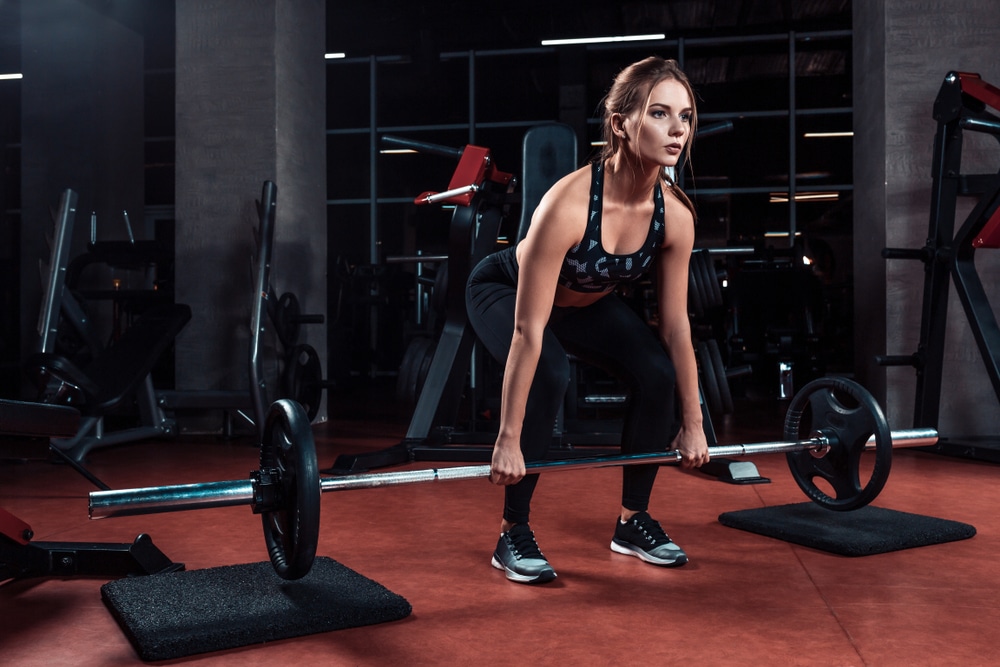
- Key Exercises: Squats, deadlifts, bench press, rows, combined with consistent cardiovascular exercise.
Reasons why BetterMe is a safe bet: a wide range of calorie-blasting workouts, finger-licking recipes, 24/7 support, challenges that’ll keep you on your best game, and that just scratches the surface! Start using our app and watch the magic happen.
Training for an Hourglass Body Shape
The goal may be balanced muscle development while enhancing overall strength and definition, as this shape already features proportional shoulders and hips with a well-defined waist.
- Focus Areas: Full-body training with an emphasis on the glutes, hamstrings, upper back, and shoulders to preserve proportion. Core work supports waist definition.
- Key Exercises:
- Lower Body: Hip thrusts, Romanian deadlifts, lunges.
- Upper Body: Overhead press, bent-over rows, lat pulldowns.
- Core: Plank variations, cable woodchoppers.
Sample Workout Program: Full-Body Focus
This program is designed for overall muscle growth and can be adapted by adding extra volume for your specific focus areas, depending on your goals. Perform this workout 2-3 times per week on non-consecutive days. Aim to perform each exercise with high effort, reaching close to muscular failure within the target rep range.
| Exercise | Sets | Reps |
|---|---|---|
| Barbell back squat | 3 | 6-10 |
| Dumbbell bench press | 3 | 8-12 |
| Bent-over barbell row | 3 | 8-12 |
| Overhead press | 3 | 8-12 |
| Romanian deadlift | 3 | 10-15 |
| Lateral raise | 3 | 12-15 |
| Plank | 3 | 30-60s |
Exercise Instructions
Barbell Back Squat
- Set the barbell in a squat rack at shoulder height. Position yourself under the bar, resting it across your upper back and traps, not on your neck.
- Grip the bar firmly with your hands slightly wider than your shoulders. Lift the bar off the rack and take a couple of steps back. Place your feet shoulder-width apart, with your toes pointed slightly outward.
- Keeping your chest up and core braced, initiate the movement by pushing your hips back and then bending your knees.
- Lower yourself until your thighs are at least parallel to the floor, maintaining a neutral back.
- Drive through your heels and mid-foot to return to the starting position, squeezing your glutes at the top.
Dumbbell Bench Press
- Lie on a flat bench with a dumbbell in each hand, resting on your thighs.
- Kick the dumbbells up one at a time to bring them to the sides of your chest. Your feet should be planted firmly on the floor.
- Press the dumbbells straight up until your arms are fully extended, but not locked. The dumbbells should be close together at the top.
- Slowly lower the dumbbells back to the sides of your chest, keeping your elbows at a 45-degree angle to your body.
Bent-Over Barbell Row
- Stand with your feet shoulder-width apart, with a loaded barbell on the floor in front of you.
- Hinge at your hips and slightly bend your knees to grab the bar with an overhand grip, your hands slightly wider than your shoulders.
- Lift the barbell, keeping your back straight, until your torso is nearly parallel to the floor. Let the bar hang with your arms fully extended.
- Pull the barbell up toward your lower chest, squeezing your shoulder blades together.
- Slowly lower the bar back to the starting position with control.
Overhead Press
- Stand with your feet shoulder-width apart, holding a barbell at shoulder height with an overhand grip. Your core should be braced and your glutes tight.
- Press the barbell directly overhead until your arms are fully extended. Keep your head and chest up.
- Pause briefly at the top before slowly lowering the barbell back to the starting position.
Read more: 4-Week Gym Workout Plan to Support Your Goals
Romanian Deadlift
- Stand with your feet hip-width apart, holding a barbell or dumbbells in front of your thighs with an overhand grip.
- Keeping your back straight and a slight bend in your knees, hinge at your hips and lower the weight toward the floor.
- Lower the weight as far as your flexibility allows without rounding your back. You should feel a deep stretch in your hamstrings.
- Drive your hips forward to return to the starting position, squeezing your glutes at the top.
Lateral Raise
- Stand with your feet hip-width apart, holding a dumbbell in each hand at your sides.
- Keeping your arms straight with a slight bend in the elbows, raise the dumbbells out to your sides until they reach shoulder height.
- Pause at the top, then slowly lower the weights back to the starting position with control.
Plank
- Position yourself on the floor as if about to do a push-up. You can rest on your forearms or your hands.
- Your body should form a straight line from your head to your heels. Engage your core and glutes to prevent your hips from sagging.
- Hold this position for the prescribed amount of time, breathing steadily.
How Long Does It Take to Change Body Type?
The timeline for seeing noticeable changes in your body shape depends on several factors, including your starting point, consistency, genetics, diet, and training intensity. There’s no one-size-fits-all answer, but you can expect to see progress along a general timeline.
- First 4-8 Weeks: You’ll likely notice improvements in strength and endurance first. Neuromuscular adaptations – your brain getting better at communicating with your muscles – happen relatively quickly (14). You might feel that your clothes fit a little differently, even if visible changes are subtle.
- 2-4 Months: This is typically when visible changes start to appear (15). If you’ve been consistent with your resistance training and nutrition, you may see increased muscle definition and a reduction in body fat. For example, your shoulders may look broader or your glutes fuller.
- 6 Months and Beyond: With six months of consistent effort, significant changes in your body shape are possible (15). Your body composition will have measurably improved, with more lean muscle mass and less body fat. The “sculpting” effect of targeted training becomes much more apparent (13).
It’s important to set realistic expectations. True, lasting transformation is a marathon, not a sprint. Focus on performance-based goals, such as lifting heavier weights or completing more reps, rather than just the number on the scale. These markers of progress will keep you motivated long before the most dramatic visual changes appear. Our previous post goes into great detail about the realistic 3-month body transformation for females.
You can create the illusion of an hourglass figure by building muscle in your shoulders (deltoids) and hips (glutes). While you can’t change your bone structure to physically narrow your waist, adding volume to your upper and lower body will make your waist appear smaller in comparison, which results in a curvier, more hourglass-like silhouette. Yes and no. Your body type doesn’t limit what you can achieve, but it can provide useful information for tailoring your program. Understanding your body’s natural tendencies for muscle growth and fat storage allows you to strategically focus your efforts on building a more balanced physique and achieving your specific aesthetic goals more efficiently. Many people are a blend of somatotypes, and it’s likely impossible to move entirely into one category. However, an individual with endomorphic tendencies (a tendency to store fat) can absolutely adopt the lifestyle and habits that lead to a mesomorphic physique (muscular and lean). Through consistent resistance training and disciplined nutrition, you can significantly alter your body composition to look more like a mesomorph. Body shape can change at multiple points in life. Puberty brings significant changes. For women, pregnancy can alter body shape. The most notable age-related shift often begins in the late 30s or 40s and continues through menopause, as hormonal changes can cause fat to redistribute from the hips and thighs to the abdomen (4). However, these changes can be managed with an active lifestyle. The hourglass figure, where the shoulders and hips are nearly identical in measurement and the waist is significantly smaller (at least 25% smaller), is often cited as the rarest body shape. It’s difficult to tell exactly how many women naturally have this specific proportion, but as the most desired and depicted in art, it often seems elusive.Frequently Asked Questions
Can I go from rectangle to hourglass?
Does body type matter when working out?
Can you change from endomorph to mesomorph?
At what age does your body shape change?
What is the rarest female body shape?
The Bottom Line
Your body is the only one you’ll ever have, and understanding its unique characteristics is the first step toward working with it, not against it. Forget rigid labels and impossible standards. Instead, use the knowledge of your body’s shape and tendencies as a tool to guide your fitness journey.
By applying consistent effort and smart training principles, you have the power to build strength, improve your health, and sculpt a physique that you feel proud of. The real transformation comes not from chasing a specific “type”, but from the process of becoming the strongest, healthiest version of yourself.
DISCLAIMER:
This article is intended for general informational purposes only and does not serve to address individual circumstances. It is not a substitute for professional advice or help and should not be relied on for making any kind of decision-making. Any action taken as a direct or indirect result of the information in this article is entirely at your own risk and is your sole responsibility.
BetterMe, its content staff, and its medical advisors accept no responsibility for inaccuracies, errors, misstatements, inconsistencies, or omissions and specifically disclaim any liability, loss or risk, personal, professional or otherwise, which may be incurred as a consequence, directly or indirectly, of the use and/or application of any content.
You should always seek the advice of your physician or other qualified health provider with any questions you may have regarding a medical condition or your specific situation. Never disregard professional medical advice or delay seeking it because of BetterMe content. If you suspect or think you may have a medical emergency, call your doctor.
SOURCES:
- Comparing Apples and Pears: Women’s Perceptions of Their Body Size and Shape (2012, pmc.ncbi.nlm.nih.gov)
- Somatotype and Constitutional Psychology (2025, simplypsychology.org)
- Central fatness and risk of all cause mortality: systematic review and dose-response meta-analysis of 72 prospective cohort studies (2020, bmj.com)
- Body Shape (n.d., sciencedirect.com)
- Age-Related Hormones Changes and Its Impact on Health Status and Lifespan (2023, pmc.ncbi.nlm.nih.gov)
- Sarcopenia in the Aging Process: Pathophysiological Mechanisms, Clinical Implications, and Emerging Therapeutic Approaches (2025, mdpi.com)
- Metabolic changes in aging humans: current evidence and therapeutic strategies (2022, pmc.ncbi.nlm.nih.gov)
- Physical activity, sedentary behavior and functionality in older adults: A cross-sectional path analysis (2021, journals.plos.org)
- The genetic architecture of the human skeletal form (2023, pmc.ncbi.nlm.nih.gov)
- Resistance training as a key strategy for high-quality weight loss in men and women (2026, pmc.ncbi.nlm.nih.gov)
- Spot reduction: why targeting weight loss to a specific area is a myth (2023, sydney.edu.au)
- Is aerobic combined with resistance training a more suitable exercise program for obese college students? Evidence-based on subjective reports and objective measurements (2025, frontiersin.org)
- Editorial: New insights and advances in body recomposition (2024, pmc.ncbi.nlm.nih.gov)
- The knowns and unknowns of neural adaptations to resistance training (2020, link.springer.com)
- Adaptations to Endurance and Strength Training (2018, pmc.ncbi.nlm.nih.gov)