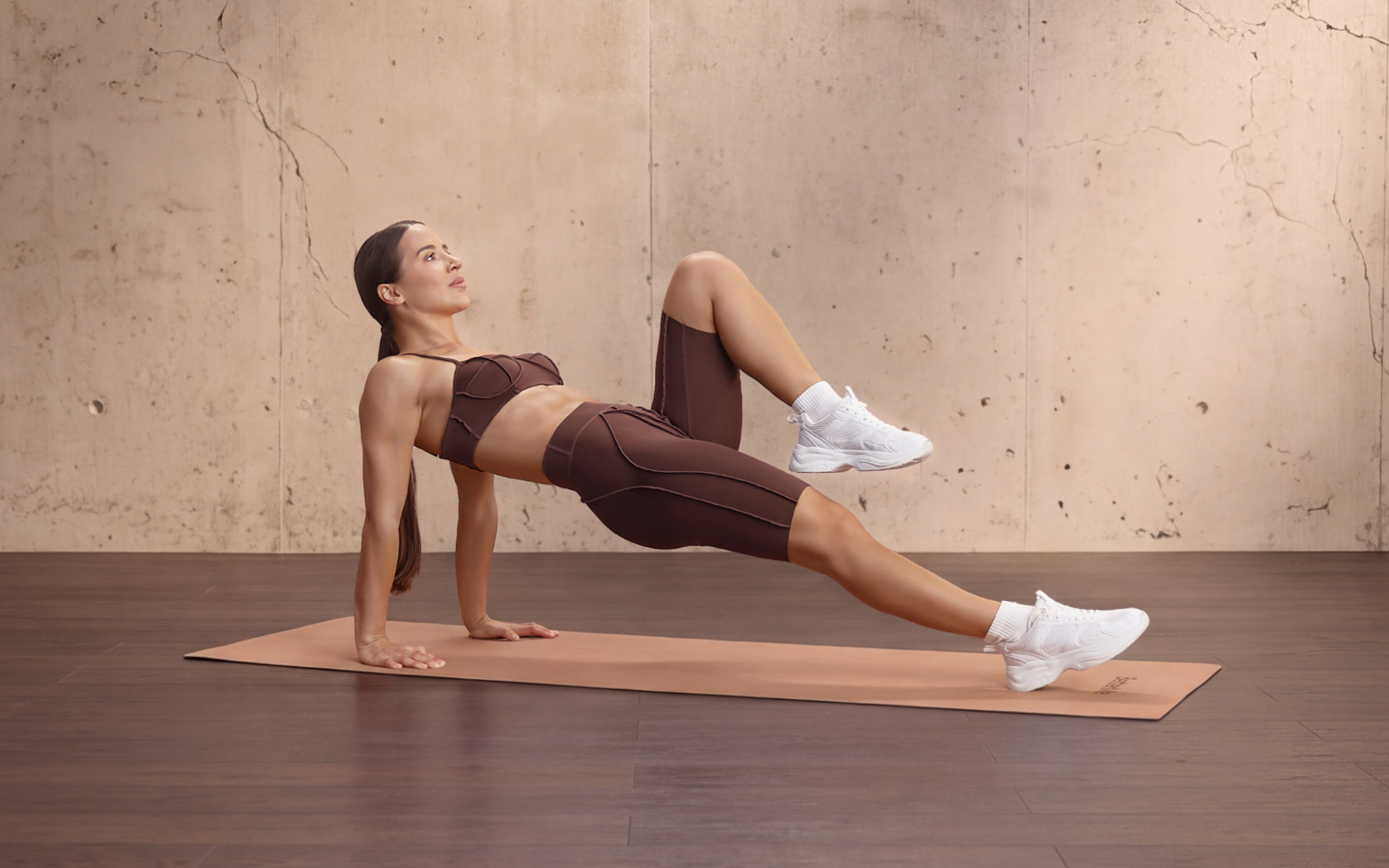
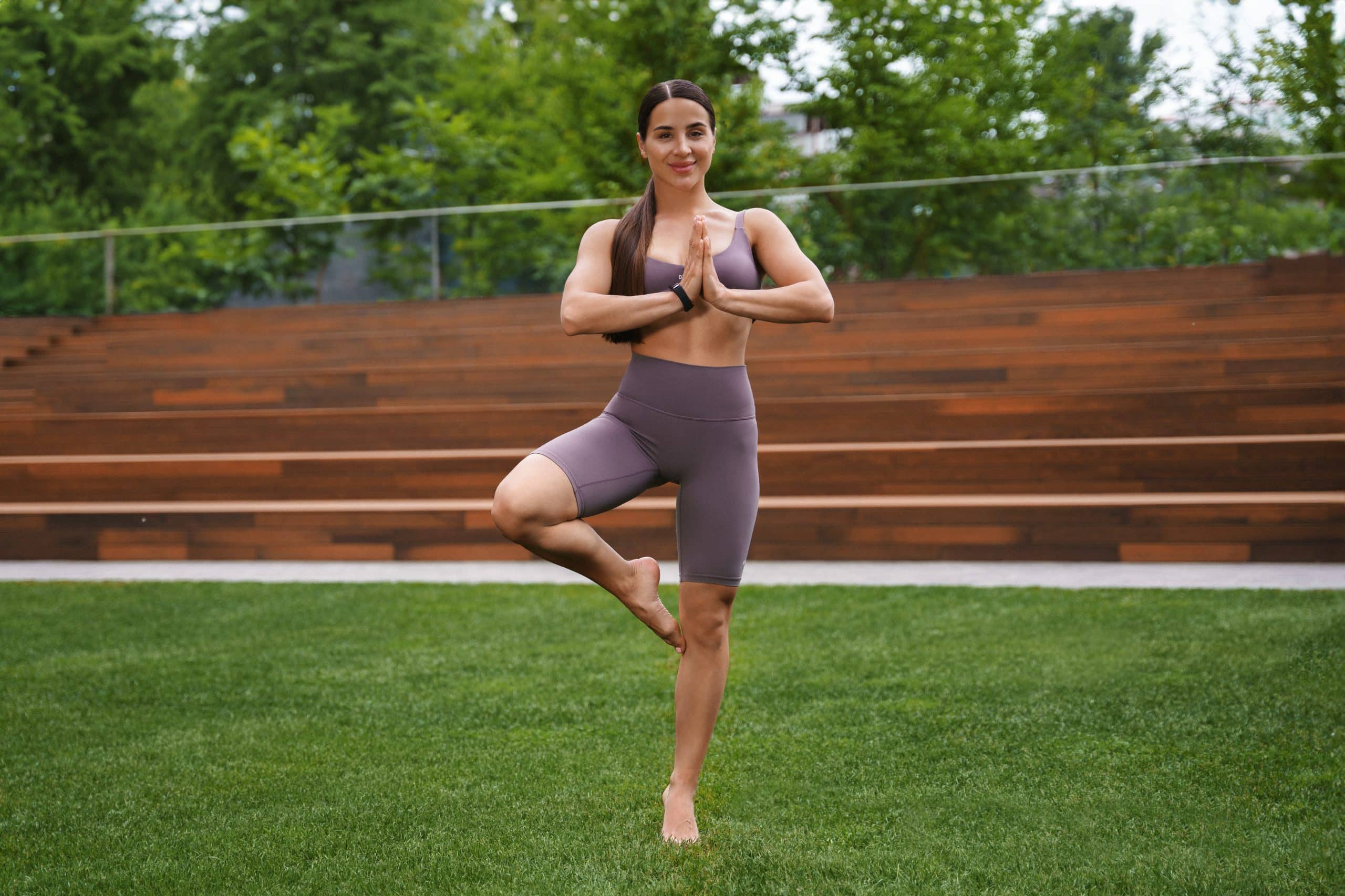
Barre Pilates blends ballet-inspired standing exercises with Pilates-style attention to breathing and movement control. Class content varies, so check the actual routine before joining. Begin with supported leg movements and manageable repetitions. The barre and Pilates comparison explains how a blended class differs from a dedicated practice.
Key takeaways
- Barre Pilates is a class description, rather than one standardized exercise program.
- A small barre trial measured strength and endurance improvements in female office workers (1).
- Pilates evidence concerns the studied Pilates programs, rather than every blended class (2).
- Fixed support and a comfortable foot position help you arrange standing movements.
- The 5-move practice below is an editorial example with easier variations.
- Add difficulty gradually and keep rest available when movement control changes.
What is barre Pilates?
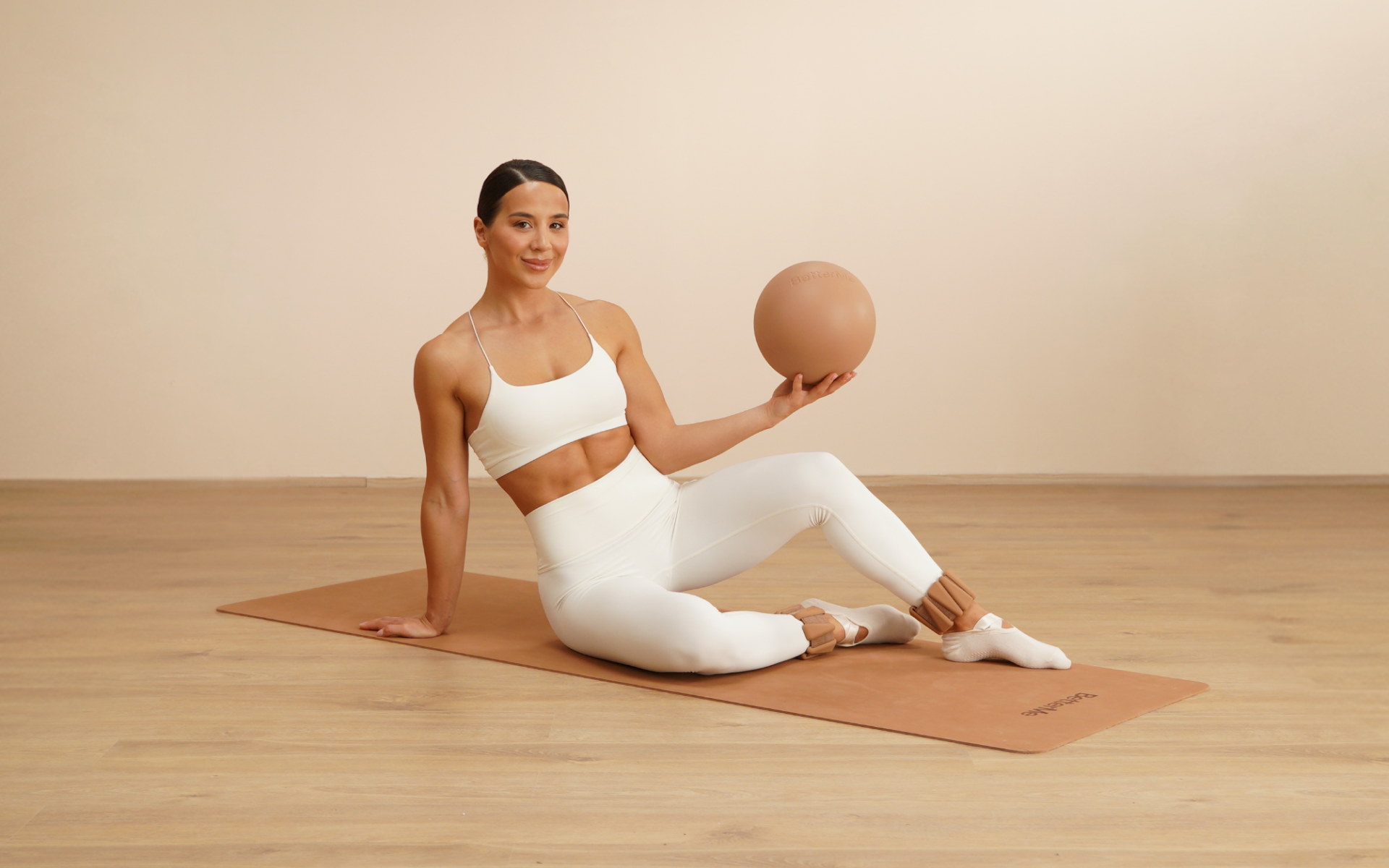
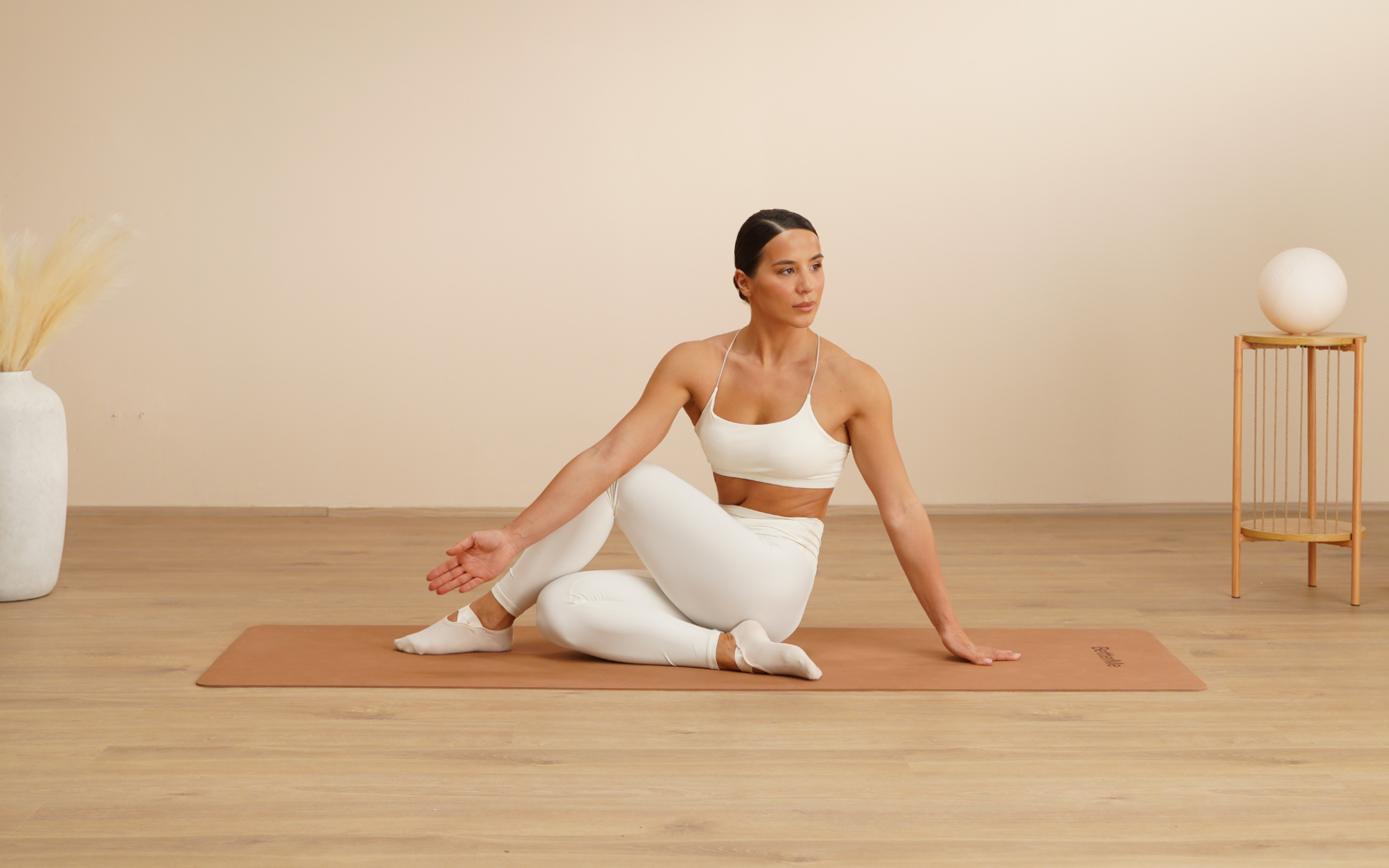
Barre Pilates is a blended fitness format that combines barre-inspired movement with elements of Pilates. The class may include standing knee bends, leg lifts, trunk exercises, and controlled breathing. Some instructors also include yoga-inspired movements.
The name does not tell you the exact exercise list. One class may spend most of its time standing. Another may include substantial mat work. Ask about the content and starting level before choosing a session.
Barre uses a support as a balance reference. Pilates can be practiced on a mat or with specialized equipment. A hybrid session can borrow tasks from both, with its own pace and structure.
The three-style comparison includes yoga as a separate practice. Borrowing a few poses does not make a blended class equivalent to a complete yoga session.
Why might you choose a barre Pilates class?
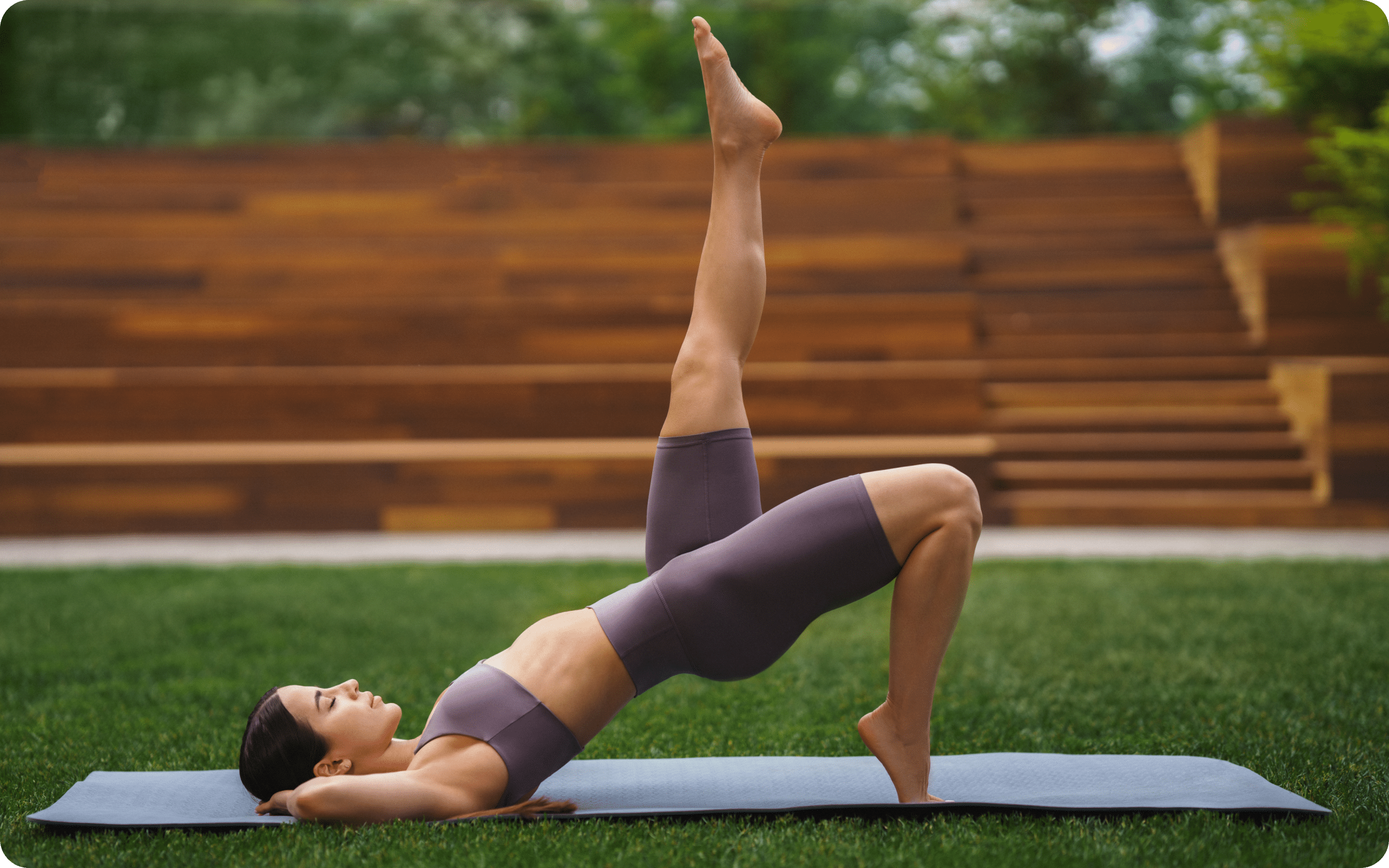
You might choose a blended class because you enjoy standing movement, mat practice, or a varied session. Seven practical reasons can help you judge the fit. Each reason describes an activity you can observe, rather than a promised result.
A manageable muscular task
Repeated knee bends and leg movements give you a specific muscular task. You can adjust the range or repetition count. The class should leave you able to pause when the movement becomes difficult to regulate.
A small barre trial measured lower-limb and trunk strength and endurance improvements (1). The participants were sedentary female office workers. The finding does not validate every hybrid class or guarantee a result.
Practice with trunk positioning
Standing leg movement asks you to keep your trunk steady while another part moves. A mat reach can present a different control task. Clear instruction helps you understand which part should move and which part should remain quiet.
A Pilates trial measured changes in trunk-pelvic control after structured practice (3). That result concerns the studied program. Keep the immediate goal focused on executing the movement in front of you.
Intense sweat sessions, working weight loss tips, lip-smacking recipes come in one package with the BetterMe app. And all of it is at your fingertips, start transforming your life now!
A comfortable movement range
You can choose a smaller knee bend or lower leg lift when learning a movement. The range should fit your current control. A ballet-inspired class does not require forcing turnout or a high extension.
Pilates research has measured endurance and flexibility improvements in specific adults (2). A blended format needs its own assessment. Flexibility claims should reflect the actual stretching and movement work included.
Coordination practice
A class can combine arm and leg movement in a sequence. Learning the sequence creates a coordination task. You can practice the legs first, then add the arm movement after the steps feel familiar.
Coordination difficulty should remain manageable. A confusing combination is a reason to simplify the action. Avoid treating missed choreography as a failure to work hard enough.
Supported balance practice
Single-leg standing movements create opportunities to practice balance with support. A fixed counter or wall lets you regulate the challenge. Keep your hand available while learning a side lift or knee repeater.
Use the amount of support needed to stay steady. Removing support is one possible progression, with instructor guidance. Bigger arm gestures can wait until your standing position feels controlled.
Time to focus on movement
A guided session gives you a set period to attend to breathing, position, and instructions. Some people enjoy that focus. Enjoyment is a practical reason to choose a format without making a mental-health treatment claim.
Yoga guidance also describes varied approaches with different physical and breathing components (4). A borrowed breathing cue does not establish the same effect as a studied yoga program. Choose the class experience you can comfortably follow.
A routine you can repeat
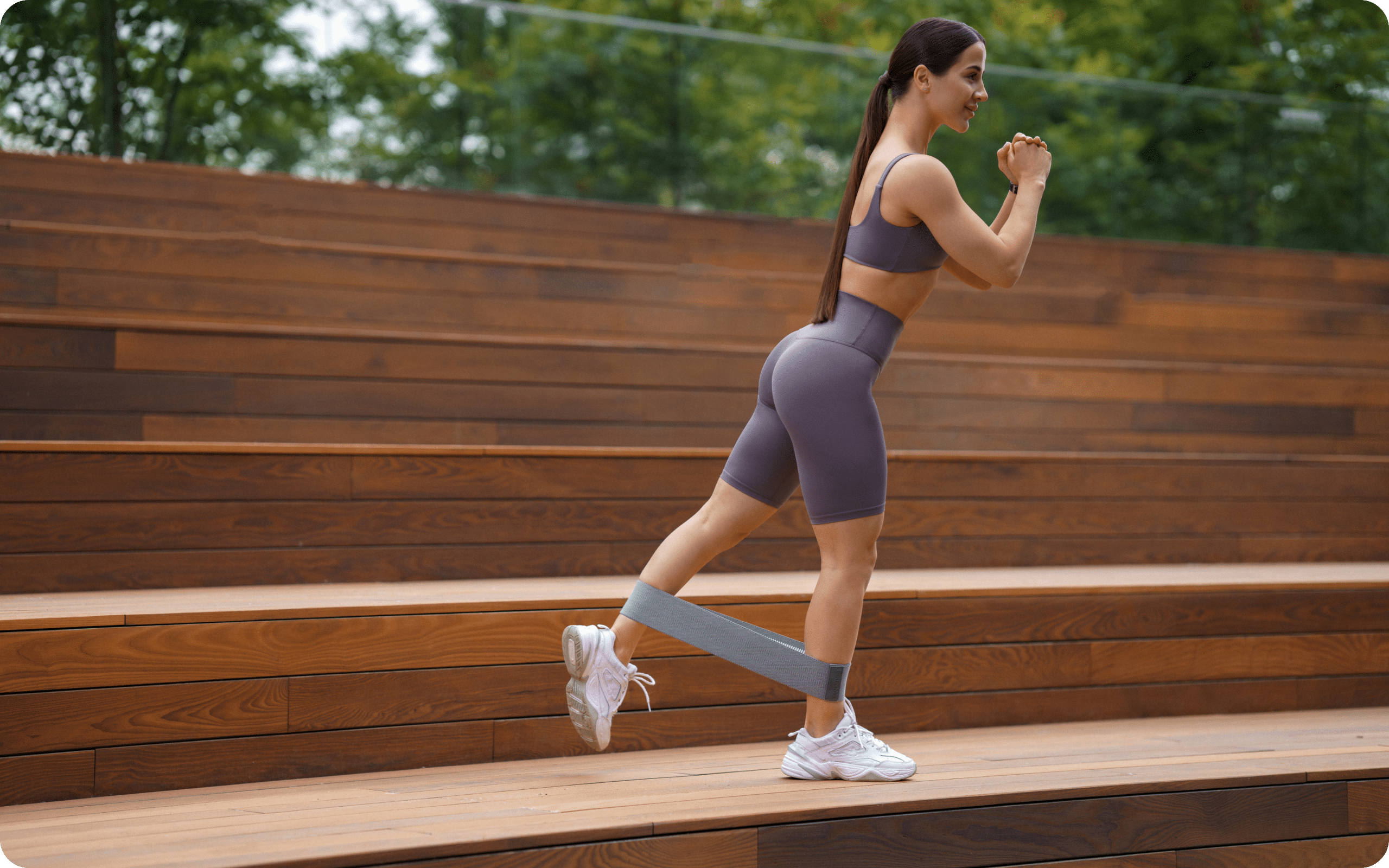
A home-friendly format may be easier to repeat when travel or scheduling makes studio classes difficult. The equipment needs can be modest. Clear instructions and a stable support still matter.
The at-home barre routine includes a timed example. Use that format when you want an inclusive schedule for preparation, movement, rest, and finishing.
How is barre Pilates different from Pilates?
Barre Pilates combines selected movements, while a Pilates class follows its own method and exercise progression. The hybrid name does not establish how much Pilates the session contains. Compare the actual class description.
|
Feature |
Barre Pilates blend |
Dedicated Pilates practice |
|---|---|---|
|
Typical positions |
Standing support plus selected mat work |
Mat or apparatus positions |
|
Movement pattern |
Repeated leg actions and chosen Pilates-style tasks |
Controlled exercises arranged by instructor |
|
Equipment |
Fixed support, optional light props |
Mat or specialized apparatus |
|
Pace |
Depends on choreography and instructor |
Depends on level and format |
|
Starting question |
Which movements are included? |
Which Pilates level and equipment are used? |
Both formats can be demanding. A slow pace still requires control. A faster pace can add coordination demands. Neither speed nor class name establishes suitability for everyone.
Use qualified guidance when ongoing discomfort or medical circumstances affect your activity choices. A general class comparison cannot select appropriate restrictions. Tell the instructor which movements you need to adapt.
How do you try the 5 standing movements?
Try the standing movements with a fixed support, a comfortable stance, and simple arm positions. The sequence is an editorial practice example. Begin with the easier versions when a combination feels unfamiliar.
Supported curtsy or straight step-back
A curtsy crosses one foot behind the other. A straight step-back is an easier alternative when the crossed position feels awkward.
- Stand beside a fixed support.
- Step one foot a short distance backward.
- Bend both knees slightly if comfortable.
- Return the back foot to the starting position.
- Repeat on the other side.
Keep the bend shallow while learning the placement. Add a small crossing step only when you can control it. Avoid forcing the front knee into an uncomfortable position.
Supported knee lift into leg extension
The knee-lift sequence combines standing balance with a small leg extension. Begin with your hand on the support.
- Shift weight onto one leg.
- Lift the other knee a comfortable distance.
- Straighten the lifted knee through a small range.
- Bend the knee again.
- Return the foot to the floor.
Keep your trunk upright. Lower the lifted foot between repetitions when needed. An overhead arm movement is optional after you understand the leg sequence.
Low backward leg lift
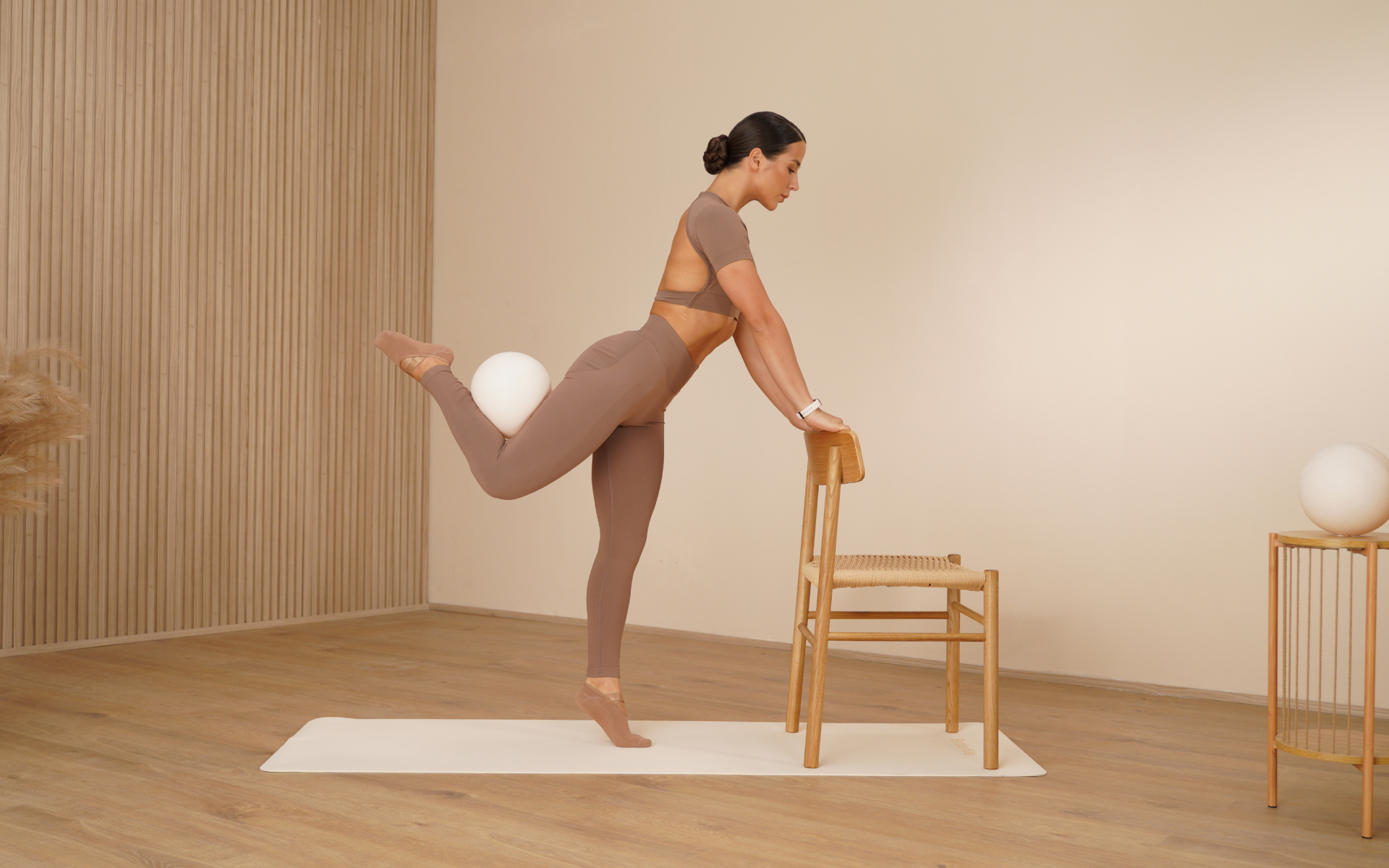
A backward lift moves one leg behind you while your supporting leg remains steady. Use a low range.
- Face a fixed support with both hands available.
- Shift weight onto one leg.
- Move the other leg a short distance backward.
- Lower the working foot to the floor.
- Change sides after your set.
Avoid arching your back to make the lift higher. A low reach keeps the task easier to monitor. Keep the supporting knee comfortable rather than rigidly locked.
Supported knee repeater
A knee repeater alternates a small backward step with bringing the working knee forward. Start with an upright trunk.
- Stand beside a fixed support.
- Step one foot a short distance backward.
- Bring that knee forward a comfortable distance.
- Return the foot to the backward position.
- Put both feet down before changing sides.
Slow the sequence when the foot placement becomes uncertain. You can tap the foot beside your supporting leg instead of lifting the knee. The simpler option reduces the balance demand.
Supported side leg lift
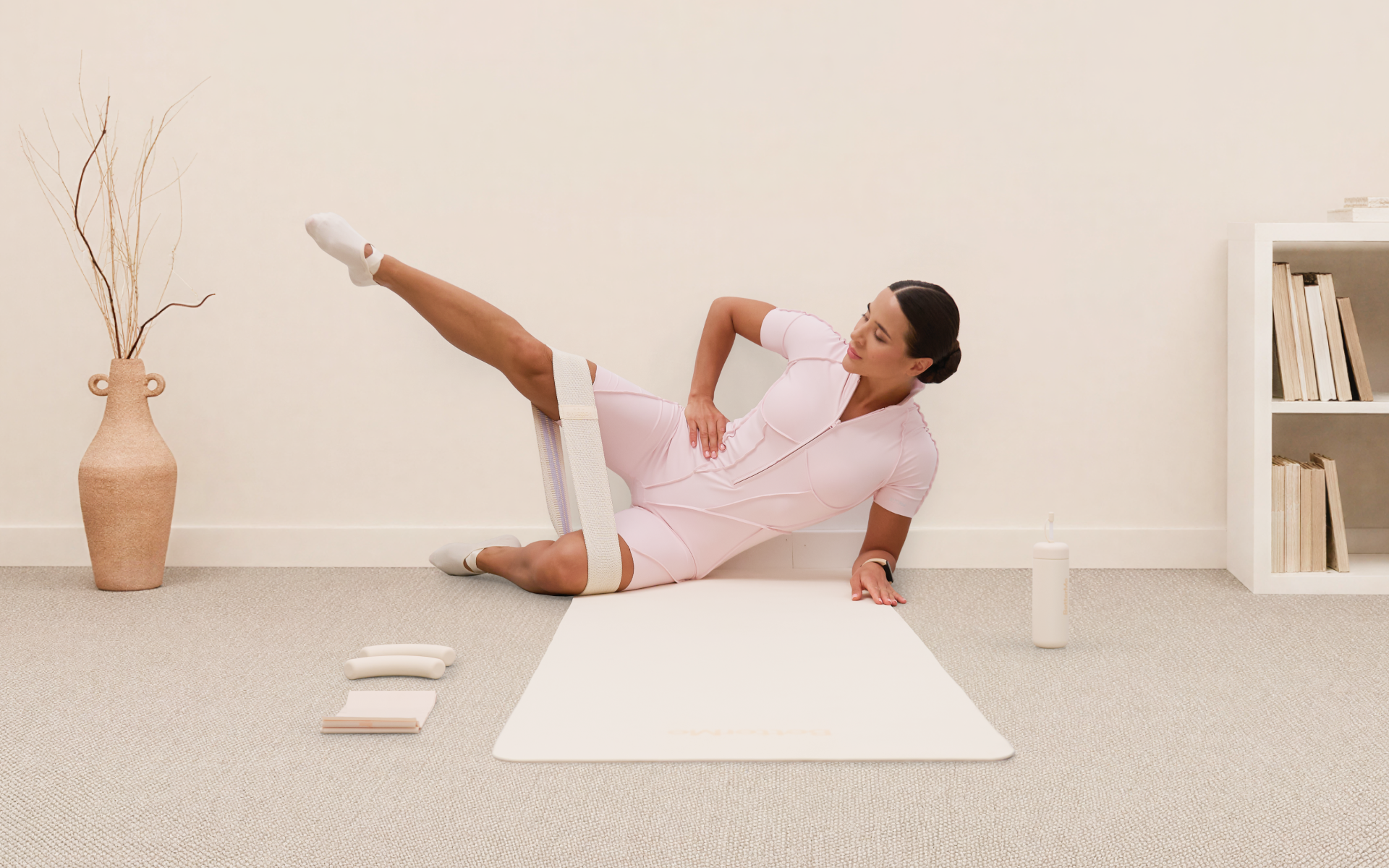
A side lift moves one leg outward while your trunk stays steady. Begin with parallel feet and a small range.
- Stand beside a fixed support.
- Shift weight onto the nearer leg.
- Lift the other leg slightly sideways.
- Return the foot to the floor.
- Repeat on the other side.
Avoid leaning away from the lifted leg. A lower lift may give you better control. You can keep both hands supported before adding a larger arm gesture.
How can you organize your first practice?
Organize the first practice around one manageable set of each movement. Warm up with easy walking and unweighted knee bends. The table gives optional starting amounts, with rest and modifications available.
|
Movement |
Optional first set |
Easier option |
|---|---|---|
|
Step-back or curtsy |
4 to 6 per side |
Straight step-back |
|
Knee lift into extension |
4 to 6 per side |
Lift and lower only |
|
Backward leg lift |
6 to 8 per side |
Low toe reach |
|
Knee repeater |
4 to 6 per side |
Foot tap instead of knee lift |
|
Side leg lift |
6 to 8 per side |
Smaller supported lift |
Complete both sides before changing the movement. Rest whenever needed and finish with easy movement. The example has no exact duration because pace, setup, and rests vary.
Write down the support and modifications you used. Those details make the next practice easier to compare. You can repeat the same version before changing repetitions or range.
Is a blended class enough for your weekly activity?
A blended class can contribute to your week, but the exercise content determines its role. General adult guidance includes aerobic activity and strengthening work (5). Check the work completed across all your sessions.
Progressive resistance training supports muscle function, with available load affecting training choices (6). A light repeated sequence may eventually need adjustment for a particular strength goal. Use instructor feedback to choose a manageable change.
Moderate aerobic effort allows talking but makes singing difficult (7). Rest and instruction time should not automatically count at that intensity. Consider other aerobic movement when your blended sessions mainly emphasize supported muscular work.
Whether you’re looking to simply pep up your fitness routine, jazz up your diet with mouth-watering low-calorie recipes or want to get your act together and significantly drop that number on your scale – BetterMe app has got you covered! Improve your body and revamp your life with us!
Frequently Asked Questions
Do I need ballet experience for a blended class?
No, a beginner class should teach its foot positions and movement sequence. Choose parallel feet and simpler arm movements while learning.
Can I leave out the arm choreography?
Yes, practice the leg pattern with your hand available for support. Add the arms after the standing sequence feels controlled.
Can I replace a crossed curtsy with a straight step-back?
Yes, a straight step-back is an available starting modification. Tell the instructor which version you are using so the movement instructions remain clear.
The bottom line
Choose a barre Pilates class by its actual movements and starting level. Learn the supported leg patterns before adding choreography. Keep simple alternatives and rest available, and review the blend alongside your other weekly activity.
Disclaimer:
This article is intended for general informational purposes only and does not serve to address individual circumstances. It is not a substitute for professional advice or help and should not be relied on for making any kind of decision-making. Any action taken as a direct or indirect result of the information in this article is entirely at your own risk and is your sole responsibility.
BetterMe, its content staff, and its medical advisors accept no responsibility for inaccuracies, errors, misstatements, inconsistencies, or omissions and specifically disclaim any liability, loss or risk, personal, professional or otherwise, which may be incurred as a consequence, directly or indirectly, of the use and/or application of any content.
You should always seek the advice of your physician or other qualified health provider with any questions you may have regarding a medical condition or your specific situation. Never disregard professional medical advice or delay seeking it because of BetterMe content. If you suspect or think you may have a medical emergency, call your doctor.
Sources:
- Effects of Barre Exercise Training on Lower Limbs and Core Muscle Endurance and Strength in Sedentary Female Office Workers (2024, he02.tci-thaijo.org)
- Pilates for improvement of muscle endurance, flexibility, balance, and posture (2010, pubmed.ncbi.nlm.nih.gov)
- Effects of Pilates Training on Lumbo-Pelvic Stability and Flexibility (2011, pmc.ncbi.nlm.nih.gov)
- Yoga: Effectiveness and Safety (n.d., www.nccih.nih.gov)
- Adult Activity: An Overview (2024, www.cdc.gov)
- American College of Sports Medicine Position Stand. Resistance Training Prescription for Muscle Function, Hypertrophy, and Physical Performance in Healthy Adults: An Overview of Reviews (2026, pmc.ncbi.nlm.nih.gov)
- How to Measure Physical Activity Intensity (2025, www.cdc.gov)
 Reviewed by