After pushing through a tough workout, the temptation to collapse on the couch is real. But what if a gentler form of movement could actually help you recover faster and feel better? This is where active recovery comes in, and increasingly, people are asking: Is Pilates a good option for it?
You may think of Pilates as a challenging workout in its own right, and it certainly can be. However, when adapted correctly, it offers a powerful tool for your rest days. The core principles of Pilates – control, precision, and breath – are perfectly aligned with the goals of active recovery, helping to soothe sore muscles, improve mobility, and prepare your body for its next challenge.
This guide will explore the science behind active recovery and how Pilates fits into the picture. We’ll break down when to use Pilates for recovery, which exercises are most effective, and how it compares to other recovery methods like yoga. By the end, you’ll have a clear understanding of how you can integrate recovery Pilates into your training schedule to enhance your performance and long-term well-being.
What Is Active Recovery?
Active recovery involves performing low-intensity exercise following a period of strenuous physical activity. Instead of complete rest, you engage in light movements to stimulate blood flow, reduce muscle soreness, and accelerate the body’s natural repair processes (1).
The primary goal is to help your body recover without adding extra training stress. Think of it as a gentle nudge to your system, encouraging it to clear out metabolic byproducts such as lactate and deliver oxygen-rich blood to tired muscles (1).
Research supports this approach. A 2019 systematic review found that brief active recovery sessions, lasting approximately 6 to 10 minutes, were associated with improved subsequent athletic performance compared to passive rest. Enhanced blood flow may help clear lactate and other metabolic byproducts from the muscles (2).
Effective active recovery should be:
- Low-intensity: The effort should feel easy, keeping your heart rate low.
- Low-impact: The movements should put minimal stress on your joints.
- Restorative: The session should leave you feeling better, not more fatigued.
Common active recovery workouts include walking, light jogging, easy cycling, and swimming. The key is to keep the intensity low enough that it facilitates recovery rather than becoming another workout.
Can Pilates Be Considered Active Recovery?
Yes, certain types of Pilates can be an excellent form of active recovery. However, not all Pilates classes are created equal. An advanced reformer class that leaves you shaking is a workout, not recovery. The key is to select the right exercises and maintain a low intensity.
Low-intensity mat Pilates, with a focus on breath, mobility, and gentle core activation, is ideal for recovery Pilates. These sessions promote the benefits of active recovery by:
- Increasing Blood Flow: The flowing, dynamic movements in Pilates encourage circulation throughout the body (3), which helps flush out metabolic waste and deliver nutrients to muscle tissues for repair (4).
- Improving Flexibility and Mobility: Many Pilates exercises are designed to move the spine and major joints through their full range of motion. This can alleviate stiffness and improve mobility (5), which are often prevalent following intense training.
- Enhancing Autonomic Recovery: A small study found that a Pilates-based cool-down strategy led to greater parasympathetic nervous system reactivation (measured by heart rate variability) compared to a static stretching cool-down (6).
A stronger parasympathetic response is a marker of better recovery, which helps your body shift from a “fight-or-flight” state to a “rest-and-digest” state.
- Building Foundational Strength: While the focus is recovery, gentle Pilates still engages deep core muscles. Strengthening these stabilizers can improve posture and movement patterns, reducing strain during future workouts and lowering injury risk over time. Multiple reviews have confirmed that Pilates improves core endurance, dynamic balance, and posture (7).
Read more: Core Strengthening Pilates For A Stronger, More Active You!
A study on individualized low-intensity mat Pilates found that regular practice improved participants’ aerobic endurance and “energetic recovery ability” (8), suggesting that it can build your capacity to recover more efficiently over time.
For Pilates to be effective as active recovery, you must keep the intensity low. The session should be restorative, not strenuous. Aim for a 15-25-minute sequence that emphasizes breath and fluid movement rather than high-tension holds or advanced, challenging exercises.
When Is Pilates a Good Option for Recovery?
Knowing when to incorporate recovery Pilates is just as important as knowing how. Here are six scenarios where a gentle Pilates session can be particularly beneficial.
When You’re Feeling Stiff and Sore
Delayed onset muscle soreness (DOMS) can leave you feeling tight and restricted. A gentle Pilates session can help alleviate this stiffness by moving your joints through a full, controlled range of motion (2). Exercises that focus on spinal articulation, such as the roll down, can be particularly soothing for a stiff back.
When You’ve Had a Heavy Lifting Day
After a day of heavy squats or deadlifts, your spine and hips have been under significant load. Recovery Pilates can help decompress the spine and mobilize the hips. Movements that encourage gentle traction and rotation of the spine can counteract the compressive forces of lifting, while hip-opening exercises can restore mobility (9).
Workouts, weight management tools, and recipe ideas come together in the BetterMe: Health Coaching app, giving you practical support for building a more consistent wellness routine.
When You’ve Completed a Long Endurance Session
Long runs or bike rides can lead to repetitive strain and tight hip flexors and hamstrings. A Pilates recovery workout can address these imbalances by focusing on lengthening tight muscles and strengthening opposing muscle groups. This helps restore muscular balance and improve overall alignment (8).
When You Need to Destress and Unwind
Intense training can be mentally and physically taxing. The emphasis on breath and mindful movement in Pilates makes it a form of moving meditation. This can help lower cortisol levels and activate the parasympathetic nervous system, shifting your body into a state of recovery and relaxation (6)
When You’re Working on Posture and Alignment
If your primary training creates postural imbalances, recovery Pilates is a perfect opportunity to counteract them (5). By focusing on posture and core stabilization, you can use your recovery days to reinforce better movement patterns that carry over into your main sport.
When You’re Returning From an Injury
As you ease back into training after an injury, low-impact movements are essential. Pilates may offer a lower-impact way to reintroduce movement, motor control, and mobility as part of a return-to-training plan. Its focus on controlled, precise movements helps rebuild the mind-body connection that is often disrupted by injury (10).
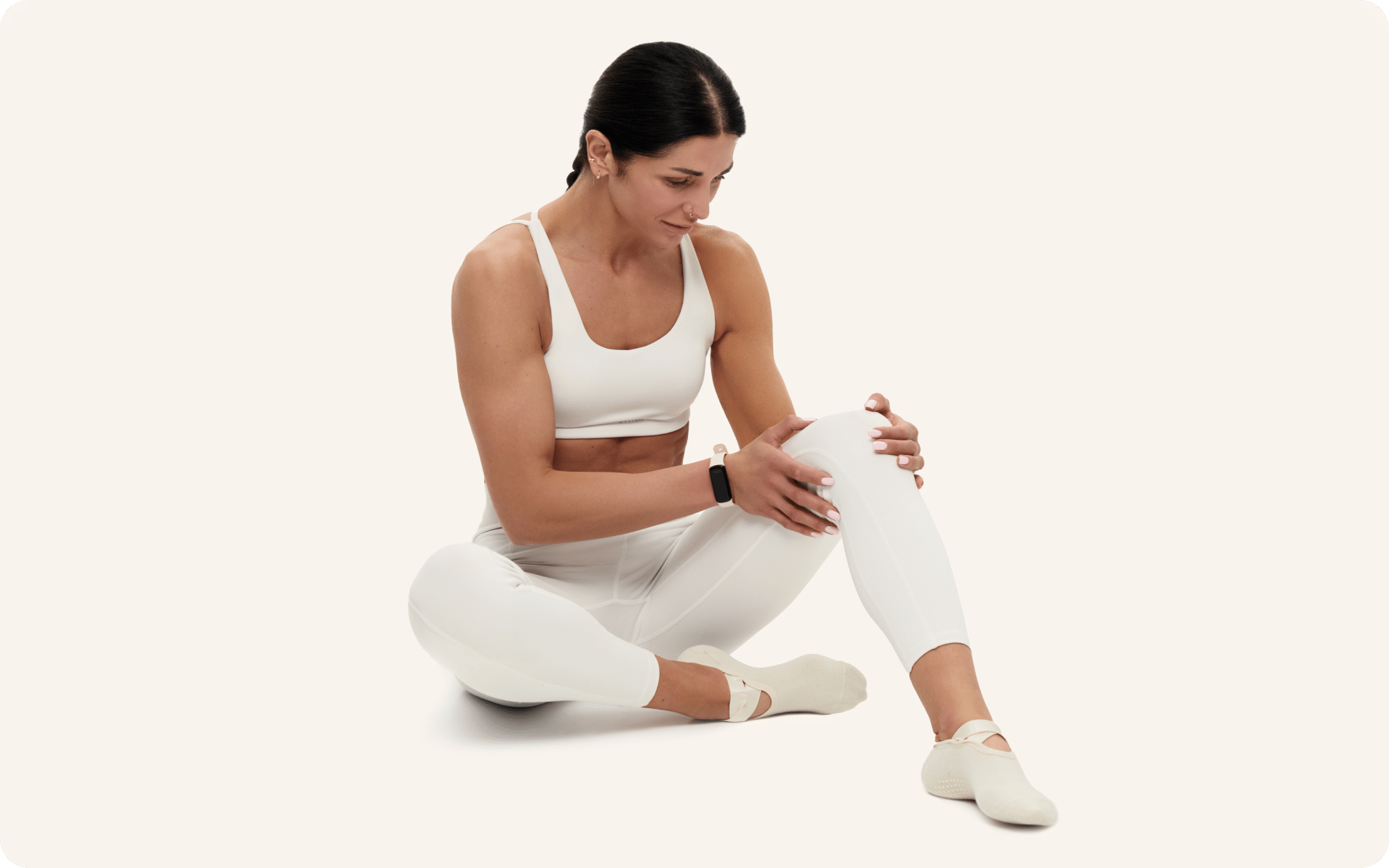
However, if you’re recovering from an injury, it’s important to consult a medical professional before you get started on Pilates.
Which Pilates Exercises Work Well for Active Recovery?
For a recovery-focused session, you should select exercises that promote mobility, gentle stretching, and core connection without causing strain. The BetterMe Pilates Kit can also support a simple at-home routine. Here are 10 exercises from Joseph Pilates’ original 34 mat exercises in Return to Life Through Contrology that are perfect for an active recovery sequence at home.
The Hundred
Why it’s good for recovery: This exercise is a fantastic way to warm up the body and connect your breath to your movement. It stimulates circulation without placing a heavy load on the muscles.
- How to do it: Lie on your back with your knees bent into your chest. Lift your head and shoulders off the mat. Extend your legs to a 45-degree angle (or higher if your back arches). Extend your arms long by your sides, palms down. Pump your arms up and down vigorously as you inhale for five counts and exhale for five counts. Repeat for 10 full breaths.
The Roll Up
Why it’s good for recovery: The roll up articulates the spine, providing a gentle stretch for the entire posterior chain, from your heels to the back of your neck.
- How to do it: Lie on your back with your legs straight and your arms extended overhead. Inhale to lift your arms toward the ceiling, then exhale as you peel your spine off the mat one vertebra at a time, reaching toward your toes. Inhale at the top, then exhale to roll back down with control.
The One Leg Circle
Why it’s good for recovery: This exercise improves hip mobility and stability by challenging you to keep your pelvis still while your leg moves.
- How to do it: Lie on your back with one leg extended to the ceiling and the other bent or straight on the mat. “Draw” circles on the ceiling with your raised foot, first clockwise and then counterclockwise. Keep your torso and pelvis stable. Repeat on the other side.
Rolling Like a Ball
Why it’s good for recovery: This movement massages the spine and teaches core control as you balance on your sit bones.
- How to do it: Sit on the mat, hug your knees to your chest, and lift your feet off the floor. Curve your spine into a “C” shape. Inhale as you roll back to your shoulder blades, and exhale as you roll back up to the starting position, maintaining your balance.
The One Leg Stretch
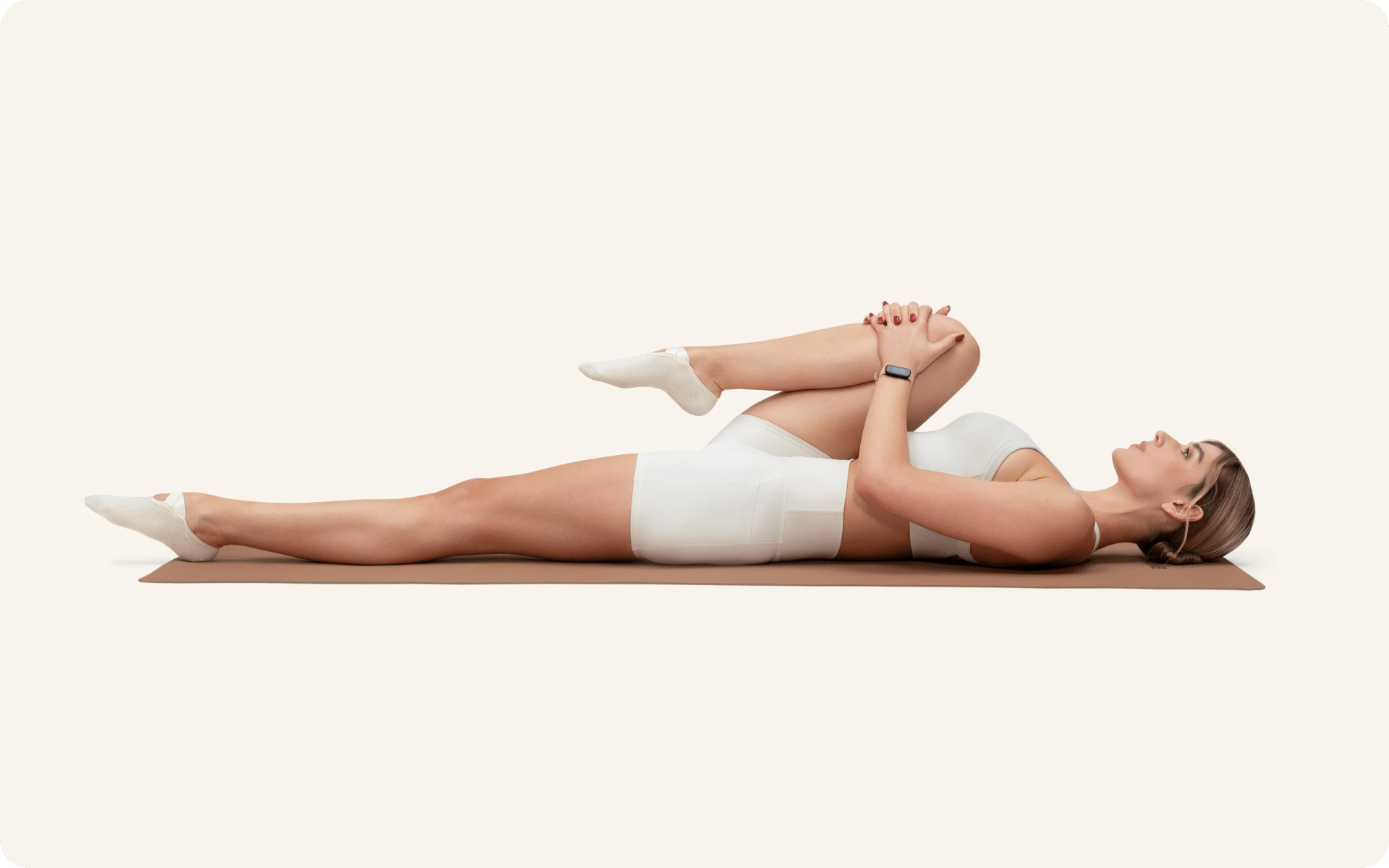
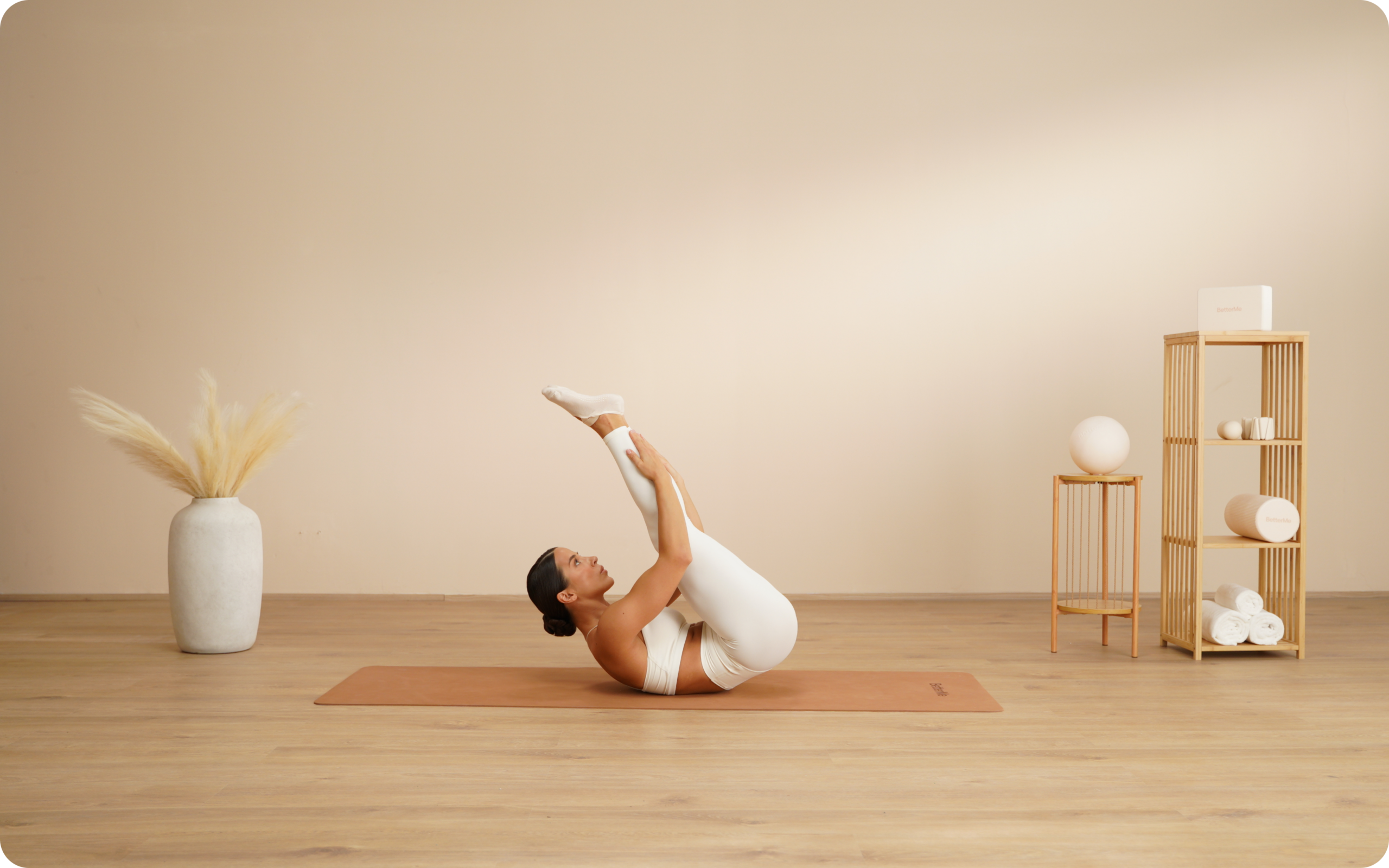
Why it’s good for recovery: It provides a dynamic stretch for the hip flexors and hamstrings while engaging the deep abdominals.
- How to do it: Lie on your back and bring both knees to your chest, with your head and shoulders lifted. Place one hand on your ankle and the other on your knee. Extend your other leg out to a 45-degree angle. Inhale to switch legs, exhaling as you pull the new knee in.
Spine Stretch
Why it’s good for recovery: This exercise releases tension in the back and hamstrings, encouraging spinal flexion.
- How to do it: Sit up tall with your legs extended in front of you, slightly wider than hip-width apart. Inhale to lengthen your spine, then exhale as you round forward, reaching your arms forward as if rolling over a large ball. Inhale, then exhale to stack your spine back up to a tall seat.
The Saw
Why it’s good for recovery: It promotes spinal rotation and stretches the hamstrings and obliques.
- How to do it: Sit tall with your legs wide and your arms extended to the sides. Inhale and twist your torso to one side. Exhale as you reach your opposite hand toward your foot, “sawing” off your little toe. Inhale to return to the center and repeat on the other side.
Read more: Floor Pilates Exercises: A Complete List for Building a Strong Core and Body
The Swan-Dive (Prep)
Why it’s good for recovery: The prep for swan-dive gently opens the chest and strengthens the back extensors, counteracting a rounded posture.
- How to do it: Lie on your stomach with your hands under your shoulders. Inhale as you press into your hands to lift your chest off the mat, keeping your hips down. Exhale to lower back down with control.
The Seal
Why it’s good for recovery: Like rolling like a ball, the seal massages the spine while adding a coordination challenge.
- How to do it: Sit on the mat and thread your arms inside your bent legs, grabbing the outside of your ankles. Lift your feet and balance. Clap your feet together three times. Inhale to roll back, clap your feet three times, and exhale to roll up.
Side Kick Kneeling
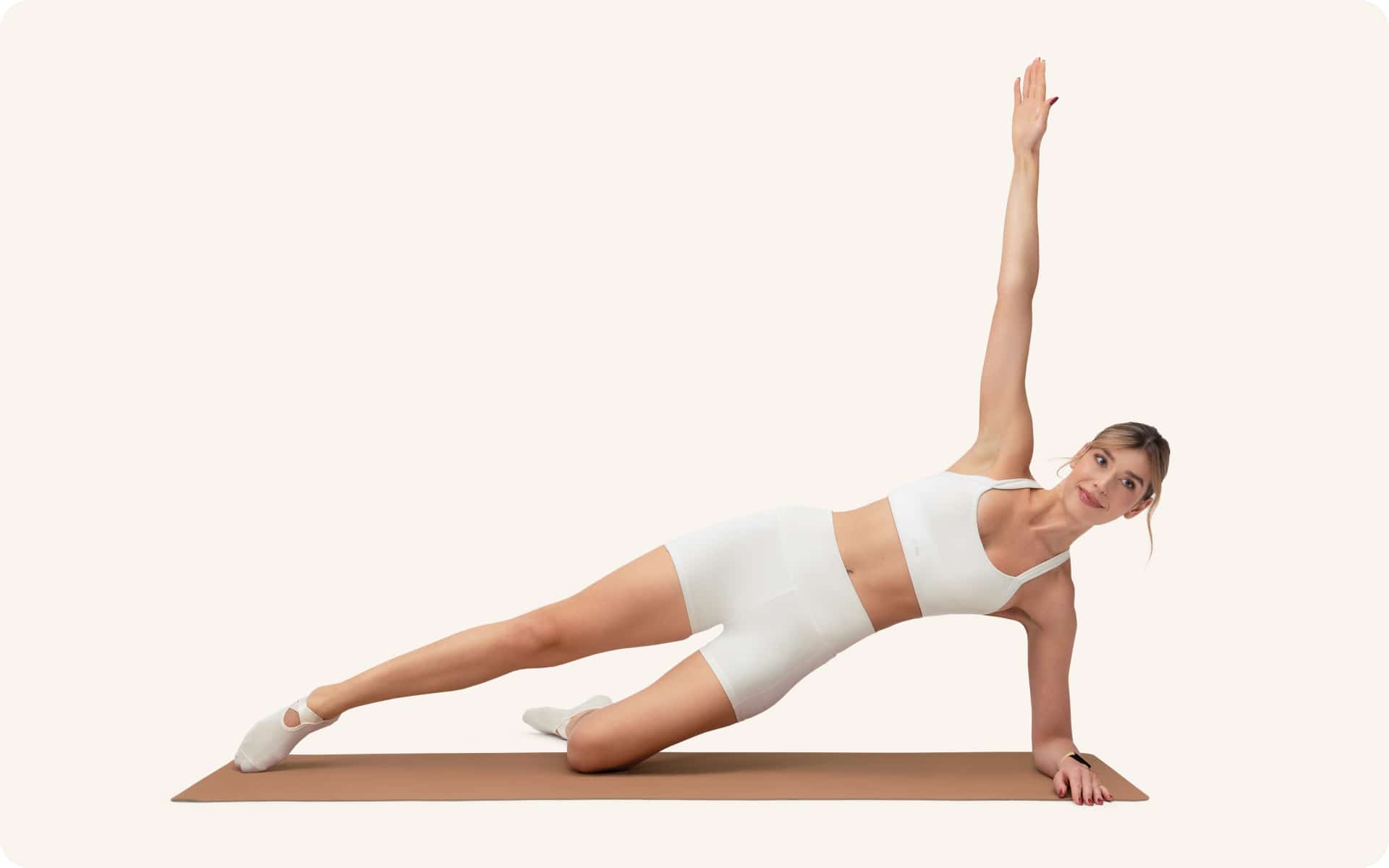
Why it’s good for recovery: This exercise challenges hip and core stability in a different plane of motion, strengthening the glutes and outer thighs.
- How to do it: Kneel on the mat and place one hand on the floor for support, extending your other leg out to the side. Lift the extended leg to hip height. Kick it forward on an inhale and sweep it back on an exhale, keeping your torso stable. Repeat on the other side.
How Long Does It Take to Recover with Pilates?
Recovery isn’t just about what you do in one session, it’s also about the cumulative effect on your body.
A single 20-minute Pilates recovery session can provide immediate relief from stiffness and improve blood flow. Physiologically, this helps clear metabolic byproducts from your muscles and kickstarts the repair process.
However, the real magic happens with consistency. Regularly incorporating low-intensity Pilates into your routine can improve your “energetic recovery ability”, as one study noted (8).
This means that over time, your body becomes more efficient at recovering from all types of exercise. Don’t expect one session to erase all the soreness, but think of it as an investment in your long-term athletic resilience.
Do You Need Rest Days When Doing Pilates?
Yes, you absolutely need rest days, even if your primary form of exercise is Pilates. All exercise creates a stressor on the body, which is necessary for adaptation and growth. Recovery is when those adaptations happen.
What to do on rest days depends on your Pilates intensity and frequency:
- High-Intensity Pilates: If you’re doing advanced or high-intensity Pilates sessions (e.g. dynamic reformer, HIIT Pilates), you’re breaking down muscle fibers just as you would with weight training. You need rest days to allow these muscles to repair and grow stronger (11).
- Low-Intensity Pilates: If you’re using Pilates solely for active recovery or gentle mobility, you can do it more frequently, even on your “rest” days from more intense training. However, it’s still wise to listen to your body and take days of complete rest when you feel fatigued.
- Frequency: Doing Pilates daily is possible if you vary the intensity. You might do a challenging workout one day, a recovery Pilates session the next, and focus on stretching on the third.
BetterMe offers a variety of workouts, recipes, challenges, and support tools to help you stay more consistent with your wellness routine. Explore the app to find features that fit your goals, preferences, and schedule.
Is Yoga or Pilates Better for Recovery?
Both yoga and Pilates can be useful for active recovery, but they have slightly different approaches. The right choice often comes down to your needs and preferences.
- Yoga for Recovery: Restorative or Yin yoga focuses on holding passive stretches for extended periods (3-5 minutes). This is excellent for increasing flexibility and calming the nervous system. The emphasis is on letting go and allowing gravity to deepen the stretch. It’s an incredibly meditative and passive approach to recovery (12).
- Pilates for Recovery: Recovery Pilates focuses on gentle, controlled movements that build stability while improving mobility. The emphasis is on core engagement and precise alignment, even in low-intensity exercises. It’s an active approach that reinforces good movement patterns while stretching and strengthening simultaneously (13).
Which should you choose?
- Choose Yoga if your primary goal is to release deep-seated tension, increase passive flexibility, and find mental stillness.
- Choose Pilates if your goal is to improve dynamic mobility, stabilize your core, and correct postural imbalances while actively recovering.
Ultimately, both can be part of a well-rounded recovery strategy. You might even alternate between them depending on how your body feels.
FAQs
Can I do active recovery instead of rest?
Active recovery should not completely replace passive rest. Your body needs days of complete rest for deep tissue repair and nervous system recovery. Think of active recovery as a supplement to your rest days, not a substitute. It may be most suitable on days when you feel a bit sore, but not completely exhausted.
Is walking good active recovery?
Yes, walking is one of the most accessible forms of active recovery. It’s low-impact, promotes blood flow, and helps clear metabolic waste without putting significant stress on the body (14).
A 20-30 minute walk at a comfortable pace is a great option for a recovery day.
Do muscles grow on rest days?
Yes, muscle growth (hypertrophy) primarily occurs during rest, not during exercise. Workouts create microscopic tears in your muscle fibers. During recovery, your body repairs these tears, which makes the muscles stronger and larger than they were before (11). This is why proper rest and nutrition are just as important as the training itself.
Is Pilates good active recovery?
Yes, low-intensity Pilates is excellent for active recovery. It improves circulation, enhances mobility, and promotes autonomic nervous system recovery (13), all of which help reduce muscle soreness and prepare your body for your next workout. Just make sure to keep the intensity low and focus on restorative movements.
The Bottom Line
Pilates is far more than just a challenging workout. When it’s used thoughtfully, it’s a powerful tool for active recovery that can help you bounce back faster, move better, and build a more resilient body. By focusing on low-intensity, mobility-focused sequences, you can reduce muscle soreness, improve posture, and calm your nervous system.
Whether you’re a competitive athlete, a weekend warrior, or someone who is just starting their fitness journey, integrating recovery Pilates into your routine can be a game-changer. Listen to your body, choose your exercises wisely, and embrace the power of mindful movement on your path to peak performance.
DISCLAIMER:
This article is intended for general informational purposes only and does not serve to address individual circumstances. It is not a substitute for professional advice or help and should not be relied on for making any kind of decision-making. Any action taken as a direct or indirect result of the information in this article is entirely at your own risk and is your sole responsibility.
BetterMe, its content staff, and its medical advisors accept no responsibility for inaccuracies, errors, misstatements, inconsistencies, or omissions and specifically disclaim any liability, loss or risk, personal, professional or otherwise, which may be incurred as a consequence, directly or indirectly, of the use and/or application of any content.
You should always seek the advice of your physician or other qualified health provider with any questions you may have regarding a medical condition or your specific situation. Never disregard professional medical advice or delay seeking it because of BetterMe content. If you suspect or think you may have a medical emergency, call your doctor.
SOURCES:
- Comparison of Different Recovery Strategies After High-Intensity Functional Training: A Crossover Randomized Controlled Trial (2022, frontiersin.org)
- A Systematic Review on the Effectiveness of Active Recovery Interventions on Athletic Performance of Professional-, Collegiate-, and Competitive-Level Adult Athletes (2019, journals.lww.com)
- +Acute blood pressure response after Mat Pilates alone and combined with aerobic exercise (2024, sciencedirect.com)
- Impact of Active Recovery and Whole-Body Electromyostimulation on Blood-Flow and Blood Lactate Removal in Healthy People (2020, frontiersin.org)
- Effects of Pilates exercises on spine deformities and posture: a systematic review (2024, bmcsportsscimedrehabil.biomedcentral.com)
- Vagal modulation after training at different levels of the Pilates method (2025, sciencedirect.com)
- Effects of Core Stability Training on Deep Stabilizing Muscle Function and Neuromuscular Control (2025, mdpi.com)
- The ability of energy recovery in professional soccer players is increased by individualized low-intensity exercise (2022, journals.plos.org)
- A pilates-based physiological recovery strategy to enhance post-exercise recovery after high-intensity interval exercise (2025, sportpedagogy.org.ua)
- Pilates lessens pain and disability and improves quality of life in people with musculoskeletal conditions in the extremities: A systematic review (2025, sciencedirect.com)
- The Importance of Recovery in Resistance Training Microcycle Construction (2024, pmc.ncbi.nlm.nih.gov)
- Yoga as Part of Sports Medicine and Rehabilitation (2023, journals.lww.com)
- A pilates-based physiological recovery strategy to enhance post-exercise recovery after high-intensity interval exercise (2025, researchgate.net)
- Comparison of Different Recovery Strategies After High-Intensity Functional Training: A Crossover Randomized Controlled Trial (2022, frontiersin.org)
 By
By 
 Reviewed by
 By
By 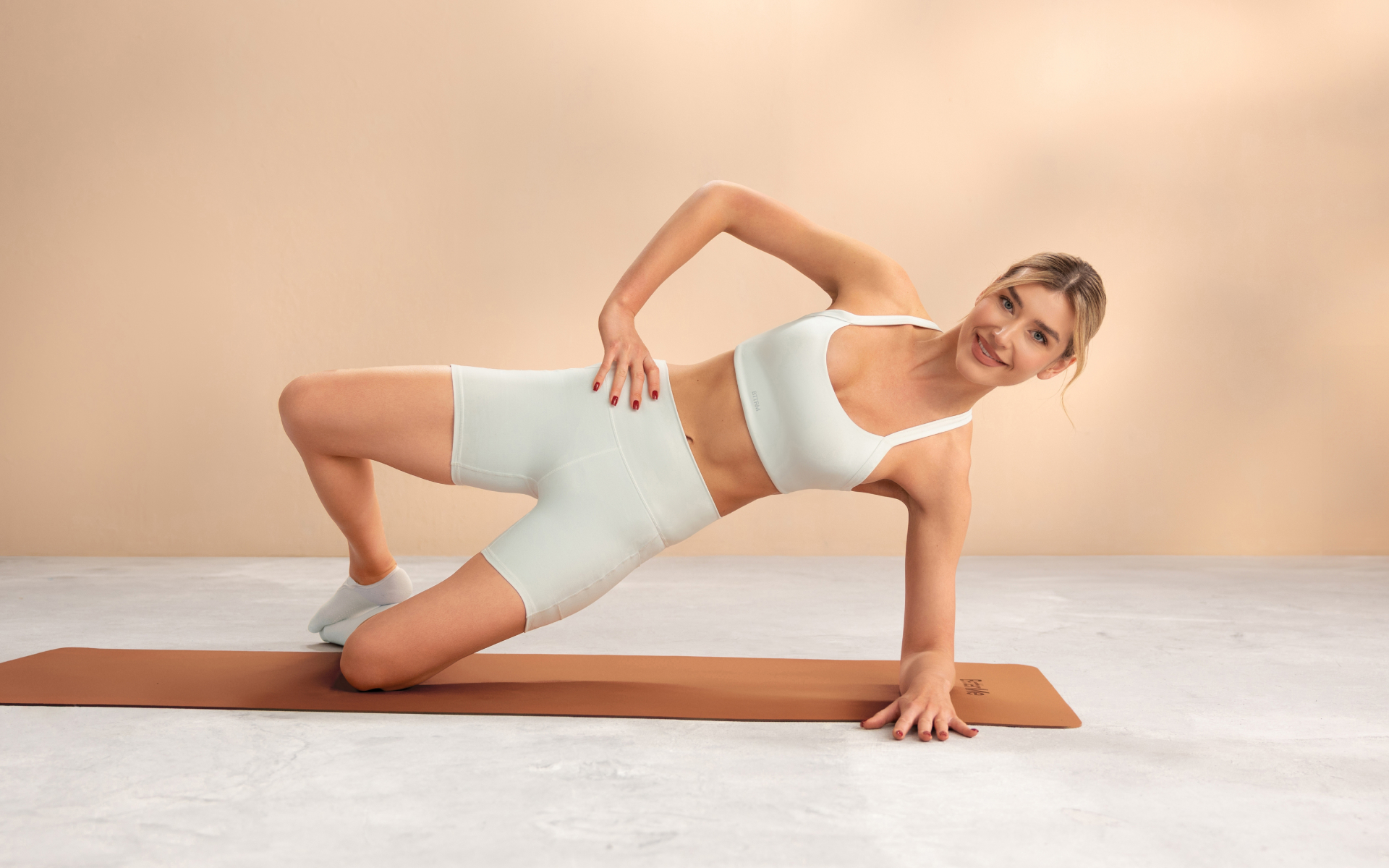
 Reviewed by