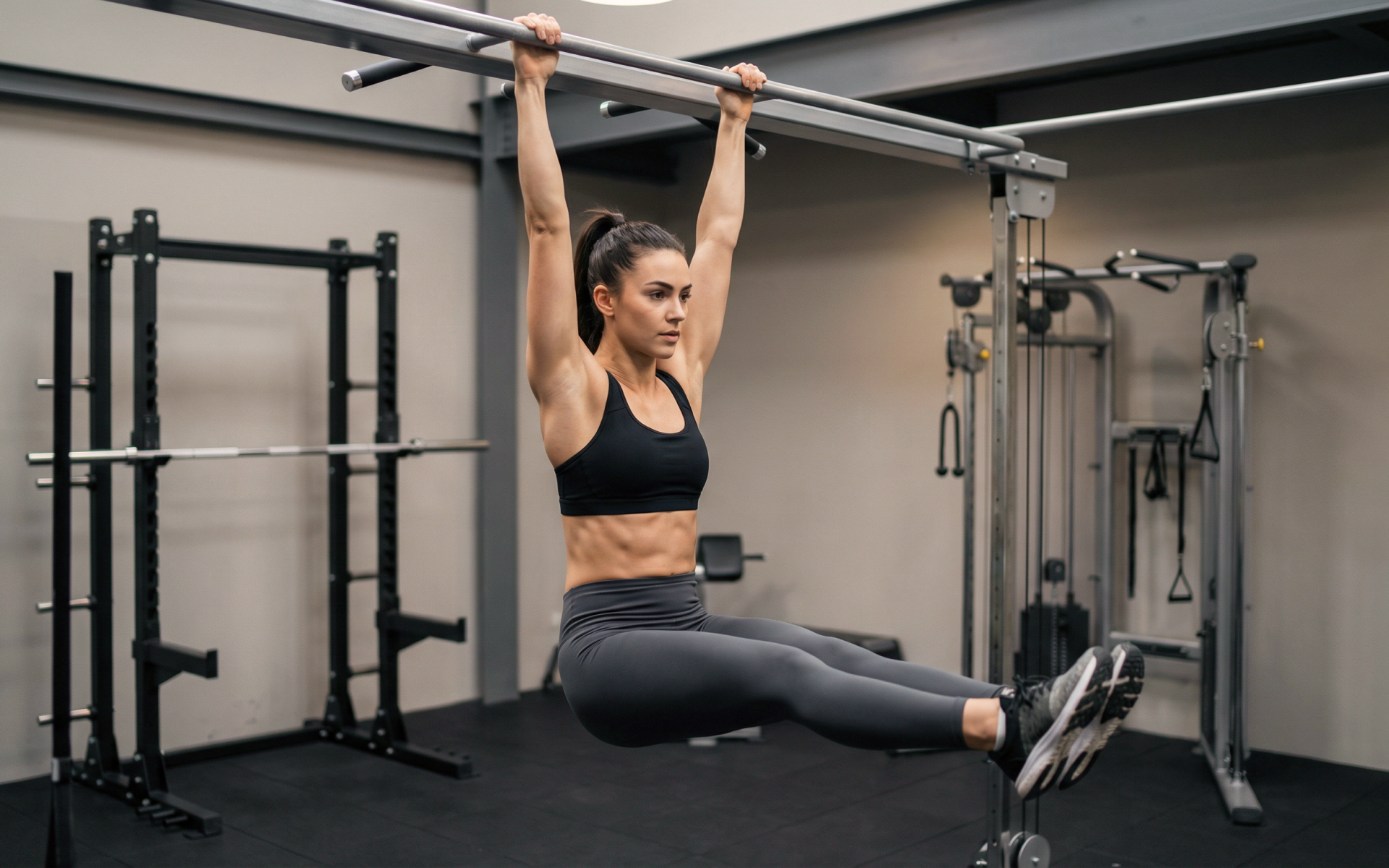
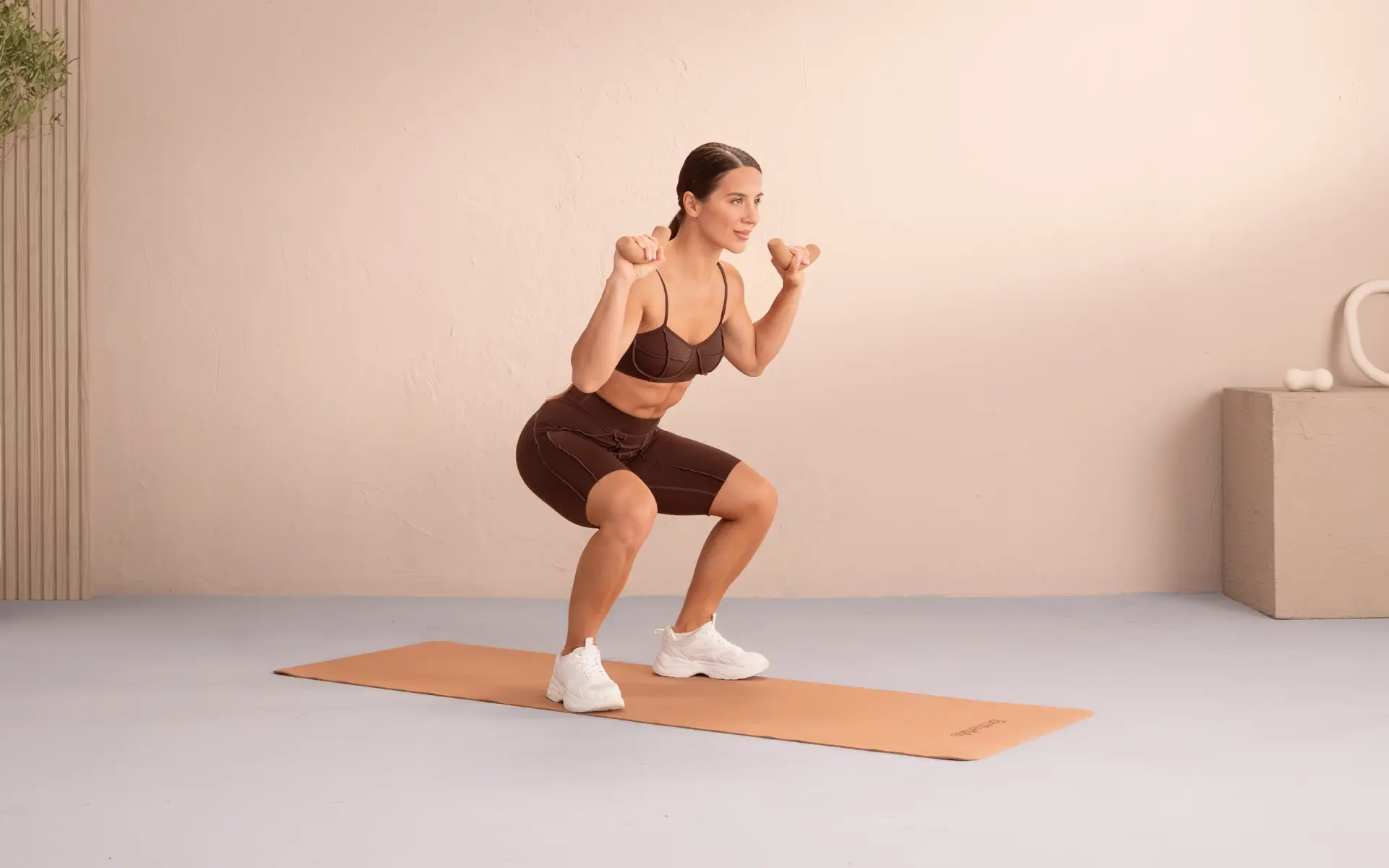
A 30-day abs and squat challenge is a month-long plan that pairs squats with core exercises. For many people, it works well with 3 focused sessions each week, plus lighter recovery and rest days.
A 30-day abs and squat challenge is simply a structured month of squats plus core work, spread across the week. It won’t spot-reduce belly fat, but it can support strength, coordination, and consistency over time. This guide is for beginners and returning movers who want a clear, doable plan without guesswork or pressure. It matters because a good structure helps you build a habit you can actually keep.
Here, you’ll find a full schedule, warm-up options, step-by-step exercises, core cues, progressions, rest guidance, and answers to common questions.
What Can a 30-Day Abs Squat Challenge Realistically Help You Develop?
A 30-day abs and squat challenge can realistically help you develop better squat form, stronger trunk control, and more lower-body endurance over four weeks. It also supports a repeatable routine.
Here’s what a well-planned month may improve:
- Squat technique: Cleaner depth, better balance, steadier knees
- Core bracing awareness: Learning to stiffen your trunk under load
- Local muscular endurance: Quads, glutes, and abs lasting longer
- Work capacity: Handling more total reps with control
- Movement confidence: Feeling steadier during daily tasks
This kind of core strength challenge is less likely to transform your physique in 30 days. Visible abs depend mostly on overall body composition, sleep, nutrition, and total activity, not one plan.
Some research has suggested that squats recruit trunk muscles meaningfully, particularly as load or fatigue rises (1). So think of this month as a skill, endurance, and habit block. Individual results vary, and your timeline depends on your starting point, recovery, and consistency.
Why Does This Challenge Combine Squats with Core Exercises?
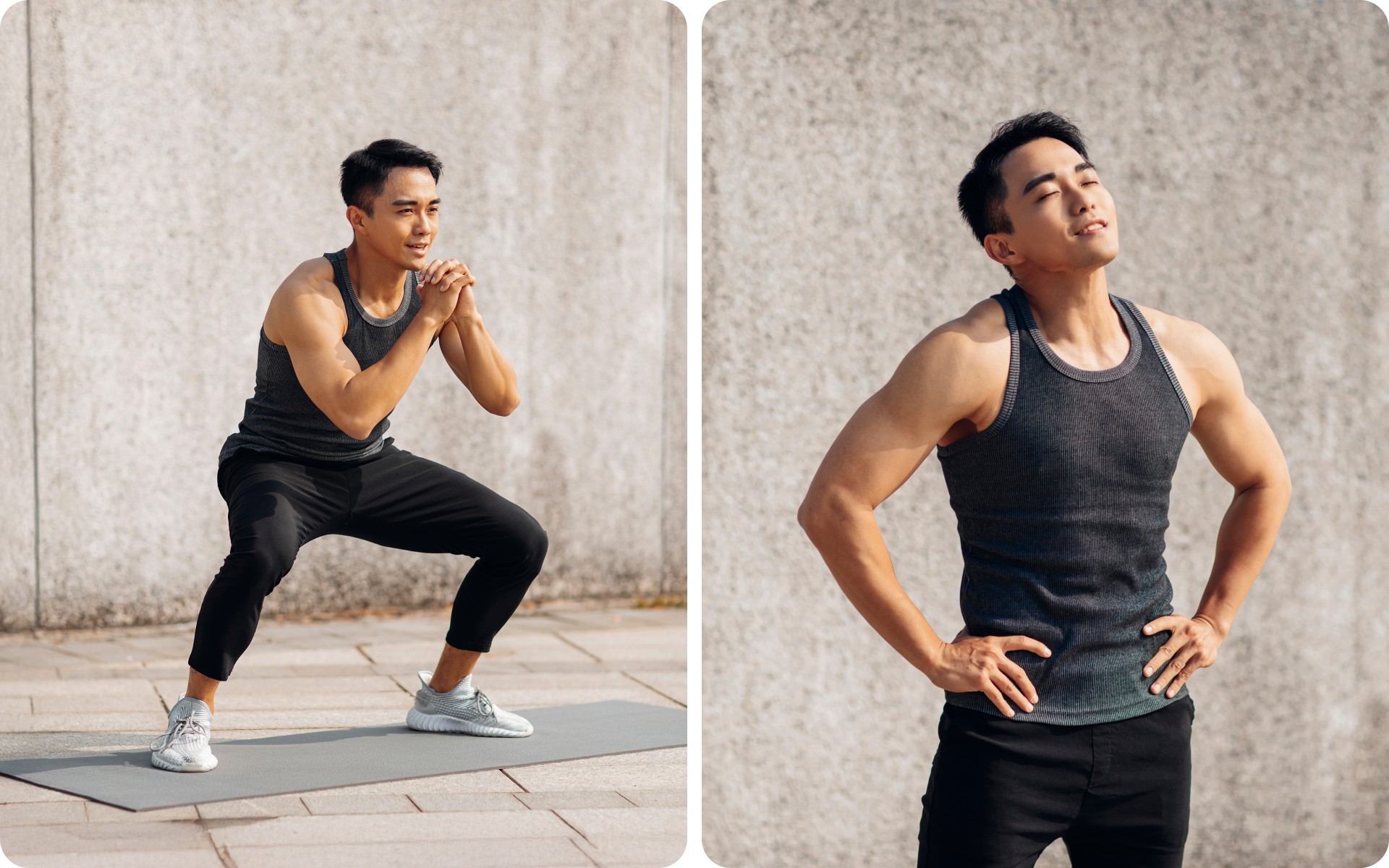
This challenge combines squats with core exercises because squats already demand trunk stability (2), and targeted core work strengthens the qualities that support better squatting (3). The two pair naturally.
During a squat, your core helps you (3):
- Resist unwanted spinal flexion or extension
- Keep your ribcage and pelvis aligned
- Stay balanced under load
- Create trunk stiffness for steadier movement
An abs and squats workout blends these needs. The squat trains your legs and hips (4). The core work helps you hold your shape while your legs do the heavy lifting (5).
A smart squat and core workout usually covers a few core “jobs”:
- Anti-extension: Plank, dead bug
- Anti-rotation: Bird dog, suitcase holds
- Lateral stability: Side plank
In plain English, the 30-day ab challenge helps you stay solid so your squats feel more controlled. That’s why pairing them tends to make more sense than training either one alone.
Read more: 50 Squats A Day Challenge: What Do Experts Have To Say?
How Can You Check Your Starting Level Before Day 1?
You can check your starting level with a short movement screening of squat quality, core control, and single-leg balance before Day 1. Stop any test that feels painful.
1. Squat Screen
Do 10 slow bodyweight squats with your arms overhead. Check that:
- Your heels stay down
- Your knees track over your feet
- Your back stays fairly neutral
- Your arms stay elevated overhead
- You reach a comfortable depth without pinching
2. Core Control Screen
Try these short holds and reps:
- Front plank: 20-45 seconds
- Side plank: 15-30 seconds per side
- Dead bug: 6 reps per side, low back quiet
- Bird dog: 6 reps per side, no trunk twist
3. Single-Leg Check
Test balance and control with:
- 5 controlled sit-to-stands per side from a chair
- Or a 20-second single-leg balance per side
Use this simple rubric to pick your starting point for this beginners’ squat challenge:
| Level | Squat quality | Plank hold | Recommended starting focus |
|---|---|---|---|
| Level 1 | Shaky or uncomfortable | Under 20 secs | Week 1 pace, extra practice |
| Level 2 | Decent and controlled | 20-40 secs | Standard Week 1 start |
| Level 3 | Solid and symmetrical | 45+ secs | Standard start, faster progress |
Your level guides your first week. Individual results vary, so adjust as you learn.
How Should You Warm Up Before Each Workout?
You should warm up for 5-8 minutes before each workout with light movement, mobility, and a few activation drills. This helps your body prepare for squats and core work (7).
A short, repeatable warm-up tends to work well. Here are three options depending on your time and setting.
| Warm-up option | Time | Suitable for | Example moves |
|---|---|---|---|
| Quick reset | 5 mins | Busy days | March in place, 5 bodyweight squats, dead bug |
| Standard flow | 6-8 mins | Most sessions | Bike or walk, hip hinge, world's greatest stretch, glute bridge |
| Extended prep | 8-10 mins | Stiff mornings | Light cardio, ankle rocks, thoracic rotations, squat holds |
A simple sequence looks like this:
- General heat (2 mins): Brisk walk, marching, or light step-ups
- Mobility (2-3 mins): Ankle rocks, hip hinges, thoracic rotations
- Activation (2-3 mins): Glute bridges, dead bugs, 5 slow squats
Before your working sets, try a quick brace cue: inhale gently, exhale, then tighten your trunk as if bracing for a light poke to the sides. That’s usually enough to feel ready.
Workouts, weight management tools, and recipe ideas come together in the BetterMe: Health Coaching app, giving you practical support for building a more consistent wellness routine.
What Does the Complete 30-Day Workout Schedule Include?
The complete 30-day workout schedule includes 3 focused squat and core days, 2 lighter recovery days, and 2 rest days each week. This structure supports steady progress without daily strain.
Here’s the weekly pattern for your squat challenge calendar:
| Day | Focus | Example activity |
|---|---|---|
| Day 1 | Squat skill + anti-extension core | Goblet squats, dead bug, plank |
| Day 2 | Recovery | 20-30-min walk or mobility |
| Day 3 | Volume squat + lateral core | Bodyweight squats, side plank |
| Day 4 | Rest | Full rest |
| Day 5 | Unilateral squat + anti-rotation core | Split squats, bird dog, carries |
| Day 6 | Recovery | Easy cardio or stretching |
| Day 7 | Rest | Full rest |
Repeat this 30-day workout plan for four weeks. Use days 29-30 to retest and take an easy day. This progressive squat workout gets slightly harder each week.
Here’s the full program in table form.
| Week | Workout A | Workout B | Workout C |
|---|---|---|---|
| Week 1 | Goblet squat 3×6-8; Tempo squat 2×5; Dead bug 3×6/side; Front plank 3×20-30 secs | Bodyweight squat 3×8; Split squat 2×6/side; Side plank 3×15-25 secs/side; Glute bridge 3×10 | Goblet squat 3×8; Box squat 2×6; Bird dog 3×6/side; Suitcase hold 3 rounds |
| Week 2 | Goblet squat 4×8; Tempo squat 3×5; Dead bug 3×8/side; Front plank 3×30-40 secs | Bodyweight squat 2×10; Split squat 3×8/side; Side plank 3×20-30 secs/side; Glute bridge march 3×8/side | Goblet squat 4×6-8; Step-up 3×6/side; Bird dog 3×8/side; Suitcase hold 3 rounds |
| Week 3 | Front-loaded squat 4×6; Pause squat 3×4-5; Dead bug 3×6/side; Plank taps 3 sets | Squat hold 2×20-30 secs; Rear-foot-elevated split squat 3×6-8/side; Side plank 3 sets; Hip bridge 3×8-10 | Squat 4×8; Lateral squat 3×6/side; Bird dog with pause 3×6/side; Offset hold 3 rounds |
| Week 4 | Squat 4×6-8; Tempo squat 2×4; Dead bug 3×8/side; Plank 3 sets | Bodyweight squat 2×12; Split squat 3×8/side; Side plank 3 sets; Single-leg bridge 3 sets | Squat 3×6 crisp reps; Assisted single-leg squat 2×6/side; Bird dog 3 sets; Carry 3 rounds |
Rest for 90 seconds between main squat sets and 30-60 seconds between core sets (8). Individual results vary, and your ideal pace depends on recovery and experience.
Exercise Instructions
Use these step-by-step notes for each move in the bodyweight squat workout and core plan.
Goblet Squat
- Hold a weight close to your chest with both hands.
- Set your feet about shoulder-width apart.
- Lower your hips down and back with control.
- Keep your heels down and chest tall.
- Stand back up by pressing through your feet.
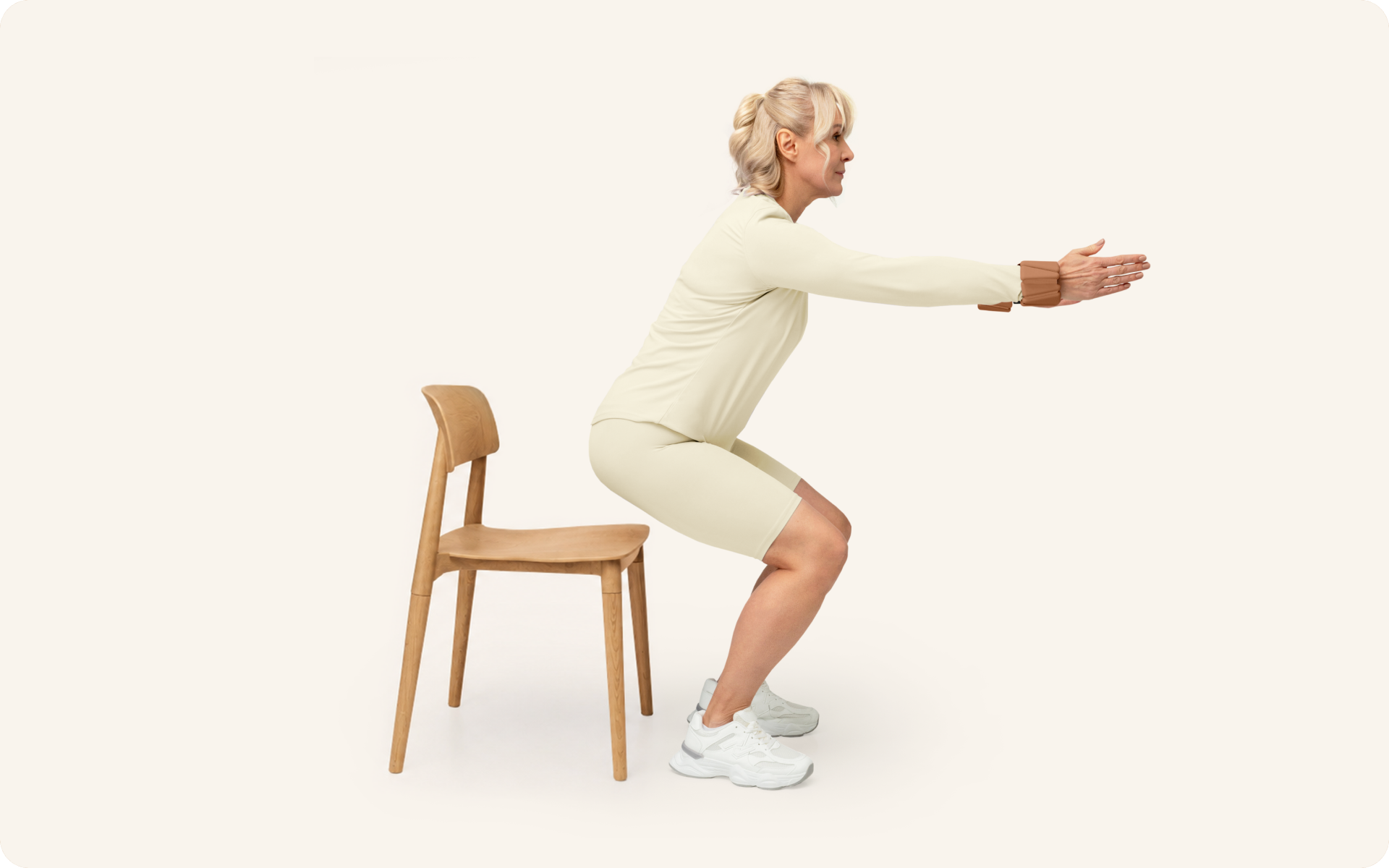
Bodyweight Squat
- Stand with your feet shoulder-width apart.
- Reach your arms forward for balance.
- Sit your hips back and down to a comfortable depth.
- Keep your knees tracking over your toes.
- Rise to standing with a steady tempo.
Tempo Squat
- Perform a bodyweight or goblet squat.
- Lower for a 3-second count.
- Pause briefly at the bottom.
- Stand back up with control.
- Repeat for the prescribed reps.
Box Squat
- Stand in front of a sturdy box or chair.
- Sit your hips back until you lightly touch the box.
- Keep your weight on your feet, not fully resting.
- Stand back up without bouncing.
- Control each rep.
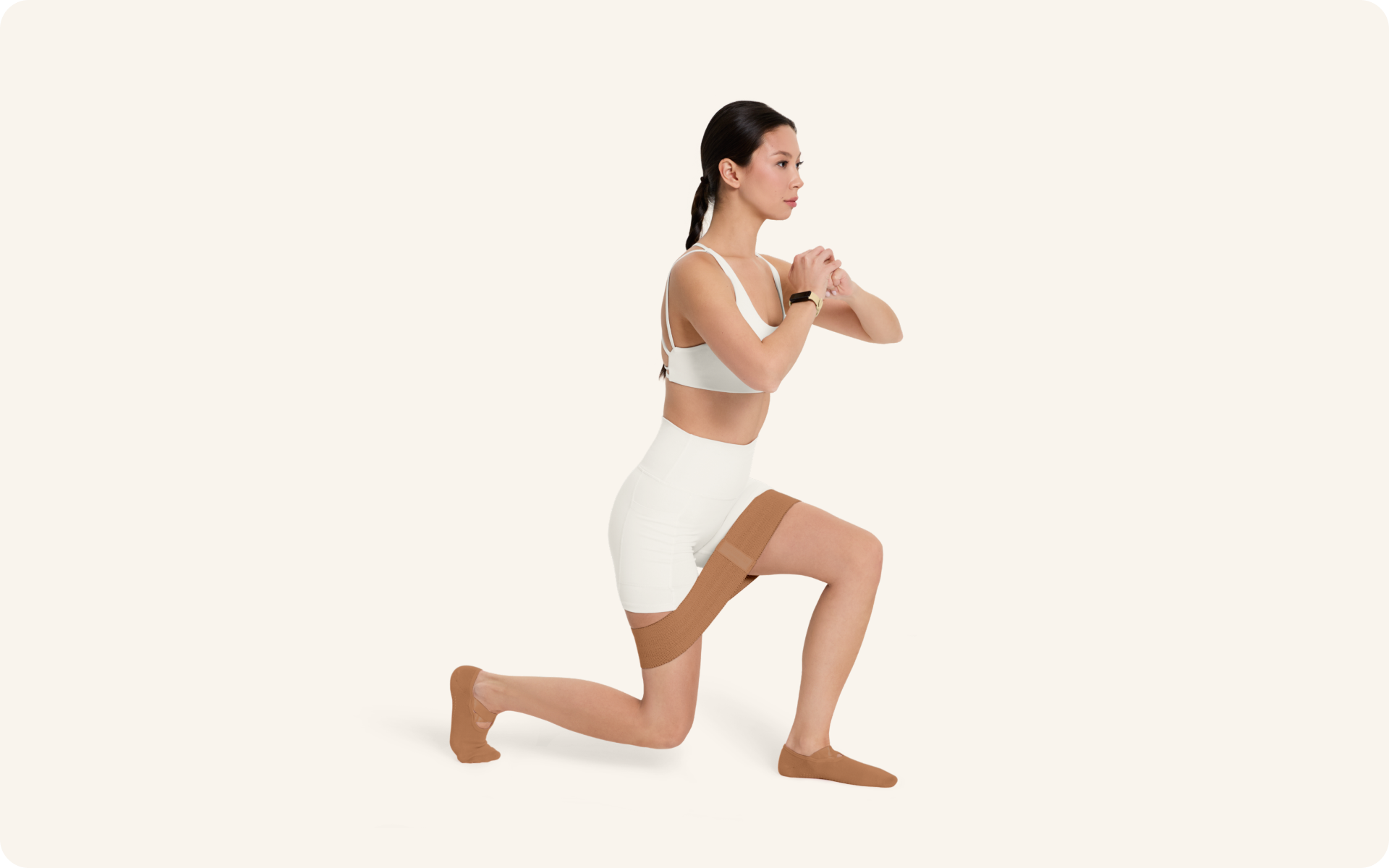
Split Squat
- Step one foot forward and one foot back.
- Lower your back knee toward the floor.
- Keep your front heel down.
- Rise back up through your front leg.
- Finish all reps, then switch sides.
Rear-Foot-Elevated Split Squat
- Place your back foot on a low bench or step.
- Keep your front foot flat and forward.
- Lower your hips down with control.
- Press up through your front leg.
- Complete reps, then switch sides.
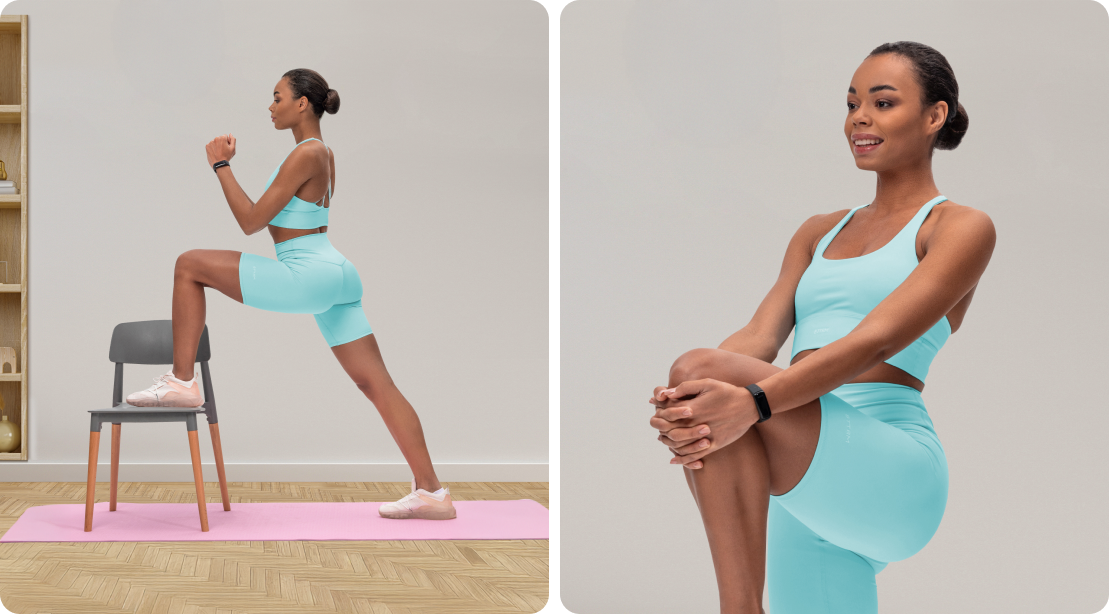
Step-Up
- Stand facing a sturdy step or low box.
- Place one foot fully on the step.
- Press up until your leg is straight.
- Lower back down with control.
- Repeat, then switch sides.
Pause Squat
- Lower into your squat.
- Hold the bottom position for 1-2 seconds.
- Stay braced and steady.
- Stand back up smoothly.
- Repeat for your target reps.
Lateral Squat
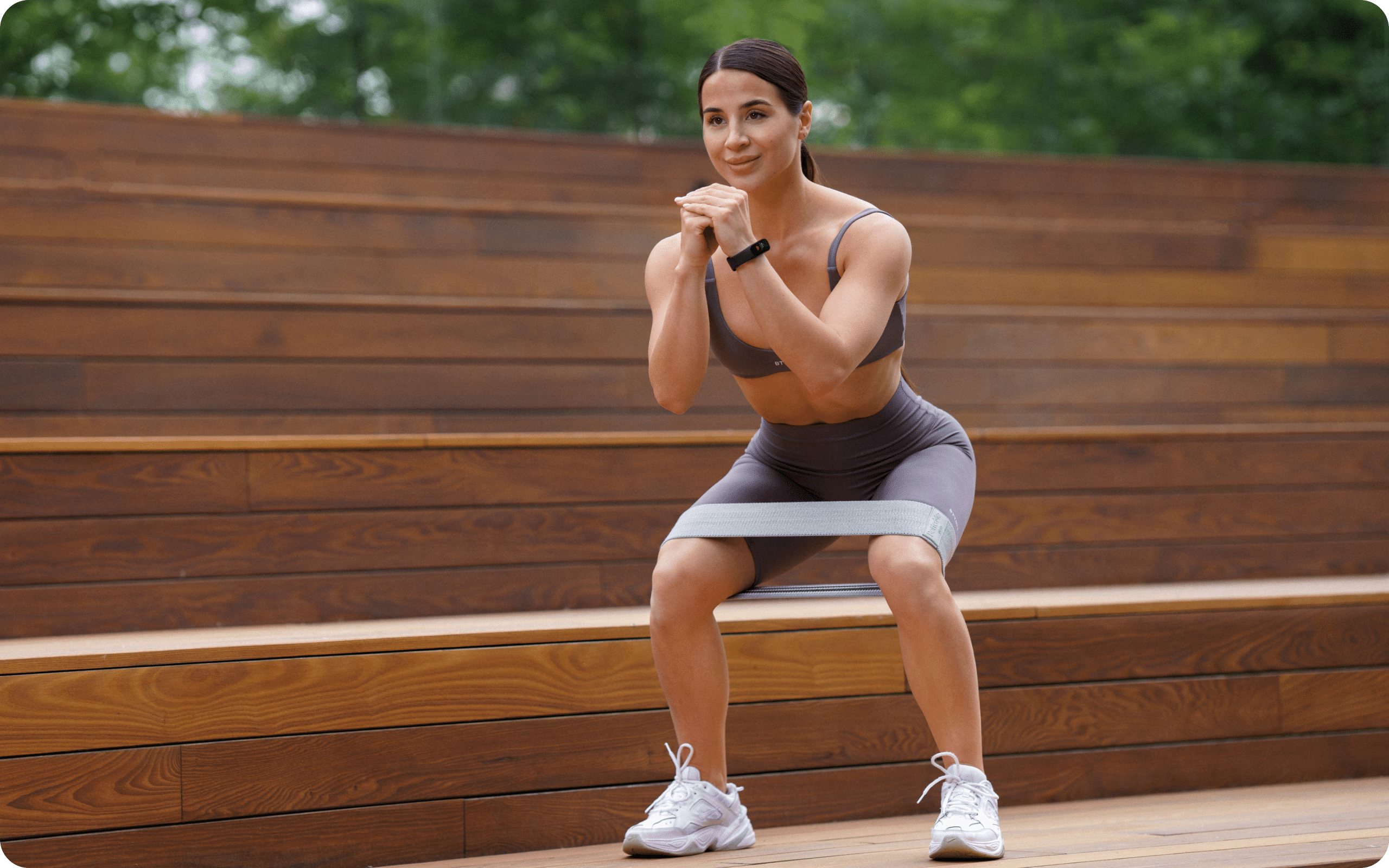
- Stand with a wide stance.
- Shift your weight to one side, bending that knee.
- Keep the other leg fairly straight.
- Return to center with control.
- Alternate sides.
Assisted Single-Leg Squat
- Hold a support like a rail or strap.
- Balance on one leg.
- Lower your hips down as far as comfortable.
- Use the support for balance, not full pulling.
- Rise up, then switch sides.
Glute Bridge
- Lie on your back with your knees bent.
- Set your feet flat, hip-width apart.
- Press through your heels to lift your hips.
- Squeeze your glutes at the top.
- Lower with control.
Single-Leg Bridge
- Lie on your back with your knees bent.
- Extend one leg or lift one foot slightly.
- Press through the grounded heel to lift your hips.
- Keep your hips level.
- Lower down, then switch sides.
Dead Bug
- Lie on your back, your arms reaching up.
- Lift your knees to a 90-degree angle.
- Slowly lower one arm and the opposite leg.
- Keep your lower back still on the floor.
- Return and switch sides.
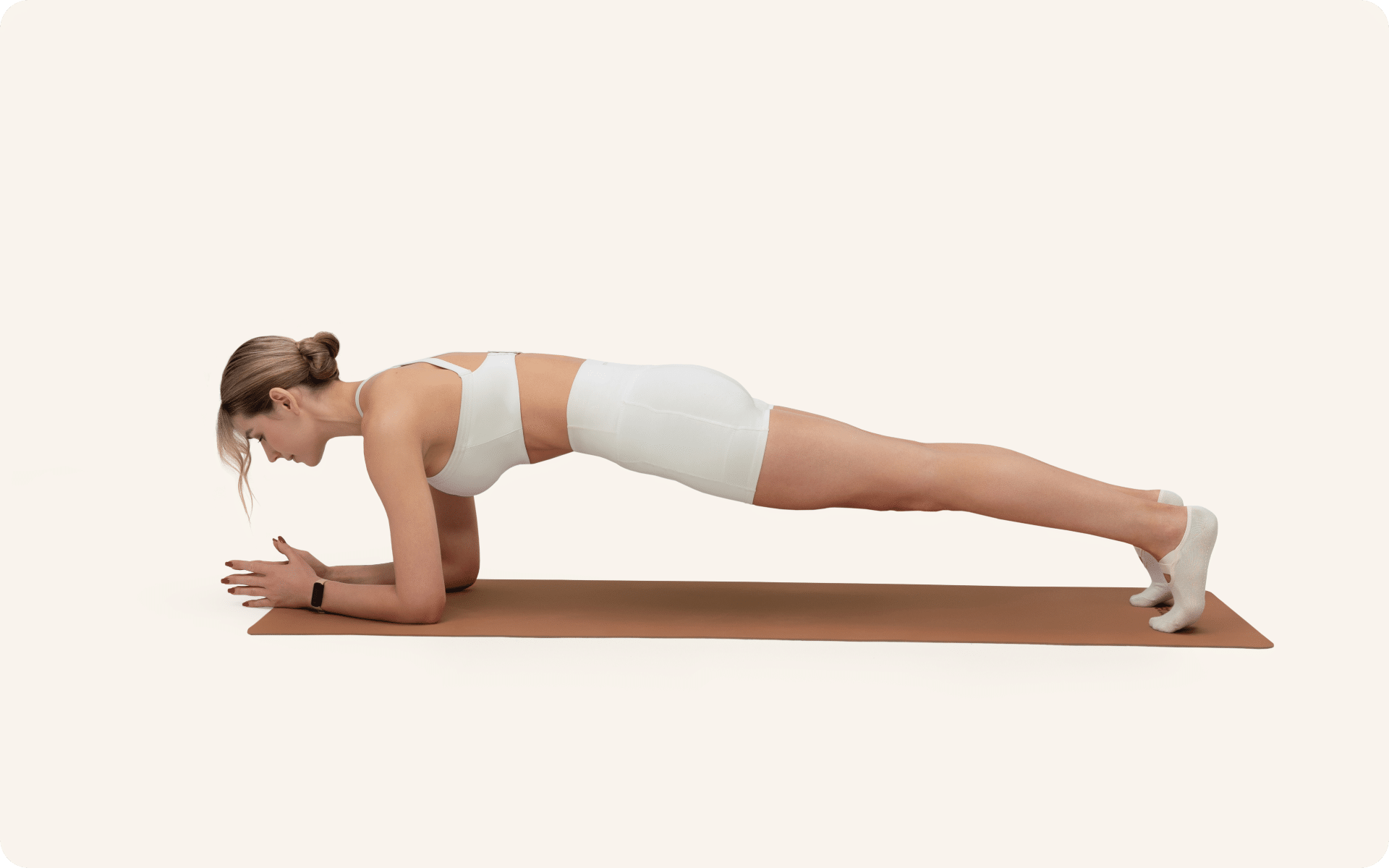
Front Plank
- Rest on your forearms and toes.
- Keep your body in a straight line.
- Brace your trunk gently.
- Avoid letting your hips sag or pike.
- Hold for the set time.
Side Plank
- Lie on one side with your forearm under your shoulder.
- Stack or stagger your feet.
- Lift your hips into a straight line.
- Hold steady and breathe.
- Lower down, then switch sides.
Bird Dog
- Start on your hands and knees.
- Reach one arm forward and the opposite leg back.
- Keep your trunk still—no twisting.
- Return with control.
- Alternate sides.
Suitcase Hold or Carry
- Hold a weight in one hand at your side.
- Stand tall with your shoulders level.
- Brace your core against the uneven load.
- Hold in place or walk slowly.
- Switch sides.
These core endurance exercises pair well with your squats to round out the plan.
Read more: How Many Squats A Day Will Give You That Peach Booty Look?
How Should You Engage Your Core During the Ab Exercises?
You should engage your core by bracing gently around your whole trunk, not by sucking your belly in. This will help you stay stable during each move.
It should feel like a firm, stable midsection with steady breathing. You want the movement to come from your limbs, not from bending your back.
A few things to avoid:
- Holding your breath on easy reps
- Flaring your ribs upward
- Arching your low back during leg lowering movements
How Can You Modify the Exercises for Your Current Ability?
You can modify the exercises by choosing easier or harder variations that match your current ability on any given day. The goal is to keep good form.
Here’s a quick modification guide.
| Exercise | Easier option | Harder option |
|---|---|---|
| Squat | Box squat or partial range | Front-loaded or pause squat |
| Split squat | Shorter range, hold support | Rear-foot-elevated version |
| Plank | High plank on hands | Plank with shoulder taps |
| Dead bug | Bent-knee version | Longer-lever reach |
| Side plank | Knees down | Full side plank with reach |
A helpful rule for this lower-body strength challenge: if you can’t hold the position you want, the move is too hard for today. Scale it down without guilt.
Looking for a joint-friendly add-on? You might enjoy the 30-Day Resistance Band Challenge for extra variety.
When Should You Use a Progression Instead of Adding More Repetitions?
You should use a progression instead of adding more repetitions once you can complete all your sets with clean form and about 2-3 reps left in reserve. This signals that you’re ready.
Progress when:
- Your tempo stays controlled
- Your form holds from first rep to last
- You’re near 10-15 quality reps on a move
- You aren’t compensating with back movement
For example, instead of grinding out 25 sloppy plank taps, switch to a longer-lever plank or add a short pause. This keeps your progressive squat workout challenging without messy reps.
General guidance:
- Beginners: Add a few reps first, then progress
- Intermediate movers: Change load, tempo, or variation sooner
- Core drills: Prioritize quality over big rep counts
Once high-rep bodyweight squats feel easy with great form, add load, slow the tempo, or try single-leg work rather than chasing 50+ reps.
BetterMe offers a variety of workouts, recipes, challenges, and support tools to help you stay more consistent with your wellness routine. Explore the app to find features that fit your goals, preferences, and schedule.
How Much Rest Should You Take Between Workouts?
You should take at least 24 hours between hard sessions, and often 48 hours before repeating the same movement pattern. This supports recovery and steadier progress (9).
Rest guidance for this squat and core plan (9):
- Between training days: 24-48 hours for the same pattern
- Between main squat sets: 90-180 seconds
- Between accessory sets: 60-90 seconds
- Between core sets: 30-60 seconds
- Between carries or holds: 45-75 seconds
Three focused sessions per week fit this rhythm well. If you still feel deep fatigue or heavy soreness, give it another day.
Building a daily movement habit doesn’t mean training hard every day. Light walks and mobility on off days count too. Individual results vary, so listen to how you feel.
Do you want to pair movement with mindful eating? The 30-Day Food Challenge is a gentle companion.
When Should You Stop an Exercise or End the Session?
You should stop an exercise or end the session immediately if you feel sharp pain, dizziness, numbness, or a sudden loss of control. Your form and comfort come first.
Stop the set if:
- Your knees cave and won’t correct
- Your heels lift repeatedly
- Your low back loses its position
- Your breathing and bracing fall apart
End the session early if:
- Every set is getting sloppier
- Discomfort is replacing effort
- You can’t hold the day’s target form
A clean, shorter workout beats a messy “challenge completed” badge. If discomfort feels ongoing or unusual, you should consider checking in with a qualified professional.
Are you new to structured plans overall? Try the 30-Day Fitness Challenge for Beginners for a gentle on-ramp.
FAQs
Do you need equipment for the 30-day abs squat challenge?
No, you don’t need equipment for the 30-day abs squat challenge, as bodyweight squats and floor-based core moves cover most of it. A single dumbbell or kettlebell can add options for goblet squats and carries later. A mat adds comfort. Start with what you have, and add load only when your form feels steady and controlled.
How long should each daily workout take?
Each workout should take about 20-35 minutes, including a 5-8 minute warm-up. Beginners may finish faster, while longer rest between sets can stretch it slightly. Recovery days are shorter, often just a 20-30-minute walk or light mobility. Keep your sessions focused, and prioritize quality reps over rushing to save a few minutes.
Can you divide the workout into two shorter sessions?
Yes, you can divide the workout into two shorter sessions if that fits your day better. For example, do squats in the morning and core work in the evening, each with its own quick warm-up. Two 10-15-minute blocks can feel more manageable than one longer session. Total effort matters more than doing it all at once.
What should you do if you miss a challenge day?
If you miss a challenge day, simply pick up where you left off rather than doubling up. This 30-day squat challenge is about consistency, not perfection. Missing one or two days won’t undo your progress. Shift your squat challenge calendar forward by a day, and keep your rest days intact so recovery stays balanced.
Can you combine the challenge with walking or other workouts?
Yes, you can combine the challenge with walking or light workouts, especially on recovery days. A 20-40-minute walk pairs well without adding much fatigue. If you add other strength training, watch your total load so squats and core work still feel controlled. Space intense sessions at least 24 hours apart when possible.
Should you perform the same number of squats and ab exercises?
No, you don’t need to perform the same number of squats and ab exercises, as they serve different roles. Squats often use 6-15 reps per set for strength and endurance (10). Many core drills use time-based holds, such as 20-45-second planks or 6-10 controlled reps. Match each exercise to its purpose rather than forcing equal counts.
Can you replace crunches with standing core exercises?
Yes, you can replace crunches with standing core exercises if that feels better for your body. Suitcase holds, carries, and anti-rotation drills challenge your trunk while standing. These options suit people who prefer less floor work. Choose moves that let you brace well and keep your back steady, and adjust the load or time to stay controlled.
Can you repeat the challenge after completing it?
Yes, you can repeat the challenge after completing it, ideally with slightly harder variations or a bit more load. Retest your squat and plank first to see your progress. Then start again using heavier goblet squats, longer holds, or single-leg moves. Repeating this core strength challenge helps turn a month-long plan into a lasting routine.
The Bottom Line
A 30-day abs and squat challenge gives you a simple, flexible way to build squat skill, core control, and lower-body endurance over four weeks. A well-run version leans on smart bracing, gradual progressions, and real rest rather than daily punishment reps. Your progress will depend on your starting point, recovery, and consistency, so individual results vary. Pick your level, move at your own pace, and enjoy watching what steady effort can build.
DISCLAIMER:
This article is intended for general informational purposes only and does not serve to address individual circumstances. It is not a substitute for professional advice or help and should not be relied on for making any kind of decision-making. Any action taken as a direct or indirect result of the information in this article is entirely at your own risk and is your sole responsibility.
BetterMe, its content staff, and its medical advisors accept no responsibility for inaccuracies, errors, misstatements, inconsistencies, or omissions and specifically disclaim any liability, loss or risk, personal, professional or otherwise, which may be incurred as a consequence, directly or indirectly, of the use and/or application of any content.
You should always seek the advice of your physician or other qualified health provider with any questions you may have regarding a medical condition or your specific situation. Never disregard professional medical advice or delay seeking it because of BetterMe content. If you suspect or think you may have a medical emergency, call your doctor.
SOURCES:
- Impact of resistance training status on trunk muscle activation in a fatiguing set of heavy back squats (2020, link.springer.com)
- Differences in trunk and lower extremity muscle activity during squatting exercise with and without hammer swing (2022, nature.com)
- Understanding the biomechanical influence of core contribution in squat: A systematic review (2025, journals.sagepub.com)
- A Biomechanical Review of the Squat Exercise: Implications for Clinical Practice (2024, pmc.ncbi.nlm.nih.gov)
- Effects of Core Training on Sport-Specific Performance of Athletes: A Meta-Analysis of Randomized Controlled Trials (2023, mdpi.com)
- The role of anti-core exercises in public health: a preventive approach to spinal health (2026, pmc.ncbi.nlm.nih.gov)
- Dynamic Warm-ups Play Pivotal Role in Athletic Performance and Injury Prevention (2024, 2024, pmc.ncbi.nlm.nih.gov)
- Give it a rest: a systematic review with Bayesian meta-analysis on the effect of inter-set rest interval duration on muscle hypertrophy (2024, frontiersin.org)
- Molecular Basis and Practical Applications of Training, Nutrition and Recovery for Maximum Gains in Lean Muscle Mass: A Narrative Review for Optimizing Muscular Hypertrophy (2026, researchgate.net)
- Loading Recommendations for Muscle Strength, Hypertrophy, and Local Endurance: A Re-Examination of the Repetition Continuum (2021, mdpi.com)
 Reviewed by

 Reviewed by