
No fixed number of sit-ups burns exactly 1,000 calories, but at about 20 to 30 calories per 100 sit-ups, you may need roughly 3,300 to 5,000. The count depends on your body weight, workout intensity, and duration. Sit-ups alone are an inefficient way to burn 1,000 calories, so combining them with other exercises is a smarter approach.
This article is for general informational purposes only and is not a substitute for individual medical or fitness advice. Calorie-burn estimates vary from person to person and should not be treated as exact figures. Speak with a doctor or certified fitness trainer before starting a new exercise routine.
Following exercise and diet plans is the key in your fitness journey and greatly impacts results. In 4 weeks users can typically expect to lose not more than 1-2 lbs per week. Individual results may vary.
Key takeaways
Burning 1,000 calories with sit-ups alone would take roughly 3,300 to 5,000 reps, so sit-ups work better as core training inside a mixed workout.
- Sit-ups strengthen your core but burn relatively few calories.
- Thousands of sit-ups aren’t the answer to a 1,000-calorie goal.
- Research has shown wide variation in how many sit-ups people can do, from 20 to 76 per minute (1).
- Combine exercises such as cardio, strength training, and sit-ups for a balanced workout.
- Everyday movement also counts and can contribute to your total daily calorie burn.
- About 100 sit-ups burn roughly 20 to 30 calories (2).
- For a 70 kg person, burning 1,000 calories takes about 2 hours of vigorous exercise (3).
Do sit-ups burn a lot of calories?
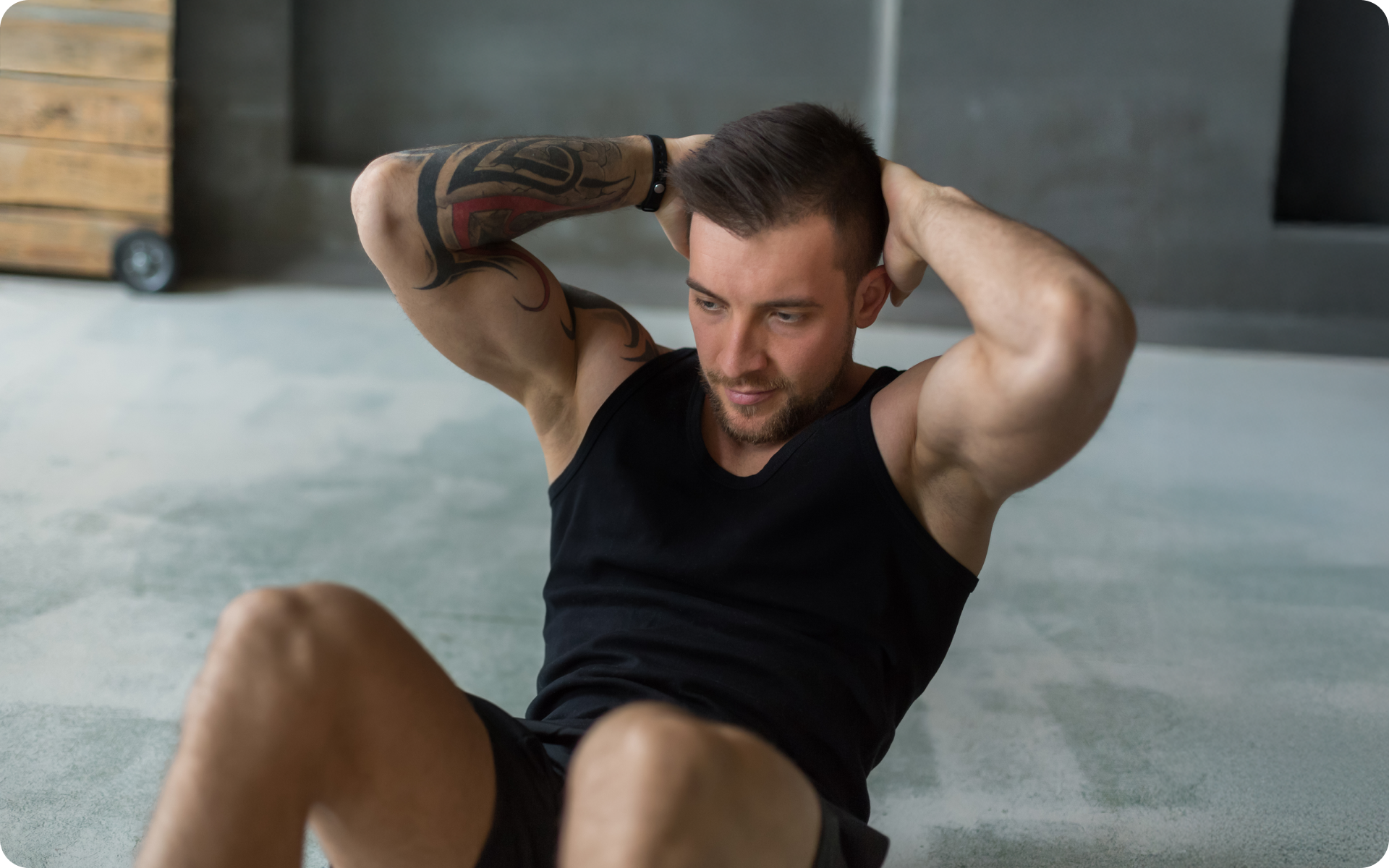
No, sit-ups don’t burn a lot of calories compared to cardio or full-body exercises (4). Sit-ups are a bodyweight exercise that targets the abdominal muscles by lifting your upper body toward your knees from a lying position (5, 6). They can strengthen your core, but they’re not an efficient choice for burning 1,000 calories a day or reaching 1,000 active calories a day through exercise alone.
How to do sit-ups
| Step | Movement | Duration |
|---|---|---|
| 1 | Lie on your back with your knees bent and your feet flat on the floor. | Not timed |
| 2 | Place your hands behind your head or across your chest, keeping your neck relaxed. | Not timed |
| 3 | Engage your core and lift your upper body towards your knees. | Part of each repetition. |
| 4 | Pause briefly at the top, then lower your upper body back to the floor with control. | Part of each repetition. |
| 5 | Rest before repeating the movement for your next set. | 30 to 60 seconds of rest between sets. |
Do 10 to 15 controlled reps per set, rest 30 to 60 seconds between sets, and use no equipment.
As your fitness improves, you can add reps or sets, but sit-ups alone are unlikely to be an efficient way to burn 1,000 calories. Combine them with cardio and other full-body exercises to burn more calories.
Read more: 8 Workouts That Burn 1,000 Calories
What affects how many calories you burn doing sit-ups?
Factors such as body weight, age, sex, height, exercise intensity, workout duration, and how much rest you take can all change how much energy your body uses. This is why two people can complete the same sit-up workout and burn different amounts of calories.
Bodyweight
Bodyweight is one of the biggest factors that affects energy expenditure (7). A heavier person generally uses more energy to move their body through the same exercise than someone who weighs less. This means that calorie estimates from sit-ups are rough guides, not exact figures.
Exercise intensity
The faster and more continuously you perform sit-ups, the more demanding the workout becomes, assuming that it allows you to perform more reps. However, it helps to keep good form as you speed up. Controlled, consistent repetitions can make the exercise challenging while helping you avoid unnecessary strain.
Workout duration
A longer workout gives your body more time to expend energy (8, 9). A few sets of sit-ups burn far fewer calories than a longer session that combines several movements. If your goal is a 1,000-calorie workout, build a varied session. It’s generally more practical than relying on sit-ups alone.
Rest periods
Rest matters too. Longer breaks reduce the amount of time you spend actively exercising, while shorter breaks can keep your heart rate elevated. The right rest period still lets you maintain a controlled form throughout the workout.
How many sit-ups can you realistically do in one workout?
Many beginners can do a few sets of 10 to 30 controlled sit-ups in one workout, and trained people may do hundreds across many sets. No one can tell you precisely how many sit-ups a day will burn 1,000 calories, because the number of calories you burn depends on your body and pace.
A full workout with several sets of sit-ups usually works well. A study found an average of 36 sit-ups per minute for men and 31 for women, with individual results ranging from 20 to 76 repetitions (1).
Sit-ups work well as a supporting exercise, not a race to rack up the biggest number. A beginner might start with 10 to 15 controlled repetitions per set, while someone with stronger abdominal endurance may comfortably perform 20 to 30 or more. The goal is to maintain good form throughout the workout rather than chasing a specific rep count.
Workouts, weight management tools, and recipe ideas come together in the BetterMe: Health Coaching app, giving you practical support for building a more consistent wellness routine.
How many sit-ups does it take to burn 1,000 calories?
Burning 1,000 calories would take roughly 3,300 to 5,000 sit-ups, though no fixed number fits everyone, because body weight, exercise intensity, and pace all change the total. A standard reference of activity energy costs lists estimates for moderate and vigorous calisthenics (3).
For example, a 70 kg (154 lb) person could burn about 280 calories per hour during continuous moderate calisthenics or 550 calories per hour during vigorous calisthenics. Reaching 1,000 calories would take roughly 3.5 hours at moderate intensity or about 2 hours at vigorous intensity. These are estimates for broader calisthenics activities, not sit-ups alone, and actual calorie expenditure will vary.
To calculate the calories, these sit-up figures assume about 20 to 30 calories per 100 sit-ups (2). Attempting this many sit-ups in one session isn’t recommended.
How many calories do 10, 100, or 200 sit-ups burn?
Using the estimate of about 20 to 30 calories per 100 sit-ups (2), 10 sit-ups burn about 2 to 3 calories, 100 burn about 20 to 30, and 200 burn about 40 to 60. Heavier people and faster paces tend to burn more per rep.
How long would you need to do sit-ups to burn 1,000 calories?
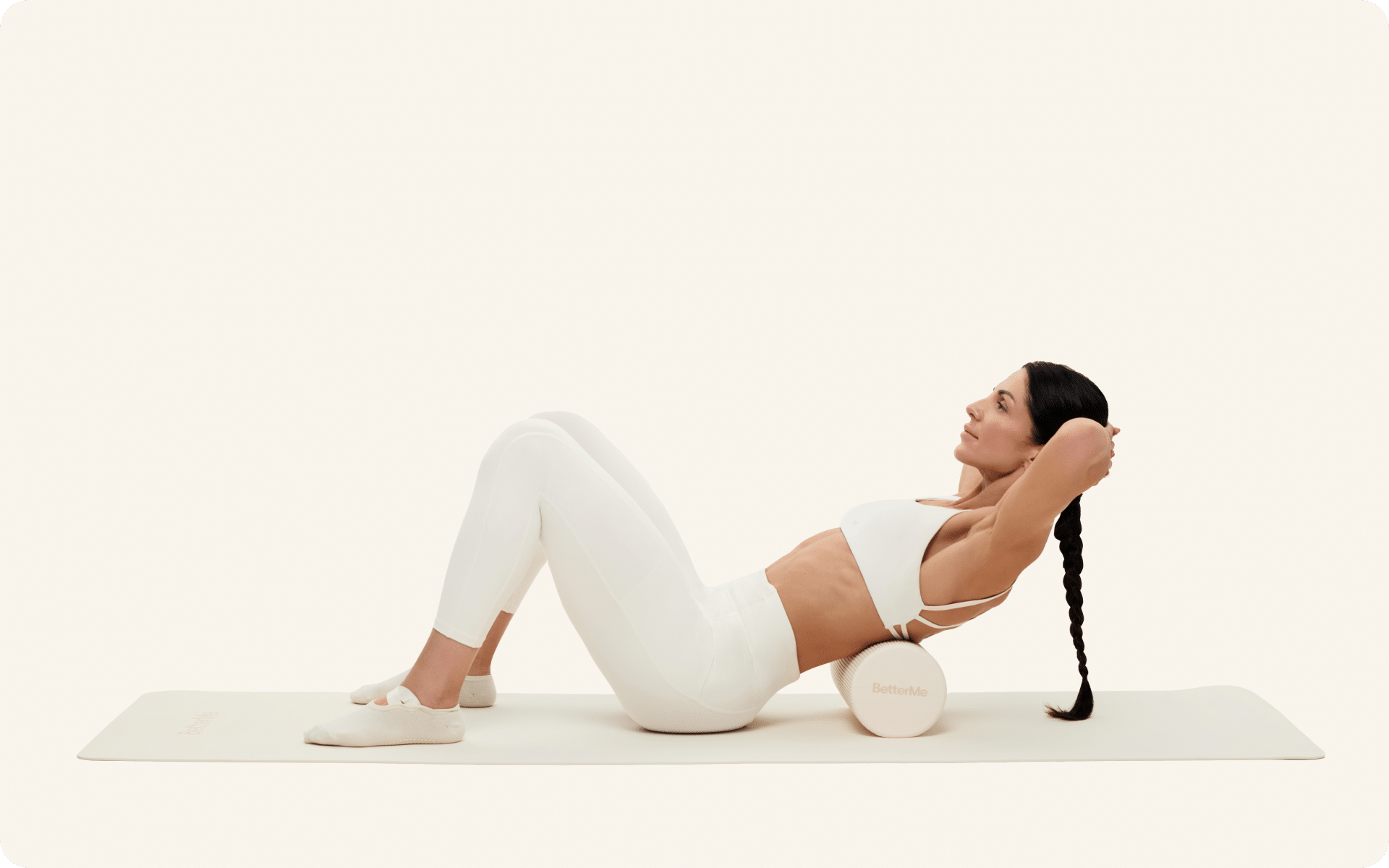
You would need to do sit-ups for a very long time to burn 1,000 calories, so this isn’t a realistic target for a single sit-up session. At about 30 to 40 sit-ups per minute, 3,300 to 5,000 sit-ups works out to roughly 83 to 167 minutes of nonstop sit-ups (1). This is a rough estimate, and your actual calorie burn and duration will vary with your body weight and exercise intensity.
Only highly trained people are likely to attempt this many sit-ups. A more practical approach is to combine shorter core workouts with cardio and everyday movement.
Read more: The Best Exercise To Lose Belly Fat: Get Rid Of The Dreaded Muffin Top Once And For All
How to practice sit-ups effectively
Consistency matters more than cramming hundreds of repetitions into one workout. Aim to practice sit-ups three to five times a week, giving your core enough rest between sessions. A mat or folded towel under your tailbone can also make the exercise more comfortable.
Try these sit-up variations to build strength and endurance:
| Variations | How to do it | Repetitions |
|---|---|---|
| Curl-up | Lie on your back with your feet close to your buttocks. Cross your arms over your chest. Keep your feet on the floor without holding them down. Lift your head and shoulders, pause for five seconds, then lower slowly. | 10 to 20 |
| Legs on a chair | Lie on your back with your feet and lower legs resting on a chair. Place your hands behind your head without pulling on your neck. Lift your head and shoulders, pause for five seconds, then lower yourself. Keep your feet in contact with the chair throughout. | 10 to 20 |
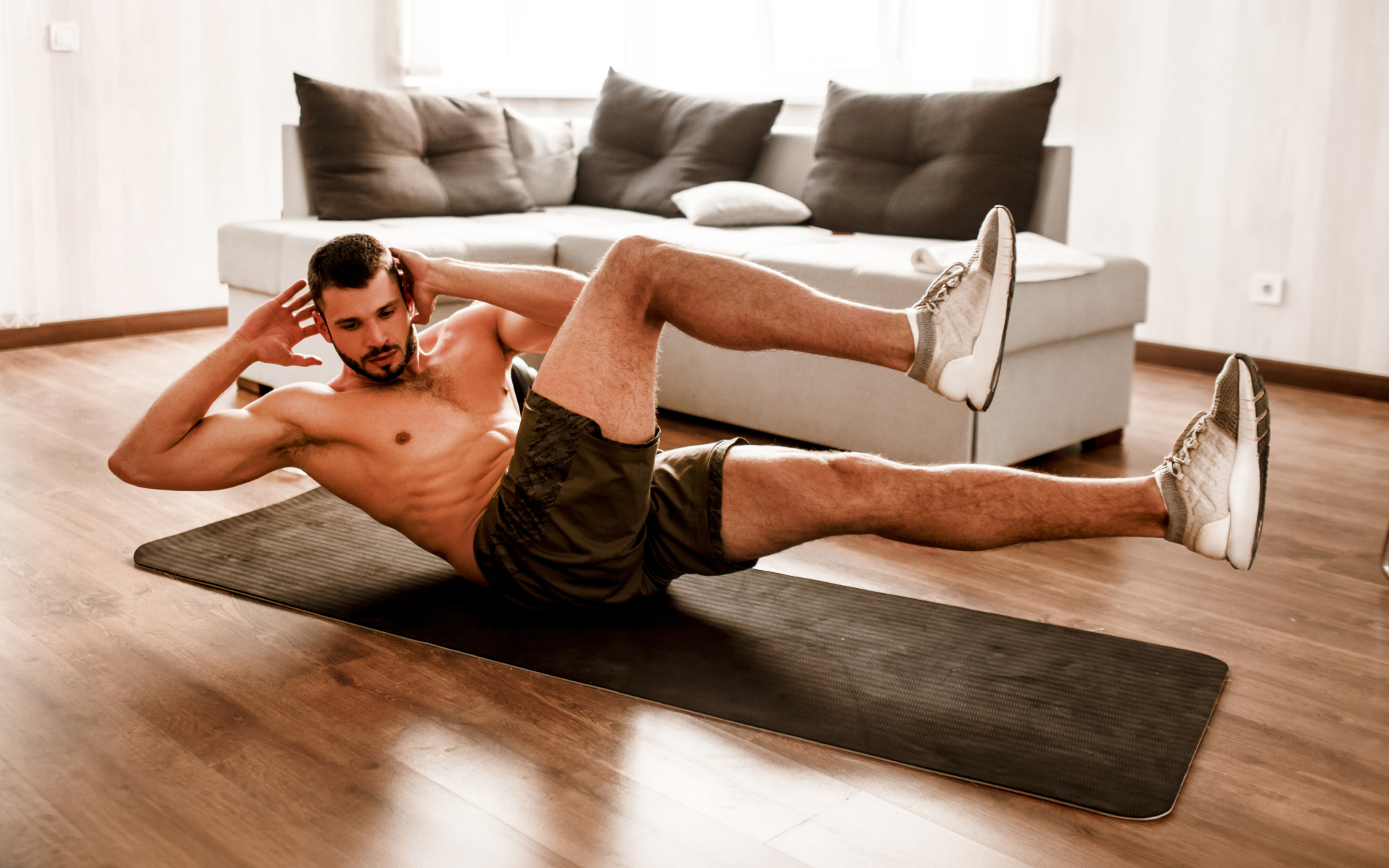
| Alternating elbow to knee | Lie on your back with your legs raised and your knees bent. Bring your left knee toward your chest while moving your right elbow toward it. Straighten your right leg without letting it touch the floor. Switch sides and repeat continuously. | 20 per leg |
| Slant-board sit-up | Lie on a slant board with your feet higher than your head. Bend your knees and keep your feet flat on the board. Place your hands behind your head. Sit up and bring your elbows toward your knees, then return to the starting position. | Up to 30 |
| Weighted sit-up | Choose one of the sit-up variations above. Hold a suitable weight against your chest. Perform the same controlled movement. Reduce the weight or repetitions if your form starts to break down. | Based on ability |
What other exercises can you combine with sit-ups for a higher calorie burn?
Combining sit-ups with cardio and full-body movements can create a more calorie-intensive workout. Exercises that involve more muscle groups or allow greater, consistent work will generally require more energy than sit-ups alone. This makes them a useful addition when you want to increase your total calorie burn.
Exercises to add to your sit-up workout
A varied workout to burn 1,000 calories at home can include exercises such as these:
- Jumping jacks: Raise your heart rate while working your legs, arms, and core (10).
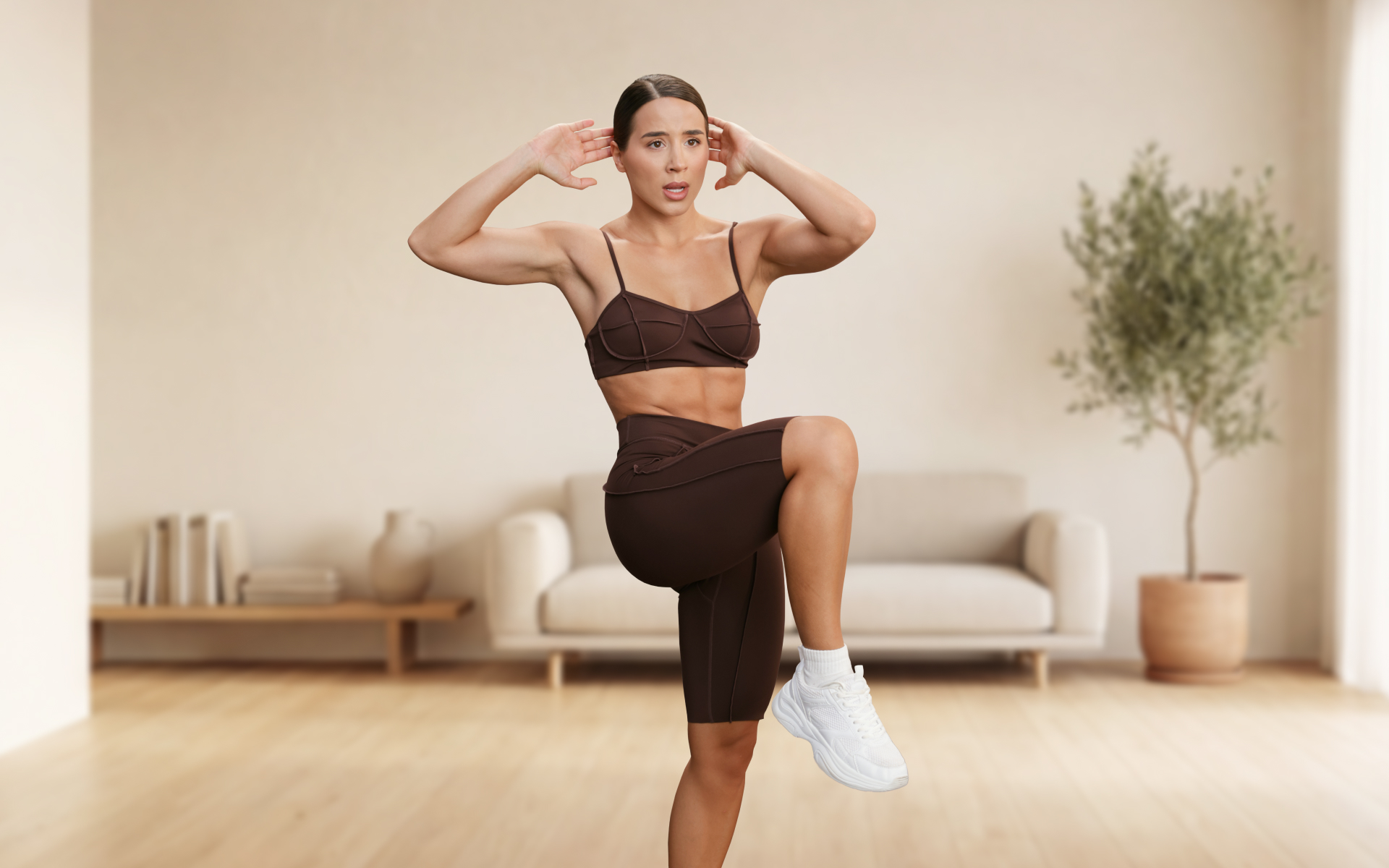
- High knees: Run in place while driving your knees toward your chest for a simple cardio lift (11, 12).
- Mountain climbers: Combine core work with a fast-paced movement that challenges your arms and legs.
- Burpees: Add a squat, plank, and jump for a demanding full-body movement.
- Squats: Strengthen your lower body while engaging large muscle groups (13).
- Lunges: Alternate legs to challenge your glutes, thighs, and balance (14).
- Jogging or running in place: A convenient way to add continuous cardio without leaving home.
What does a balanced 1,000-calorie workout look like?
For a 70 kg person, a 1,000-calorie workout usually means about 2 hours of vigorous mixed training (3). A balanced workout that burns 1,000 calories combines cardio, strength exercises, and core work instead of relying on a single movement.
Below is one sample session for experienced exercisers, with rest between activities:
| Workout component | Examples | Duration |
|---|---|---|
| Strength training | Compound moves such as squats, lunges, and push-ups, with supersets where appropriate | 45 minutes |
| HIIT | Intervals on an air bike, or high knees, jumping jacks, and mountain climbers | 15 minutes |
| Incline rucking | Walk uphill on a treadmill or an outdoor incline with a manageable backpack load | 30 to 45 minutes |
This routine takes approximately 90 to 105 minutes, excluding additional recovery time. It can provide a challenging combination of cardiovascular and muscular work, but it doesn’t promise a 1,000-calorie burn. Your actual expenditure may be considerably lower or higher depending on individual factors.
Caution: This program isn’t suitable for beginners or anyone who is unaccustomed to prolonged, high-intensity exercise. Build up your training volume gradually, use a manageable rucksack load and allow sufficient recovery between demanding sessions. Stop if you feel dizzy, have chest pain, or experience unusual shortness of breath.
BetterMe offers a variety of workouts, recipes, challenges, and support tools to help you stay more consistent with your wellness routine. Explore the app to find features that fit your goals, preferences, and schedule.
FAQs
Do sit-ups flatten your belly?
Not on their own. Sit-ups strengthen the abdominal muscles, but they don’t specifically burn belly fat. Changes around the stomach may come from reducing overall body fat while building core strength by exercising regularly (15), and a balanced diet usually supports this.
What will 20 sit-ups a day do?
20 sit-ups a day can help build core endurance, particularly if you’re new to abdominal exercises. However, 20 repetitions alone are unlikely to cause major changes in your body shape or calorie burn. As your strength improves, you can gradually increase the challenge by adding repetitions. You can also incorporate other exercises.
How many sit-ups burn 500 calories?
Roughly 1,700 to 2,500 sit-ups would burn 500 calories, based on about 20 to 30 calories per 100 sit-ups (2). The real number varies with body weight, pace, and fitness level, so combining core exercises with cardio is a more practical way to burn calories.
Is burning 1,000 calories a day through exercise realistic?
For trained people it is possible, but it usually means about 2 hours of vigorous exercise for a 70 kg person (3). That is not a realistic daily target for many beginners, so talk to a doctor before attempting high training volumes.
What is the fastest way to burn 1,000 calories?
Vigorous, mixed workouts that use large muscle groups, such as running, cycling, or circuit training, burn calories faster than sit-ups alone (3). Even so, it usually takes around 2 hours for a 70 kg person.
What happens if I do 50 or 100 sit-ups a day for 30 days?
Doing 50 sit-ups a day for 30 days gives you 1,500 repetitions, and 100 a day gives you 3,000. Either can improve your abdominal endurance. You may find sit-ups become easier and your core feels stronger, particularly if you’re starting from a low fitness level. Note that 1,500 sit-ups won’t automatically flatten your stomach or produce significant fat loss. If you’re aiming to get more noticeable results, combine core training with full-body exercise and healthy eating.
The bottom line
Burning 1,000 calories with sit-ups alone would take thousands of reps and well over an hour, so the number is more of a curiosity than a practical target. Sit-ups help build core strength, but they burn relatively few calories.
If you want to burn calories, combine sit-ups with cardio, full-body strength moves, and plenty of everyday movement for a more balanced workout.
DISCLAIMER:
This article is intended for general informational purposes only and does not serve to address individual circumstances. It is not a substitute for professional advice or help and should not be relied on for making any kind of decision-making. Any action taken as a direct or indirect result of the information in this article is entirely at your own risk and is your sole responsibility.
BetterMe, its content staff, and its medical advisors accept no responsibility for inaccuracies, errors, misstatements, inconsistencies, or omissions and specifically disclaim any liability, loss or risk, personal, professional or otherwise, which may be incurred as a consequence, directly or indirectly, of the use and/or application of any content.
You should always seek the advice of your physician or other qualified health provider with any questions you may have regarding a medical condition or your specific situation. Never disregard professional medical advice or delay seeking it because of BetterMe content. If you suspect or think you may have a medical emergency, call your doctor.
SOURCES:
The list covers research on sit-up energy cost and performance, energy expenditure and the 2024 Compendium of Physical Activities, reviews on exercise, warm-ups, squats, lunges, and abdominal fat, and two news reports. Each number in the article links to its source.
- Weekly cumulative extracurricular core training time predicts cadet physical performance: A descriptive epidemiological study (2023, sciencedirect.com)
- Here’s How Many Calories You Really Burn Doing 100 Sit-Ups (2024, carehospitals.com)
- 2024 Adult Compendium of Physical Activities: A third update of the energy costs of human activities (2024, pmc.ncbi.nlm.nih.gov)
- Scientific Challenges on Theory of Fat Burning by Exercise (2021, pmc.ncbi.nlm.nih.gov)
- The Sit-Up test battery: Calculation of the energy expenditure (2023, rua.ua.es)
- Population-based trends and distributional characteristics in sit-ups performance among school-aged girls in urban China over three decades (2025, nature.com)
- Energy Expenditure in Humans: Principles, Methods, and Changes Throughout the Life Course (2024, researchgate.net)
- Physical Activity Increases Total Daily Energy Use, Study Shows (2025, newswise.com)
- The Effect of Chronic Exercise on Energy and Fatigue States: A Systematic Review and Meta-Analysis of Randomized Trials (2022, frontiersin.org)
- Dynamic Warm-ups Play Pivotal Role in Athletic Performance and Injury Prevention (2024, arthroscopyjournals.onlinelibrary.wiley.com)
- effect of high knee running and high knee bounce skips exercises on running speed of 100 meters of athletic extracurricular participants in senior high school (2022, researchgate.net)
- Cardiovascular and cardiorespiratory effects of high-intensity interval training in body fat responders and non-responders (2024, nature.com)
- A Biomechanical Review of the Squat Exercise: Implications for Clinical Practice (2024, ijspt.scholasticahq.com)
- Lunges activate the gluteus maximus muscles more than back squats when both exercises are standardized (2021, researchgate.net)
- Lifestyle-Intervention-Induced Reduction of Abdominal Fat Is Reflected by a Decreased Circulating Glycerol Level and an Increased HDL Diameter (2020, onlinelibrary.wiley.com)
 Reviewed by
 Reviewed by

 Reviewed by