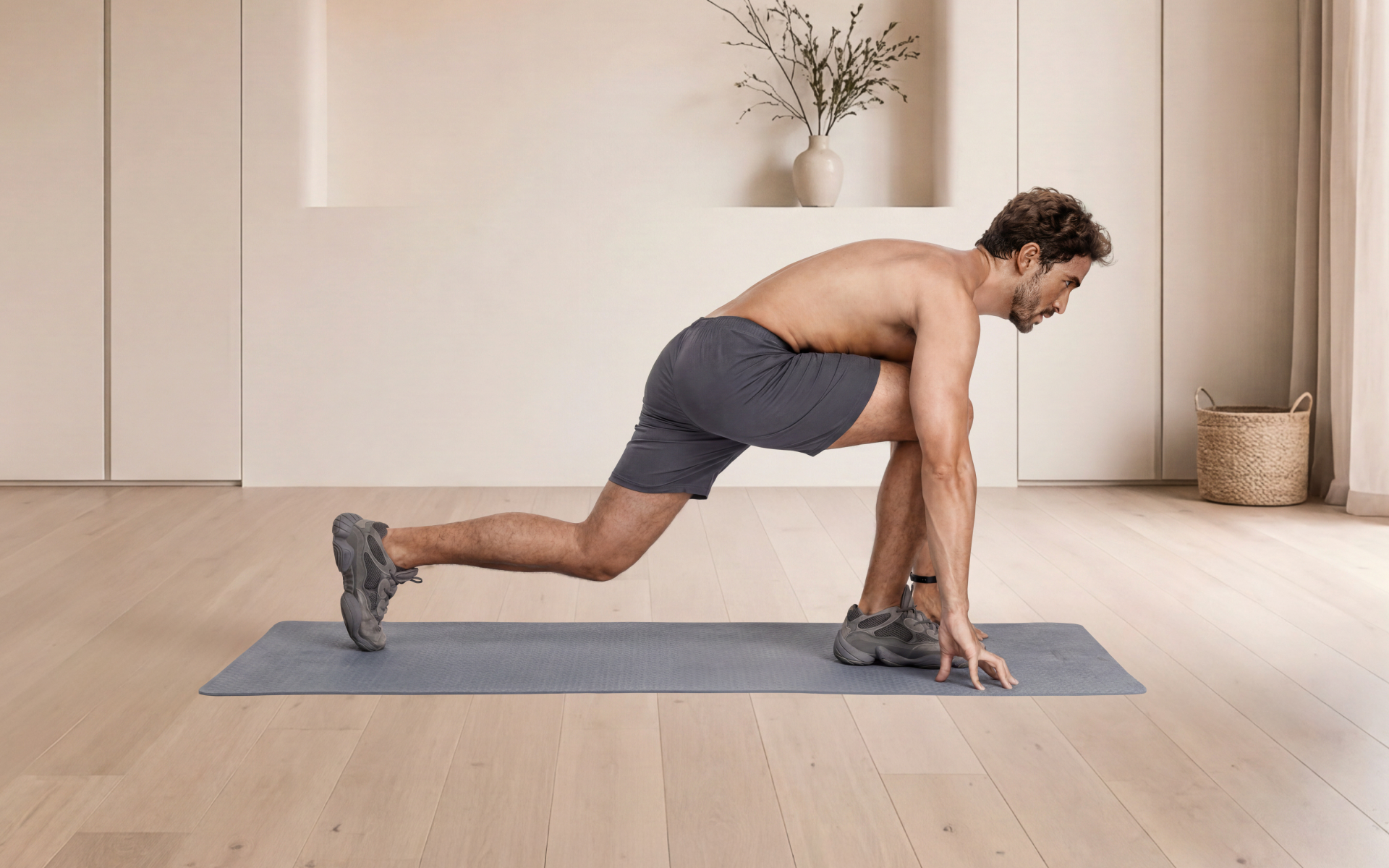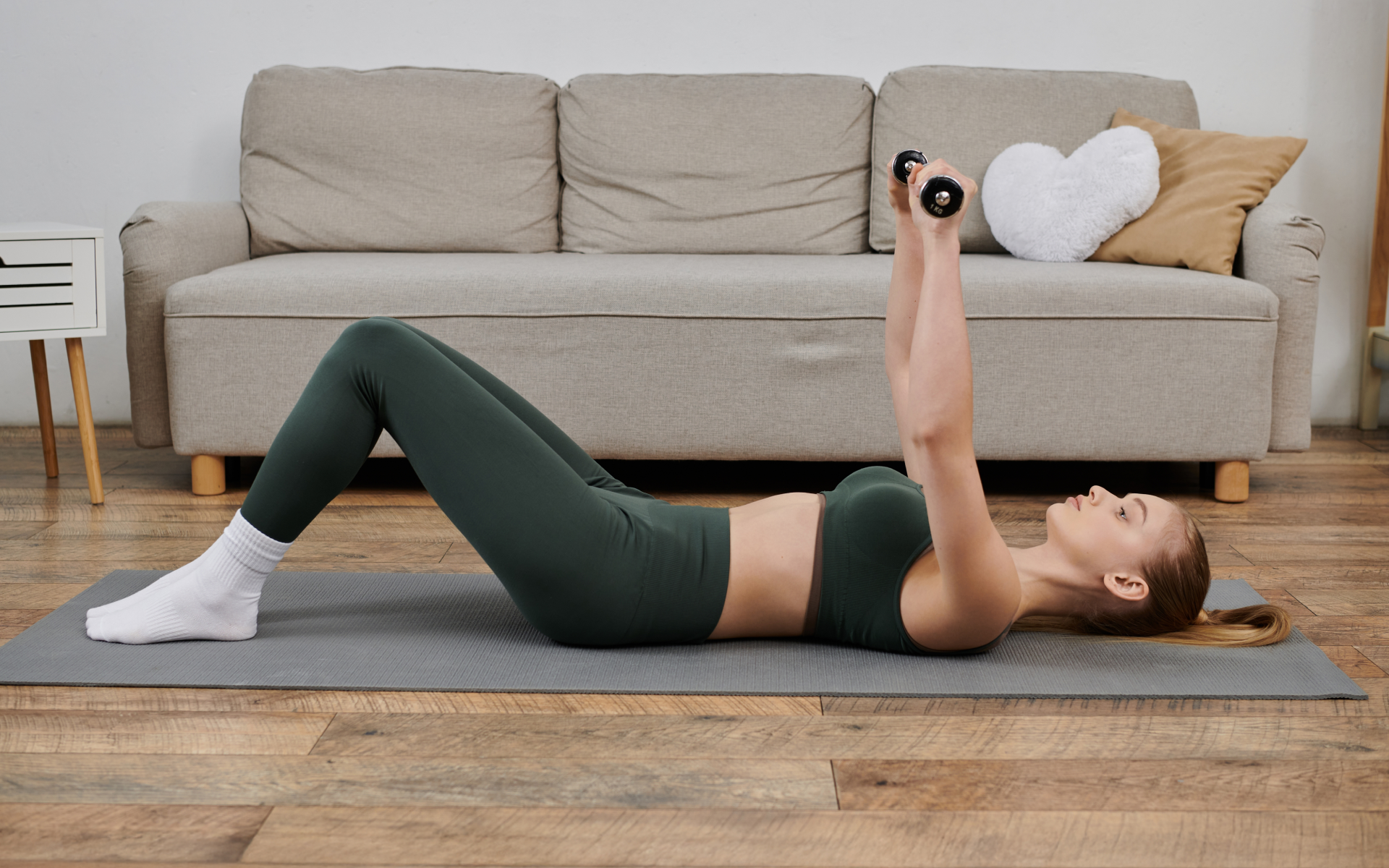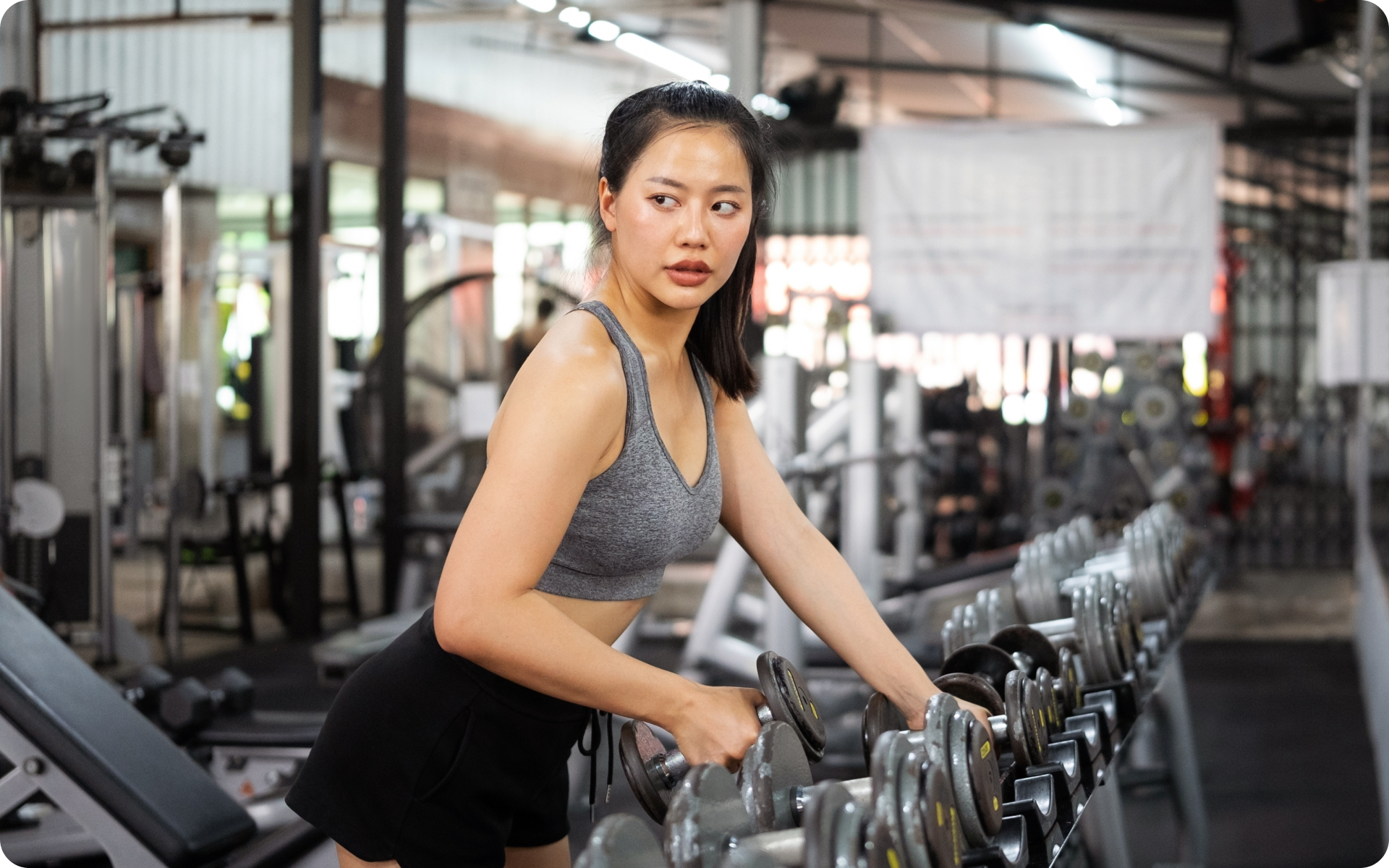
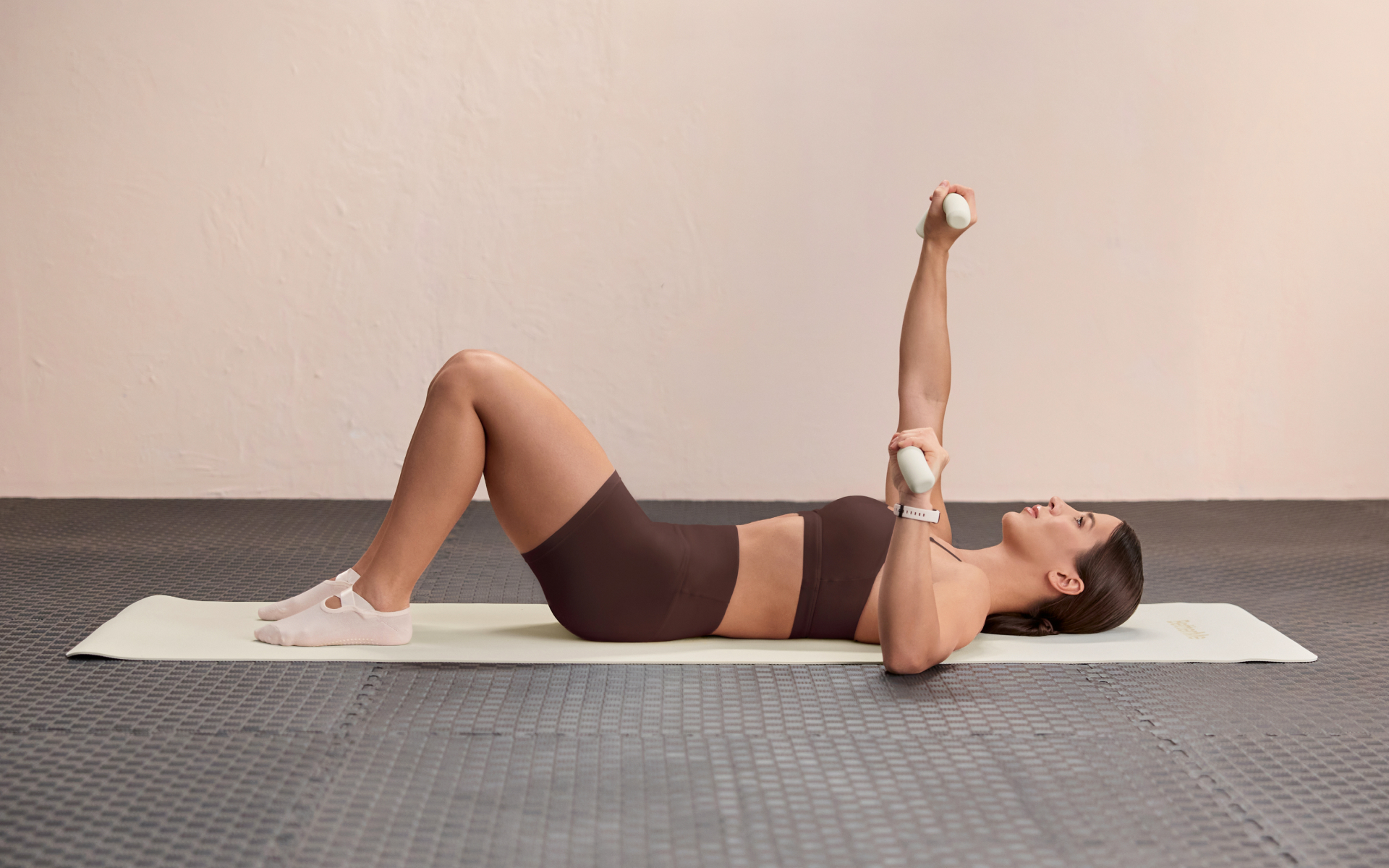
A 2-day workout routine can support strength and muscle growth for many people. This sample pairs upper- and lower-body movements in two weekly sessions, with different emphases each day. Use manageable effort and progress gradually. Covering movement patterns does not mean every muscle receives two direct sessions. Adjust the workload to your experience and recovery.
You might feel like two sessions a week isn’t enough to see real change. This worry is common and it keeps many people from starting at all. The good news is that a 2-day workout routine (two weekly gym or home sessions built around whole-body training) can go a long way when the effort and structure are right.
This guide is for busy people, beginners, and anyone who is short on time. You’ll learn how to plan your days, pick efficient exercises, and keep progressing. For options you can adapt to your space, explore our home exercise plan.
Are you ready to make two days count? Let’s build a plan you can actually stick to.
Key takeaways
- This sample routine uses 2 weekly sessions with 5 main exercises in each.
- Session emphasis: Day 1 emphasizes squatting and horizontal pressing and rowing. Day 2 emphasizes hip extension and vertical pressing and pulling.
- The sample covers movement patterns across the week, but not every muscle receives 2 direct sessions.
- Leave space between demanding sessions when possible, such as Monday and Thursday.
- Increase reps within a target range before adding weight, while maintaining controlled technique.
- Time-saving options: Trim accessories or sets before changing the split. Matching volume may still require long sessions.
Why can a 2-day workout schedule make sense?
A 2-day workout schedule can make sense because weekly workload often matters more than how many days you train. When total sets and effort stay similar, spreading them over two sessions can still support progress.
For reference (1):
- A rep is one complete movement.
- A set is a group of reps done back-to-back.
- A rest interval is the pause between sets.
Some research has suggested that training frequency plays a smaller role once weekly volume is matched (2). In plain terms, volume means the total amount of work you do, often counted as sets per muscle group per week.
Two sessions can work well because you can still:
- Cover upper- and lower-body movement patterns across the week
- Reach a meaningful weekly set count
- Recover enough between sessions
There’s also a hidden benefit: consistency. Some people stick to two sessions better than four. A twice-a-week workout plan you complete beats an ambitious plan you skip.
Read more: Full-body workout 3 times a week: routines, tips, and FAQs
Should you choose full-body workouts or an upper-lower split?
For most people training twice a week, a 2-day full-body workout is usually the simpler and more reliable option. A full-body format can allow two weekly exposures per muscle when exercises are selected for that purpose (1).
That matters because your results usually depend more on your weekly training volume than on the split itself (3). Weekly training volume means the total amount of work you do across the week. In strength training, that is often counted as sets per muscle group per week (4).
Here’s what “matching weekly work” means in practice:
- If you do 10 chest sets per week as 5 sets on Tuesday and 5 sets on Friday, that is one weekly total
- If you do 10 chest sets in one workout on Monday, that is still the same weekly total
In both cases, the weekly work is matched because the total number of sets is the same. This is why some research has suggested that a split isn’t inherently superior to full-body workouts when the weekly work is similar (5).
The difference isn’t only about totals, though. It’s also about how those sets feel inside the workout.
With a full-body workout twice a week, the weekly work gets spread out. This often means:
- Less fatigue per muscle group in a single session
- More chances to practice key lifts
- Shorter gaps between training exposures
For example, if your goal is around 10 weekly sets for quads, a full-body setup may let you do:
- 5 quad-focused sets on Day 1
- 5 quad-focused sets on Day 2
This is often easier to recover from than doing all 10 sets on one lower-body day.
Workouts, weight management tools, and recipe ideas come together in the BetterMe: Health Coaching app, giving you practical support for building a more consistent wellness routine.
When does a 2-day upper/lower split make sense?
A 2-day upper/lower split can still work, but it creates a trade-off. On a strict 2-day upper/lower schedule, each muscle group usually gets trained only once per week. That means all your weekly work for that muscle group has to fit into one session.
For some goals, that may be completely fine.
A 2-day upper/lower split may suit you if:
- You’re a beginner
- You’re aiming for general strength and fitness
- You’re comfortable with a lower weekly set target, such as 4-6 sets per muscle group
A review describes novice athletes responding to lower training volumes (6), so a lower weekly total may still work well.
The challenge shows up when your goal is more volume-dependent, such as muscle growth (7). If you want to reach around 10 or more sets per muscle group per week, a 2-day upper/lower split can become harder to manage.
This is because one upper-body day may need to include work for the:
- Chest
- Back
- Shoulders
- Biceps
- Triceps
One lower-body day may need to include work for the:
- Quads
- Hamstrings
- Glutes
- Calves
- Core
Once you’ve added enough sets for each area, the workout can become quite long. The later sets may also feel lower quality as fatigue builds across the session.
A 2-day gym split can still be an option. Choose it with clear expectations about weekly workload and muscle-training frequency.
How do you choose between full-body and upper/lower?
Here’s a practical decision guide:
- Choose full-body if you want to cover upper- and lower-body movement patterns on both days. Check direct muscle exposures separately.
- Choose full-body if your main goal is building a consistent 2-day workout plan with balanced weekly volume.
- Choose upper/lower if you strongly prefer separate training days and are comfortable with lower weekly volume, or longer single sessions.
- Choose upper/lower if full-body sessions feel too crowded, too tiring, or hard to schedule.
A 2-day workout split involves a trade-off between frequency and how much work fits into each session. Full-body sessions spread movement patterns across both days. Upper/lower sessions may feel more focused, but concentrating the same weekly volume into one day per region can make those sessions longer.
For many people, the most practical starting point is this:
- Start with full-body twice a week
- Keep the sessions to 5-7 exercises
- Only move to upper/lower if your full-body workouts become too long or too draining
This approach tends to keep the program simple, balanced, and easier to repeat.

What does a 2-day full-body workout routine include?
This 2-day full-body workout uses two sessions with different emphases. Day 1 leans on squatting and horizontal pushing and pulling, while Day 2 leans on hip extension and vertical pushing and pulling.
Below is a full 2-day strength training routine.
| Day | Exercise | Sets | Reps | Rest | Main movement pattern |
|---|---|---|---|---|---|
| Day 1 | Goblet or back squat | 3-4 | 5-8 | 2-3 mins | Squat |
| Day 1 | Bench press or push-up | 3-4 | 6-10 | 2-3 mins | Horizontal push |
| Day 1 | Cable or dumbbell row | 3-4 | 6-10 | 60-90 secs | Horizontal pull |
| Day 1 | Romanian deadlift | 2-3 | 6-10 | 60-90 secs | Hinge |
| Day 1 | Plank | 2-3 | 20-40 secs | 60 secs | Core |
| Day 2 | Glute bridge | 3-4 | 6-10 | 2-3 mins | Hip extension |
| Day 2 | Overhead press | 3-4 | 6-10 | 2-3 mins | Vertical push |
| Day 2 | Lat pulldown or pull-up | 3-4 | 6-10 | 60-90 secs | Vertical pull |
| Day 2 | Split squat or lunge | 2-3 | 8-12 | 60-90 secs | Single-leg |
| Day 2 | Side plank or suitcase carry | 2-3 | 20-40 secs | 60 secs | Core |
This 2-day routine covers upper- and lower-body movement patterns across the week. It does not directly train every muscle twice: chest pressing occurs on Day 1, and direct calf work is not included. Add a manageable push-up or calf-raise accessory if those areas are priorities.
Read more: Leg workout for women: exercises, tips, and FAQs
How do you perform a goblet or back squat?
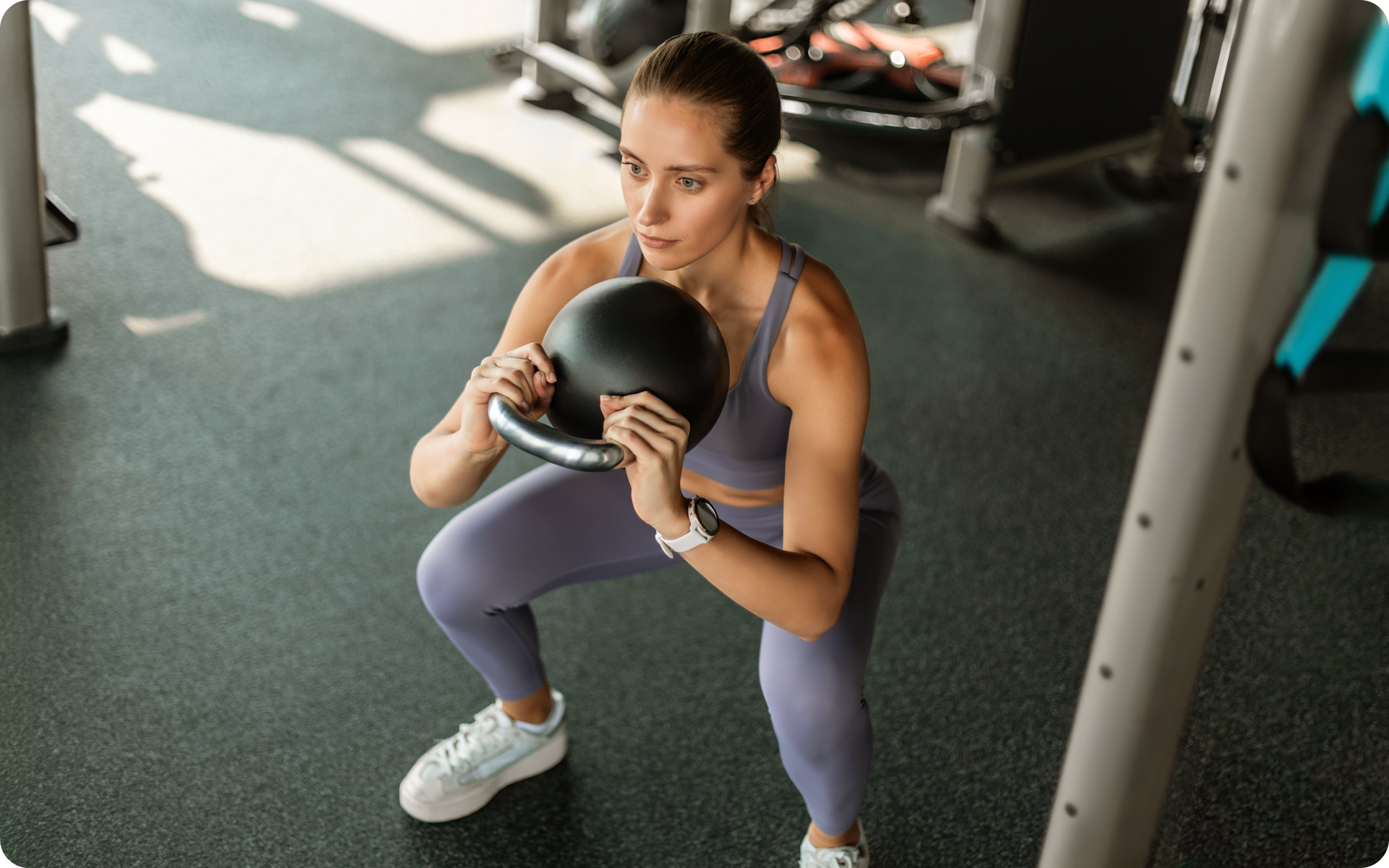
- Stand with your feet about shoulder-width apart.
- Hold a weight at your chest or place a bar on your upper back.
- Bend your knees and hips to lower down.
- Drive through your feet to stand tall again.
How do you perform a bench press or push-up?
- Lie on a bench with your feet flat or set up in a push-up position.
- Lower the bar or your chest with control.
- Keep your elbows at a comfortable angle.
- Press back up until your arms are straight.
How do you perform a cable or dumbbell row?
- Hinge slightly forward or sit at a cable station.
- Pull the handle or weight toward your torso.
- Squeeze your shoulder blades gently.
- Lower with control to a full stretch.
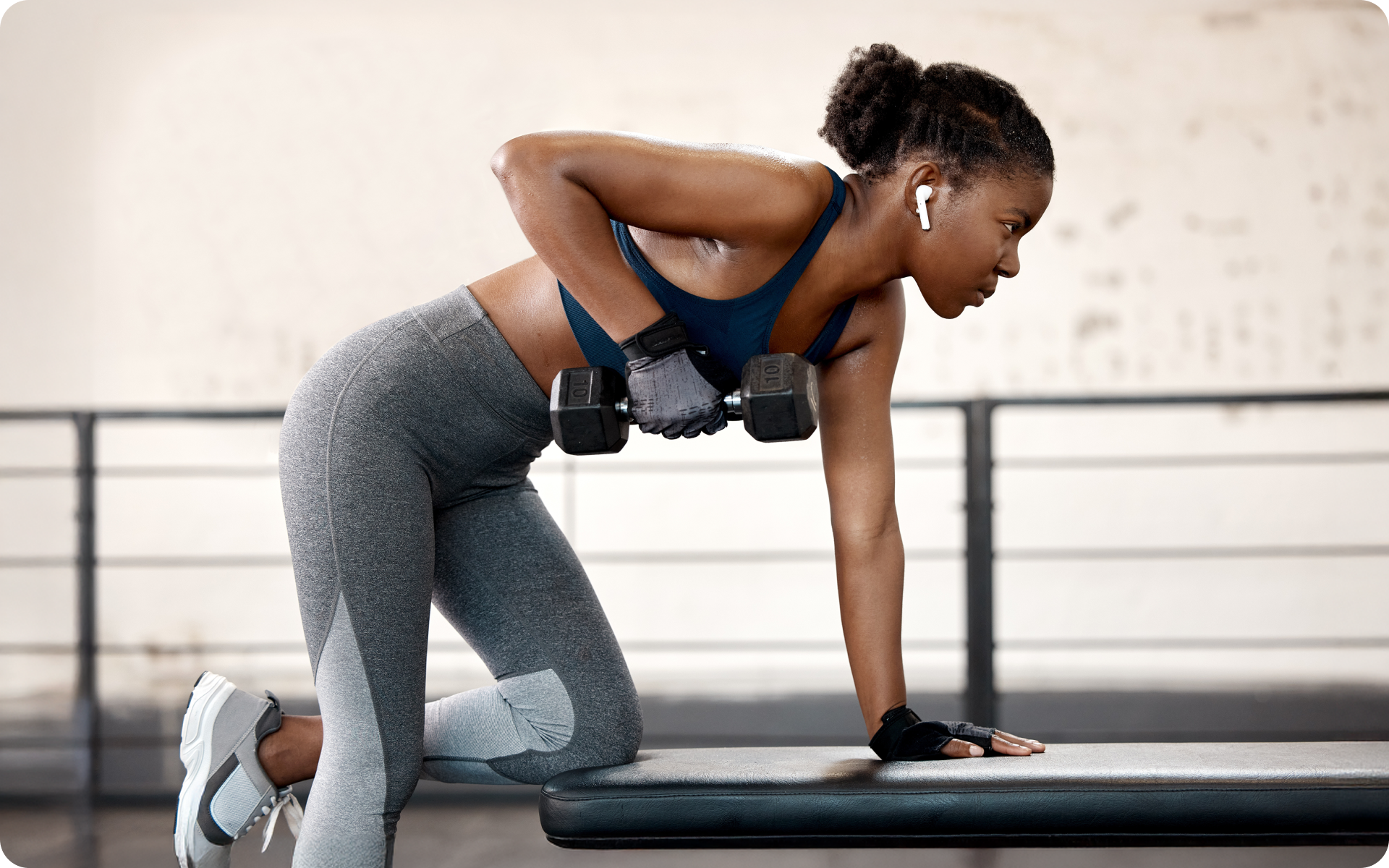
How do you perform a Romanian deadlift?
- Hold a bar or dumbbells in front of your thighs.
- Push your hips back while keeping a soft knee bend.
- Lower until you feel a stretch in your hamstrings.
- Return to standing by driving your hips forward.
How do you perform a plank?
- Rest on your forearms and toes.
- Keep your body in a straight line.
- Brace your midsection gently.
- Hold for the set time, breathing steadily.
How do you perform a glute bridge?
- Lie on your back with your knees bent and your feet flat on the floor.
- Optional: place a padded dumbbell or barbell securely across your hips, or use bodyweight.
- Brace your core and lift your hips while keeping your ribs down.
- Pause briefly at the top without arching your lower back.
- Lower your hips to the floor with control.
How do you perform an overhead press?
- Hold a bar or dumbbells at shoulder height.
- Brace your midsection.
- Press the weight overhead until your arms are straight.
- Lower back to your shoulders with control.
How do you perform a lat pulldown or pull-up?
- Grip the bar with your hands a little wider than shoulder-width apart.
- Pull your chest toward the bar or the bar toward your chest.
- Squeeze your back muscles at the bottom.
- Return slowly to a full stretch.
How do you perform a split squat or lunge?
- Step one foot forward or back into a staggered stance.
- Lower your back knee toward the floor.
- Keep your front knee tracking over your foot.
- Push up and repeat, then switch sides.
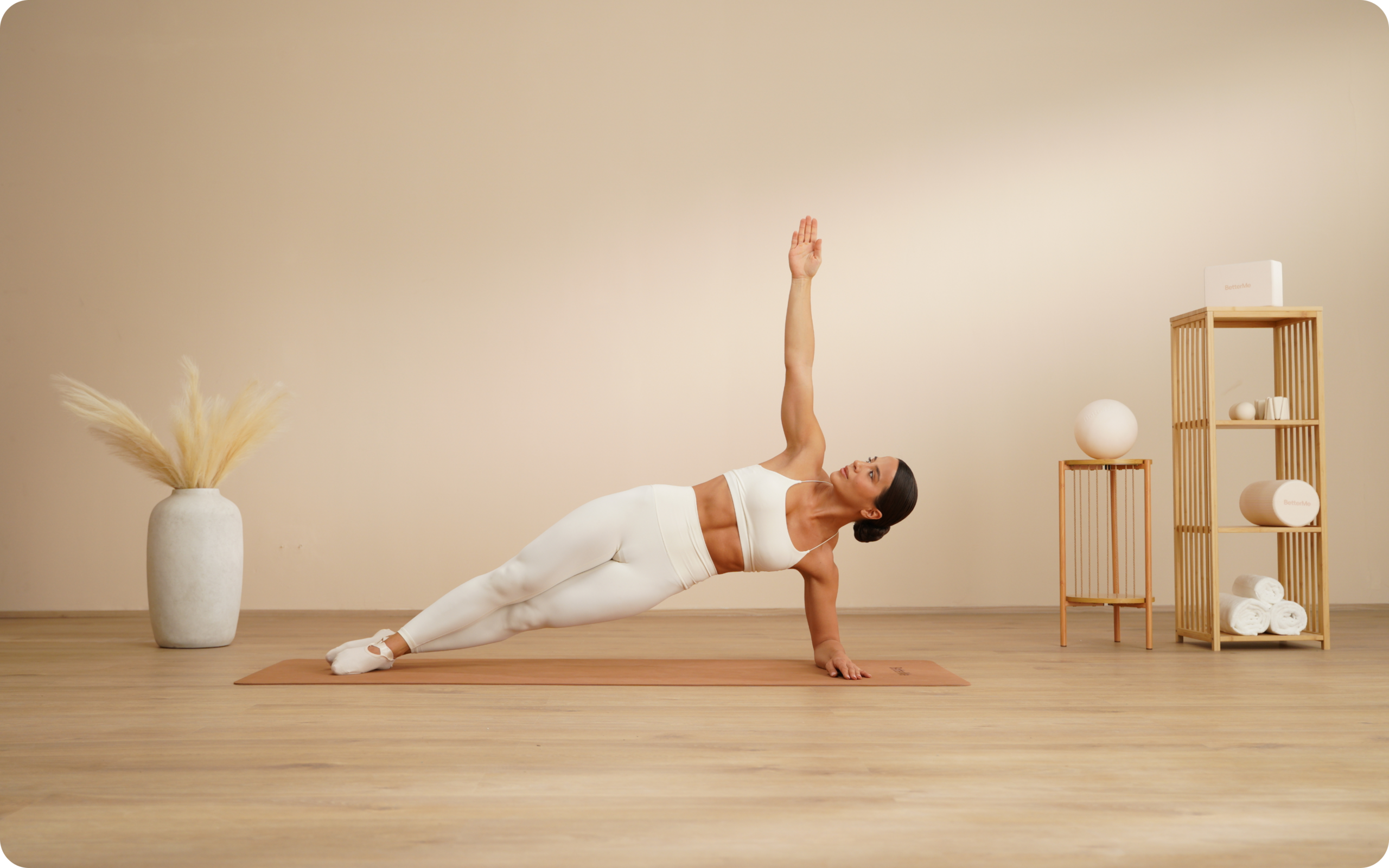
How do you perform a side plank or suitcase carry?
- For a side plank, rest on one forearm with a straight body.
- For a carry, hold a weight in one hand and walk tall.
- Keep your midsection braced.
- Hold or walk for the set time, then switch sides.
How should the 2 training days differ?
Your two training days should be similar enough to cover the whole body, but different enough to spread fatigue. A simple approach is to lead each day with a different big movement.
Here’s the pattern:
- Day 1: Squat-focused, with bench and row emphasis.
- Day 2: Hip-extension-focused, with overhead press and pulldown emphasis.
This 2-day workout split reduces overlap in fatigue. It also gives you practice across all main movement categories.
You don’t need constant variety or “muscle confusion.” Thoughtful, repeatable variation tends to work better than random changes.
Which compound exercises give you the most from limited training time?
Generally, compound exercises give you the most value from limited time as they train several muscles at once. A compound exercise is any movement that works multiple muscle groups and joints together (3). Compare this to isolation movements that typically focus on one muscle or joint at a time.
These lifts let you build a strong full-body strength workout without needing a dozen isolation moves.
| Exercise | Main muscles involved | Why it's efficient | Good beginners' option |
|---|---|---|---|
| Squat | Quads, glutes, core | Trains most of the lower body in one move | Goblet squat |
| Deadlift | Hamstrings, glutes, back | Works the whole posterior chain | Trap-bar deadlift |
| Bench press | Chest, shoulders, triceps | Covers major upper-body pushing | Dumbbell or machine press |
| Row | Upper back, biceps | Balances pushing and builds the back | Chest-supported row |
| Overhead press | Shoulders, triceps, core | Trains vertical pushing and stability | Seated dumbbell press |
| Pull-up or pulldown | Lats, upper back, biceps | Strong vertical pulling stimulus | Lat pulldown with manageable resistance |
If you have limited time, these movements form a reliable core for any 2-day gym workout routine.
How can you balance push, pull, squat, hinge, and core exercises?
You balance these patterns by covering each one across your two weekly sessions. Thinking in movement patterns, not body parts, helps you organize the plan. Check direct work for each muscle separately.
Across the week, aim for these exposures:
- 2 squat-pattern slots (squat, leg press, split squat)
- 2 hip-extension slots (Romanian deadlift and glute bridge in this sample)
- 2 push slots (bench, overhead press)
- 2 pull slots (row, pulldown, pull-up)
- 2 core slots (plank, carry, anti-rotation work)
Use this weekly checklist to track the main movement categories. Check individual muscle priorities separately; covering patterns does not mean every muscle receives equal direct work.
If you want more structured progressions later, you may enjoy exploring an intermediate workout routine for fresh ideas.
What should you do between your 2 weekly workouts?
Between your two weekly workouts, light movement and recovery tend to help most. You don’t need extra lifting to make a 2-day workout plan effective.
Helpful options include:
- Walking for 20-40 minutes
- Easy cycling or swimming
- Gentle mobility work
- Rest, if life already feels busy
Sleep and adequate protein also support recovery for many people (8, 9). The goal is simple: to arrive at your next session feeling ready to train with effort again.
BetterMe can help you add more structure to your daily wellness routine with workouts, meal planning tools, and habit-building features. Explore the app and take a practical step toward a routine that feels more manageable for you.

How can you fit a 2-day routine into a busy schedule?
You can fit a 2-day workout schedule into a busy week by picking two days with some space between them. Even imperfect spacing can still work well.
For this sample schedule, consider leaving 2-3 days between sessions and adjust to your recovery (10). Keep each session to about 45-75 minutes to protect your time.
| Schedule option | Day 1 | Day 2 | Suitable for |
|---|---|---|---|
| Midweek spread | Monday | Thursday | Even recovery |
| Later spread | Tuesday | Friday | Busy Mondays |
| Weekend focus | Wednesday | Saturday | Weekend availability |
If you’re new to this, a good starter workout routine can help you ease into a consistent rhythm.
How do you make a twice-weekly routine more challenging over time?
You make a twice-weekly routine more challenging through progressive overload. Progressive overload means gradually increasing the demands on your body over time (11).
One practical method is double progression. Research has compared load progression and repetition progression separately (12); the steps below combine them into a sample progression method:
- Pick a rep range, such as 6-10 reps.
- Keep the same weight until all sets reach the top of the range.
- Then add a little weight and start again.
Aim for challenging effort. This often means training around RPE 7-9, or leaving 1-3 reps in reserve. Reps in reserve is how many more reps you could do before you cannot complete another controlled rep (13).
A study modeled the relationship between reps in reserve and lifting velocity (14). It did not test long-term strength or muscle growth across different RIR targets, so use RIR here to monitor effort rather than predict results.
For big lifts, keeping 1-3 reps in reserve is a sensible approach for strength training twice a week.
What can you change if your workouts feel too long?
If your workouts feel too long, trim low-value work first. A full-body session can stay effective even when it’s shorter.
Try these adjustments:
- Drop extra isolation moves such as repeated curl variations or lateral raises.
- Reduce compounds to 3 sets and accessories to 2 sets.
- Rotate accessories instead of doing them every session.
- Superset non-competing moves, such as planks with calf raises.
Switching to upper/lower may make each day feel more focused if you reduce or reprioritize the weekly workload. Keeping the same volume while training each region only once can make sessions longer, so do not assume the split alone saves time.
For those who want more frequency later, a daily full-body workout routine offers another way to structure training.

FAQs
Is it better to train on Monday and Thursday or on consecutive days?
Monday and Thursday provide more recovery between demanding full-body sessions than consecutive days. If your schedule requires consecutive days, make one session lighter and adjust for fatigue. Choose a schedule you can repeat consistently.
Can beginners start with 2 workouts per week?
Yes, beginners can start with 2 workouts per week. Use manageable loads and practice controlled movement before adding resistance. Reduce sets or accessories if the full sample routine feels too demanding.
Can you build muscle by training only twice a week?
Yes, training twice a week can support muscle growth when workload and effort are appropriate (2). Start with a manageable weekly set total and adjust rather than treating 10 sets per muscle as a universal minimum. Results vary with training history, sleep, nutrition, and consistency.
How many exercises should fit into each session?
This sample plan uses 5 main exercises per session, with optional accessories if time and recovery allow. Choose movements suited to your technical ability; an expert-consensus study assessed exercise suitability for novices (15). It did not establish a universal requirement of 5-7 exercises.
Can one workout be at home and the other at the gym?
Yes, one workout can be at home and the other at the gym. Match the movement patterns using equipment available in each setting, such as push-ups and dumbbell rows at home. Track workload and effort so that switching locations still supports consistent progression.
Should both weekly workouts use the same exercises?
No, both workouts do not need identical exercises. Lead one day with a squat and the other with hip extension, while covering the main patterns across the week. Keep enough repetition to practice technique and track progress.
Can you add walking or cardio on non-training days?
Yes, you can add walking or other light cardio on non-training days. Active-recovery research has examined discomfort after exercise (16), but light activity is optional rather than a requirement. Keep it manageable so you arrive ready for your next lifting session.
The bottom line
A well-built 2-day workout routine can support real strength and muscle progress when both sessions include upper- and lower-body movements with manageable effort. Focus on compound lifts, aim for meaningful weekly volume, and add small increases over time. Choose two days you can repeat consistently. Individual results vary with training history, workload, sleep, and nutrition.
DISCLAIMER:
This article is intended for general informational purposes only and does not serve to address individual circumstances. It is not a substitute for professional advice or help and should not be relied on for making any kind of decision-making. Any action taken as a direct or indirect result of the information in this article is entirely at your own risk and is your sole responsibility.
BetterMe, its content staff, and its medical advisors accept no responsibility for inaccuracies, errors, misstatements, inconsistencies, or omissions and specifically disclaim any liability, loss or risk, personal, professional or otherwise, which may be incurred as a consequence, directly or indirectly, of the use and/or application of any content.
You should always seek the advice of your physician or other qualified health provider with any questions you may have regarding a medical condition or your specific situation. Never disregard professional medical advice or delay seeking it because of BetterMe content. If you suspect or think you may have a medical emergency, call your doctor.
SOURCES:
- American College of Sports Medicine Position Stand. Resistance Training Prescription for Muscle Function, Hypertrophy, and Physical Performance in Healthy Adults: An Overview of Reviews (2026, ovid.com)
- Equal-Volume Strength Training With Different Training Frequencies Induces Similar Muscle Hypertrophy and Strength Improvement in Trained Participants (2022, frontiersin.org)
- No Time to Lift? Designing Time-Efficient Training Programs for Strength and Hypertrophy: A Narrative Review (2021, link.springer.com)
- Resistance Training Variables for Optimization of Muscle Hypertrophy: An Umbrella Review (2022, frontiersin.org)
- Efficacy of Split Versus Full-Body Resistance Training on Strength and Muscle Growth: A Systematic Review With Meta-Analysis (2024, ovid.com)
- Neuromuscular adaptations to resistance training in elite versus recreational athletes (2025, frontiersin.org)
- Loading Recommendations for Muscle Strength, Hypertrophy, and Local Endurance: A Re-Examination of the Repetition Continuum (2021, mdpi.com)
- Physical activity, athletic performance, and recovery: The role of sleep (2026, sciencedirect.com)
- Nutritional Strategies to Improve Post-exercise Recovery and Subsequent Exercise Performance: A Narrative Review (2025, link.springer.com)
- The Importance of Recovery in Resistance Training Microcycle Construction (2024, pmc.ncbi.nlm.nih.gov)
- Exercise progressions and regressions in sports training and rehabilitation (2024, sciencedirect.com)
- Effects of Resistance Training Overload Progression Protocols on Strength and Muscle Mass (2024, thieme-connect.com)
- Feasibility and Usefulness of Repetitions-In-Reserve Scales for Selecting Exercise Intensity: A Scoping Review (2024, pmc.ncbi.nlm.nih.gov)
- Modeling the repetitions-in-reserve-velocity relationship: a valid method for resistance training monitoring and prescription, and fatigue management (2024, physoc.onlinelibrary.wiley.com)
- Selecting Resistance Training Exercises for Novices: A Delphi Study with Expert Consensus (2022, pmc.ncbi.nlm.nih.gov)
- Effect of Active Recovery Protocols on the Management of Symptoms Related to Exercise-Induced Muscle Damage: A Systematic Review (2022, ovid.com)