Calisthenics workout results can include changes in exercise performance, muscle size, movement control, and training consistency. The amount and timing vary, so compare repeatable tasks instead of expecting a fixed appearance deadline. A calisthenics weekly routine helps you organize practice and record what changes as the movements become more familiar.
Key takeaways
These points summarize which calisthenics workout results to track and how to compare them.
- Bodyweight resistance training can improve strength when the exercise challenge matches the person (1).
- A small study in sedentary young women found increased muscle thickness after progressive bodyweight training (2).
- Repetition counts are most informative when exercise setup, assistance, and movement range remain comparable.
- The six sample movements include lower-impact options and do not constitute a complete strength program.
- Adult activity guidance includes aerobic exercise and strength work for all major muscle groups (3).
- Review points help organize notes without setting a fixed deadline for results.
Which five changes are useful to assess?
Assess repeatable exercise performance, muscular endurance, movement control, muscle-related changes, and consistency. Each answers a different question. Keeping them separate prevents one measurement from being mistaken for a complete fitness assessment.
Can you perform a more demanding movement?
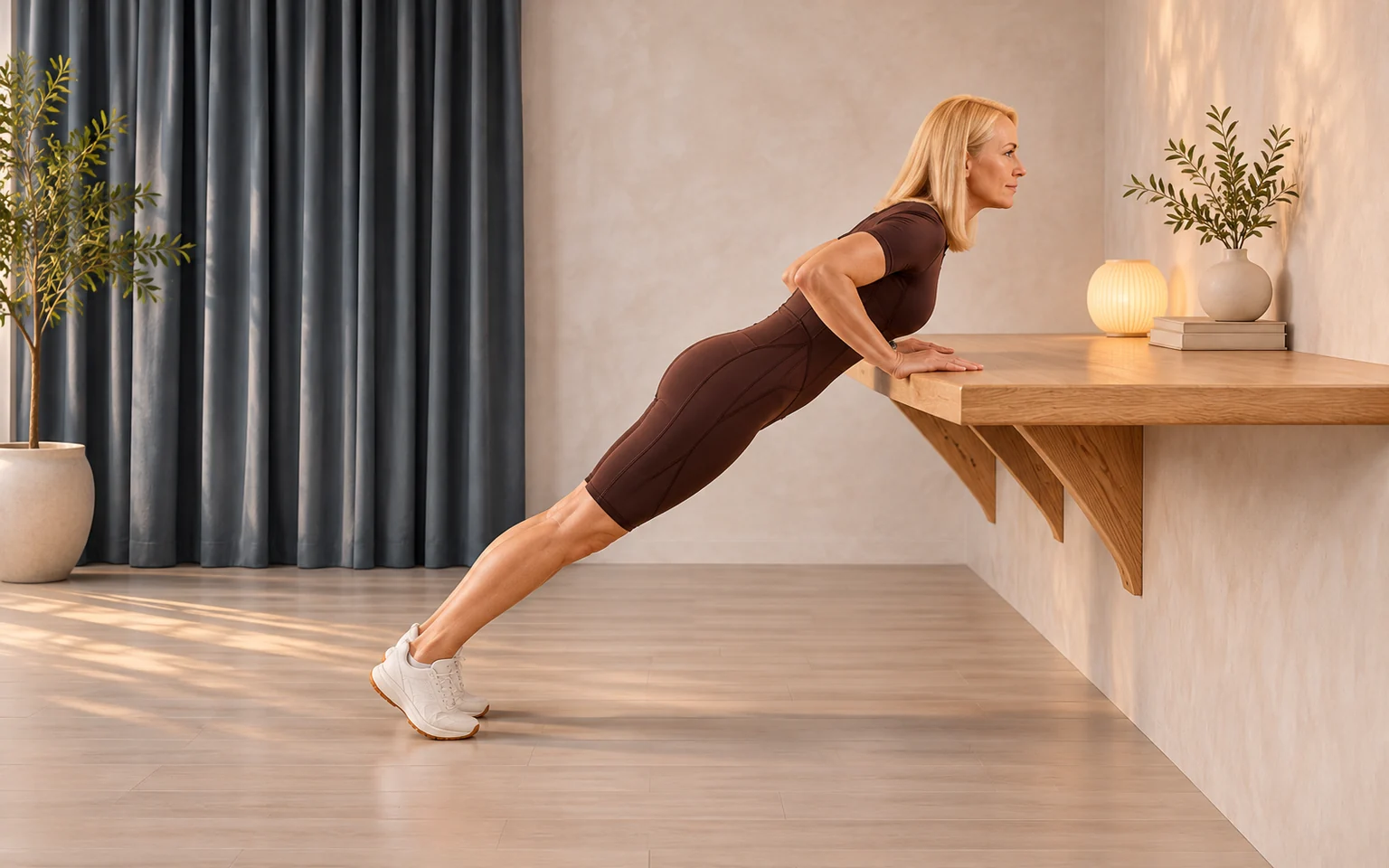
A more demanding version can indicate a change in task-specific ability. You might move from a wall push-up to an incline. Record the support height and the repetitions completed with control.
Current resistance-training guidance recognizes bodyweight exercise as a useful option for strength development (1). The exercise still needs an appropriate challenge. Choose a version that matches your current ability.
Can you repeat the same movement more consistently?
More controlled repetitions of the same exercise can show improved performance on that task. Keep the movement range and rest periods comparable. Avoid counting shorter repetitions as equivalent to the original version.
A longer hold can also be recorded, provided the position stays consistent. End the comparison when your posture changes. The extra seconds after losing control do not describe the same task.
Is the movement easier to control?
Movement control can improve as you practice a familiar setup. You might need fewer pauses to find your starting position. Record that observation alongside your repetition count.
Comfortable movement range is another useful observation. Avoid forcing a joint farther simply to create a larger number. A trainer can help distinguish a technique adjustment from an appropriate progression.
Have muscle measurements or appearance changed?
Muscle size may change with suitable resistance training, although visible definition is a separate outcome. A six-week trial included 13 sedentary young women. Progressive bodyweight and barbell groups both increased measured muscle thickness (2).
The bodyweight group did not show a significant body-fat reduction in that small study. The findings therefore do not support an automatic fat-loss promise. A photograph also cannot reproduce a research measurement of muscle thickness.
Is the routine easier to maintain?
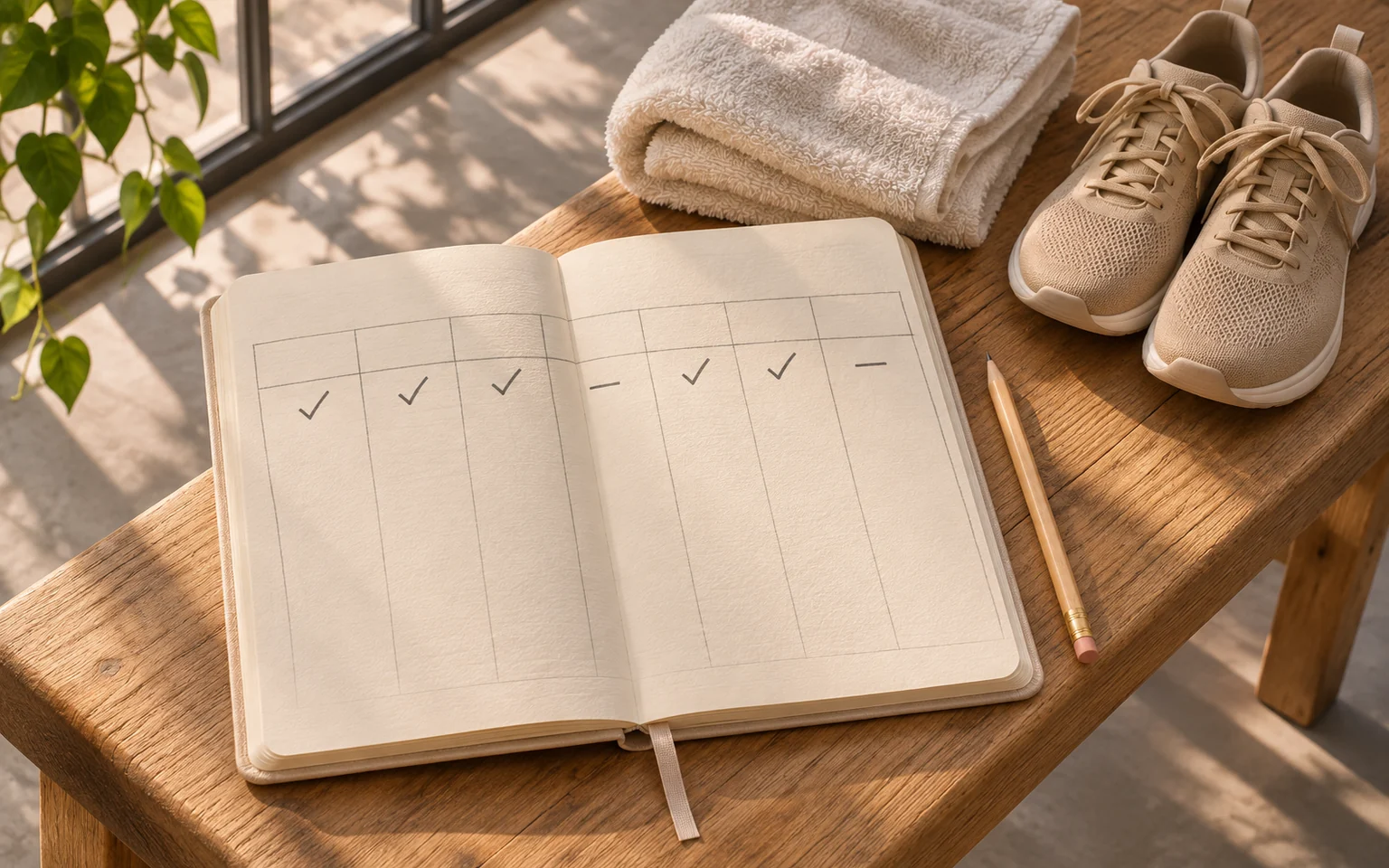
Consistency can be assessed by comparing planned and completed sessions. Keep an honest record of shortened or missed workouts. A repeatable appointment is useful even before a visible change appears.
Choose a schedule that fits your daily responsibilities. A home calisthenics workout plan can reduce uncertainty about what to do when the appointment arrives. Keep the equipment ready when practical.
How long does it take to notice results?
There is no single deadline for noticing calisthenics results. Starting ability, exercise selection, training amount, and attendance all affect the comparison. Research study durations should not be converted into personal promises.
Use regular review points to organize your notes. A four-week check can ask whether the routine fits your schedule. A later check can compare the same exercises under similar conditions.
|
Review point |
Question to ask |
Useful evidence |
|---|---|---|
|
First sessions |
Which versions are manageable? |
Setup notes and controlled repetitions |
|
After several weeks |
Is the schedule repeatable? |
Planned and completed sessions |
|
Later review |
Has the same task changed? |
Comparable repetitions, assistance, or hold time |
The table describes review questions rather than expected physiological milestones. Repeat an earlier exercise when it remains useful. A longer review period may make patterns easier to see without promising a particular outcome.
For a structured review window, compare a three-month calisthenics plan. Keep each measurement linked to the activity you actually practiced.
Is a 20-minute session enough?
Three weekly sessions or twenty-minute appointments can provide useful practice, depending on their content and your goals. Duration alone does not describe training quality. Exercise selection, effort, rest, and weekly coverage also matter.
Adult guidance includes muscle strengthening on at least two days weekly. The same guidance recommends 150 moderate aerobic minutes or 75 vigorous minutes weekly (3). A short bodyweight session does not automatically fulfill both recommendations.
If twenty minutes is your available time, choose a manageable amount of work. Include preparation and rest within the appointment. Avoid squeezing a long routine into that period by rushing repetitions.
Some people can organize three separated strength sessions. Others may prefer two sessions and additional walking. Begin with an arrangement you can repeat, then review whether a change is useful.
Want a structured routine? Take the BetterMe quiz to get a customized calisthenics workout plan.
Which six movements can you practice at home?
The six movements below provide a mix of standing activity, lower-body exercise, and trunk control. Use a comfortable range and choose the lower-impact option when needed. The menu is a sample practice selection, not a complete full-body strength plan.
|
Movement |
Starting option |
Sample practice amount |
|---|---|---|
|
Jumping jack |
Step jack |
20 seconds |
|
Skater movement |
Side step with a pause |
20 seconds |
|
Squat |
Supported squat or sit-to-stand |
5 to 8 repetitions |
|
High knees |
Comfortable marching |
20 seconds |
|
Side plank |
Knees-supported version |
10 seconds per side |
|
Glute bridge |
Both feet supported |
5 to 8 repetitions |
The amounts are optional starting examples. Rest between movements as needed and stop before control changes. Do not treat the table as a timed circuit that must be completed without breaks.
Warm up first. General resistance-training guidance suggests five to ten minutes of aerobic movement before working sets (4). Comfortable walking or marching can help you begin gradually.
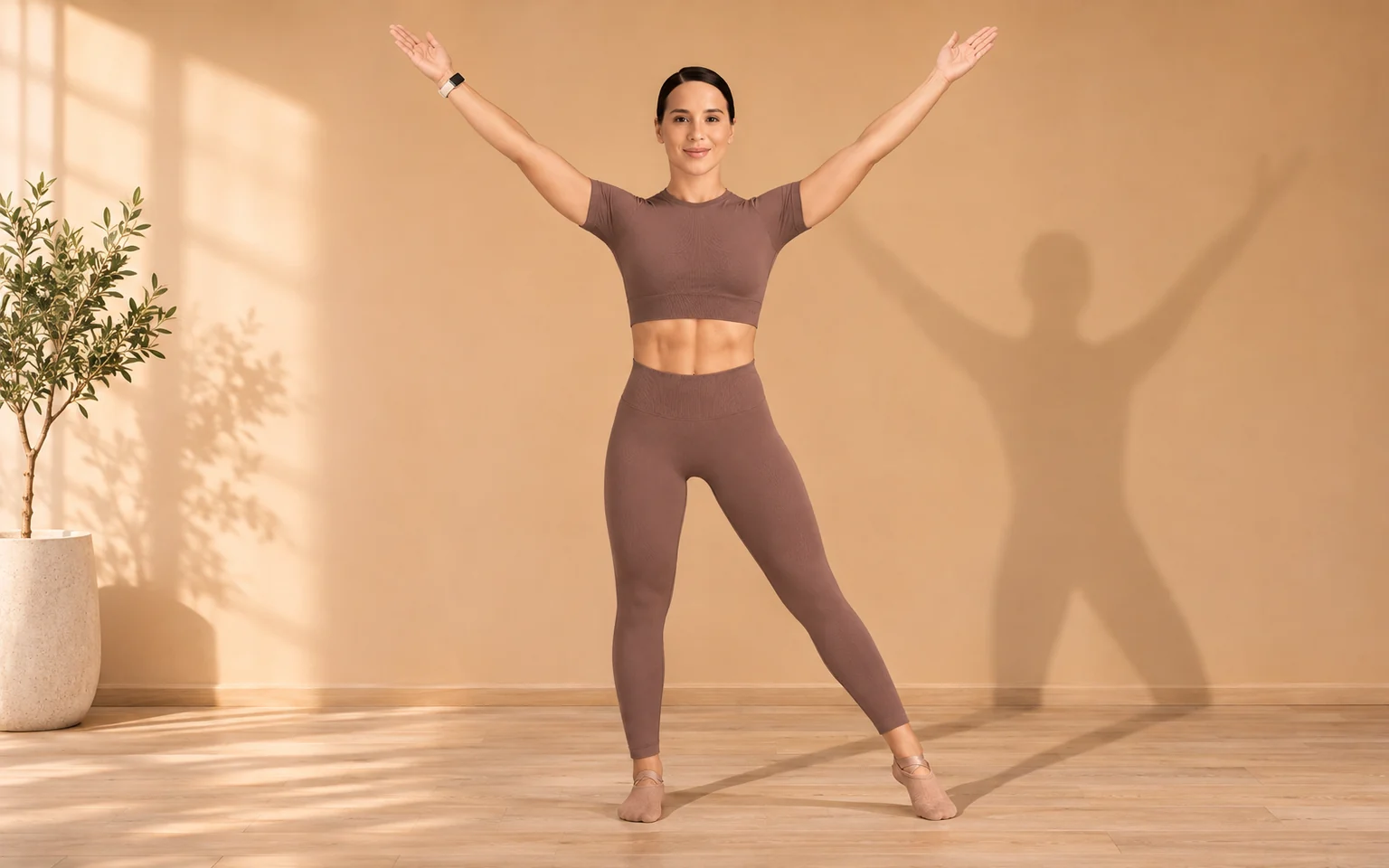
Step jack
- Stand with your feet comfortably together.
- Step one foot sideways while raising your arms within a comfortable range.
- Return the foot to the starting position.
- Repeat the step with the other foot.
A jumping jack adds a jump between positions. Keep the step version when jumping is unsuitable or unwanted. You can also keep your hands lower if overhead movement feels uncomfortable.
Side step with a pause
- Stand with enough clear space on both sides.
- Step to one side.
- Pause in a steady position.
- Step back and repeat in the other direction.
A skater hop adds a sideways jump and single-leg landing. That progression requires different balance and impact tolerance. Reaching toward the floor is optional and should not compromise control.
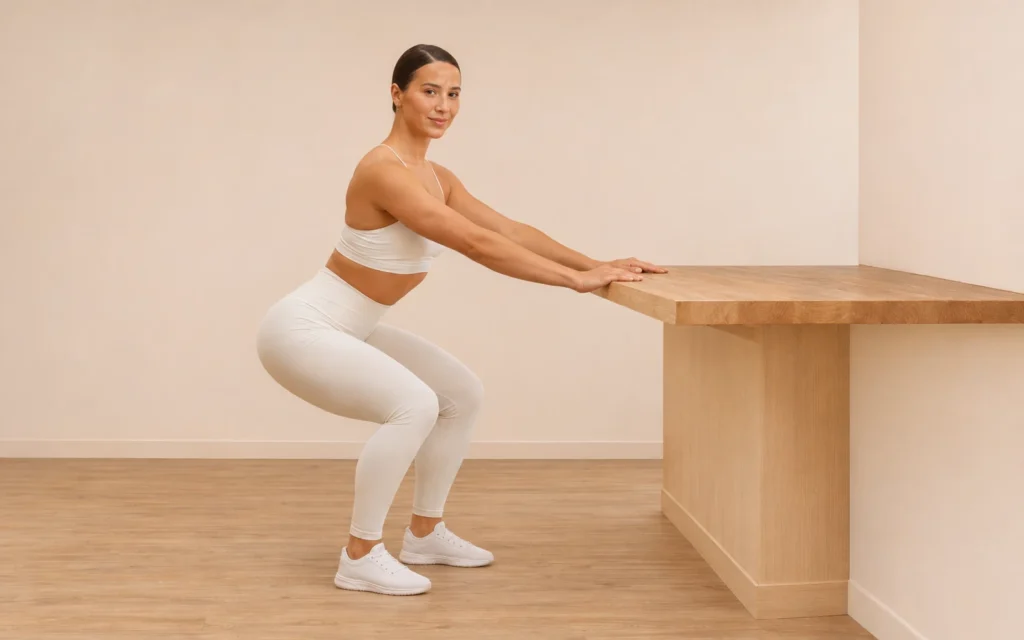
Supported squat
- Place your hands on a stable support.
- Bend your hips and knees through a comfortable range.
- Pause before losing balance.
- Return to standing.
Public home-strength guidance includes supported mini-squats and sit-to-stands (5). A chair can provide a clear sitting target. Use a chair that cannot slide and has no wheels.
Marching
- Stand tall with a stable support nearby if needed.
- Raise one knee to a comfortable height.
- Lower the foot with control.
- Repeat on the other side.
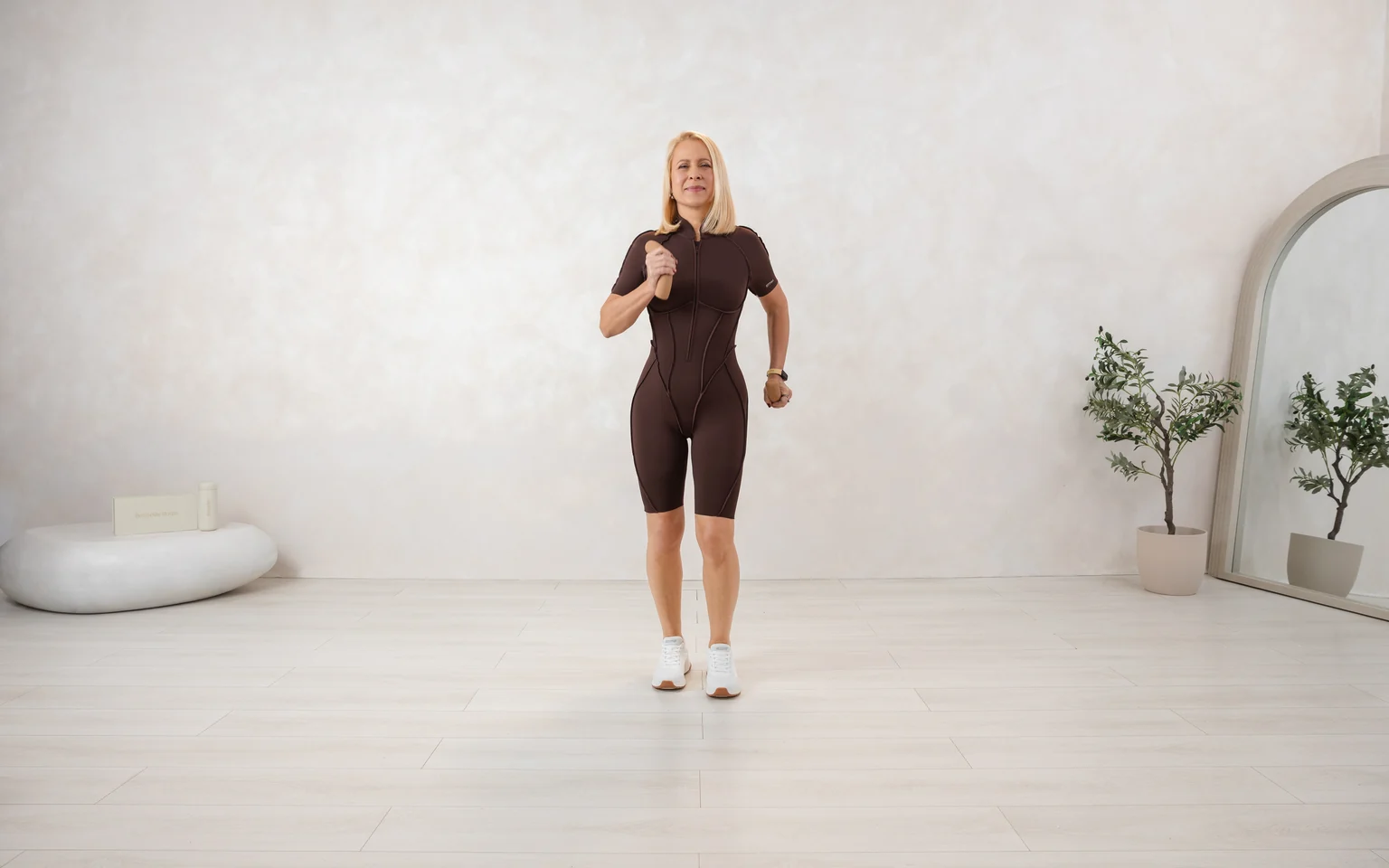
Keep the pace manageable and avoid leaning backward to lift the knee higher. Running-style high knees add intensity. The faster version is optional and should be recorded separately.
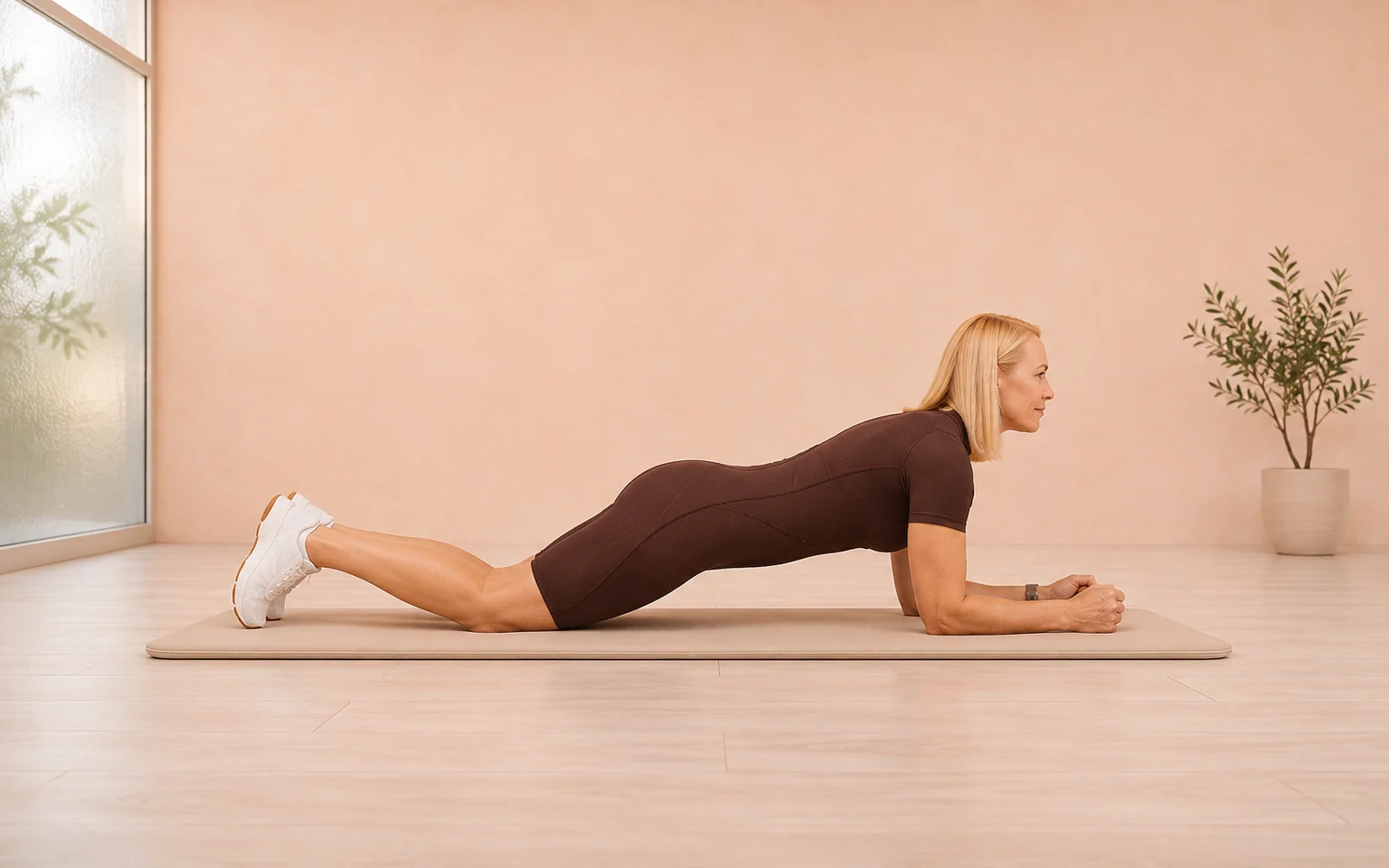
Knees-supported side plank
- Lie on your side with your knees bent.
- Place your forearm under your shoulder.
- Lift your hips into a manageable supported position.
- Lower when the position becomes difficult to maintain.
Repeat on the other side after resting. Keep breathing during the hold. Ask a trainer for an alternative if floor transfers or shoulder loading are difficult.
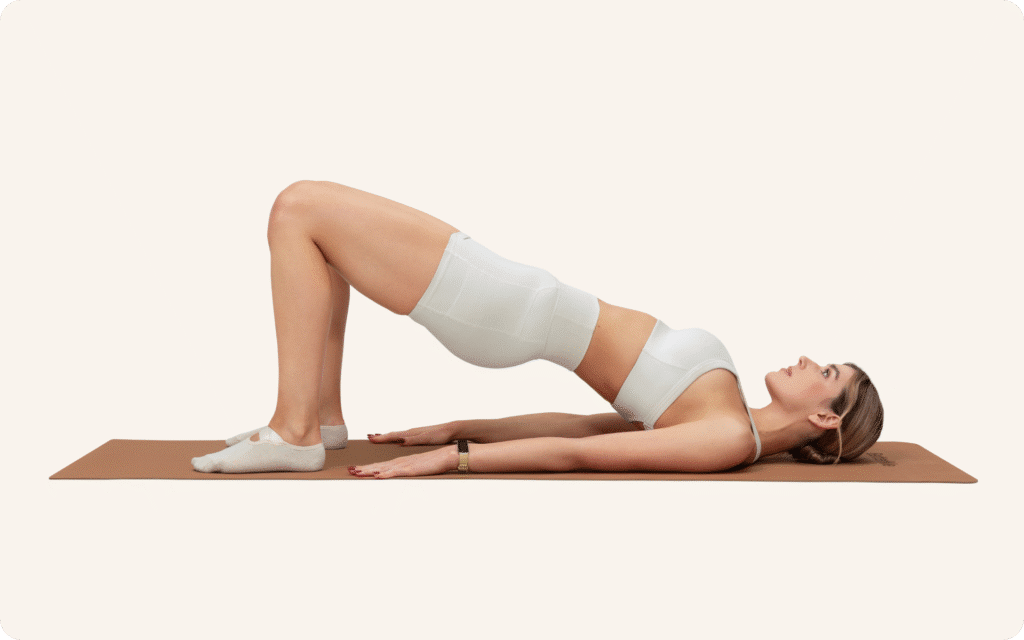
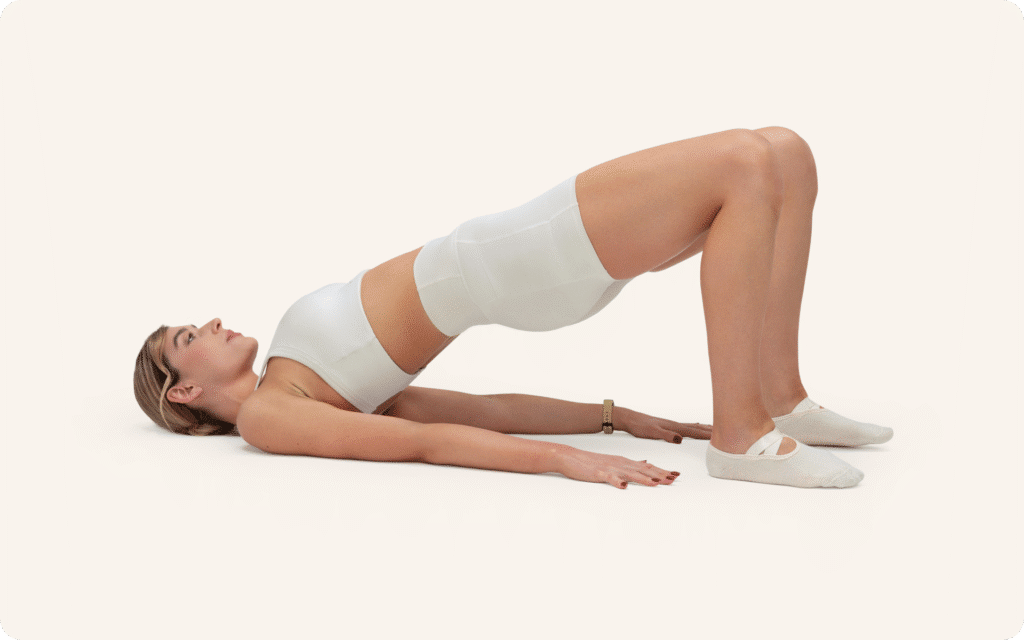
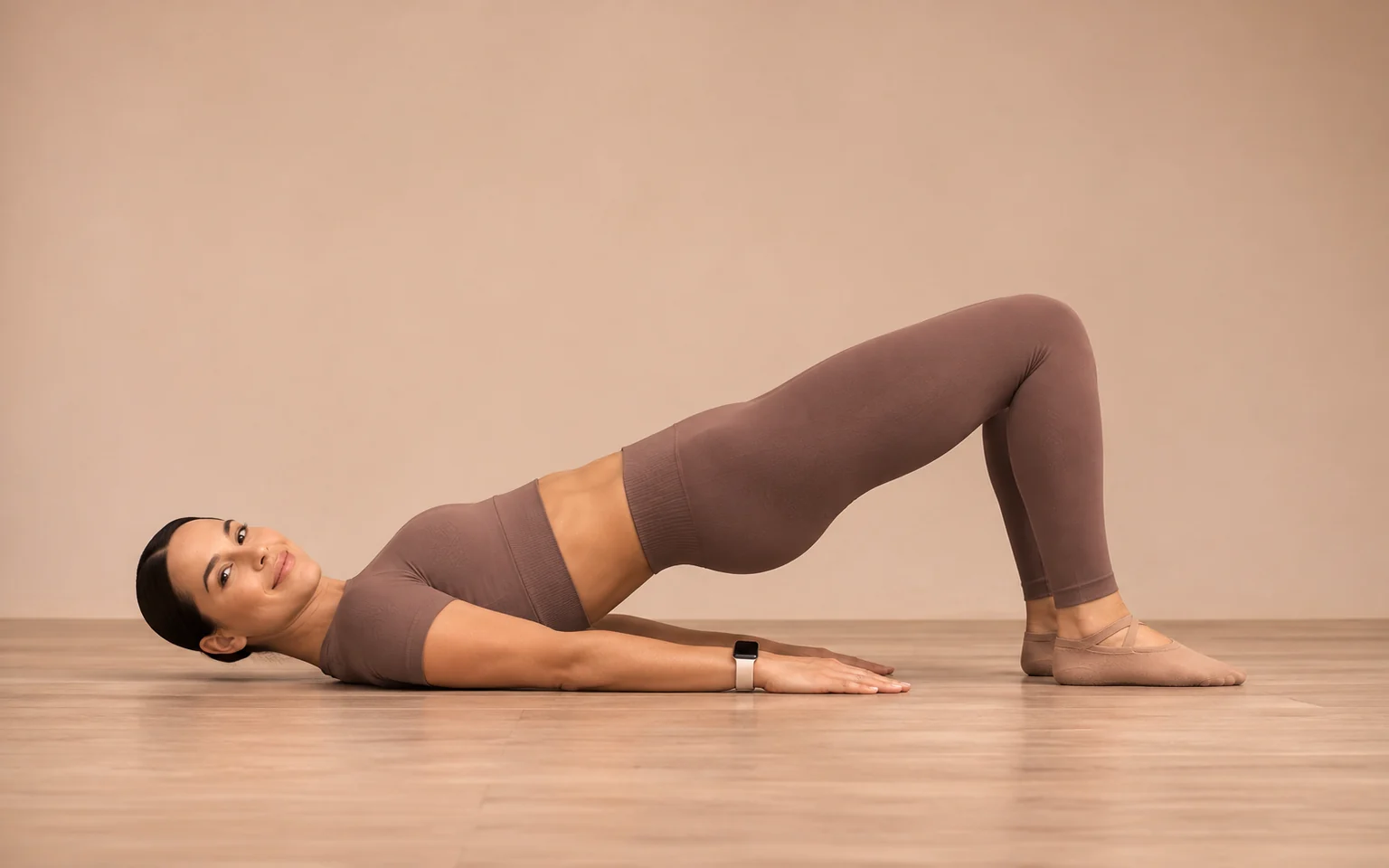
Glute bridge
- Lie on your back with your knees bent and feet on the floor.
- Press through your feet to raise your hips comfortably.
- Pause without forcing your lower back into an arch.
- Lower your hips with control.
The calisthenics glute exercise guide provides additional options. Keep the movement range manageable. Stop if the exercise causes discomfort beyond normal effort.
What else does a complete routine need?
A complete strength routine needs suitable coverage of the major muscle groups, including pushing and pulling. The six-movement menu does not provide substantial pulling work. Add an appropriate row or another coached pulling exercise when suitable equipment is available.
Use a purpose-built bar, suspension system, or correctly installed band anchor. Avoid assuming household furniture can support bodyweight rows. Record the equipment and exercise version for later comparisons.
Keep aerobic activity in the week according to your capacity and goals (3). Walking can be scheduled separately. Not every minute of a strength session occurs at moderate aerobic intensity.
Sleep and ordinary daily responsibilities also belong in the plan. Adults aged 18 to 60 are advised to get at least seven hours of sleep nightly (6). Reduce the planned workload when it repeatedly conflicts with basic rest needs.
How can you make the next comparison more reliable?
Make the next comparison more reliable by writing down the setup before the session begins. Use the same support height and a similar movement range. Keep rest periods comparable when practical.
If you change an exercise version, begin a new entry for that version. Retain the earlier record instead of combining the two repetition counts. A clear note about what changed is more informative than an unexplained higher total.
Prefer to follow a plan? The BetterMe quiz can help you set up a calisthenics routine that fits your schedule.
Frequently Asked Questions
Can I start at age 35?
Yes, age 35 alone does not determine which exercise version you should use. Start from your current ability and activity history. Seek individual guidance when a medical condition or ongoing discomfort affects exercise.
Does better posture prove that an exercise corrected a problem?
No, a photograph or personal observation cannot establish that a medical or structural problem was corrected. Describe the movement change you can observe. Seek qualified assessment for persistent concerns.
Should I restart a challenge if I miss a day?
No, missing one day does not require restarting the entire challenge. Resume at a manageable point and record the interruption. Avoid stacking missed sessions into a single demanding workout.
The bottom line
Choose a few repeatable movements and record the setup before comparing results. Assess performance, consistency, and appearance as separate outcomes. Use the record to adjust your routine while keeping expectations specific to your own starting point.
DISCLAIMER:
This article is intended for general informational purposes only and does not serve to address individual circumstances. It is not a substitute for professional advice or help and should not be relied on for making any kind of decision-making. Any action taken as a direct or indirect result of the information in this article is entirely at your own risk and is your sole responsibility.
BetterMe, its content staff, and its medical advisors accept no responsibility for inaccuracies, errors, misstatements, inconsistencies, or omissions and specifically disclaim any liability, loss or risk, personal, professional or otherwise, which may be incurred as a consequence, directly or indirectly, of the use and/or application of any content.
You should always seek the advice of your physician or other qualified health provider with any questions you may have regarding a medical condition or your specific situation. Never disregard professional medical advice or delay seeking it because of BetterMe content. If you suspect or think you may have a medical emergency, call your doctor.
SOURCES:
- ACSM Unveils Landmark 2026 Resistance Training Guidelines: First Update in 17 Years (2026, acsm.org)
- Effects of progressive body-weight versus barbell back squat training on strength, hypertrophy and body fat among sedentary young women (2023, nature.com)
- Adult Activity: An Overview (2023, cdc.gov)
- Weight training: Do’s and don’ts of proper technique (2026, mayoclinic.org)
- Strength exercises (2024, nhs.uk)
- About Sleep (2024, cdc.gov)
 By
 Reviewed by