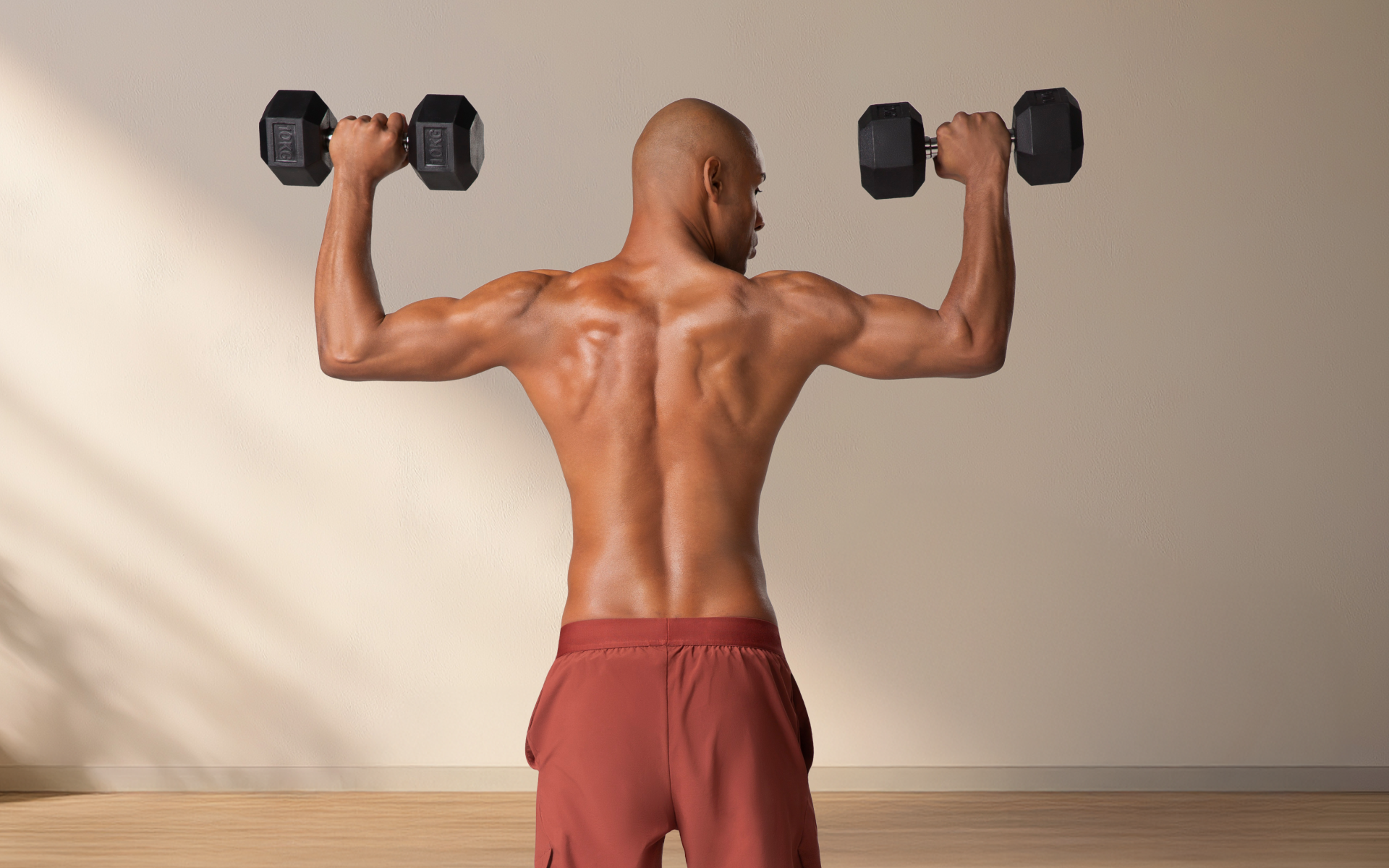
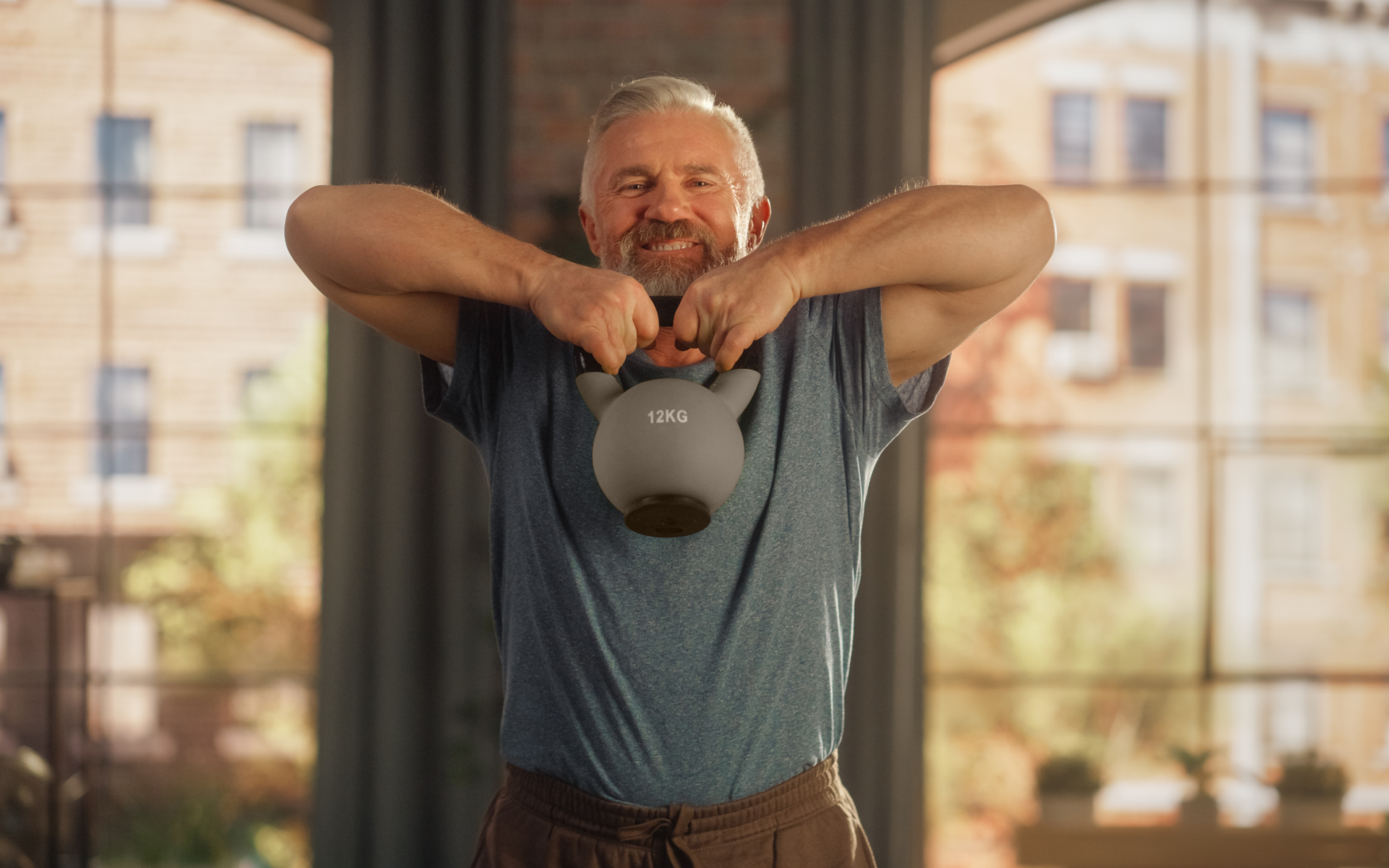
Hitting your 50s can bring a new perspective, but it might also come with a noticeable decline in energy and strength. This isn’t just about feeling less robust – it can genuinely impact your quality of life. You might find yourself turning down social activities, struggling with household chores, or giving up hobbies you once loved simply because you don’t have the physical capacity anymore.
This guide is designed to show you a clear, safe, and effective path to regaining that lost strength and vitality. We’ll explore how to create a workout plan ideal for a 50-year-old man and give science-backed answers to frequently asked questions.
Can a 50-Year-Old Man Get Back in Shape?
Yes, a 50-year-old man can absolutely get back in shape. It’s a common misconception that age is a definitive barrier to fitness. While physiological changes are a natural part of aging, your body retains a remarkable ability to adapt and improve. Increasing your physical activity levels and making thoughtful improvements to your diet can yield significant positive outcomes, even if you’ve been sedentary for several years (1).
The key is to start smart and progress gradually. Your body may not recover as quickly as it did in your twenties (2), but with a consistent and well-structured approach, you can build muscle, increase endurance, and improve your overall health. The process is about working with your body, not against it, and we’ll share insights to help you do so.
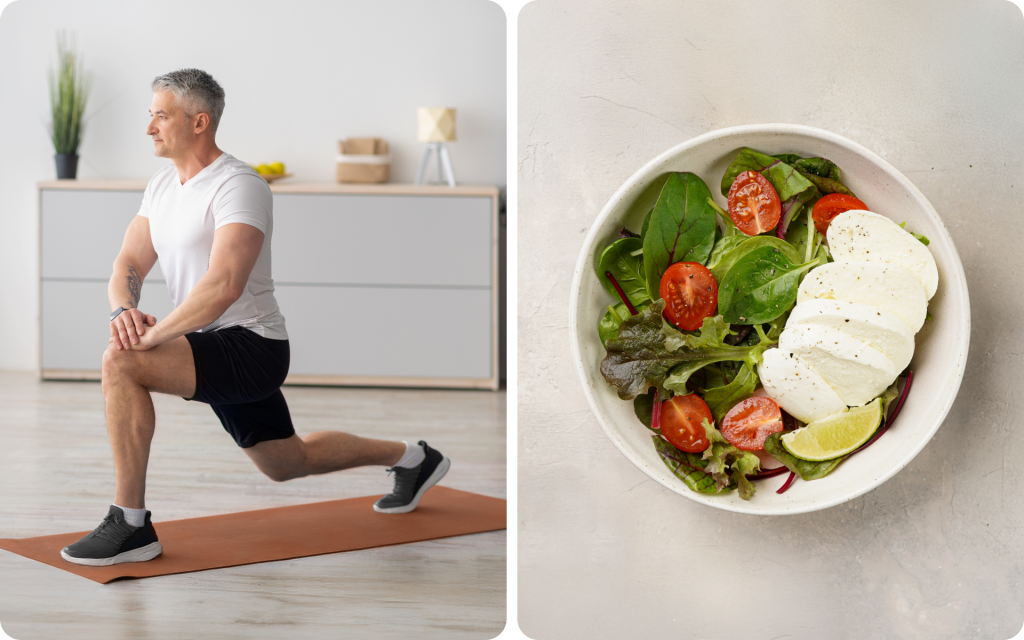
Is It Possible to Lose Belly Fat When You’re over 50?
Yes, it’s entirely possible to lose belly fat after 50. Belly fat, or visceral fat, is the fat that is stored deep within the abdominal cavity, surrounding your organs. It’s often more stubborn than subcutaneous fat (the fat just under your skin), but it’s not impossible to lose. A combination of consistent physical activity, dietary adjustments, and positive lifestyle changes is the most effective strategy (3).
Losing belly fat isn’t just about aesthetics, it’s crucial for your health, as excess visceral fat is linked to several health issues (4).
A comprehensive fitness plan that includes both resistance training and cardiovascular exercise will help increase your metabolism and burn calories. When it’s paired with a balanced diet that prioritizes whole foods and manages calorie intake, you can effectively reduce belly fat and improve your overall body composition.
BetterMe: Health Coaching app helps you achieve your body goals with ease and efficiency by helping to choose proper meal plans and effective workouts. Start using our app and you will see good results in a short time.
Should a 50-Year-Old Man Lift Heavy Weights?
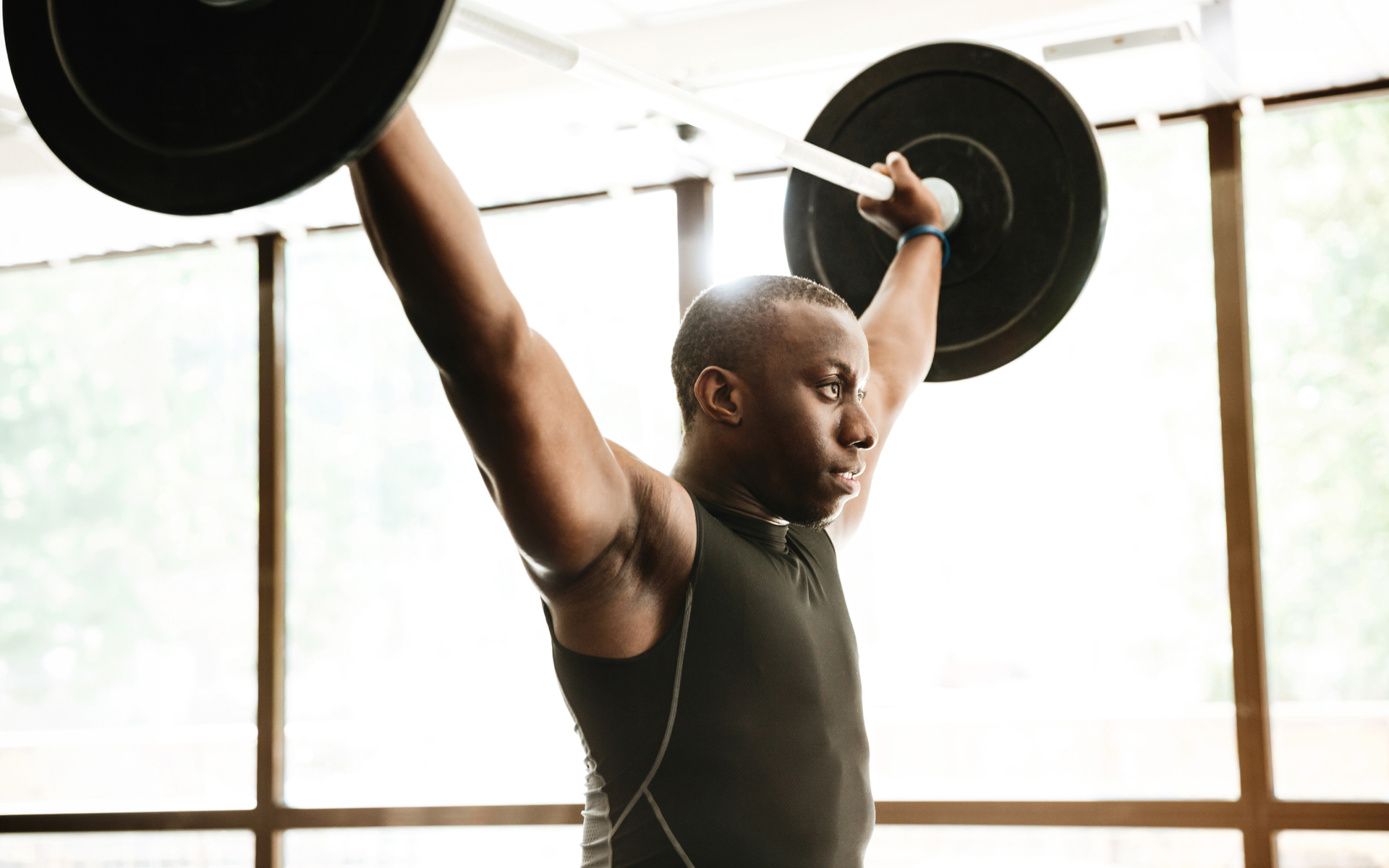
The idea of lifting “heavy” weights can be intimidating, but it’s one of the most beneficial activities a man over 50 can do.
First, let’s define “heavy”. According to the National Strength and Conditioning Association (NSCA), for healthy older adults, a productive intensity for building strength is around 70-85% of their one-repetition maximum (1RM) (5).
Your 1RM is the maximum amount of weight you can lift for a single repetition of a given exercise (6).
You don’t need to actually test your 1RM, which can be risky without proper supervision. Instead, you can estimate it. A weight is likely in that 70-85% 1RM range if you can perform between 6 and 12 repetitions with proper form before reaching muscular fatigue.
The last one or two reps should feel challenging, but not so difficult that your technique breaks down. This approach ensures the weight is heavy enough to stimulate muscle growth without putting you at unnecessary risk.

Lifting weights in your 50s and beyond has many benefits:
- Boosts Metabolism
As you age, your metabolic rate naturally starts to slow down. Resistance training is a powerful tool to counteract this. Building and maintaining muscle mass increases your resting metabolic rate, which means your body burns more calories throughout the day, even when you’re not exercising. This makes it easier to manage your weight and reduce body fat (7).
- Strengthens Bones
Osteoporosis and bone density loss are significant concerns for older adults. Lifting weights puts mechanical stress on your bones, which signals your body to increase bone mineral density. Stronger bones are less susceptible to fractures, which can be debilitating (8).
- Improves Functional Strength
Functional strength is your ability to perform everyday tasks with ease – carrying groceries, lifting a suitcase, or playing with grandchildren. Resistance training builds the real-world strength needed for these activities, directly improving your independence and quality of life (9).

- Enhances Joint Health
Contrary to some beliefs, proper weight training can be beneficial for your joints. Strengthening the muscles that surround your joints provides better support and stability, which can alleviate pain and reduce the risk of injury (10). It’s essential to use proper form and avoid movements that cause pain.
- Reduces Risk of Chronic Disease
A regular strength training routine has been shown to improve insulin sensitivity, which helps regulate blood sugar levels and reduces the risk of type 2 diabetes. It also helps manage blood pressure and improves cholesterol profiles, contributing to better cardiovascular health (11).
- Improves Mental Health
The benefits of exercise aren’t just physical. Accomplishing goals in the gym builds confidence and self-esteem. Furthermore, exercise is a proven mood booster, releasing endorphins that help reduce stress and symptoms of anxiety and depression (12).
For those who are just starting, learning how to structure effective workouts at home for men can be a great way to lay a solid foundation.
How Many Times a Week Should a 50-Year-Old Man Work Out?
For general health, older adults should aim for a balanced routine that includes cardiovascular exercise, strength training, and flexibility work. The NSCA recommends that healthy older adults perform resistance training 2-3 times per week on non-consecutive days. This frequency allows your muscles adequate time to recover and adapt between sessions, which is when they actually become stronger (5).
In addition to strength work, guidelines from health organizations recommend at least 150 minutes of moderate-intensity aerobic activity, 75 minutes of vigorous-intensity aerobic activity, or a combination per week (13).
This could be broken down into 30-minute sessions five days a week. Examples of moderate-intensity activity include:
- 50-70% of max HR
- Brisk walking
- Cycling on level ground
- Water aerobics
Vigorous activities include:
- 70-85% of max HR
- Jogging
- Swimming laps
- Hiking uphill
Finally, don’t forget flexibility and balance exercises. These can be done daily and are essential for maintaining mobility and preventing falls.
Read more: 12-Week Workout Plan for a 50 Year Old Man: Transform Your Body at Home
What Is a Safe Workout for a 50-Year-Old Man?
A safe workout is one that is structured, progressive, and tailored to your current fitness level. Following evidence-based guidelines is the best way to ensure both safety and effectiveness.
Here’s a breakdown of the NSCA’s general recommendations for healthy older adults (5).
- Sets
The NSCA recommends starting with 1 set per exercise if you’re a beginner, particularly those who are particularly frail. This is enough to stimulate your muscles and allows you to focus on learning proper form.
As you get stronger and more comfortable, you can progress to 2-3 sets per exercise to provide a greater stimulus for muscle growth and strength.
- Repetitions
For general muscular strength in healthy older adults, a range of 6-12 repetitions is ideal. If you’re a beginner, starting with a higher repetition range of 10-15 at a lighter weight is recommended. This helps build muscular endurance and allows you to perfect your technique before increasing the load.
- Intensity / Load
Intensity refers to how much weight you’re lifting or the load. As mentioned, an intensity of 70-85% of your 1RM is effective for building strength. You should begin with a weight that you can lift comfortably for your target rep range and gradually increase it over time – a concept that is known as progressive overload.
It’s important that you avoid training to failure, which is the point where you can no longer complete a repetition with good form. Stopping 1-2 reps short of failure reduces unnecessary stress on your joints and mitigates fatigue, which can disrupt your form (5).
- Exercise Selection
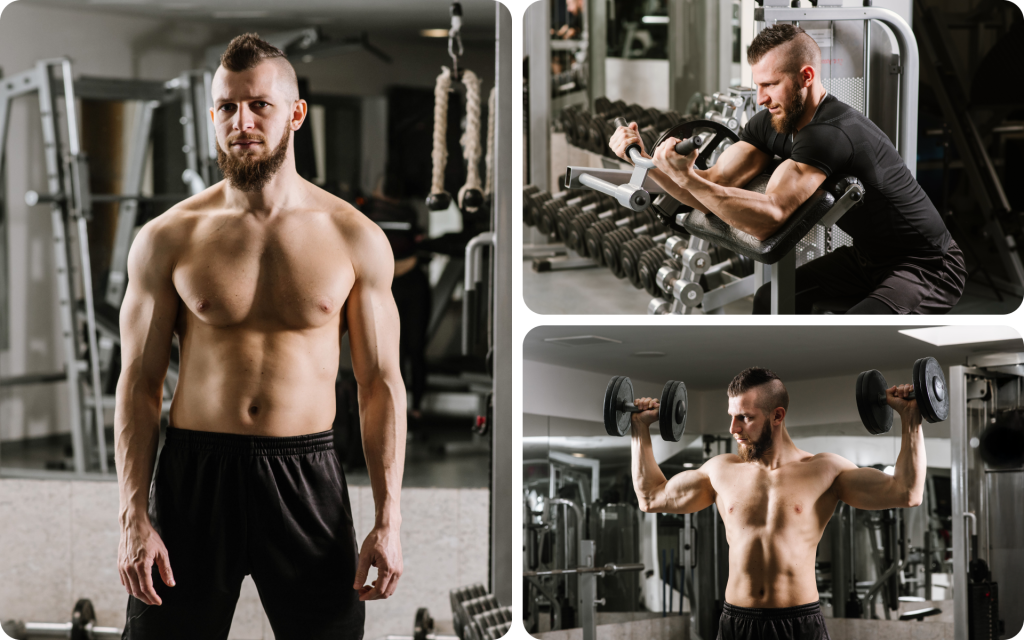
A well-rounded program should include a total of 8-10 different exercises that target all the major muscle groups. Prioritize multi-joint, or compound, movements. These exercises, such as squats, presses, and rows, work multiple muscle groups simultaneously, which makes them highly efficient for building overall strength. Examples include:
- Chest press
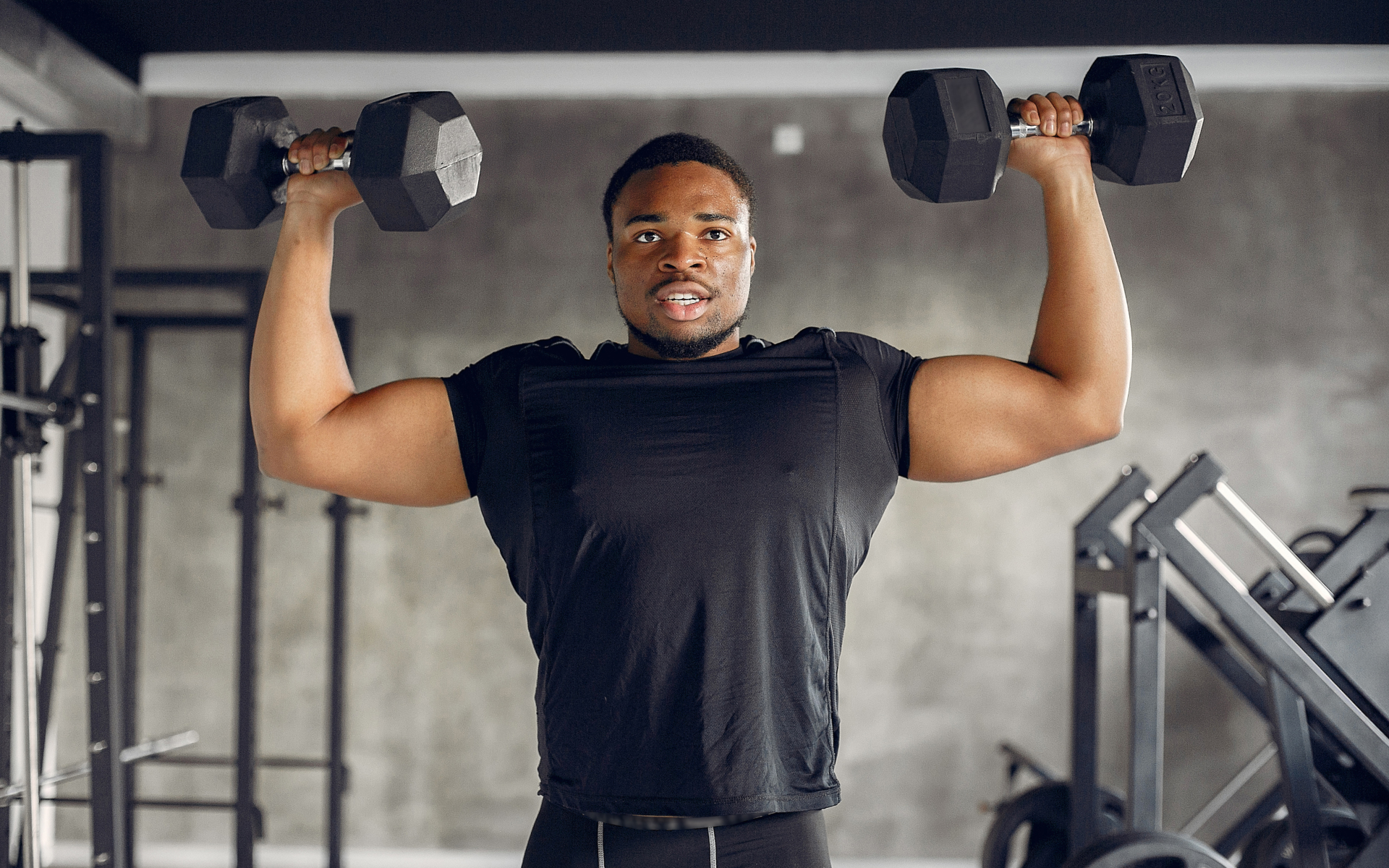
- Shoulder press
- Pull-downs
- Leg press
- Core exercises
- Modality
Modality simply refers to the type of equipment you use. Machine-based exercises are excellent for beginners as they guide the movement path and provide stability, which reduces the risk of injury.
Resistance bands and isometric exercises are also great starting points. As you become more proficient, incorporating free weights like dumbbells, barbells, and kettlebells can offer additional benefits by challenging your stabilizing muscles.
- Frequency
Training each major muscle group 2-3 times per week on non-consecutive days is the sweet spot (14). This could look like two or three full-body workouts per week. This frequency provides enough stimulus for adaptation while allowing for the necessary recovery between sessions.
- Power/Explosive Training
Power is the ability to produce force quickly, and it’s a crucial component of functional fitness that declines with age. Including power exercises, where you perform the lifting (concentric) phase of the movement with high velocity, is highly beneficial.
These are done with moderate intensities – around 40-60% of your 1RM – to promote power, strength, and performance in daily tasks (5).
- Functional Movements
Your training should help you move better outside the gym. Incorporating exercises that mimic the tasks of daily living is key. This can include variations in your base of support (e.g. single-leg exercises) or complex movements that challenge your coordination and balance.
These guidelines can be adapted to fit your individual needs and goals, and they provide a great framework for anyone who is looking into effective Workouts for Men over 50.
What’s the Best Workout for a 50-Year-Old Man?
The “best” workout is one you can stick with consistently and that is aligned with your goals. A comprehensive program should include elements of strength, power, cardiovascular health, and mobility.
The following is a sample 12-week workout plan for a 50-year-old man designed as a full-body routine to be performed 2-3 times per week on non-consecutive days.
Program Notes
- Glossary:
- RPE (Rate of Perceived Exertion): A scale from 1-10 to measure intensity. An RPE of 7-8 means the last 2-3 reps are challenging but possible with good form.
- Tempo: The speed of the lift, written as a 4-digit number (e.g. 3010). 1st digit: lowering phase, 2nd: pause at bottom, 3rd: lifting phase, 4th: pause at top.
- Equipment Needed: Access to basic gym equipment (dumbbells, barbells, cables, machines).
- Split Structure: Full-body workouts performed 2-3 times per week (e.g. Monday, Wednesday, Friday).
- Sets and Reps: Aim for the prescribed sets and repetitions, adjusting the weight to meet the target RPE.
- Rest: Rest for 60-90 seconds between sets.
Full-Body Workout Program
| Exercise | Sets | Reps | Rest (seconds) | RPE |
|---|---|---|---|---|
| Warm-up (5-10 minutes) | ||||
| Light cardio (treadmill/bike) | 1 | 5-10 mins | - | 3-4 |
| Dynamic stretches (leg swings, arm circles) | 1-2 | 10-12 reps | - | |
| Workout | ||||
| Goblet squat | 3 | 8-12 | 90 | 7-8 |
| Dumbbell bench press | 3 | 8-12 | 90 | 7-8 |
| Seated cable row | 3 | 10-15 | 60 | 7-8 |
| Seated dumbbell shoulder press | 3 | 10-15 | 60 | 7-8 |
| Leg press | 2 | 10-12 | 60 | 8 |
| Lat pulldown | 2 | 10-12 | 60 | 8 |
| Plank | 3 | 30-60 sec hold | 60 | 8 |
| Cool-down (5-10 minutes) | ||||
| Static stretching (hold each for 30s) | 1 | - | - | - |
Exercise Instructions
Goblet Squat
- Stand with your feet slightly wider than shoulder-width apart, your toes pointing out slightly.
- Hold a single dumbbell vertically against your chest with both hands.
- Keeping your chest up and back straight, lower your hips down and back as if sitting in a chair.
- Go as low as you can comfortably while maintaining a straight spine, aiming to get your thighs parallel to the floor.
- Push through your heels to return to the starting position, squeezing your glutes at the top.
Dumbbell Bench Press
- Lie on a flat bench with a dumbbell in each hand, resting them on your thighs.
- Kick the dumbbells up to your chest one at a time and position them to the sides of your chest with your palms facing forward. Your feet should be flat on the floor.
- Press the dumbbells straight up until your arms are fully extended, but not locked.
- Slowly lower the dumbbells back to the starting position, keeping them under control.
Seated Cable Row
- Sit at a cable row machine with your feet on the platform and your knees slightly bent.
- Grasp the handle with a neutral (palms facing each other) grip.
- Keeping your back straight, pull the handle toward your torso. Squeeze your shoulder blades together at the peak of the movement.
- Slowly extend your arms to return to the starting position, maintaining control.
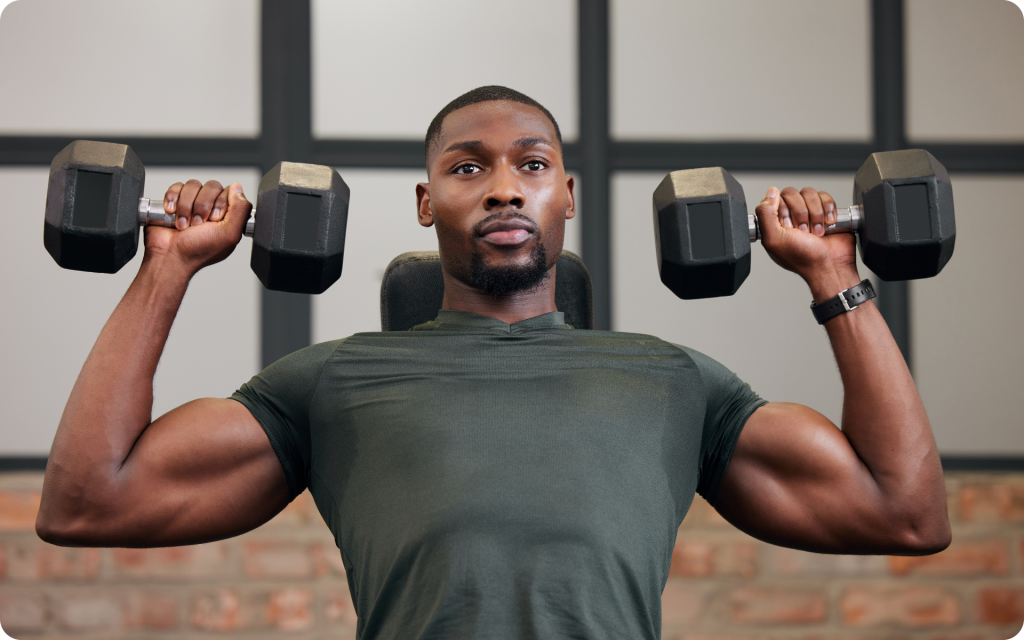
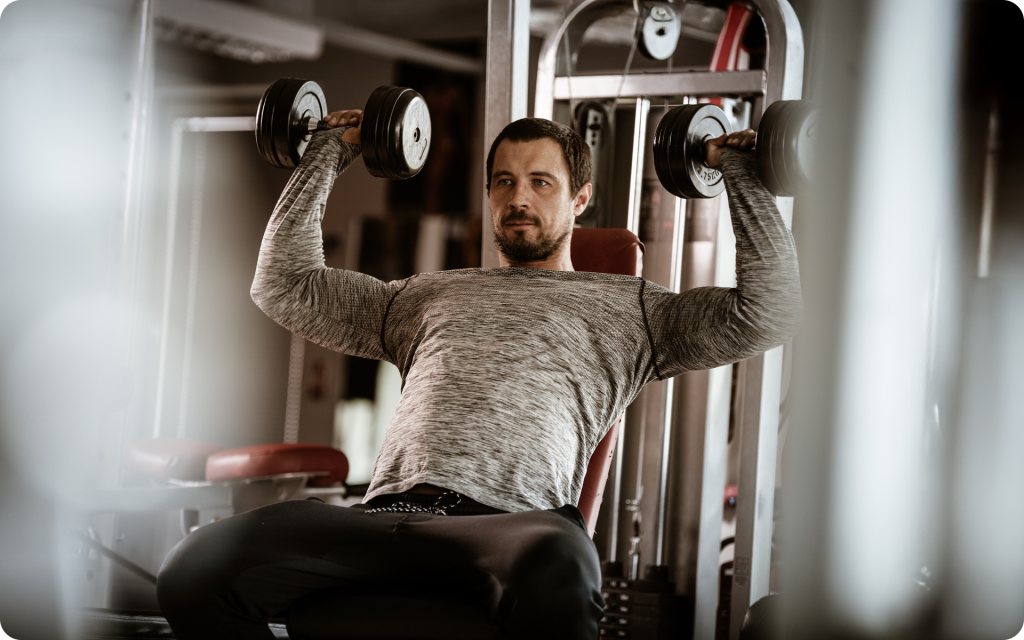
Seated Dumbbell Shoulder Press
- Sit on a bench with back support. Hold a dumbbell in each hand at shoulder height, with your palms facing forward and your elbows bent at a 90-degree angle.
- Press the dumbbells overhead until your arms are fully extended.
- Slowly lower the weights back to the starting position.
Leg Press
- Sit on the leg press machine and place your feet on the platform, shoulder-width apart.
- Release the safety catches and press the platform up until your legs are nearly extended, but don’t lock your knees.
- Slowly lower the platform by bending your knees until they form a 90-degree angle.
- Push through your heels to press the platform back to the starting position.
Whether you’re a workout beast or just a beginner making your first foray into the world of fitness and dieting – BetterMe has a lot to offer to both newbies and experts! Install the app and experience the versatility first-hand!
Lat Pulldown
- Sit at the lat pulldown machine and adjust the knee pad to secure your legs.
- Grasp the bar with a wide, overhand grip.
- Keeping your torso upright, pull the bar down toward your upper chest, squeezing your lats.
- Slowly return the bar to the starting position with control.
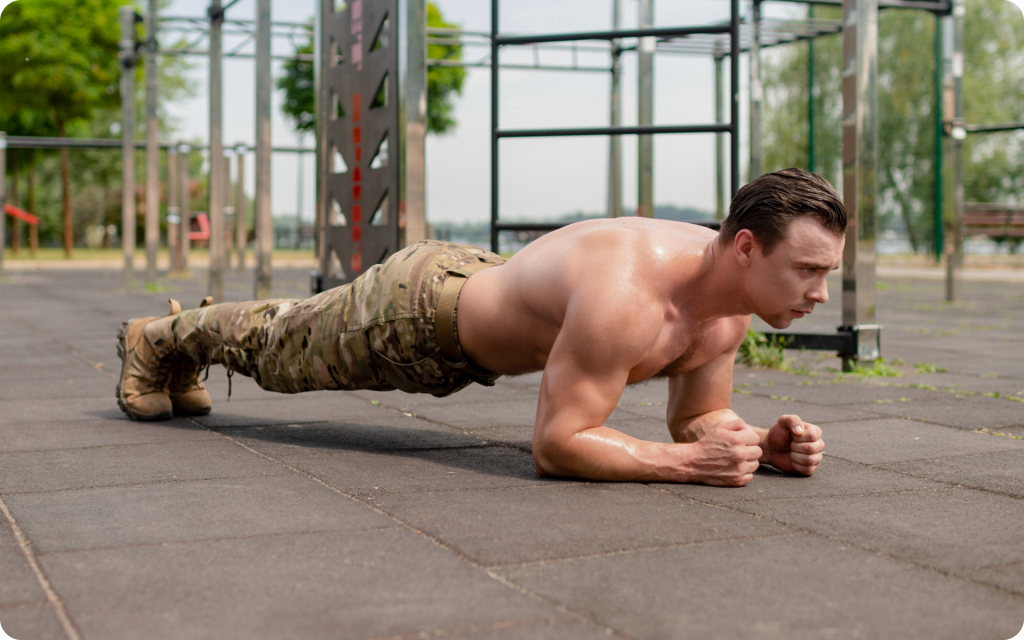
Plank
- Start in a push-up position, but with your weight resting on your forearms instead of your hands.
- Your body should form a straight line from your head to your heels.
- Engage your core and glutes to prevent your hips from sagging.
- Hold this position for the prescribed amount of time.
Many women can also benefit from a similar, structured approach to fitness. You can learn more by reading about strength training for women over 50.
Are There Any Exercises to Avoid After 50?
There aren’t any specific exercises that every person over 50 must avoid. The appropriateness of an exercise depends on an individual’s health status, injury history, and fitness level. However, individuals with frailty or specific health conditions should be more cautious. Frailty is a state of increased vulnerability that results from age-associated declines in multiple physiological systems.
The NSCA provides specific recommendations for older adults with frailty to ensure safety while still promoting functional improvements (5).
- Resistance Training
Perform resistance training 2-3 times per week. Start with an intensity as low as 20-30% of 1RM to master form, and gradually progress toward 80% of 1RM. A program of 3 sets of 8-12 repetitions is effective.
- Power
Power training is essential for this population. Include exercises performed at high speed with low to moderate intensity (30-60% of 1RM). This has been shown to produce marked improvements in the performance of functional tasks.
- Functional Training
Exercises should simulate daily activities. The sit-to-stand exercise (squatting to a box or chair) is a prime example that directly translates to improved functional capacity.
- Endurance Training
Most men don’t need to “wait” to start endurance work – walking is a safe, low-barrier place to begin while you build strength and balance in parallel. Start with 5-10 minutes of brisk walking and progress toward 15-30 minutes. Other low-impact options include stationary cycling or stair climbing, depending on joint comfort and fitness level.
Intensity can be monitored using the rate of perceived exertion (RPE) scale – a level of 12-14 on the Borg scale (which runs 6-20) is generally well tolerated.
- Balance Training
To reduce the risk of falls, include specific balance exercises. Examples include standing on one leg, heel-toe walking, and tandem foot standing (placing one foot directly in front of the other).
- Progression
Progression should be gradual. Slowly increase the volume (sets/reps), intensity (weight), and complexity of the exercises as you get stronger. Listening to your body is paramount – don’t push through pain.
There is no single “best” exercise for losing belly fat, as you cannot spot-reduce fat from one area of your body (15). The most effective approach is a combination of total-body resistance training to build muscle and increase metabolism and cardiovascular exercise to burn calories. A consistent, well-rounded fitness program paired with a healthy diet is the key. Yes, absolutely. While the rate of muscle synthesis may be slower than in younger years, men in their 50s and beyond can still achieve significant muscle growth (hypertrophy) with a properly structured resistance training program and adequate protein intake (16). There isn’t a single “hardest age” to build muscle, but it does become more challenging as you get older because your body’s ability to build and repair muscle slows down over time. This is mainly due to natural changes such as reduced efficiency in muscle protein synthesis. However, with a consistent strength training program and good nutrition, you can still build muscle effectively at any age. High-intensity interval training (HIIT) and total-body resistance workouts are highly effective for burning overall body fat, which will include stomach fat. These activities burn a significant number of calories and boost your metabolism for several hours after the workout is complete (17, 18). Drinking water doesn’t directly burn fat, but it’s an essential part of any weight loss strategy. Staying hydrated can boost your metabolism, help you feel full (reducing overall calorie intake), and improve your body’s efficiency at metabolizing stored fat for energy (19).Frequently Asked Questions
What is the best exercise for a 50-year-old man to lose belly fat?
Can a 50-year-old man still build muscle?
What is the hardest age to build muscle?
What burns the most stomach fat?
Does drinking water help lose belly fat?
The Bottom Line
Regaining strength and getting in shape after 50 isn’t only possible, it’s one of the most powerful investments you can make in your long-term health and happiness. By following a structured, science-backed plan that includes strength training, cardio, and mobility work, you can rebuild your body, boost your energy, and reclaim the active life you want to live. Consistency, patience, and a smart approach are your greatest allies on this journey.
DISCLAIMER:
This article is intended for general informational purposes only and does not serve to address individual circumstances. It is not a substitute for professional advice or help and should not be relied on for making any kind of decision-making. Any action taken as a direct or indirect result of the information in this article is entirely at your own risk and is your sole responsibility.
BetterMe, its content staff, and its medical advisors accept no responsibility for inaccuracies, errors, misstatements, inconsistencies, or omissions and specifically disclaim any liability, loss or risk, personal, professional or otherwise, which may be incurred as a consequence, directly or indirectly, of the use and/or application of any content.
You should always seek the advice of your physician or other qualified health provider with any questions you may have regarding a medical condition or your specific situation. Never disregard professional medical advice or delay seeking it because of BetterMe content. If you suspect or think you may have a medical emergency, call your doctor.
SOURCES:
- Impact of Exercise Training on Physiological Measures of Physical Fitness in the Elderly (2016, pubmed.ncbi.nlm.nih.gov)
- Age-Associated Differences in Recovery from Exercise-Induced Muscle Damage (2025, mdpi.com)
- An exercise program to reduce abdominal visceral and subcutaneous fat in adults with overweight and obesity: A systematic review and meta-analysis of randomized controlled trials (2025, sciencedirect.com)
- Visceral Fat: What Is It? (2024, webmd.com)
- Resistance Training for Older Adults: Position Statement From the National Strength and Conditioning Association (2019, nsca.com)
- Test–Retest Reliability of the One-Repetition Maximum (1RM) Strength Assessment: a Systematic Review (2020, pmc.ncbi.nlm.nih.gov)
- Increasing muscle mass to improve metabolism (2013, pmc.ncbi.nlm.nih.gov)
- Examining how resistance training affects bone strength in older adults with rheumatic diseases: a systematic review (2025, link.springer.com)
- Machine-Based Resistance Training Improves Functional Capacity in Older Adults: A Systematic Review and Meta-Analysis (2024, mdpi.com)
- The Benefits of Strength Training for Musculoskeletal Health (2025, brownhealth.org)
- Muscle-strengthening activities are associated with lower risk and mortality in major non-communicable diseases: a systematic review and meta-analysis of cohort studies (2021, bjsm.bmj.com)
- Can resistance training improve mental health outcomes in older adults? A systematic review and meta-analysis of randomized controlled trials (2024, sciencedirect.com)
- Older Adult Activity: An Overview (2025, cdc.gov)
- Effects of Resistance Training Frequency on Measures of Muscle Hypertrophy: A Systematic Review and Meta-Analysis (2016, pubmed.ncbi.nlm.nih.gov)
- Spot reduction: why targeting weight loss to a specific area is a myth (2023, sydney.edu.au)
- Muscles adaptation to aging and training: architectural changes – a randomised trial (2021, link.springer.com)
- The Effect of High-Intensity Interval Training Type on Body Fat Percentage, Fat and Fat-Free Mass: A Systematic Review and Meta-Analysis of Randomized Clinical Trials (2023, mdpi.com)
- Full-body resistance training promotes greater fat mass loss than a split-body routine in well-trained males: A randomized trial (2024, pubmed.ncbi.nlm.nih.gov)
- Water intake, hydration, and weight management: the glass is half-full! (2025, sciencedirect.com)
 Reviewed by