Most of us spend time doing squats and lunges, but working on the deeper glute and hip muscles can help give our hips a more sculpted look and provide strength and stability in our back and hips. We’re talking about gluteus medius and minimus here. Those muscles aren’t there for aesthetics – they’re important for keeping our hips stable and our knees aligned.
Do you also want to define those curves well and just look better?
This guide covers comprehensive glute exercises you can perform at the gym and at home to enhance your curves. Let’s find out.
How Do You Work Your Glutes More Comprehensively?
To effectively work your glutes in a more robust way, you need to focus on the gluteus medius and gluteus minimus. Although the gluteus maximus, which is the largest muscle, does most of the power work, the smaller muscles help move your leg outward and inward and keep your hips and pelvis stable (1, 2).
Single-leg exercises and side-to-side (lateral) movements are often the most effective for activating the deeper gluteal muscles.
- Side-Lying Hip Abduction: Often ranked among the top in clinical studies, this move can activate more than 80% of the muscle (3). To make it more difficult, add ankle weights or use a cable machine at the gym.
- Single-Leg Squats/Pistol Squats: Balancing on one leg engages your deeper glutes to keep your hips steady and prevent them from dropping (4).
- Lateral Step-Ups: Studies rate this as a very high-activation exercise (5, 6). Stepping up sideways instead of forward places direct tension on the gluteus medius.
- Single-Leg Romanian Deadlift (RDL): Although it’s often considered a hamstring exercise, standing on one leg challenges your balance and rotation. This also makes it an effective deep glute builder.
If you have access to a full gym, these machines allow you to add the heavy resistance that’s necessary for muscle growth (hypertrophy).
| Machine | Best exercise | Why it works |
|---|---|---|
| Seated abductor machine | Seated hip abductions | Directly isolates the medius (7). Pro Tip: Lean slightly forward to increase the stretch |
| Cable machine | Standing cable abduction | Provides constant tension throughout the entire movement |
| Leg press | High and wide leg press | Placing your feet high and wide on the platform shifts the load away from the quads and onto the glutes |
Recent research using muscle tracking and movement analysis has shown that some exercises better target the side glutes than others.
A 2009 study published in the Journal of Orthopaedic & Sports Physical Therapy indicates that simple isolation exercises, such as side-lying hip abduction (leg raises), are highly effective for activating the gluteus medius (8).
However, exercises such as side planks and resisted single-leg squats create the most strength and tension in the gluteus medius and minimus. In simple terms, isolation exercises help you feel the burn. On the other hand, strength- and balance-based movements are the key to building stronger, more developed glutes.
Read more:Glute Workout Routine: 7 Must-Have Exercises and Tips
How Do You Work Your Deeper Glute Muscles?
Focus has recently shifted to functional loaded abduction. It involves exercises where your body position, balance, and load all matter. Although the hip abduction machine is popular for deep gluteal exercise, your stability and torso angle play a bigger role in how much muscle you actually build.
Here are some more options for working your deeper gluteals:
- The Clamshell Evolution
The clamshell has long been seen as a beginner’s exercise. However, a weighted side-plank clamshell, where you lift your hips while keeping your knees open, can increase the challenge to your glutes.
BetterMe: Health Coaching app helps you achieve your body goals with ease and efficiency by helping to choose proper meal plans and effective workouts. Start using our app and you will see good results in a short time.
- The Curtsey Factor
Despite the regular lunge, the curtsey lunge puts the gluteus medius into a deep stretch. This type of stretch under load, which is known as eccentric loading, is another great way to stimulate muscle growth (9), and this factor makes it one of the best glute exercises for development.
- Cable Kick-Backs (45-Degree Angle)
Most people kick straight back during this move. However, kicking back at a 45-degree angle better aligns the resistance with the muscle fiber (10). This can make the exercise more effective.
These exercises can play a central role in developing the deeper glutes. Beginners can start with lighter, simpler versions, while more advanced variations are ideal for building strength and muscle over time.
What Machine Targets the Deeper Glute Muscles?
When you step into a gym, you’ll notice that most machines are focused on straight, forward-and-back movements, also known as the sagittal plane. However, building your side glutes requires resistance that works side-to-side.
If you want to go beyond the squat rack, specific side glute exercises with gym machines are also effective for targeting and isolating the gluteus medius and minimus.
The Seated Hip Abductor
The seated hip abductor is one of the easiest and most effective machines for targeting the side glutes. As it guides your movement, it’s particularly useful for beginners who are still learning how to engage the right muscles.
The steps to exercise on this machine are:
- Sit on the machine and place your feet flat on the floor or footrests.
- Position your thighs against the pads and grip the handles for support.
- Engage your core and sit tall or lean slightly forward if that’s comfortable.
- Slowly push your legs outward until you feel your glutes contract.
- Pause briefly at the open position and squeeze your outer hips.
- Bring your legs back in slowly and with control.
- Repeat for the desired number of reps.
The way you position your body on the machine matters. Remember, sitting tall with your core engaged helps you remain in control.
The Multi-Hip Machine
Often found tucked away in a corner, this machine has a rotating arm that moves in all directions. It’s one of the most flexible machines for side glute training.
Here’s how you can use this machine correctly:
- Adjust the pad to sit just above your knee on the working leg.
- Stand sideways to the machine and hold the handles or frame for balance.
- Keep your standing leg slightly bent and your core engaged.
- Slowly move the working leg outward against the pad.
- Pause briefly at the top and squeeze your glute.
- Return your leg to the starting position with control.
- Complete all reps, then switch sides.
BetterMe will shake off your mental funk, rid you of your energy-zapping habits, and help you sculpt the body of your dreams. Intrigued? Hurry up and change your life for the better!
The 45-Degree Extension
This machine is typically used for lower-back or glute-ham work, but a small adjustment can make it an effective deep glute exercise.
To do this, you need to:
- Set yourself up on the machine, with your hips resting comfortably on the pad.
- Place your feet on the platform and turn them outward at a 45-degree angle.
- Lower your upper body slightly while keeping your spine neutral.
- Push through your heels and lift your body back up.
- As you rise, focus on squeezing the sides of your hips, not your lower back.
- Pause briefly at the top, then lower yourself again with control.
- Repeat for the desired number of reps.
You’ll find several other options when you start looking for deep glute exercise machines. Evidence supports the use of machines for developing the side glutes.
For example, a study by Andersson and Herö (2011) examined a device called the Proprio-plate (Proprioplattan). It was designed to add lateral resistance during squats. This resistance continuously activates the gluteus medius to prevent the knees from collapsing inward.
The results showed significantly greater gluteus medius activation than with regular bodyweight squats. The muscles were working throughout the full range of motion. The device also activated both sides evenly, supporting better pelvic stability and left-right muscle balance (11).
Therefore, these are the signs that machines are great tools for enhancing your side glutes.
What Is a Comprehensive Glute Exercise Gym Workout?
A comprehensive glute exercise targets the muscles deeper in your hips and glutes. Although gym machines are great, beginners can build a strong foundation using the best bodyweight glute exercises before adding weights or equipment.
Perform this workout 2 to 3 times per week. Rest for 30-45 seconds between sets.
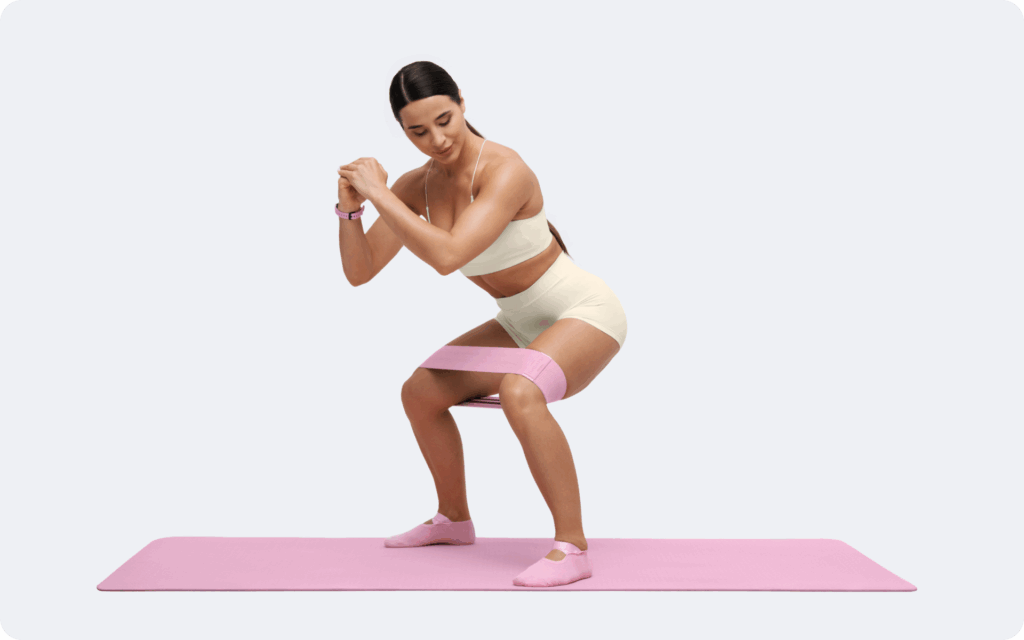
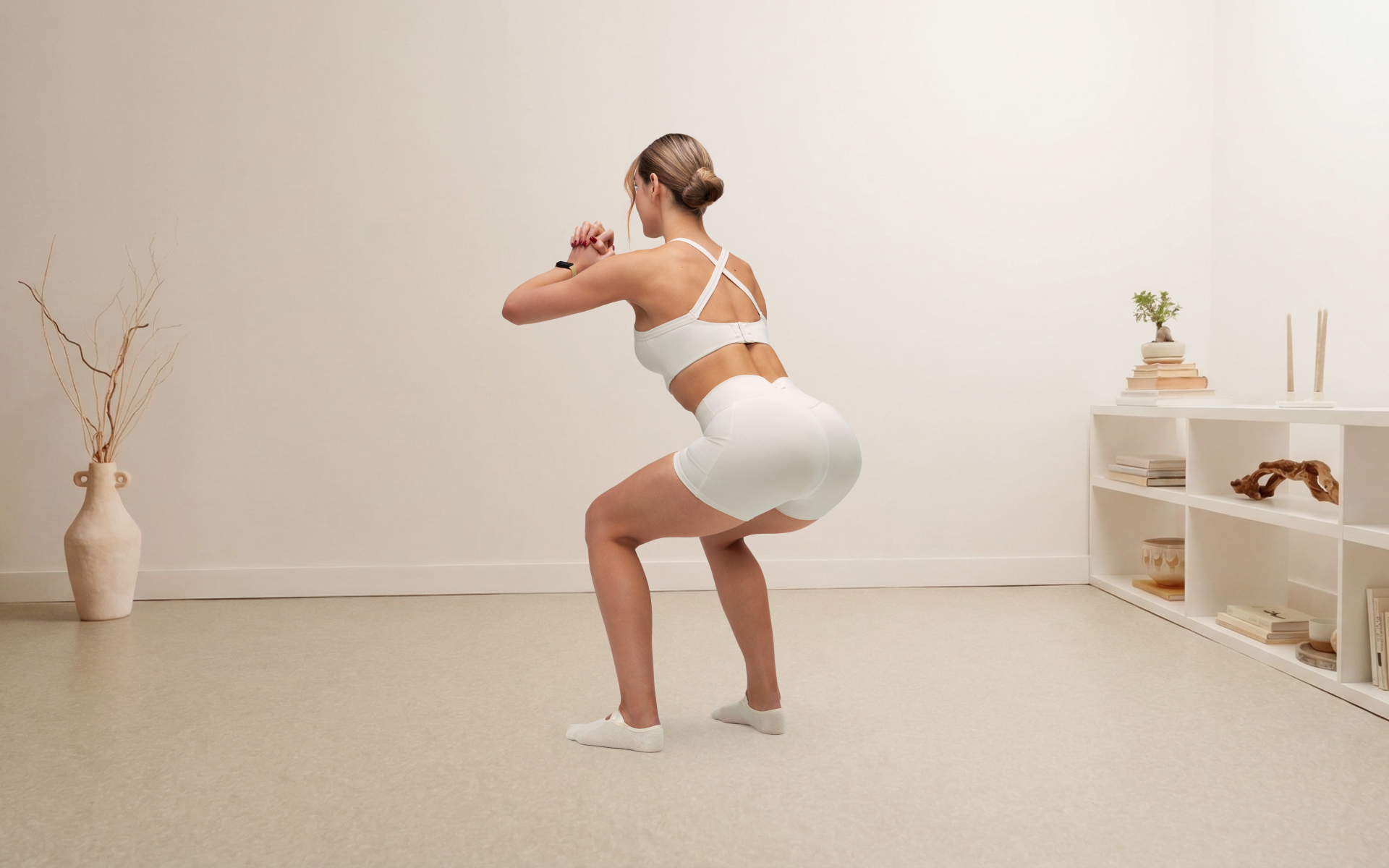
Bodyweight Squats
- Stand with your feet shoulder-width apart.
- Sit back into a squat.
- Push through your heels to stand up.
2-3 sets of 12-15 reps
Side-Lying Leg Raises
- Lie on your side with legs stacked.
- Lift the top leg upward slowly.
- Keep your hips steady, avoid rolling backward.
2-3 sets of 12-15 reps per side
Clamshells
- Lie on your side with your knees bent and your feet together.
- Open your top knee while keeping your hips still – avoid rolling backward.
2-3 sets of 15 reps per side
Lateral Lunges
- Step out to the side.
- Bend the stepping knee.
- Push back to the starting position.
2 sets of 10-12 reps per side
Glute Bridge Hold
- Lie on your back, with your feet flat on the floor.
- Lift your hips and hold while squeezing your glutes.
2 sets of 20-30 seconds
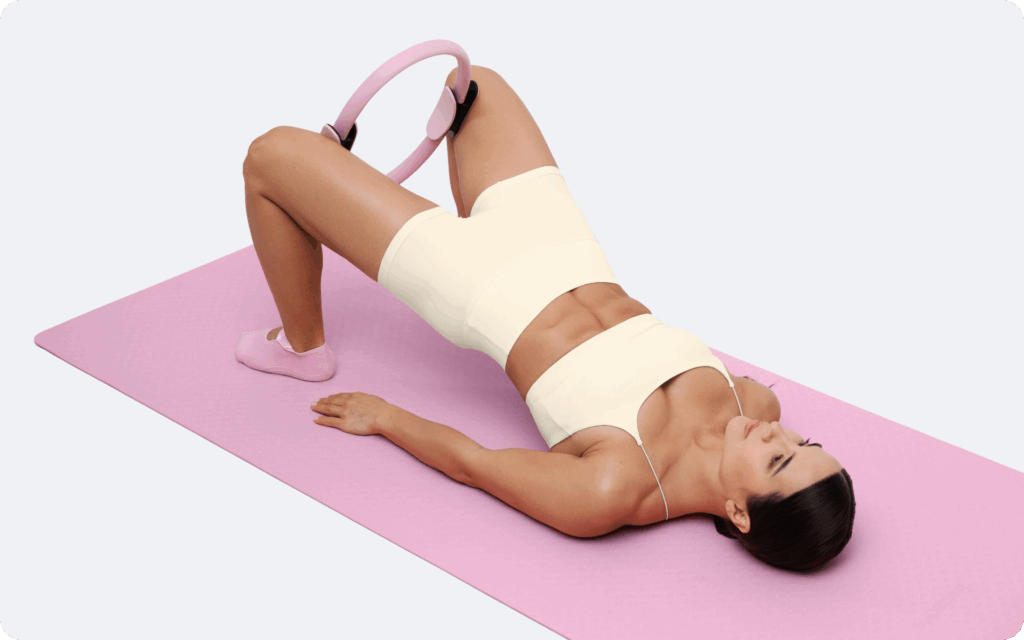
This workout sequence shows that the best bodyweight glute exercises don’t need to be complicated. Once these exercises feel comfortable, you can gradually progress to gym machines or weighted variations for greater results. If you’re curious about the best glute workout, check out our earlier article.
Is It OK to Train Side Glutes Every Day as a Woman?
When performing side glute exercises at the gym, female workout enthusiasts often find themselves in a fix. Should we do this training every day or take breaks? This is one of the commonly asked questions.
When you train your deep glutes, tiny tears form in the muscle fibers. Your body needs time to repair these tears and rebuild the muscle. This is to make it stronger and more rounded, which usually takes approximately 24 to 48 hours (12).
Working the same muscles every day doesn’t give them enough time to recover. This can slow your results and increase the risk of hip pain or overuse injuries such as bursitis or tendonitis.
For the best results, aim for 2 to 3 sessions per week, with at least one day of rest between sessions. This may let you train at higher intensity and with heavier resistance, which is likely more effective.
Read more: Can Pilates Build Glutes Just Like Weight Training?
How Long Does It Take to Build Deep Glutes?
Building visible glutes takes time and involves both muscle hypertrophy (growth) and neurological adaptation. For most women, you may notice a slight firmness in the muscles within a couple of weeks. However, clear changes in hip shape usually appear after weeks of consistent training.
The timeline below might help you get a clear vision of how things work:
- Weeks 1-4: The visual change is not visible during this phase. You may feel more accomplished and happier after your workouts, but don’t expect highly defined muscles at this point.
- Weeks 5-8: During this stage, your glute muscles start to grow and thicken. When you consume enough protein and gradually increase your weights, you may notice greater fullness and shape in the upper and outer parts of your glutes (13).
- Weeks 12+: By three months, the cumulative effect of tissue growth can be more visible (14). This is the point at which your clothes start to fit differently, and your side glutes may become more defined.
A study published in the Journal of Sport and Health Sciences emphasizes that mechanical tension is the primary driver of growth (15). This means that five minutes of focused, heavy work on a cable abduction machine or weighted lateral step-ups can turn out to be more effective for building your glutes than doing hundreds of unweighted exercises.
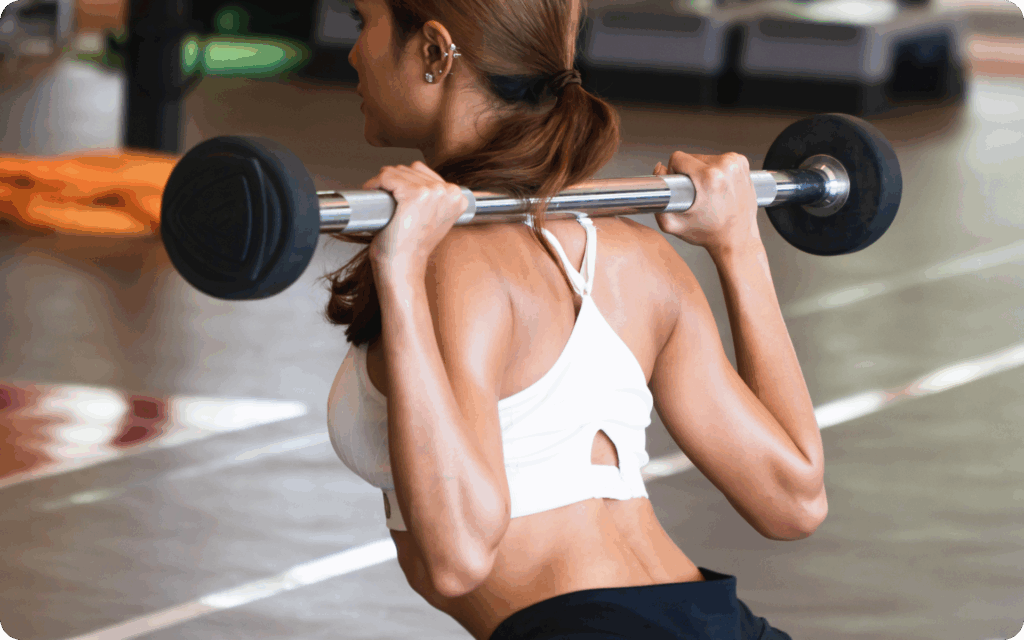
Why Won’t My Glutes Grow?
Honestly, it’s not because your glutes are broken – it’s probably one of these common mistakes:
- You’re skipping progressive overload. Doing the same reps and weight forever won’t make your glutes grow.
- Your form is off. If your knees are doing the work or you’re relying too much on machines, you most likely aren’t stressing your glutes enough.
- You’re training too often or not enough. Muscles need 24-48 hours to recover. Overdoing it or underdoing it both stall growth.
- You’re not eating enough protein or calories. Growth doesn’t happen in the gym alone – your body needs fuel.
- You’re sticking to bodyweight or isolation moves only. Machines, cables, and compound exercises help you fully stress the glute medius and minimus.
Fix these issues, remain consistent, and your side glutes might start to show in a couple of months.
Yes, two days a week is considered to be the sweet spot for most lifters. As muscle protein synthesis remains elevated for about 48 hours post-workout, a twice-weekly frequency may help you maximize these growth windows while providing enough recovery time. Yes! To actually grow your glutes, your body needs extra fuel. Eating a little more than your usual calories, or at least staying at maintenance while getting enough protein, can give your muscles the energy to grow. Aim for approximately 1.6-2.2g of protein per kg of body weight to help repair and build your glute muscles. There isn’t a single “best” glute exercise. It depends on which muscle you want to emphasize. Hip thrusts are often considered the king for building the gluteus maximus because EMG research has shown high peak activation. However, if your goal is to develop the gluteus medius and minimus, lateral movements and single-leg exercises are essential. Your glutes are a mix of slow-twitch and fast-twitch fibers, so they like a mix of rep ranges. Combining both is key to stronger, fuller glutes. For the best muscle growth, you should aim for 8-12 reps on your main lifts. Note that your glutes can grow with a wide range of reps, from 6 to 30. So don’t stress too much about exact numbers – focus on working hard and feeling the muscle.Frequently Asked Questions
Is 2 glute days a week enough?
Do I need to eat more to grow glutes?
What is the number one glute exercise?
Do glutes respond better to high or low reps?
How many reps are best for glute growth?
The Bottom Line
Glutes play an important role in shaping your overall appearance.
When your curves are well-defined, they add confidence and a noticeable lift to your posture and silhouette. Strong side glutes can also improve your balance, stability, and hip function, which helps with everyday movements and workouts.
Include targeted exercises, use proper form, and give your muscles time to recover. And soon, you can build a rounded and shapely set of side glutes that complements your physique.
When all the cards are played right, you’ll be all set to slay with those curvy curves!
DISCLAIMER:
This article is intended for general informational purposes only and does not serve to address individual circumstances. It is not a substitute for professional advice or help and should not be relied on for making any kind of decision-making. Any action taken as a direct or indirect result of the information in this article is entirely at your own risk and is your sole responsibility.
BetterMe, its content staff, and its medical advisors accept no responsibility for inaccuracies, errors, misstatements, inconsistencies, or omissions and specifically disclaim any liability, loss or risk, personal, professional or otherwise, which may be incurred as a consequence, directly or indirectly, of the use and/or application of any content.
You should always seek the advice of your physician or other qualified health provider with any questions you may have regarding a medical condition or your specific situation. Never disregard professional medical advice or delay seeking it because of BetterMe content. If you suspect or think you may have a medical emergency, call your doctor.
SOURCES:
- Gluteus maximus muscle (2023, kenhub.com)
- The Study of the Cross-Sectional Areas of the Gluteal Muscles on Magnetic Resonance Images of the Weighlifting Athletes (2021, mattioli1885journals.com)
- AN EXAMINATION OF THE GLUTEAL MUSCLE ACTIVITY ASSOCIATED WITH DYNAMIC HIP ABDUCTION AND HIP EXTERNAL ROTATION EXERCISE: A SYSTEMATIC REVIEW (2015, pubmed.ncbi.nlm.nih.gov)
- The single leg squat: when to prescribe this exercise (2016, repository.mdx.ac.uk)
- Electromyographic activity in the gluteus medius, gluteus maximus, biceps femoris, vastus lateralis, vastus medialis and rectus femoris during the Monopodal Squat, Forward Lunge and Lateral Step-Up exercises (2020, pmc.ncbi.nlm.nih.gov)
- A SYSTEMATIC REVIEW AND META-ANALYSIS OF COMMON THERAPEUTIC EXERCISES THAT GENERATE HIGHEST MUSCLE ACTIVITY IN THE GLUTEUS MEDIUS AND GLUTEUS MINIMUS SEGMENTS (2020, pmc.ncbi.nlm.nih.gov)
- Hip abduction machine is better than free weights to target the gluteus medius while minimizing tensor fascia latae activation (2022, pubmed.ncbi.nlm.nih.gov)
- Gluteal Muscle Activation During Common Therapeutic Exercises (2009, jospt.org)
- Hypertrophic Effects of Concentric vs. Eccentric Muscle Actions: A Systematic Review and Meta-analysis (2017, journals.lww.com)
- Gluteus Medius Muscle Activities during Standing Hip Abduction Exercises in the Transverse Plane at Different Angles (2015, pubmed.ncbi.nlm.nih.gov)
- A NEW TRAINING DEVICE TO OPTIMIZE MUSCLE ACTIVATION OF THE GLUTEUS MEDIUS DURING PROGRESSIVE HIP FLEXION (2011, scispace.com)
- Muscle activation and volume load performance of paired resistance training bouts with differing inter-session recovery periodsL’activité musculaire et la charge volumique associées avec différentes périodes de récupération entre les sessions (2021, sciencedirect.com)
- The increase in muscle force after 4 weeks of strength training is mediated by adaptations in motor unit recruitment and rate coding (2019, semanticscholar.org)
- A Systematic Review with Meta-Analysis of the Effect of Resistance Training on Whole-Body Muscle Growth in Healthy Adult Males (2020, pmc.ncbi.nlm.nih.gov)
- Load-induced human skeletal muscle hypertrophy: Mechanisms, myths, and misconceptions (2025, sciencedirect.com)
 Reviewed by
 Reviewed by