For Pilates, what you wear matters more than it might seem. The right clothing lets you move through a full range of motion, helps your instructor see and correct your form, and keeps you comfortable throughout the session. This guide covers every clothing decision — from tops and bottoms to fabrics and accessories — so you can show up to class ready to move.
What Should You Wear to a Pilates Class?
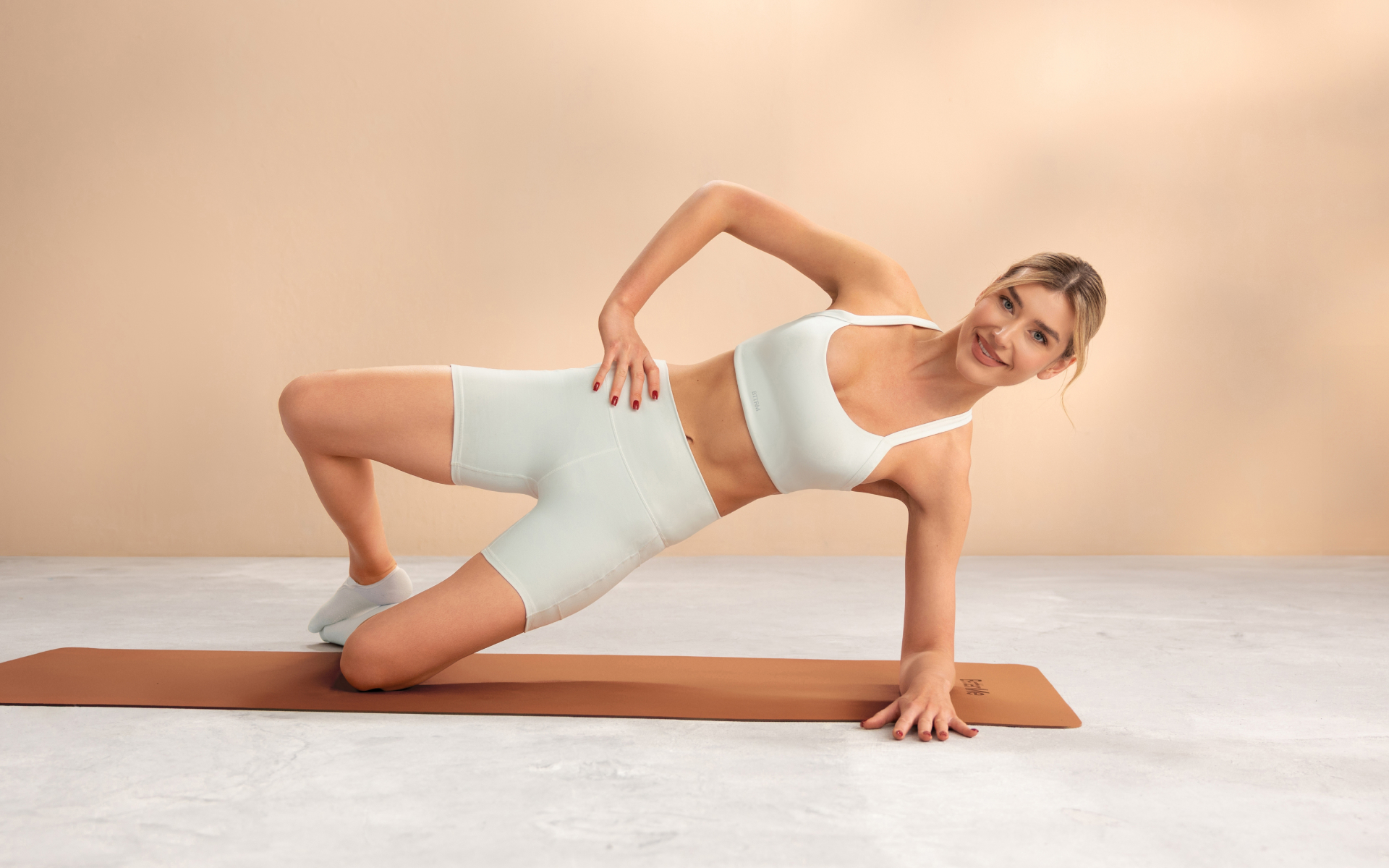
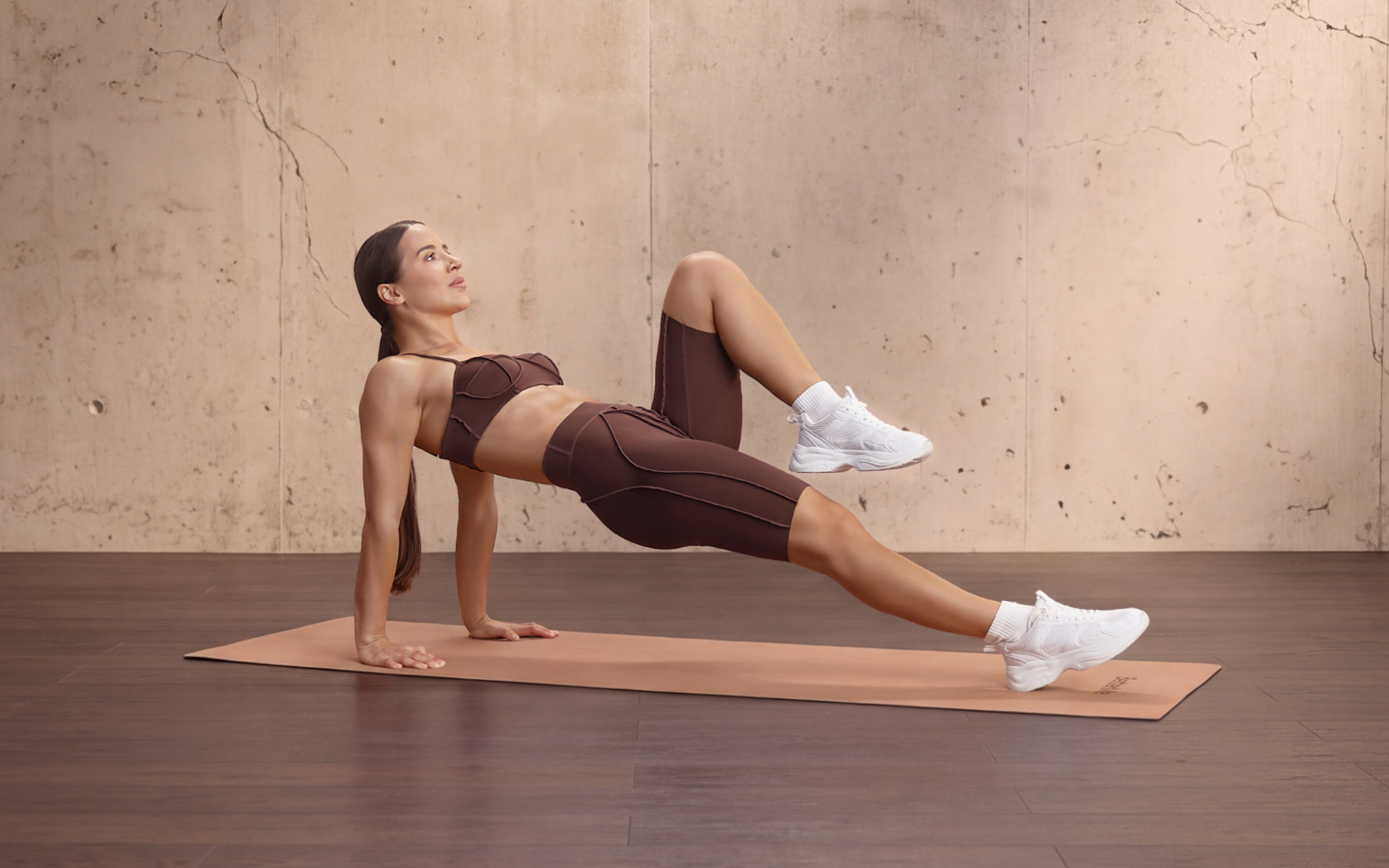
Pilates clothing works best when it’s form-fitting, stretchy, and breathable. Unlike gym wear designed for high-impact training, Pilates outfits are built for controlled, precise movement — so the focus is on fabrics that move with your body and fits that stay in place without restricting you.
Here’s what a typical Pilates outfit includes:
Tops
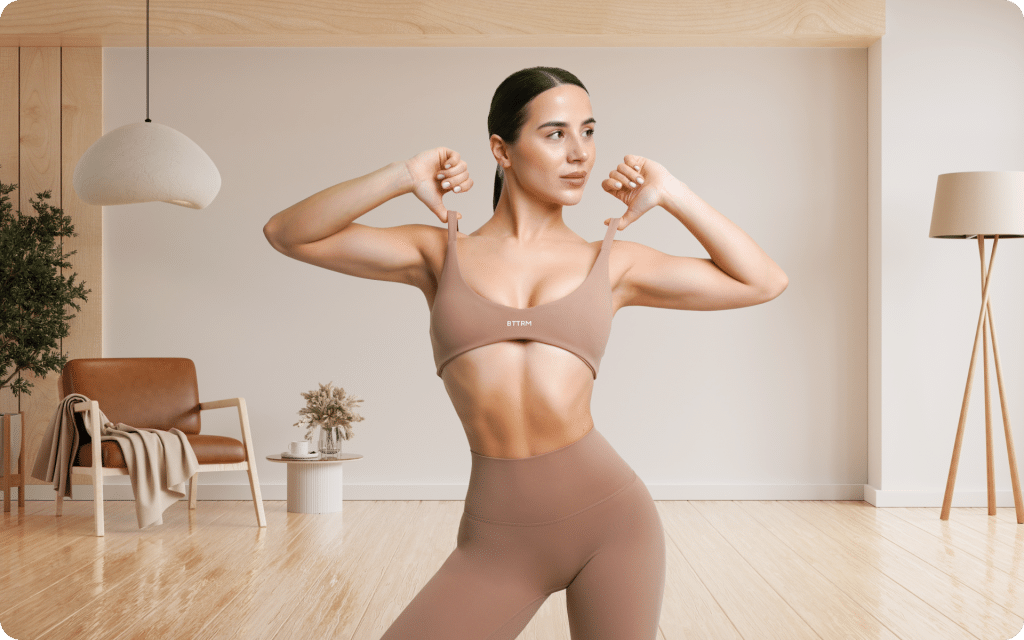
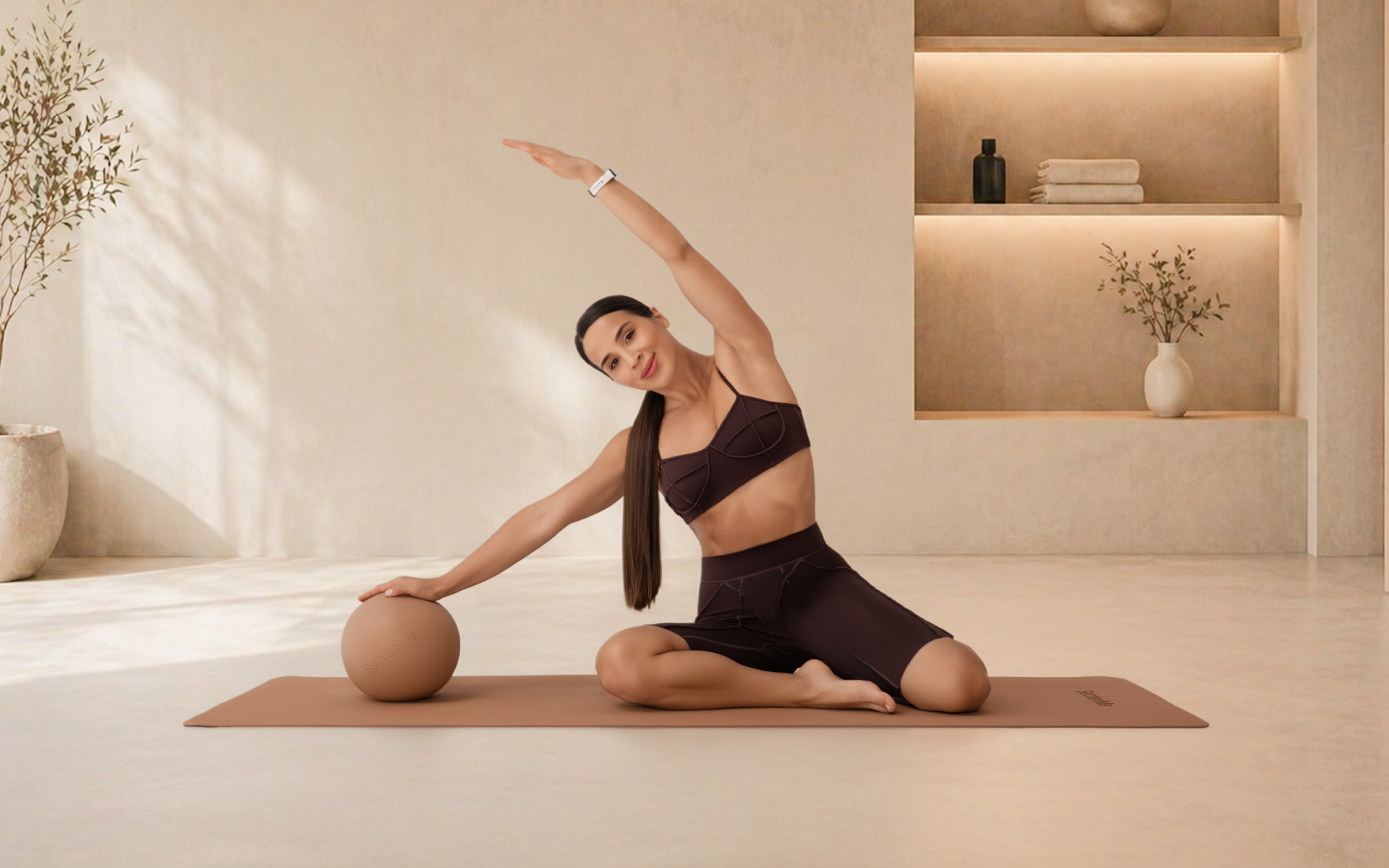
A fitted tank top or cropped top works well for most Pilates sessions. The fit should be snug enough that it doesn’t ride up or bunch during mat work or reformer exercises, but not so tight that it restricts breathing or movement. Short fitted sleeves are also a practical option — avoid loose or wide sleeves that could catch on equipment.
Tops with built-in shelf bras are useful for reducing layers. If you prefer more support, a simple fitted tank paired with a separate sports bra underneath works just as well.
Sports bras
Pilates is a low-impact practice, so you don’t need the same level of support as you would for running or high-intensity training. A low- to medium-support sports bra is generally enough. Look for soft, flexible straps and a construction that stays comfortable during mat work, where you’ll be lying down, sitting up, and rolling through the spine.
Those who need more support will typically find medium-impact bras with wider straps more comfortable for longer sessions.
Leggings and bottoms
High-waisted leggings are the most popular option for Pilates. They stay in place during inversions and leg raises, provide coverage, and let you check your alignment in a studio mirror. Look for a no-roll waistband and a fabric weight that’s light enough not to feel restrictive.
During warmer months, high-waisted cycling shorts are a practical alternative. They offer the same coverage and stretch as leggings with less fabric.
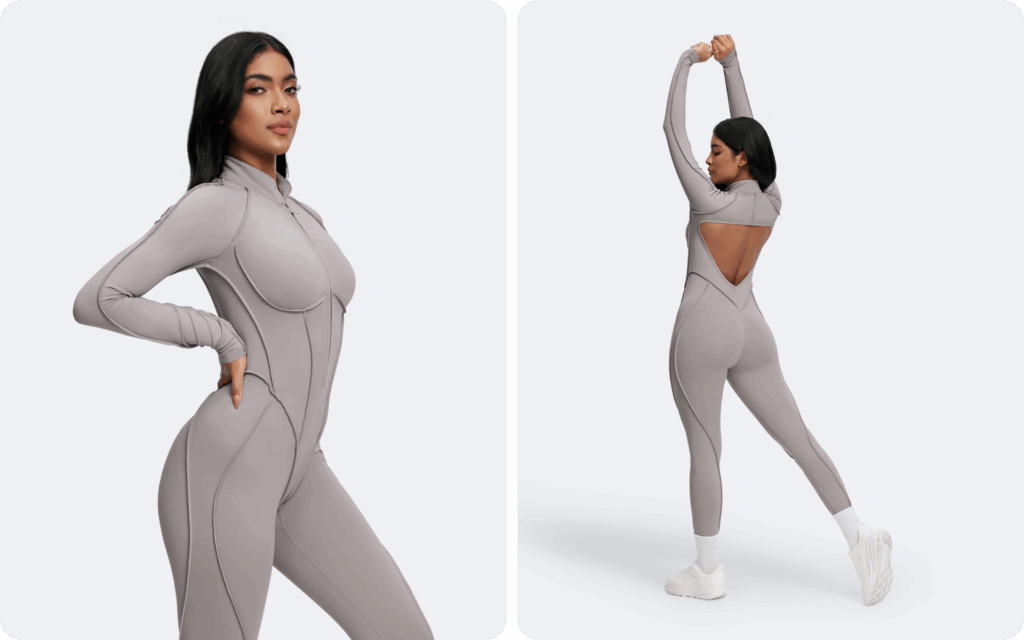
Catsuits and jumpsuits
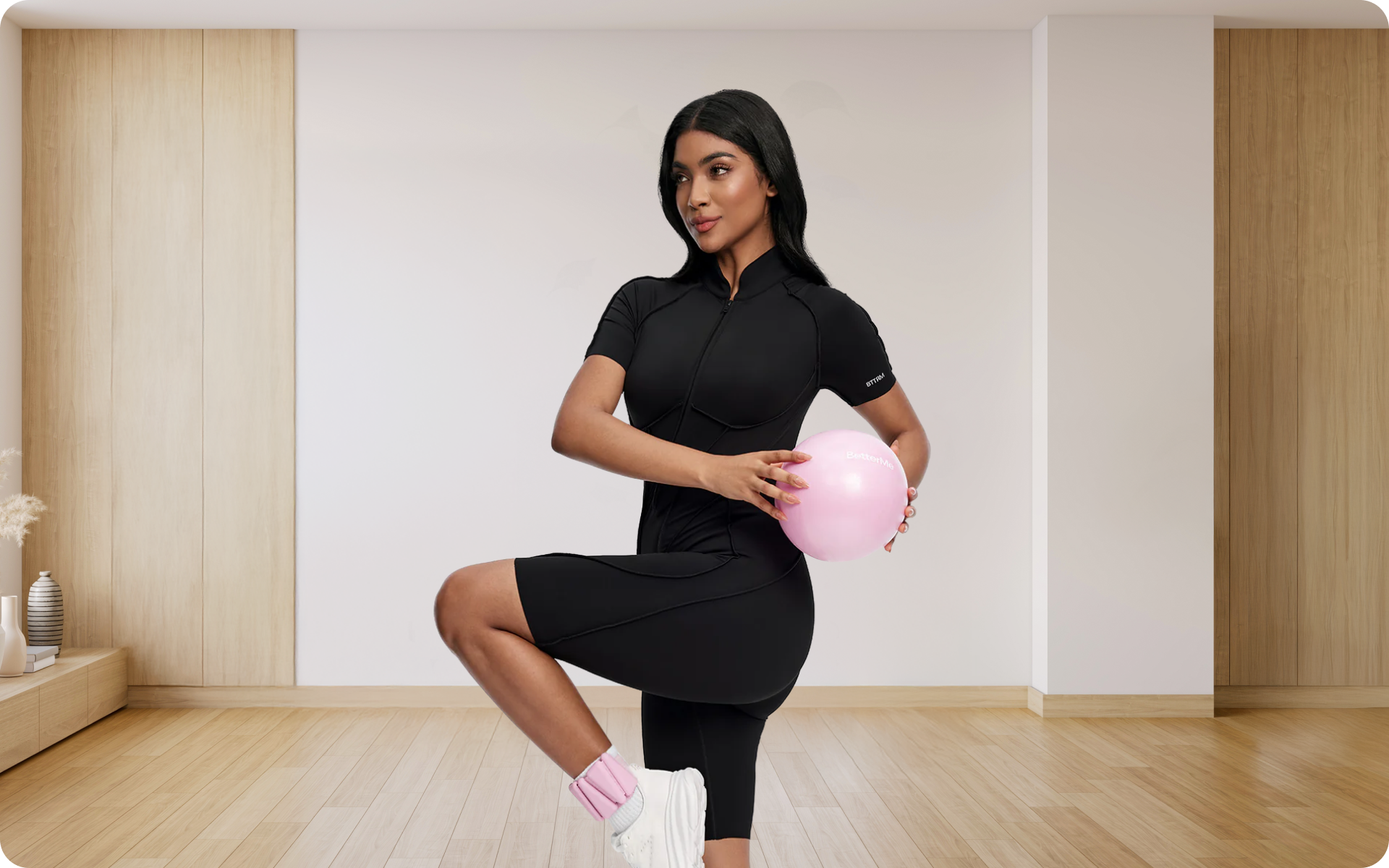
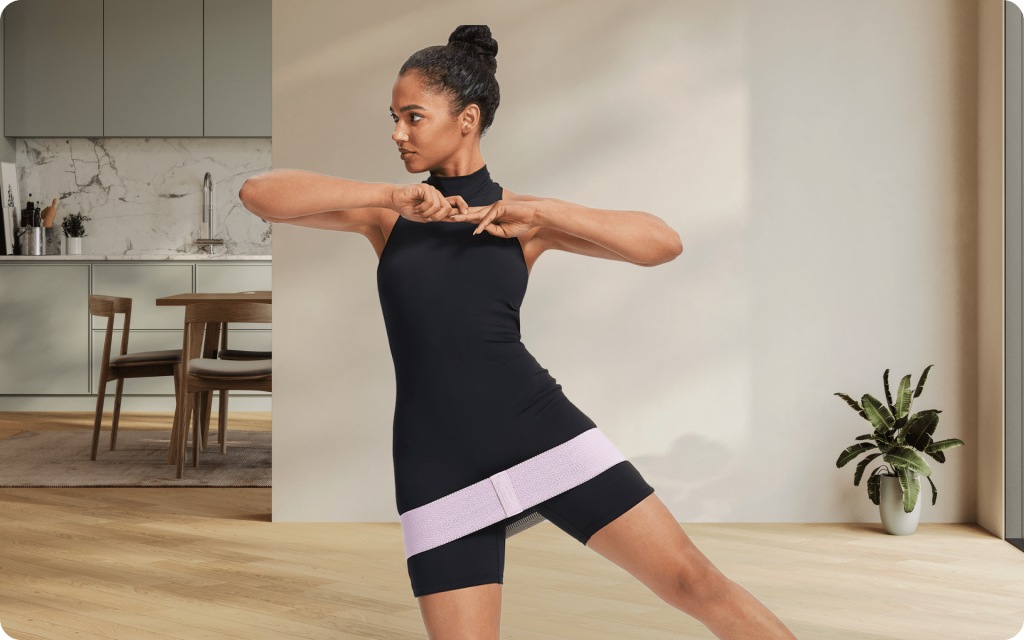
A fitted catsuit or jumpsuit is a one-piece alternative to mixing tops and bottoms. It eliminates the need to coordinate separate pieces, stays tucked in during all types of movement, and comes in short or long-leg versions to suit different preferences. This is a practical option for anyone who wants a simple, streamlined outfit without thinking about it.
What Features Should Pilates Clothing Have?
Does fit matter for Pilates?
Yes — fit is one of the most important considerations. Form-fitting clothing lets both you and your instructor easily see your alignment and posture during exercises. Loose or baggy clothing can obscure whether your hips are level, your spine is neutral, or your shoulders are stacked correctly.
That said, “form-fitting” doesn’t mean uncomfortably tight. The clothes should feel second-skin but move with you freely, without pulling, pinching, or restricting your breath.
How important is breathability?
Breathable clothing matters even in a low-impact practice. Research shows that non-breathable fabrics can interfere with the body’s ability to regulate temperature during exercise, which can affect both comfort and performance (1). While Pilates doesn’t typically generate the same heat as cardio training, longer sessions, heated studios, or reformer work can still warm the body significantly.
Look for lightweight, open-structure fabrics that allow air to circulate and moisture to move away from the skin.
Do seams and waistbands matter?
More than most people expect. Flat or seamless construction prevents chafing during floor work. No-roll waistbands keep leggings from sliding down during leg raises or hip exercises. These details make a real difference over a 45–60 minute session, especially when you’re focused on movement quality rather than adjusting your clothing.
BetterMe Well-Being Coach app helps you achieve your body goals with ease and efficiency by helping to choose proper meal plans and effective workouts. Start using our app and you will see good results in a short time.
What Are the Best Fabrics for Pilates Clothing?
What fabric works best for Pilates?
A blend of polyester and spandex (elastane) is the most widely used combination in Pilates and activewear, and for practical reasons.
Spandex is highly elastic — it can stretch significantly and return to its original shape. This means the fabric moves with your body through every exercise without losing its fit or becoming distorted over time. It’s also soft against the skin, which matters for floor work.
Polyester contributes moisture-wicking properties. It draws sweat away from the skin to the outer surface of the fabric, where it can evaporate more quickly. Research on sportswear textiles confirms that polyester-based fabrics have well-documented moisture transport and ventilation properties that support body temperature regulation during physical activity (2, 3).
Together, these two materials provide stretch, breathability, and shape retention — the three most important qualities for Pilates clothing.
Some Pilates clothing also incorporates nylon, which offers similar properties to polyester with a slightly softer feel. Cotton blends are less common in performance wear because cotton absorbs moisture rather than wicking it away, which can feel heavy and uncomfortable during exercise.
How Does Clothing Affect Pilates Performance?
Can what you wear actually improve how you perform?
Research on sportswear suggests that clothing comfort has a measurable effect on how people feel and perform during exercise. Studies on compression and form-fitting sportswear have found that garment fit and construction influence thermal comfort, perspiration, and physiological response during physical activity (4). When clothing feels uncomfortable — too hot, too restrictive, or constantly shifting — it creates a distraction that can take focus away from the movement itself.
In Pilates, where precision and body awareness are central, this matters. Clothing that fits well and moves freely lets you concentrate on breath, alignment, and control rather than managing your outfit.
Read more: How to Style a Sport Jumpsuit: Performance Tips
What Accessories Are Useful for Pilates?
Not essential, but worth considering:
Grip socks are probably the most useful Pilates accessory. They provide traction on reformer footbars and mat surfaces, reducing slipping during footwork and standing exercises. Most Pilates studios either recommend or require them.
A headband keeps hair and sweat away from your face during more dynamic sequences. Look for a moisture-wicking fabric rather than cotton, which can become heavy and damp.
Hair ties are practical for keeping hair secure and out of the way of the reformer carriage or mat straps.
A lightweight layer — a zip-up or loose cardigan — is useful for walking to and from a studio in cooler weather, or for wearing during a cool-down stretch at the end of class.
How Should You Choose Pilates Clothing for Your Body?
The most straightforward advice is to prioritize function over aesthetics. Choose clothing that:
- Stays in place through full range-of-motion movements
- Doesn’t require adjusting during class
- Feels comfortable against the skin during floor work
- Stretches without becoming see-through when you move
Beyond that, color, pattern, and style are personal preferences. Many people prefer neutral, monochromatic sets because they’re easy to mix and match and tend to photograph alignment clearly in mirrors. But any form-fitting, stretchy, breathable clothing that meets the functional criteria above will serve you well.
Browse Pilates workout clothing and equipment at BetterMe Store.
How Should You Care for Pilates Workout Clothes?
Proper care extends the life of stretch fabrics considerably:
- Wash inside out in cold water on a gentle cycle.
- Use a mild detergent and skip fabric softener — softeners coat synthetic fibers and reduce their moisture-wicking properties over time.
- Air-dry instead of using a tumble dryer. Heat breaks down spandex fibers and causes fabrics to lose their stretch and shape faster.
- Check regularly for loose threads or signs of wear at high-friction areas like the waistband and inner thighs.
BetterMe will shake off your mental funk, rid you of your energy-zapping habits, and help you sculpt the body of your dreams. Intrigued? Hurry up and change your life for the better!
Form-fitting is a suitable fit for Pilates. Close-fitting clothing lets you and your instructor see your alignment clearly, stays in place during floor work, and doesn’t catch on equipment. It should feel comfortable and unrestricted — not uncomfortably compressed. You can, but it’s not ideal for either activity long-term. Pilates clothing is designed for low-impact, precision movement and may not provide enough support or durability for the repetitive impact of running. Keeping separate sets for each activity tends to extend the life of both. They’re often interchangeable, and most stretch fabrics work for both. The main distinction is that reformer Pilates — unlike yoga — involves equipment with footbars, carriage rails, and straps, so avoiding loose-fitting clothing that could catch is more important. Grip socks are also more commonly used in Pilates than in yoga. Not strictly necessary for mat Pilates, but grip socks are widely recommended — and in many studios required — for reformer work. They improve traction on the footbar and carriage surfaces and keep feet cleaner in shared studio spaces.Frequently Asked Questions
Should Pilates sets be tight or loose-fitting?
Can you wear the same clothes for Pilates and running?
What’s the difference between yoga clothes and Pilates clothes?
Do you need special socks for Pilates?
The Bottom Line
The most important qualities in Pilates clothing are fit, stretch, and breathability. Form-fitting clothes that move with your body and stay in place during dynamic and floor-based exercises let you focus on what matters — movement quality and alignment. A polyester-spandex blend covers the fabric requirements for most people. Grip socks, a well-fitting sports bra, and high-waisted leggings or shorts round out a practical Pilates kit.
Find workout clothing suited to Pilates at BetterMe Store.
DISCLAIMER:
This article is intended for general informational purposes only and does not serve to address individual circumstances. It is not a substitute for professional advice or help and should not be relied on for making any kind of decision-making. Any action taken as a direct or indirect result of the information in this article is entirely at your own risk and is your sole responsibility.
BetterMe, its content staff, and its medical advisors accept no responsibility for inaccuracies, errors, misstatements, inconsistencies, or omissions and specifically disclaim any liability, loss or risk, personal, professional or otherwise, which may be incurred as a consequence, directly or indirectly, of the use and/or application of any content.
You should always seek the advice of your physician or other qualified health provider with any questions you may have regarding a medical condition or your specific situation. Never disregard professional medical advice or delay seeking it because of BetterMe content. If you suspect or think you may have a medical emergency, call your doctor.
SOURCES:
- The Role of Sports Clothing in Thermoregulation, Comfort, and Performance During Exercise in the Heat: A Narrative Review (2022, pmc.ncbi.nlm.nih.gov)
- Enhancing Drying Performance: Analyzing Fabric Parameters in Active Sportswear (2025, journals.sagepub.com)
- Advancements in Functional Smart and Wearable Textiles for Sportswear Applications (2025, pmc.ncbi.nlm.nih.gov)
- Study on the Compression Effect of Clothing on the Physiological Response of the Athlete (2022, pmc.ncbi.nlm.nih.gov)
 By
By 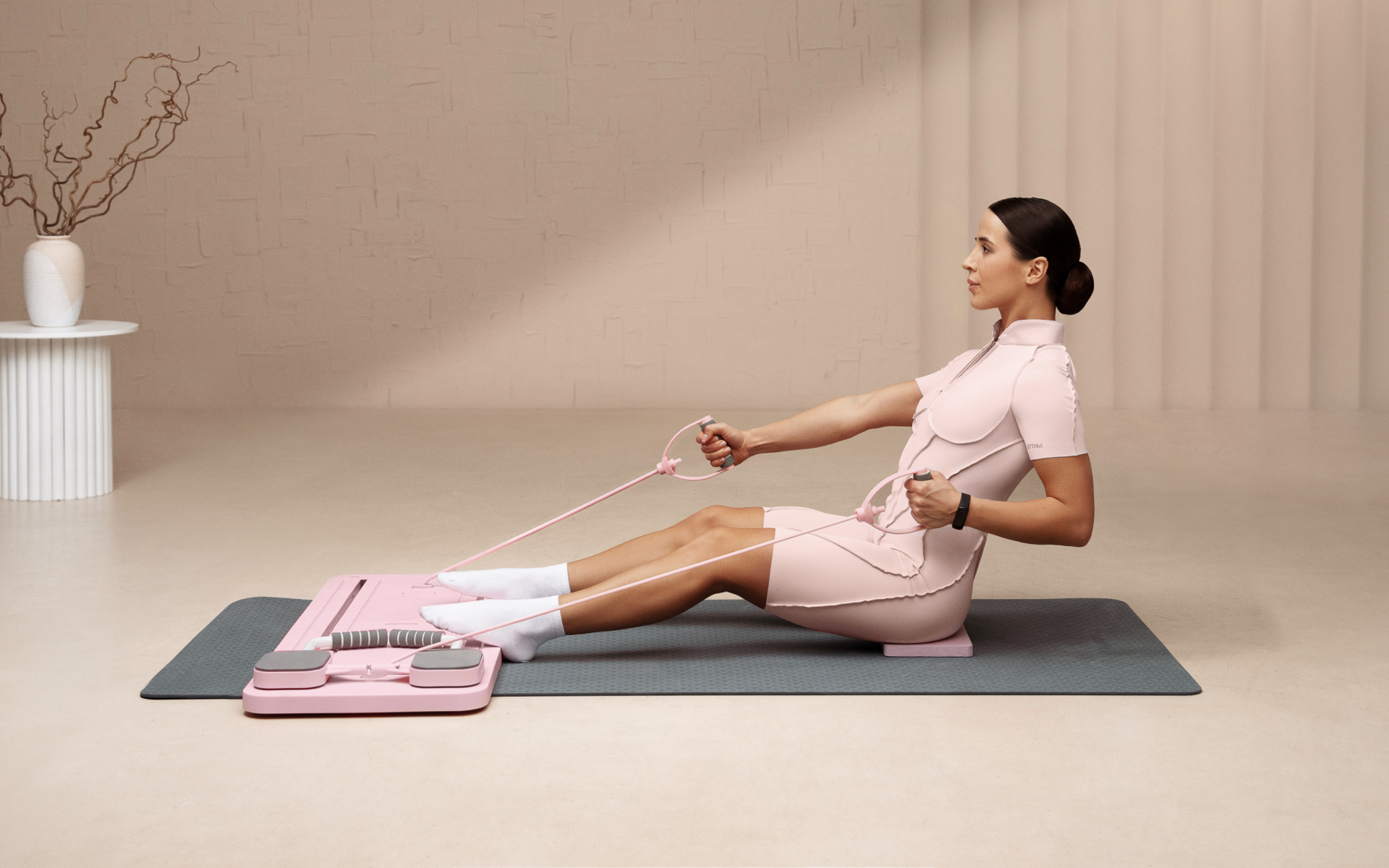
 Reviewed by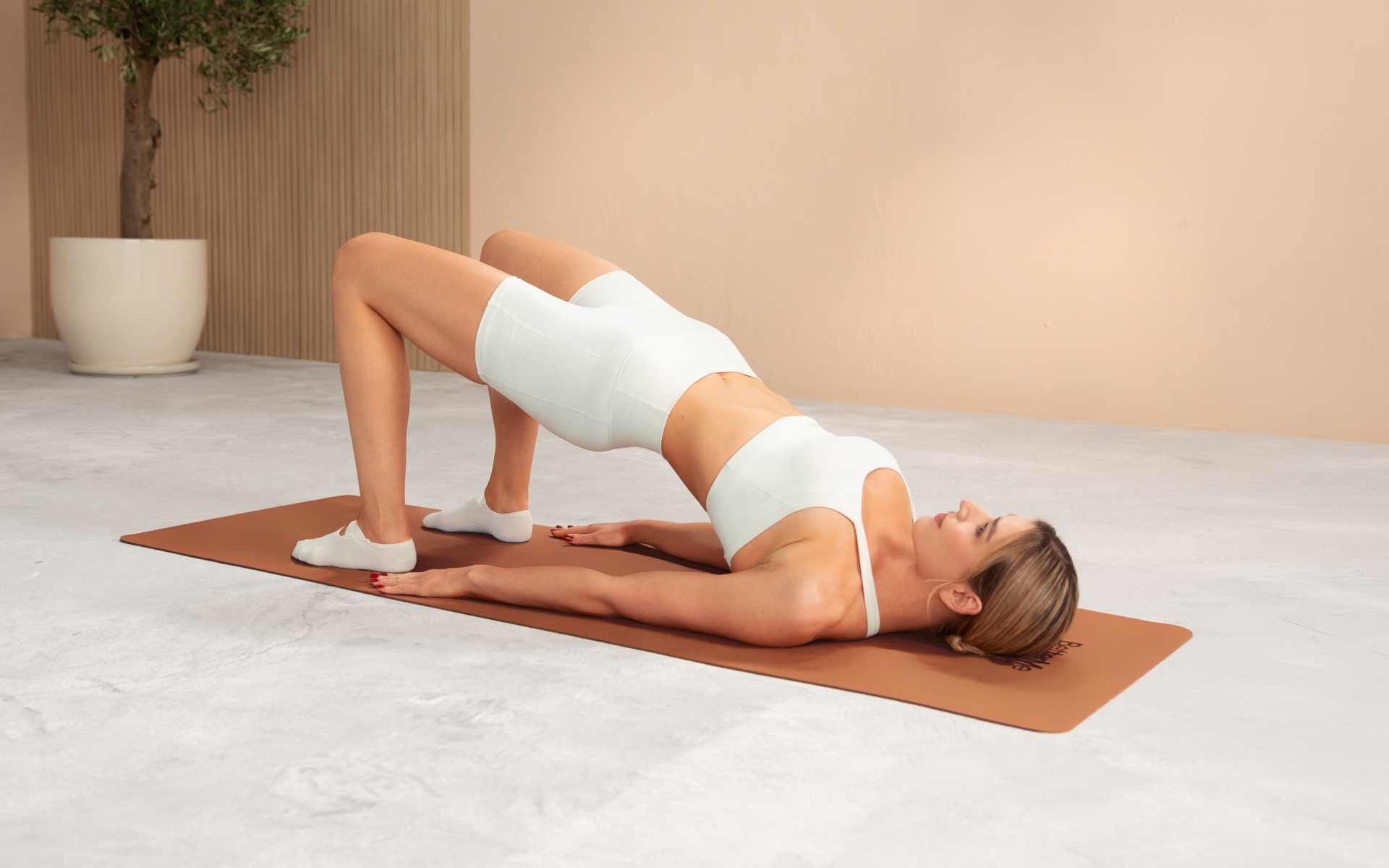
 By
By