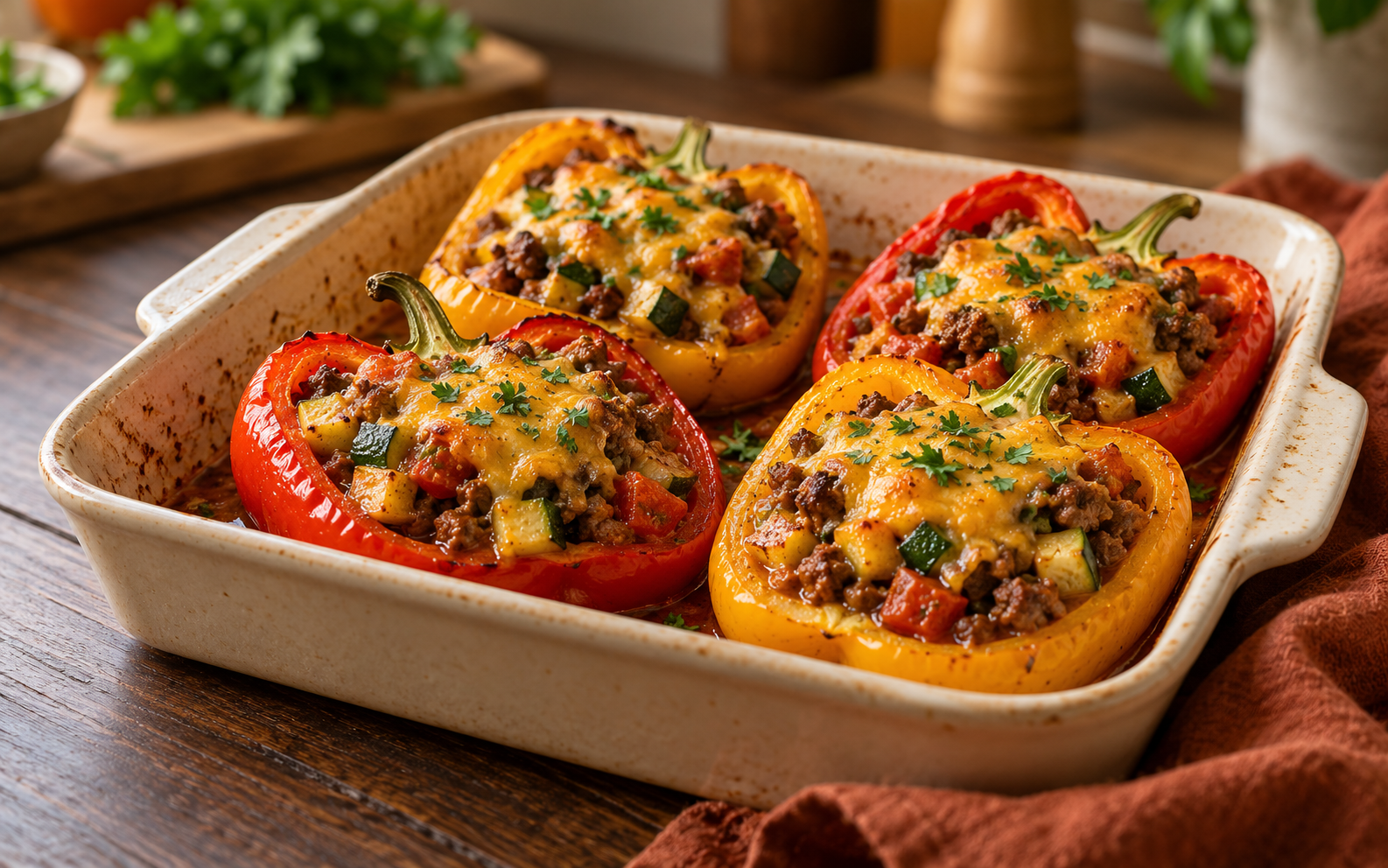
Stuffed peppers without rice use meat, vegetables, sauce, and cheese to fill bell pepper halves. Cauliflower rice is optional. Cook the filling first, then bake until the peppers soften and the center reaches the required temperature. Our guide to sweet peppers and nutrition explains the vegetable itself.
Key takeaways
These points cover the recipe, cooking temperatures, and storage.
- Rice is optional in stuffed peppers; chopped vegetables can add texture and help fill the pepper shells.
- This stuffed bell peppers recipe makes eight halves, with two halves per serving as a suggested portion.
- Cook ground beef or pork to 160°F / 71°C, and ground chicken or turkey to 165°F / 74°C (1).
- The finished filled peppers should reach 165°F / 74°C in the center, following casserole temperature guidance (1).
- Refrigerate leftovers promptly, use them within four days, and reheat them to 165°F / 74°C (2).
- Finished-dish carbohydrate totals depend on all ingredients and portions; rice-free does not mean carbohydrate-free.
Do stuffed peppers need to have rice?
Stuffed peppers do not need rice to hold a cooked filling. Ground meat, chopped vegetables, and a thick tomato sauce can fill the shells. Cheese is an optional topping, depending on the version you make.
Rice usually adds bulk and texture. Omitting white rice changes the filling, so avoid replacing it with a large amount of thin sauce. The mixture should be moist enough to spoon, with little loose liquid collecting in the pan.
You can use cauliflower rice, mushrooms, or chopped zucchini for variety. Each releases moisture differently. Cook watery vegetables before filling the peppers, and let excess liquid evaporate.
A rice-free recipe can suit someone who prefers fewer grain ingredients. It can also be a practical way to use vegetables already in the refrigerator. Whether the meal fits a particular carbohydrate target depends on the entire serving.
| Nutrients | Green Pepper | Red Pepper | Yellow Pepper | Orange Pepper |
|---|---|---|---|---|
| Calories | 20 | 26 | 27 | 32 |
| Carbs | 4.64 g | 6.03 g | 6.32 g | 6.7 g |
| Fat | 0.17 g | 0.3 g | 0.21 g | 0.16 g |
| Protein | 0.86 g | 0.99 g | 1 g | 0.88 g |
| Fiber | 1.7 g | 2.1 g | 0.9 g | 1 g |
| Calcium | 10 mg | 7 mg | 11 mg | 5 mg |
| Magnesium | 10 mg | 12 mg | 12 mg | 10.4 mg |
| Phosphorus | 20 mg | 26 mg | 24 mg | 27 mg |
| Potassium | 175 mg | 211 mg | 212 mg | 201 mg |
| Vitamin A | 18 µg RAE | 157 µg RAE | 10 µg RAE | N/A |
| Vitamin B6 | 0.22 mg | 0.29 mg | 0.17 mg | 0.33 mg |
| Vitamin C | 80.4 mg | 128 mg | 184 mg | 158 mg |
| Vitamin E | 0.37 mg | 1.58 mg | N/A | N/A |
Stuffed pepper recipe: ingredients and substitutions
Use four large bell peppers, ground beef, chopped vegetables, tomato sauce, and a cheese topping. The quantities below make a simple home recipe. Times are estimates, since ovens and pepper sizes vary.
Recipe details
|
Detail |
Amount or instruction |
|---|---|
|
Yield |
Eight stuffed pepper halves |
|
Suggested servings |
Four servings of two halves |
|
Preparation |
Approximately 20 minutes |
|
Stovetop filling |
Approximately 15 minutes |
|
Oven time |
Approximately 35 to 45 minutes, including prebaking |
|
Oven setting |
375°F / 190°C |
|
Equipment |
Large skillet, baking dish, chopping board, knife, food thermometer |
Preparation stages can overlap, but allow roughly 70 to 80 minutes when doing them in sequence. Use tenderness and temperature checks rather than relying on the clock as proof of doneness.
Ingredients
- 4 large bell peppers, any color
- 1 pound / 454 grams lean ground beef
- 1 tablespoon olive oil
- 1 small onion, finely chopped
- 8 ounces / 227 grams mushrooms, finely chopped
- 2 garlic cloves, minced
- 1 cup thick tomato sauce or marinara sauce
- 1 tablespoon tomato paste
- 1 teaspoon dried oregano
- ½ teaspoon paprika
- ¼ teaspoon ground black pepper
- ½ cup shredded cheddar cheese
- 2 tablespoons water for the baking dish
- Optional: chopped parsley for serving
Choose green peppers, red bell peppers, or a mix of colors in similar sizes. Large peppers vary considerably in capacity, which affects filling amounts and cooking time. Keep a small ovenproof dish ready for any extra filling.
Select a sauce with a flavor you enjoy. Compare the ingredient list and nutrition panel if salt or added sugar matters to your plan. A sauce’s label serving may differ from the amount used in the recipe (3).
The base recipe contains milk from cheese. Check sauce and seasoning labels for additional allergens. For a dairy-free version, omit the cheese or use a suitable alternative after checking its ingredients.
BetterMe is your fast-track ticket to a long-lasting weight loss! Tailor your fitness journey and maximize your results with just a couple of swipes!
How do you make stuffed peppers without rice?
Prebake the pepper halves, cook the filling, and finish the assembled dish in the oven. Keep raw meat separate from washed vegetables and ready-to-eat food. Wash utensils and preparation surfaces after handling raw meat (1).
Rinse the peppers and mushrooms under running water before cutting. Avoid soap or produce detergent. Dry the vegetables with a clean towel so excess water does not enter the filling (4).
Prepare and prebake the bell pepper halves
- Heat the oven to 375°F / 190°C.
- Cut each pepper lengthwise into two halves.
- Remove the seeds and white membranes.
- Arrange the halves cut-side up in a baking dish.
- Add two tablespoons of water around the peppers.
- Cover the dish with an ovenproof lid or foil.
- Bake for approximately 15 minutes to begin softening the shells.
Place the peppers in a dish large enough to hold them in one layer. Avoid cutting through the bottom of each half while removing membranes. Intact shells are easier to fill and lift from the dish.
Cook the ground beef filling
- Warm the olive oil in a large skillet over medium heat.
- Add the chopped onion.
- Cook until the onion begins to soften.
- Add the chopped mushrooms.
- Cook until much of their released liquid has evaporated.
- Stir in the minced garlic.
- Add the ground beef.
- Break the meat into small pieces as it cooks.
- Check that the ground beef reaches 160°F / 71°C.
- Stir in the tomato sauce, tomato paste, oregano, paprika, and pepper.
- Simmer until the filling is thick enough to spoon.
Ground beef needs a temperature check; color alone is unreliable. For ground turkey or chicken, use 165°F / 74°C instead. Keep the thermometer probe away from the hot skillet when measuring the food (1).
If the skillet is crowded, use a wider pan or cook the vegetables in batches. Extra liquid can make the filling slide out of the shells. Add more sauce only if the mixture becomes too dry.
Stuff the peppers and bake
- Remove the pepper dish from the oven.
- Spoon the cooked meat mixture evenly into the eight halves.
- Scatter the shredded cheese across the tops.
- Return the dish to the oven, uncovered.
- Bake for approximately 20 to 30 minutes.
- Check that the center of the filling reaches 165°F / 74°C.
- Continue cooking if the peppers remain firmer than you prefer.
- Let the dish stand briefly before serving.
The final temperature follows guidance for casserole-style dishes. Check several peppers, particularly those near the center of the dish. A browned cheese topping cannot confirm that the filling has heated through (1).
If the cheese browns before the peppers soften, loosely cover the dish again. Lift each half with a wide spatula. Spoon any escaped filling onto the plate alongside it.
What can you stuff peppers with besides rice?
Chopped mushrooms, cauliflower rice, and zucchini can provide texture without adding a grain. Cook each before assembly to manage moisture. Rice substitutes are optional; the base beef-and-mushroom filling already works without them.
|
Filling change |
Suggested adjustment |
Preparation note |
|---|---|---|
|
Cauliflower rice |
Replace the mushrooms with about two cups |
Cook until released moisture evaporates |
|
Chopped zucchini |
Replace some mushrooms with a similar volume |
Dice small and cook before adding sauce |
|
Extra mushrooms |
Use mushrooms as the main vegetable |
Avoid leaving liquid in the skillet |
|
Cooked lentils |
Replace part of the meat |
Recalculate carbohydrate and protein totals |
Use these as variations and adjust cooking times to the filling. Lentils add carbohydrate as well as protein, so they change the nutritional profile. A rice substitute does not have to imitate the taste or texture of rice exactly.
For a vegetable-only version, combine cooked mushrooms, cauliflower, and a protein food you enjoy, such as crumbled tofu. Check the complete recipe for allergens and suitability. Removing beef changes both texture and nutrition.
Our healthy dinner plate guide can help you choose sides and adjust the meal. A simple vegetable side may suit one person; another may want bread, potatoes, or a grain alongside.
How do turkey, chicken, and sausage variations differ?
Ground turkey and chicken can replace the ground beef, but they need the poultry cooking temperature. Ground pork sausage uses the ground-meat temperature. Check the package carefully because sausages may contain poultry or mixed meats (1).
Turkey or ground chicken
Use the same starting weight as the beef and assess the filling as it cooks. Lean poultry can dry out, so adjust the sauce gradually if needed. Cook it to 165°F / 74°C before assembling the peppers (1).
Season after reviewing the sauce’s salt content. Adding more cheese or oil changes the recipe again. Record substitutions if you plan to calculate nutrition or repeat the meal.
Sausage
Sausage brings its own seasoning, so reduce added seasonings until you have tasted the fully cooked mixture. Raw ground pork sausage should reach 160°F / 71°C; poultry sausage requires 165°F / 74°C (1).
Drain excess fat if necessary before adding the sauce. Different sausages can vary substantially in sodium and fat. Compare the exact products instead of assuming a sausage variation matches the beef version nutritionally.
Other flavor changes
Try mozzarella or Monterey Jack instead of cheddar. For another variation, season the cooked meat mixture with cumin or chili powder. Worcestershire sauce is another optional flavoring, but check its ingredients for fish and other allergens. Any gluten-free requirement needs label checks across sauces, seasonings, and prepared ingredients.
Can you make stuffed pepper casserole without rice?
Yes. Chop the peppers and combine them with the cooked filling in a baking dish. This changes the shape and serving method while keeping the same basic ingredients.
Cook the chopped peppers until they begin softening before combining them with the filling. Add the cheese topping and bake until the center reaches 165°F / 74°C. Oven time depends on the dish’s depth and starting temperature (1).
Avoid converting a deep casserole into the same time estimate as shallow pepper halves. Check the middle with a food thermometer and allow more time if needed. Divide the finished casserole into portions after cooking.

Are stuffed peppers without rice low-carb or keto-friendly?
Rice-free stuffed peppers may fit a lower-carbohydrate eating plan, depending on ingredients and serving size. Keto suitability requires the finished dish’s carbohydrate total and your overall daily intake. Calculate the carb count from your own ingredient labels.
For reference, one raw medium bell pepper weighing 148 grams provides approximately 25 calories and 6 grams of carbohydrate. The reference also lists 2 grams of fiber. Those figures describe the raw vegetable, not this filled recipe (5).
Finished-dish nutrition depends on the exact ingredients you use. Use the ingredient labels and weights if you need a reliable estimate. Avoid copying values from a different stuffed-pepper recipe.
- Record each ingredient and the amount used.
- Select matching nutrition information for that ingredient.
- Scale the values to the recipe quantity.
- Add the ingredient totals.
- Divide by the number of equal portions served.
A four-serving calculation assumes the complete batch is divided into four comparable portions. If pepper sizes differ, two halves may hold different amounts of filling. Keep the calculation method consistent when comparing versions (3).
If you’ve mustered up the courage to crush your weight loss goal, let Betterme take the sting out of this demanding process. Our app will help you restructure your habits, remold your life and crank up your fitness results!
How should you store and reheat stuffed peppers without rice?
Refrigerate cooked peppers promptly in shallow containers and use leftovers within four days. Keep the refrigerator at 40°F / 4°C or below. Reheat the center of the filling to 165°F / 74°C (1, 2).
Refrigerate perishables within two hours of cooking, or within one hour when temperatures exceed 90°F / 32°C. Avoid leaving the dish on the counter until completely cool. Discard food left out beyond those limits (1).
Freeze portions you will not use promptly. Label containers with the preparation date and thaw them in the refrigerator. Reheat only the portion you need, checking the center rather than judging by steam at the edges.
For microwave reheating, cover the food and rotate it for more even heating. Allow standing time before checking temperature. Pepper size, filling depth, and appliance power affect how long reheating takes (1).
Frequently Asked Questions
Should you precook the peppers and filling?
This recipe precooks both the pepper shells and meat filling. Skipping the pepper prebake may extend the final baking time. Keep the meat temperature checks and cover the top if the cheese browns early.
Can you freeze stuffed peppers without rice?
Yes. Freeze cooked portions promptly in suitable containers, thaw in the refrigerator, and reheat the center to 165°F / 74°C (1).
Can I make the peppers ahead of dinner?
Prepare the cooked filling and washed pepper shells separately, then refrigerate them promptly. Assemble before baking; a chilled filling may need longer to reach 165°F / 74°C (1).
Is a dairy-free cheese swap nutritionally equivalent?
No. Ingredients and protein content vary between products. Read the replacement’s nutrition panel and recalculate the finished dish if you are tracking nutrients (3).
How can I plan other meals around leftover peppers?
Keep the peppers for a main meal and vary breakfast separately. Our breakfast ideas without eggs or dairy offer options for a different part of the day.
The bottom line
Start with the beef-and-vegetable filling and change one ingredient at a time. Cook the meat first, check the finished filling temperature, and refrigerate leftovers promptly. Use the ingredients and portions you actually prepare when calculating nutrition.
Disclaimer
DISCLAIMER:
This article is intended for general informational purposes only and does not serve to address individual circumstances. It is not a substitute for professional advice or help and should not be relied on for making any kind of decision-making. Any action taken as a direct or indirect result of the information in this article is entirely at your own risk and is your sole responsibility.
BetterMe, its content staff, and its medical advisors accept no responsibility for inaccuracies, errors, misstatements, inconsistencies, or omissions and specifically disclaim any liability, loss or risk, personal, professional or otherwise, which may be incurred as a consequence, directly or indirectly, of the use and/or application of any content.
You should always seek the advice of your physician or other qualified health provider with any questions you may have regarding a medical condition or your specific situation. Never disregard professional medical advice or delay seeking it because of BetterMe content. If you suspect or think you may have a medical emergency, call your doctor.
SOURCES:
These sources support the research cited in this article.
- Safe Food Handling (2024, www.fda.gov)
- People at Risk of Food Poisoning (2025, www.foodsafety.gov)
- Serving Size on the Nutrition Facts Label (2024, www.fda.gov)
- 7 Tips for Cleaning Fruits, Vegetables (2021, www.fda.gov)
- Nutrition Information for Raw Vegetables (n.d., www.fda.gov)

 Reviewed by