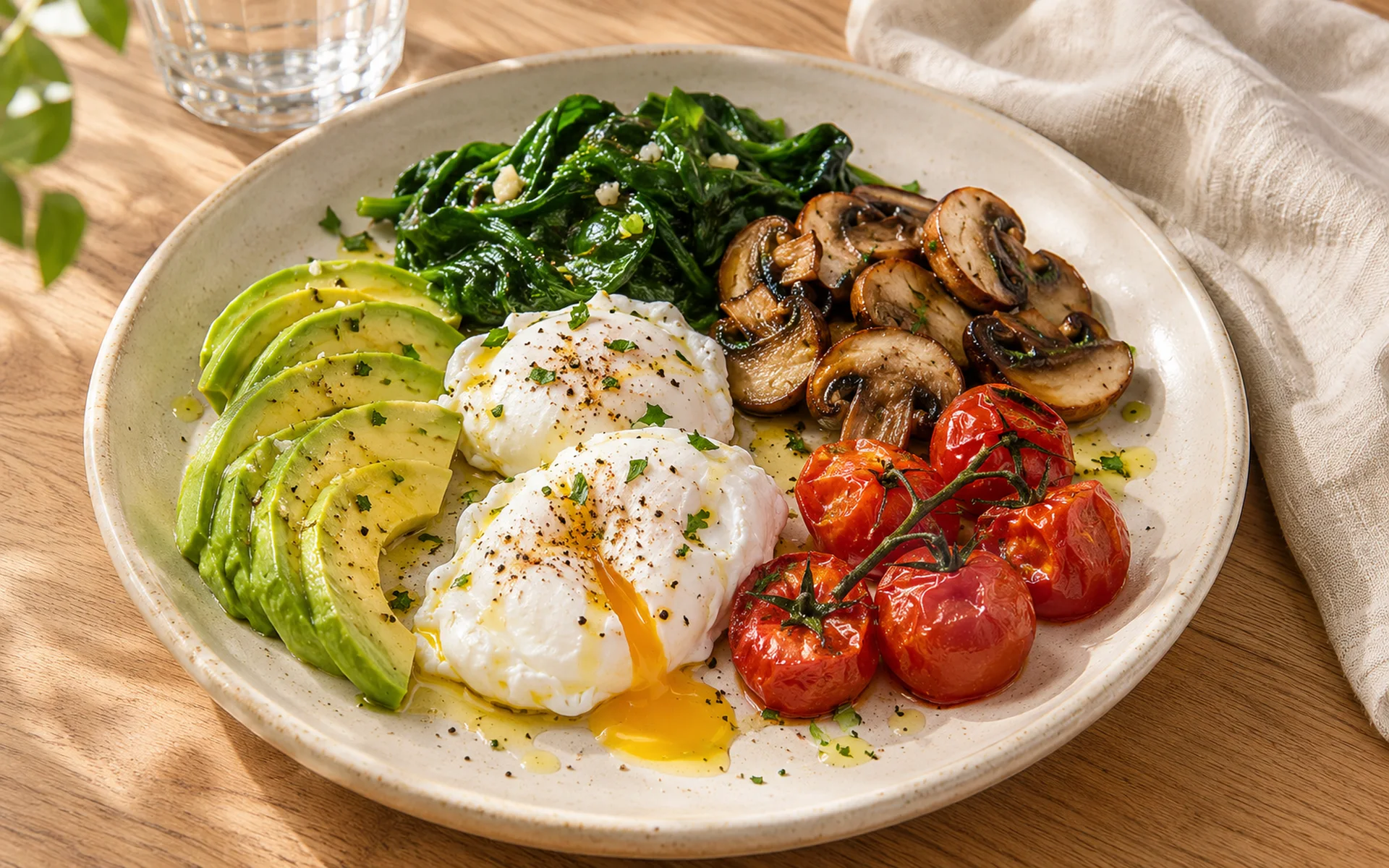
A low-carb diet menu replaces most bread, pasta, sweets, and sugary drinks with protein foods, vegetables, and healthy fats. This 10-day plan suits adults who want a structured trial without counting every gram. The guide lists meals, swaps, and realistic expectations. For shopping help, use our low-carb diet food list*.*
Following exercise and diet plans is the key in your fitness journey and greatly impacts results. In 4 weeks users can typically expect to lose not more than 1-2 lbs per week. Individual results may vary.
Key takeaways
A low-carb diet menu is easier to follow when the meals are simple and the expectations are modest.
- Low-carb diets vary in how far they limit carbohydrates, so no single number defines them (1).
- General guidance places carbohydrates at 45 to 65% of daily calories (2).
- In a 12-month trial, the low-carb group averaged about 30% of calories from carbohydrates (3).
- That trial found similar weight loss on low-carb and low-fat diets (3).
- Cooked rice has about 28 grams of carbohydrate per 100 grams, and cooked lentils have about 20 grams (4).
- A gradual pace of about 1 to 2 pounds a week is the rate described in public health guidance (5).
- No menu can direct fat loss to one body area.
What is a low-carb diet menu?
A low-carb diet menu is a set of meals that keeps carbohydrate intake below the usual range. Protein foods, vegetables, and fats fill most of the plate.
There is no single definition. Low-carb diets differ in their limits (1). General guidance suggests 45 to 65% of calories from carbohydrates (2). In one large trial, people on a low-carb diet settled at about 30% (3).
For a 2,000-calorie day, 30% equals about 150 grams of carbohydrate. That figure uses 4 calories per gram and serves as an example, not a prescription.
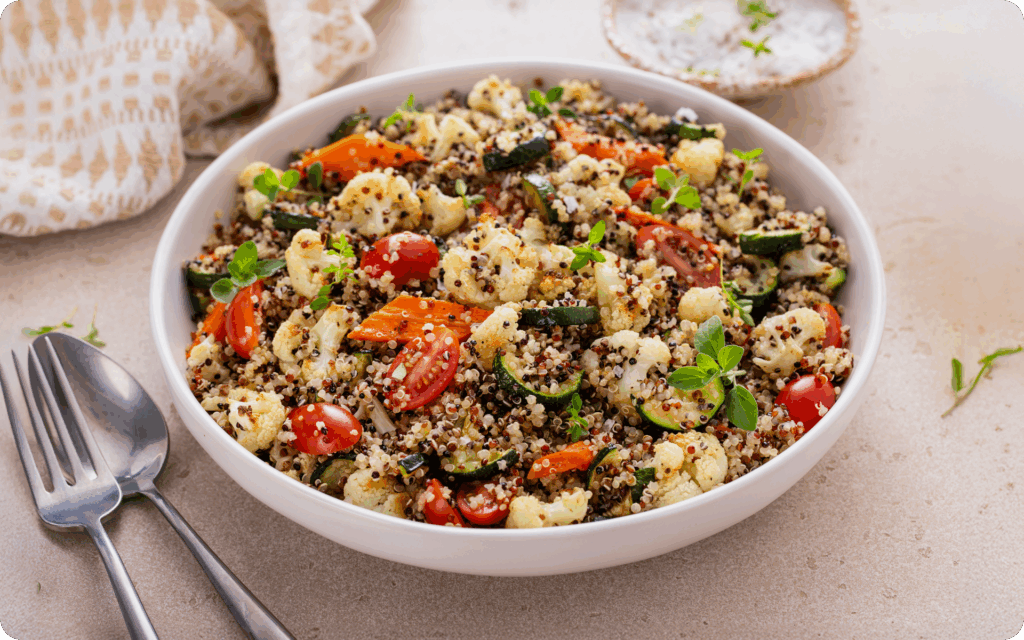
This menu takes a moderate approach. Each day keeps one or two portions of fruit, beans, or whole grains.
What foods can you eat on a low-carb diet?
You can eat protein foods, non-starchy vegetables, nuts, seeds, dairy, and measured portions of fruit and legumes. The table sorts common foods.
| Build meals around | Include in measured portions | Limit |
|---|---|---|
| Eggs, fish, poultry, lean meat, tofu | Berries, apples, and other whole fruit | White bread, pasta, and pastries |
| Leafy greens, broccoli, zucchini, peppers | Beans and lentils | Sugary drinks and juice |
| Olive oil, avocado, nuts, and seeds | Oats, quinoa, and brown rice | Candy, cakes, and ice cream |
| Plain yogurt and cheese | Potatoes and sweet potatoes | Sweetened cereal and granola bars |
Carbohydrates include sugars, starches, and fiber (2). A low-carb menu trims the first two and keeps fiber-rich foods.
Vegetarian readers can follow the same structure. Our low-carb vegetarian meal plan adapts it.
Read more: Gluten-free low-carb diet: foods, menu, and label tips
What does a 10-day low-carb diet menu look like?
A 10-day low-carb diet menu repeats a simple pattern: a protein food, vegetables, and one measured starchy or fruit portion. Adjust portions to your appetite and needs.
| Day | Breakfast | Lunch | Dinner |
|---|---|---|---|
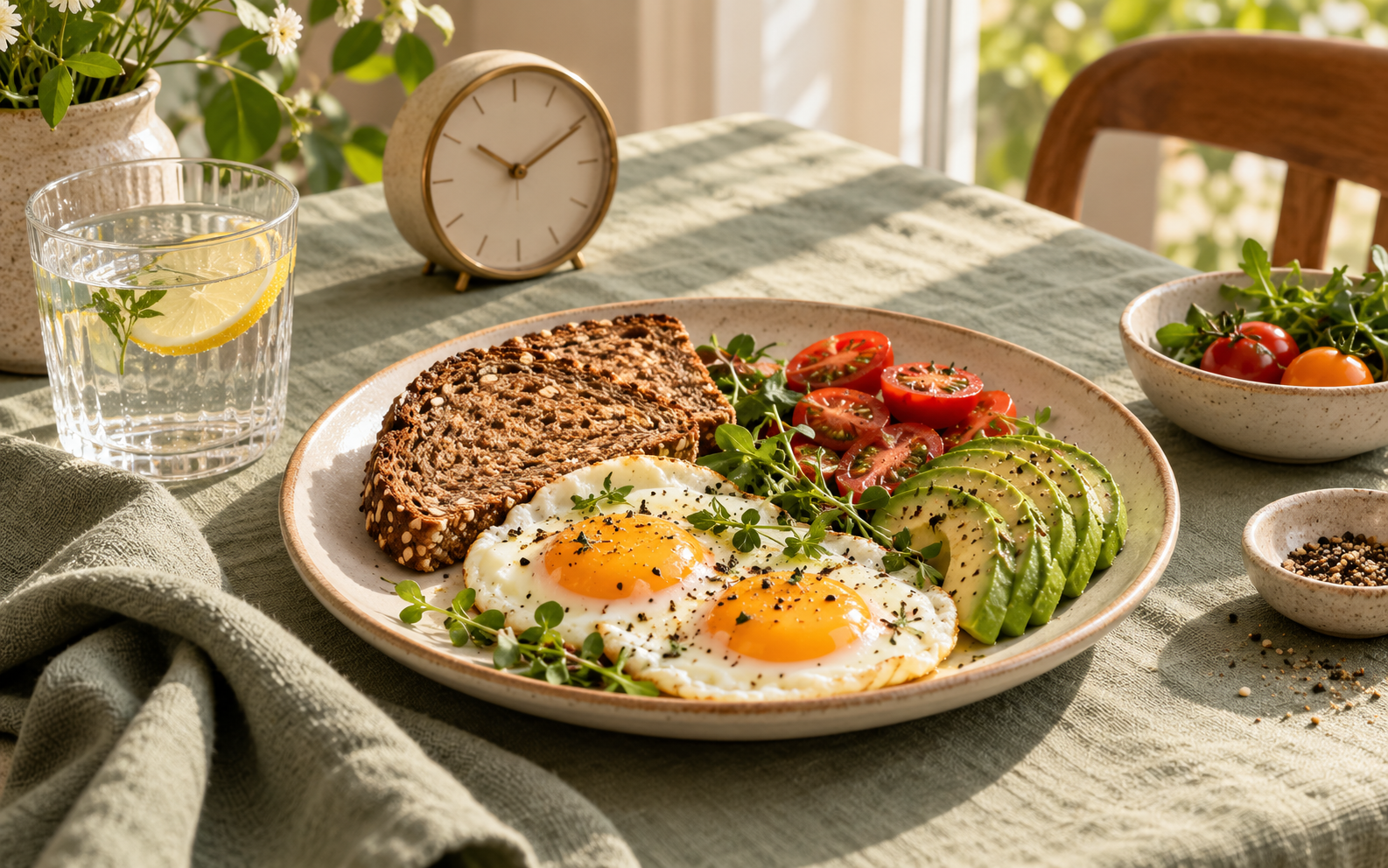
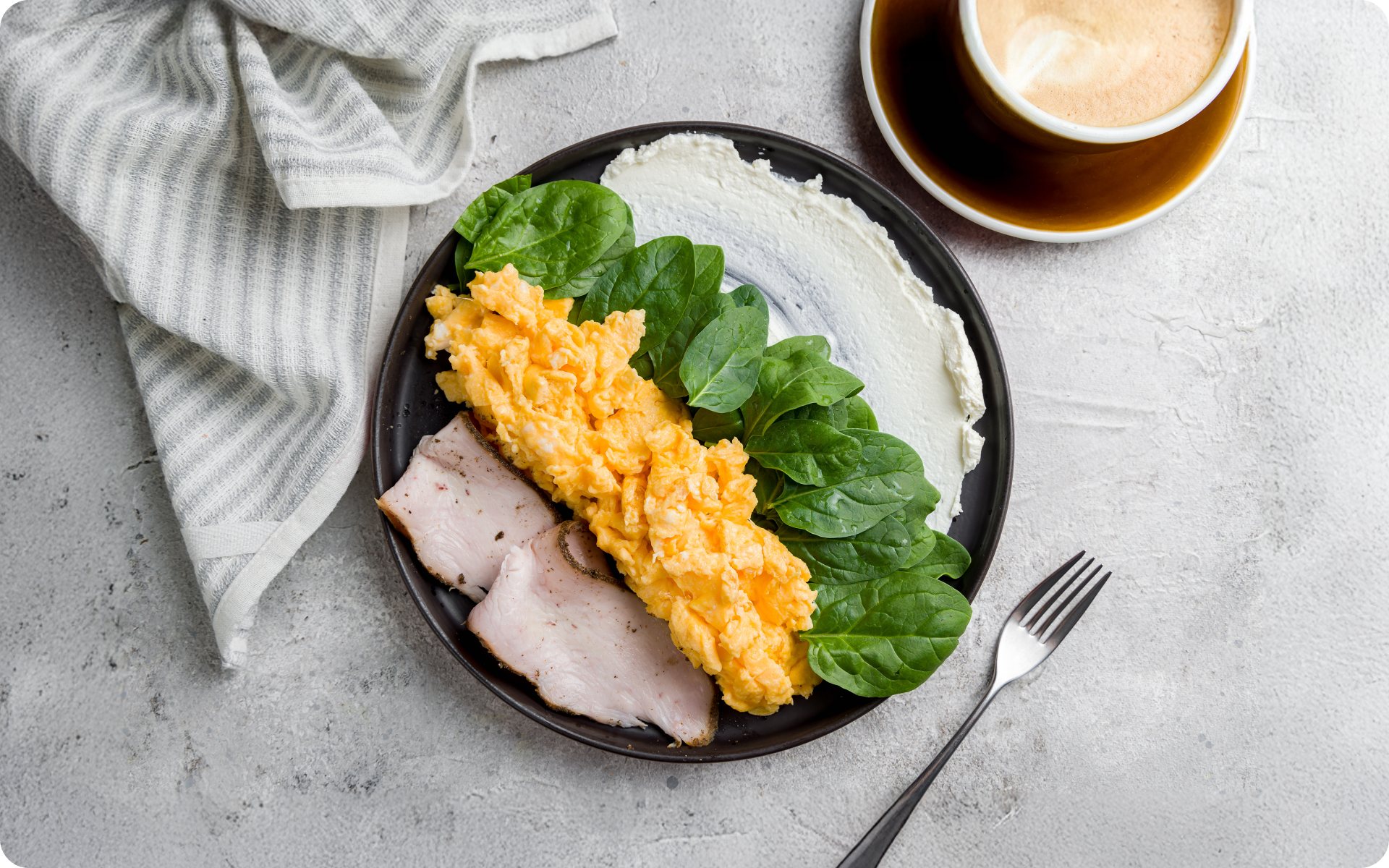
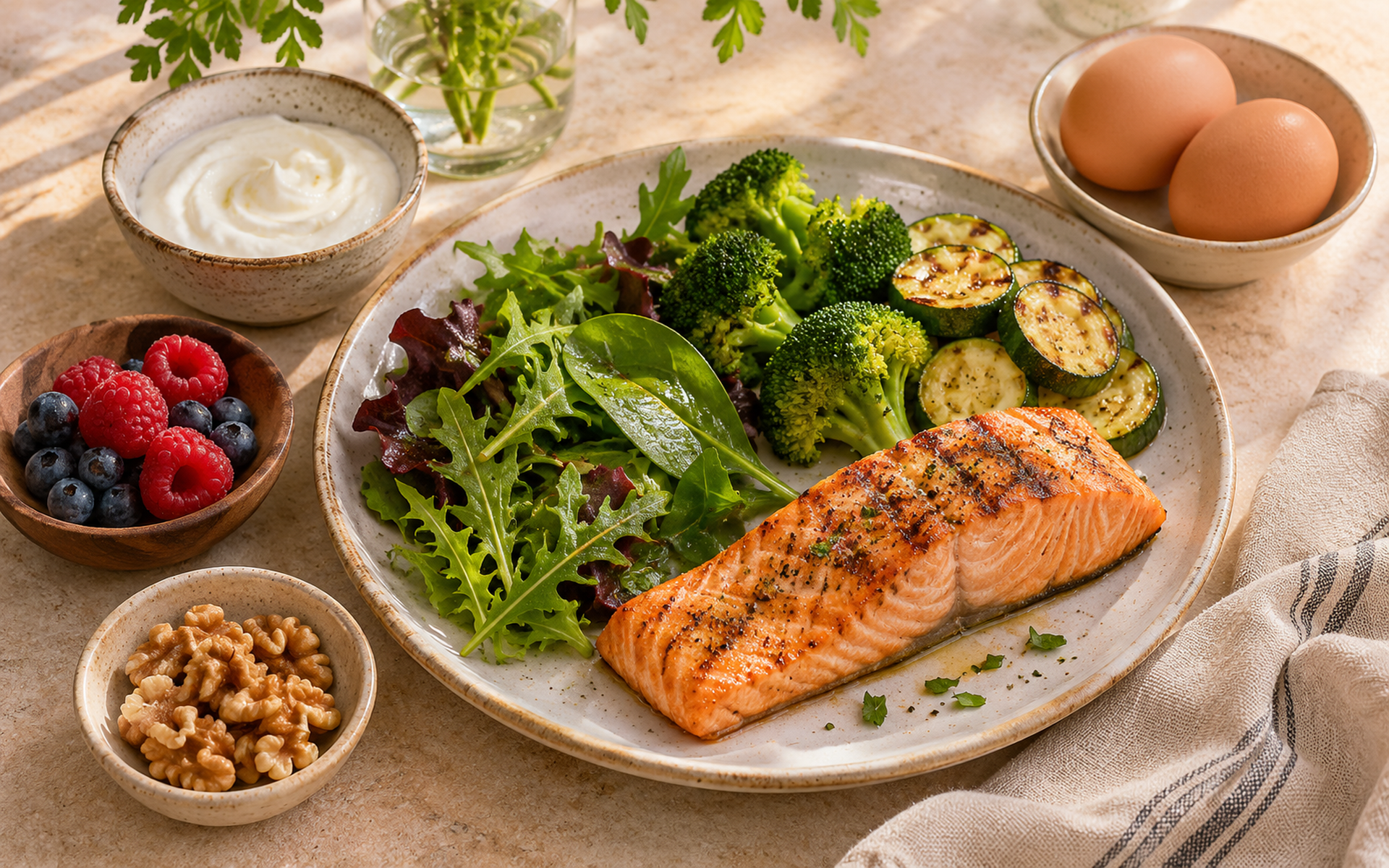
| 1 | Scrambled eggs with spinach and tomato | Chicken salad with olive oil | Baked salmon with broccoli |
| 2 | Plain yogurt with berries and walnuts | Lentil soup with a side salad | Turkey meatballs with zucchini |
| 3 | Vegetable omelet with avocado | Tuna and bean salad | Stir-fried tofu with peppers |
| 4 | Cottage cheese with cucumber and seeds | Leftover tofu stir-fry over greens | Grilled chicken with roasted vegetables |
| 5 | Oats with milk and berries, small portion | Egg salad lettuce wraps | Baked cod with green beans |
| 6 | Yogurt with chia seeds and an apple | Chicken and vegetable soup | Beef and broccoli stir-fry |
| 7 | Boiled eggs with tomato and avocado | Salmon salad with olive oil | Chickpea and vegetable curry |
| 8 | Smoothie of milk, berries, and peanut butter | Turkey and cheese lettuce wraps | Shrimp with zucchini and garlic |
| 9 | Vegetable omelet with feta | Lentil salad with peppers | Roast chicken with cauliflower |
| 10 | Plain yogurt with nuts and a pear | Leftover roast chicken salad | Baked salmon with a small baked potato |
Snacks are optional. Nuts, cheese, boiled eggs, vegetable sticks, or a piece of fruit all fit.
Drink water, plain tea, or coffee without sugar. Sweet drinks add carbohydrates quickly.
How do you build your own low-carb plate?
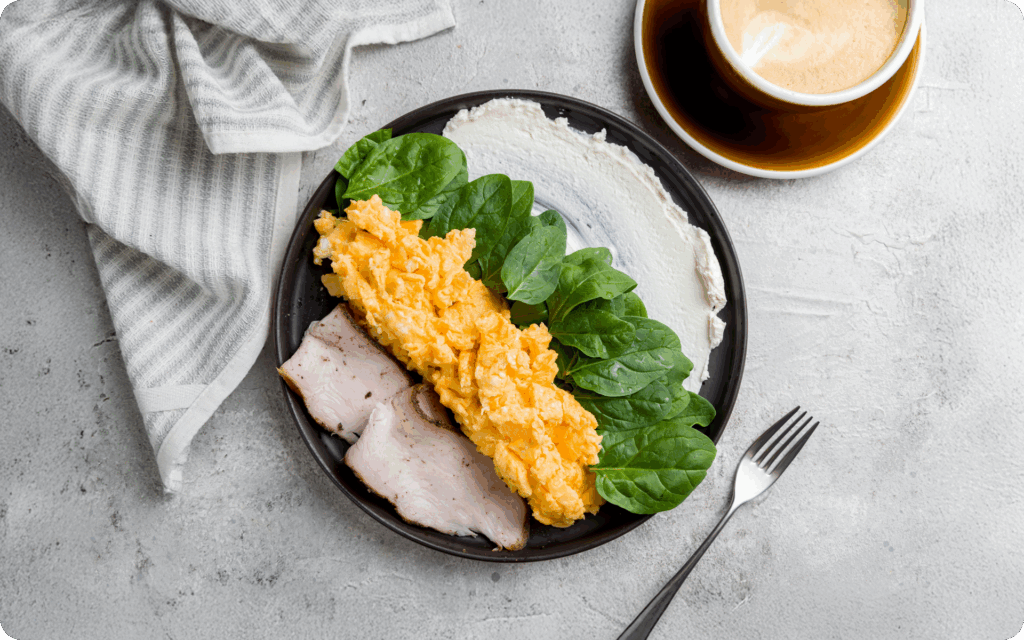
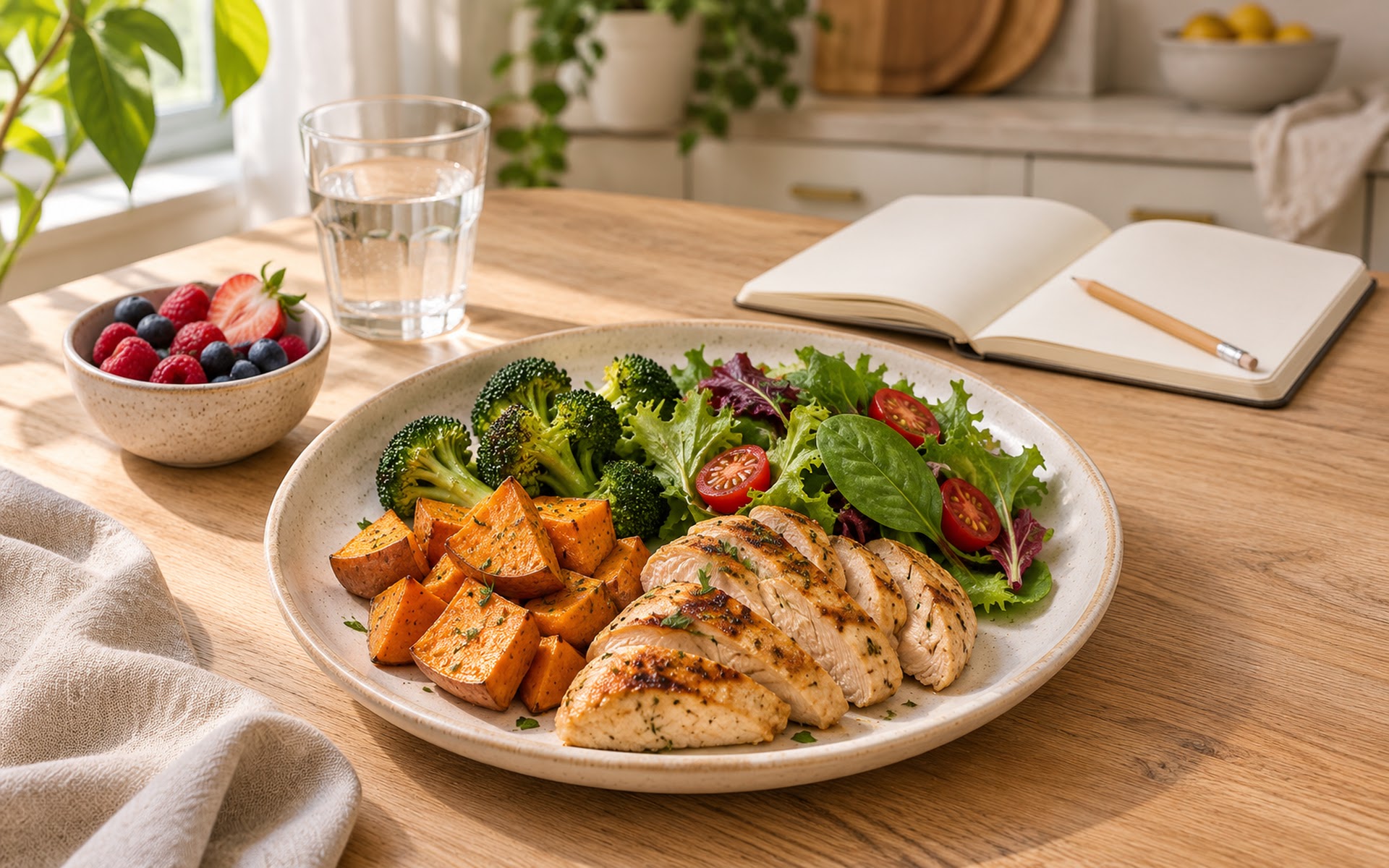
Build a low-carb plate in four steps, starting with protein. The method works for any meal on the menu.
- Choose a palm-sized portion of a protein food.
- Fill half the plate with non-starchy vegetables.
- Add a spoonful of olive oil, a few nuts, or some avocado.
- Add one measured portion of fruit, beans, or a whole grain if you want it.
The same steps help when you eat out. Order grilled fish or chicken with vegetables, and swap fries or bread for a salad.
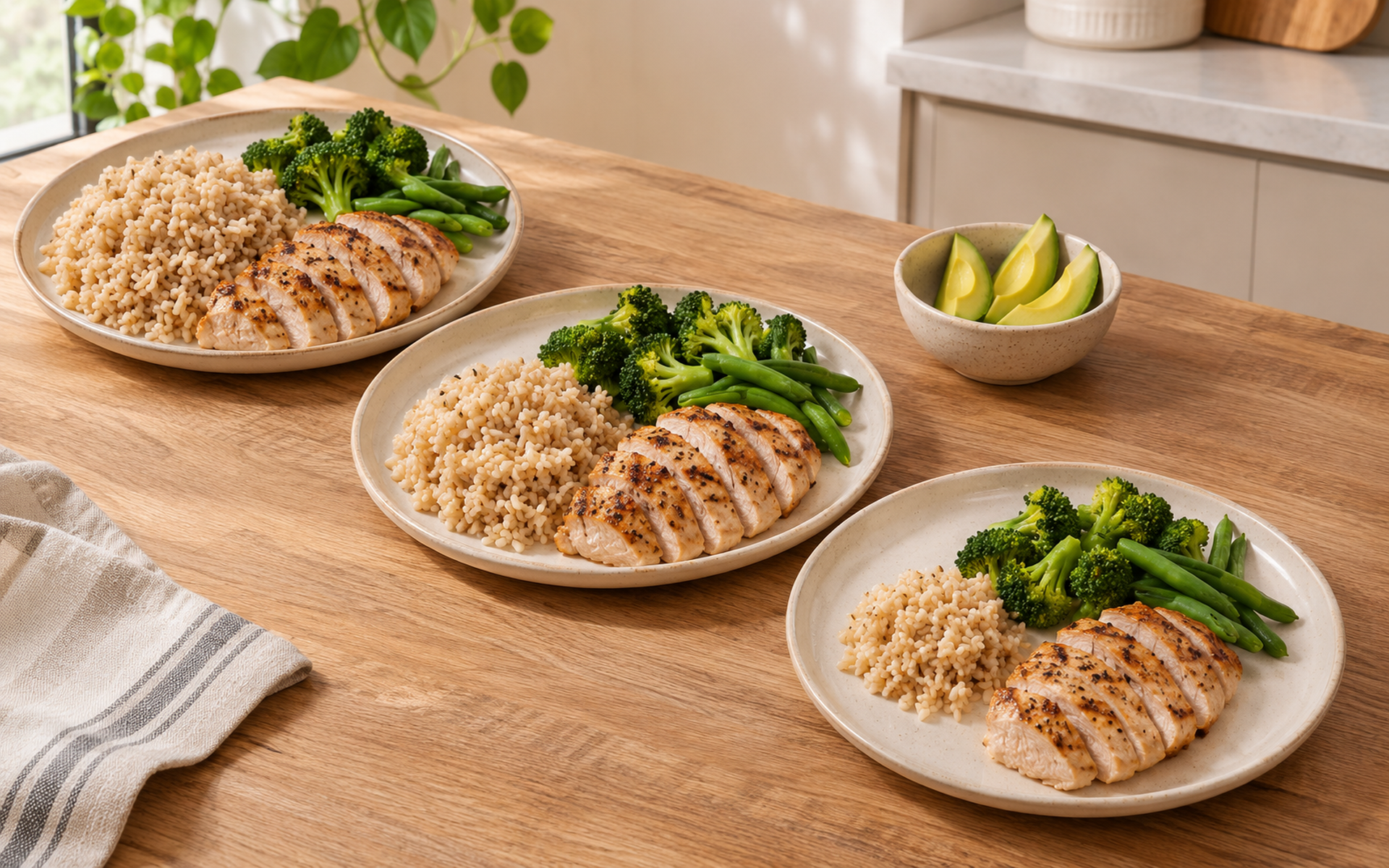
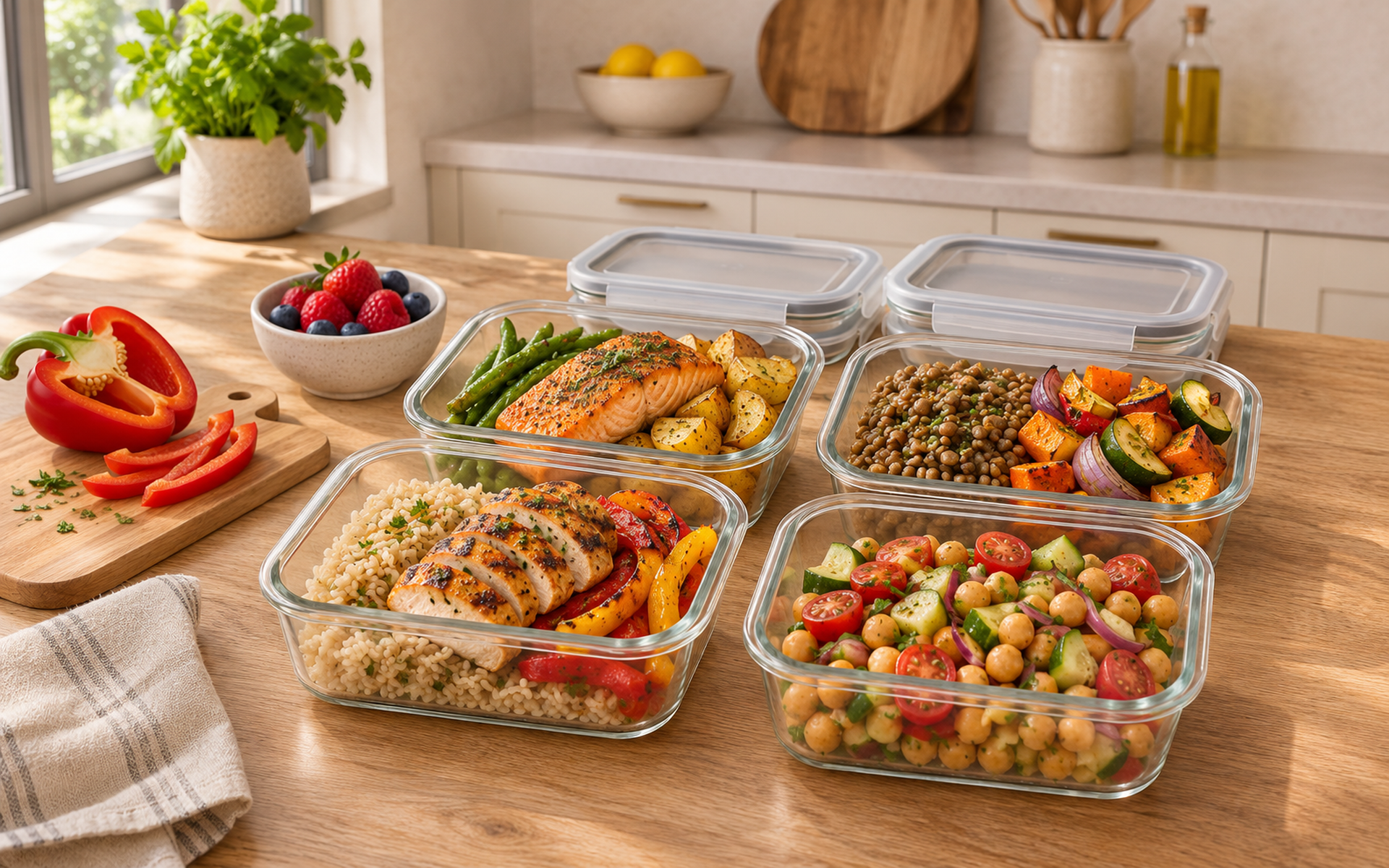
Leftovers save time. Cook double portions of chicken, lentils, and roasted vegetables at dinner. Use them for lunch the next day, as the menu does on days 4 and 10.
Which snacks fit a low-carb diet menu?
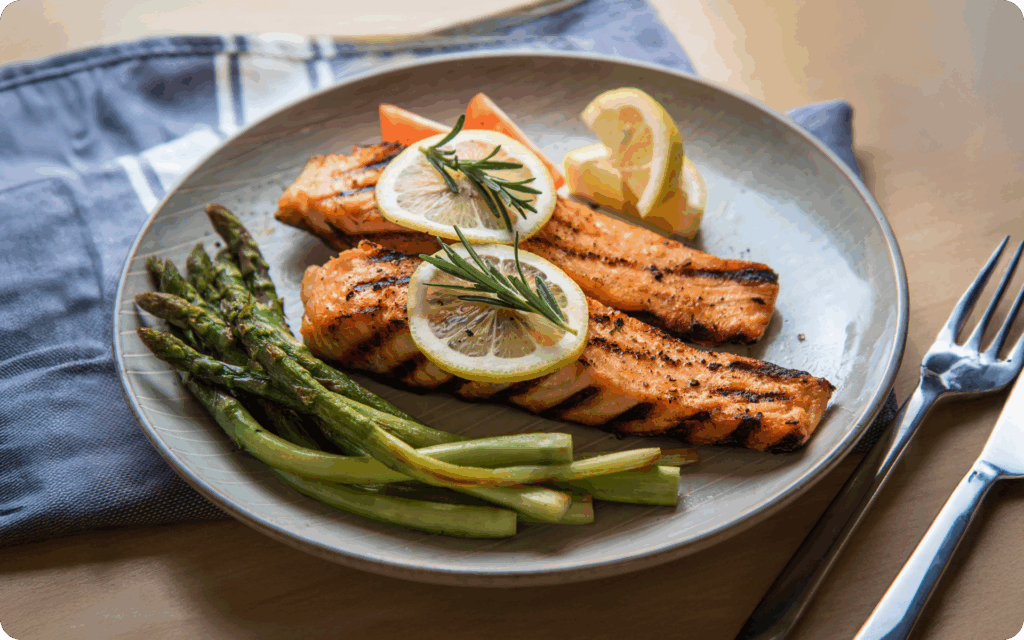
Snacks with protein or fiber fit a low-carb diet menu. Keep two or three options at home and at work.
- A boiled egg with cherry tomatoes
- Plain yogurt with a few berries
- A small handful of unsalted nuts
- Vegetable sticks with hummus
- Cheese with cucumber slices
Eat a snack when you are hungry between meals, not out of habit. One snack a day or none is often enough on this menu.
How many carbs do common swaps save?
Common swaps in the table save about 8 to 35 grams of carbohydrate per meal. The table uses values from a national food composition database (4).
| Instead of | Carbohydrate | Try | Carbohydrate |
|---|---|---|---|
| Cooked pasta, 180 g | About 56 g | Cooked lentils, 150 g | About 30 g |
| Cooked white rice, 200 g | About 56 g | Cooked quinoa, 100 g | About 21 g |
| Whole-wheat bread, 60 g | About 26 g | Plain low-fat yogurt, 170 g | About 12 g |
| Baked potato, 170 g | About 36 g | Half the potato with extra vegetables | About 18 g |
| Banana, 120 g | About 27 g | Apple, 150 g | About 19 g |
Portion figures are calculated from values per 100 grams, such as about 28 grams for cooked rice and about 20 grams for cooked lentils. Weigh a food once to learn your usual portion.
Smaller portions often work as well as swaps. Half a serving of rice with extra vegetables keeps a familiar meal on the table.
BetterMe offers a variety of workouts, recipes, challenges, and support tools to help you stay more consistent with your wellness routine. Explore the app to find features that fit your goals, preferences, and schedule.
Can a low-carb diet menu help you lose weight?
A low-carb diet menu can help with weight loss when it lowers total calorie intake. The evidence does not show a large advantage over other approaches.
A 12-month trial assigned 609 adults with higher body weight to a low-carb or a low-fat diet. Both groups were coached to choose quality foods (3). Average weight loss was 6.0 kg in the low-carb group and 5.3 kg in the low-fat group. The difference was not significant (3).
An overview of low-carb diets reaches a similar conclusion. Short-term weight changes are common, and long-term advantages tend to be small (1).
A steady pace is realistic. Public health guidance describes gradual loss of about 1 to 2 pounds a week (5). Ten days is a trial period, not a finish line.
Can cutting carbs reduce belly fat?
Cutting carbs cannot direct fat loss to the belly. Fat is lost across the body as overall weight falls.
The trials cited here measured total weight, not one body area (3). A menu that lowers calorie intake may reduce body fat in general. Where that change shows first differs between people.
Scale readings in the first days can mislead. Early changes often reflect water and food volume. Judge the menu over several weeks.
What should you expect in the first 10 days?
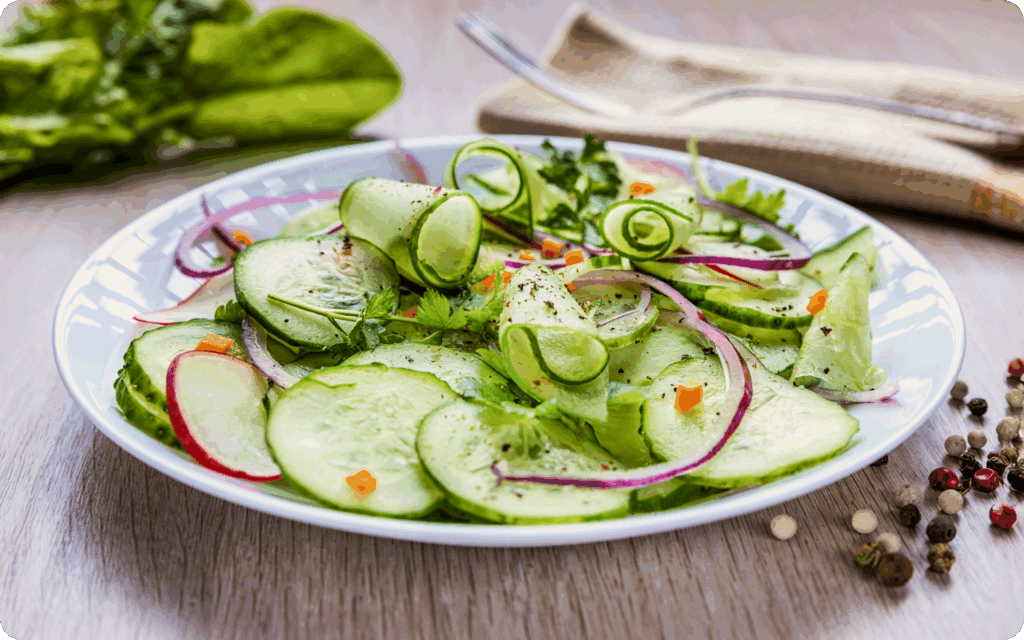
Expect an adjustment period in the first days and a clearer routine by day 10. Experiences differ.
An overview of low-carb diets notes that a sudden large cut can cause constipation or headaches (1). A gradual start may lower that risk.
- Days 1 to 3: meals feel different, and cravings for bread or sweets are common.
- Days 4 to 7: shopping and cooking become quicker.
- Days 8 to 10: you can tell which meals you want to keep.
Fiber and fluids help digestion. The Daily Value for fiber on food labels is 28 grams (6). Vegetables, beans, nuts, and seeds supply it.
Read more: The everyday guide to low-carb snacks without the guesswork
How do you prepare for the 10 days?
Prepare by shopping once and cooking a few basics in advance. Preparation takes about an hour.
- Read the menu and mark the meals you want to change.
- Write a shopping list by food group.
- Cook a batch of chicken, lentils, and roasted vegetables.
- Wash and chop salad vegetables for three days.
- Portion nuts and yogurt for snacks.
Very low targets need more planning. Our 20 grams of carbs example shows how strict such a day looks. The guide to zero-carb meals lists foods with almost no carbohydrate.
Who should ask a doctor before starting?
Some people need medical advice before lowering carbohydrates. The change can affect medication needs.
- People who take medication that depends on what and when they eat
- People who are pregnant or breastfeeding
- People with a kidney concern managed by a doctor
- Children and teenagers
- Anyone with a history of restrictive eating
Stop the menu and return to your usual meals if you feel unwell. A dietitian can adjust the plan to your needs.
What mistakes should you avoid?
The main mistakes are cutting too fast and ignoring vegetables. Simple checks prevent them.
- Removing all fruit, beans, and whole grains on day 1
- Eating mostly processed meat and cheese
- Forgetting fiber and fluids
- Drinking sweetened coffee and juice
- Expecting a visible change in 10 days
After day 10, decide what to keep. Some people prefer a higher intake, and our 300 grams of carbs guide shows the other end of the range.
Frequently Asked Questions
What happens if you stop eating bread for 10 days?
Your carbohydrate intake drops if nothing else replaces the bread. Two slices of whole-wheat bread supply about 26 grams (4). Any change in weight depends on total intake.
Can you eat fruit on a low-carb diet menu?
Yes, whole fruit fits in measured portions. An apple of 150 grams has about 19 grams of carbohydrate (4).
How many carbs a day count as low-carb?
No single number applies, because low-carb diets vary (1). In one trial, the low-carb group averaged about 30% of calories from carbohydrates (3).
What are five foods to limit on a low-carb diet?
Sugary drinks, white bread, pasta, pastries, and candy are the usual first choices. Those foods supply many carbohydrates with little fiber.
What should you do after day 10?
Keep the meals you enjoyed and add back foods you missed in measured portions. A pattern you can keep matters more than a strict 10 days.
The bottom line
A low-carb diet menu for 10 days relies on protein foods, vegetables, healthy fats, and measured starchy portions. Expect modest, gradual changes, and judge the plan by how well you can keep it. Ask a doctor first if you take medication.
DISCLAIMER:
This article is intended for general informational purposes only and does not serve to address individual circumstances. It is not a substitute for professional advice or help and should not be relied on for making any kind of decision-making. Any action taken as a direct or indirect result of the information in this article is entirely at your own risk and is your sole responsibility.
BetterMe, its content staff, and its medical advisors accept no responsibility for inaccuracies, errors, misstatements, inconsistencies, or omissions and specifically disclaim any liability, loss or risk, personal, professional or otherwise, which may be incurred as a consequence, directly or indirectly, of the use and/or application of any content.
You should always seek the advice of your physician or other qualified health provider with any questions you may have regarding a medical condition or your specific situation. Never disregard professional medical advice or delay seeking it because of BetterMe content. If you suspect or think you may have a medical emergency, call your doctor.
Some visuals may be AI-generated.
SOURCES:
- Low-carb diet: Can it help you lose weight? (n.d., mayoclinic.org)
- Carbohydrates (2024, medlineplus.gov)
- Effect of Low-Fat vs Low-Carbohydrate Diet on 12-Month Weight Loss in Overweight Adults and the Association With Genotype Pattern or Insulin Secretion: The DIETFITS Randomized Clinical Trial (2018, pubmed.ncbi.nlm.nih.gov)
- FoodData Central (n.d., fdc.nal.usda.gov)
- Steps for Losing Weight (2025, cdc.gov)
- Daily Value on the Nutrition and Supplement Facts Labels (2024, fda.gov)
 Reviewed by