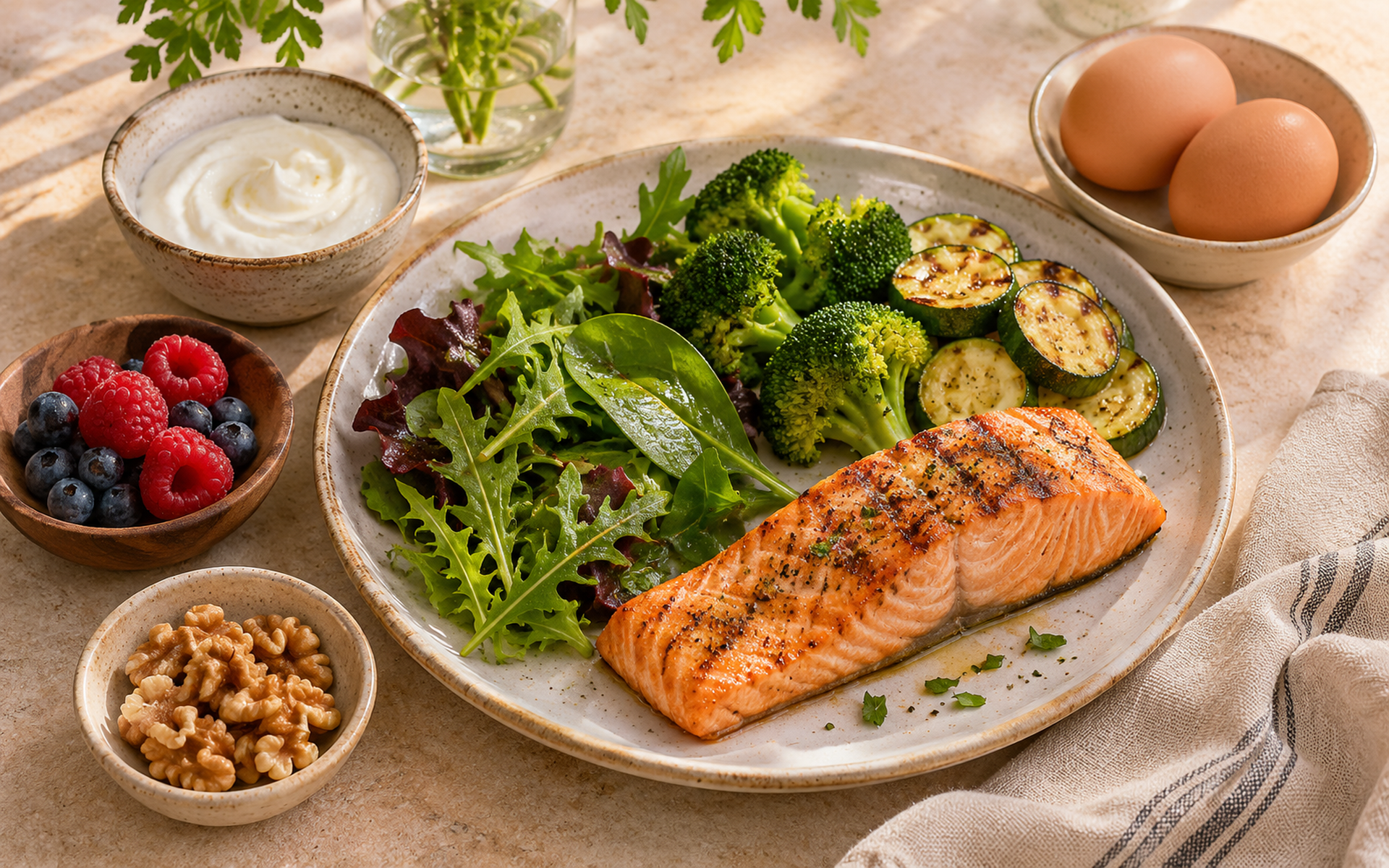
A gluten-free low-carb diet removes wheat, rye, and barley and also limits starchy and sugary foods. The pattern can work for adults who must avoid gluten and prefer fewer carbohydrates, but it needs planning. This guide covers foods, labels, and a two-day menu. New to gluten-free eating? Start with how to go gluten-free.
Following exercise and diet plans is the key in your fitness journey and greatly impacts results. In 4 weeks users can typically expect to lose not more than 1-2 lbs per week. Individual results may vary.
Key takeaways
A gluten-free low-carb diet stacks two sets of rules, so food choice and labels matter more than usual.
- Gluten is a protein found in wheat, rye, and barley (1).
- A food labeled gluten-free must contain less than 20 parts per million of gluten (2).
- Low-carb diets differ in how far they limit carbohydrates, so the term has no single definition (3).
- General guidance places carbohydrates at 45 to 65% of daily calories (4).
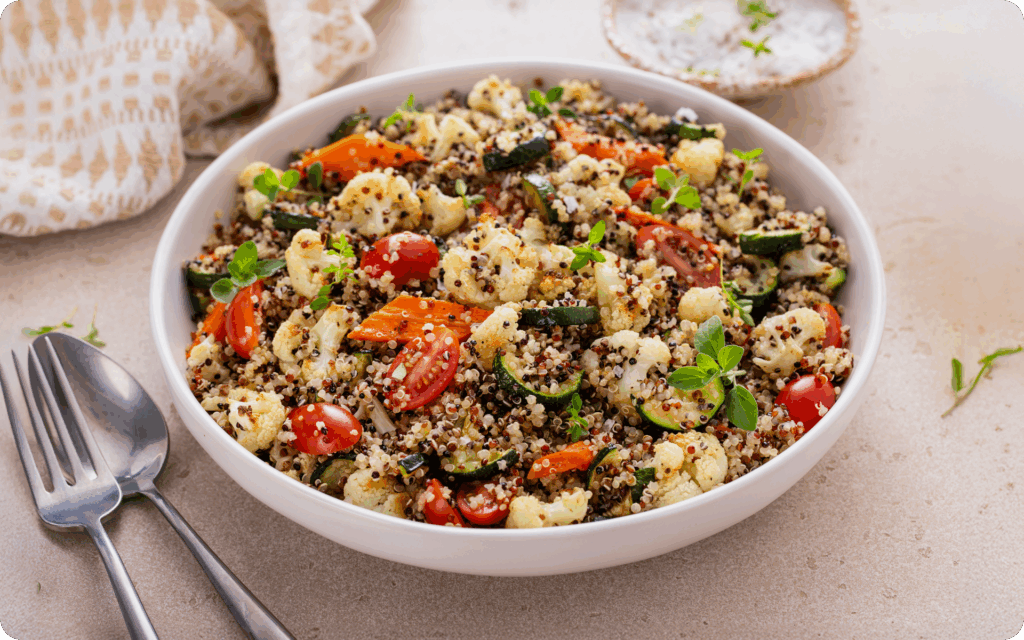
- Cooked rice, quinoa, potatoes, and lentils are gluten-free but supply 20 to 28 grams of carbohydrate per 100 grams (5).
- In a 12-month trial, a low-carb diet and a low-fat diet led to similar weight loss (6).
- Gluten can also appear in some medicines, vitamins, and supplements (1).
What is a gluten-free low-carb diet?
A gluten-free low-carb diet is an eating pattern that follows two rules at once. The pattern excludes gluten and keeps carbohydrate intake below the usual range.
The gluten rule is about one protein. Gluten is found in wheat, rye, and barley (1). Crossbreeds of those grains contain gluten too (2).
The low-carb rule is about quantity. Low-carb diets vary in their limits, and no single number defines them (3). General guidance suggests 45 to 65% of calories from carbohydrates (4). A low-carb plan sits below that range.
The two rules overlap only partly. Bread and pasta break both. Rice and potatoes are gluten-free but high in carbohydrates.
How are gluten-free and low-carb diets different?
Gluten-free and low-carb diets differ in purpose and in the foods they remove. The table compares them.
| Feature | Gluten-free diet | Low-carb diet |
|---|---|---|
| What is limited | Wheat, rye, barley, and foods made with them | Starches and sugars from any source |
| Main reason | Often a doctor's advice to avoid gluten | A preference for fewer carbohydrates |
| Rice and potatoes | Allowed | Limited |
| Fruit | Allowed | Portions are counted |
| Label to check | The gluten-free claim | Total carbohydrate per serving |
A food can pass one test and fail the other. Gluten-free bread and cookies often contain as much starch as regular versions. Check the carbohydrate line as well as the claim.
What can you eat on a gluten-free low-carb diet?
You can eat most unprocessed protein foods, vegetables, nuts, and dairy. The plan limits grains and counts portions of starchy foods.
| Eat freely | Count the portion | Leave out |
|---|---|---|
| Eggs, fish, poultry, and meat | Rice and quinoa | Wheat bread, pasta, and couscous |
| Tofu and tempeh without wheat-based sauce | Potatoes and sweet potatoes | Barley and rye products |
| Leafy greens, broccoli, zucchini, peppers | Beans and lentils | Regular beer and malt drinks |
| Nuts, seeds, olive oil, and avocado | Whole fruit | Pastries, crackers, and breaded foods |
| Plain yogurt and cheese | Gluten-free oats and breads | Sauces thickened with wheat flour |
Oats need care. Buy oats with a gluten-free label if you include them.
Our low-carb diet food list has more ideas for the first two columns.
Read more: Gluten-free, high-protein meals: a guide to balanced eating
How many carbs do gluten-free staples contain?
Cooked gluten-free staples contain about 20 to 28 grams of carbohydrate per 100 grams, and fruit and yogurt contain less. Values come from a national food composition database (5).
| Food | Carbohydrate per 100 grams | Fiber per 100 grams |
|---|---|---|
| White rice, cooked | 28.2 g | 0.4 g |
| Black beans, cooked | 23.7 g | 8.7 g |
| Quinoa, cooked | 21.3 g | 2.8 g |
| Baked potato with skin | 21.2 g | 2.2 g |
| Lentils, cooked | 20.1 g | 7.9 g |
| Apple, peeled | 12.8 g | 1.3 g |
| Plain low-fat yogurt | 7.0 g | 0 g |
Beans and lentils bring far more fiber than rice. Choosing them for your counted portions helps keep fiber intake up when grains are limited.
Wheat foods are higher by weight. Whole-wheat bread has about 42.7 grams of carbohydrate per 100 grams, and cooked pasta has about 30.9 grams (5).
How do you read labels for gluten and carbs?
Read labels in two passes: first for gluten, then for carbohydrates. Both checks take a few seconds once you know where to look.
- Look for a gluten-free claim on the front or back of the package.
- Scan the ingredients for wheat, rye, barley, and malt.
- Find the serving size on the nutrition panel.
- Read the total carbohydrate per serving.
- Check the fiber and added sugars lines.
The gluten-free claim is voluntary. A food that carries it must contain less than 20 parts per million of gluten (2). Foods without the claim can still be free of gluten, but they need a closer look at the ingredients.
Gluten is not limited to food. Some medicines, vitamins, and supplements contain it (1). Ask a pharmacist when you are unsure.
Whether you want to refresh your fitness routine, explore lower-calorie recipe ideas, or bring more structure to your wellness habits, BetterMe: Health Coaching app offers tools that can support your next step. Explore the app and find an approach that works for your lifestyle.
What does a 2-day sample menu look like?
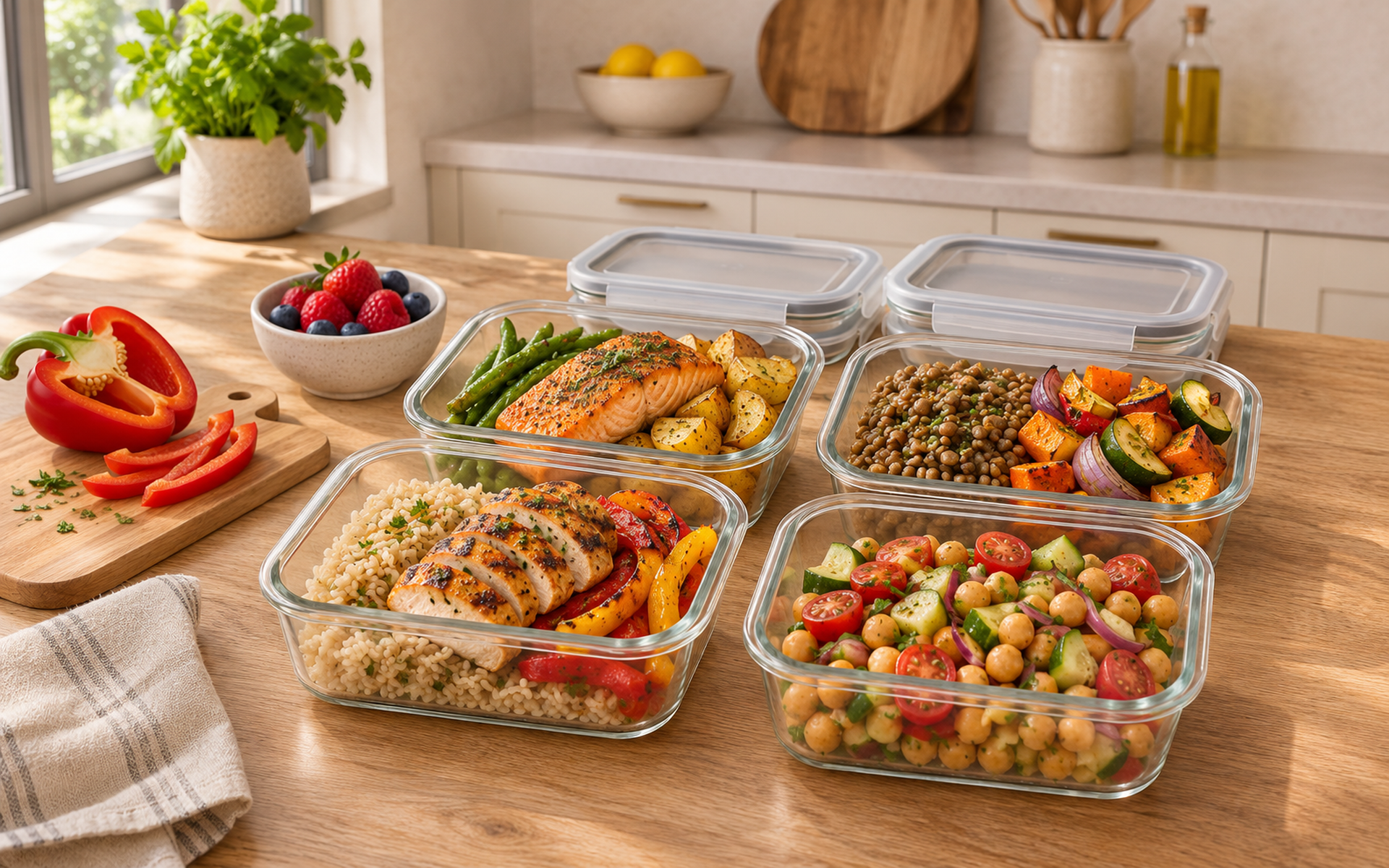
A two-day sample menu shows how the rules work on a plate. Portions depend on your needs, so no totals are claimed.
| Meal | Day 1 | Day 2 |
|---|---|---|
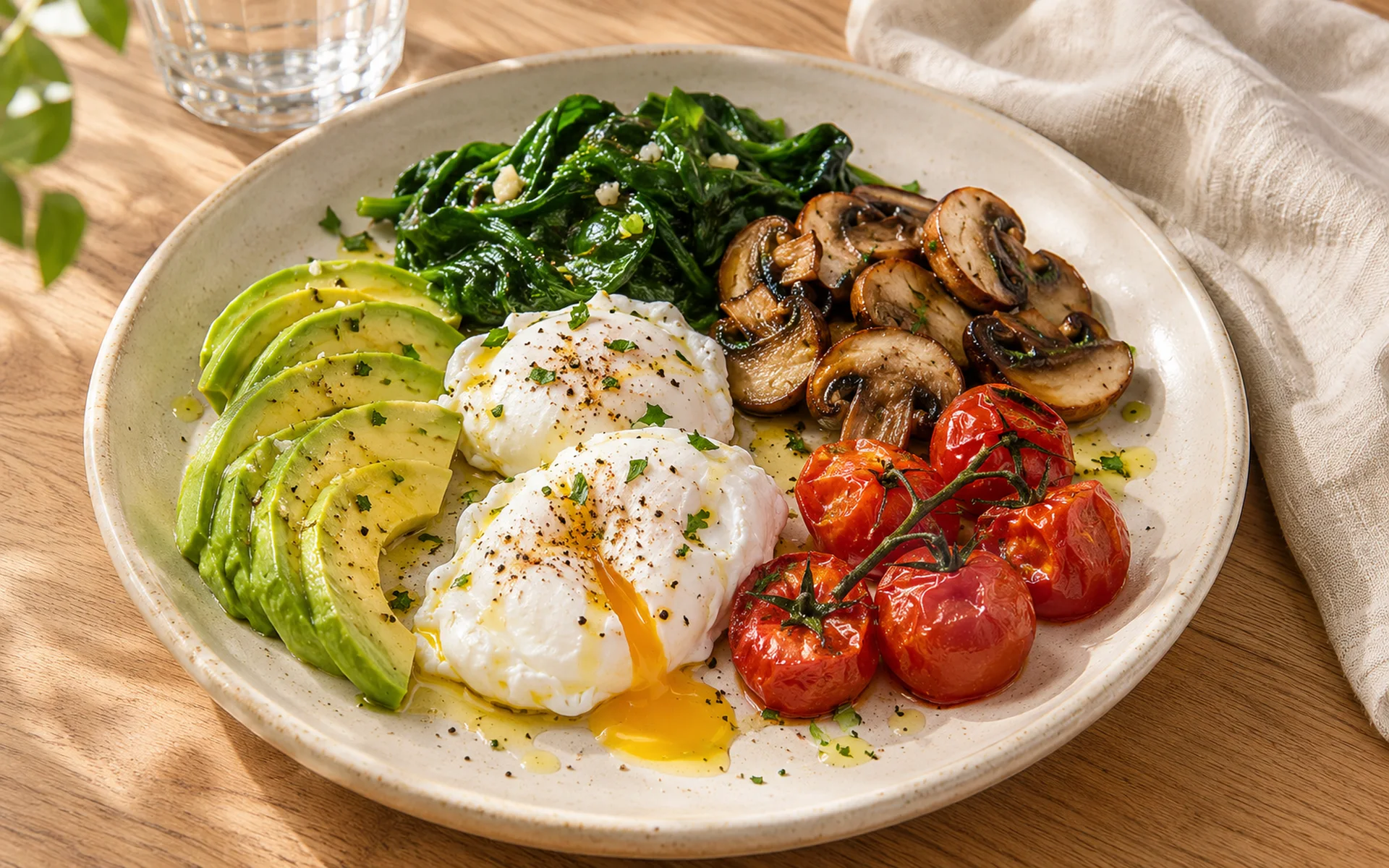
| Breakfast | Vegetable omelet with avocado | Plain yogurt with berries and walnuts |
| Lunch | Grilled chicken salad with olive oil and a small portion of quinoa | Lentil and vegetable soup |
| Snack | Apple slices with unsweetened peanut butter | Carrot sticks with hummus |
| Dinner | Baked salmon, roasted broccoli, and a small baked potato | Tofu or beef stir-fry with peppers, using a gluten-free soy sauce |
Each day includes one or two counted portions of a starchy food. That keeps the menu lower in carbohydrates without removing them.
For a full week of ideas, see our gluten-free meal plan.
Can a gluten-free low-carb diet help with weight loss?
A gluten-free low-carb diet can lead to weight loss when it lowers total calorie intake. The rules alone do not decide the result.
A 12-month trial followed 609 adults with higher body weight. One group ate a low-carb diet, and the other ate a low-fat diet. Both diets emphasized food quality (6). Average weight loss was 6.0 kg and 5.3 kg, and the difference was not significant (6).
The trial did not test gluten-free eating. Removing gluten does not lower calories by itself, and packaged gluten-free snacks can be high in sugar and fat. An overview of low-carb diets also notes that long-term advantages tend to be small (3).
Read more: Stuffed peppers without rice: a beef and vegetable recipe
Who should talk to a doctor before starting?
Some people need medical advice before changing either rule. That step matters most for the gluten part.
- People who suspect that gluten upsets them and have not been tested
- People who take medication that depends on carbohydrate intake
- People who are pregnant or breastfeeding
- Children and teenagers
- Anyone with a history of restrictive eating
Testing usually comes before removal. A health care provider usually checks for a gluten-related condition before suggesting a gluten-free trial (1). Cutting gluten first can make later tests harder to interpret.
A sudden large cut in carbohydrates can also cause short-term effects such as constipation or headaches (3). A gradual change is easier.
How do you start a gluten-free low-carb diet step by step?
Start with the gluten rule, then trim carbohydrates gradually. Two changes at once are harder to keep.
- Replace wheat, rye, and barley foods with gluten-free alternatives for two weeks.
- Write down your usual portions of rice, potatoes, fruit, and gluten-free bread.
- Reduce one starchy portion a day.
- Add a protein food and a vegetable to every meal.
- Review your energy, digestion, and enjoyment after one month.
Keep fiber in view. The Daily Value for fiber on food labels is 28 grams (7). Vegetables, beans, nuts, and seeds help you reach it.
Beginners may prefer a single rule first. Our gluten-free diet plan for beginners covers that stage.
How do you eat out on a gluten-free low-carb diet?
Eat out by choosing simple dishes and asking two questions. Restaurants often check gluten and carbohydrates separately.
- Ask whether a dish contains wheat flour, soy sauce, or breadcrumbs.
- Ask whether fried foods share oil with breaded items.
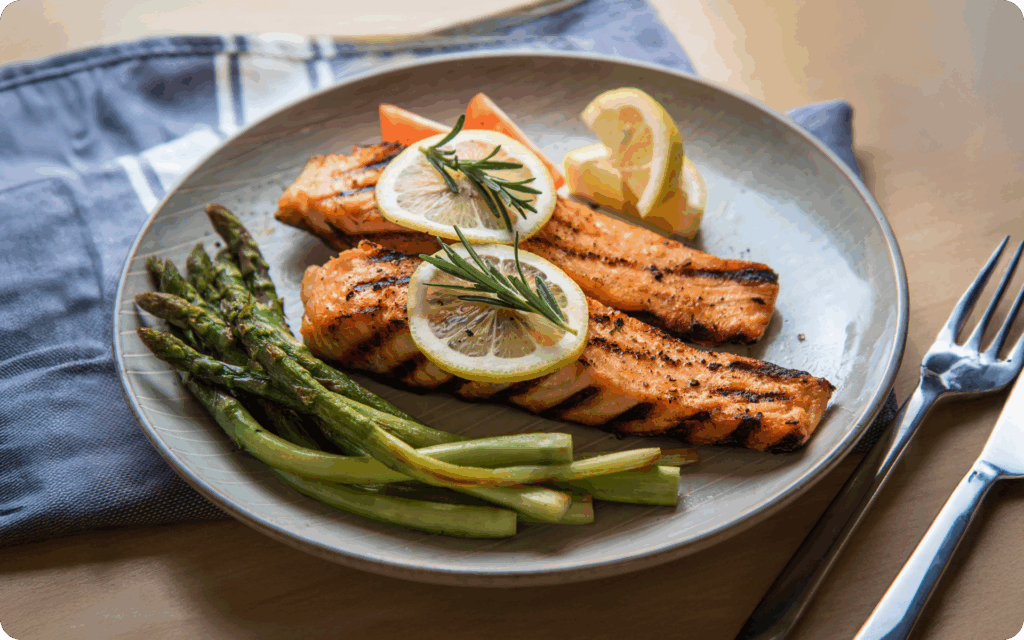
- Choose grilled fish, meat, or tofu with vegetables.
- Swap fries, bread, or pasta for a salad or extra vegetables.
- Keep one starchy side, such as rice or potatoes, if you want it.
Calling ahead helps on busy evenings. Many kitchens can adjust a dish when they know in advance. Carry a snack such as nuts for places with few options.
How do you keep meals satisfying?
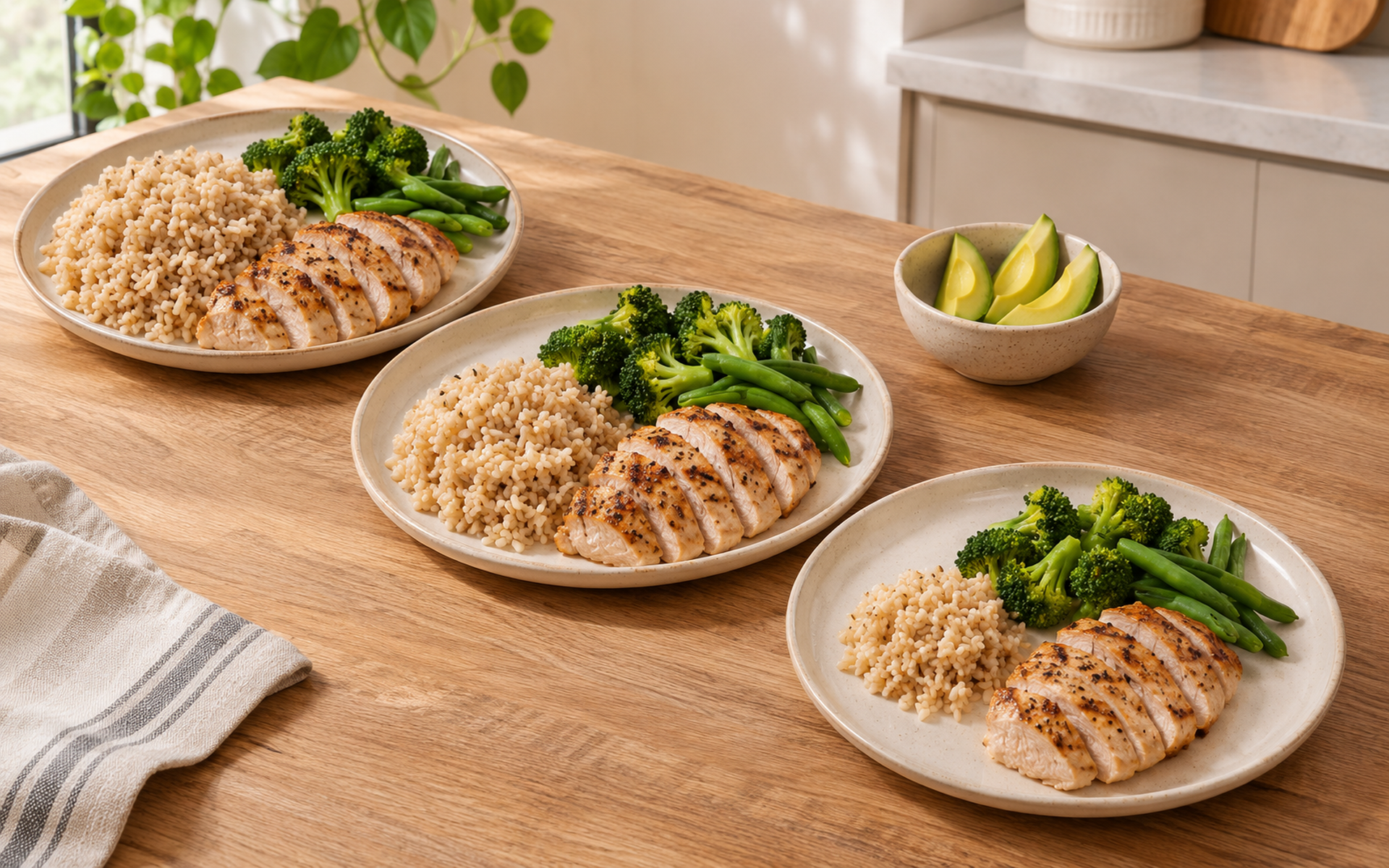
Keep meals satisfying by building each plate around protein, vegetables, and a source of fat. Those three parts make smaller starchy portions easier to accept.
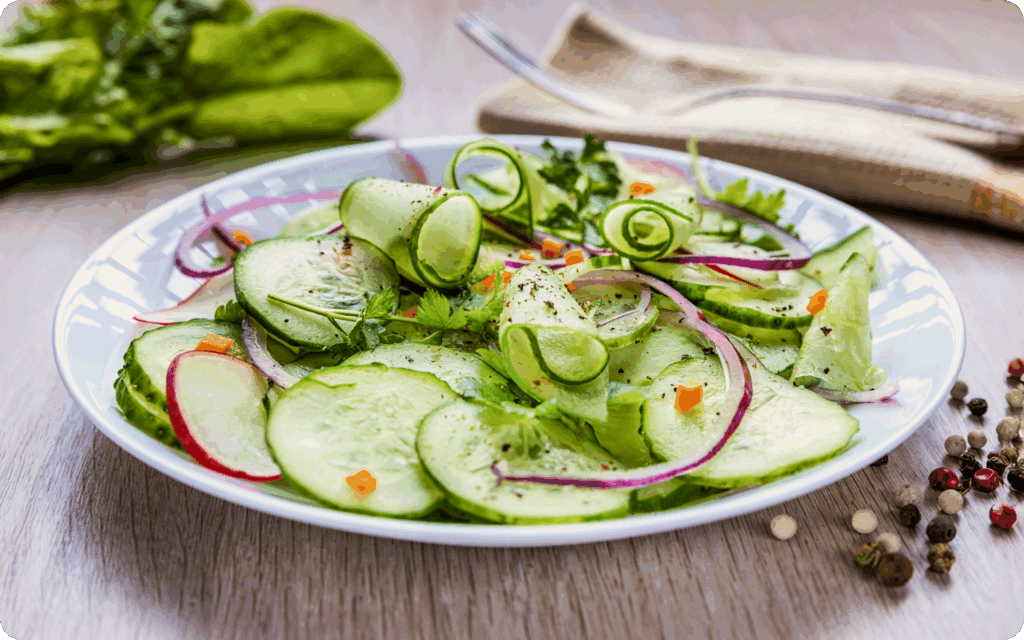
Start with the protein food, such as eggs, fish, chicken, or tofu. Fill half the plate with vegetables. Add olive oil, avocado, nuts, or cheese for flavor. Then decide on one counted portion of rice, potatoes, beans, or fruit.
Herbs, spices, lemon, and vinegar add taste without gluten or sugar. Check spice blends and stock cubes, because some contain wheat.
What mistakes should you avoid?
The main mistakes are trusting packaging and cutting too much. A short checklist prevents both.
- Assuming that gluten-free cookies and breads are low in carbohydrates
- Forgetting sauces, soups, and marinades thickened with wheat flour
- Removing fruit, beans, and dairy without a reason
- Eating too little fiber
- Changing the plan without telling your doctor when you take medication
A Mediterranean-style version suits people who enjoy fish, olive oil, and vegetables. Our gluten-free Mediterranean diet guide explains it.
Frequently Asked Questions
Is rice allowed on a gluten-free low-carb diet?
Yes, rice is gluten-free, but the portion counts. Cooked white rice has about 28 grams of carbohydrate per 100 grams (5).
Are oats gluten-free?
Oats do not belong to the three gluten grains named on labels (2). Choose oats that carry a gluten-free claim, and count the portion.
Can you follow a vegan gluten-free low-carb diet?
Yes, with planning. Tofu, tempeh, nuts, seeds, and counted portions of beans and lentils supply protein.
Is a gluten-free diet automatically low-carb?
No, a gluten-free diet removes three grains, not carbohydrates. Rice, potatoes, corn, and gluten-free breads all supply starch.
Do you need to avoid gluten to lose weight?
No, weight change depends on total intake, not on gluten. In the trial cited above, both groups lost similar weight while focusing on food quality (6).
The bottom line
A gluten-free low-carb diet removes wheat, rye, and barley and counts portions of starchy foods. Build meals from protein foods, vegetables, and healthy fats, and read both the gluten claim and the carbohydrate line. Ask a doctor before removing gluten if you have not been tested.
DISCLAIMER:
This article is intended for general informational purposes only and does not serve to address individual circumstances. It is not a substitute for professional advice or help and should not be relied on for making any kind of decision-making. Any action taken as a direct or indirect result of the information in this article is entirely at your own risk and is your sole responsibility.
BetterMe, its content staff, and its medical advisors accept no responsibility for inaccuracies, errors, misstatements, inconsistencies, or omissions and specifically disclaim any liability, loss or risk, personal, professional or otherwise, which may be incurred as a consequence, directly or indirectly, of the use and/or application of any content.
You should always seek the advice of your physician or other qualified health provider with any questions you may have regarding a medical condition or your specific situation. Never disregard professional medical advice or delay seeking it because of BetterMe content. If you suspect or think you may have a medical emergency, call your doctor.
Some visuals may be AI-generated.
SOURCES:
- Gluten Sensitivity (2024, medlineplus.gov)
- Gluten and Food Labeling (2018, fda.gov)
- Low-carb diet: Can it help you lose weight? (n.d., mayoclinic.org)
- Carbohydrates (2024, medlineplus.gov)
- FoodData Central (n.d., fdc.nal.usda.gov)
- Effect of Low-Fat vs Low-Carbohydrate Diet on 12-Month Weight Loss in Overweight Adults and the Association With Genotype Pattern or Insulin Secretion: The DIETFITS Randomized Clinical Trial (2018, pubmed.ncbi.nlm.nih.gov)
- Daily Value on the Nutrition and Supplement Facts Labels (2024, fda.gov)
 Reviewed by


 Reviewed by