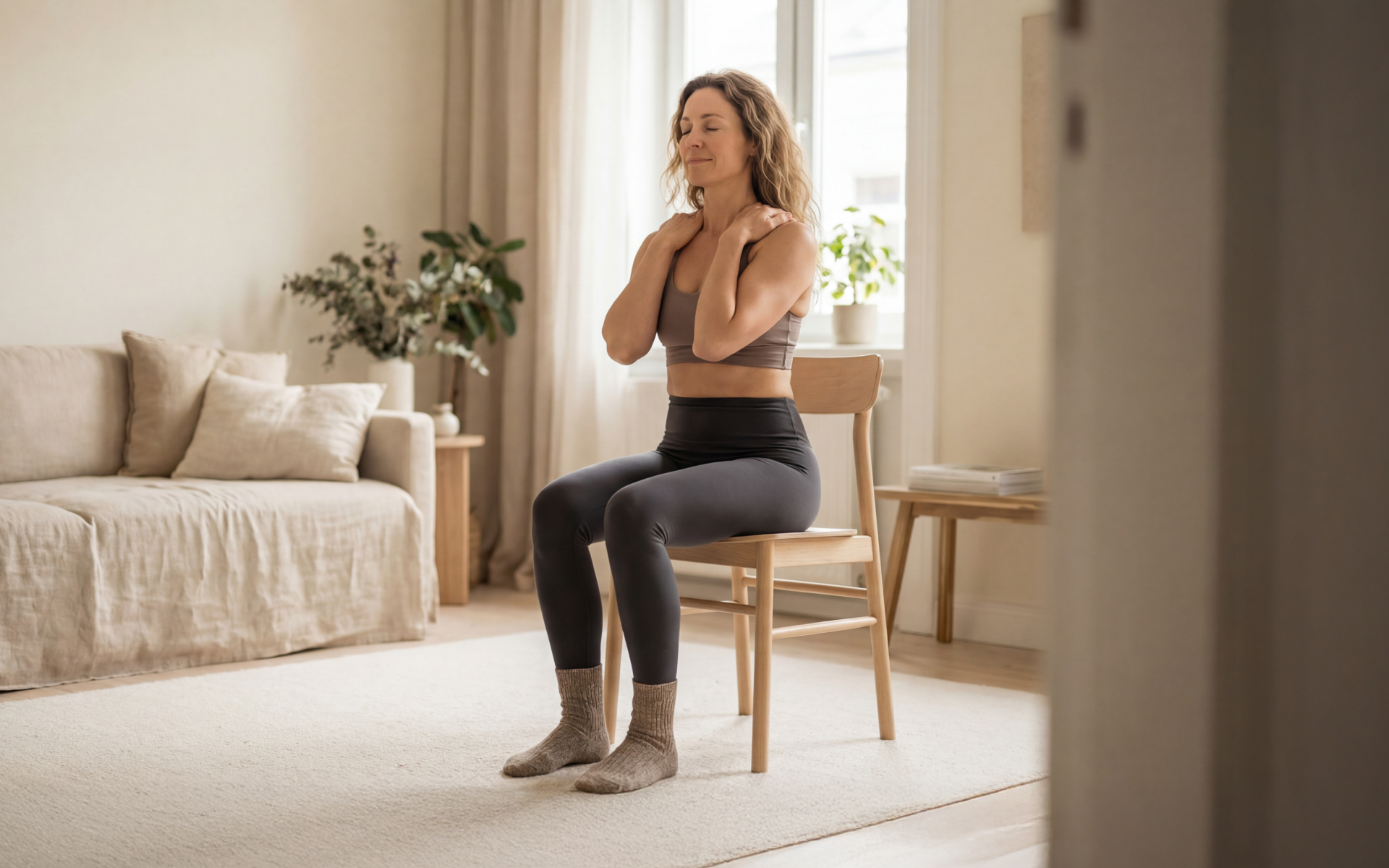
Can you still reap meaningful benefits from yoga on low-energy days? Yes, you can.
Chair yoga represents one of the most accessible forms of movement practice that is available. It requires minimal space, no special equipment beyond a sturdy chair, and can be adapted to virtually any fitness level. When we add the modifier “lazy” to chair yoga, we’re acknowledging something important: not every workout needs to be high-intensity to be valuable.
Your nervous system doesn’t distinguish between “lazy” days and “motivated” days when it comes to receiving movement inputs. What matters is consistency and appropriate stimulus. On days when your energy reserves are depleted, gentle movement can actually help restore your system rather than further deplete it.
Here’s what you need to know about lazy chair yoga, and 8 poses you can try at home.
What Is Lazy Yoga?
Lazy chair yoga is a gentler, low-pressure take on traditional chair yoga. It focuses on simple, comfortable movements and flexible structure, so you can move at your own pace without worrying about intensity or perfect sequencing. The goal is to feel better and stay consistent, not to perform a strict routine.
The concept acknowledges that movement doesn’t need to be strenuous to be beneficial.
This approach removes the barriers that often prevent people from maintaining consistent movement practices. There’s no need for perfect form, matching yoga outfits, or hour-long sessions – just you, a chair, and a willingness to move gently. When exercise feels accessible rather than daunting, you’re more likely to maintain it long-term.
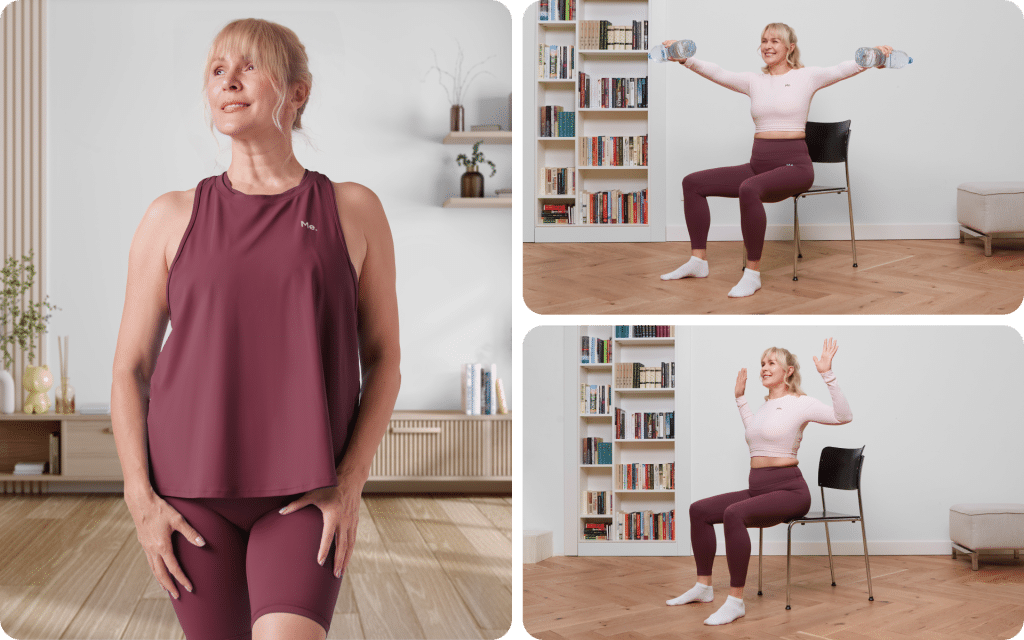
How Can Yoga Be Adapted to Low-Energy Days?
Low-energy days are inevitable parts of life. Various factors can leave you feeling depleted, including:
- Stress
- Poor sleep
- Demanding work schedules
- Natural biorhythms
Recognizing these fluctuations and adapting your movement accordingly demonstrates body awareness rather than laziness.
Reasons why BetterMe is a safe bet: a wide range of calorie-blasting workouts, finger-licking recipes, 24/7 support, challenges that’ll keep you on your best game, and that just scratches the surface! Start using our app and watch the magic happen.
Here are several strategies for maintaining movement on low-energy days:
- Micro-sessions: Break your practice into 5-10 minute segments throughout the day rather than attempting longer sessions.
- Breath-focused movement: Emphasize breathing patterns over physical challenge, using movement as a vehicle for nervous system regulation.
- Supported positions: Use chairs, walls, or other props to reduce the muscular effort required while maintaining movement variety.
- Gentle flow: Focus on smooth transitions between poses rather than holding challenging positions.
- Restorative holds: Allow longer holds in comfortable positions that promote relaxation rather than strength building.
The key is to maintain the movement habit while realizing your current capacity. This approach builds consistency without creating additional stress on your system.
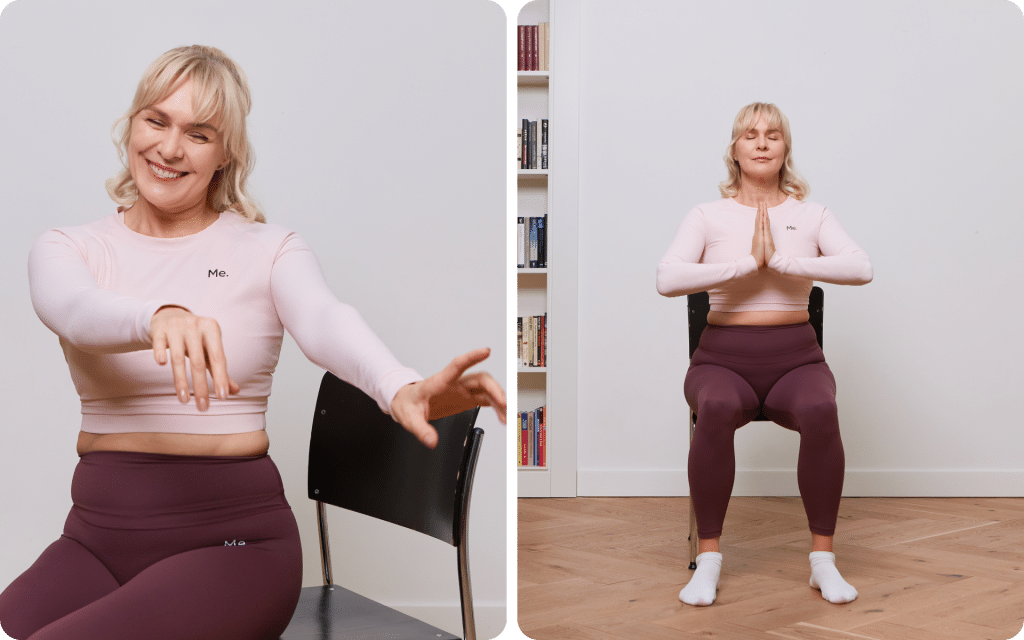
Can Chair Yoga Feel Effortless yet Effective?
The relationship between effort and effectiveness in exercise is more complex than many people assume. Chair yoga demonstrates that meaningful benefits can occur with minimal perceived exertion when the approach is designed thoughtfully (1).
Effectiveness in movement practice depends on your goals. If you’re looking for cardiovascular conditioning or significant strength gains, chair yoga alone won’t suffice.
However, chair yoga can be remarkably effective if your goals include:
- Maintaining mobility
- Reducing stiffness
- Improving circulation
- Managing stress
Research on gentle yoga practices has shown improvements in flexibility, balance, mood, and pain management, even when the physical demands are modest. The nervous system responds to consistent, gentle inputs over time, which creates adaptations that support overall well-being (2).
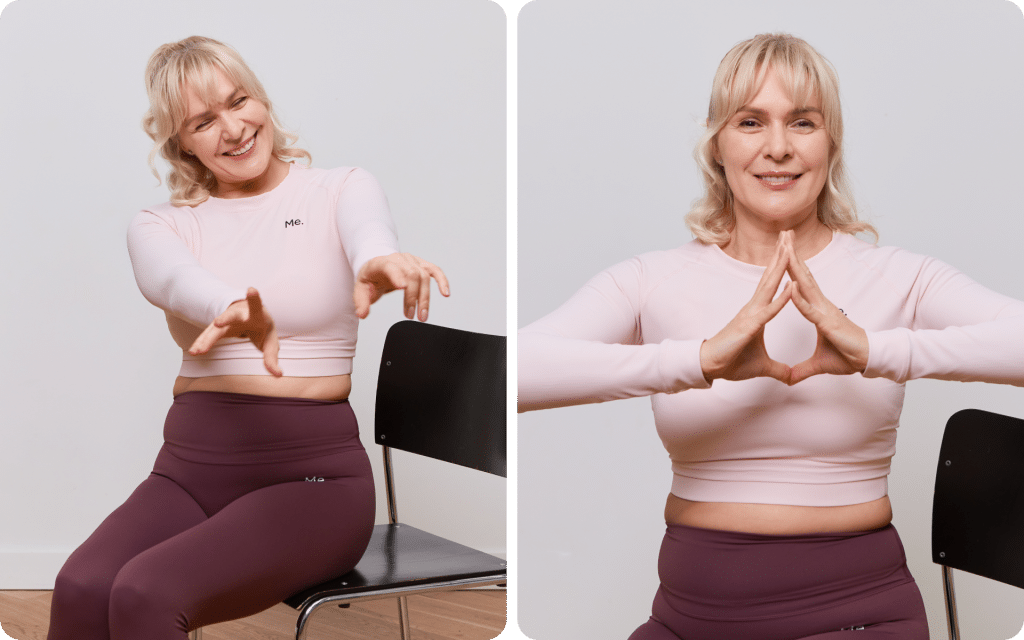
The “effortless” quality comes from working within your current capacity rather than pushing beyond it. When movement feels forced or uncomfortable, your nervous system may respond with tension and resistance. When movement feels natural and supported, your body can relax into the positions and receive their benefits more fully.
Chair yoga also eliminates many of the balance and stability challenges that are present in traditional floor-based yoga. This allows you to focus on specific movement patterns without the additional cognitive load of maintaining equilibrium.
The effectiveness isn’t measured in sweat or muscle fatigue, but in:
- Improved function
- Reduced tension
- Enhanced well-being throughout your day
Read more: Low-Impact Chair Yoga Exercises for the Elderly to Stay Strong and Flexible
How Does Lazy Chair Yoga Differ from Traditional Chair Yoga?
Chair yoga is already one of the most beginner-friendly yoga styles that is often used by seniors and beginners. “Lazy chair yoga” simply takes that one step further by removing any remaining pressure to follow a set structure or intensity on low-energy days.
- Intensity levels:
- Traditional chair yoga may include challenging strengthening exercises and deeper stretches.
- Lazy chair yoga emphasizes comfort and ease over challenge.
- Duration expectations:
- Standard chair yoga classes typically run 30-60 minutes.
- Lazy chair yoga can be as brief as 3-5 minutes or extended based on your available time and energy.
- Goal orientation: Traditional approaches often target specific improvements in strength, flexibility, or balance. Lazy chair yoga prioritizes the simple act of moving and feeling better in the moment.
- Instruction style: Formal chair yoga includes precise alignment cues and proper form emphasis. Lazy chair yoga encourages you to find what feels good within general movement patterns.
- Progression tracking: Traditional programs may track improvements in range of motion or pose difficulty. Lazy chair yoga success is measured by consistency and how you feel during and after practice.
- Breathing emphasis: While both approaches include breathwork, lazy chair yoga may focus more heavily on using breath for relaxation, rather than supporting challenging movements.
The lazy approach removes performance pressure and allows for more personalized adaptation based on your daily needs and energy levels.

Does Lazy Chair Yoga Actually Work?
The effectiveness of lazy chair yoga depends on realistic expectations and appropriate goal setting. Understanding what this practice can and cannot accomplish helps you approach it with the right mindset.
What you can expect: Gentle chair yoga that is consistently practiced can improve joint mobility, reduce muscle tension, enhance circulation, and provide stress relief. Many practitioners report feeling more relaxed and mentally clear after even brief sessions (2).
Circulation benefits: Seated movements promote blood flow, particularly important for people who spend long hours in static positions. Simple arm circles, gentle twists, and supported stretches can counteract some effects of prolonged sitting (3).
Stress management: The combination of gentle movement and focused breathing activates your parasympathetic nervous system, potentially reducing cortisol levels and promoting relaxation (4).
Joint health: Regular gentle movement through available ranges of motion helps maintain joint lubrication and prevents stiffness from developing (5).
Sleep and energy: Many practitioners find that gentle movement helps regulate energy levels throughout the day and may contribute to better sleep quality, although individual responses vary (6).
What you shouldn’t expect: Many adaptations require progressive overload and consistent challenge to make meaningful improvements. This includes:
- Cardiovascular improvements
- Major strength gains
- Dramatic flexibility increases
These improvements are unlikely to occur in any significant manner through this approach alone.
The “work” happens gradually through consistency rather than intensity. Small, regular inputs to your movement system accumulate over time, supporting overall function and well-being.
Can You Lose Weight Doing Lazy Chair Yoga?
Weight management operates on the fundamental principle of energy balance – calories consumed versus calories expended. Lazy chair yoga burns relatively few calories compared to more vigorous forms of exercise.
A typical 30-minute session of gentle chair yoga may burn 50-100 calories, depending on your body weight and the specific movements performed (7). For context, this is roughly equivalent to a 10-15 minute walk at a moderate pace.
However, weight management extends beyond direct calorie burn during exercise. Chair yoga may contribute to weight management through several indirect mechanisms:
Stress reduction: Chronic stress elevates cortisol levels, which can promote fat storage, particularly around the midsection. Regular stress-management practices may help regulate these hormonal patterns (8).
Sleep improvement: Better sleep quality supports healthy hormone regulation, including hormones that control hunger and satiety. Poor sleep disrupts leptin and ghrelin, which makes weight management more challenging (9).
Movement consistency: Establishing regular movement habits, even gentle ones, often leads to increased overall activity levels throughout the day.
Body awareness: Mindful movement practices can enhance awareness of hunger, fullness, and emotional eating patterns (10).
Energy regulation: Improved energy levels from gentle exercise may support more active choices throughout the day (11).
For meaningful weight loss, lazy chair yoga needs to be combined with other lifestyle factors such as nutrition management and potentially more vigorous forms of exercise. However, it can serve as a valuable component of an overall wellness approach.
Learn more about finding the lazy way to lose weight that fits your lifestyle.
Who Benefits Most from Lazy Chair Yoga?
Different populations can gain unique advantages from this accessible movement approach. Understanding who benefits most helps determine if this practice is aligned with your current needs and circumstances.
Individuals with Limited Mobility
For those who find traditional exercise programs inaccessible, chair yoga provides a way to maintain movement without aggravating existing conditions. This includes those who are:
- Recovering from injuries
- Managing chronic conditions
- Dealing with physical limitations
The supported nature of chair-based movement reduces fall risk while still providing circulation, flexibility, and strength benefits. This population often sees the most dramatic improvements from consistent practice.
Desk Workers and Sedentary Professionals
Prolonged sitting creates specific movement patterns and muscle imbalances (12). Chair yoga can be performed in office settings, which makes it practical for busy professionals who struggle to find time for traditional exercise.
Short movement breaks throughout the workday can counteract some negative effects of prolonged sitting, including hip flexor tightness, thoracic spine stiffness, and reduced circulation.
Beginners to Movement Practice
People new to yoga or exercise may feel intimidated by traditional classes or gym environments. Chair yoga provides a gentle introduction to movement concepts without the complexity of floor-based poses or balance challenges.
This population can build confidence and body awareness before you progress to more challenging forms of exercise if desired.
Older Adults
Age-related changes in balance, strength, and flexibility make traditional yoga potentially risky for some older adults. Chair yoga maintains the benefits of yoga practice while providing stability and support.
Balance training aspects of chair yoga can be particularly valuable for fall prevention, while gentle movements help maintain functional mobility (13).
Individuals Managing Chronic Fatigue
Conditions such as chronic fatigue syndrome, fibromyalgia, or post-viral syndromes often fluctuate in severity. Lazy chair yoga provides a movement option that can be adapted to current energy levels without fear of overexertion.
The gentle nature of the practice rarely triggers symptom flares while still providing some of the benefits of regular movement (14, 15).
People Seeking Stress Management
High-stress lifestyles often leave little time or energy for self-care practices. Chair yoga can be integrated into busy schedules as a brief stress-relief tool, rather than another item on an overwhelming to-do list.
Consider incorporating a quick morning workout routine that includes gentle chair movements.
Can You Do Lazy Chair Yoga in Bed?
Adapting chair yoga principles to bed-based practice is possible with some modifications and safety considerations. The key is to maintain the spirit of gentle, supported movement while working within the constraints of a different surface.
Surface considerations: Beds provide an unstable surface compared to chairs, which changes the nature of the movements. Some exercises will be more challenging due to the lack of firm support, while others may be more comfortable.
Safety modifications: Movements that are reliant on chair stability, such as side stretches with one hand on the chair back, require adaptation. Focus on movements that keep your center of gravity low and stable.
Supported positions: Use pillows and bolsters to create support for various positions. A pillow behind your back can be a substitute for a chair back in seated positions.
Modified seated poses: Sit cross-legged or with legs extended rather than feet-on-floor positions typical in chair yoga. This changes the muscle activation patterns, but maintains the gentle stretching benefits.
Lying adaptations: Many chair yoga movements can be adapted to lying positions. Gentle twists, arm movements, and breathing exercises translate well to bed-based practice.
Practical considerations: Morning bed-based practice can serve as a gentle wake-up routine, while evening practice may promote relaxation before sleep. Be mindful that vigorous movement in bed may be too stimulating for bedtime routines.
Remember that safety comes first. If you feel unstable or uncomfortable, you should return to supported positions or consider moving to a more stable surface.
For those who are interested in expanding their gentle movement options, explore easy workouts to lose weight that complement a low-energy approach.
Read more: 7 Senior Chair Yoga Exercises To Improve Mobility
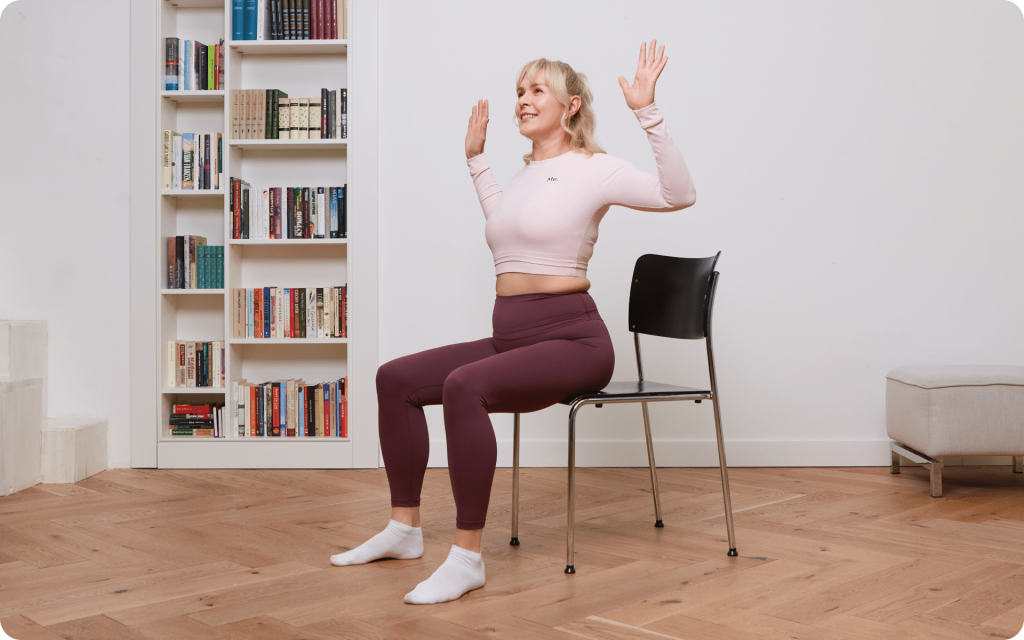
8 Lazy Chair Yoga Poses for Your Home Practice
These poses are all designed for minimal effort while maximizing comfort and gentle movement. Each of them can be held for 30 seconds to several minutes based on your preferences and available time.
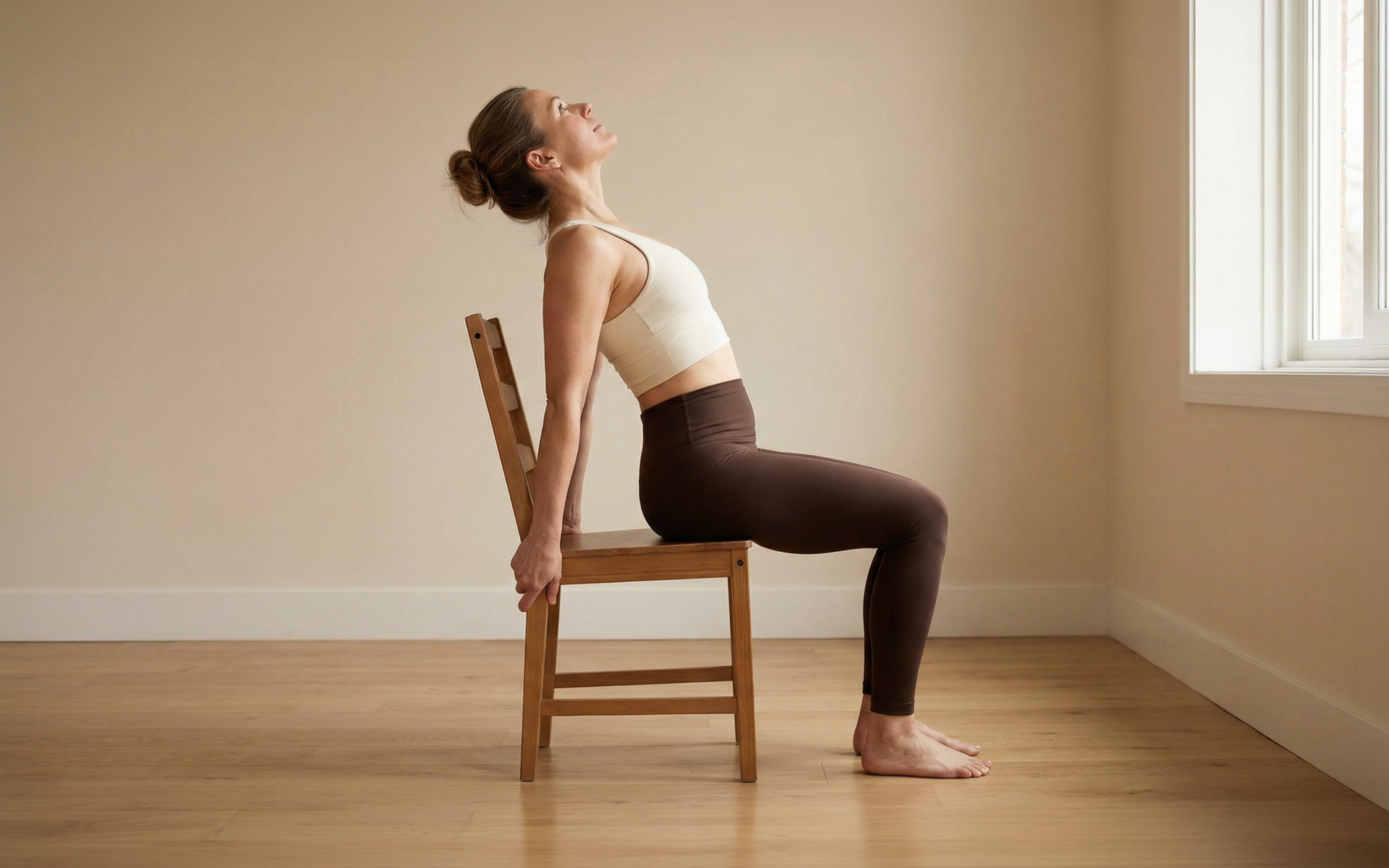
1. Seated Cat-Cow Stretch
- Sit toward the front of your chair with your feet flat on the floor. Place your hands on your thighs for support.
- Inhale and gently arch your back, lifting your chest and looking slightly upward. Your shoulder blades should draw together naturally.
- Exhale and round your spine forward, dropping your chin toward your chest and allowing your shoulders to roll forward.
- Continue this gentle rocking motion, coordinating with your breath. The movement should feel like a gentle massage for your spine.
This pose helps counteract stiffness from prolonged sitting while gently mobilizing your entire spine.
2. Gentle Seated Twist
- Remain seated with both feet planted firmly on the floor. Place your left hand on your right knee and your right hand on the back or arm of the chair.
- Gently rotate your torso to the right, using your hands for light support rather than forcing the movement. Your head can follow the rotation or remain neutral if neck movement is uncomfortable.
- Hold this position while breathing normally, allowing the twist to deepen naturally with each exhale if it feels comfortable.
- Return to center and repeat on the opposite side.
This movement helps maintain spinal mobility and can relieve tension in your back muscles.
BetterMe: Health Coaching app helps you achieve your body goals with ease and efficiency by helping to choose proper meal plans and effective workouts. Start using our app and you will see good results in a short time.
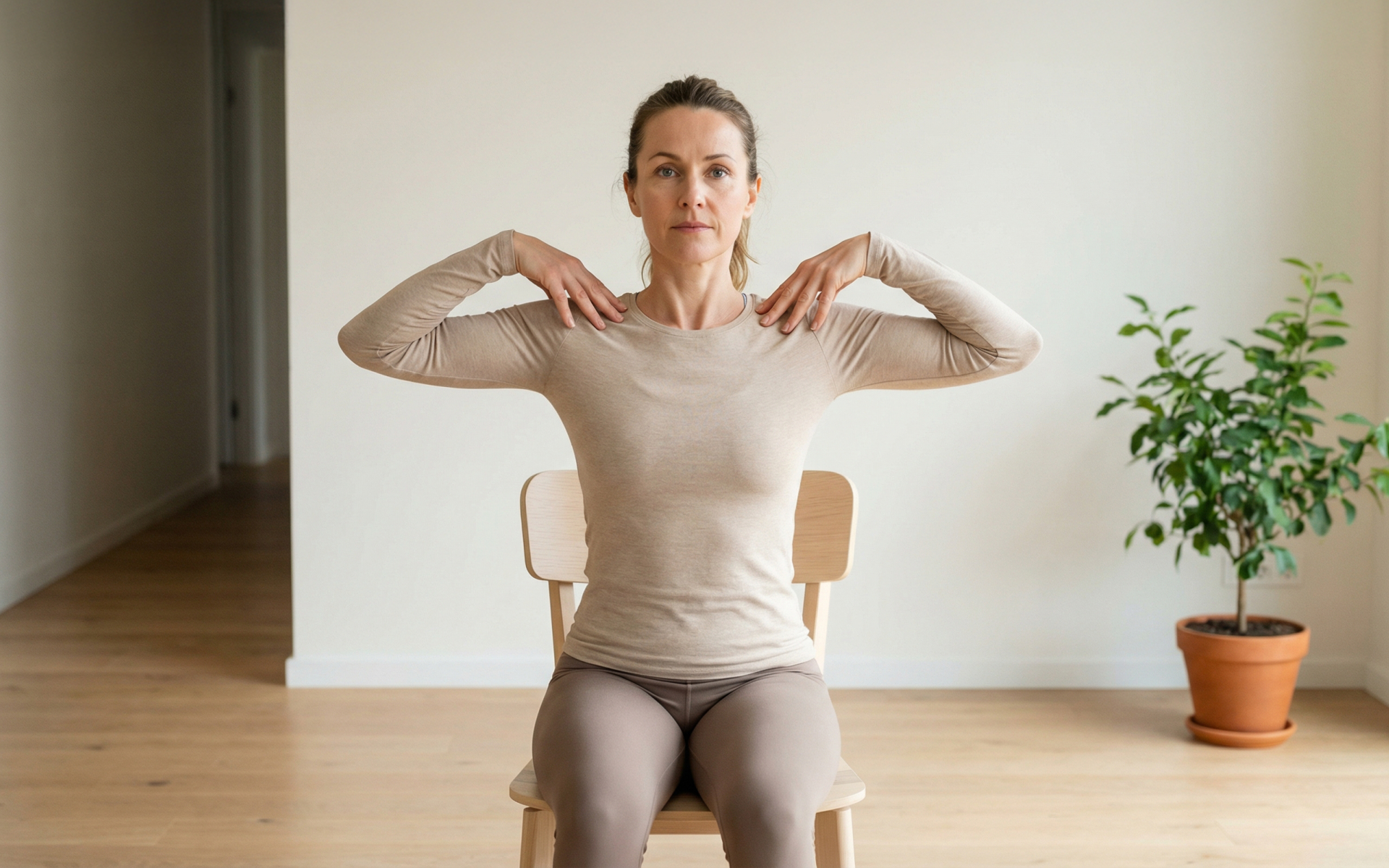
3. Shoulder Rolls and Arm Circles
- Sit comfortably with your arms relaxed at your sides. Start with slow shoulder rolls, lifting your shoulders up toward your ears, then back, down, and forward in a smooth circle.
- After several rolls in one direction, reverse the movement. Focus on releasing tension rather than creating perfect circles.
- Extend your arms out to the sides at shoulder height. Create small circles with your entire arms, gradually increasing the size if it feels comfortable.
These movements help counteract rounded shoulder posture and improve circulation to your arms and upper back.
4. Ankle and Wrist Mobility
- While seated, extend one leg and rotate your ankle slowly in both directions. Point and flex your foot several times, then switch legs.
- Extend your arms in front of you and rotate your wrists in circles. Make fists and release them several times.
These small movements improve circulation and can help prevent stiffness in your extremities, which makes them particularly beneficial for people who spend long hours in static positions.
5. Gentle Side Stretch
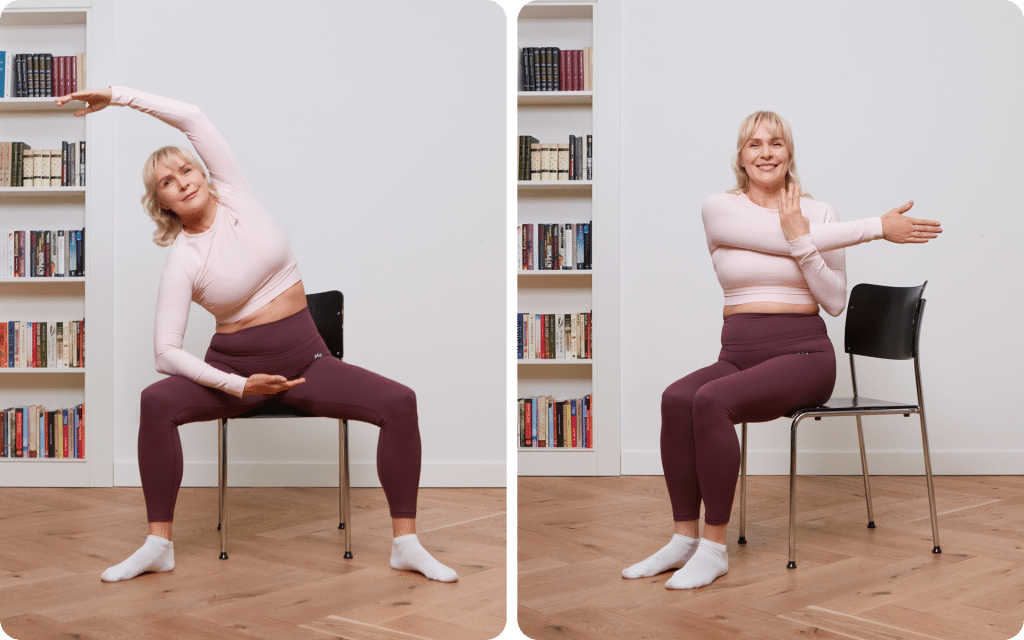
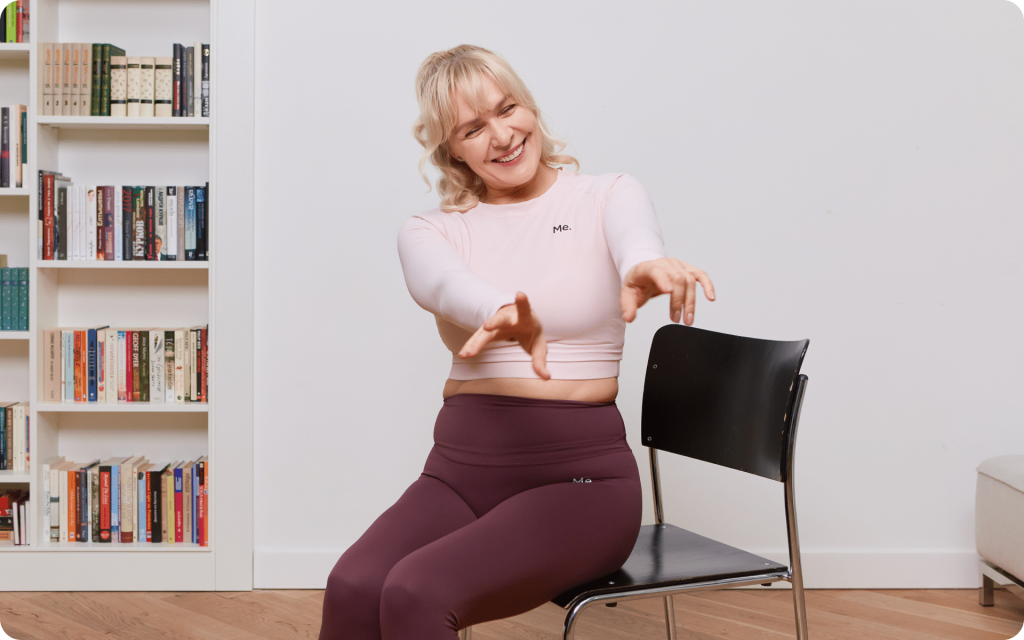
- Sit tall and place your left hand on the seat beside your left hip for support. Reach your right arm up and over your head, creating a gentle side bend to the left.
- Focus on lengthening through your right side rather than pushing into a deep stretch. Your breathing should remain comfortable throughout.
- Hold for several breaths, then return to center and repeat on the opposite side.
This movement helps open your side body and can relieve tension from prolonged sitting.
6. Seated Forward Fold
- Sit toward the front of your chair with feet hip-width apart. Place your hands on your thighs just above your knees.
- Slowly hinge forward from your hips, allowing your hands to slide down your legs for support. Only go as far as feels comfortable – this should never cause back pain.
- Let your head and neck relax completely.
This pose can help release tension in your back and promote relaxation through gentle inversion.
7. Chest Opening Stretch
- Interlace your fingers behind your back, or simply clasp your hands together. Gently lift your hands away from your back while opening your chest.
- If reaching behind your back is uncomfortable, place your hands on the back of your head and gently draw your elbows back.
This stretch counteracts forward shoulder posture and can help improve your breathing by opening your chest area.
8. Gentle Neck Release
- Sit comfortably with your shoulders relaxed. Gently lower your right ear toward your right shoulder without lifting your shoulder up.
- Use your right hand to apply very light pressure to the left side of your head, only adding weight rather than pulling.
- Hold for several breaths, then slowly return to center and repeat on the opposite side.
Neck stretches should always be performed gently, and you should stop immediately if they cause you any discomfort.
Chair yoga burns relatively few calories – typically 50-100 calories per 30-minute session (7). While it’s not effective for significant weight loss on its own, it can support weight management through stress reduction, improved sleep, and increased overall daily movement. For meaningful weight loss, combine gentle chair yoga with dietary changes and more vigorous physical activity. Chair yoga can be practiced daily as it’s gentle and low-impact. Most people benefit from 3-5 sessions per week, with each session lasting 10-30 minutes. Listen to your body and adjust frequency based on how you feel. Consistency matters more than duration – short daily sessions often provide better results than longer, infrequent practices. Chair yoga provides minimal resistance training, so significant muscle toning is unlikely for most people. However, it can help maintain existing muscle tone, improve posture, and create better body awareness. Some isometric holds in chair poses provide light strengthening, but for noticeable toning, you’ll need to add resistance training or more challenging forms of exercise. A 30-minute chair yoga session typically burns 50-100 calories, depending on your body weight and the specific movements performed. This is comparable to light walking or gentle stretching. While the calorie burn is modest, the stress-reduction and circulation benefits can support overall health and may indirectly contribute to better energy balance throughout the day.Frequently Asked Questions
Can you actually lose weight with chair yoga?
How many days a week should you do chair yoga?
Can you get a toned body with chair yoga?
How many calories does 30 minutes of chair yoga burn?
The Bottom Line
The most effective exercise program is one you’ll actually do consistently. Lazy chair yoga removes many barriers that prevent people from maintaining regular movement practices – excuses such as not having enough time or energy to go to the gym, feeling overwhelmed by strenuous exercise, or simply not enjoying traditional forms of physical activity. Use some of the 8 lazy chair yoga poses in this guide when you feel overwhelmed or exhausted.
DISCLAIMER:
This article is intended for general informational purposes only and does not serve to address individual circumstances. It is not a substitute for professional advice or help and should not be relied on for making any kind of decision-making. Any action taken as a direct or indirect result of the information in this article is entirely at your own risk and is your sole responsibility.
BetterMe, its content staff, and its medical advisors accept no responsibility for inaccuracies, errors, misstatements, inconsistencies, or omissions and specifically disclaim any liability, loss or risk, personal, professional or otherwise, which may be incurred as a consequence, directly or indirectly, of the use and/or application of any content.
You should always seek the advice of your physician or other qualified health provider with any questions you may have regarding a medical condition or your specific situation. Never disregard professional medical advice or delay seeking it because of BetterMe content. If you suspect or think you may have a medical emergency, call your doctor.
SOURCES:
- Take a Seat for Yoga with Seniors: A Scoping Review (2022, lidsen.com)
- Exploring the therapeutic effects of yoga and its ability to increase quality of life (2011, pmc.ncbi.nlm.nih.gov)
- The Effects of a Gentle Yoga Program on Sleep, Mood, and Blood Pressure in Older Women with Restless Legs Syndrome (RLS): A Preliminary Randomized Controlled Trial (2012, pmc.ncbi.nlm.nih.gov)
- Effect of Yoga Exercise on Circulatory System (n.d., juniperpublishers.com)
- Reducing Stress with Yoga: A Systematic Review Based on Multimodal Biosignals (2024, pmc.ncbi.nlm.nih.gov)
- Key characteristics of effective yoga interventions for managing osteoarthritis: a systematic review and meta-analysis (2024, link.springer.com)
- Energy Costs of Chair Sitting and Standing Video Exercises in Chinese Older Adults Over 60 Years (2023, pubmed.ncbi.nlm.nih.gov)
- Hatha Yoga Practices: Energy Expenditure, Respiratory Changes and Intensity of Exercise (2011, pmc.ncbi.nlm.nih.gov)
- Impact of a stress management program on weight loss, mental health and lifestyle in adults with obesity: a randomized controlled trial (2018, pmc.ncbi.nlm.nih.gov)
- Sleep Deprivation: Effects on Weight Loss and Weight Loss Maintenance (2022, mdpi.com)
- Effects of a Mindfulness-Based Weight Loss Intervention on Long-term Psychological Well-being Among Adults with Obesity: Secondary Analyses from the Supporting Health by Integrating Nutrition and Exercise (SHINE) Trial (2022, link.springer.com)
- Musculoskeletal disorders and prolonged static sitting (2020, oshwiki.osha.europa.eu)
- The Effects of Yoga on Fall-Related Physical Functions for Older Women: A Systematic Review of Randomized Controlled Trials (2025, mdpi.com)
- Fibromyalgia Syndrome and Yoga (2025, journals.lww.com)
- Effects of recumbent isometric yoga on the daily functioning level of patients with myalgic encephalomyelitis/chronic fatigue syndrome: a randomized, controlled trial (2025, bpsmedicine.biomedcentral.com)
- Yoga Poses Increase Subjective Energy and State Self-Esteem in Comparison to ‘Power Poses’ (2017, frontiersin.org)
 Reviewed by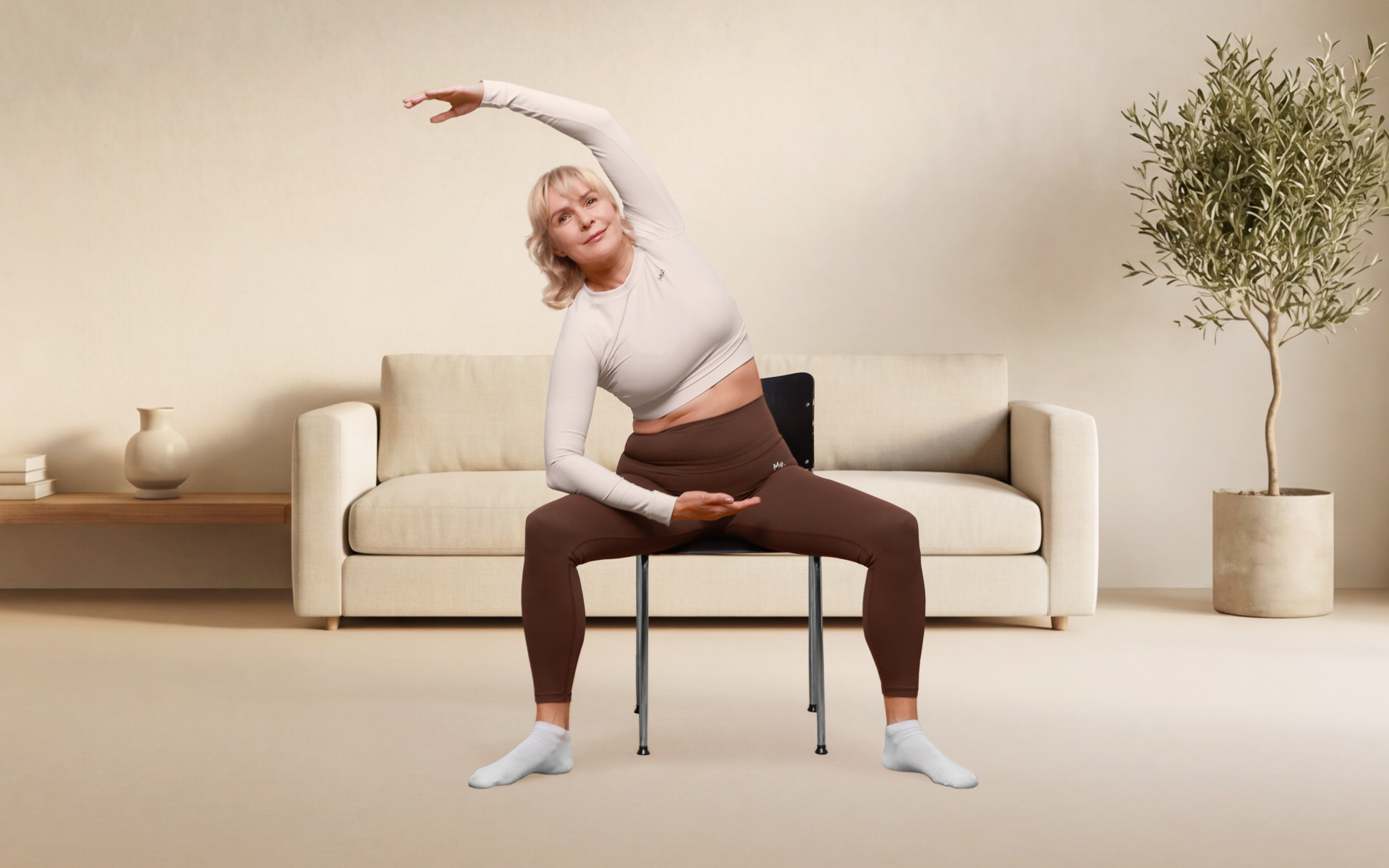
 Reviewed by