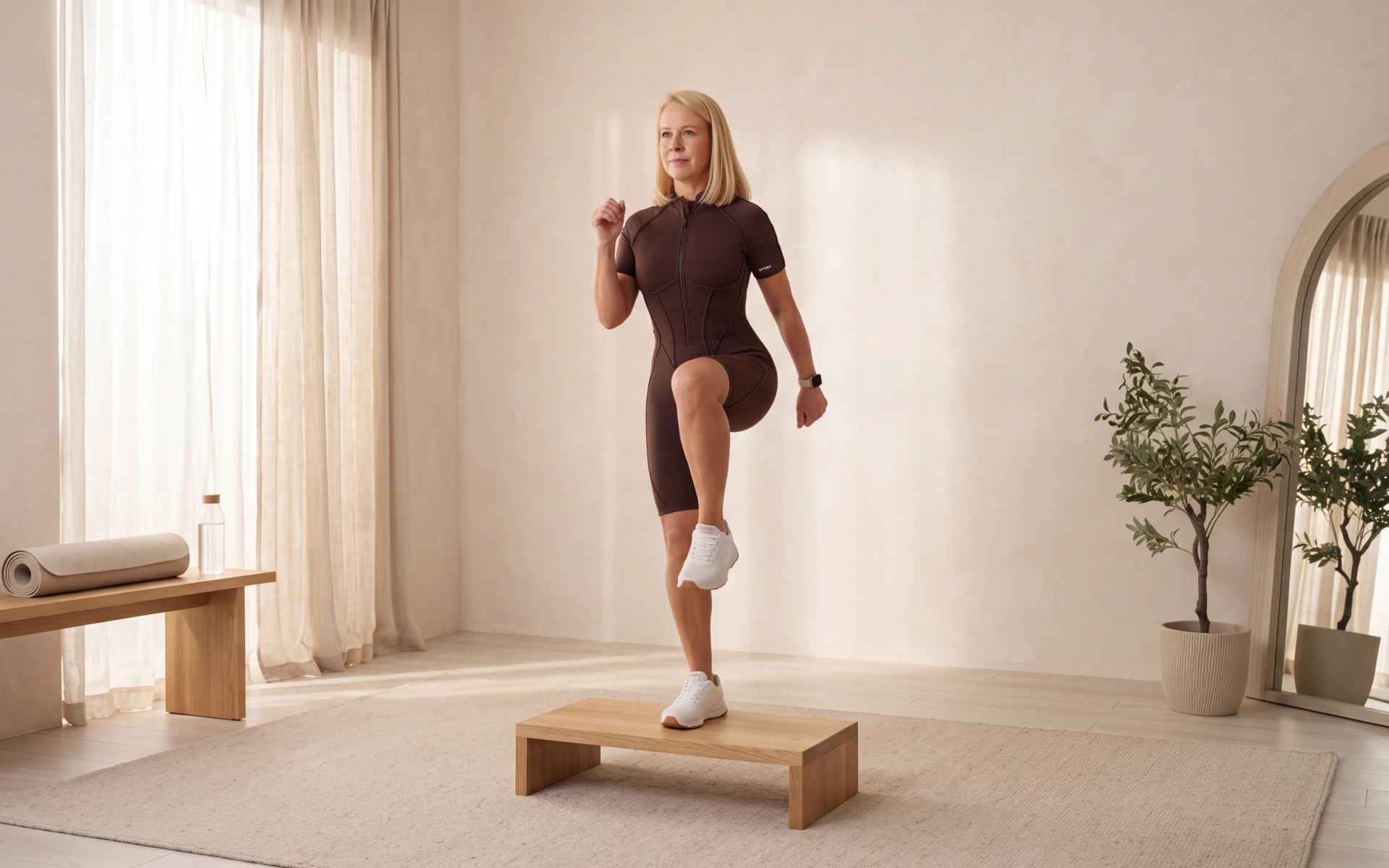
HIIT workouts for women over 50 may support aerobic fitness when the format and dose fit the person (1). Intervals alternate harder work with easier recovery. Research often involves selected participants, so the sample plans here are examples rather than individual prescriptions. Pair interval choices with appropriate strength work and recovery.
This guide explains interval formats, exercise steps, and scheduling choices. Our HIIT workouts for women guide offers other examples, but every routine needs adapting to current capacity. The sample here separates vigorous intervals from moderate activity so the label matches the effort.
Following exercise and diet plans is the key in your fitness journey and greatly impacts results. In 4 weeks users can typically expect to lose not more than 1-2 lbs per week. Individual results may vary.
If you have joint, muscle, or spine-related concerns, please consult your physician before starting this workout.
Key takeaways
- Older-adult HIIT studies show the clearest benefits for aerobic fitness, with varied results for other outcomes (1).
- One eight-week trial in 36 older women used cycle HIIT, resistance training, and control groups; it did not compare HIIT with steady cardio (2).
- General adult activity guidance includes strengthening on at least two days weekly alongside aerobic activity (3).
- The sample six-round interval block lasts twelve to eighteen minutes before preparation and finishing.
- The menopause meta-analysis found clearer fat-related effects before menopause, while postmenopausal evidence remained limited (4).
- A review in adults with excess weight found no overall fat-loss superiority for HIIT over continuous aerobic exercise (5).
- The sample schedule uses one or two interval days and keeps easier activity and strength sessions separate.

Is a HIIT workout beneficial for people over 50?
HIIT may support aerobic fitness in selected older adults, with varied results by protocol and participants (6, 1). Those findings do not establish one dose or outcome for every woman over 50.
The older-adult review found the clearest evidence for (1):
- Aerobic capacity, often measured as peak oxygen uptake
- Exercise tolerance, or how long you can keep moving comfortably
- Selected functional outcomes in some studied groups
Metabolic, mood, and quality-of-life outcomes were less consistent (1). Consider the studied participants and dose rather than assuming a home circuit reproduces the findings.
Read more: 5-minute HIIT workout: is it worth it?
Can a 50-year-old woman get back in shape?
A woman returning to activity at 50 can plan around current capacity. Strength, endurance, and body-composition responses vary. Seek guidance when medical circumstances or exercise limitations apply.
Useful goals when returning to exercise may include:
- Aerobic fitness and walking endurance
- Muscular strength and balance
- A routine that can be repeated around daily responsibilities
The following is an editorial sequence, not a four-week return-to-training prescription. Move between stages according to capacity and professional guidance where needed:
- Establish manageable walking, cycling, or swimming sessions
- Include appropriate strength sessions
- Layer in balance and mobility work
- Consider short intervals when that exercise format fits your circumstances
Adult guidance includes strengthening on at least two days weekly (3). Select resistance movements according to capacity; the sample sets and exercises are editorial choices.
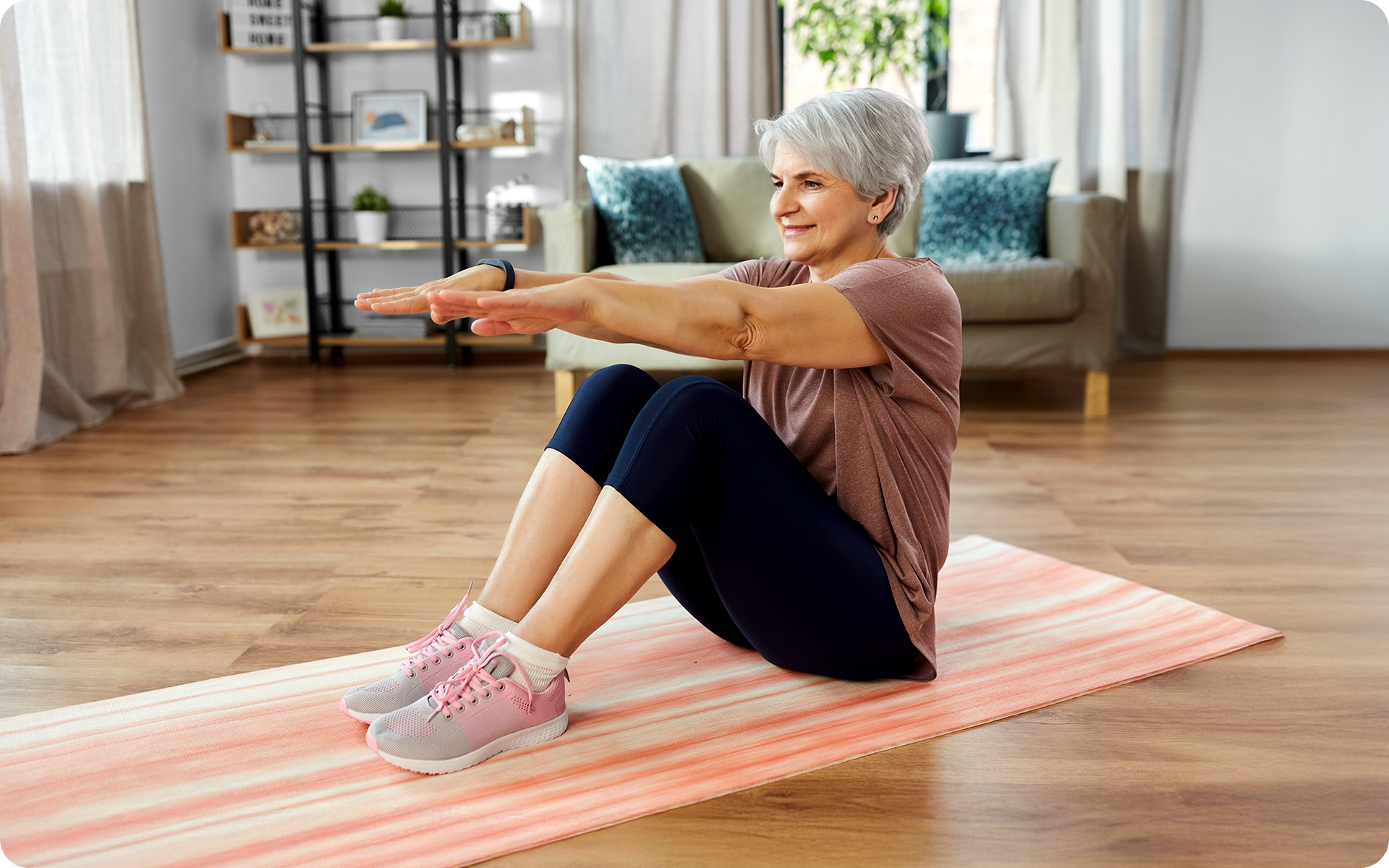
Should women over 50 do HIIT?
One eight-week trial studied 36 older women with impaired cardiometabolic circumstances. Cycle HIIT improved six-minute walking distance, but the study does not validate every home routine (2).
Discuss these planning factors when considering intervals:
- Your current aerobic and strength activity
- The exercise mode and time available
- Any movement limitations or support you need
More caution may help if you have ongoing back discomfort, balance concerns, dizziness, or significant deconditioning. In those cases, checking with a qualified professional before starting is a reasonable step.
Research often uses supervised or selected settings (6). For a HIIT workout for female beginners, practice movement control before increasing pace; moderate intervals may be more appropriate.
Our low-impact cardio workout guide covers alternatives. Low impact describes movement, while effort and individual suitability need separate consideration.
Workouts, weight management tools, and recipe ideas come together in the BetterMe: Health Coaching app, giving you practical support for building a more consistent wellness routine.
Does HIIT burn more fat than other exercise?
HIIT does not consistently produce greater fat loss than continuous aerobic exercise. A review in adults with excess weight found no overall superiority for body or visceral-fat reduction (5). The result depends on the population, comparison, dose, and outcome measured.
Keep these distinctions in mind:
- Energy used in a session is different from a long-term change in body fat.
- Strength and interval training serve different goals; combining them requires planning both components (7).
Evidence specifically after menopause is limited. A meta-analysis found clearer weight and abdominal-fat effects before menopause, with only a small number of postmenopausal studies (4). The trial in older women used resistance, HIIT, and control groups; it did not compare HIIT with steady cardio (2).
Our HIIT workouts for weight loss guide covers the wider topic. The sample cannot establish an individual result timeline.
What can a HIIT workout plan for a 50-year-old woman include?
A plan can include an appropriate interval format alongside strength sessions and easier activity days. Choose movements that you can repeat comfortably and control. Research does not establish one ideal protocol for every woman over 50 (6, 1).
These editorial examples compare work/recovery structures. Moderate walking intervals are included as an alternative; they are not HIIT solely because the pace alternates.
| Format | Structure | Effort level | Suited for |
|---|---|---|---|
| 4 × 4 intervals | 4 rounds: 4 mins hard, 3 mins easy; 28-min block | Vigorous (7-8/10) | Experienced exercisers with appropriate guidance |
| Short intervals | 6 rounds: 30-60 secs hard, 90-120 secs easy | Vigorous work with easy recovery | People able to tolerate the work and recovery periods |
| Walking intervals | Alternate 1 min brisk, 2 mins easy | Moderate (5-6/10) | Low-impact starters |
Read more: Weight training for women over 50: exercises, tips, and FAQs for beginners
Relative effort can be described on a 0-to-10 scale, where vigorous aerobic work is commonly 7 or 8 (8). Moderate work is 5 or 6. The table’s 4-by-4 block excludes preparation and finishing, so its full session lasts longer than 28 minutes.
This editorial sample covers HIIT workouts for women over 50 at home or on a machine. Its two interval slots are examples, not a required frequency.
| Day | Focus | Details |
|---|---|---|
| Monday | Interval session | Warm-up, 6 rounds of 30-60 secs hard/90-120 secs easy, cool-down |
| Tuesday | Strength | Full-body, 2-3 sets × 8-12 reps |
| Wednesday | Easy cardio or rest | 20-30-min walk |
| Thursday | Strength | Full-body, 2-3 sets × 8-12 reps |
| Friday | Interval session | Repeat Monday only if the dose remains appropriate |
| Weekend | Recovery | Walking, mobility, or full rest |
Six work/recovery rounds total twelve to eighteen minutes, or 22 to 38 including preparation and finishing. For resistance examples alongside a calisthenics HIIT workout, see our calisthenics workout plan for over 50.
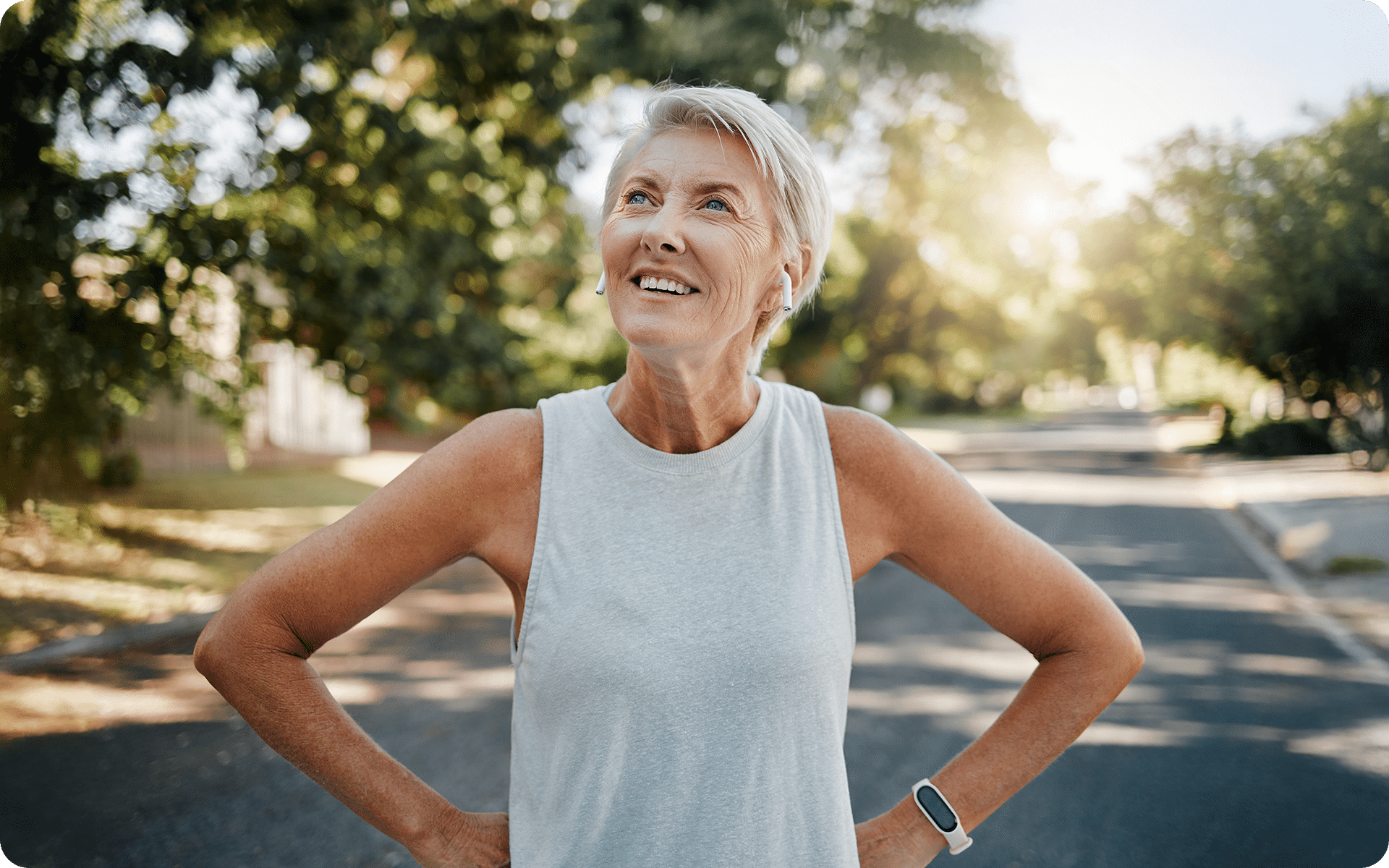
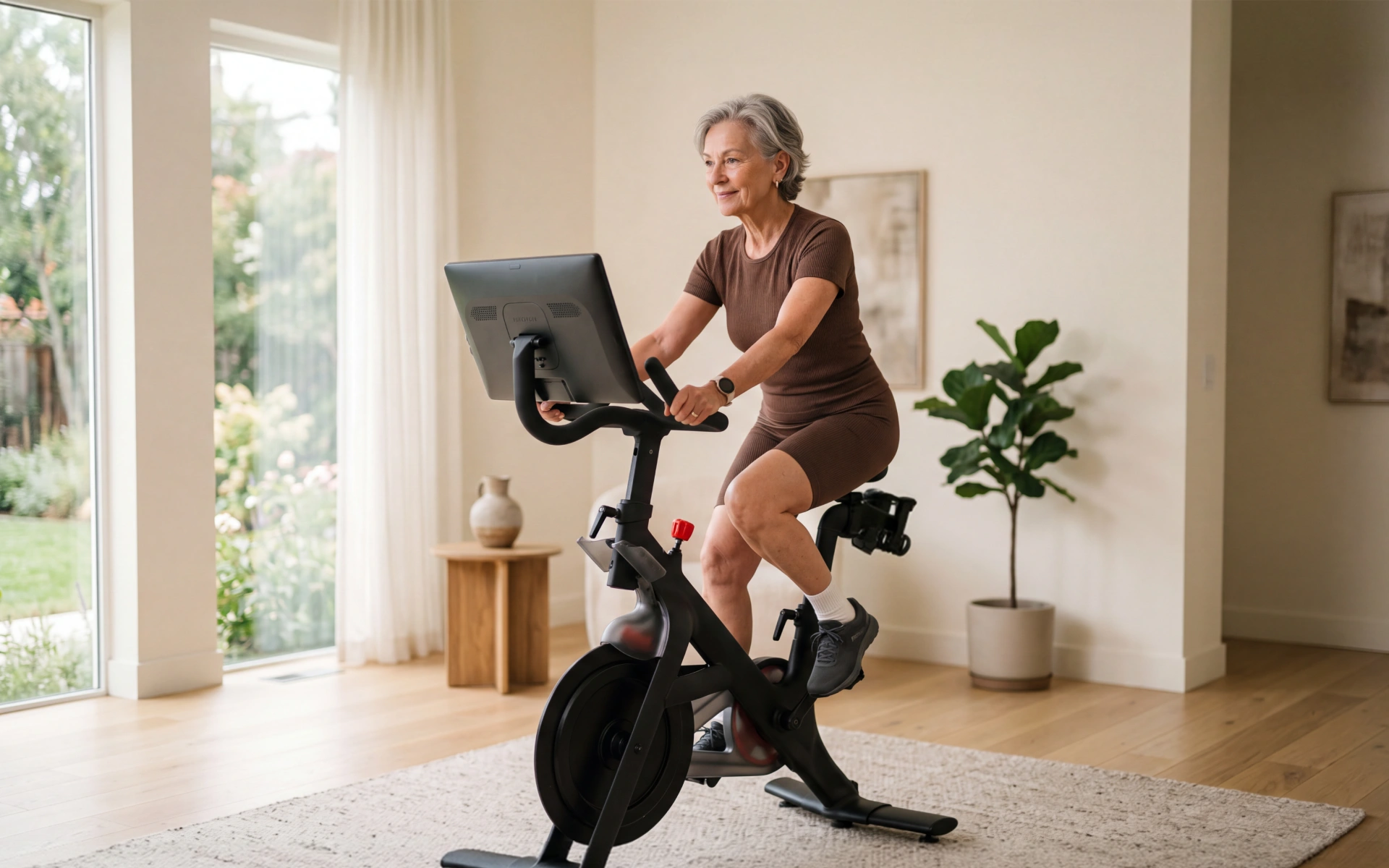
1. Bike or walking intervals
- Warm up for 5-10 minutes at an easy pace.
- Work hard for 30-60 seconds at roughly 7-8/10 effort.
- Recover for 90-120 seconds at a gentle pace.
- Complete up to 6 rounds as appropriate.
- Cool down for 5 to 10 minutes at an easy pace.
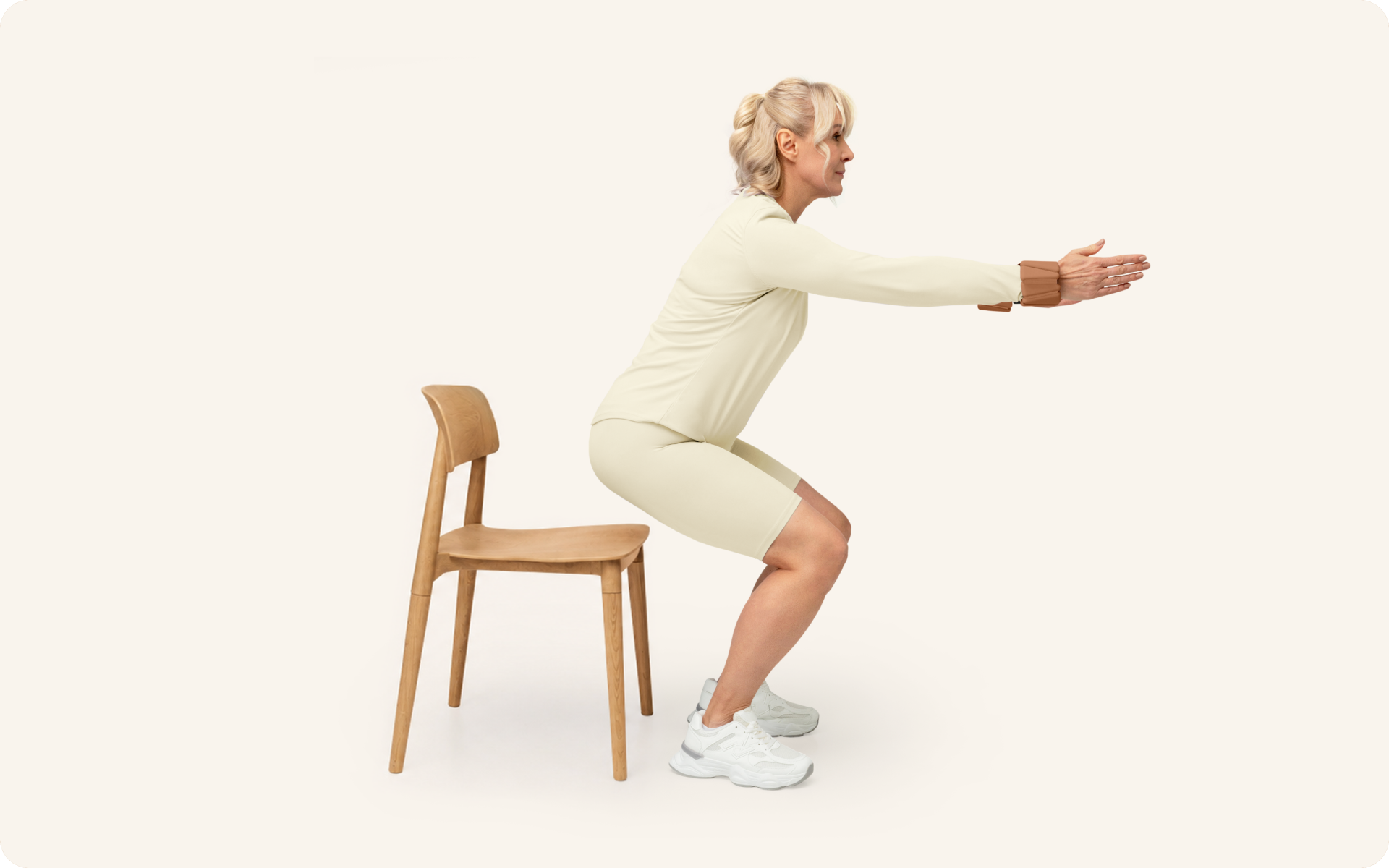
2. Bodyweight squat
- Stand with your feet shoulder-width apart.
- Bend your knees and lower your hips back and down.
- Keep your chest tall and your heels grounded.
- Push through your feet to return to standing.
3. Step-up
- Face a sturdy step or a low bench.
- Place one foot fully on the step.
- Press through that foot to lift your body up.
- Lower one foot back to the floor.
- Lower the other foot to the floor.
- Change the leading leg for the next repetition.
Which HIIT exercises can women over 50 consider?
Cycling, rowing, walking intervals, and bodyweight movements are possible formats when their demands fit the person. This article cannot rank them by calorie expenditure for every woman over 50. Choose according to movement control, equipment, and the work/recovery pattern.
Possible exercise modes include:
- Cycling sprints or air-bike intervals
- Rowing intervals
- Incline walking or treadmill intervals
- Supported step or stair intervals when appropriate
The table compares movement and equipment, not a calorie ranking. For a HIIT workout for women with no equipment, pace and support still affect the difficulty.
| Exercise | Sample effort | Impact level | Equipment |
|---|---|---|---|
| Air-bike intervals | High | Low | Air bike |
| Rowing intervals | High | Low | Rower |
| Incline walking | Moderate | Low | Treadmill or hill |
| Marching + squats | Moderate | Low | None |
Choose by capacity and setting. Change or stop a movement that causes discomfort or becomes difficult to control; lower impact can still involve substantial effort.
How many days a week should women over 50 do HIIT?
The sample here uses one or two interval days, with easier activity between them. This is an editorial starting structure rather than a frequency proven suitable for every woman. Strength work and recovery are planned separately, so interval days do not crowd out the other components.
A practical weekly setup might include:
- 2 strength sessions for major muscle groups
- 1-2 interval sessions
- 2-4 easy walking or low-intensity days
- At least 1 recovery day
A person new to intervals may use only one sample slot. Review recovery before adding the second, considering other training in the week.
Lingering fatigue, discomfort, or poorer movement control are reasons to reassess the dose. Use an easier day or reduce the work block.
Strength work contributes a separate stimulus. Concurrent-training studies used structured programs across varied populations (7). A HIIT workout for women over 60 also needs this distinction.
What are common HIIT mistakes for women over 50?
The most common HIIT mistakes for women over 50 involve starting too hard, skipping strength, and ignoring recovery. Small adjustments tend to make a big difference.
Look out for these patterns:
- Starting too hard: Keep the work interval controlled.
- No activity base: Establish manageable steady movement before increasing pace.
- Defaulting to jumping: Consider low-impact formats when they fit your circumstances.
- Skipping strength work: Include appropriate resistance exercise alongside cardio (3).
- Poor recovery: Leave easier days or rest between the harder sample sessions.
- Using a fixed heart-rate formula: Discuss intensity monitoring when medications or medical circumstances affect your response.
- Rushing recovery: Extend the easy phase when needed to regain controlled movement before another work interval.
Stop exercise for chest discomfort, faintness, or unusual breathlessness. Seek prompt medical help for severe or persistent symptoms rather than continuing the session. For routine planning questions, a clinician or exercise professional can help assess the proposed dose.
HIIT workouts for weight loss for women fit within a wider activity and nutrition routine. Weight loss for women over 50 cannot be predicted from this sample’s timer.
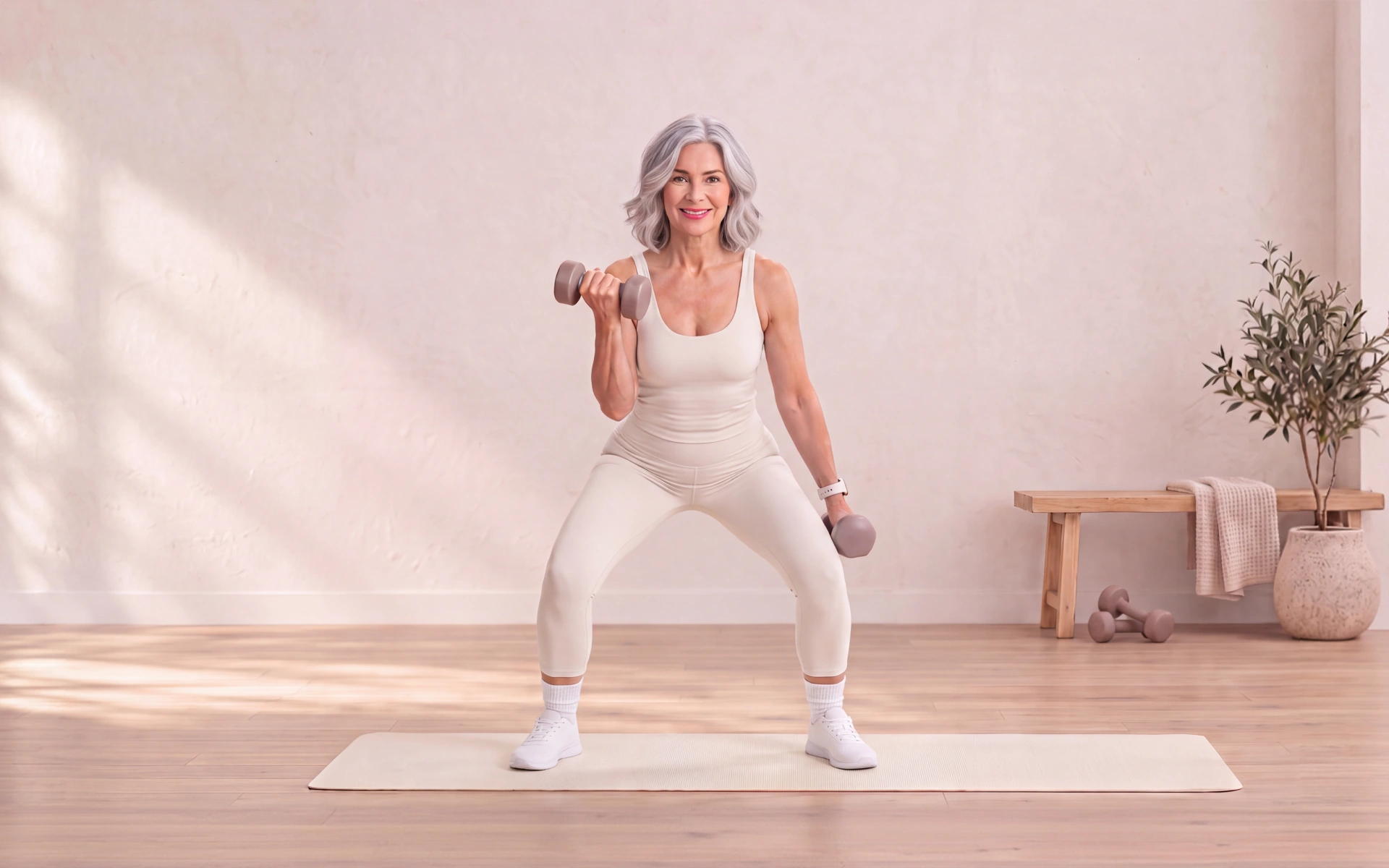
HIIT workouts for women over 50 with weights need appropriate loading and technique. The effects of combined training cannot be attributed to intervals alone (7).
Whether you’re just starting your fitness journey or looking to add more structure to your routine, BetterMe offers tools that can support different wellness goals. Explore the app and see how its workout, nutrition, and habit-building features can fit into your lifestyle.

FAQs
Does HIIT burn belly fat?
HIIT may contribute to changes in overall body fat, but the cited reviews do not establish an individual belly-fat outcome (9, 10). Localized muscle training did not produce localized fat loss in a separate review (11). Evidence after menopause remains limited, so the amount and timing of change vary (4).
What time of day should you do HIIT?
Choose a time when the planned session fits your schedule and you can recover afterward. This draft does not establish one time of day that produces superior results. Keep the dose similar when comparing how different times feel.
How many days of HIIT does it take to see results?
The sample establishes no individual result timeline. Studies use different participants, outcomes, and doses (1). Track activity capacity and recovery instead of expecting visible change by a fixed week.
What happens if I do HIIT every day?
Daily hard intervals can crowd out other activity and rest. The sample spaces interval sessions apart. Reassess the dose if fatigue or movement control worsens.
Can HIIT change body composition?
Some trials and reviews report body-composition changes, but the findings vary by protocol and participants (9, 5). HIIT is not a substitute for separately planned strength work, and evidence specific to postmenopausal women is limited (7, 4). Individual outcomes and timelines vary.
The bottom line
Choose a suitable format and checked work/recovery pattern. Adapt the sample with professional guidance where needed. Review technique and recovery before adding rounds or increasing pace.
DISCLAIMER:
This article is intended for general informational purposes only and does not serve to address individual circumstances. It is not a substitute for professional advice or help and should not be relied on for making any kind of decision-making. Any action taken as a direct or indirect result of the information in this article is entirely at your own risk and is your sole responsibility.
BetterMe, its content staff, and its medical advisors accept no responsibility for inaccuracies, errors, misstatements, inconsistencies, or omissions and specifically disclaim any liability, loss or risk, personal, professional or otherwise, which may be incurred as a consequence, directly or indirectly, of the use and/or application of any content.
You should always seek the advice of your physician or other qualified health provider with any questions you may have regarding a medical condition or your specific situation. Never disregard professional medical advice or delay seeking it because of BetterMe content. If you suspect or think you may have a medical emergency, call your doctor.
SOURCES:
- Effects of High-Intensity Interval Training in Older Adults: A Systematic Review of Randomized and Non-Randomized Intervention Studies (2026, mdpi.com)
- Impact of resistance and high-intensity interval training on body composition, physical function, and temporal dynamics of adaptation in older women with impaired cardiometabolic health: a randomized clinical trial (2025, link.springer.com)
- Adult Activity: An Overview (2023, www.cdc.gov)
- Effect of high intensity interval training on body composition in women before and after menopause: a meta-analysis (2020, physoc.onlinelibrary.wiley.com)
- High-intensity interval training is not superior to continuous aerobic training in reducing body fat: A systematic review and meta-analysis of randomized clinical trials (2023, sciencedirect.com)
- High-Intensity Interval Training in Older Adults: a Scoping Review (2021, link.springer.com)
- Concurrent HIIT and Resistance Training for Musculoskeletal Function: A Systematic Review of Neuromuscular, Morphological, and Performance Adaptations (2026, mdpi.com)
- What Counts as Physical Activity for Older Adults (2025, www.cdc.gov)
- The Effect of High-Intensity Interval Training Type on Body Fat Percentage, Fat and Fat-Free Mass: A Systematic Review and Meta-Analysis of Randomized Clinical Trials (2023, mdpi.com)
- Efficacy of Interval Training in Improving Body Composition and Adiposity in Apparently Healthy Adults: An Umbrella Review with Meta-Analysis (2024, link.springer.com)
- A proposed model to test the hypothesis of exercise-induced localized fat reduction (spot reduction), including a systematic review with meta-analysis (2022, hummov.awf.wroc.pl)
 Reviewed by