One of the most common concerns women voice when considering strength training is, “I don’t want to get big or bulky”. While it’s understandable, this apprehension is often rooted in misconceptions about how female bodies respond to lifting weights. The truth is that building a physique that appears “bulky” requires a highly specific, high-volume training and nutrition strategy that doesn’t happen by accident. For most women, the goal is to feel stronger, improve health, and enhance their natural shape – all of which are achievable through a well-designed gym routine.
This guide will walk you through the science and practical steps of creating an effective gym workout routine for women. We’ll dismantle common myths, provide evidence-based recommendations, and give you the tools to build a sustainable plan that’s aligned with your goals.
What is a Gym Workout Routine for Women that Beginners Can Follow?
A gym workout routine for women that beginners can follow is a structured, progressive plan that’s designed to improve strength, body composition, and overall health. It’s not about randomly using machines or copying exercises you see online. Instead, it’s a systematic approach that focuses on foundational compound movements, proper form, and consistent effort.
Research has confirmed that men and women do not need to train differently to achieve similar results in strength and muscle growth (1). The physiological principles of adaptation are universal.

The “toned” look many people desire is a function of having a healthy amount of muscle mass combined with a relatively low body fat percentage, which allows muscle definition to become visible. Lifting weights is the most effective way to build that underlying muscle (2).
Concerns about becoming “bulky” are largely unfounded for most women due to hormonal differences, primarily lower testosterone levels compared to men. Achieving significant muscle size requires years of dedicated, high-volume training and an incredibly specific diet, so you can train hard without fear of unwanted bulk.
A good beginner’s routine prioritizes learning movement patterns, building a base level of strength, and establishing consistency.
Reasons why BetterMe is a safe bet: a wide range of calorie-blasting workouts, finger-licking recipes, 24/7 support, challenges that’ll keep you on your best game, and that just scratches the surface! Start using our app and watch the magic happen.
How Often Should a Female Go to the Gym?
The ideal frequency for gym attendance depends on your goals, experience level, and recovery capacity. General health guidelines from organizations such as the World Health Organization (WHO) provide a solid starting point for adults.
- For Cardiorespiratory Health: Aim for 150-300 minutes of moderate-intensity aerobic activity per week. This could be 30 minutes of brisk walking (3-4 mph) five days a week. Alternatively, you can do 75-150 minutes of vigorous-intensity aerobic activity, such as running or cycling (3).
- For Strength: Engage in muscle-strengthening activities that involve all major muscle groups on 2 or more days a week. This is the minimum recommendation for maintaining muscle mass and bone density (3).
For those who are looking to optimize results such as muscle growth (hypertrophy) and significant strength gains, a higher frequency is often more effective. Training a muscle group 2-3 times per week is generally considered optimal for maximizing growth. This allows for sufficient stimulus and recovery (4).
Your weekly schedule could include 3-4 strength training days, complemented by 1-2 days of cardiovascular exercise and dedicated rest days.
Read more: Workout Plan to Get Lean Female: The Complete Guide
How to Build an Effective Gym Workout Routine for Women
Building a routine that delivers results requires more than just showing up. It involves a thoughtful process that considers several key training variables. Here are 10 steps to create a plan that is effective, sustainable, and tailored to you.
1. Define Your Primary Goal
Your goal dictates your training approach. Are you aiming for strength, muscle growth, or general fitness?
- Strength: The ability to produce maximal force. This typically involves lifting heavy weights for fewer repetitions (5).
- Hypertrophy: An increase in muscle size. This is often achieved with moderate weight and rep ranges (5).
- Endurance: The ability to sustain effort over time. This involves lighter weights for higher repetitions (5).
2. Determine Your Training Frequency
Decide how many days you can realistically commit to the gym each week.
- Beginners: 2-3 days per week is an excellent starting point. This provides enough stimulus for progress while allowing ample time for recovery.
- Intermediates: 4-5 days per week can allow for more volume and specialization.
3. Choose Your Training Split
A training split is how you organize your workouts throughout the week.
- Full-Body: You train all major muscle groups in each session. This is ideal for beginners who train 2-3 times per week, as it maximizes the frequency each muscle is stimulated (4).
- Upper/Lower Split: You dedicate separate days to upper-body and lower-body workouts. This is a great progression for those training 4 days a week.
- Body Part Split (“Bro Split”): Each day focuses on one or two specific muscle groups (e.g. chest day, back day). This is common among advanced lifters, but is often less optimal for beginners.
4. Select Your Exercises
Focus on compound exercises, which work multiple muscle groups simultaneously. They are efficient and provide the most bang for your buck.
- Lower-Body: Squats, deadlifts, lunges, hip thrusts.
- Upper-Body (Push): Bench press, overhead press, push-ups, dips.
- Upper-Body (Pull): Pull-ups, bent-over rows, lat pulldowns.
- Accessory/Isolation Exercises: Include movements such as bicep curls, tricep extensions, and calf raises to target smaller muscles after your main compound lifts. A free gym workout routine for women should prioritize these foundational movements.
5. Establish Training Intensity
Intensity refers to how heavy you lift, often expressed as a percentage of your one-rep max (1RM) – the most weight you can lift for a single repetition (6). A more practical way to manage intensity is by using the reps in reserve (RIR) concept.
- Reps in Reserve (RIR): This is the number of repetitions you could have done before reaching muscular failure (7). For example, an RIR of 2 means you stopped the set, but felt you could have completed 2 more reps with good form.
- For Hypertrophy: Aim for an RIR of 1-3. This ensures you’re working hard enough to challenge your muscles while minimizing your risk of injury.
- For Strength: Aim for an RIR of 1-2, often with heavier loads.
6. Set Your Volume (Sets and Reps)
Volume is the total amount of work you do (sets x reps x weight) (8). The rep range you work in is traditionally tied to a specific goal (5).
- Strength: 1-5 reps per set.
- Hypertrophy: 8-12 reps per set.
- Endurance: 15+ reps per set.
However, recent research shows that muscle growth can occur across a wide spectrum of rep ranges, as long as sets are taken close to failure (low RIR) (9). For a well-rounded program, it’s beneficial to work across different rep ranges. A good starting point is 3-4 sets per exercise.
7. Plan for Progressive Overload
Progressive overload is the principle of gradually increasing the demands on your body over time. This is the cornerstone of getting stronger and building muscle (10).
- Increase Weight: Add a small amount of weight to the bar once you can complete your target reps and sets with good form.
- Increase Reps: Aim to do one more rep than you did last time with the same weight.
- Increase Sets: Add another set to an exercise.
- Improve Form: Perfecting your technique can increase muscle activation and is a form of progression.
8. Manage Your Rest Periods
The time you rest between sets influences your performance and the metabolic effect of the workout (11).
- For Strength (Heavy Lifts): Rest for 3-5 minutes to allow for near-full recovery of the nervous system.
- For Hypertrophy (Moderate Lifts): Rest for 30-60 seconds. This range creates metabolic stress, which is a driver of muscle growth.
- For Endurance (Lighter Lifts): Rest for 20-60 seconds.
9. Incorporate a Warm-up and Cool-down
Properly preparing for and winding down from your workout is essential for performance and injury prevention (12, 13).
- Warm-up: Start with 5-10 minutes of light cardio (e.g. jogging, cycling) followed by dynamic stretches (e.g. leg swings, arm circles) and activation drills for the muscles you’re about to train.
- Cool-down: Finish with 5-10 minutes of static stretching, holding each stretch for 20-30 seconds to improve flexibility.
10. Track Your Progress
Keep a workout log to monitor what you’re doing. A gym workout routine for women app can be useful for this.
- What to Track: Exercises performed, weight lifted, sets, reps, and RIR.
- Why it Matters: Tracking allows you to ensure you’re applying progressive overload and making informed decisions about your training. It removes guesswork.
Even with a perfect plan, you need to remember that consistency is the most important factor. If you’re new to fitness, you may find it helpful to look into a detailed guide for your first day at the gym workout.
What’s a Good Example of a Gym Workout Routine for Women?
Here’s a 3-day full-body program designed for beginners. It focuses on compound movements to build a solid foundation of strength and muscle. This gym workout plan for female beginners is balanced with cardiovascular exercise and adequate rest.
Program Notes
- Glossary:
- Reps: Repetitions, or the number of times you perform an exercise.
- Sets: A group of repetitions.
- LISS: Low-intensity steady-state cardio. This is aerobic exercise performed at a low, sustainable intensity, such as a brisk walk.
- Equipment Needed: Barbell, dumbbells, lat pulldown machine, leg press machine, cable machine.
- Split Structure: 3 full-body training days, 2 LISS cardio days, and 2 rest days.
- Progression: Aim to add weight or reps each week. Once you can complete all sets and reps at the top of the recommended range with good form, increase the weight slightly in your next session.
- Rest: Rest 60-90 seconds between sets.
Weekly Schedule
- Day 1: Full-body workout
- Day 2: LISS cardio (30-45 minutes)
- Day 3: Full-body workout
- Day 4: Rest
- Day 5: Full-body workout
- Day 6: LISS cardio (30-45 minutes)
- Day 7: Rest
Full-Body Workout Program
| Exercise | Sets | Reps |
|---|---|---|
| Goblet squat | 3 | 8-12 |
| Romanian deadlift | 3 | 8-12 |
| Dumbbell bench press | 3 | 8-12 |
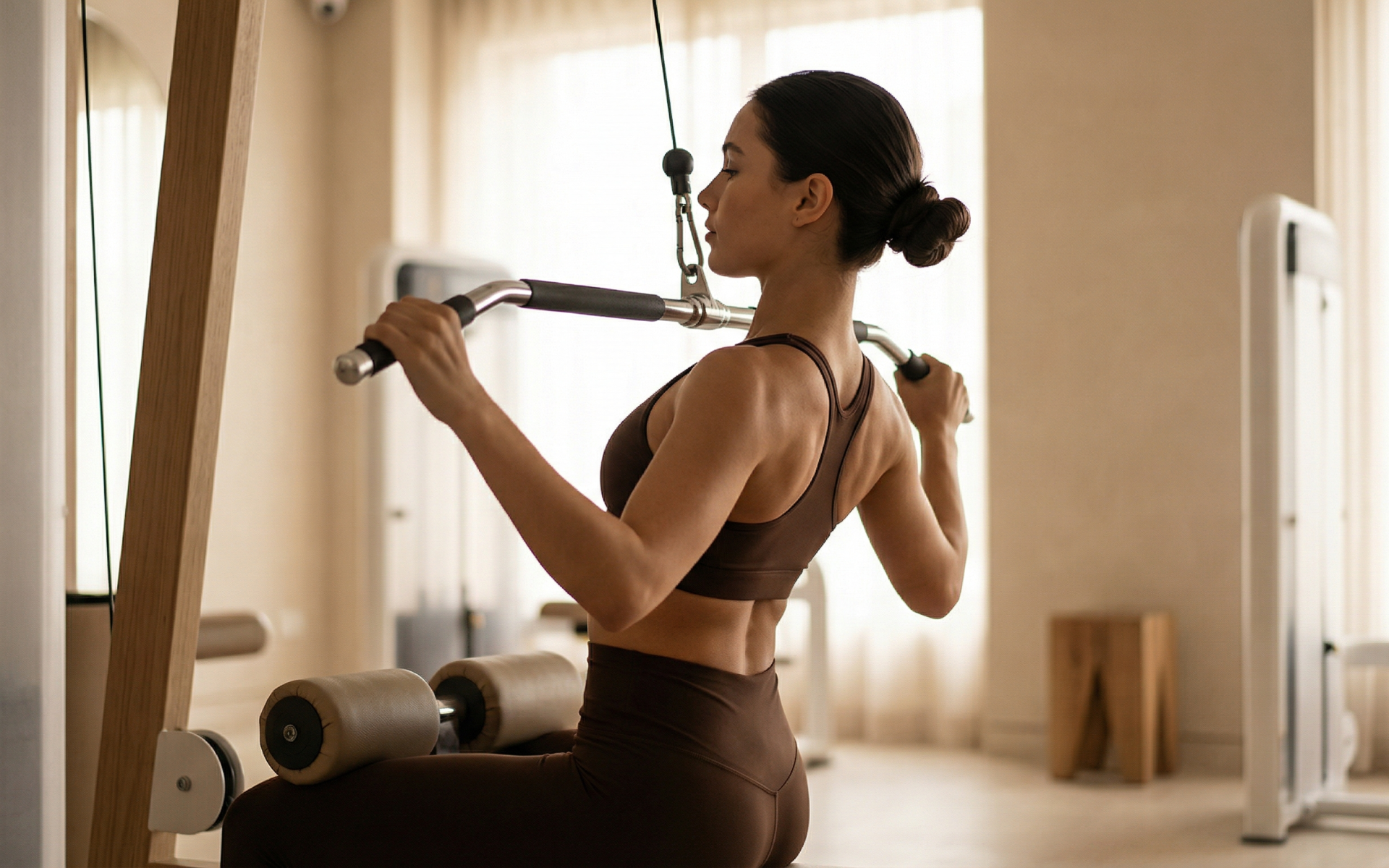
| Lat pulldown | 3 | 10-15 |
| Seated dumbbell shoulder press | 3 | 10-15 |
| Plank | 3 | 30-60 seconds |
Exercise Instructions
Goblet Squat
- Stand with your feet slightly wider than shoulder-width apart, your toes pointing slightly out.
- Hold one end of a dumbbell vertically with both hands, cupping it against your chest. Keep your elbows tucked in.
- Brace your core and initiate the movement by sending your hips back and down, as if sitting in a chair.
- Keep your chest up and back straight as you lower yourself until your thighs are at least parallel to the floor.
- Drive through your heels to return to the starting position, squeezing your glutes at the top.

Romanian Deadlift
- Stand with your feet hip-width apart, holding a dumbbell in each hand in front of your thighs with an overhand grip.
- With a slight bend in your knees, hinge at your hips, pushing your butt back. Keep your back straight.
- Lower the dumbbells towards the floor, keeping them close to your legs. Go as far as your hamstring flexibility allows without rounding your lower back.
- Drive your hips forward to return to the standing position, squeezing your glutes.
Dumbbell Bench Press
- Lie on a flat bench with your feet firmly on the floor. Hold a dumbbell in each hand just to the sides of your chest, with your palms facing forward.
- Press the dumbbells up until your arms are fully extended, but not locked out.
- Slowly lower the dumbbells back to the starting position, keeping them under control.
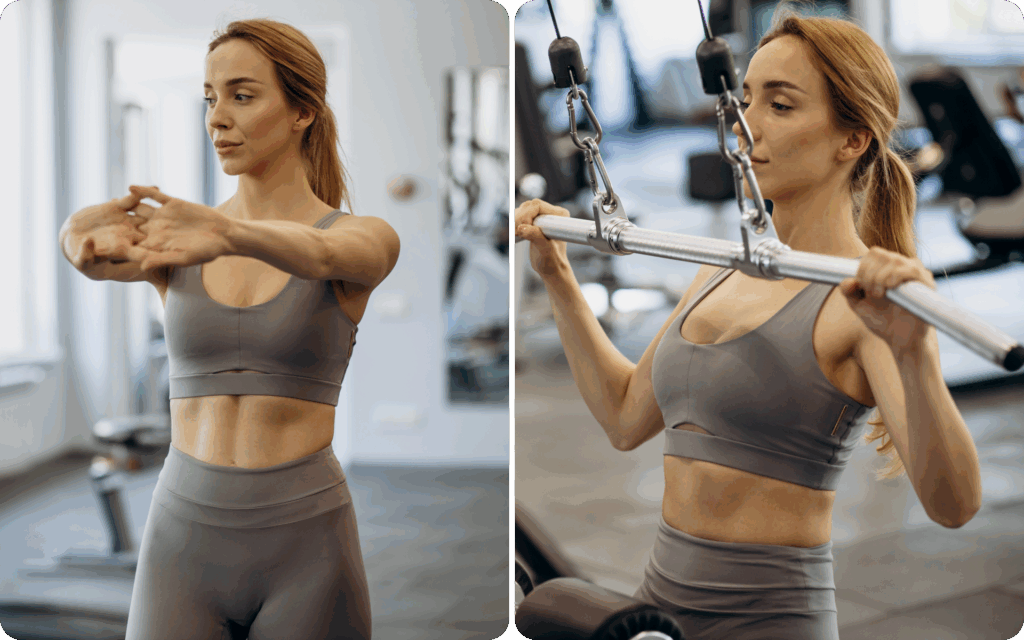
Lat Pulldown
- Sit at a lat pulldown machine and adjust the knee pad to secure your legs. Grasp the bar with a wide, overhand grip.
- Lean back slightly (approximately 20-30 degrees) and pull the bar down toward your upper chest. Focus on driving your elbows down and back.
- Squeeze your back muscles at the bottom of the movement.
- Slowly return the bar to the starting position with control.
Seated Dumbbell Shoulder Press
- Sit on a bench with back support. Hold a dumbbell in each hand at shoulder height, with your palms facing forward and elbows bent at a 90-degree angle.
- Press the dumbbells overhead until your arms are fully extended.
- Slowly lower the dumbbells back to the starting position.
Plank
- Lie face down and prop yourself up on your forearms and toes, keeping your body in a straight line from your head to your heels.
- Engage your core and glutes to prevent your hips from sagging.
- Hold this position for the prescribed amount of time, breathing steadily.
For a more comprehensive starter program, you might want to explore a dedicated gym workout plan for female beginners.

What Tips Can Help You Ease into a Consistent Workout Routine?
Starting is one thing, staying consistent is another. Behavioral science offers insights into building lasting habits.
- Start Smaller Than You Think You Need to
The biggest mistake is trying to do too much, too soon. Instead of committing to five gym days a week, start with two or three. The goal is to make the new habit so easy that you can’t say no. This builds momentum and self-efficacy. Once the habit is established, you can gradually increase the duration or frequency.
- Schedule Your Workouts
Treat your gym sessions like any other important appointment. Block out time in your calendar for them. This simple act reduces the mental friction of deciding when to work out each day. A pre-defined schedule automates the decision, which makes it more likely that you’ll follow through.
BetterMe: Health Coaching app helps you achieve your body goals with ease and efficiency by helping to choose proper meal plans and effective workouts. Start using our app and you will see good results in a short time.
- Reduce Friction
Make the process of getting to the gym as seamless as possible. Pack your gym bag the night before. Choose a gym that is on your way to or from work. Lay out your workout clothes before you go to bed. Each small barrier you remove increases your chances of success.
For those who prefer bodyweight training at home, it may be interesting to compare calisthenics vs gymnastics to see which discipline is better aligned with your goals.
Read more: Full-Body Workouts For Women To Build Strength And Burn Fat
How Can a Proper Training Routine Affect Your Results?
Following a structured routine can transform your health and fitness in numerous ways. Here are some of the key benefits you can expect.
Increased Basal Metabolic Rate
Muscle tissue is more metabolically active than fat tissue (14). By increasing your muscle mass through resistance training, you increase your basal metabolic rate (BMR) – the number of calories your body burns when at rest (15). This makes it easier to manage your weight in the long term.
Improved Bone Density
Resistance training places mechanical stress on your bones, which signals the body to increase their density (16). This is a powerful tool for preventing osteoporosis, a condition that’s characterized by weak and brittle bones, which is more common in women (17).
Enhanced Body Composition
A consistent workout routine helps you build lean muscle and reduce body fat. This leads to a more “toned” and defined physique, improved insulin sensitivity, and a lower risk of metabolic diseases (18).
Increased Strength and Confidence
Getting stronger isn’t just about lifting heavier weights. It translates to everyday life, making tasks such as carrying groceries or playing with your kids easier. Furthermore, the sense of accomplishment you get from hitting new personal records at the gym can significantly boost your self-esteem and confidence outside of it.
Reduced Risk of Injury
Strengthening the muscles, tendons, and ligaments that support your joints makes your body more resilient. A balanced program that corrects imbalances and improves movement patterns can dramatically reduce your risk of injury, both in the gym and in daily activities (19).
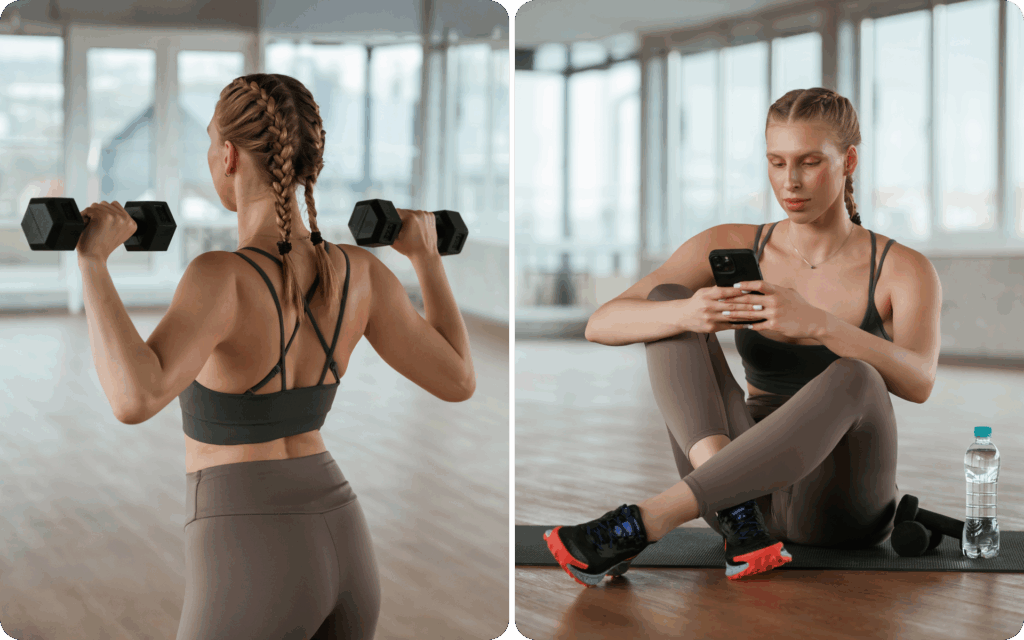
The best time to work out is the time you can do it most consistently. Some research has suggested that there is a slight performance peak in the late afternoon (20), but adherence is far more important than small physiological advantages. It’s generally advised to avoid intense exercise within 4 hours of bedtime, as the increase in core body temperature and heart rate can interfere with sleep for some individuals (21). However, this varies greatly between people. If late-night workouts don’t affect your sleep, there’s no reason to avoid them. There is no “best” time for fat loss. Fat loss is primarily determined by your overall energy balance (calories in vs. calories out) over a 24-hour period (22). Choose a workout time that suits your schedule and allows you to be consistent. If maximizing your calorie burn is your main goal, aim to complete workouts that get your heart rate up and keep it up throughout the session. We recommend focusing on compound movements done with speed, power, and control. These are great for developing strength and calorie expenditure. Exercising in a fasted state (“fasted cardio”) may slightly increase fat burning during the session (23), but studies show it doesn’t lead to greater overall fat loss over the course of the day compared to exercising after a meal (24). For performance, particularly in strength training, having some fuel in your system is generally beneficial. To optimize recovery, consume a meal that contains both protein and carbohydrates within a few hours of finishing your workout. Protein helps repair and build muscle (25), while carbohydrates replenish the glycogen stores you used for energy (26). A common recommendation is 20-40 grams of protein and a moderate serving of carbs (27).Frequently Asked Questions
Is it better to work out in the morning or at night?
How late is too late to work out?
What is the best workout time for fat loss?
Is it better to exercise on an empty stomach?
What should you eat after a workout?
The Bottom Line
Creating a gym routine is a powerful step toward taking control of your health. It’s a journey of learning, adapting, and discovering what your body is capable of. The key is to start with a solid, evidence-based plan, remain consistent, and don’t be afraid to challenge yourself. By focusing on progression and listening to your body, you can build a sustainable habit that yields lifelong benefits in strength, health, and confidence.
DISCLAIMER:
This article is intended for general informational purposes only and does not serve to address individual circumstances. It is not a substitute for professional advice or help and should not be relied on for making any kind of decision-making. Any action taken as a direct or indirect result of the information in this article is entirely at your own risk and is your sole responsibility.
BetterMe, its content staff, and its medical advisors accept no responsibility for inaccuracies, errors, misstatements, inconsistencies, or omissions and specifically disclaim any liability, loss or risk, personal, professional or otherwise, which may be incurred as a consequence, directly or indirectly, of the use and/or application of any content.
You should always seek the advice of your physician or other qualified health provider with any questions you may have regarding a medical condition or your specific situation. Never disregard professional medical advice or delay seeking it because of BetterMe content. If you suspect or think you may have a medical emergency, call your doctor.
SOURCES:
- Sex Differences in Resistance Training: A Systematic Review and Meta-Analysis (2020, journals.lww.com)
- Evidence-Based Resistance Training Recommendations (2011, researchgate.net)
- Physical activity (n.d., who.int)
- Progression Models in Resistance Training for Healthy Adults (2009, journals.lww.com)
- Loading Recommendations for Muscle Strength, Hypertrophy, and Local Endurance: A Re-Examination of the Repetition Continuum (2021, pmc.ncbi.nlm.nih.gov)
- An Introduction to Intensity (n.d., us.humankinetics.com)
- Reps in Reserve (RIR): What You Need to Know (n.d., blog.nasm.org)
- Resistance Training Variables for Optimization of Muscle Hypertrophy: An Umbrella Review (2010, frontiersin.org)
- Intensity of effort and momentary failure in resistance training: Are we asking a binary question for a continuous variable? (2022, sciencedirect.com)
- Progressive Overload Explained: Grow Muscle & Strength Today (n.d., blog.nasm.org)
- Rest Interval between Sets in Strength Training (2011, link.springer.com)
- Revisiting the ‘Whys’ and ‘Hows’ of the Warm-Up: Are We Asking the Right Questions? (2024, link.springer.com)
- Do We Need a Cool-Down After Exercise? A Narrative Review of the Psychophysiological Effects and the Effects on Performance, Injuries and the Long-Term Adaptive Response (2018, link.springer.com)
- Muscle cells vs. fat cells: MedlinePlus Medical Encyclopedia Image (2022, medlineplus.gov)
- Increasing muscle mass to improve metabolism (2013, pmc.ncbi.nlm.nih.gov)
- Effects of Resistance Exercise on Bone Health (2018, e-enm.org)
- Decoding osteoporosis: Understanding the disease, exploring current and new therapies and emerging targets (2025, sciencedirect.com)
- Evolution of resistance training in women: History and mechanisms for health and performance (2025, pmc.ncbi.nlm.nih.gov)
- CURRENT CONCEPTS OF MUSCLE AND TENDON ADAPTATION TO STRENGTH AND CONDITIONING (2015, pmc.ncbi.nlm.nih.gov)
- Chronobiology of Exercise: Evaluating the Best Time to Exercise for Greater Cardiovascular and Metabolic Benefits (2022, pmc.ncbi.nlm.nih.gov)
- Dose-response relationship between evening exercise and sleep (2025, pmc.ncbi.nlm.nih.gov)
- “Calories in, calories out” and macronutrient intake: the hope, hype, and science of calories (2017, journals.physiology.org)
- Effects of aerobic exercise performed in fasted v. fed state on fat and carbohydrate metabolism in adults: a systematic review and meta-analysis (2016, cambridge.org)
- Exercise Training and Fasting: Current Insights (2020, pmc.ncbi.nlm.nih.gov)
- International Society of Sports Nutrition Position Stand: protein and exercise (2017, jissn.biomedcentral.com)
- The Effect of Carbohydrate Intake on Strength and Resistance Training Performance: A Systematic Review (2022, pmc.ncbi.nlm.nih.gov)
- International society of sports nutrition position stand: nutrient timing (2017, pmc.ncbi.nlm.nih.gov)


 Reviewed by
 Reviewed by