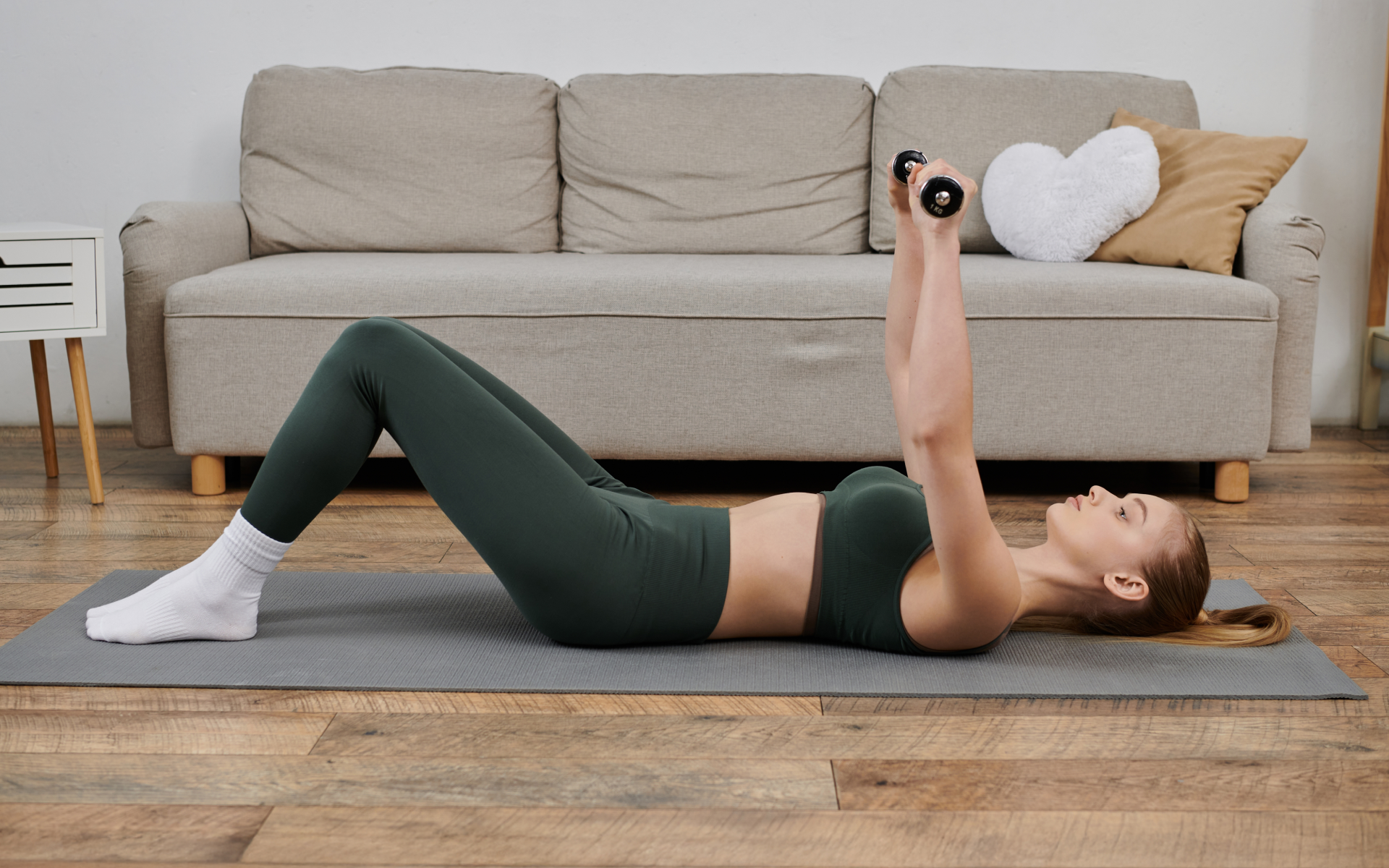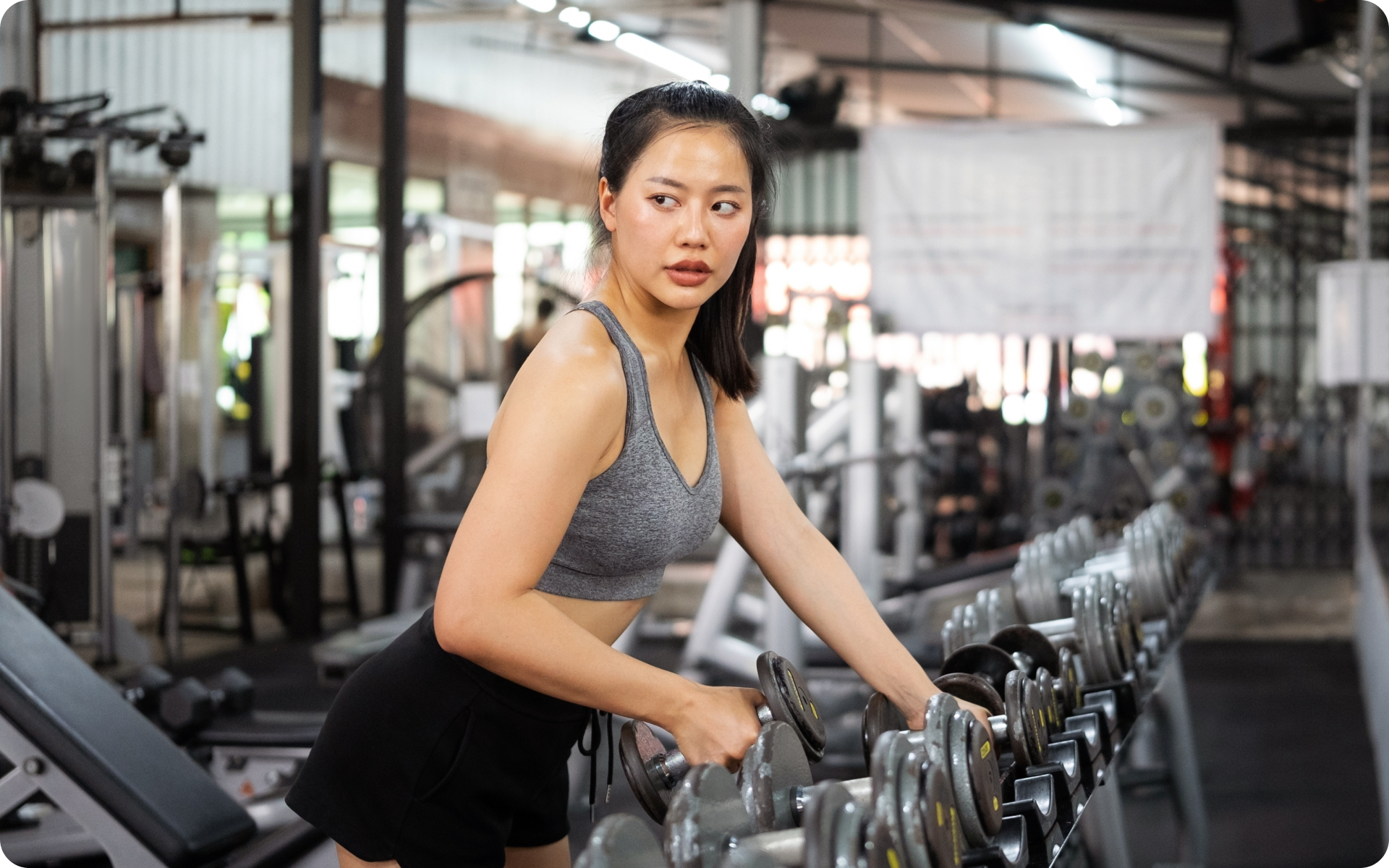
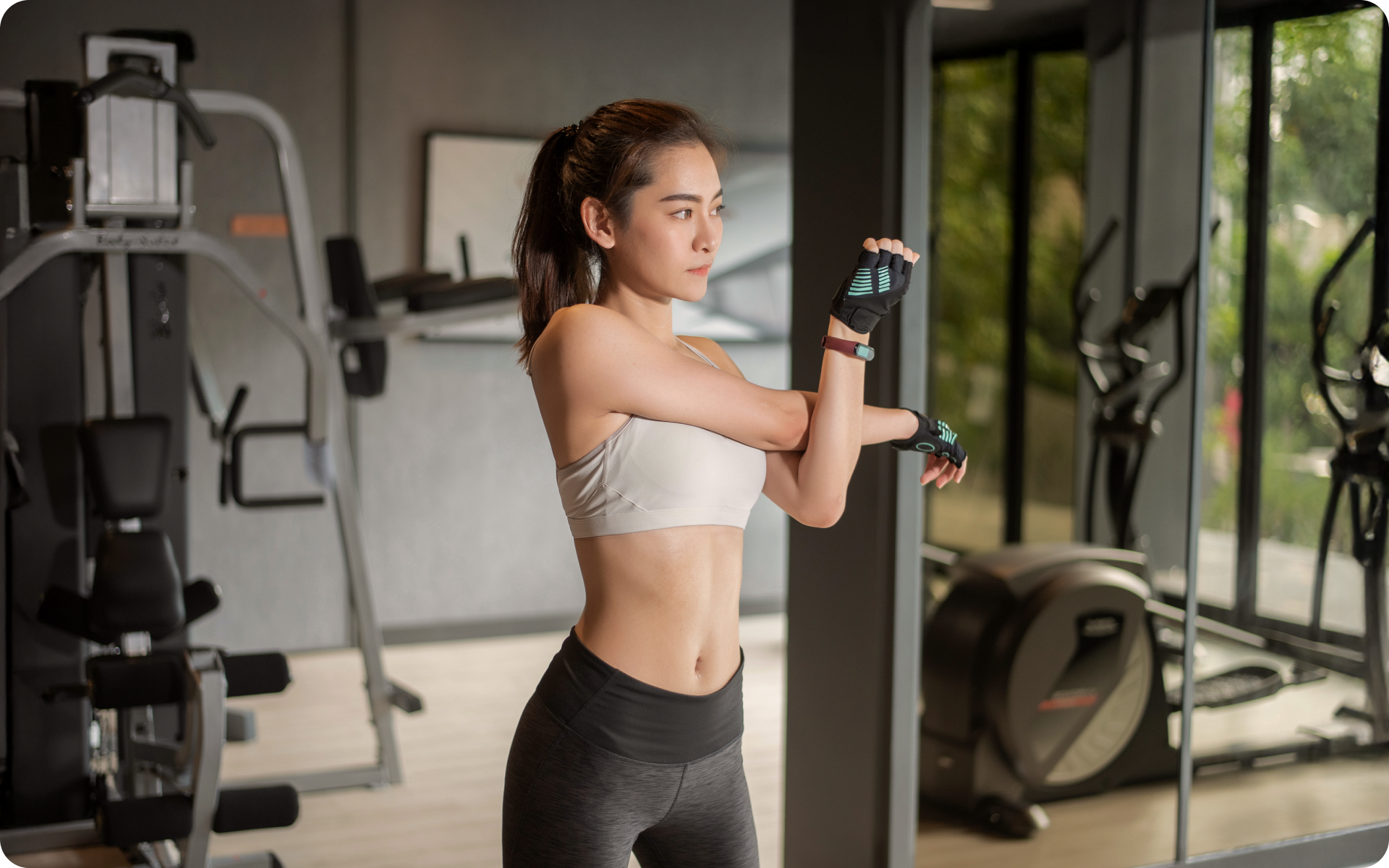
A 3-day full-body gym workout for female beginners can cover squatting, hinging, pushing, pulling, and trunk control on nonconsecutive days. Start with manageable loads and fewer sets. This sample uses seven exercises, with substitutions and effort cues to match your current capacity.
For help with your first visit, use our female beginner gym guide.
Key takeaways
- General adult guidance includes strength work on at least two days per week (1).
- This sample plan uses Monday, Wednesday, and Friday as three optional lifting days.
- Seven movement options cover the full-body routine, but beginners may start with fewer.
- Finish each set with some effort left so you keep control.
- Longer rest is an option when you cannot repeat a set with controlled technique.
- Progress when you can repeat the current workload with similar technique, and add repetitions before increasing resistance.
What should a female beginner do at the gym?
A female beginner can begin with a light practice of the day’s movements before working sets. Ask a trainer to check setup and range for unfamiliar lifts. The purpose of the first sessions is to learn positions and repeat them, not to test a maximum load.
Start more demanding activity with a gradual warm-up, commonly five to ten minutes (2). Use lighter practice sets for squat, press, row, and hinge movements before selecting your working resistance.
BetterMe Well-Being Coach app helps you achieve your body goals with ease and efficiency by helping to choose proper meal plans and effective workouts. Start using our app and you will see good results in a short time.
What does the three-day routine include?
The routine includes seven main movements, with alternatives for different equipment and capacity. These sample targets are a starting point you can adjust.
|
Exercise |
Sets and target |
Rest |
Substitute |
|---|---|---|---|
|
Goblet squat |
2 x 8 to 12 reps |
90 to 120 secs |
Leg press |
|
Dumbbell bench press |
2 x 8 to 12 reps |
90 to 120 secs |
Chest press machine |
|
Bent-over dumbbell row |
2 x 8 to 12 reps |
90 to 120 secs |
Chest-supported row |
|
Overhead press |
1 to 2 x 8 to 12 reps |
90 to 120 secs |
Shoulder press machine |
|
Romanian deadlift |
2 x 8 to 12 reps |
90 to 120 secs |
Light hinge practice |
|
Plank |
1 to 2 x 10 to 30 secs |
60 to 90 secs |
Incline plank |
|
Glute bridge |
1 to 2 x 10 to 15 reps |
60 to 90 secs |
Bodyweight bridge |
Weekly arrangement
|
Day |
Activity |
|---|---|
|
Monday |
Full-body routine |
|
Tuesday |
Optional manageable aerobic activity |
|
Wednesday |
Full-body routine |
|
Thursday |
Rest or gentle movement |
|
Friday |
Full-body routine |
|
Saturday |
Optional manageable aerobic activity |
|
Sunday |
Rest |
Use two weekly lifting days if three is not manageable. General adult guidance includes strength work on at least two days per week (1). Our four-week female beginner plan provides another schedule.
How do you perform the seven movements?
Perform each movement through a range you can control, using a trainer’s demonstration when you are learning. End a set when your position deteriorates rather than forcing the planned count.
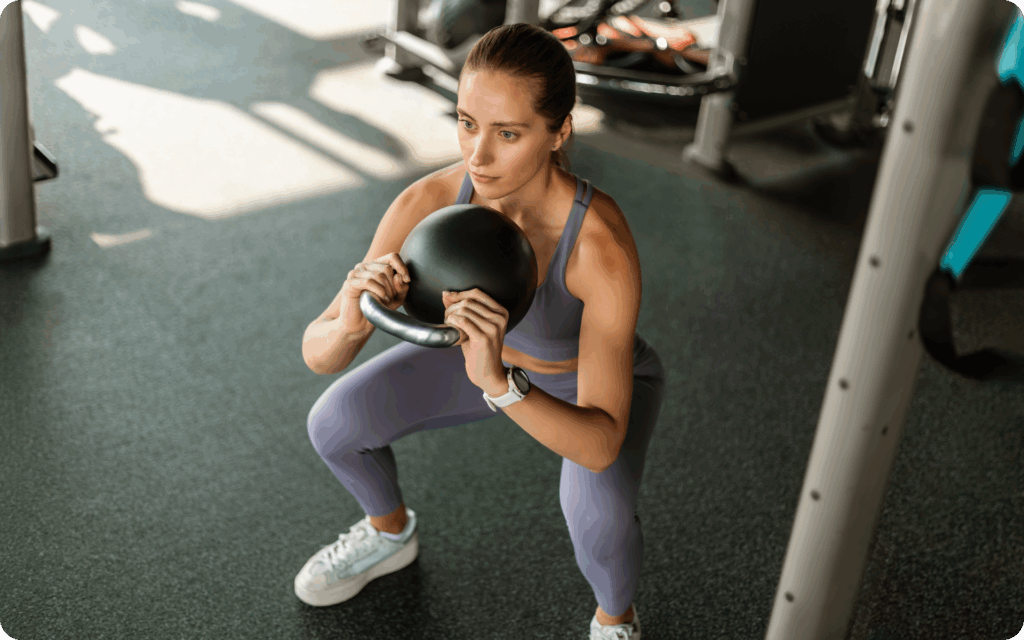
Goblet squat
- Hold a light dumbbell at your chest.
- Sit your hips down with your feet planted.
- Stand up without bouncing.
Dumbbell bench press
- Lie on a flat bench with a dumbbell in each hand.
- Lower the dumbbells toward your chest with control.
- Press them back up.
Bent-over dumbbell row
- Establish a steady hinge position.
- Pull the dumbbells toward your torso.
- Lower the dumbbells without swinging.
Overhead press
- Sit or stand in a stable position.
- Press the dumbbells upward through a comfortable range.
- Lower the dumbbells with control.
Romanian deadlift
- Hold the dumbbells close to your thighs.
- Move your hips backward with knees softly bent.
- Return to standing without leaning backward.
Plank
- Set your hands or forearms on a stable surface for the plank.
- Hold the plank with a steady body position and normal breathing.
- End the plank before your hips sag or your breathing becomes strained.
Glute bridge
- Plant your feet with bent knees for the glute bridge.
- Lift your hips during the glute bridge without forcing your back into an arch.
- Lower your hips from the glute bridge slowly.
For an equipment-light alternative, a stable-chair sit-to-stand and wall push-up offer general strength options (3).
How do you organize the seven movements into a manageable visit?
Prepare the exercise selection before entering the gym. A full-body routine groups several movement patterns in one visit. That structure gives you a menu, but it does not require a beginner to complete every exercise during the first attempt.
Choose a familiar starting version for each movement you plan to use. Ask for a demonstration of unfamiliar equipment, then practice with manageable resistance. Once the setup is understood, complete the working sets of that exercise before moving to the next station.
Keep equipment changes in your notes. A machine chest press, dumbbell bench press, and floor press have different starting positions. You can choose among them, but do not compare their loads as though they are identical. The same applies to seated, supported, and bent-over rows.
What should the first session teach you?
Use the first visit to learn whether the planned movements fit your space, time, and current capacity. Notice the exercise settings you need to remember and whether the rest intervals are sufficient. If you cannot repeat a set with controlled technique, take a longer rest. Note setup changes for your next visit.
For the squat, choose a stance and depth you can repeat. Use demonstrations to learn the movement, with depth adjusted to the version selected for you. If the goblet position feels awkward, get help with the listed leg press alternative instead of adding weight to force the movement.
For the hinge, keep the dumbbells close and move the hips backward. Lower through the range you can control, then stand without leaning backward. A lighter practice set can clarify the movement. The weight does not need to reach the floor.
Rows and overhead presses also need a stable starting position. If a bent-over row position becomes difficult to hold, choose the supported alternative. If an overhead press is uncomfortable, stop and ask for guidance rather than repeatedly forcing the same range.
How can you handle floor exercises?
Check how you will get down to the mat and stand up afterward. A plank or bridge should not depend on a rushed floor transfer. If that transition is difficult, an instructor can help select a standing alternative and review the rest of the session.
The plank uses a hold, while the bridge uses repetitions. End the hold when the position changes and stop a bridge set when you cannot repeat the lift with control. Longer holds and larger lifts are optional changes, not measures of how committed you are to the plan.
What can a two-day version keep?
Keep a squat or leg-press choice, a hinge, a push, and a pull across your planned visits. Add the other movements when the routine becomes manageable. Use the calendar to preserve space between demanding sessions instead of compressing three sessions into two consecutive days.
For example, Monday and Thursday may be workable days for a reduced routine. Record the selection actually completed and review it before adding a third day.
If a session is missed, resume with a manageable workload. Avoid doubling the next visit. A smaller repeatable routine gives you clearer records than a changing mix of catch-up sessions and rushed finishers.
How should you review progress beyond the numbers?
Compare the same exercise version, range, resistance, and rest. A higher repetition count with a shorter movement range describes a changed task. Notes about steadier technique or needing less setup help can also matter when you are learning.
The three-day label does not set a timeline for results. Review whether the plan fits your week and whether you can rest enough to repeat its demands. If the current selection repeatedly leaves you unable to perform the next session, reduce it and seek qualified advice when needed.
Ask a trainer how your selected exercises overlap. Presses already involve several upper-body muscles, and squats and hinges both place demands on the legs. Adding extra work for every named muscle can expand the session quickly. Use the seven-movement list as a planning tool rather than adding another exercise for each body area. The total workload, rests, and repeated sessions all belong in the review.
How can you progress without rushing?
Progress when you can repeat the current workload with similar technique. Add repetitions within the target range before increasing resistance, and change one exercise at a time if you want to understand the effect.
|
Session result |
Adjustment |
|---|---|
|
All sets reach the upper rep target with control |
Try the smallest practical load increase |
|
Repetitions shorten or become rushed |
Keep or reduce resistance |
|
You feel unusually drained |
Reduce sets or use two days |
|
Plank position deteriorates early |
Use a higher incline or shorter hold |
|
Equipment changes |
Record the substitute and establish a new starting load |
The strength-training workout plan for women gives another format for recording load and effort.
BetterMe will shake off your mental funk, rid you of your energy-zapping habits, and help you sculpt the body of your dreams. Intrigued? Hurry up and change your life for the better!
Is 30 minutes enough for a full-body workout?
Thirty minutes can be enough for a shorter version with fewer exercises and sufficient rest. It may not fit all seven movements, a warm-up, and a cool-down. Keep the main squat, hinge, push, and pull patterns rather than rushing every exercise to meet the clock.
Include aerobic activity separately as your capacity allows. The talk test can help identify moderate aerobic effort (4). Gentle seated movement and flexibility exercises provide lighter-day options (5, 6).
Either can work as a scheduling format. Beginners may find repeated full-body sessions easier to learn, while a split can suit people who prefer shorter sessions on more days. No, you can start with fewer exercises or one working set. Add the remaining movements as the routine becomes familiar and manageable. There is no universal weight based on sex alone. Use a resistance that lets you keep control and finish with some effort left.Frequently Asked Questions
Is a full-body workout three times a week or a split more useful?
Should you do every exercise on the first day?
How heavy should a female beginner lift?
The bottom line
A three-day routine can provide structure without daily lifting. Learn the seven movements, use substitutes when appropriate, and progress from controlled repetitions. The adjustable women’s gym plan can help you change the schedule as your needs develop.
DISCLAIMER:
This article is intended for general informational purposes only and does not serve to address individual circumstances. It is not a substitute for professional advice or help and should not be relied on for making any kind of decision-making. Any action taken as a direct or indirect result of the information in this article is entirely at your own risk and is your sole responsibility.
BetterMe, its content staff, and its medical advisors accept no responsibility for inaccuracies, errors, misstatements, inconsistencies, or omissions and specifically disclaim any liability, loss or risk, personal, professional or otherwise, which may be incurred as a consequence, directly or indirectly, of the use and/or application of any content.
You should always seek the advice of your physician or other qualified health provider with any questions you may have regarding a medical condition or your specific situation. Never disregard professional medical advice or delay seeking it because of BetterMe content. If you suspect or think you may have a medical emergency, call your doctor.
SOURCES:
- Adult Activity: An Overview (2023, cdc.gov)
- Warm Up, Cool Down (2024, heart.org)
- Strength exercises (2024, nhs.uk)
- How to Measure Physical Activity Intensity (2025, cdc.gov)
- Sitting exercises (2024, nhs.uk)
- Flexibility exercises (2023, nhs.uk)
 Reviewed by