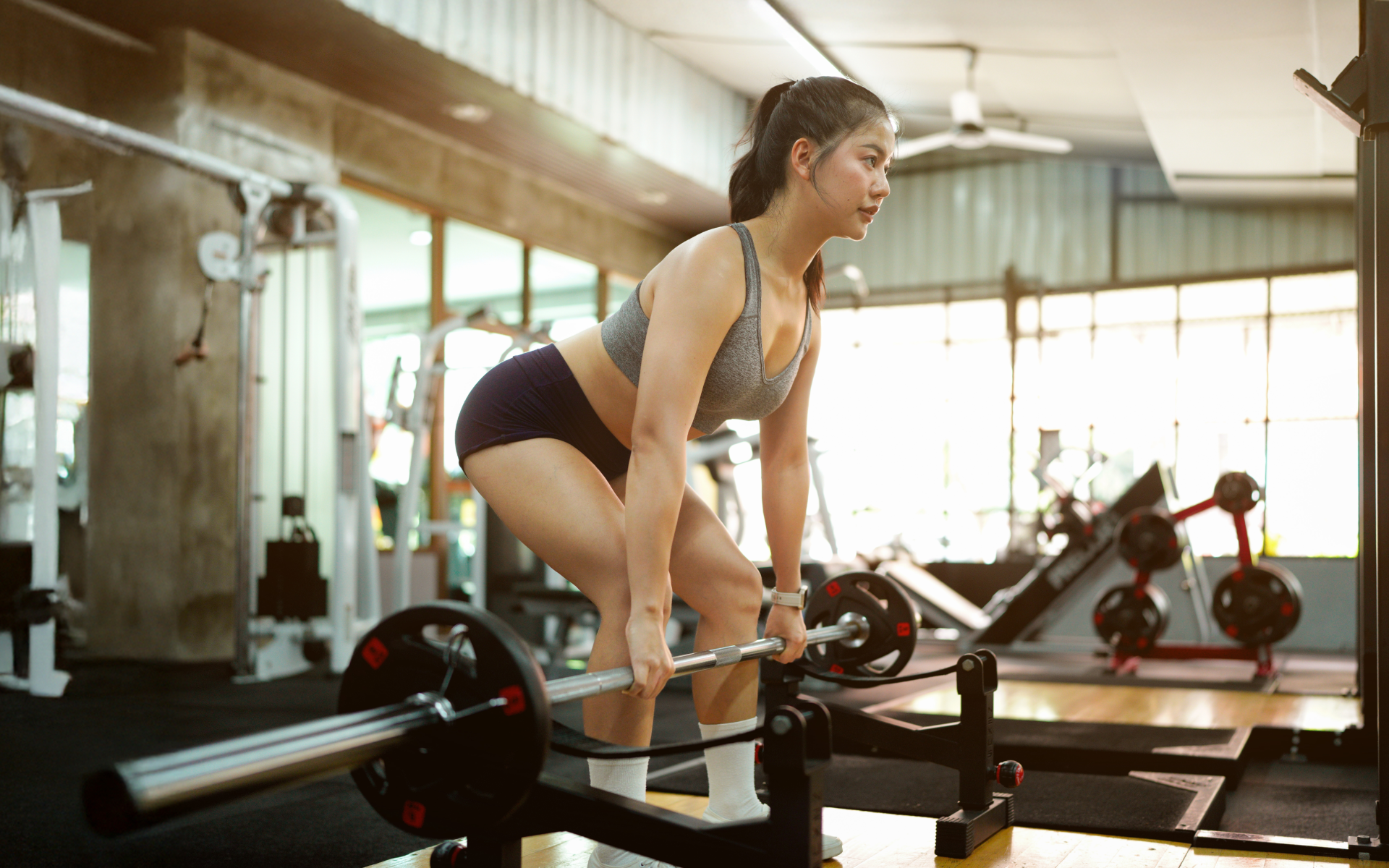
A full body gym workout routine trains every major muscle group in each session. Many beginners start with 3 sessions a week on non-consecutive days, doing 2 to 3 sets of 8 to 12 reps per exercise. This guide suits new lifters and people who want fewer gym sessions, and it includes a 7-exercise sample plan, form cues, a weekly schedule, and simple progression rules.
If you have a heart condition, joint problems, or a recent injury, or you are new to exercise after a long break, check with a doctor before starting a new strength plan.
Following exercise and diet plans is the key in your fitness journey and greatly impacts results. In 4 weeks users can typically expect to lose not more than 1-2 lbs per week. Individual results may vary.
Key takeaways
A plan that lets you train full body 2 to 3 times a week with compound movements, moderate reps, and gradual progression may help many new lifters build strength and muscle.
- A full-body routine works every major muscle group in each session, usually on 3 non-consecutive days per week.
- Training each muscle group at least twice a week was linked with more muscle growth than once a week in a meta-analysis 1.
- For muscle and strength, a load you can lift for about 6 to 12 reps with 1 to 2 reps in reserve is a common choice 2.
- Weekly volume, the total number of hard sets per muscle, is one of the main training variables linked with muscle growth 3.
- Adults are advised to do muscle-strengthening activity that works all major muscle groups on at least 2 days a week 4.
- Add load or reps only after you can complete the current sets and reps with proper form.
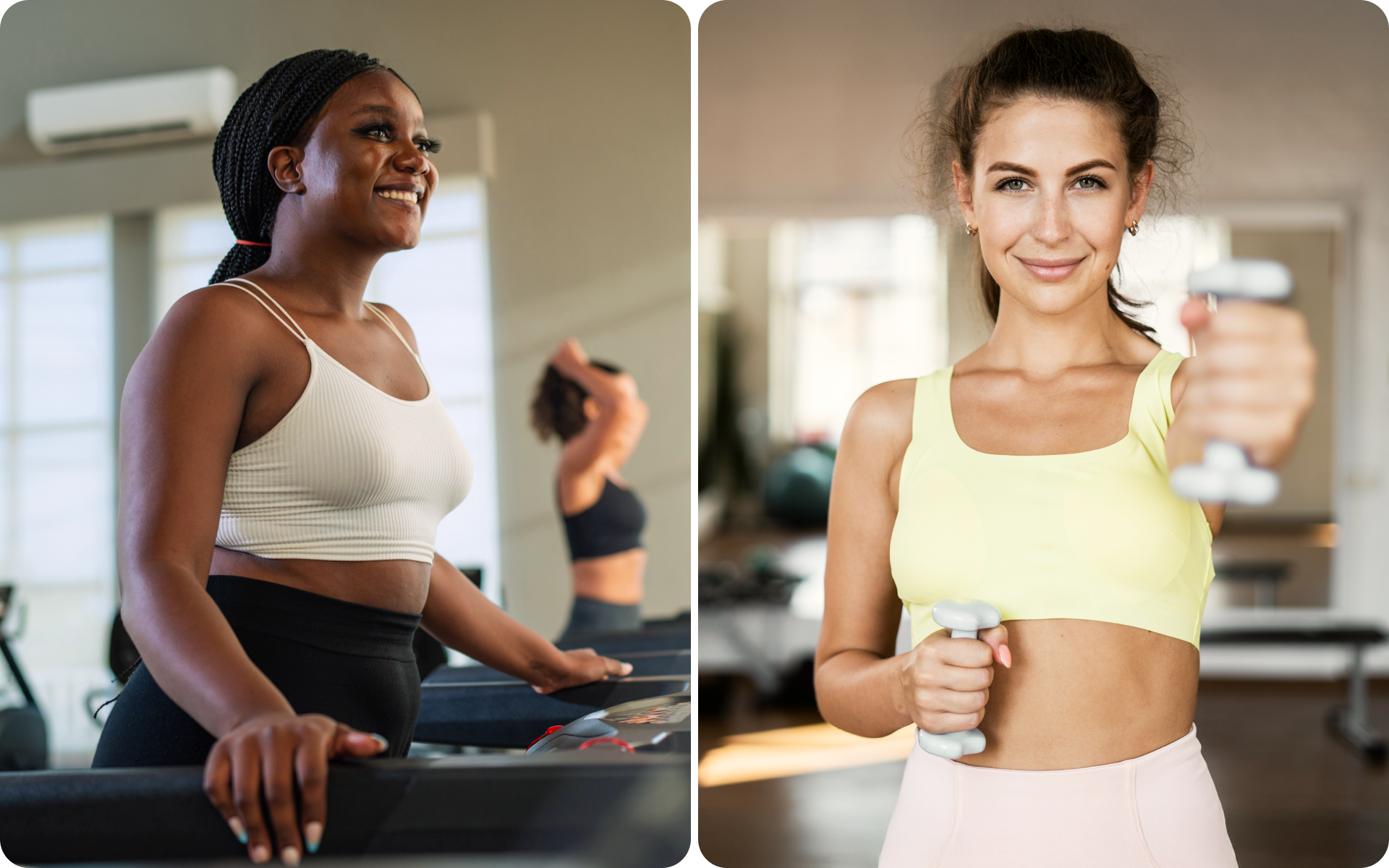
What is a full-body workout, and what are its benefits?
An effective full-body workout is a session that trains the lower body, upper body, and core together, usually with compound exercises like squats, presses, rows, and deadlifts that work multiple muscle groups at once.
- Frequency: each muscle gets trained 2 to 3 times per week, which a meta-analysis linked with more growth than once a week 1.
- Time efficiency: you do not need to spend hours in the gym. Fewer, shorter gym sessions can still cover every muscle 5.
- Practice: building strength takes practice, and repeating the main movements several times a week gives beginners more practice with technique.
- Flexibility: if you miss a session, each muscle still gets trained at the next one.
Full-body training is a common recommendation for beginners in resistance training position stands 6.
Is it okay to do a full-body workout in the gym?
Yes, a full-body workout in the gym is a sound choice for beginners and many intermediate lifters, because the equipment lets you load every movement pattern in one session.
Because each session spreads the work across the body, the volume per muscle group is lower than on a single “chest day”, for example 3 to 4 sets of chest work instead of 12 to 15. That can help you keep good technique on every set.
Hard training also causes fatigue in the muscles and the nervous system 7 8. Leaving about 48 hours between sessions that load the same heavy lifts is a common way to plan rest, though recovery needs vary with workload and the person 9.
Read more: Bodyweight leg workouts: 6 beginner moves for stronger legs
What exercises should a full-body workout include?
A full-body workout usually draws on five main movement patterns: a squat, a hinge, an upper-body push, an upper-body pull, and a core or carry exercise.
- Knee-dominant (squat pattern): quads and glutes, for example a goblet squat or barbell back squat.
- Hip-dominant (hinge pattern): hamstrings, glutes, and lower back, for example a Romanian deadlift.
- Upper body push: chest, shoulders, and triceps, for example a bench press or overhead press.
- Upper body pull: back and biceps, for example a dumbbell row or lat pulldown.
- Core or carry: trunk stability, for example a plank or farmer’s walk.
Plans that include exercises from each pattern across the week can help build balanced strength, with less need to target smaller muscles through isolation work.
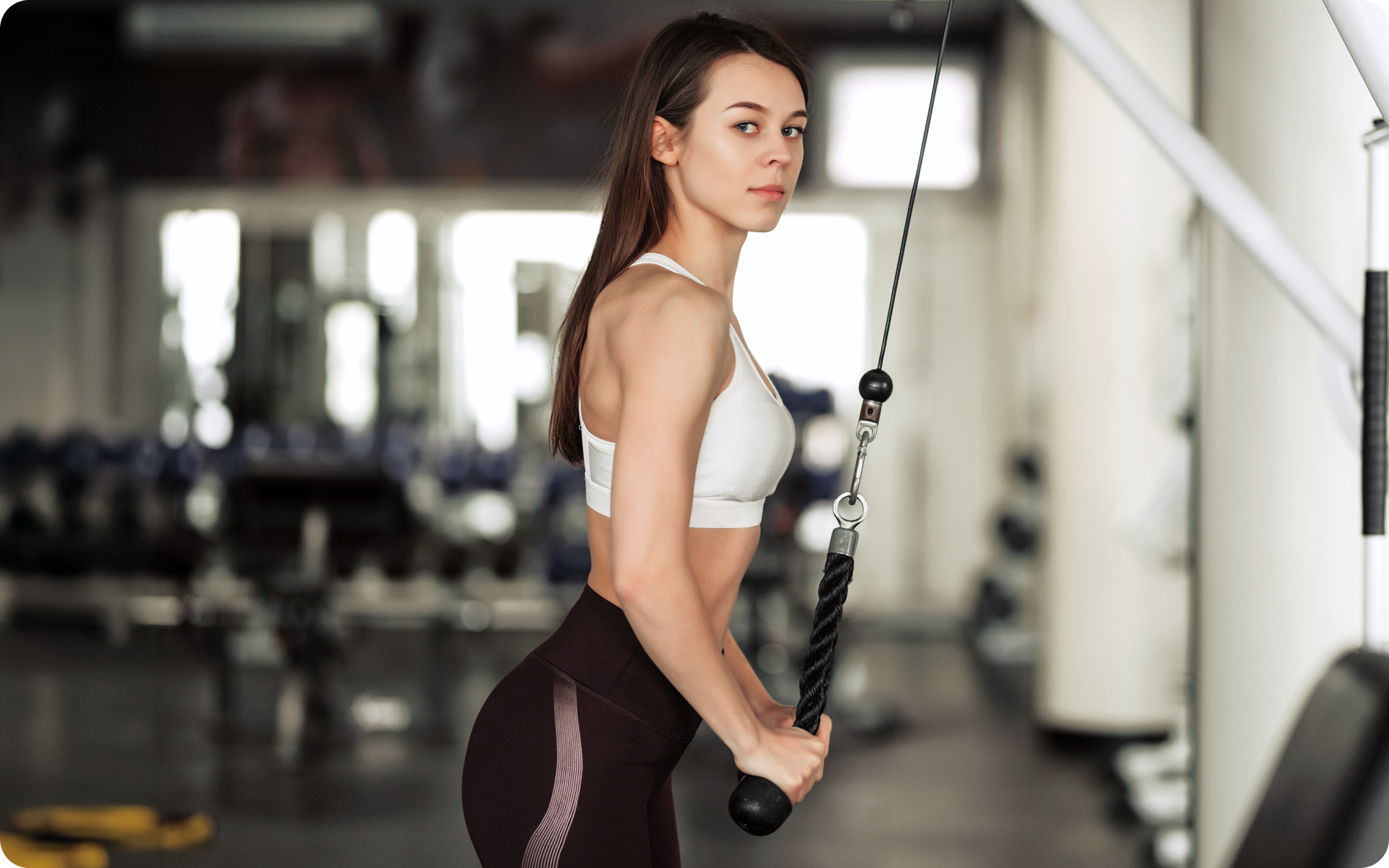
What is a good full body gym workout routine for beginners?
A good full-body gym routine for new lifters uses 6 compound exercises and 1 core exercise, 2 to 3 sets each, done three days per week, for example on Monday, Wednesday, and Friday. The table below is a sample full body workout plan, not a prescription.
Sample full body routine
Start the first exercise after a warm-up, and pick weights that let you finish every set with 1 to 2 reps in reserve.
| Order | Pattern | Exercise | Sets | Reps | Rest (min) |
|---|---|---|---|---|---|
| 1 | Knee-dominant | Goblet squat (or barbell back squat) | 3 | 8 to 10 | 2 to 3 |
| 2 | Horizontal push | Flat dumbbell bench press | 3 | 8 to 12 | 1.5 to 2 |
| 3 | Hip-dominant | Romanian deadlift (RDL) | 3 | 8 to 10 | 2 to 3 |
| 4 | Horizontal pull | Single-arm dumbbell row | 3 | 10 to 12 | 1.5 |
| 5 | Vertical push | Seated or standing overhead press | 2 | 10 to 12 | 1.5 |
| 6 | Vertical pull | Lat pulldown | 2 | 10 to 12 | 1.5 |
| 7 | Core | Front plank | 3 | 30 to 45 seconds | 1 |
All you need is a squat rack or a pair of dumbbells, a bench, and a cable station. If you prefer training with machines, a leg press, chest press, and seated row can replace the free-weight versions.
Each exercise below includes the main form cues for a beginner.
1. Goblet squat
The goblet squat teaches an upright squat with a light load held at the chest.
- Stand with feet slightly wider than shoulder-width, toes turned out a little.
- Hold a dumbbell or kettlebell against your chest with both hands.
- Bend at the hips and knees together and sit down between your heels, keeping your chest up.
- Lower until your thighs are about parallel to the floor, with knees tracking over your toes.
- Drive through the middle of the foot to stand up and squeeze the glutes at the top.
2. Flat dumbbell bench press
The dumbbell bench press trains the chest, front shoulders, and triceps through a full range of motion.
- Sit on the end of a flat bench with dumbbells on your thighs, then lie back and bring them to chest level.
- Plant your feet and squeeze your shoulder blades together.
- Press the weights up over your chest.
- Lower them with control until they are level with your chest, elbows at about 45 degrees to your torso.
3. Romanian deadlift
The Romanian deadlift is a hinge that trains the hamstrings and glute muscles.
- Stand with feet hip-width apart, holding a barbell or dumbbells in front of your thighs.
- Unlock your knees slightly and keep them in that position.
- Push your hips back and keep the weight close to your legs.
- Lower until you feel a stretch in your hamstrings, usually around mid-shin, with a neutral back.
- Drive your hips forward to stand tall.
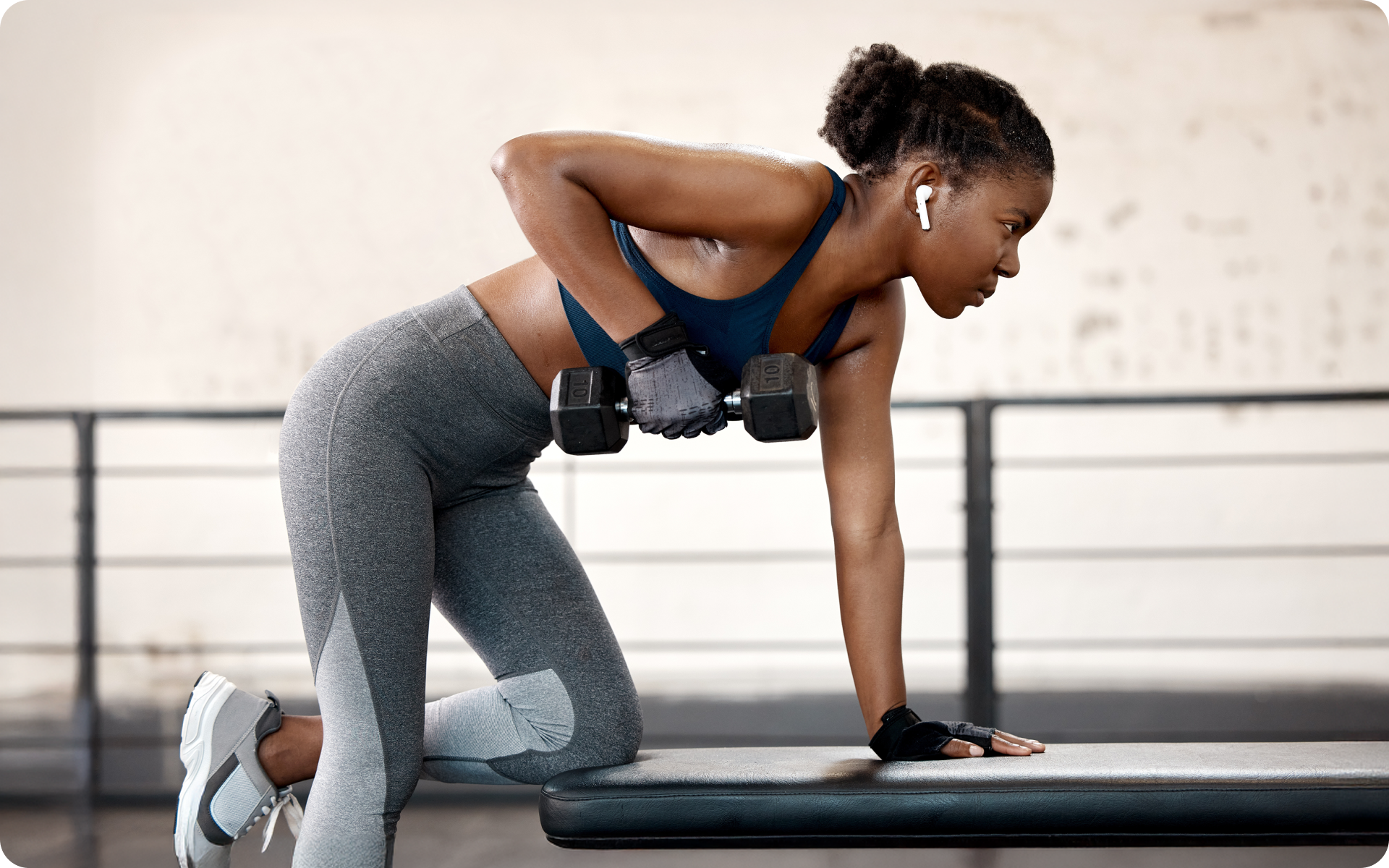
4. Single-arm dumbbell row
The single-arm row trains the lats and upper back while your core resists rotation.
- Place your left knee and left hand on a bench with your back flat.
- Hold a dumbbell in your right hand with the arm straight.
- Pull your elbow back toward your hip until the dumbbell reaches your lower ribs.
- Lower slowly over 2 to 3 seconds, then switch sides after the set.
5. Overhead press
The overhead press trains the shoulders and triceps in a vertical push.
- Stand with feet shoulder-width apart, or sit with your back against the pad.
- Hold dumbbells at shoulder height.
- Press them straight up until your arms are extended.
- Lower them with control back to shoulder height.
6. Lat pulldown
The lat pulldown trains the back in a vertical pull and is easier to scale than a pull-up.
- Sit with your thighs under the pad and hold the bar slightly wider than your shoulders.
- Pull the bar to your upper chest, driving your elbows down.
- Return the bar slowly until your arms are straight.
7. Front plank
The front plank trains your core to keep your trunk still.
- Rest on your forearms with elbows under your shoulders.
- Lift your hips so your body forms a straight line from head to heels.
- Brace your abs, squeeze your glute muscles, and breathe steadily.
Workouts, weight management tools, and recipe ideas come together in the BetterMe: Health Coaching app, giving you practical support for building a more consistent wellness routine.
How many days a week should I do a full-body workout?
Many new lifters can do a full-body workout 2 to 3 days per week, with at least one rest day between sessions 6 4.
- 3 days per week: a 3-day plan such as Monday, Wednesday, and Friday gives each muscle three sessions a week.
- 2 sessions per week: still meets the advice to train all major muscle groups on at least 2 days a week 4.
- 4 or more days: possible, but alternate harder and easier days to manage fatigue.
If you want to train 3 days and also do cardio, many people add brisk walking or easy cycling on rest days.
How many sets and reps should I do in a full-body workout?
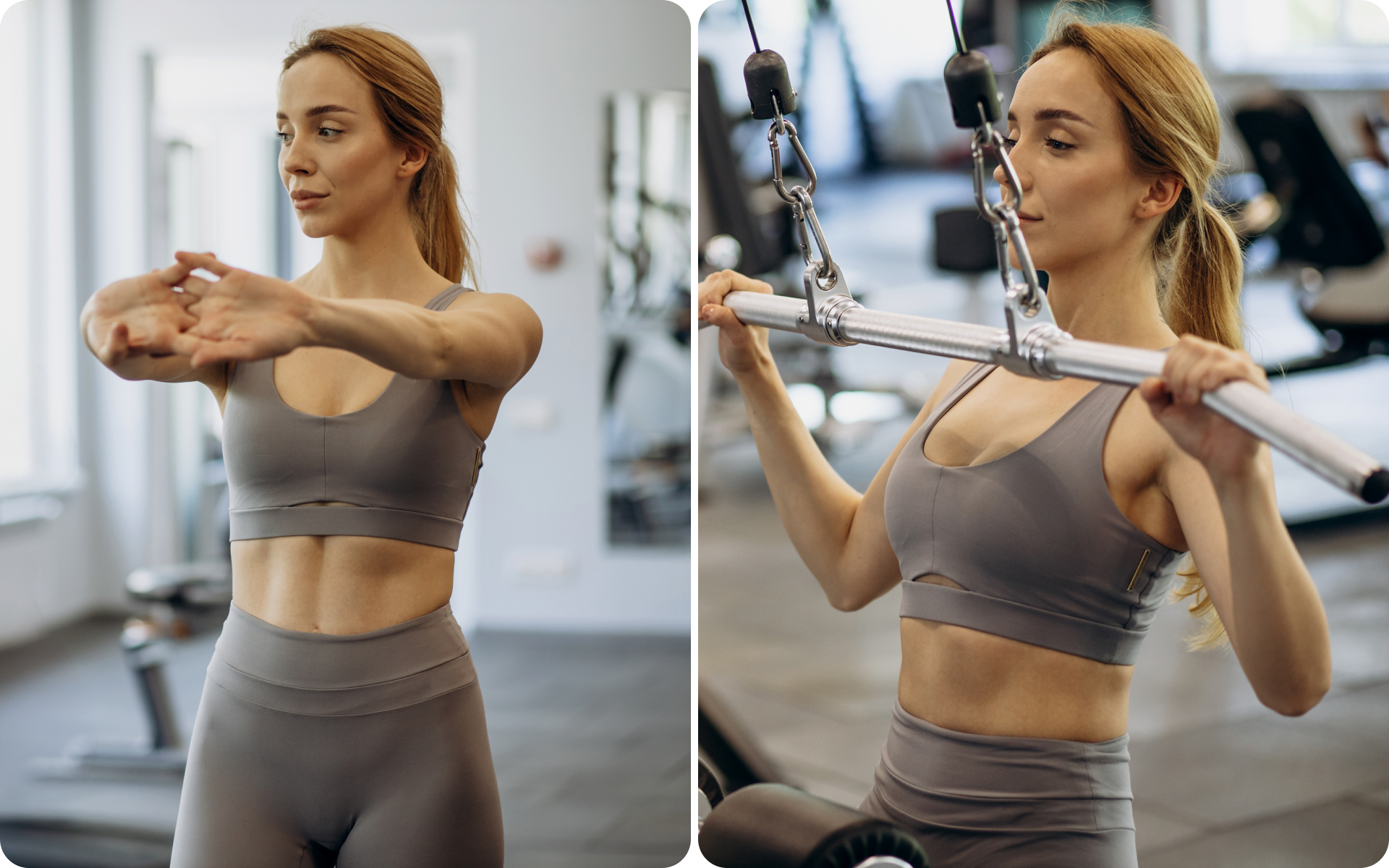
For many new lifters, 2 to 3 sets of 8 to 12 reps per exercise is a practical range, with a load that leaves 1 to 2 reps in reserve 2.
- Strength focus: heavier weights for about 3 to 6 reps.
- Muscle focus: moderate weights for about 6 to 12 reps.
- Endurance focus: lighter weights for about 15 reps or more.
Research suggests muscle growth can occur across a wide range of loads when sets are hard enough, so pick the range you can perform with good technique 2 3.
Read more: Leg strengthening exercises: how to build stronger legs at any fitness level
How long should a full-body workout take, and how should I warm up?
A full-body workout usually takes about 45 to 75 minutes, depending on the number of exercises, rest periods, and experience. Start with a 5 to 10 minute warm-up.
- 5 minutes of light cardio such as treadmill walking or cycling.
- Dynamic moves such as leg swings and arm circles.
- One or two lighter sets of the first exercise before your working sets.
Rest periods of 1 to 3 minutes between sets, as in the sample table, are a large share of the total time.
How can I progress and avoid muscle imbalances with a full-body routine?
Progress by adding a small amount of weight, an extra rep, or one more set once you can complete every set at the top of the rep range with good technique. This is progressive overload.
- Add reps first: move from 8 to 12 reps, then increase the weight and drop back to 8.
- Add a set: if you want more volume, add a set to one or two exercises at a time.
- Balance push and pull: match the number of pressing and pulling sets each week.
- Use one-sided work: single-arm rows and split squats show left-right differences.
- Keep a log: record sets and repetitions so you see results over time and change the plan only when progress stalls.
Raising the load too quickly may add strain, so change one variable at a time.
How can I adapt a full-body workout for home or limited equipment?
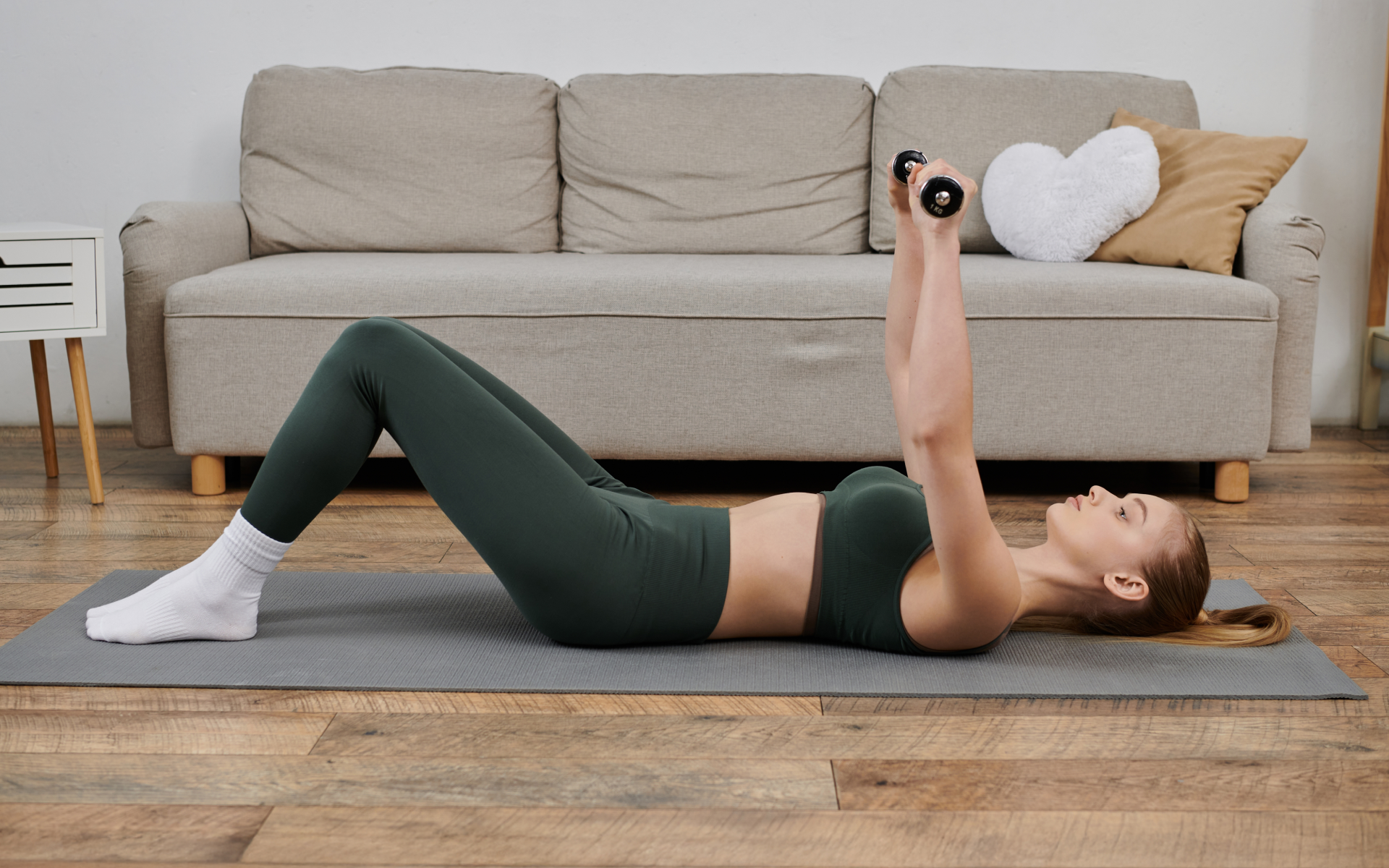
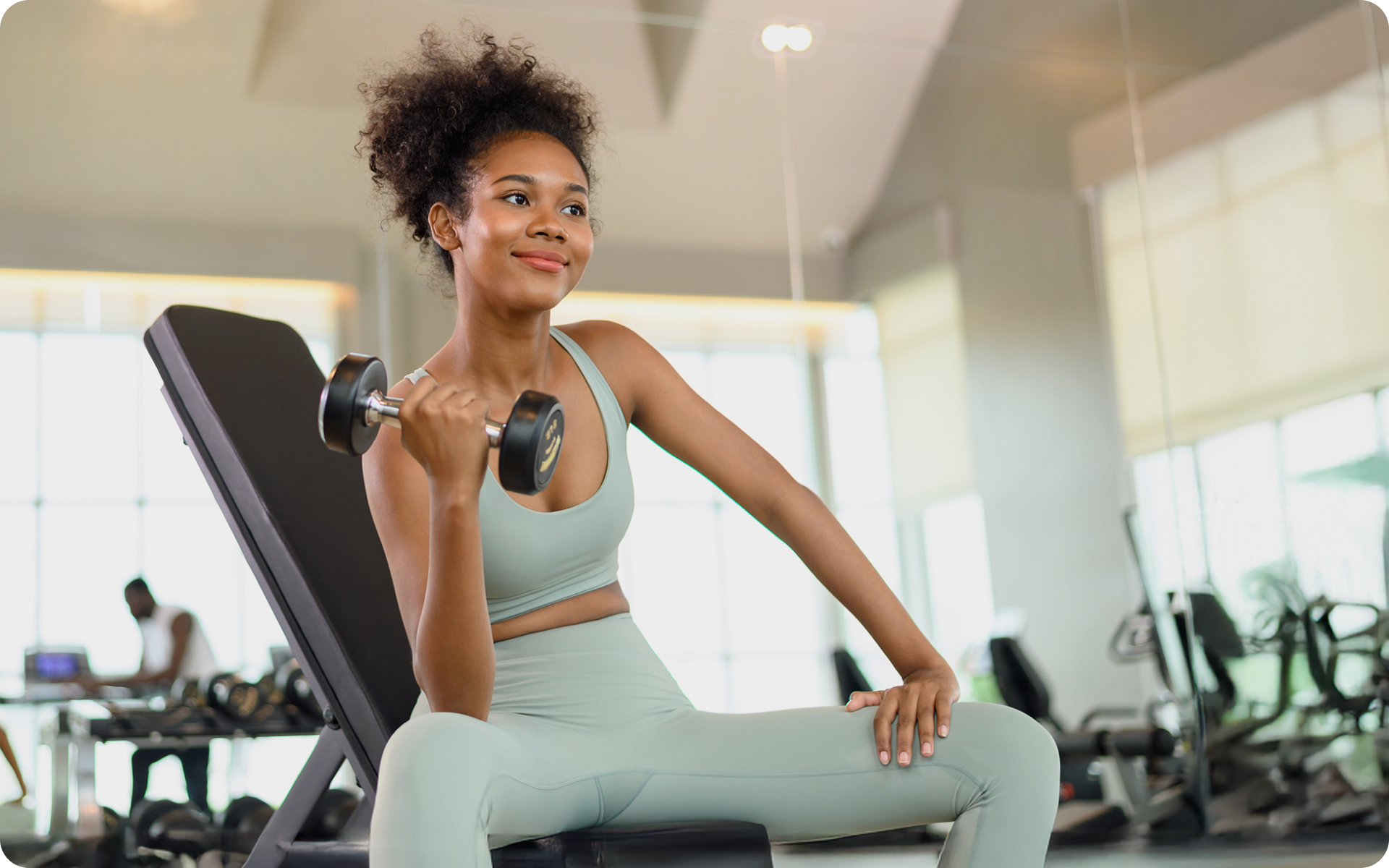
You can adapt a full-body workout for home with a pair of dumbbells, a bench or sturdy step, and your bodyweight.
| Gym exercise | Home option |
|---|---|
| Barbell back squat | Goblet squat or split squat with dumbbells |
| Barbell bench work | Push-up or floor press |
| Romanian deadlift | Dumbbell Romanian deadlift |
| Lat pulldown | Band pulldown or door-frame row |
| Barbell overhead work | Dumbbell overhead push |
Full-body routines rely on basic compound movements, so they suit limited equipment better than splits that use many machines 5.
Can full-body workouts help build muscle and lose fat?
Full-body workouts can help build muscle, and as part of an overall plan that includes eating habits and regular activity, they may support a lower body fat level for some people. Individual results vary.
The main drivers of muscle growth include mechanical tension and metabolic stress from hard sets 8 10. A study in trained men found that higher weekly volume increased muscle growth but not strength 11.
For weight, public health guidance notes that people who lose weight gradually and steadily, about 1 to 2 pounds a week, are more likely to keep it off 12. Strength training alone does not ensure fat loss.
How does a full-body routine compare with a split workout?
A full-body plan trains each muscle in each session, while a split divides the body across days, for example upper and lower days. Both can work when weekly volume is similar.
| Factor | Full body | Split |
|---|---|---|
| Sessions per week | 2 to 3 | 4 to 6 |
| Frequency per muscle | 2 to 3 times per week | Often 1 to 2 times |
| Missed session | Little impact | A muscle may go a week or more untrained |
| Session length | Longer | Shorter |
Instead of splitting your week by body part, a full body split of 3 days gives you enough frequency to practice each lift often 1. A split can also suit new lifters when the schedule and workload are manageable.
Are 4 exercises enough for full body?
Yes, 4 exercises can be enough for a full-body session if they are compound movements like squats, push-ups, pull-ups, and deadlifts, and if weekly sets, progression, and recovery are appropriate.
- Squat: quads, glute muscles, adductors, and core.
- Push-up: chest, front shoulders, triceps, and core.
- Pull-up or pulldown: lats, biceps, and upper back.
- Deadlift: hamstrings, glute muscles, back muscles, and grip.
A short list also takes the guesswork out of each session, which suits people with limited time.
Whether you’re just starting your fitness journey or looking to add more structure to your routine, BetterMe offers tools that can support different wellness goals. Explore the app and see how its workout, nutrition, and habit-building features can fit into your lifestyle.
FAQs
Why do people not do full body workouts?
Many people follow body-part splits out of habit from bodybuilding culture. Full-body sessions can also feel more tiring because each one works the whole body.
Is there a full-body workout for women?
Yes. The same plan can work for women and men, because the movement patterns and progression rules are the same. Adjust the weights, sets, and repetitions to your level.
Do I need a personal trainer to start?
No, but one or two sessions with a qualified personal trainer can help you learn the main movements with good technique.
What should I do on a gym day when I feel tired?
Do a lighter version of every workout: keep the exercises, cut one set from each, and stop further from failure.
The Bottom Line
A full-body plan done three days per week covers each muscle with a short list of compound movements. Start with the sample routine, keep good technique, and add weight or repetitions slowly while leaving recovery time between hard sessions.
DISCLAIMER:
This article is intended for general informational purposes only and does not serve to address individual circumstances. It is not a substitute for professional advice or help and should not be relied on for making any kind of decision-making. Any action taken as a direct or indirect result of the information in this article is entirely at your own risk and is your sole responsibility.
BetterMe, its content staff, and its medical advisors accept no responsibility for inaccuracies, errors, misstatements, inconsistencies, or omissions and specifically disclaim any liability, loss or risk, personal, professional or otherwise, which may be incurred as a consequence, directly or indirectly, of the use and/or application of any content.
You should always seek the advice of your physician or other qualified health provider with any questions you may have regarding a medical condition or your specific situation. Never disregard professional medical advice or delay seeking it because of BetterMe content. If you suspect or think you may have a medical emergency, call your doctor.
SOURCES:
These are the meta-analyses, reviews, position stands, and public health guidelines cited above, listed in order of first mention. Each number in the text links to its source.
-
- Effects of Resistance Training Frequency on Measures of Muscle Hypertrophy: A Systematic Review and Meta-Analysis (2016, pubmed.ncbi.nlm.nih.gov)
- Loading Recommendations for Muscle Strength, Hypertrophy, and Local Endurance: A Re-Examination of the Repetition Continuum (2021, mdpi.com)
- Resistance Training Variables for Optimization of Muscle Hypertrophy: An Umbrella Review (2022, frontiersin.org)
- Adult Activity: An Overview (2023, cdc.gov)
- No Time to Lift? Designing Time-Efficient Training Programs for Strength and Hypertrophy: A Narrative Review (2021, link.springer.com)
- Progression Models in Resistance Training for Healthy Adults (2009, journals.lww.com)
- Neural Contributions to Muscle Fatigue: From the Brain to the Muscle and Back Again (2016, pmc.ncbi.nlm.nih.gov)
- The Mechanisms of Muscle Hypertrophy and Their Application to Resistance Training (2010, journals.lww.com)
- The Importance of Recovery in Resistance Training Microcycle Construction (2024, pmc.ncbi.nlm.nih.gov)
- Anabolic signals and muscle hypertrophy: Significance for strength training in sports medicine (2025, sciencedirect.com)
- Resistance Training Volume Enhances Muscle Hypertrophy but Not Strength in Trained Men (2019, journals.lww.com)
- Steps for Losing Weight (2024, cdc.gov)
 Reviewed by