
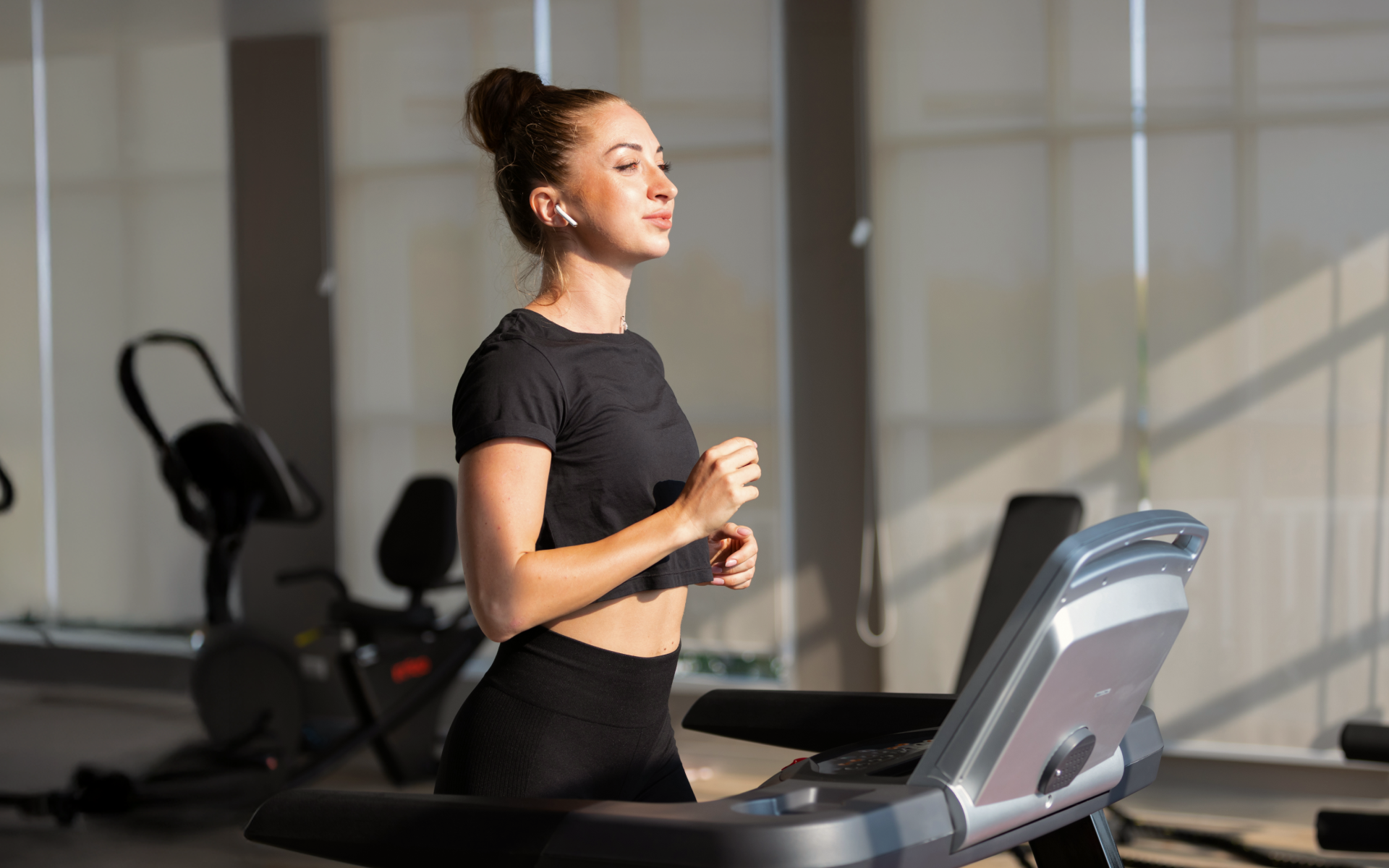
We’ve all seen the catchy headlines promising a workout that magically targets belly fat. If you’ve been searching for the elusive secret to spot-reducing your midsection through cardio alone, you’re not the only one. It is a common goal, but the path to achieving it is often cluttered with misinformation. That’s why we’re giving you a flat stomach treadmill workout for weight loss that can really deliver results, if you follow it.
Before we dive into the workouts, let’s get one thing clear: successful weight loss is about more than just sweating on a machine. It’s a physiological process that requires a strategic balance of energy intake, energy expenditure, and hormonal health.
In this guide, we’ll break down the science behind using the treadmill effectively. We’ll look at the mechanisms of fat loss, the role of intensity, and how to structure your training for sustainable results.
What Is a Flat Stomach Treadmill Workout for Weight Loss?
A flat stomach treadmill workout for weight loss is a cardiovascular training session that’s designed to increase total daily energy expenditure (TDEE) to support a calorie deficit. While the name suggests a direct targeting of the stomach area, the physiological reality is slightly different.
Defining the Concept
Physiologically, you can’t tell your body exactly where to burn fat. When you exercise, you create an energy demand. Your body meets this demand by mobilizing stored energy (fat and glycogen) from various tissues throughout the body, not just the area you’re trying to shrink (1).
Therefore, a treadmill workout for a flat stomach is actually a tool for systemic fat loss. It works by:
- Increasing Caloric Burn: Moving your body weight against gravity (or friction) requires energy (2).
- Improving Insulin Sensitivity: Regular aerobic exercise helps your body manage blood sugar better, which is crucial for reducing visceral fat (deep belly fat) (3).
- Reducing Stress: Lowering cortisol levels can help prevent the accumulation of abdominal fat (4).
A flat stomach treadmill workout for weight loss for beginners or advanced athletes requires a protocol that optimizes these systemic factors to reveal the muscles of the abdomen over time.
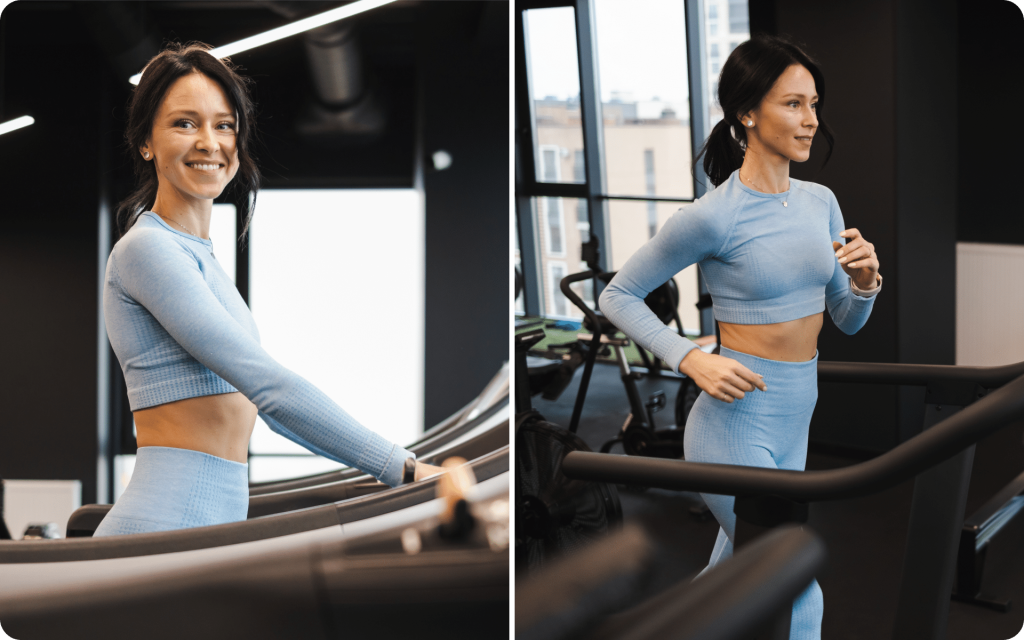
Is a Treadmill Good for Losing Belly Fat?
The short answer is yes, but it’s likely not for the reasons you think. The treadmill is an exceptionally versatile tool for manipulating energy balance, which is the cornerstone of weight loss (5). However, its effectiveness depends entirely on how you use it.
Low-Intensity Steady State (LISS)
Walking at a moderate pace (Zone 2 heart rate) relies heavily on fat oxidation for fuel (6).
- Pros: It places low stress on the central nervous system, allowing for high frequency (you can do it daily). It helps with recovery and creates a caloric deficit without spiking hunger hormones excessively (6).
- Cons: It burns fewer calories per minute compared to high-intensity work.
High-Intensity Interval Training (HIIT)
This involves alternating between bursts of near-maximal effort and periods of recovery.
- Pros: It burns a significant number of calories in a short time and can increase Excess Post-exercise Oxygen Consumption (EPOC), which means you burn calories long after the workout ends (7).
- Cons: It is very taxing on the body and requires longer recovery times. Doing this too often can lead to burnout or injury.
BetterMe: Health Coaching app helps you achieve your body goals with ease and efficiency by helping to choose proper meal plans and effective workouts. Start using our app and you will see good results in a short time.
Incline Walking
Walking on an incline increases the intensity without the impact of running (8).
- Mechanism: By increasing the grade, you increase the recruitment of the posterior chain (glutes and hamstrings) and the metabolic demand of the workout (8).
- Benefit: This is often the “sweet spot” for many people who are looking for treadmill workouts for weight loss, as it burns substantial calories while sparing your joints (8).
If you’re looking to maximize your results, consistency trumps intensity. A regular walking routine you stick to is infinitely better than a grueling sprint session you quit after a week.
Read more: Treadmill Speed Workout Guide: How to, Benefits, and FAQs
How to Flatten Stomach on a Treadmill
Achieving a leaner midsection is an 8-step process that integrates physiology with mechanics. It is not just about pressing ‘start’.
Step 1: Establish Your Calorie Needs
You can’t out-train a diet that provides a caloric surplus. Weight loss is ultimately an equation of energy balance.
- Calculate TDEE: Use an online calculator to find your total daily energy expenditure.
- Create a Deficit: Subtract 300-500 calories from your TDEE. This is your target intake.
- Track Intake: Use a food scale and tracking app to ensure accuracy.
Step 2: Prioritize Protein Intake
Protein is essential for muscle preservation during a calorie deficit (9).
- Thermic Effect: Protein requires more energy to digest than carbs or fats (10).
- Satiety: It keeps you fuller for longer, reducing the likelihood of overeating (11).
- Muscle Repair: It provides the amino acids necessary to repair tissue damaged during exercise (12).
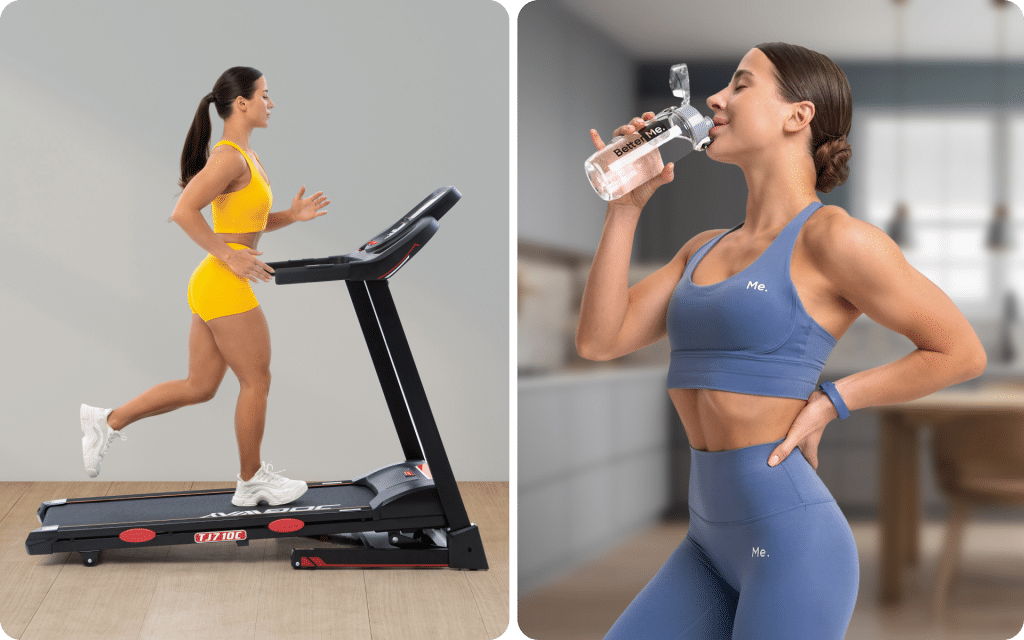
Step 3: Determine Your Training Frequency
Consistency is the primary driver of adaptation.
- Realistic Scheduling: Commit to a number of days you can actually hit (e.g. 3-4 days per week).
- Recovery Needs: Allow time for your connective tissues to adapt to the impact of walking or running (13).
Step 4: Select Your Intensity Zone
Training in different heart rate zones elicits different physiological responses (6).
- Zone 2 (60-70% Max HR): Best for fat oxidation and building an aerobic base.
- Zone 4/5 (80-95% Max HR): Best for improving VO2 max and caloric burn per minute.
Step 5: Incorporate Progressive Overload
Just like lifting weights, your cardio needs to get harder over time to continue producing results (14).
- Increase Duration: Add 5 minutes to your sessions every two weeks.
- Increase Incline: Raise the grade by 1-2% once the current level feels easy.
- Increase Speed: Boost your pace by 0.2-0.5 mph periodically.
Step 6: Integrate Non-Exercise Activity (NEAT)
The treadmill is just one hour of your day – what you do in the other 23 also matters.
- Move More: Take the stairs, park further away, or stand while working.
- Step Count: Aim for a total daily step count (including your treadmill work) of 8k-10k.
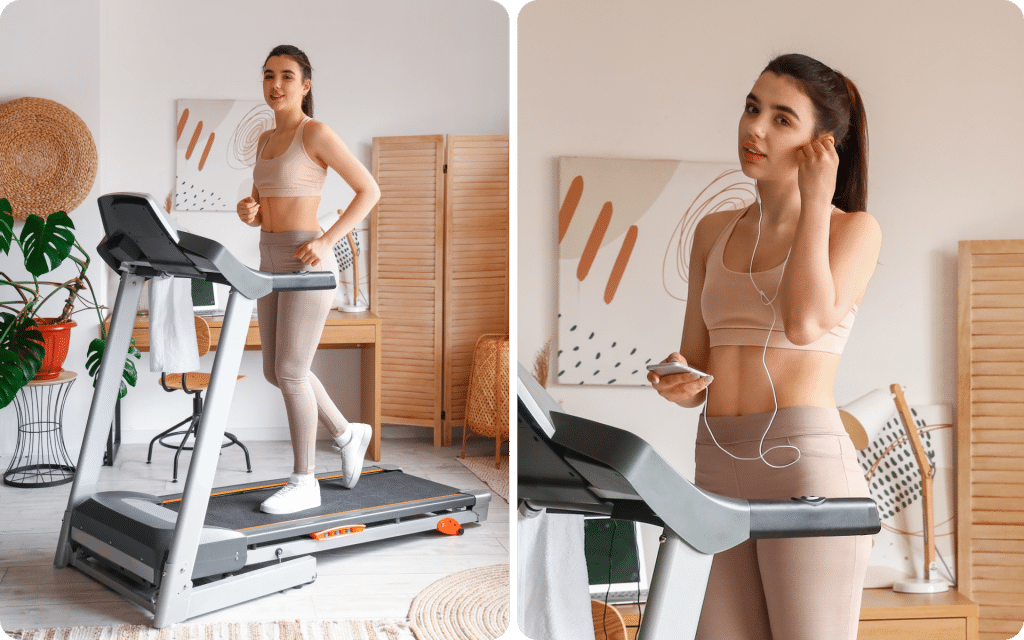
Step 7: Monitor Hydration and Sleep
These are the silent regulators of your metabolism.
- Water: Essential for lipolysis (the breakdown of fat) (15).
- Sleep: Lack of sleep raises cortisol and ghrelin (hunger hormone), sabotaging your deficit (16).
Step 8: Track and Adjust
Data allows for objective decision-making.
- Weigh-ins: Track daily, but look at the weekly average to smooth out fluctuations.
- Measurements: Use a tape measure on your waist, as scale weight can be deceptive if you are building muscle. walking treadmill workout.
What Is a Sculpting Flat Stomach Treadmill Workout for Weight Loss?
To truly “sculpt”, you need to reveal muscle while reducing fat. This program combines low-intensity steady state (LISS) cardio with a recommendation for strength training.
Important note: The treadmill handles the energy expenditure side of the equation. To change the shape of your body, you must stimulate muscle tissue through resistance training. We highly recommend pairing this cardio protocol with a full-body strength program 2 days per week.
Strength training enhances your metabolic rate, which can further your weight loss efforts (17), not to mention its ability to improve strength, bone density, and functional fitness (18).
Program Notes
- Goal: Increase caloric expenditure and improve aerobic capacity without compromising recovery for strength training.
- Frequency: 2-3 days per week.
- Duration: 30-45 minutes per session.
- Intensity: Moderate (RPE 4-5 out of 10). You should be able to hold a conversation.
The LISS Protocol
| Phase | Activity | Duration | Speed/Incline | Notes |
|---|---|---|---|---|
| Warm-Up | Walk | 5 minutes | 2.5-3.0 mph / 0% Incline | Focus on deep breathing and loosening your hips. |
| Work Phase | Incline walk | 25-35 minutes | 3.0-3.5 mph / 3-5% Incline | Keep your chest up and your shoulders back. Don’t hold the handrails. |
| Cool-Down | Walk | 5 minutes | 2.5 mph / 0% Incline | Allow your heart rate to return to near resting levels. |
Exercise Execution Instructions
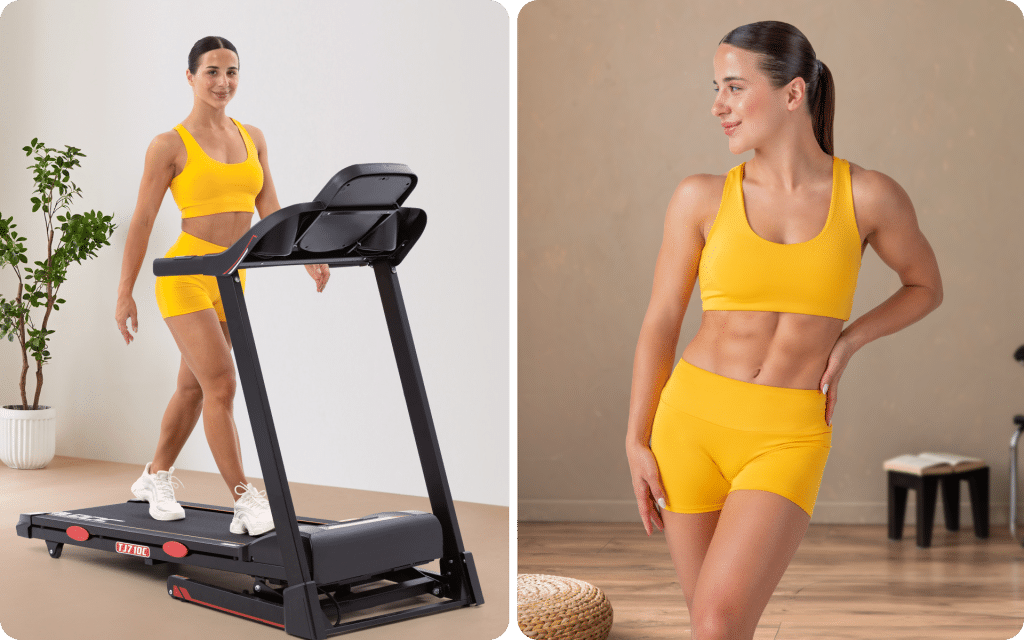
Treadmill Incline Walk
Proper form is crucial to engage the posterior chain and avoid lower back stress.
- Stand on the treadmill belt with feet shoulder-width apart.
- Set the speed to a brisk walking pace (3.0-3.5 mph is a good speed to walk on a treadmill to lose weight).
- Increase the incline to your target percentage (3-5% for beginners).
- Engage your core slightly to stabilize your spine.
- Walk with a natural gait, landing on your mid-foot or heel and rolling through to the toe.
- Swing your arms naturally. Don’t hold onto the handrails as this reduces caloric burn and alters your posture.
- Keep your gaze forward, not down at your feet or a screen, to maintain neck alignment.
Treadmill Cool-Down Walk
The goal here is to gradually lower physiological stress markers.
- Reduce the incline to 0% (flat).
- Reduce the speed to a slow stroll (2.0-2.5 mph).
- Focus on exhaling fully to engage the parasympathetic nervous system (rest and digest).
- Relax your shoulders away from your ears.
For more details about treadmill weight loss, take a look at our prior publication.
How Long Should I Go on the Treadmill to Lose Belly Fat?
Is there a magic number? Generally, 30 to 45 minutes is the standard recommendation for a dedicated cardio session aimed at fat loss.
The Physiological Sweet Spot
During the first 20 minutes of exercise, your body relies heavily on glycogen (stored carbohydrates) for fuel. As the duration extends beyond 20-30 minutes, and assuming the intensity remains moderate, your body shifts to utilizing a higher percentage of fatty acids for energy (19).
Whether you’re a workout beast or just a beginner making your first foray into the world of fitness and dieting – BetterMe has a lot to offer to both newbies and experts! Install the app and experience the versatility first-hand!
The Monotony Challenge
Let’s be honest, staring at a console for 45 minutes can be mentally draining. This “perceived difficulty” due to boredom is a real barrier to consistency.
Strategies to Overcome Monotony:
- Podcast Stacking: Only allow yourself to listen to your favorite podcast while walking.
- Visual Distraction: Watch a specific Netflix series during your sessions.
- Variation: If 45 minutes feels impossible, split it up. Do 20 minutes in the morning and 25 minutes in the evening. The total caloric burn is roughly the same.
- Switch It Up: Don’t be afraid to swap a treadmill session for an outdoor walk or an elliptical session (ergo) to give your mind a break.
Is 30 Minutes a Day on a Treadmill Enough to Lose Weight?
Yes, absolutely.
If you perform a 30-minute fat-burning treadmill workout daily, you could burn roughly 150-300 calories per session, depending on your weight and intensity. In a week, that’s 1,050 to 2,100 additional calories expended.
The Caveat: Energy Balance
This only works if you’re not “eating back” those calories. If you walk for 30 minutes and then treat yourself to a 500-calorie frappuccino because “you earned it”, you’ll negate the deficit and potentially gain weight.
30 minutes is enough if and only if it’s paired with a calorie-controlled diet. It’s a tool to widen the deficit, not the sole driver of it. HIIT treadmill workout for fat loss.
Read more: Incline Walking vs Running: Which One Should You Do?
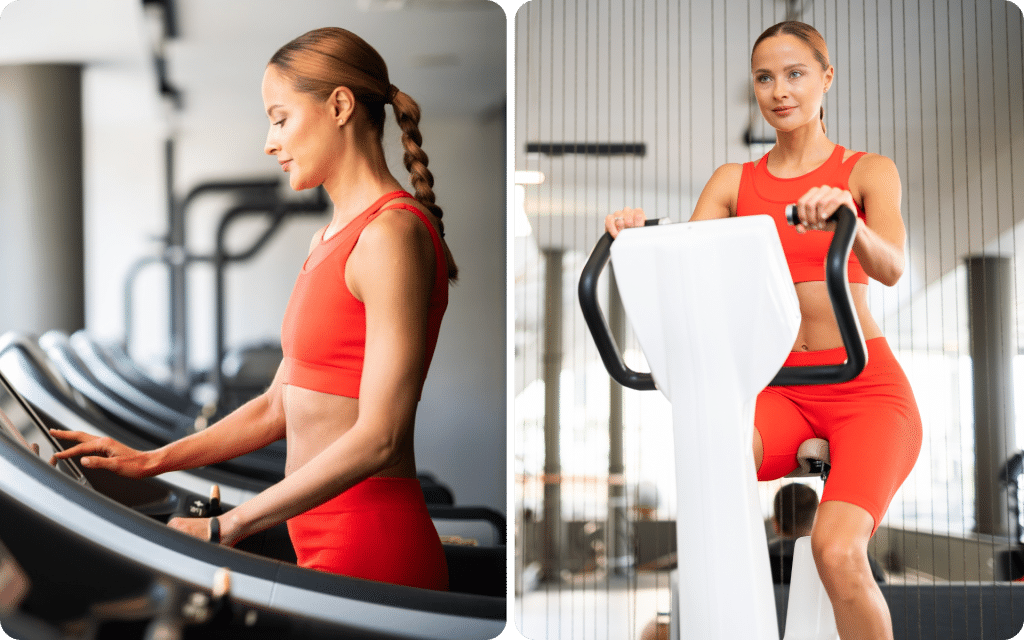
Which Is Better for Belly Fat, Cycling or Treadmill?
Clients often ask if they should swap the treadmill for the bike. The truth is, there’s no “better” option for fat loss in a vacuum – it depends on your body and your intensity.
The Treadmill
Pros:
- Higher Caloric Burn: Generally burns more calories per hour than cycling at a matching perceived exertion because you’re supporting your own body weight.
- Functional Movement: Walking and running are fundamental human movements that improve bone density due to the impact.
- Versatility: Easy to alter incline and speed to mimic real-world terrain.
Cons:
- Joint Impact: Running or high-incline walking can aggravate knee, hip, or lower back issues.
- Recovery: The eccentric loading (landing) causes more muscle damage, potentially requiring more recovery time.
Cycling (Stationary Bike)
Pros:
- Low Impact: Zero-impact forces make it ideal for those with joint pain or who are recovering from injury.
- Posterior Chain Focus: Excellent for isolating the quads and glutes without upper body fatigue.
- Higher Intensity Ceiling: Easier to push to true failure in sprint intervals without the risk of falling off (as you might on a treadmill).
Cons:
- Lower Caloric Burn (at moderate intensity): As the bike supports your weight, you generally burn fewer calories than walking/running, unless you’re pushing significant resistance.
- Posture Issues: Many people hunch over the handlebars, which exacerbates poor desk posture.
The Verdict
For pure caloric burn per minute at a moderate intensity, the treadmill usually wins. However, if joint pain prevents you from walking consistently, the bike is the superior choice as it allows you to actually do the work.
A flat-stomach treadmill workout for weight loss that many female clients prefer often involves walking, but if your knees hurt, cycling is a great low-impact alternative.
There’s no single “magic” setting. However, an incline setting of 3% to 12% combined with a speed that keeps your heart rate in Zone 2 (60-70% of your max heart rate) is highly effective. This combination maximizes fat oxidation while keeping the workout sustainable for longer durations, which is the key to caloric expenditure. For most people, a speed between 3.0 mph and 3.5 mph is effective for walking workouts. If you are running, 5.0 mph to 7.0 mph is common. The “right” speed is one that allows you to complete your target duration (e.g. 30 minutes) while maintaining a challenging but manageable effort level. Yes, you can. While cycling doesn’t spot-reduce stomach fat (nothing does), it burns significant calories. If cycling helps you maintain a caloric deficit consistently, you’ll lose systemic body fat, which will eventually reveal a flatter stomach. Generally, the treadmill burns more calories, assuming the time and intensity are the same. Because you are bearing your own body weight and engaging more stabilizing muscles to stay upright, the metabolic demand is typically higher on a treadmill than on a bike, where your weight is supported by the seat. This varies heavily by weight and intensity. For an average 155lb person walking at a moderate pace (3.5 mph), it may take roughly 3.5 to 4 hours to burn 1,000 calories. Running at a 6 mph pace could reduce this time to roughly 1.5 hours. It is essentially impossible to burn 1,000 calories in a standard 30-minute session.Frequently Asked Questions
What setting on a treadmill is best for belly fat?
What speed should I put my treadmill on to lose weight?
Can you get a flat stomach from cycling?
Which burns the most calories, a treadmill or a stationary bike?
How long does it take to lose 1,000 calories on a treadmill?
The Bottom Line
The flat stomach treadmill workout isn’t a myth, but it’s also not magic – it’s a systematic application of energy expenditure. By combining consistent treadmill workouts for weight loss – whether that’s a belly fat 30-minute treadmill workout or a longer incline walk – with a controlled diet and strength training, you’ll create the environment your body needs to shed fat and reveal the muscle underneath. Stop searching for shortcuts, trust the physiology, and start walking.
DISCLAIMER:
This article is intended for general informational purposes only and does not serve to address individual circumstances. It is not a substitute for professional advice or help and should not be relied on for making any kind of decision-making. Any action taken as a direct or indirect result of the information in this article is entirely at your own risk and is your sole responsibility.
BetterMe, its content staff, and its medical advisors accept no responsibility for inaccuracies, errors, misstatements, inconsistencies, or omissions and specifically disclaim any liability, loss or risk, personal, professional or otherwise, which may be incurred as a consequence, directly or indirectly, of the use and/or application of any content.
You should always seek the advice of your physician or other qualified health provider with any questions you may have regarding a medical condition or your specific situation. Never disregard professional medical advice or delay seeking it because of BetterMe content. If you suspect or think you may have a medical emergency, call your doctor.
SOURCES:
- Spot reduction: why targeting weight loss to a specific area is a myth (2023, sydney.edu.au)
- An Exploratory Study Comparing the Metabolic Responses between the 12-3-30 Treadmill Workout and Self-Paced Treadmill Running (2025, pmc.ncbi.nlm.nih.gov)
- Exercise-induced improvement of glycemic fluctuation and its relationship with fat and muscle distribution in type 2 diabetes (2024, onlinelibrary.wiley.com)
- Abdominal obesity and metabolic syndrome: exercise as medicine? (2018, link.springer.com)
- Fat Loss Depends on Energy Deficit Only, Independently of the Method for Weight Loss (2007, karger.com)
- What To Know About Exercise and Heart Rate Zones (2025, health.clevelandclinic.org)
- Comparison of epoc and recovery energy expenditure between hiit and continuous aerobic exercise training (2019, researchgate.net)
- Predicting the Metabolic Cost of Incline Walking from Muscle Activity and Walking Mechanics (2012, pmc.ncbi.nlm.nih.gov)
- Preserving Healthy Muscle during Weight Loss (2017, pmc.ncbi.nlm.nih.gov)
- Effects of Varying Protein Amounts and Types on Diet-Induced Thermogenesis: A Systematic Review and Meta-Analysis (2024, sciencedirect.com)
- Revisiting the role of protein-induced satiation and satiety (2017, sciencedirect.com)
- 9 Things to Know About How the Body Uses Protein to Repair Muscle Tissue (2019, acefitness.org)
- Recovery after exercise: what is the current state of play? (2019, sciencedirect.com)
- Progressive overload in cardiorespiratory exercise training for young and old: Is increasing duration or intensity of exercise more important? (2024, sciencedirect.com)
- Effects of changes in hydration on protein, glucose and lipid metabolism in man: impact on health (2003, pubmed.ncbi.nlm.nih.gov)
- Nocturnal ghrelin, ACTH, GH and cortisol secretion after sleep deprivation in humans (2006, pubmed.ncbi.nlm.nih.gov)
- Increasing muscle mass to improve metabolism (2013, pmc.ncbi.nlm.nih.gov)
- Get a lift from resistance training (2025, health.harvard.edu)
- Exercise Metabolism: Fuels for the Fire (2018, pmc.ncbi.nlm.nih.gov)

 Reviewed by

 Reviewed by
 Reviewed by