There are many different types of workouts and approaches, and it’s easy to feel overwhelmed. However, at its core, exercise is a tool, and like any tool, each type has a specific purpose. To get the results you want, you need to use the right one. Usually, you need a variety of workouts to have a comprehensive fitness program.
This guide is designed to cut through the noise. We’ll explore the major categories of physical training, breaking down what the latest scientific evidence says about each one. You’ll learn what they are, how they work, who they are for, and how to apply them to your own fitness journey.
By the end, you’ll have a clear, structured understanding of how to build an effective and sustainable workout plan tailored to your specific goals.
How Many Types of Body Workouts Are There?
When we look at the different types of workouts for the body, we can categorize them based on the primary physical adaptation they produce. While there are countless exercises and programs, they generally fall into a few core categories. Think of these as the fundamental pillars of a complete fitness regimen.
- Cardiorespiratory Training: Also known as aerobic or endurance exercise, this category focuses on improving the efficiency of your heart, lungs, and circulatory system. It’s defined by sustained, rhythmic activity that elevates your heart rate (1).
- Resistance Training: This is strength or weight training. The goal is to make your muscles work against a force or weight, which stimulates muscle growth, strength, and endurance (2). This is one of the most common types of body workout in a gym setting.
- Flexibility and Mobility Training: This involves exercises that stretch and lengthen your muscles, improving the range of motion at your joints. It’s essential for movement quality, posture, and injury prevention (3).
- Neuromotor Training: This category includes exercises that challenge your balance, agility, coordination, and proprioception (your sense of body position). It’s foundational for athletic movement and preventing falls, particularly as you age (4).
- Power and Speed Training: Often associated with athletic performance, this training focuses on producing force as quickly as possible. Plyometrics and explosive lifts fall into this category (5).
How Effective Are Different Types of Workouts for the Body?
Each type of workout produces a unique set of physiological responses. Understanding their specific effects, backed by recent scientific reviews, will allow you to choose the right method for your objective. Let’s examine what the research says about their effectiveness.
- Cardiorespiratory Training: The Engine of Health
Cardio is the foundation of metabolic and heart health (1). It can be broken down into different intensities, each with distinct benefits.
- High-Intensity Interval Training (HIIT)
HIIT involves short bursts of near-maximal effort (around 85-95% of your maximum heart rate) followed by brief recovery periods (6).
A 2024 meta-analysis confirmed that HIIT is effective for improving VO2 max, a key marker of aerobic fitness. VO2 max refers to the maximum amount of oxygen your body can utilize during intense exercise, making it a central indicator of aerobic endurance.
HIIT drives this adaptation by creating significant stress that forces your heart to pump more blood and your muscles to use oxygen more efficiently (7).
Another recent systematic review found HIIT to be effective for improving vascular function, such as arterial flexibility (8).
How to Apply: A typical session involves 4 to 8 intervals of 1 to 4 minutes of intense work, with equal or shorter rest periods. Two to three HIIT sessions per week are effective for most people.
Whether you’re a workout beast or just a beginner making your first foray into the world of fitness and dieting – BetterMe has a lot to offer to both newbies and experts! Install the app and experience the versatility first-hand!
Moderate-Intensity Continuous Training (MICT)
MICT is steady-state cardio performed at a conversational pace, roughly 60-70% of your max heart rate. It’s excellent for building an aerobic base, improving mitochondrial density, and enhancing your body’s ability to use fat for fuel (9).
How to Apply: Aim for 30 to 60 minutes, 3 to 5 times per week. The key is consistency and duration.
“Zone 2” Training
This is a specific type of MICT, performed at a low-to-moderate intensity where you can comfortably hold a conversation. It specifically targets Type I (slow-twitch) muscle fibers and enhances mitochondrial function. This type of training is highly sustainable and provides significant metabolic health benefits with minimal physiological stress. (10)
How to Apply: Dedicate 45 to 90 minutes to Zone 2 training, 2 to 4 times per week. It should feel relatively easy, forming the bulk of a well-rounded endurance program.
- Resistance Training: Building a Stronger You
Resistance training (RT) is essential for building and maintaining muscle mass, bone density, and metabolic rate (11). Its effectiveness depends on how you manipulate variables like load, volume, and frequency.
For Strength
To maximize pure strength, the evidence is clear. A 2023 meta-analysis showed that lifting heavy loads – defined as over 80% of your one-repetition maximum (1RM) – produces the greatest strength gains. This type of training recruits the largest motor units and improves neural drive to the muscles (12).
For Muscle Growth (Hypertrophy)
Building muscle is more flexible. Research has indicated that a wide range of loads, from as low as 30% of your 1RM to over 85%, can stimulate hypertrophy, as long as sets are taken close to muscular failure (about 1-3 repetitions in reserve) (13).
The primary driver for muscle growth is total training volume – the combination of sets, reps, and weight lifted. For trained individuals, 10-20+ hard sets per muscle group per week is an effective range (14). This makes it a great option for any type of workout in the gym for ladies who are looking to build lean mass.
Eccentric-Emphasis Training
The eccentric phase is the lowering portion of a lift. Emphasizing this phase (e.g. a 3-5 second negative) has been shown to be uniquely effective at increasing tendon stiffness and improving muscle architecture. This can enhance force production and help build resilience against injury (15).
Blood Flow Restriction (BFR) Training
BFR involves using cuffs to partially restrict blood flow to a limb while lifting very light weights (20-40% of 1RM). This creates a low-oxygen environment in the muscle, accelerating metabolic stress and muscle growth without heavy loads (16).
Recent reviews confirm its efficacy and suggest it is a safe option in supervised settings, even for populations who cannot tolerate heavy lifting (16).
- Flexibility and Mobility: Moving Without Limits
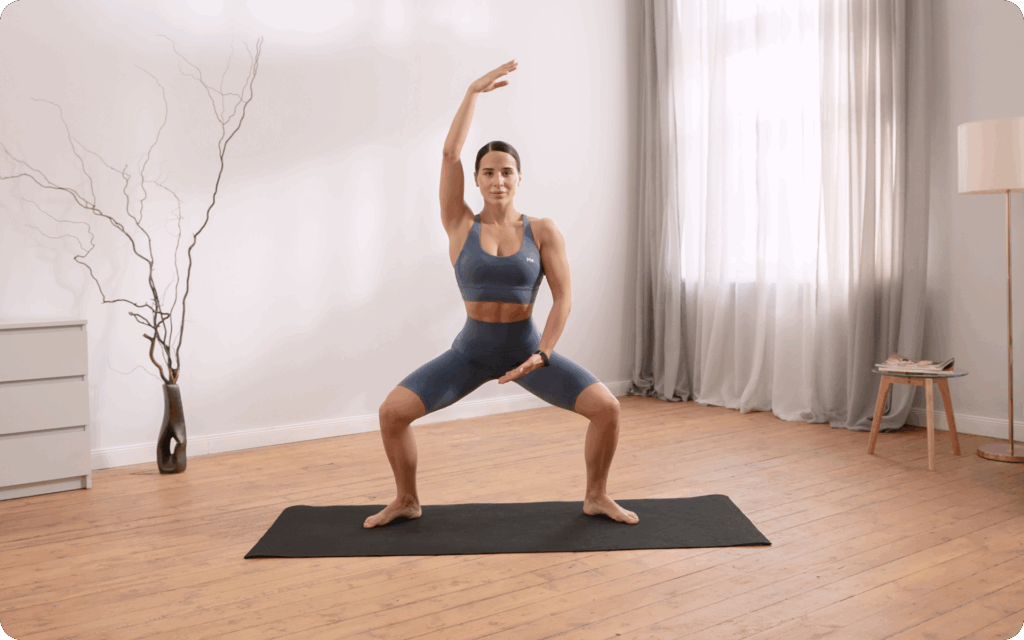
Flexibility is the ability of a muscle to lengthen passively, while mobility is the ability to move a joint actively through its full range of motion(3).
Static Stretching
This is the classic “hold-a-stretch” method. Recent analyses have shown that to create lasting changes in range of motion, total stretch time is key (17).
Aiming for a cumulative 60 to 120 seconds of stretching per muscle group, spread across 2 to 3 sessions per week, is effective. These gains come from both increased stretch tolerance and actual structural changes in the muscle tissue (17).
Proprioceptive Neuromuscular Facilitation (PNF)
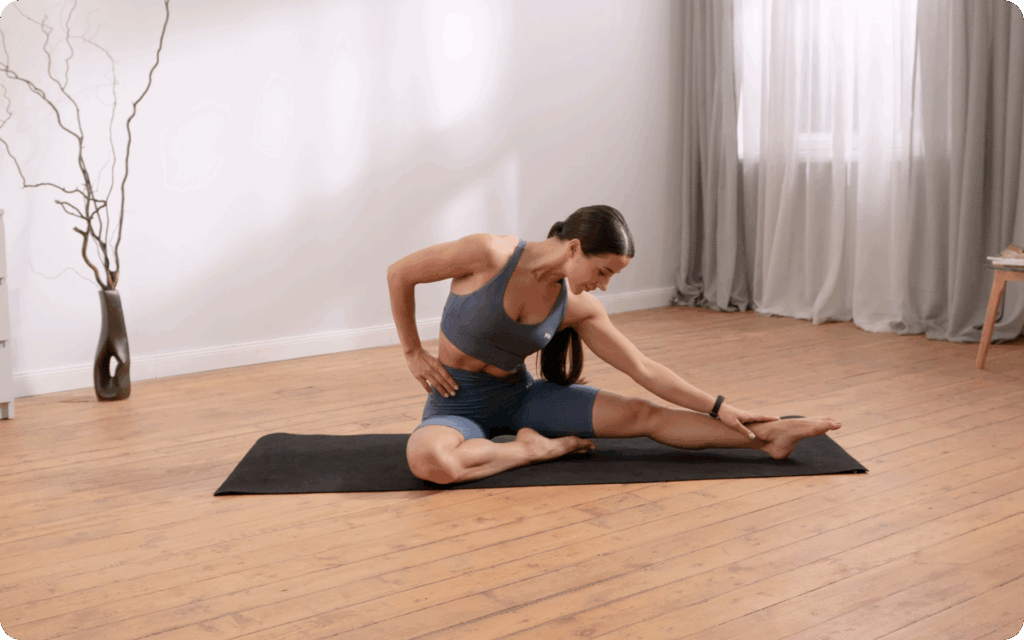
PNF stretching typically involves a contract-relax cycle, where you alternate between contracting the muscle and then relaxing it while stretching, which helps improve range of motion (18).
A 2025 systematic review confirmed that PNF often yields slightly greater, more immediate improvements in range of motion compared to static stretching alone, which makes it a powerful tool for post-workout recovery (19).
- Neuromotor Training: Mastering Balance and Coordination
This type of training targets the connection between your brain and your muscles. A 2025 meta-analysis highlighted its powerful effect on reducing fall risk in older adults. For athletes, it improves agility and reaction time (20).
How to Apply: Integrate 10-20 minutes of neuromotor exercises 2-3 times per week. This can include single-leg stances, balance drills on unstable surfaces (once foundational balance is mastered), or agility ladder drills.
Read more: Transform Your Body With These 10 Mat Pilates Back Exercises
How to Pick the Best Type of Workout for Your Goals
With a clear understanding of what each workout type does, you can now align your training with your desired outcome. This process is about matching the tool to the job.
Goal 1: Fat Loss and Improved Body Composition
To lose fat, you must be in a caloric deficit (21). Exercise helps by increasing energy expenditure and building or preserving muscle, which boosts your metabolic rate (22).
- Primary Workout: Resistance Training. Prioritize building muscle. Lifting weights 3-4 times per week ensures that the weight you lose is primarily from fat, not muscle. Focus on compound movements like squats, deadlifts, presses, and rows.
- Secondary Workout: A mix of HIIT and MICT. Use HIIT 1-2 times per week to maximize calorie burn in a short amount of time. Use MICT or Zone 2 training 2-3 times per week to increase overall energy expenditure without adding excessive stress, which can interfere with recovery.
- For Beginners: Start with full-body resistance training 2-3 times per week and add 2 sessions of moderate-intensity cardio. This is one of the most effective approaches for different types of workouts for the body for beginners.
Goal 2: Building Muscle and Strength (Hypertrophy)
The goal here is progressive overload – systematically increasing the demands placed on your muscles (23).
- Primary Workout: Resistance training. This is non-negotiable. Aim for a training frequency of hitting each muscle group 2 times per week. Your volume should be in the range of 10-20 hard sets per muscle group per week.
- Programming: Structure your training to include a mix of rep ranges. Use heavy loads (3-6 reps) for strength-focused compound lifts, moderate loads (6-12 reps) for primary hypertrophy work, and lighter loads (12-20 reps) for accessory movements to induce metabolic stress.
- At the Gym: There are many types of workouts at the gym that work well. You can use free weights, machines, or cables. The key is consistent progression. This principle applies to all, including any type of workout in the gym for ladies.
Goal 3: Enhancing Athletic Performance (Speed and Power)
Athletes need to be strong, fast, and resilient.
- Primary Workout: A combination of heavy resistance training and power training. Heavy strength work (squats, deadlifts) at over 80% 1RM builds the foundation. Plyometrics (box jumps, bounds) and Olympic lifts (cleans, snatches) convert that strength into explosive power.
- Secondary Workout: Cardiorespiratory training. A strong aerobic base (built with Zone 2 training) is essential for recovery between plays and during games. Add 1-2 HIIT sessions per week to mimic the high-intensity demands of sport.
- Supportive Work: Mobility and neuromotor drills are essential for moving efficiently and reducing injury risk.
Reasons why BetterMe is a safe bet: a wide range of calorie-blasting workouts, finger-licking recipes, 24/7 support, challenges that’ll keep you on your best game, and that just scratches the surface! Start using our app and watch the magic happen.
Goal 4: Improving General Health, Longevity, and Well-being
For this goal, the focus is on sustainability, consistency, and hitting all the pillars of fitness.
- The Blueprint:
- Resistance Training: 2-3 full-body sessions per week. Focus on functional, compound movements. Even low-volume RT has been shown to deliver substantial benefits for older adults, improving function and lean mass.
- Cardiorespiratory Training: Aim for 150 minutes of moderate-intensity cardio or 75 minutes of vigorous-intensity cardio per week, as recommended by health organizations. A good split is 2-3 sessions of Zone 2 training and 1 HIIT session.
- Flexibility and Balance: Incorporate 5-10 minutes of stretching and balance work daily or after your main workouts.
- At Home: Many of these modalities can be adapted for home use. Resistance bands, dumbbells, and bodyweight exercises are excellent tools. There are many different types of workouts for the body at home.
Are you interested in starting your fitness journey with effective, simple routines? Here are some easy workouts to lose weight.
What Kind of Workout Is Best for Everyday?
The idea of working out every single day is appealing, but it’s important to differentiate between intense training and daily movement. High-intensity training sessions require recovery, and doing them daily can lead to overtraining, injury, and burnout.
Instead, the best “workout” for every day is light-to-moderate physical activity. This is what promotes recovery, manages stress, and maintains metabolic health without taxing your system.
Options for Daily Movement:
- Zone 2 Cardio: A brisk 30-45 minute walk, a light bike ride, or an easy session on the elliptical are perfect daily activities. They promote blood flow, help with recovery from harder workouts, and improve your aerobic base.
- Mobility and Flexibility: Spending 10-20 minutes on dynamic stretching, foam rolling, or a yoga flow can relieve muscle tightness, improve joint health, and prepare your body for more intense training.
- Neuromotor Drills: Practicing balance and coordination for a few minutes each day helps maintain the mind-body connection and reinforces good movement patterns.
- Active Living: This is simply integrating more movement into your daily life. Taking the stairs, walking instead of driving short distances, or doing yard work all contribute to your overall activity level.
The key is to listen to your body. Intense workouts should be balanced with lower-intensity days to allow for proper physical and neurological recovery.
Are you short on time? You don’t need a full hour. Discover the power of mini workouts throughout the day.
Read more: 4 Benefits Of Mat Pilates For Body And Mind
How Do I Create My Workout Plan and Stick to It?
Creating a plan is the first step; consistency is what delivers results. Follow this structured approach to build a plan you can adhere to.
Step 1: Define Your “Why” and Set a Specific Goal
Be precise. Instead of “I want to get in shape”, define what that means. Is it “I want to lose 15 pounds in 4 months” or “I want to be able to run a 5k without stopping”? A clear goal dictates your training priorities.
Step 2: Assess Your Starting Point and Schedule
Realistically, how many days a week can you commit to training? An “ideal plan” you can’t follow is useless, while a “good-enough” plan you stick to is gold. If you’re a beginner, 3-4 days per week is a fantastic start.
Step 3: Choose Your Primary Training Modality
Based on your goal, select your main workout type.
- Fat Loss: Resistance training + cardio
- Muscle Gain: Resistance training
- Performance: Resistance training + power training
- General Health: A balanced mix of RT, cardio, and mobility.
Step 4: Structure Your Week
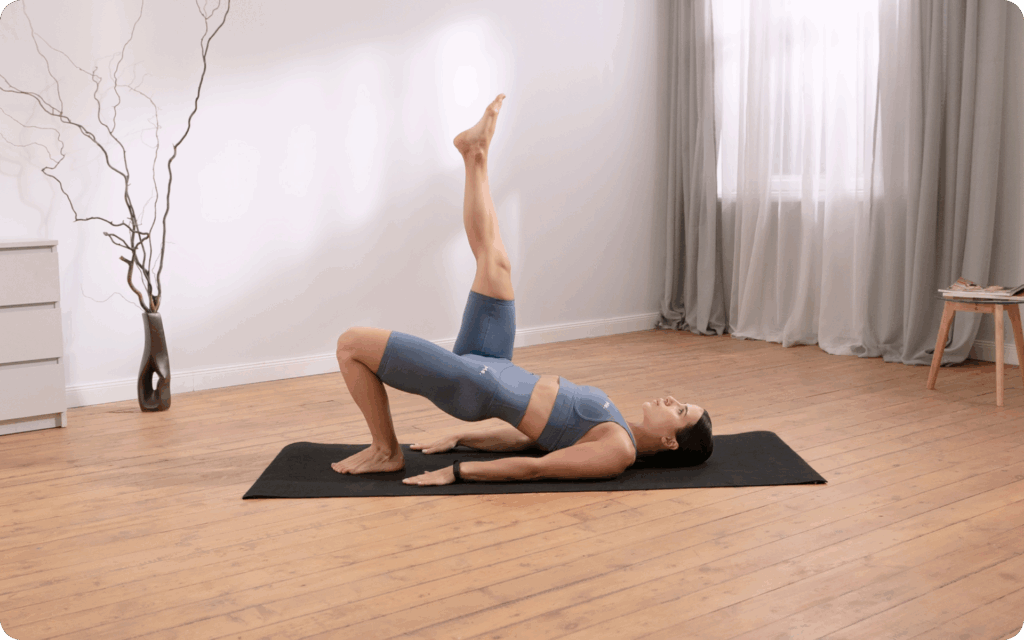
Create a weekly template. Avoid placing two high-intensity sessions back-to-back. For example, don’t schedule a HIIT session the day after a heavy leg day.
- Sample Plan (General Health Focus, 4 Days/Week):
- Monday: Full-body resistance training
- Tuesday: Zone 2 cardio (45 min) + mobility (15 min)
- Wednesday: Rest or active recovery (e.g. walking)
- Thursday: Full-body resistance training
- Friday: HIIT session (20 min) + mobility (10 min)
- Saturday: Long Zone 2 cardio (60-90 min)
- Sunday: Rest or active recovery
Step 5: Select Your Exercises
Focus on compound movements that work multiple muscle groups at once. They provide the most bang for your buck. Examples for different types of workouts for the body include:
- Lower Body: Squats, lunges, deadlifts, hip thrusts
- Upper Body: Push-ups, bench press, pull-ups, rows, overhead press
Step 6: Document and Track Your Progress
Write down your workouts: the exercises, weight, sets, and reps. The goal is to do slightly more over time (one more rep, a little more weight). This is the principle of progressive overload, and it is the master key to long-term results.
Step 7: Prioritize Consistency Over Perfection
Life happens. You will miss a workout. The key is to not let one missed session derail your entire week. Get back on track with your next scheduled workout. Consistency is far more important than perfection.
Ready to build your routine using just your body? Here’s a complete bodyweight workout plan.
No single exercise truly works everything, but if one had to be chosen for its comprehensive benefits, the deadlift (and its variations) is a strong contender. It targets the entire posterior chain (glutes, hamstrings, back), quads, core, and grip, which makes it a highly efficient movement for building total-body strength. They are both critically important and have a synergistic relationship. You cannot sacrifice one for the other. Exercise creates the stimulus for adaptation, but sleep is when the vast majority of recovery, repair, and growth actually happens. Consistently poor sleep will undermine the benefits of even the most perfect training program. Yes, absolutely. Muscle growth, or hypertrophy, occurs during periods of rest, not during the workout itself. Resistance training places mechanical tension on the muscle and builds metabolic fatigue (24). These mechanisms trigger MPS and other anabolic processes that help repair and build the muscle. However, this occurs during recovery (25). It depends on the intensity. It’s unwise to perform high-intensity strength training or HIIT sessions every day, as this will lead to overtraining and increase injury risk. However, it’s highly beneficial to engage in some form of light-to-moderate physical activity every day, such as walking, stretching, or easy cycling, to promote recovery and overall health.Frequently Asked Questions
What is one exercise that works everything?
Is sleep or exercise more important?
Do muscles grow on rest days?
Is it wise to work out every day?
The Bottom Line
Building a capable and resilient body is a journey of applying the right principles consistently over time. By understanding the different types of workouts and their specific effects, you’re no longer guessing. You now have the knowledge to choose the right tools, structure an intelligent plan, and execute it with confidence. Start with a clear goal, choose your path, and commit to the process.
DISCLAIMER:
This article is intended for general informational purposes only and does not serve to address individual circumstances. It is not a substitute for professional advice or help and should not be relied on for making any kind of decision-making. Any action taken as a direct or indirect result of the information in this article is entirely at your own risk and is your sole responsibility.
BetterMe, its content staff, and its medical advisors accept no responsibility for inaccuracies, errors, misstatements, inconsistencies, or omissions and specifically disclaim any liability, loss or risk, personal, professional or otherwise, which may be incurred as a consequence, directly or indirectly, of the use and/or application of any content.
You should always seek the advice of your physician or other qualified health provider with any questions you may have regarding a medical condition or your specific situation. Never disregard professional medical advice or delay seeking it because of BetterMe content. If you suspect or think you may have a medical emergency, call your doctor.
SOURCES:
- Physical activity, cardiorespiratory fitness, and cardiovascular health: A clinical practice statement of the American Society for Preventive Cardiology Part I: Bioenergetics, contemporary physical activity recommendations, benefits, risks, extreme exercise regimens, potential maladaptations (2022, sciencedirect.com)
- Resistance Training (n.d., sciencedirect.com)
- Understanding Flexibility, Mobility, and Stability: Key Components of Functional Fitness (2024, cospineandjoint.com)
- The Advantage of Neuromotor Exercise for Brain and Body Health (2025, pacificneuroscienceinstitute.org)
- Model for Progression of Strength, Power, and Speed Training (2021, journals.lww.com)
- The effects of high-intensity interval training versus moderate-intensity continuous training on athletes’ aerobic endurance performance parameters (2024, link.springer.com)
- High Intensity Interval Training (n.d., sciencedirect.com)
- Narrative Review of High-Intensity Interval Training: Positive Impacts on Cardiovascular Health and Disease Prevention (2025, mdpi.com)
- WHAT IS STEADY-STATE CARDIO? (n.d., nasm.org)
- WHAT’S ZONE 2 TRAINING, AND WHY DOES IT MATTER? (2025, hprc-online.org)
- Resistance training – health benefits (2022, betterhealth.vic.gov.au)
- Resistance training prescription for muscle strength and hypertrophy in healthy adults: a systematic review and Bayesian network meta-analysis (2023, bjsm.bmj.com)
- Loading Recommendations for Muscle Strength, Hypertrophy, and Local Endurance: A Re-Examination of the Repetition Continuum (2021, mdpi.com)
- A Systematic Review of The Effects of Different Resistance Training Volumes on Muscle Hypertrophy (2022, pmc.ncbi.nlm.nih.gov)
- Effect of Eccentric Training with Different Durations, Intensities, and Contraction Velocities on Upper Limb Muscle Strength: A Meta-Analysis (2025, mdpi.com)
- Blood Flow Restriction Training-An Overview and Implication in New Generation Physical Therapy: A Narrative Review (2022, pmc.ncbi.nlm.nih.gov)
- Practical recommendations on stretching exercise: A Delphi consensus statement of international research experts (2025, sciencedirect.com)
- Proprioceptive Neuromuscular Facilitation (PNF): Its Mechanisms and Effects on Range of Motion and Muscular Function (2012, pmc.ncbi.nlm.nih.gov)
- Effects of post-exercise stretching versus no stretching on lower limb muscle recovery and performance: a meta-analysis (2025, frontiersin.org)
- Neuroadaptive Balance Training to Reduce Fall Risk in the Elderly (2025, researchgate.net)
- Fat Loss Depends on Energy Deficit Only, Independently of the Method for Weight Loss (2007, karger.com)
- Editorial: Exercise and its role in regulating energy metabolism—Insight from intramuscular mechanisms and cellular signaling (2023, frontiersin.org)
- Effects of Resistance Training Overload Progression Protocols on Strength and Muscle Mass (2024, pubmed.ncbi.nlm.nih.gov)
- Beyond Mechanical Tension: A Review of Resistance Exercise-Induced Lactate Responses & Muscle Hypertrophy (2022, mdpi.com)
- Resistance training‐induced changes in integrated myofibrillar protein synthesis are related to hypertrophy only after attenuation of muscle damage (2016, pmc.ncbi.nlm.nih.gov)
 By
By 
 Reviewed by