Fitness trainers have harped on the importance of leg workouts – training your lower body offers benefits for your core, posture, and daily movements. Burning out your legs and glutes is a good way to improve your mobility and performance – the stronger they are, the easier it gets to complete difficult workouts.
Today, you’re going to devote your time to the best leg day routine at home with dumbbells. It’s perfect for newbies or more experienced challengers who can hardly find the time for an additional commute to the gym or other fitness facilities.
If you’re feeling jazzed about a workout, it’s time for you to wear comfy clothes, lay the mat, and jump right into the strength-building exercises. The following routine can be used alongside other lower-body routines if you happen to have a few exercises that you currently love to do.
Keep reading this review to also discover the biggest leg day mistakes and how to know if you’ve overtrained your legs.
What Is the Best Split to Build Leg Muscle?
The best split to build leg muscle at home rounds up lower- and upper-body workouts. Here’s the sample of a four-day split:
- Day 1: Full-body strength
- Day 2: Lower-body squat dominant (quad focus)
- Day 3: Rest
- Day 4: Upper-body isolation exercises
- Day 5: Lower-body hinge dominant (hamstring + glutes)
- Weekend: Active rest (brisk walking, stretching, or yoga).
Depending on the day, the variety of exercises may shift.
A 2023 study found that both weighted and bodyweight whole-body training could induce muscle hypertrophy in the thighs (1). Resistance training helps induce muscle hypertrophy (2), but it works best when you train all the muscles in your entire body rather than just focusing on one section.
What Muscle Makes Your Legs Look Bigger?
Your quads (front thighs) and hamstrings, glutes, and calves are the primary muscles that make your legs look bigger.
- Quadriceps: The muscles on the front of your thighs. These include the rectus femoris, vastus intermedius, and vastus lateralis. They help extend and straighten your knees.
- Hamstrings: Located at the back of your thighs, they are made of several muscles, including the biceps femoris, semimembranosus, and semitendinosus. They bend your knees and assist with knee extension.
- Calves: The muscles on the back of your lower legs, including the gastrocnemius and the soleus muscles. The gastrocnemius is the large muscle that gives a good definition to the lower leg. They support ankle stability and movement.
- Glutes: The glutes are your butt muscles – gluteus maximus, medius, and minimus (3). Glutes provide hip stability, power, and strength.
Whether you’re a workout beast or just a beginner making your first foray into the world of fitness and dieting – BetterMe has a lot to offer to both newbies and experts! Install the app and experience the versatility first-hand!
What Is the Best Leg Day Routine?
The best leg day routine to build muscle at home typically includes 5 to 7 exercises that target all movement patterns of the lower body. The human body moves in a number of different ways and a great goal to have is to be strong in all of these movements.
These workout sessions can have a specific focus such as a quad focus session where you’re working on building strength in the quadriceps. For this, you’ll need to focus on squatting movements and knee extension. For a hamstring/glute focus, you’ll work on hinge movements and knee extension. This could be a glute bridge or a deadlift. An active warm-up primes your muscles for the exercises, while a gentle stretch helps boost recovery.
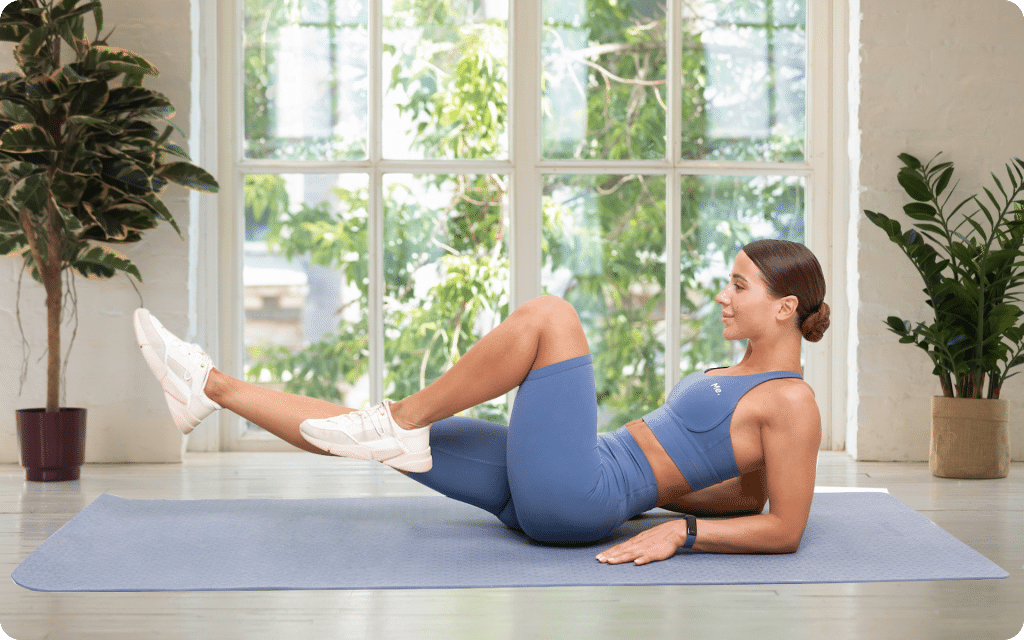
A simple warm-up routine you need to do before each workout:
- Cat-Cow Stretch: Start in tabletop position (hands under shoulders and knees under hips). Exhale and round your spine into a cat. Inhale, arching your back into a cow. Perform 5-10 reps.
- Arm Circles: Circle both arms in one direction for 30 seconds and in the counterclockwise motion for another 30 seconds.
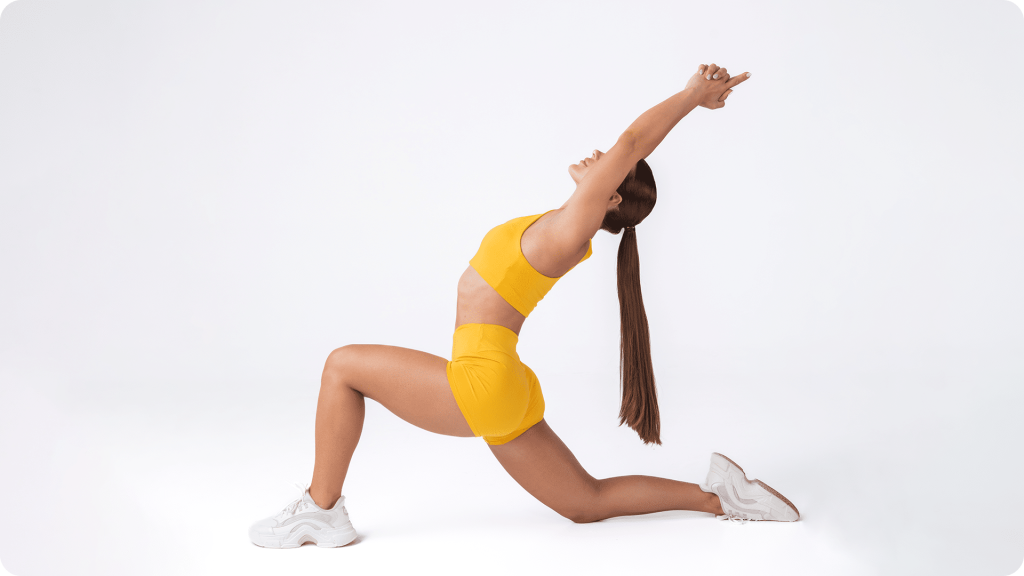
- Full-Body Bent Stretch: Step into a kneeling lunge with your left foot forward and right leg straight behind you. Place your right hand on the floor and bring your left elbow down inside your left foot. Twist to the left while lifting your left arm toward the ceiling. Return to the start, which counts for 1 rep. Perform 6 repetitions on each side.
-
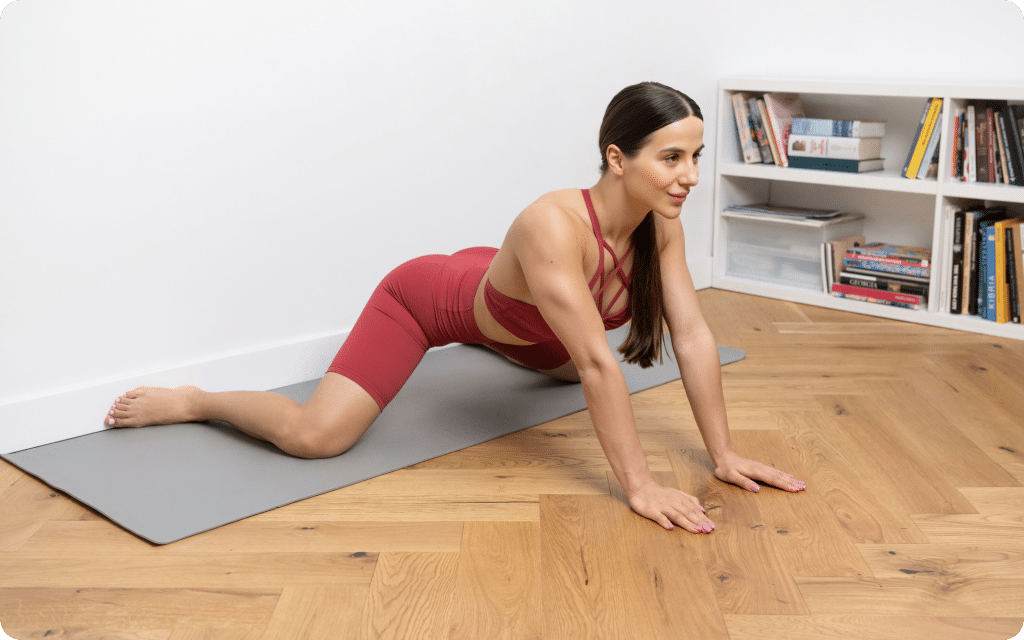
- 90/90 Hip Switch: This movement is all about 90-degree angles. Sit with your legs wide and hands behind you. Bend both knees and have one leg in front of your body and one leg behind. The bottom of the front foot will be in line with the shin of the trailing leg. You’ll notice a 90-degree angle between your front knee and trailing knee. From here, you’ll drop stacked knees to the right, then to the left – that’s 1 rep. Do 10 reps per side.
- Hip Rotation: Stand tall with your feet hip-width apart and your hands on your hips. Begin making slow, controlled circles with your hips. Keep your upper body still and focus on smooth movement. Switch directions.
Read more: 6 Compound Exercises for Women to Build Strength and Transform Their Bodies
Killer Exercises to Build Leg Muscles at Home
- Hip thrusts
- Wall sits
- Romanian deadlifts
- Hamstring curl
- Bulgarian split squat
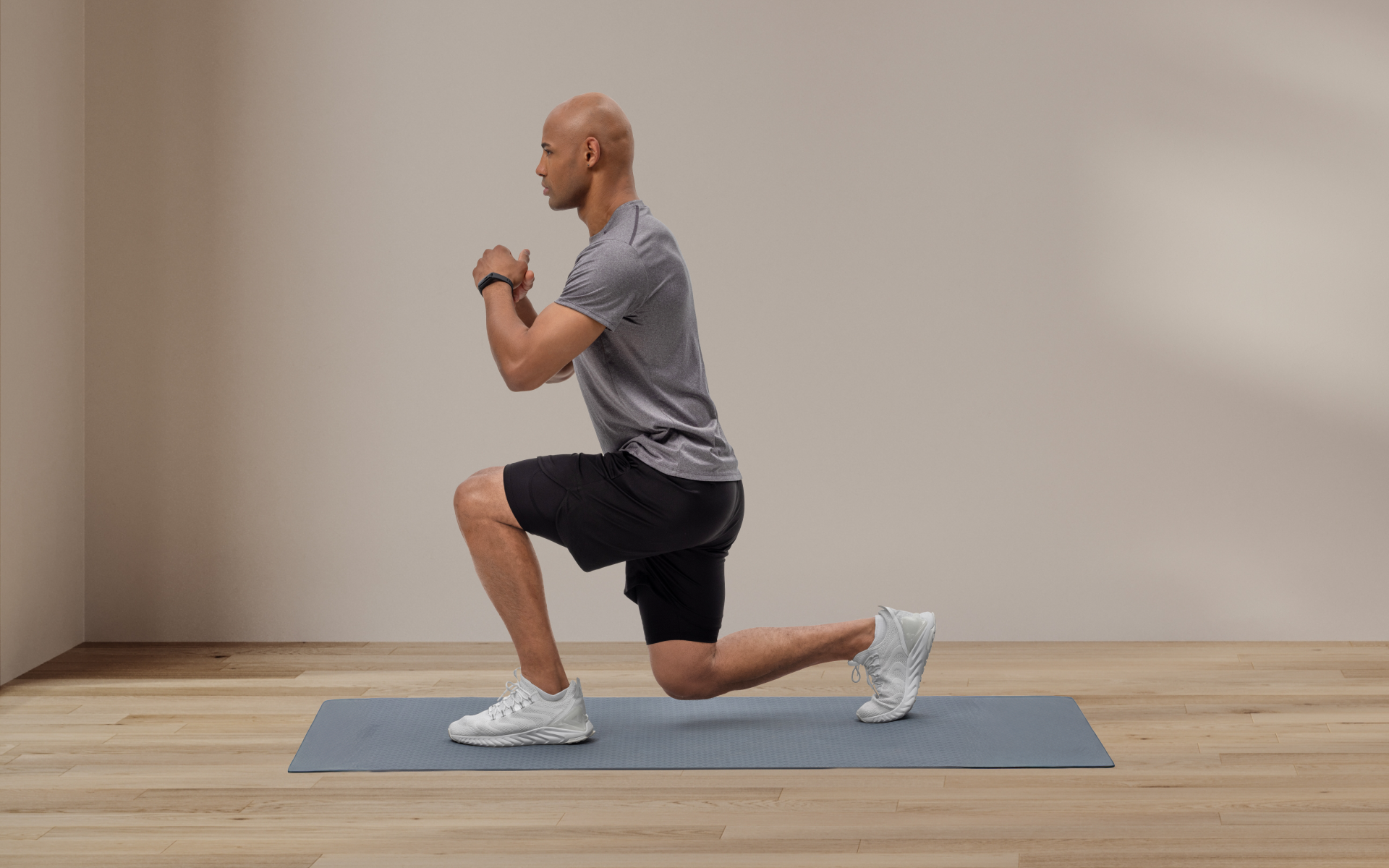
- Reverse lunges
- Weighted calf raises
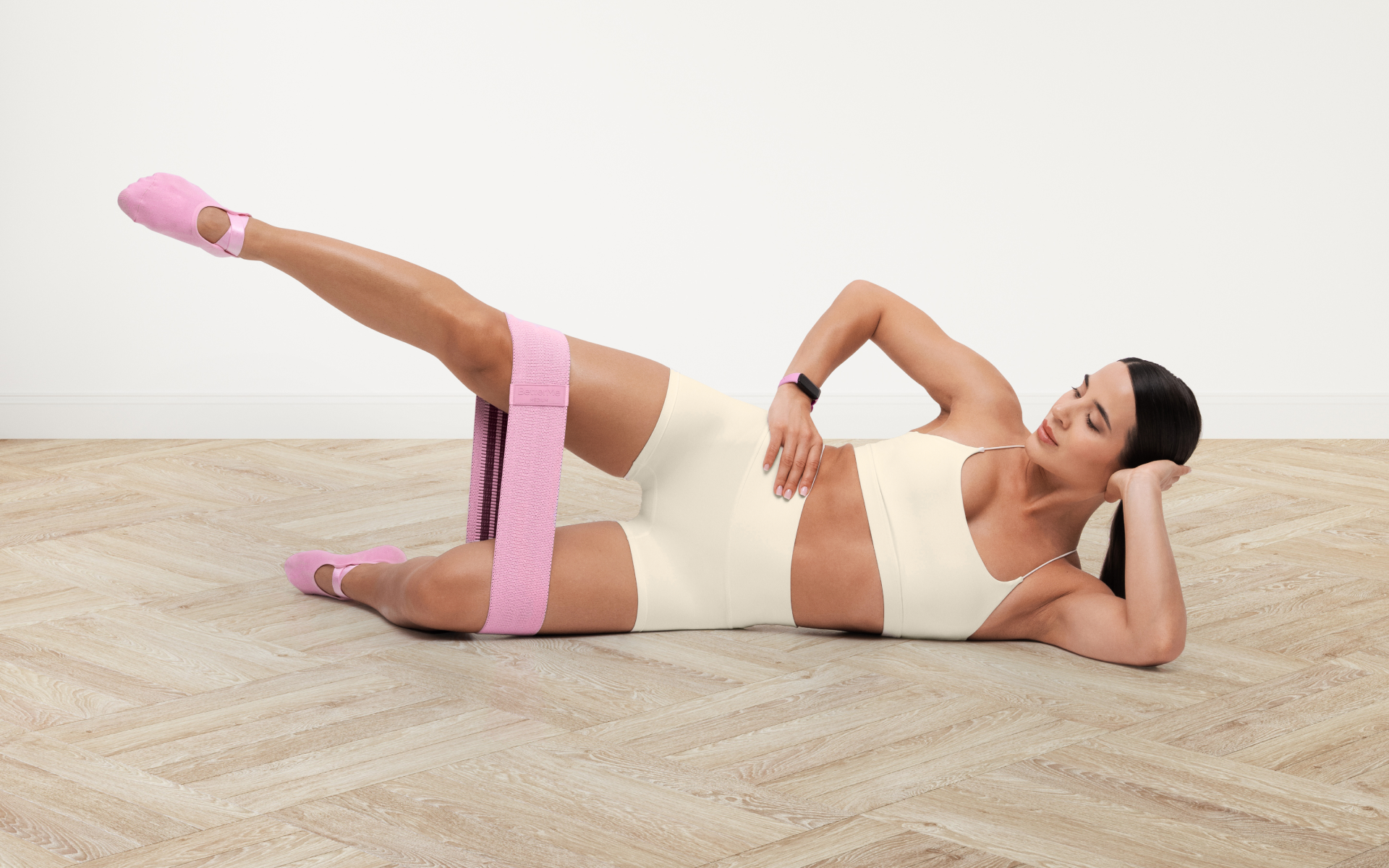
- Side-lying leg raises
Hip Thrusts
Proper performance:
- Sit on the floor with your upper back against the chair, bench, or any other sturdy surface. Make sure your shoulder blades rest on the edge as you lean back.
- Bend your knees and plant your feet flat on the floor. Keep your shins vertical at the top of the movement.
- Place one or two dumbbells on your hips – hold with both hands.
- Drive through your heels, lifting your hips.
- Squeeze at the top, creating a straight line with your body. Keep your core tight.
- Hold for 2 seconds and lower your hips toward the floor until they almost touch.
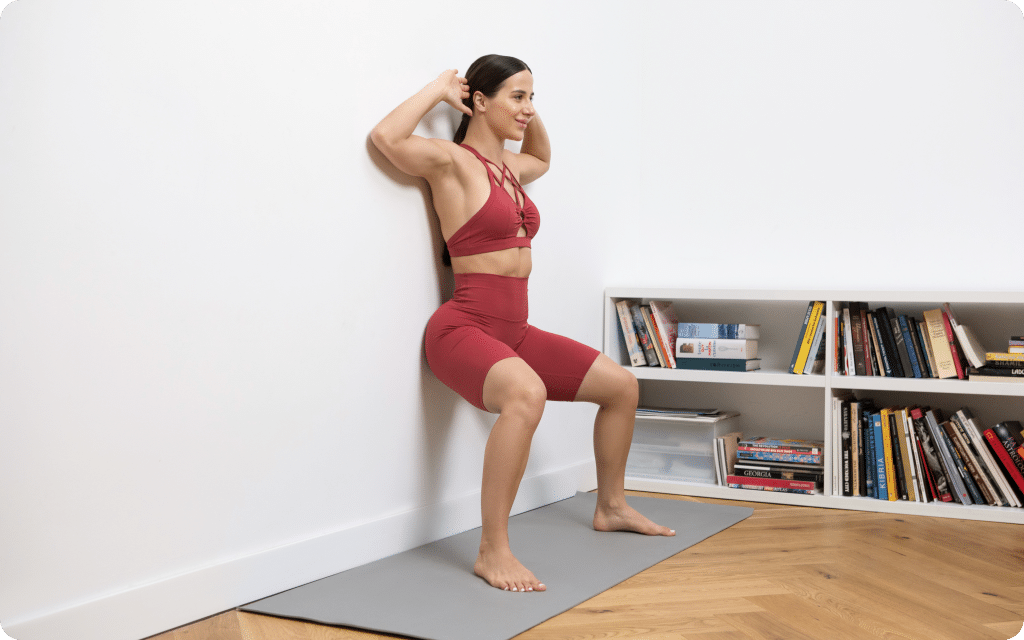
Wall Sits
Proper performance:
- Stand with your back against a wall and your feet about 1-2 feet in front of you.
- Slide down the wall as if sitting in a chair until your knees are bent at 90°.
- Keep your back flat against the wall, your chest up, and weight in your heels.
- Hold the position for up to 1 minute and release.
Romanian Deadlifts
Proper performance:
- Stand tall with your feet hip-width apart and your knees slightly bent. Hold dumbbells in both hands, with your arms relaxed by the front of your quads. This is the starting position.
- Hinge forward at your hips and bend your knees slightly to push your butt way back. Slowly lower the weight along your shins, keeping your back flat and your core engaged. Make sure your torso is almost parallel to the floor.
- Push through your heels to stand up straight and return to the starting position. Keep the weight close to your shins as you pull it up.
- Pause at the top and squeeze your butt. This is 1 rep.
Hamstring Curl
Proper performance:
- Lie face down on a mat, extend your legs, and support your chest with your arms.
- Grasp a dumbbell securely between your feet by placing it upright on the ground between your feet/ankles. You’ll then squeeze your feet together around the middle/end of the dumbbell. Here, the bottom of your feet will touch one end of the dumbbell and the dumbbell will be secured between your feet. Make sure to hold this squeeze throughout the movement. This is your starting position.
- Curl your legs up toward your butt, remembering to engage your glutes.
- Slowly lower back to the starting position. This counts for one repetition.
Bulgarian Split Squat
Proper performance:
- Stand a couple of feet in front of a sturdy bench or chair with a pair of dumbbells in front of you and to your sides.
- Reach one leg back and place the top of your rear foot on the bench.
- Begin to shift your front foot forward until you feel stable. Your front leg should be at a 90-degree angle.
- With your chest tall, bend your front knee and lower straight down to grasp the dumbbells with each hand. Your back knee should move toward the floor while your front shin should stay mostly vertical.
- Push through your front heel to stand back up, keeping your balance steady.
This is the upward phase of the first repetition. You’ll then repeat this movement, but hold the dumbbells in your hands the entire time. It’s best to position your body properly before grabbing the dumbbells.
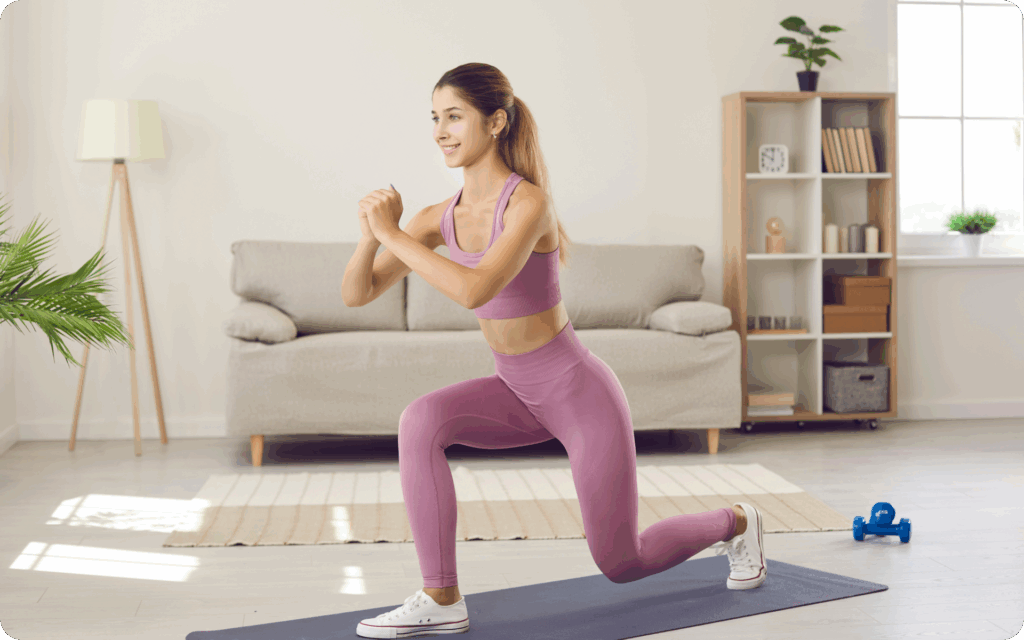
Reverse Lunges
Proper performance:
- Stand tall with a dumbbell in each hand, your core engaged, chest up, and shoulders back.
- Take a large step backward with your right leg, landing on the ball of your foot.
- Lower your body by bending both knees until your back knee is almost touching the floor and your front shin stays mostly upright.
- Keep most of your weight centered in your front heel.
- Push through your front leg to return to the standing position.
- Repeat on the other side.
Weighted Calf Raises
Proper performance:
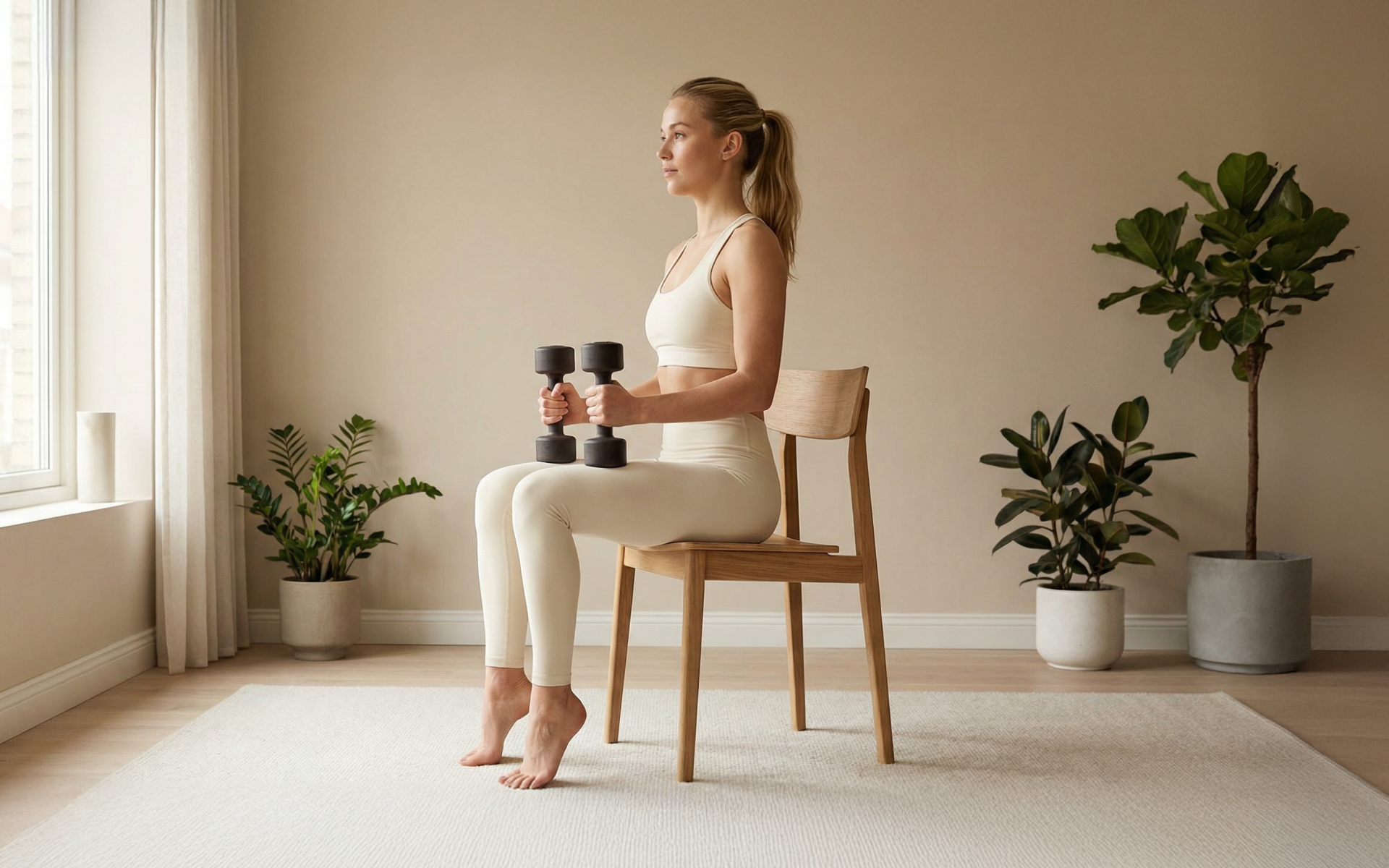
- Stand with your feet hip-width apart. Hold both dumbbells at your sides. Keep your core tight and your posture tall.
- Pressing into the balls of your feet, lift your heels off the floor as high as possible.
- Hold the top position for 3 seconds or so, and flex your calves.
- Keep your knees soft, not locked.
- Slowly lower your heels down and repeat for up to 12 repetitions.
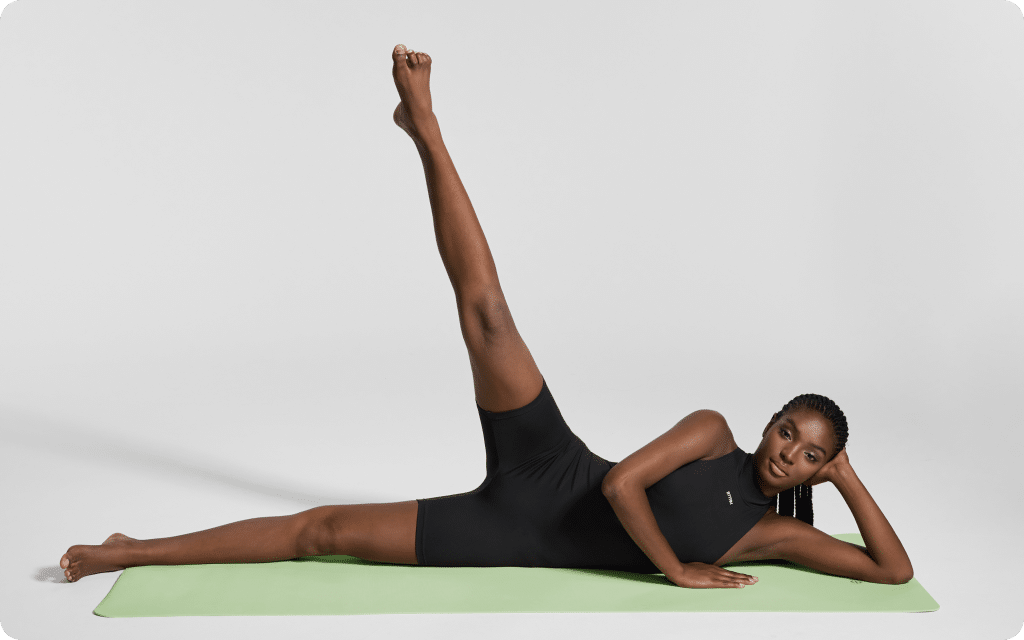
Side-Lying Leg Raises
Proper performance:
- Lie on your side with your legs stacked and your head supported on your arm.
- Keep your body in a straight line.
- Slowly lift the top leg upward as high as you comfortably can and lower it back down with control.
- Repeat for the desired number of reps in a slow motion, keeping your movements smooth to engage the outer thigh and glute medius.
Number of sets: We believe that the best leg day for mass involves 3 to 4 sets of each exercise.
Number of reps: The number of repetitions may vary individually for each person and could vary depending on the movement. However, a good rule of thumb is to try to stick to around 8 to 12 repetitions, ideally with a weight that makes the final few reps feel challenging.
Rest in between: Rest for around 20 seconds between exercises and up to 45 seconds between sets.
Note: The exact number of sets, rest periods, and reps will ultimately depend on your goals. Beginners can start with 3 sets of 8-12 reps, while more advanced practitioners who are aiming to build muscle mass may do three to five sets with heavier weights.
If you’re curious about the no squat leg workout, check out our earlier article.
Reasons why BetterMe is a safe bet: a wide range of calorie-blasting workouts, finger-licking recipes, 24/7 support, challenges that’ll keep you on your best game, and that just scratches the surface! Start using our app and watch the magic happen.
Cool-Down Routine:
- Standing forward fold: Hinge at your hips, reaching toward your toes. Relax your neck and shoulders.
- Cat-cow stretch: Get on your hands and knees, alternating between arching and rounding your back to release your spine.
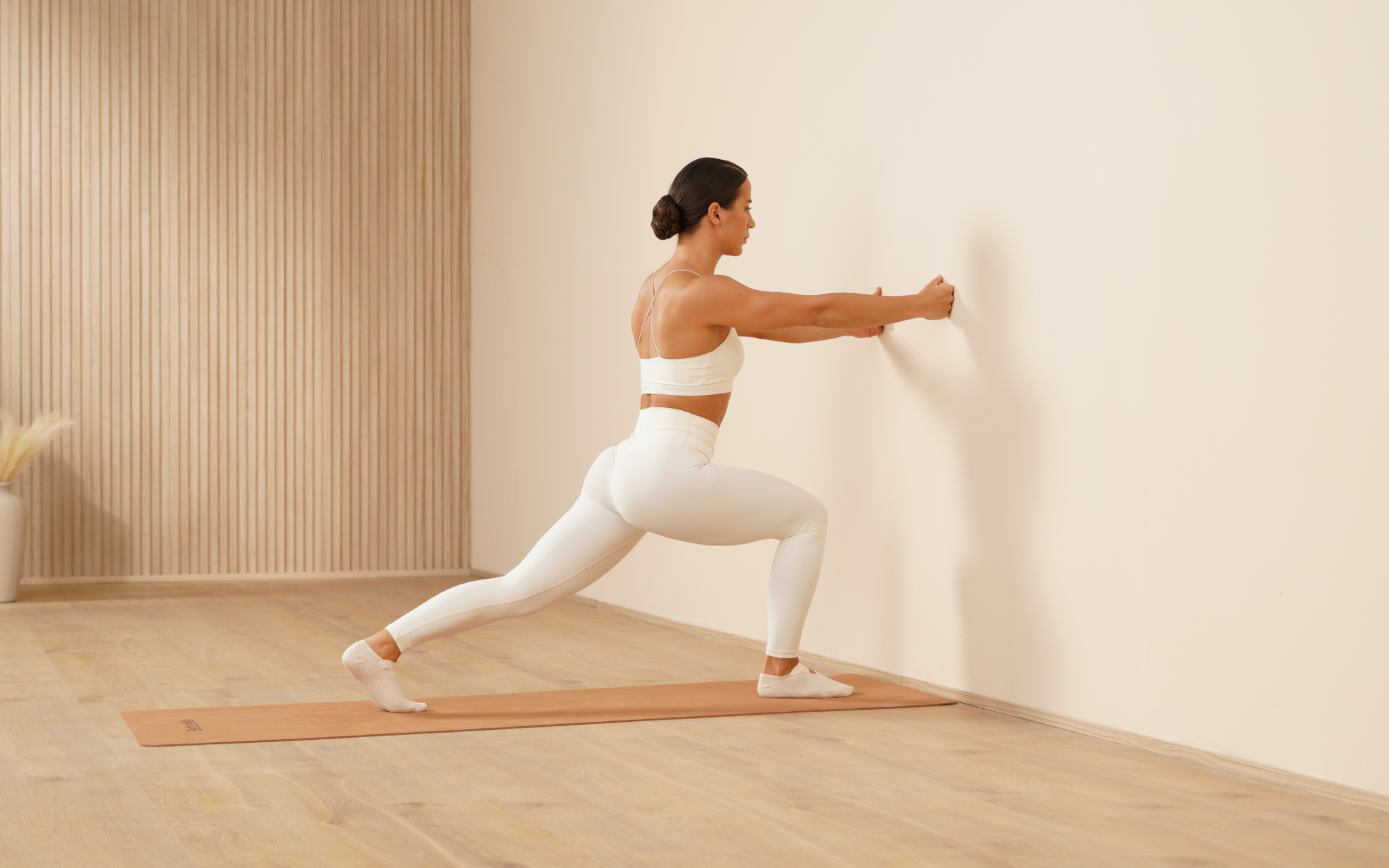
- Hip flexor stretch: Step into a low lunge, gently push your hips forward to stretch the front of your hip.
- Seated hamstring stretch: Get in a seated position, extend one leg forward, and reach toward your toes, keeping your back straight.
- Shoulder stretch: Bring your left arm across your chest, using your right arm to pull it closer to stretch your shoulder.
Read more: 30-Day Muscle-Building Workout at Home Made Simple
Is 3 Leg Days a Week Too Much?
Doing leg days three times a week is generally okay. However, it’s important to contact a medical professional before getting started on any new form of exercise. You may have preexisting conditions that would prevent you from exercising, and it’s best to make sure you’re safe before starting a grueling workout.
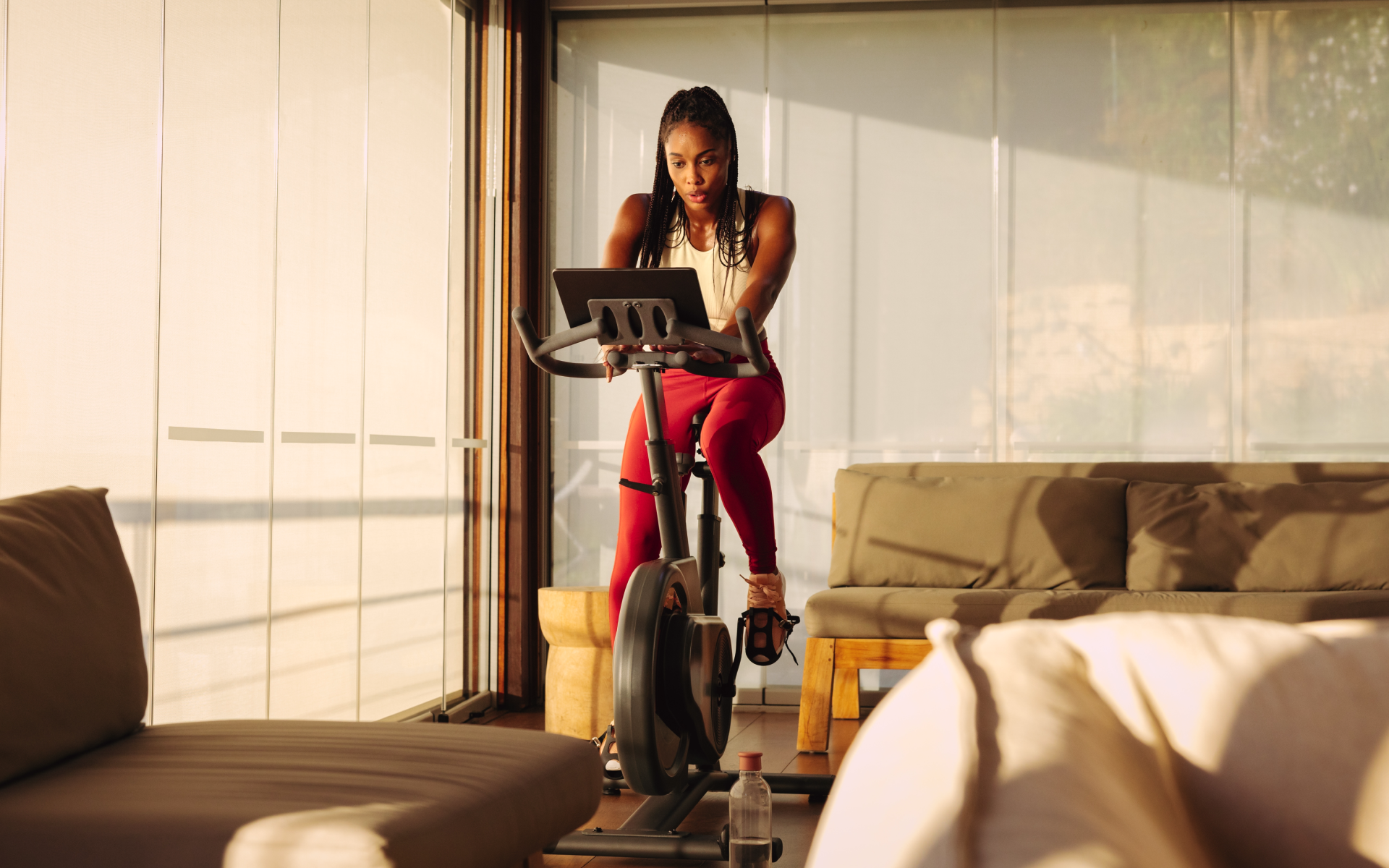
It’s also recommended that you leave 24 to 48 hours between workouts for your muscles to recover (4). If you’re feeling sore from a previous workout, it’s generally advised not to perform another leg workout, particularly high-intensity leg workouts. Opt instead for active recovery such as walking, cycling, or general mobility work. Rest is just as important as exercise, but sometimes even just a little extra movement is what your body truly needs to feel like itself again.
However, if you’re a newbie and you’re starting your journey with weighted training, we’d advise that you commit to either 2 leg sessions and 2 upper-body sessions per week or three days of full-body training. You’ll gradually increase both your frequency and volume.
For more details about the best leg workout for mass, take a look at our prior publication.

What Are the Biggest Leg Day Mistakes?
Even if you’re training at home, it’s essential to maintain proper form and technique. Here are the biggest leg day mistakes you should avoid:
- You don’t do enough volume: If you do too few sets or reps, your muscles aren’t stressed enough to induce hypertrophy. Greater volume helps to enhance muscle mass (5). This is particularly applicable to intermediate and advanced trainees who need to scale sets and repetitions.
- You don’t use a full range of motion: Your legs grow best when they’re trained in the stretch. Training muscles in the stretched position stimulates more growth (6). To build bigger legs, focus on achieving a full range of motion and proper stretching under tension.
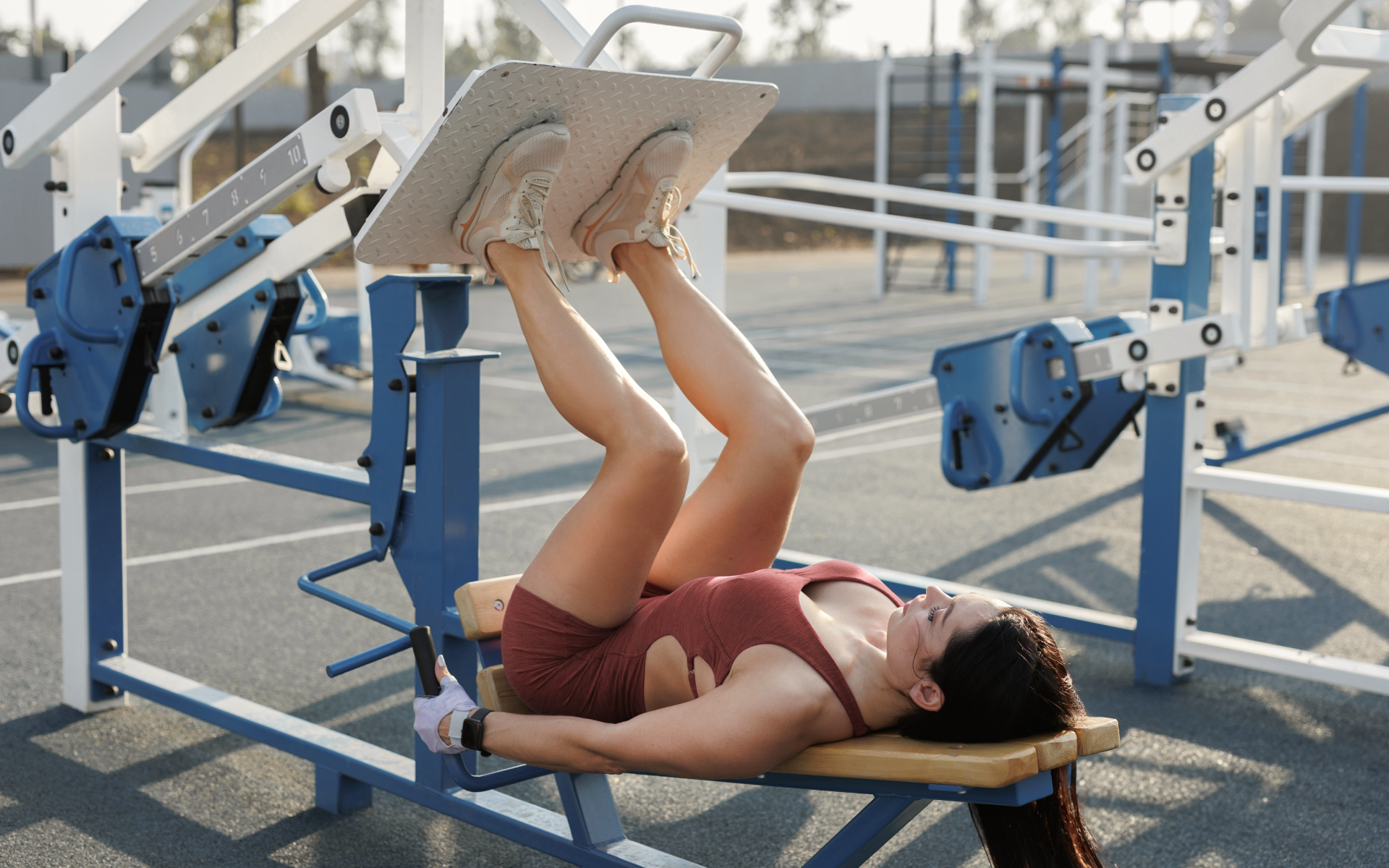
- You skip compound movements: Such moves engage multiple muscle groups at the same time (Romanian deadlifts, squats, or leg presses). Compound lifts boost strength, enhance stability, and muscle coordination, which can also benefit your isolation exercises.
- You skip isolation exercise: After compound moves, it’s important to target specific muscles. Isolated moves ensure that every individual muscle gets enough work. Think of calf raises or side-lying leg raises.
How Do I Know if I’m Overtraining My Legs?
Overtraining occurs when you don’t allow your muscles sufficient time to recover after leg day workouts at the gym or in your home space. There are various signs of overtraining that can affect your performance, lifestyle, and health (7):
Training-related signs:
- Unusual muscle soreness, even without training
- Struggling to perform exercises at previously manageable levels
- Feeling heavy or sluggish in your legs, even at lower intensities
- Declines in performance and strength
- Joint pain in your knees or hips
Lifestyle-related signs:
- Ongoing fatigue
- Increase in tension, anger, and irritability
- Difficulty relaxing
- Poor sleep quality
- Decreased motivation or enjoyment
Health-related signs of overtraining:
- More frequent illnesses
- Elevated blood pressure
- Irregular menstrual cycles or missed periods
- Appetite loss, unintended weight loss
- Digestive issues
It can be challenging to grow any muscle. We all have unique bodies and differing genetics. What’s easy to grow for one person isn’t necessarily easy for another. However, both the quads and glutes respond well to heavy strength training as they’re large, strong, and used frequently in daily movements. Their size in comparison to other muscles of the body also gives them a slight advantage due to their potential for growth. The exercises mentioned in this article help you build larger legs. They contain both compound and isolation moves. Think of wall sits, hip thrusts, Romanian deadlifts, calf raises, hamstring curls, side-lying leg raises, and Bulgarian split-squats. But also make sure to monitor your food intake if you want to see muscle growth. Ensuring you eat a healthy, nutritious diet and stay consistent with progressive strength training will help you get bigger legs in no time. Squat is hailed as the king of leg exercises as it targets the quads, glutes, hamstrings, and core. The Bulgarian split squat is a great variation of the traditional squat. It improves balance, stability, and single-leg strength. That depends on what your goals are. If you’re training for muscular endurance (cycling, running), high repetitions and light weights are recommended. If you’re training for hypertrophy (muscle size increase), a rep range of 8 to 12 is typically recommended. Training for pure strength? A modest rep range of 2 to 6 with heavy weight is the best route to take. High reps are great for getting your legs to burn, but low-rep heavy weight training develops absolute strength and shouldn’t be neglected. Frequently Asked Questions
Which muscle is easiest to grow?
What exercise gives you bigger legs?
What is the king of leg exercises?
Are higher reps better for legs?
The Bottom Line
This review shows the best leg day routine to perform at home with dumbbells. It includes 8 killer exercises, plus recommended warm-up and cool-down moves. Beginners can start with two leg sessions per week, and more experienced trainees are free to increase their frequency to three to four sessions.
The biggest leg day mistakes to look out for are insufficient training volume, performing exercises with a limited range of motion, and skipping both compound and isolation movements.
Signs that you’ve overtrained your legs vary, and range from muscle soreness to decreased performance and possible health issues. Allow your body to recover properly before you do another workout.
DISCLAIMER:
This article is intended for general informational purposes only and does not serve to address individual circumstances. It is not a substitute for professional advice or help and should not be relied on for making any kind of decision-making. Any action taken as a direct or indirect result of the information in this article is entirely at your own risk and is your sole responsibility.
BetterMe, its content staff, and its medical advisors accept no responsibility for inaccuracies, errors, misstatements, inconsistencies, or omissions and specifically disclaim any liability, loss or risk, personal, professional or otherwise, which may be incurred as a consequence, directly or indirectly, of the use and/or application of any content.
You should always seek the advice of your physician or other qualified health provider with any questions you may have regarding a medical condition or your specific situation. Never disregard professional medical advice or delay seeking it because of BetterMe content. If you suspect or think you may have a medical emergency, call your doctor.
SOURCES:
- Effects of free weight and body mass-based resistance training on thigh muscle size, strength and intramuscular fat in healthy young and middle-aged individuals (2023, physoc.onlinelibrary.wiley.com)
- Optimizing Resistance Training Technique to Maximize Muscle Hypertrophy: A Narrative Review (2024, www.mdpi.com)
- A Guide to Your Leg Muscles, from the Ground Up (n.d., hss.edu/health-library)
- Mastering the Art of the Split Routine (2024, acefitness.org)
- Effects of High-Volume Versus High-Load Resistance Training on Skeletal Muscle Growth and Molecular Adaptations (2021, frontiersin.org)
- Partial vs full range of motion resistance training: A systematic review and meta- analysis (2022, researchgate.net)
- Overtraining: What It Is, Symptoms, and Recovery (n.d., hss.edu)
 Reviewed by
 Reviewed by