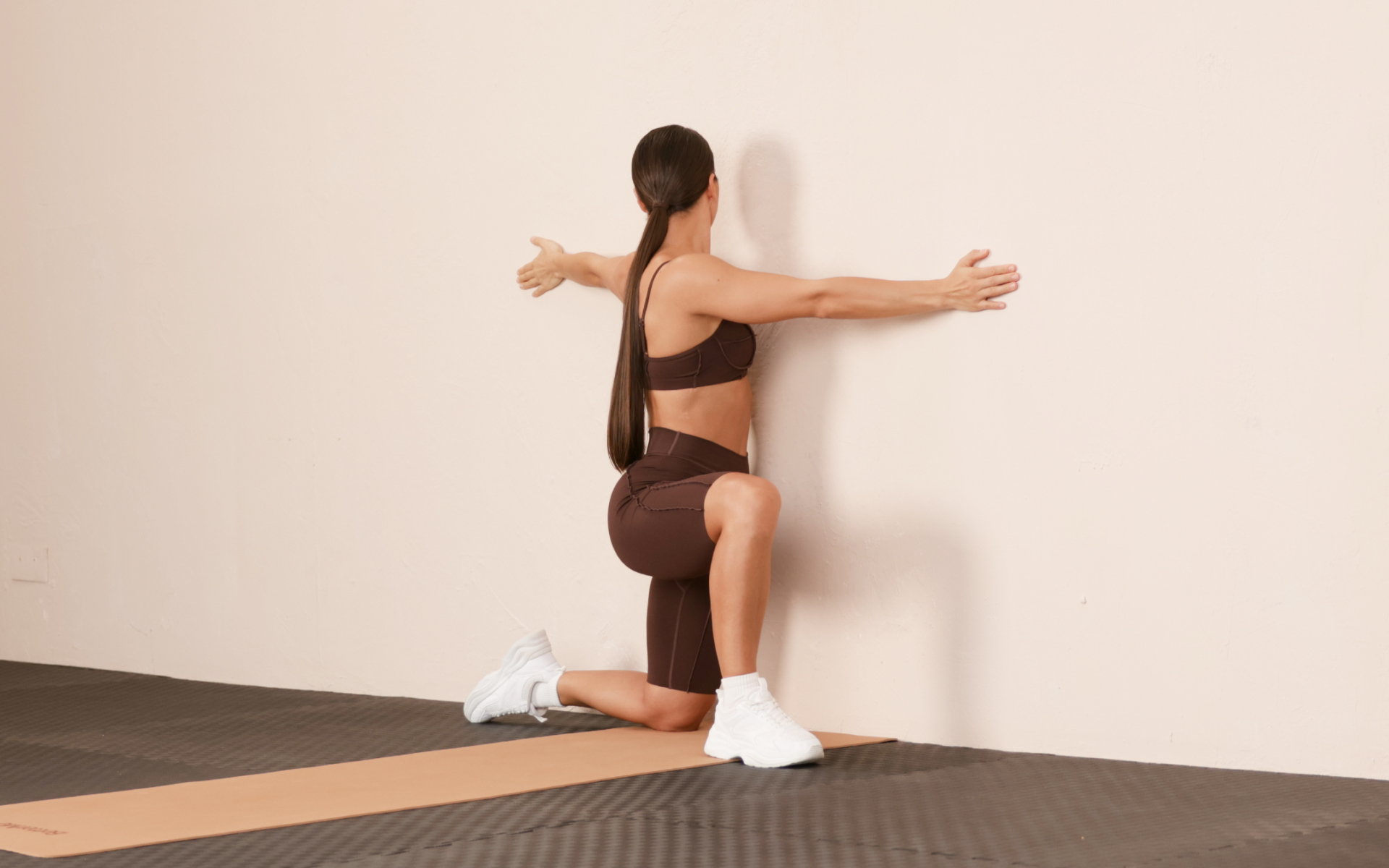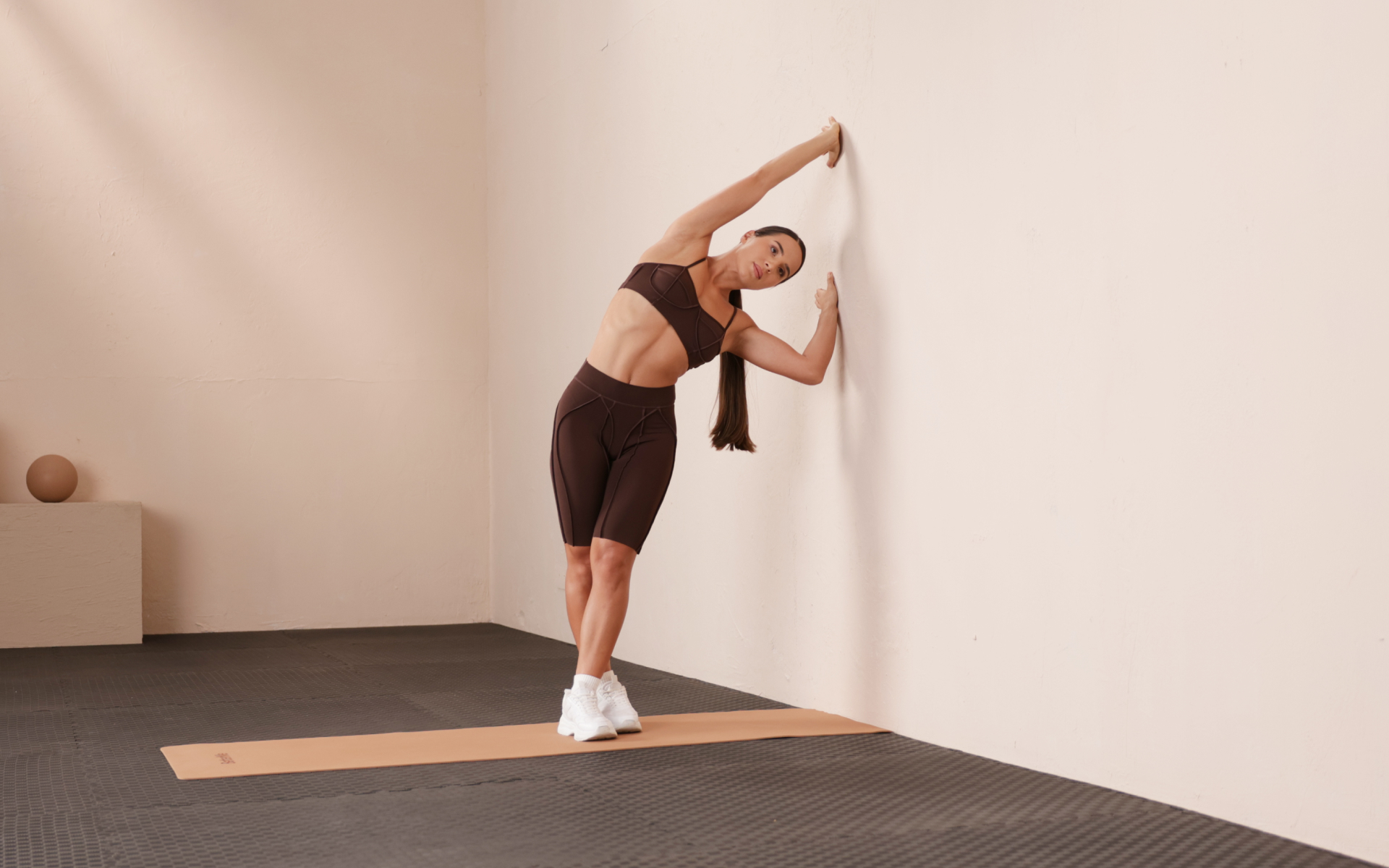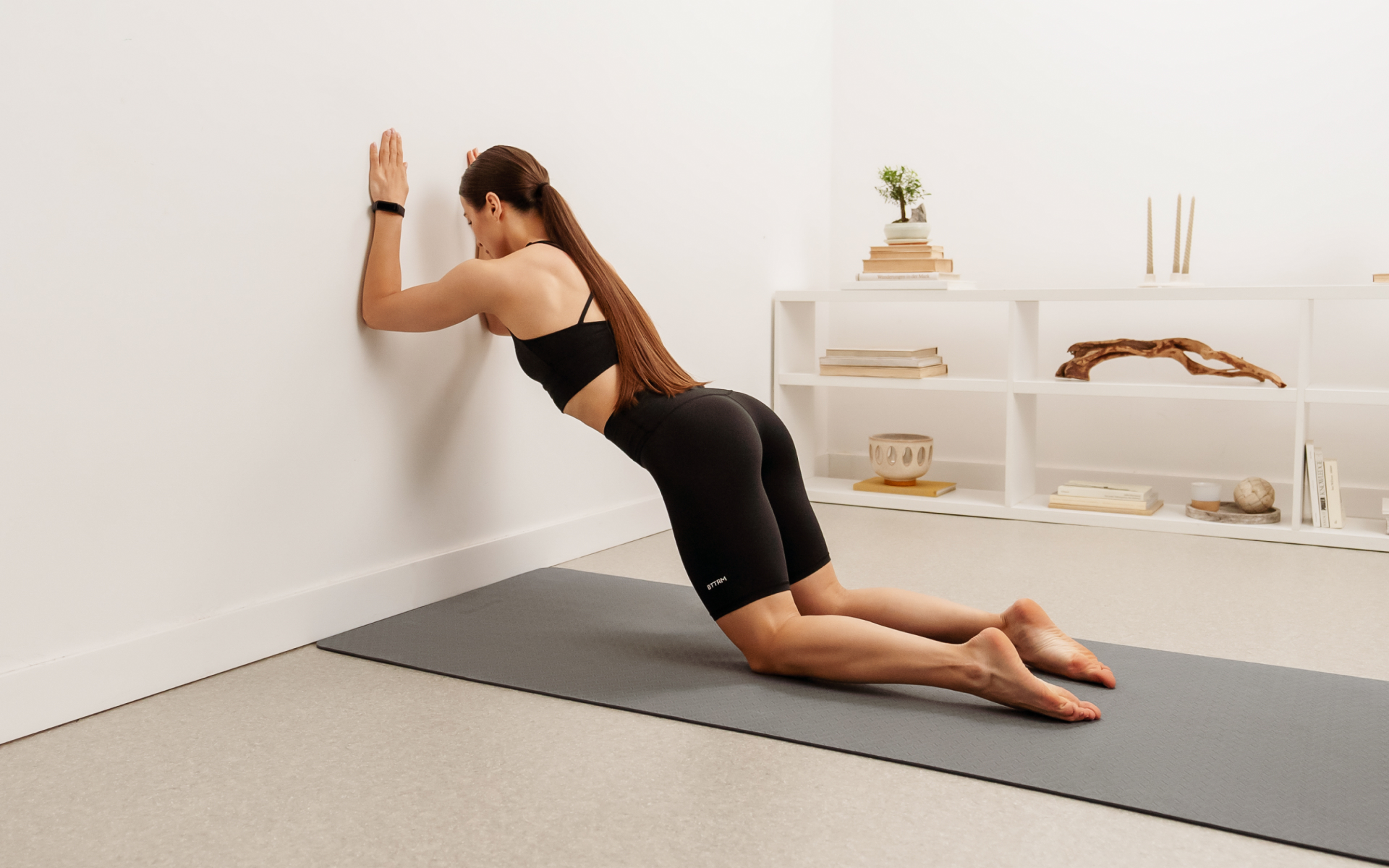
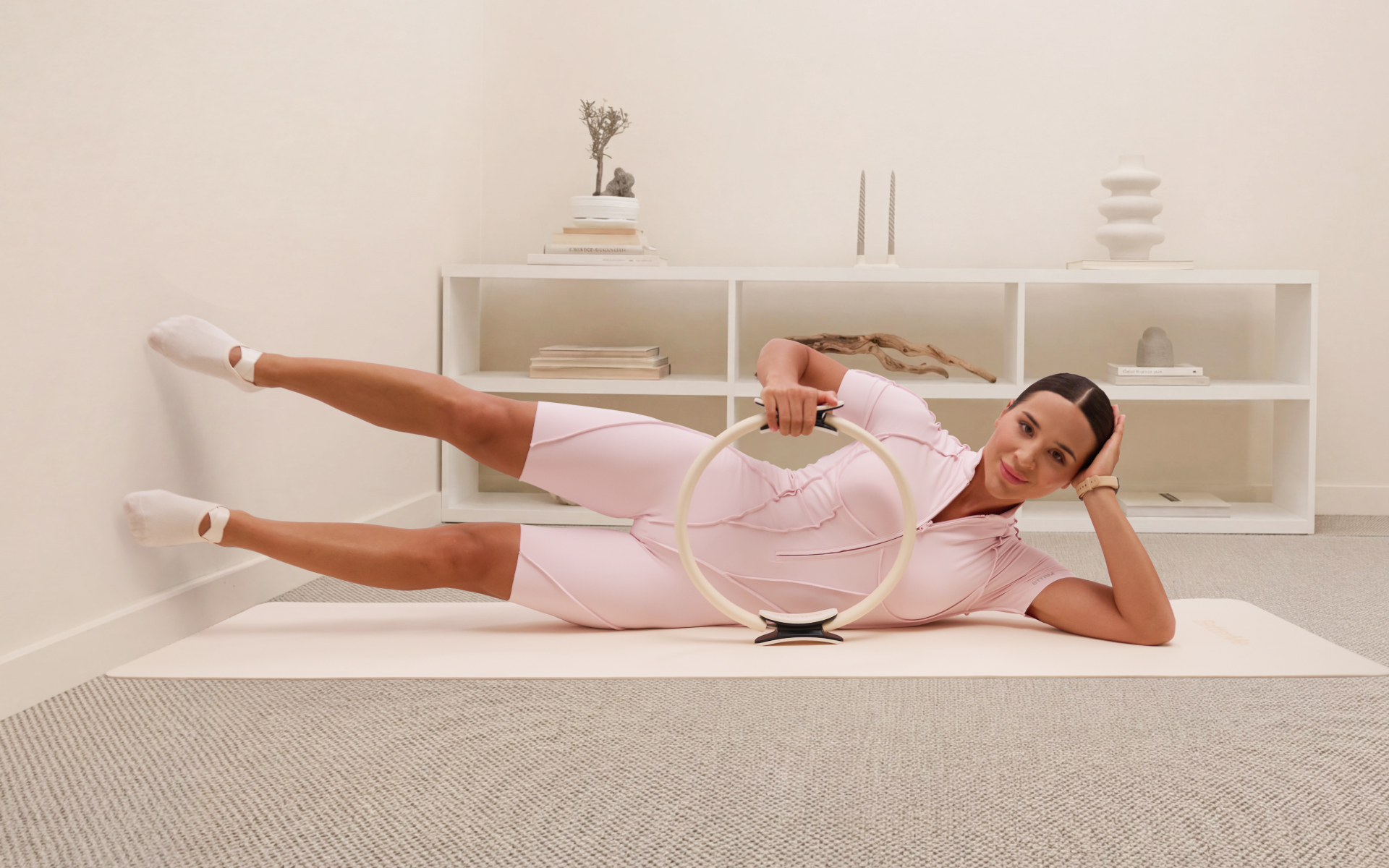
Working out doesn’t have to be that complicated—sometimes, you just need a wall and motivation. At-home wall Pilates has become an all-time favorite for many, and it’s easy to see why: it delivers a full-body workout that builds core strength, improves flexibility, and enhances body awareness, without a single piece of equipment.
Here, we’re going to cover everything you need to get started with wall Pilates at home, from setting up your space and learning the foundational moves to building a consistent routine and avoiding common mistakes. If you’re comparing wall Pilates vs Pilates, this guide can help you understand how using a wall changes the setup, support, and exercise options.
What Do You Need for Wall Pilates at Home?
One of the biggest advantages of doing wall Pilates without equipment is that it requires a minimal setup. However, you still need some things to make the practice as comfortable as possible. Here are some things you’ll need:
- A clear, flat wall: Your wall should be free of shelves, artwork, or furniture that can get in the way of your practice. A standard interior wall works perfectly.
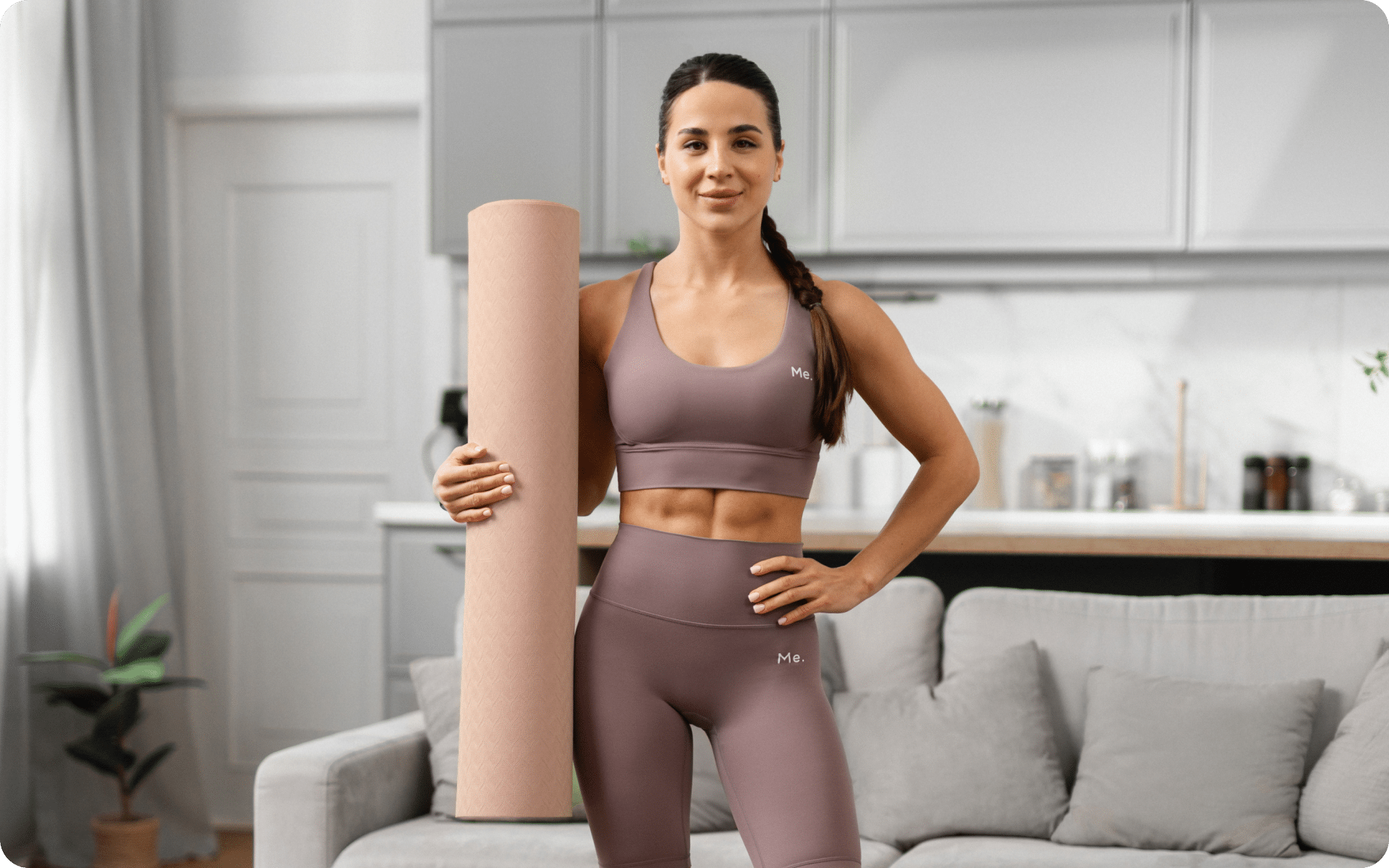
- A yoga or exercise mat: While you can technically do wall Pilates at-home exercises without one, a mat can make floor-based movements more comfortable for your knees, wrists, or back and provide your feet extra grip.
- Comfortable clothing: Make sure you wear form-fitting activewear that allows you to move freely and observe your body’s alignment.
- Grip socks (optional): Shoes aren’t necessary and can actually reduce the sensory feedback that can help you stay aware of your form. If you don’t like to go barefoot, you can always use grip socks.
- A water bottle: Hydration is important, even during low-impact sessions.
And that’s it—that’s all you need to start doing wall Pilates at home.
You don’t need a reformer machine, resistance bands, or weights. The wall itself acts as resistance, feedback, and support all at once, which is what makes home wall Pilates simple to do at home.
Eventually, you can consider adding some equipment, but it’s not mandatory.
How Should You Set up Your Space for Wall Pilates?
The right setup takes less than 5 minutes and can make your session easier to follow.
Start by clearing a space roughly 6 feet 5 inches (2 meters) wide and 6 feet 5 inches (2 meters) long in front of the wall you chose. You want enough room to lie down with your legs extended vertically against the wall, and enough space on each side to move your arms freely.
Place your mat parallel to the wall, with the short edge closest to the surface. This position works for most wall Pilates exercises at home, from supine leg presses to standing hip circles.
You should also make sure that you have good lighting. Being able to see your own reflection (or at least your shadow) can help you correct your alignment. And, if you’re exercising near a mirror, that’s a bonus.
Finally, make sure you remove all distractions. Put your phone on do-not-disturb, put on some music or the instructional video, and give yourself permission to focus. Even a 15-minute at-home wall Pilates workout can feel useful when you stay focused on your form and movement.
Read more: Wall Shoulder Exercises: Benefits and Variations to Try
Which at-Home Wall Pilates Exercises Are Good for Beginners?
When it comes to wall Pilates, there are several workouts you can try doing at home. But which ones are good to help you get started, particularly if you’re a beginner/
These wall Pilates exercises at home help build strength, stability, and body awareness. And most importantly, they’re good even if you’re a beginner.
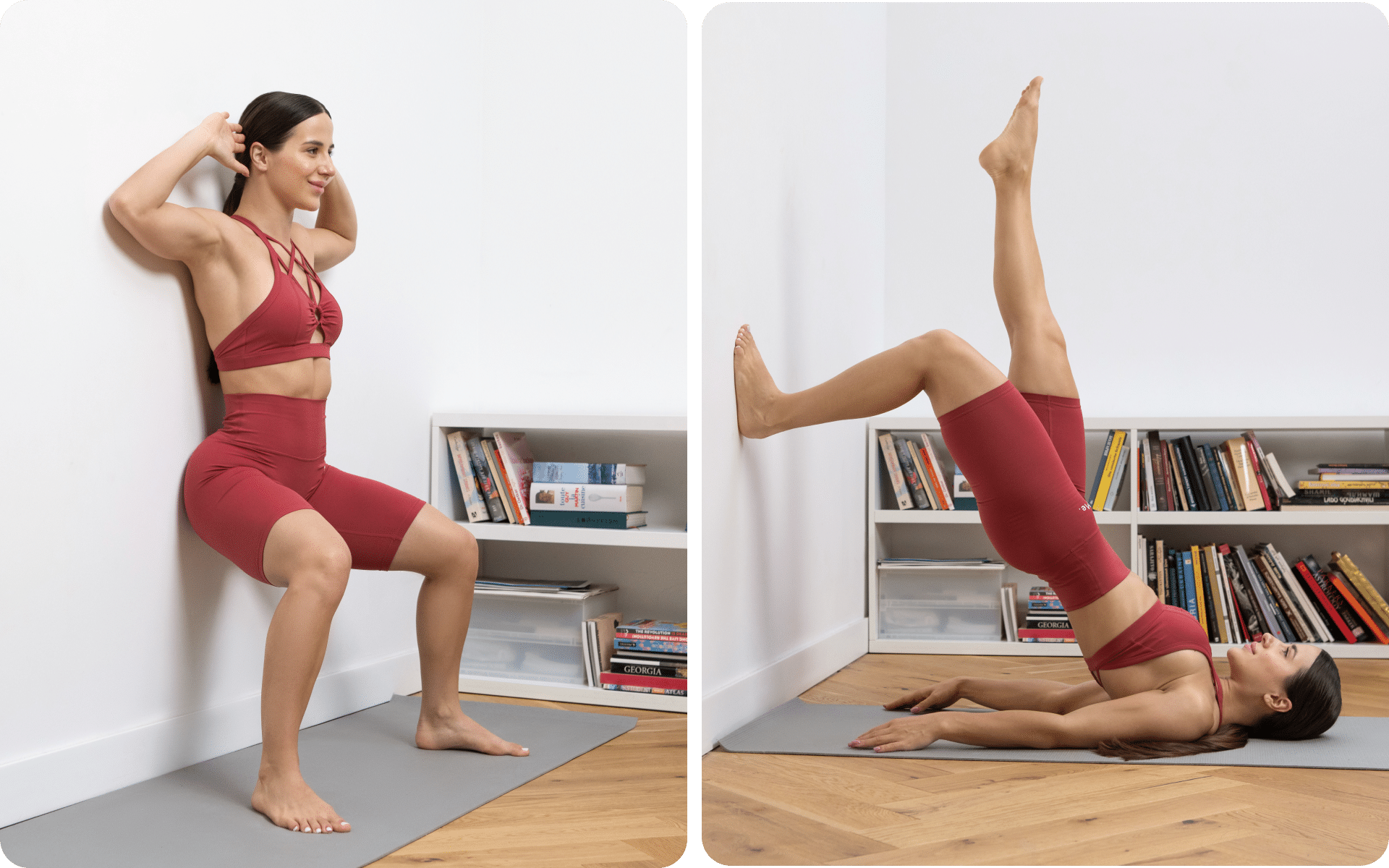
- Wall sit: Slide your back down the wall until your thighs are parallel to the floor. Hold the position for 20-23 seconds, keeping your core engaged and your spine in a neutral position.
- Supine leg press: Lie on your mat with your feet flat against the wall and your knees bent at 90 degrees. Press your lower back gently into the mat, then slowly extend your legs, pushing your feet into the wall as you go. Return to the starting position and repeat.
- Wall roll-down: Stand with your back against the wall, your feet hip-width apart. Slowly peel your spine away from the wall, vertebra by vertebra, reaching your hands toward the floor. Roll back up the same way.
- Wall bridge: Lie on your mat with your feet flat on the wall and your knees bent. Push your feet into the wall as you lift your hips off the mat, forming a straight line from your shoulders to your knees. Hold briefly at the top, and then lower with control.
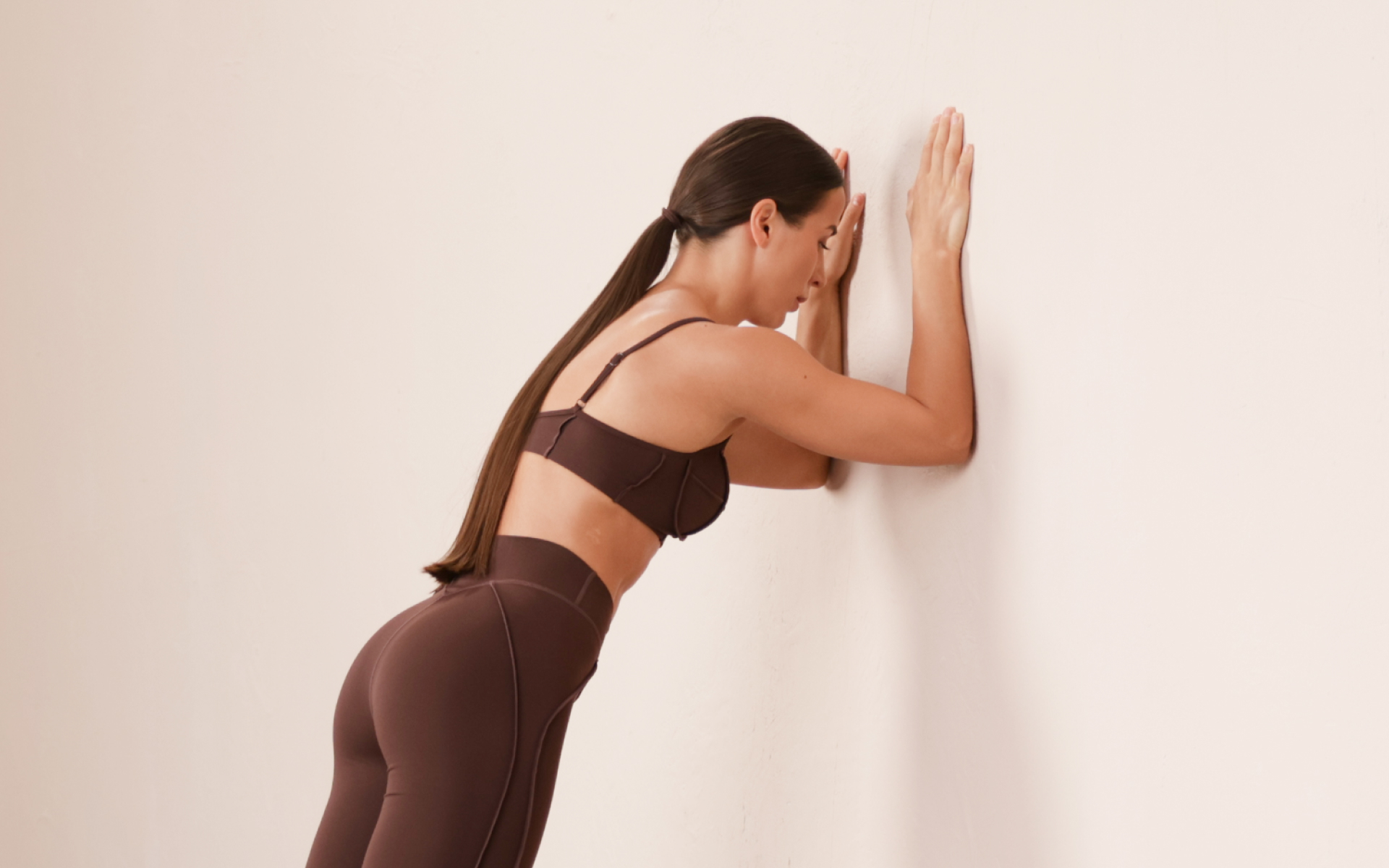
- Standing wall calf raises: Stand facing the wall with both hands lightly resting on the surface. Rise onto your toes slowly, hold for 2 seconds, then lower back down.
You can start practicing one of them and gradually add more to your routine. Remember to practice each with slow, intentional movements. We’re not looking for perfection or speed—we want to work on building control.
What Is a 15-Minute at-Home Wall Pilates Routine?
This beginner-friendly home wall Pilates routine takes around 15 minutes and covers all the major muscle groups. Remember that this is for educational purposes. You should always consult a healthcare professional to determine the best type of exercise for your goals and needs.
Warm-Up (3 minutes)
- Wall roll-down (5 reps)
- Standing wall hip circles (8 reps in each direction)
Main Sequence (10 minutes)
- Wall sit (3 holds of 20 seconds and rest 10 seconds in between each hold)
- Supine leg press (10 reps)
- Wall bridge (10 reps)
- Supine wall hip opener (hold for 60 seconds)
- Standing wall calf raises (12 reps)
Cool-Down (2 minutes)
- Legs up the wall (hold for 60 seconds)
- Supine spinal twist (30 seconds on each side)
This at-home Pilates wall routine is designed to help you progress. First, move through a gentle warm-up, then strength-focused exercises, and finally a slower cool-down. You can repeat it 2-3 times per week to start building a foundation.
How Can You Modify at-Home Wall Pilates Exercises?
Another positive benefit of wall Pilates is that there are many modifications you can make based on your fitness level, previous training experience, or flexibility.
- Adjusting range of motion: If an exercise feels too intense, you can reduce the range of motion. For example, instead of a full leg lift, try lifting halfway or just a few inches off the ground.
- Using props for support: Add household items such as cushions, rolled-up towels, or a sturdy chair to provide additional support or stability during exercises.
- Slowing down the movement: Performing exercises at a slower pace can help improve control, which makes it easier to focus on your form and breathing.
- Breaking exercises into smaller parts: If a full sequence feels too overwhelming, that’s OK. Try breaking it down into smaller components. Practice each part individually before combining them.
- Shortening duration or repetitions: Reduce the number of repetitions or the duration of an exercise. This can help you build strength and endurance gradually.
- Modifying base positions: Change the starting position to fit your comfort level. For example, if an exercise begins in a plank, you can modify it by starting on your knees instead of your toes.
- Using a wall or floor for stability: Leaning against a wall or lying completely on the floor can help make the exercise feel more manageable while still engaging the core and other muscle groups.
Remember, the key to a successful Pilates practice is consistency and tuning in to your body’s needs. These modifications can be a handy tool to help you progress gradually without doing too much too soon.
BetterMe offers a variety of workouts, recipes, challenges, and support tools to help you stay more consistent with your wellness routine. Explore the app to find features that fit your goals, preferences, and schedule.
How Can You Progress Your Wall Pilates Routine?
Once you feel comfortable with the foundational movements, it’s time to increase the intensity. Here’s how you can easily progress your at-home Pilates workout.
- Increase time under tension: Hold each position for longer. Extend a wall sit from 20 seconds to 40, or slow down the tempo of each rep. Instead of a 2-second lowering phase, try lowering on a 4-count.
- Add single-leg variations: Do the wall bridge with one foot elevated, or try single-leg calf raises. Single-leg work dramatically increases demand on balance, stability, and muscular endurance.
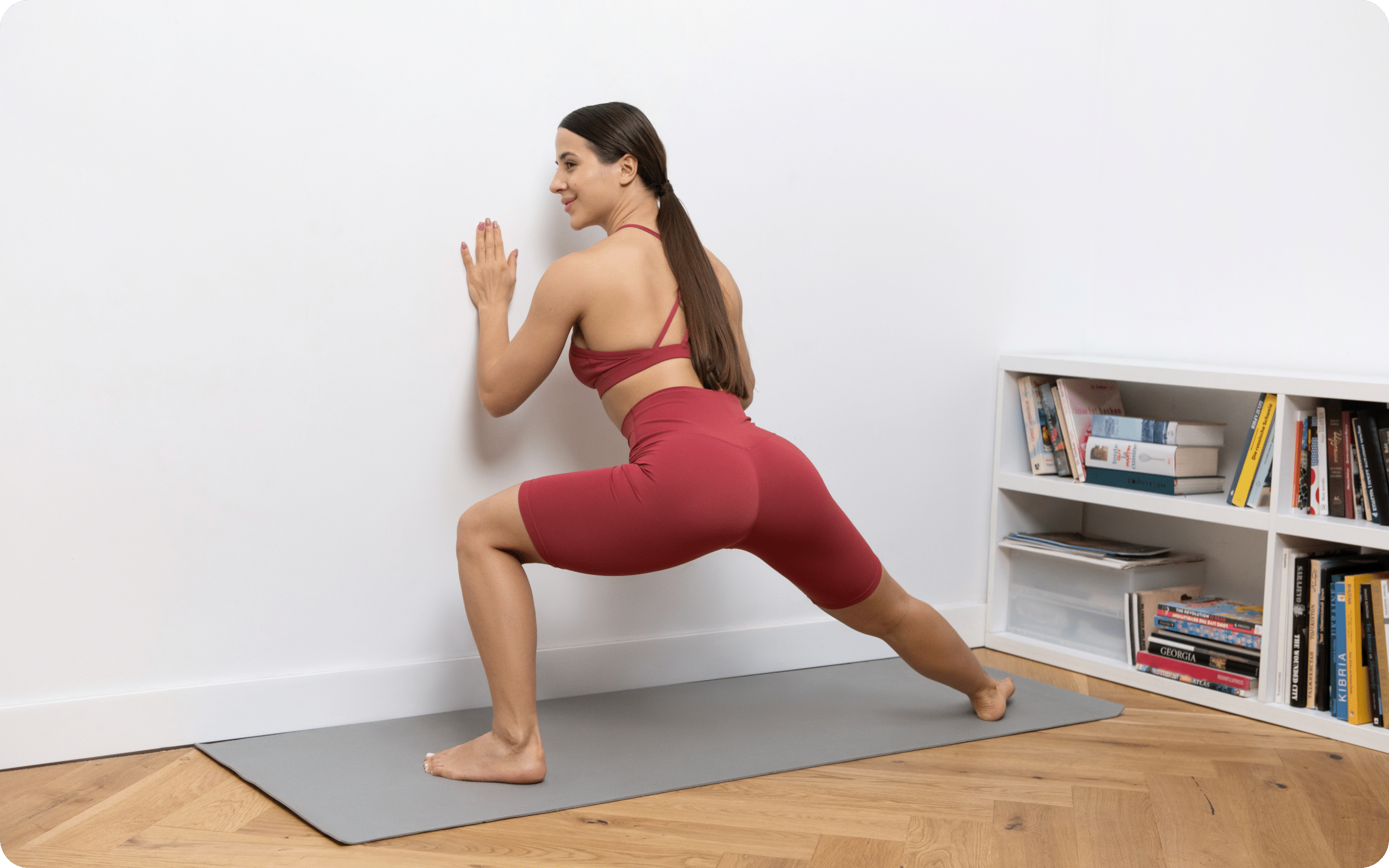
- Reduce wall contact: Moving from 2 feet on the wall to 1, or from both hands on the wall to none, forces your stabilizing muscles to work harder.
- Do a wall Pilates challenge: Structured wall Pilates challenges (typically 28-day programs) can help increase intensity over time and help you build consistency.
- Layer in controlled breathing: Advanced Pilates work relies heavily on breath coordination. Once you’ve mastered the movements and they feel automatic, you can focus on exhaling during the effort phase and inhaling during the release. This can help deepen core activation and improve mind-body connection.
How Often Can You Practice Wall Pilates at Home?
A practical starting point is 2-4 sessions per week. As wall Pilates workouts are low-impact, recovery time is usually shorter than with high-intensity training (HIIT). However, your muscles will still need time to adapt between sessions.
A practical schedule might look like this:
- If you’re a beginner: Practice 2 sessions per week, with at least one rest day in between.
- If you’re intermediate: 3-4 sessions per week, alternating between full-body routines and targeted sessions (core focus one day, lower body the next).
- If you’re advanced: Up to 5 sessions per week, including longer routines or a structured wall pilates challenge.
The most important thing is that you listen to your body. Mild muscle soreness is normal. Sharp pain, joint discomfort, or persistent fatigue are signals to rest and, if needed, consult a healthcare professional.
Read more: 6 Chest Wall Exercises for an At-Home Practice
What Common at-Home Wall Pilates Mistakes Should You Avoid?
There are some mistakes you might want to avoid to get the most out of your training sessions while keeping your routine controlled and comfortable.
- Rushing through reps: Speed can affect your technique. If you’re moving too fast, you’re relying on momentum rather than muscle control, which is the opposite of what you want.
- Holding your breath: Breathing is crucial in Pilates. Holding it may make your neck and shoulders feel tense and make it harder to engage your core. Make steady, rhythmic breathing part of your workout.
- Hyperextending the lower back: During exercises such as wall bridges and leg presses, it can be tempting to arch your lower back. However, this can shift effort away from the intended muscle groups. Keep your pelvis neutral or in a slight posterior tilt.
- Letting the wall do all the work: The wall is just a tool, not a crutch. Let your muscles do the work, not gravity or friction.
- Skipping the warm-up: While some exercises are gentle, you still need to warm up your muscles to have smooth joint movement and mobilization. Even 3 minutes of rolling and breathing makes a great difference.
- Comparing your range of motion to others: Flexibility varies from person to person and changes day to day. Focus on your own body’s feedback rather than matching an image or video.
Frequently Asked Questions
Do you need any equipment for wall Pilates at home?
No, you can easily do a wall Pilates workout without any equipment. You just need a flat wall and enough space to lie down.
Can you do wall Pilates without a mat?
Yes, but we recommend using a mat to make floor-based exercises more comfortable for your knees, back, or hips.
Is wall Pilates different from regular Pilates?
The core principles are the same, but it all comes down to the props and setting. Wall Pilates uses a wall for support and to create feedback, while traditional mat Pilates uses body weight alone or other props.
Can you practice wall Pilates in a small apartment?
Yes—you just need enough space to extend your body.
Can you combine wall Pilates with walking or strength training?
Of course! Home wall Pilates routines complement cardiovascular exercise such as walking and lower-intensity strength training well. On days when you lift weights, you can consider using wall Pilates as a cool-down or mobility session.
The Bottom Line
At-home wall Pilates shows that a structured workout doesn’t always require equipment, a studio membership, or a large amount of space. With nothing but a clear wall and a mat, you may work on core strength, flexibility, and body awareness that translates into better movement in your everyday life.
DISCLAIMER:
This article is intended for general informational purposes only and does not serve to address individual circumstances. It is not a substitute for professional advice or help and should not be relied on for making any kind of decision-making. Any action taken as a direct or indirect result of the information in this article is entirely at your own risk and is your sole responsibility.
BetterMe, its content staff, and its medical advisors accept no responsibility for inaccuracies, errors, misstatements, inconsistencies, or omissions and specifically disclaim any liability, loss or risk, personal, professional or otherwise, which may be incurred as a consequence, directly or indirectly, of the use and/or application of any content.
You should always seek the advice of your physician or other qualified health provider with any questions you may have regarding a medical condition or your specific situation. Never disregard professional medical advice or delay seeking it because of BetterMe content. If you suspect or think you may have a medical emergency, call your doctor.
SOURCES:
- Remote Pilates Training Is Effective in Improving Physical Fitness in Healthy Women: A Randomized Controlled Study (2024, pmc.ncbi.nlm.nih.gov)
- Pilates: How Does It Work and Who Needs It? (2011, pmc.ncbi.nlm.nih.gov)
- The Impacts of Pilates and Yoga on Health-Promoting Behaviors and Subjective Health Status (2021, pmc.ncbi.nlm.nih.gov)
 Reviewed by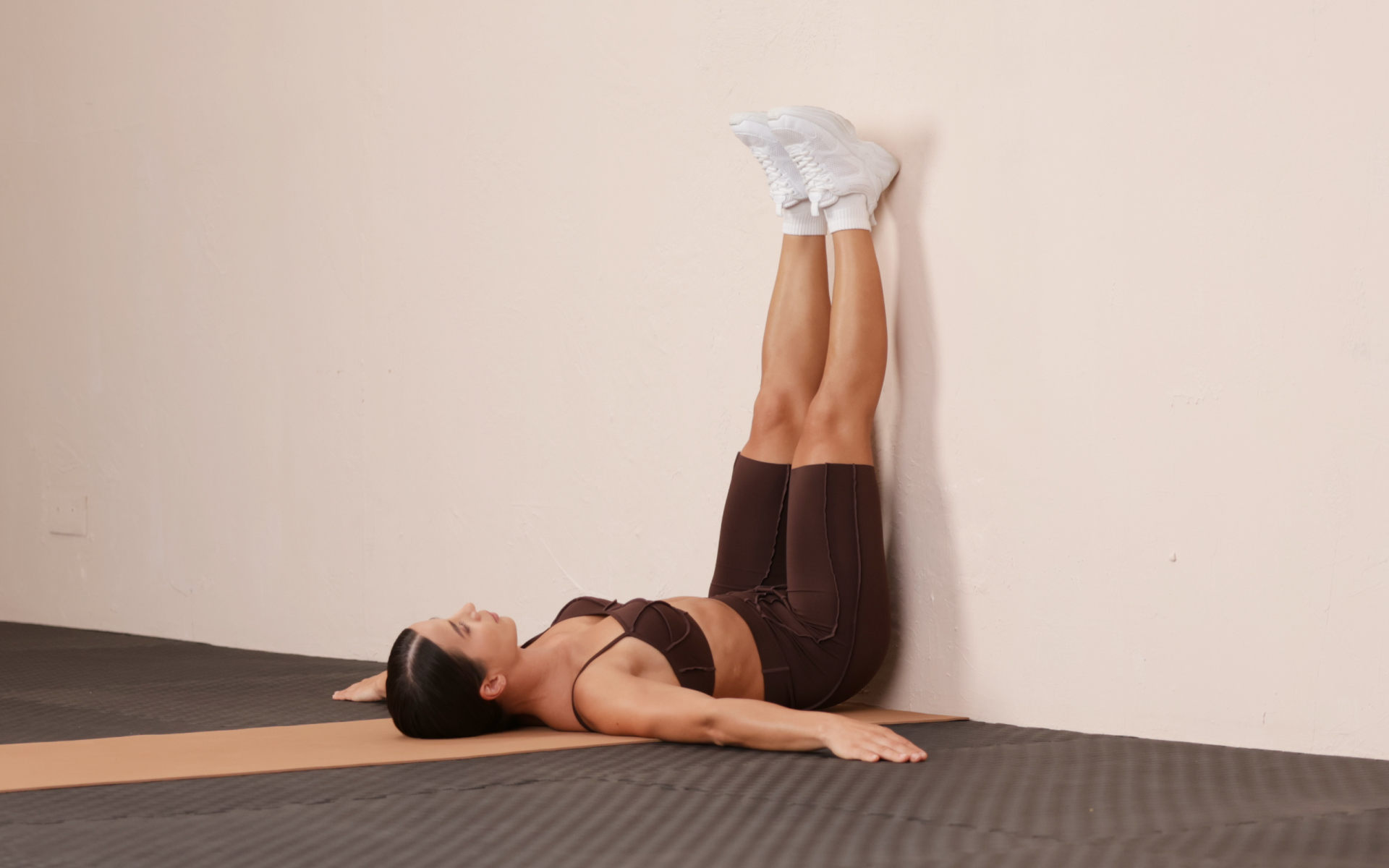
 Reviewed by