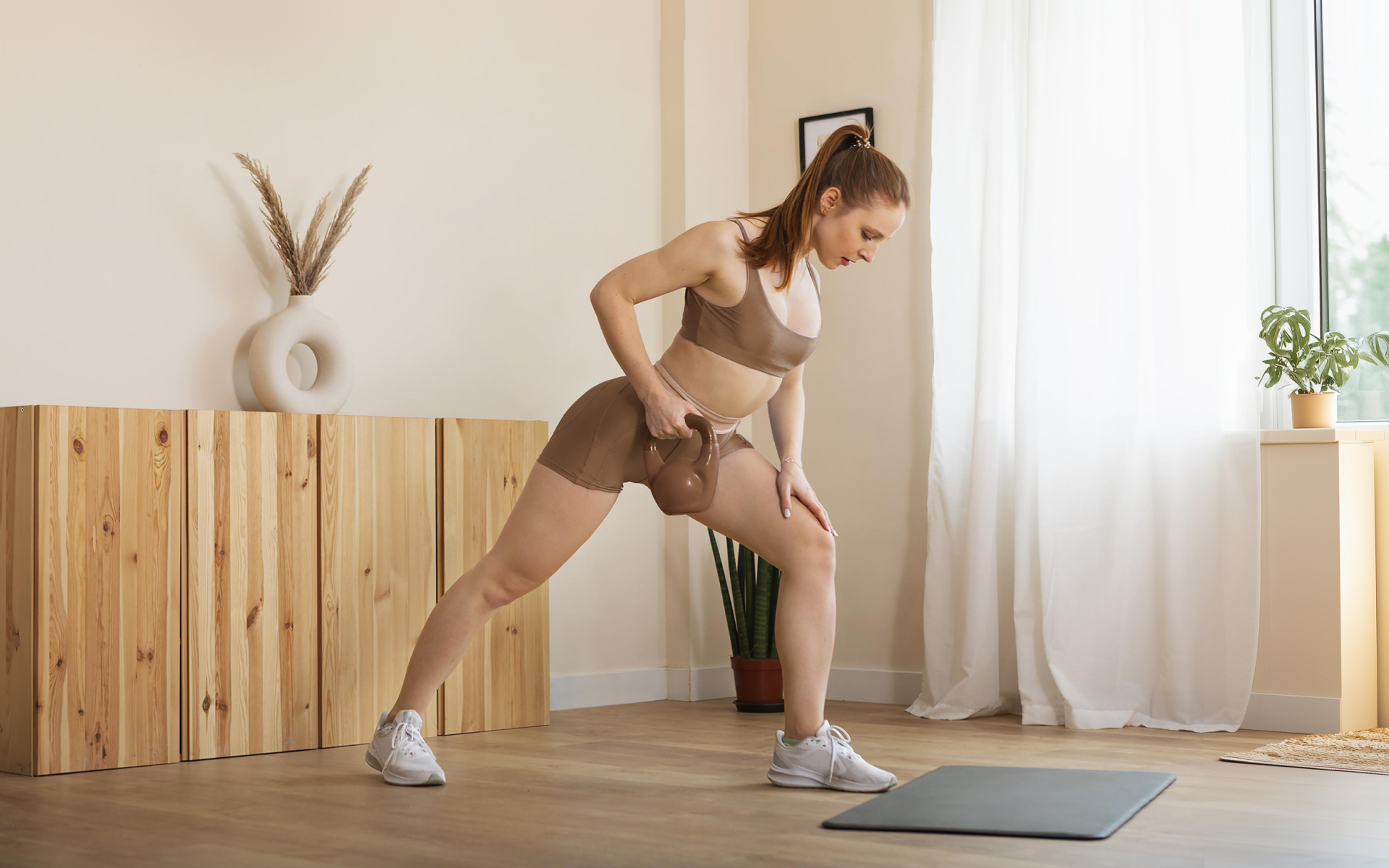
Arm exercises for women are movements that primarily target the biceps, triceps, and shoulders to build strength and support everyday movement. These exercises can be done with dumbbells, resistance bands, or body weight. Some chest and upper-back movements can also support arm-focused goals when you use arm-biased variations, such as close-grip push-ups for more triceps focus or underhand rows for more biceps focus. Over time, a steady routine can help you feel stronger and more confident.
Building upper-body strength can support daily tasks, such as carrying groceries, lifting bags, and reaching overhead. Arm exercises for women are simply movements that challenge your upper-body muscles so they can adapt over time. This guide covers practical options for different levels, whether you prefer weights or bodyweight training.
This article is for anyone who wants a clearer, more manageable approach to upper-body training. It explains what arm exercises are, how to build a simple routine, and what to expect along the way. Keep reading to find options that may fit your schedule and comfort level.
Can Women Build More Defined Arms with Exercise?
Yes, exercise can help many people build upper-body strength and create more muscle definition over time. When you train your muscles regularly, they adapt to the effort and become stronger and more visible (1). Arm toning exercises for females with weights can support that process by adding steady resistance. In everyday fitness language, “toning” usually means building muscle while also paying attention to overall body composition.
That being said, visible changes often take time. A regular routine matters more than doing a lot all at once. For many people, steady progress comes from repeating simple movements, recovering well, and staying patient.
Food choices, rest, sleep, and overall activity also play a role. Exercise is one part of the bigger picture. Some research has suggested that combining resistance training with regular daily movement can support strength, energy, and overall wellness (2).
It may also help to focus on how your body feels, not just how it looks. Feeling steadier when carrying things or moving through your day can be a meaningful sign of progress. Different bodies respond in different ways, and that’s completely normal.
What Are the Best Arm Exercises for Women?
A useful arm routine should focus first on direct arm training, particularly for the biceps, triceps, and shoulders. That matches what most readers are looking for when they search for arm exercises. Chest and upper-back movements can still fit into an arm-focused plan when you use variations that increase arm involvement, such as close-grip push-ups for the triceps or underhand rows for the biceps. When used that way, they can support the arms without shifting the routine into a general upper-body session.
A few basic arm strength exercises can give your routine enough structure without making it complicated. Start with movements that train the biceps, triceps, and shoulders, then add chest or back exercises only when they support your arm-focused goal.
The dumbbell bicep curl targets the front of the upper arm. It is simple to learn and easy to adjust by changing the load. This makes it a helpful starting point for many people.
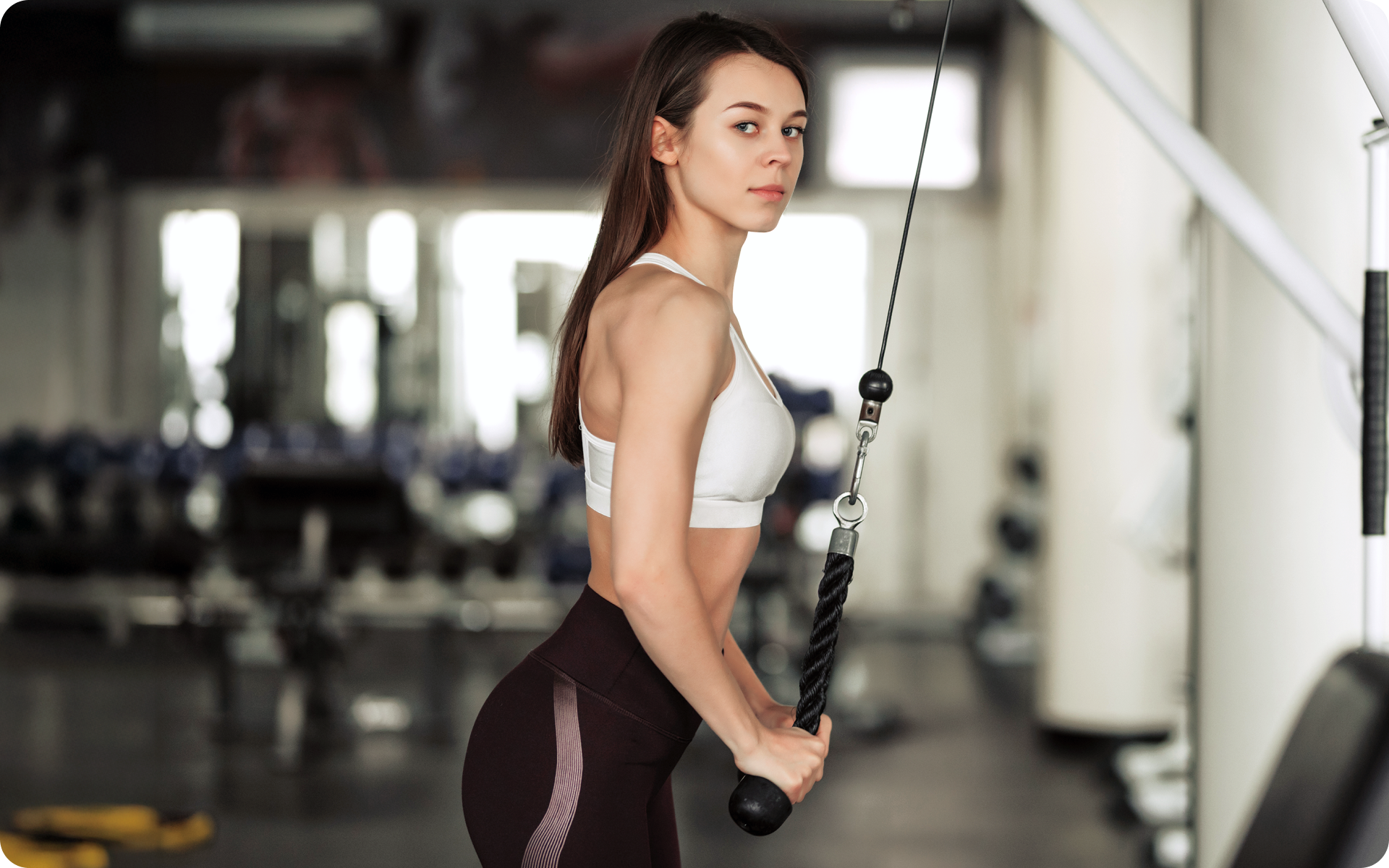
The triceps extension targets the back of the upper arm. You can do it seated or standing, depending on what feels more comfortable. It can be a useful choice if you want to train the arms with controlled overhead work.
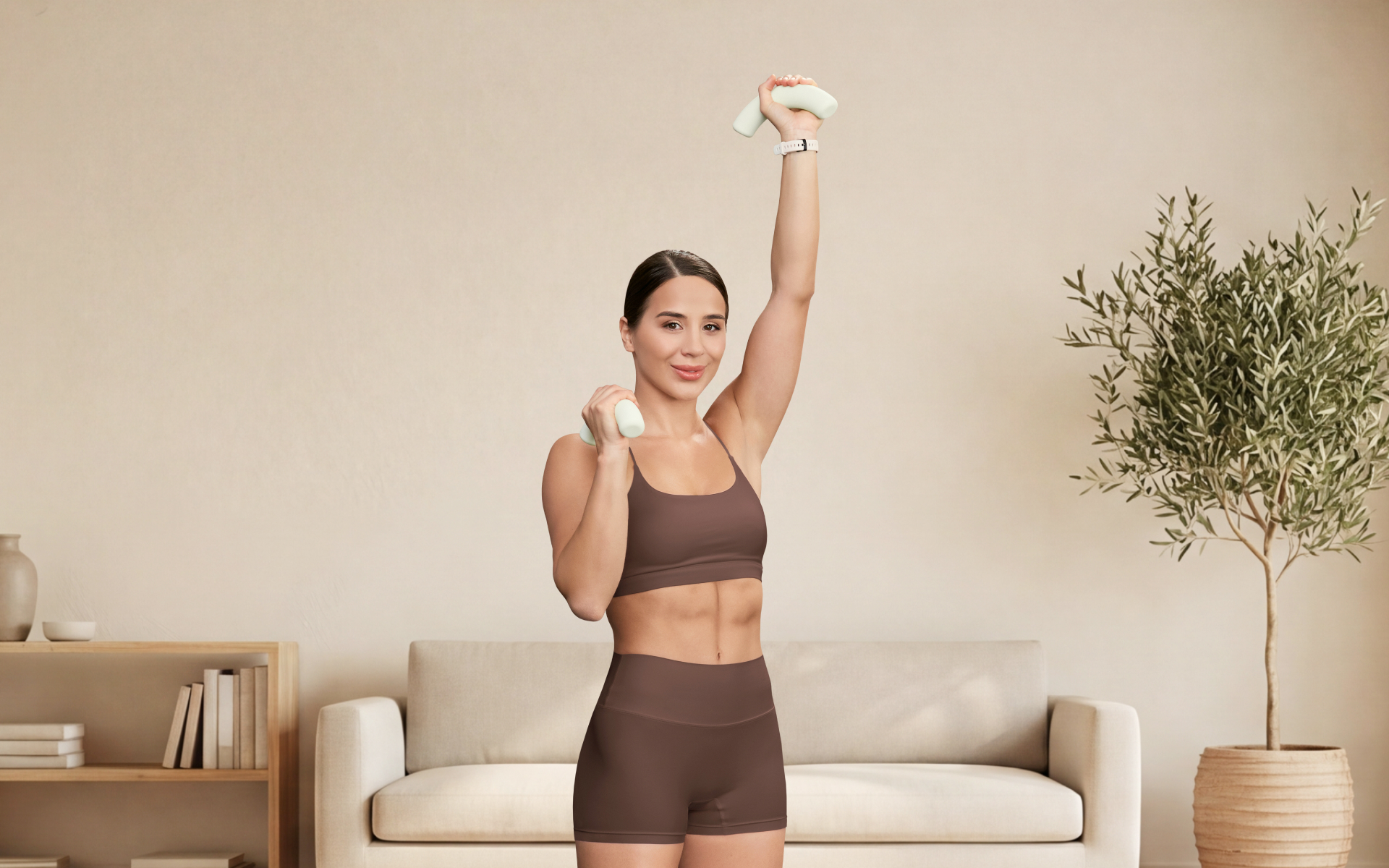
The overhead press focuses on the shoulders and helps train pressing strength. This movement also relates to daily tasks, such as placing items on a shelf. Start with a load that feels manageable and lets you move with control.
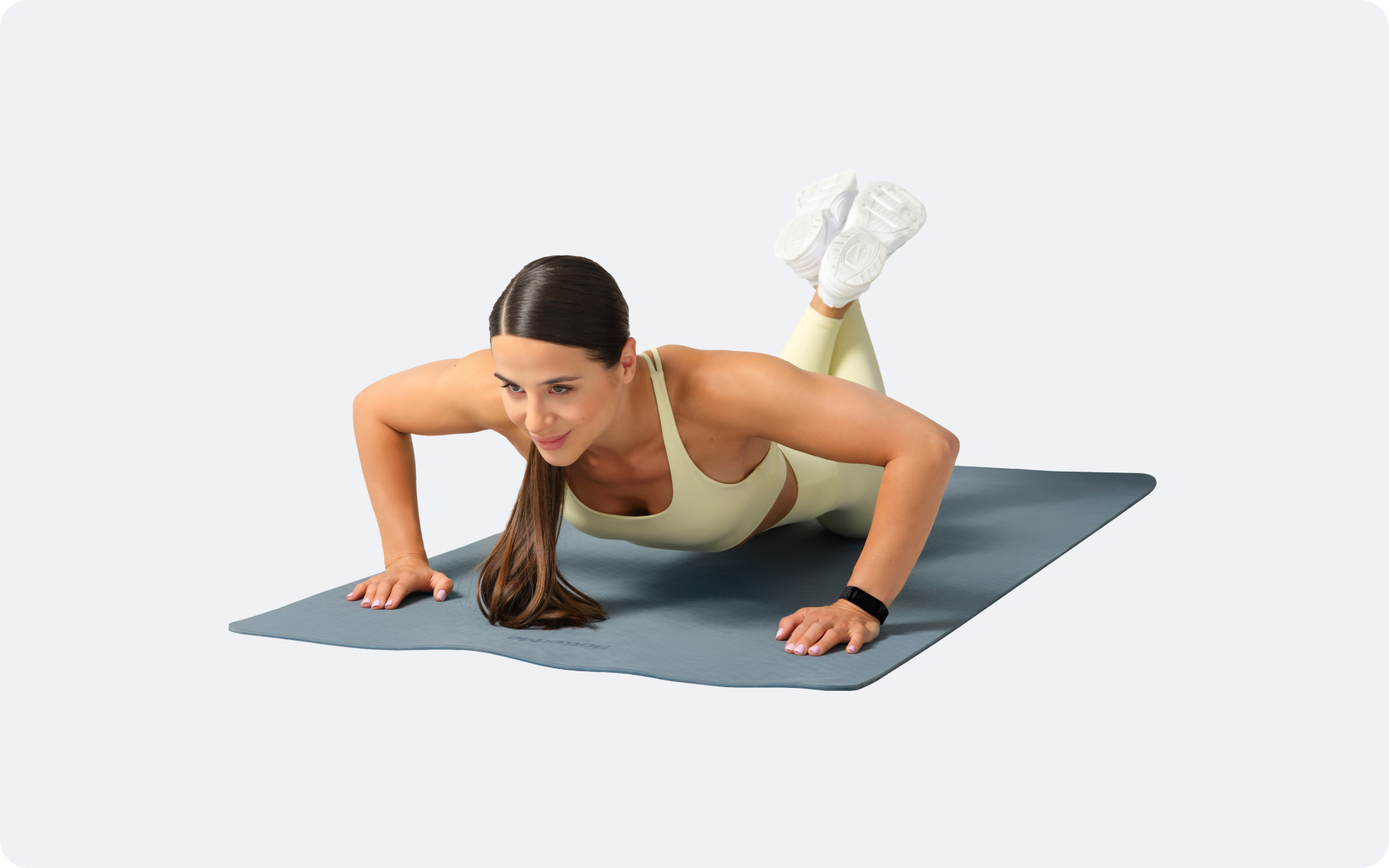
Push-ups can still fit an arm-focused routine when you use an arm-biased setup, such as a close-grip variation that increases triceps involvement. They can be done on a wall, bench, or floor, which makes them easy to scale. This can be useful for someone who is specifically looking for arm exercises as it keeps more of the work on the arms while still training a practical pressing pattern.
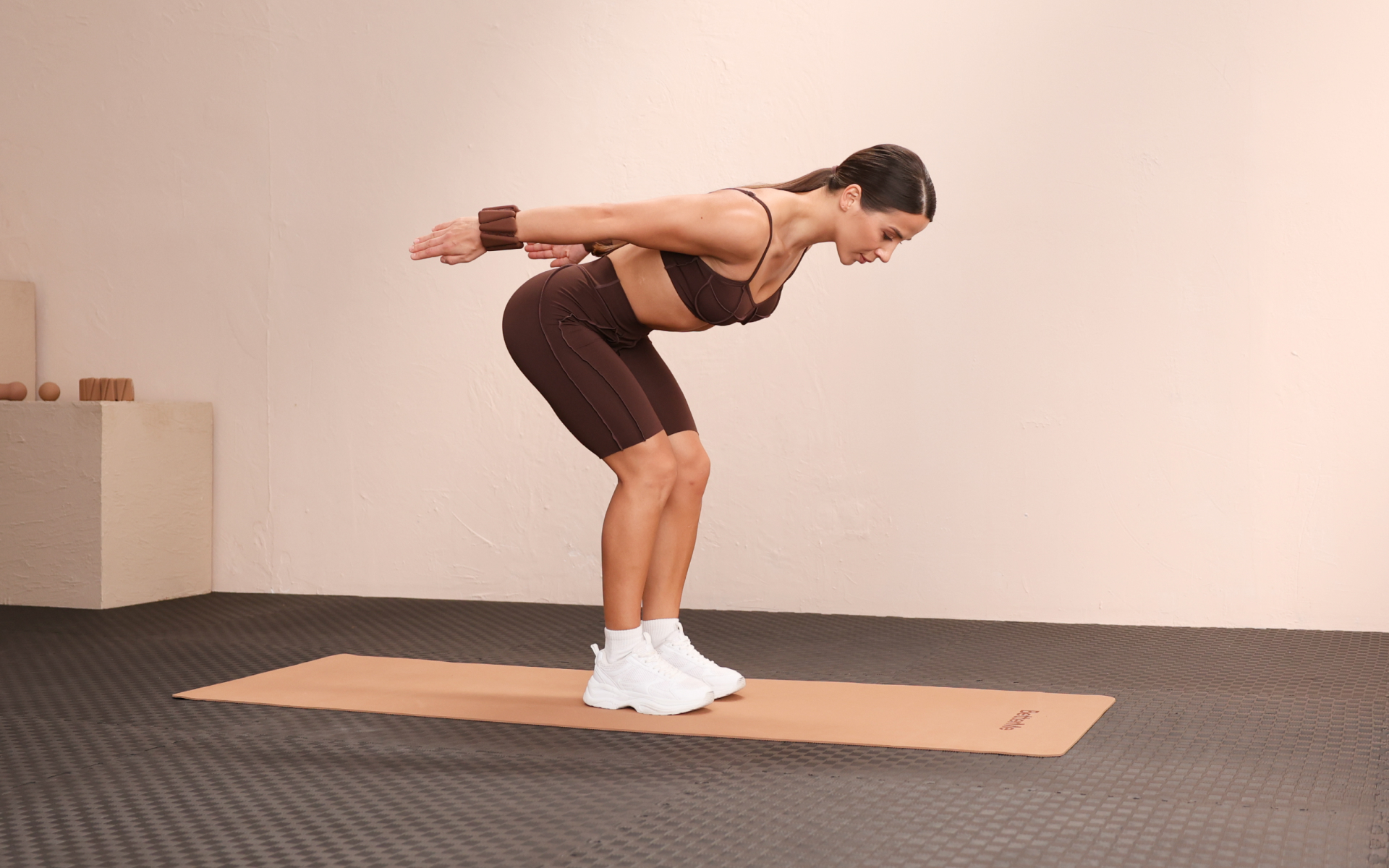
The bent-over row can still support an arm-focused routine when you use an underhand grip or another arm-biased variation that increases biceps involvement. That setup shifts more of the work toward the arms while still training the upper back. For someone who is specifically looking for arm exercises, this can be useful because it adds direct biceps emphasis without turning the session into a general upper-body workout.
Intense sweat sessions, working weight loss tips, lip-smacking recipes come in one package with the BetterMe Well-Being Coach app—all at your fingertips, start transforming your life now!
What Is a Simple Arm Workout for Women?
A simple arm workout includes a few foundational exercises, clear training variables, and a pace you can repeat each week. Before you start, it helps to understand a few basic terms.
- Frequency means how often you train.
- Sets are how many rounds you do of each movement, and reps are how many times you perform the movement in each set.
- Rest is the break between sets.
- Tempo is the speed of each rep.
- Effort describes how challenging the set feels.
- Progression means making the workout a little more challenging over time, such as by adding a rep, slowing the tempo, or increasing the load when your form stays solid.
For many people, a beginner-friendly routine includes 2-3 upper-body sessions per week. A common starting point is 2-3 sets of 8-12 reps per exercise (3). Rest periods of approximately 60-90 seconds often work well (4).
Arm exercises for women with weights can be progressed by increasing the load gradually once the last few reps feel more manageable.
This routine is meant to stay arm-focused, although a few movements also involve the chest or upper back. They are included here as specific variations can shift more of the work to the arms.
Simple Upper-Body Workout Plan
| Exercise | Sets | Reps | Tempo | Rest | Effort level |
|---|---|---|---|---|---|
| Dumbbell bicep curl | 2-3 | 10-12 | Slow and controlled | 45-60 seconds | Moderate to challenging |
| Overhead press | 2-3 | 8-10 | Steady pace | 60-90 seconds | Moderate to challenging |
| Triceps extension | 2-3 | 10-12 | Slow and controlled | 45-60 seconds | Moderate to challenging |
| Underhand bent-over row | 2-3 | 10-12 | Pause briefly at the top | 60-90 seconds | Moderate to challenging |
| Close-grip modified push-up | 2-3 | 8-12 | Steady pace | 45-60 seconds | Moderate to challenging |
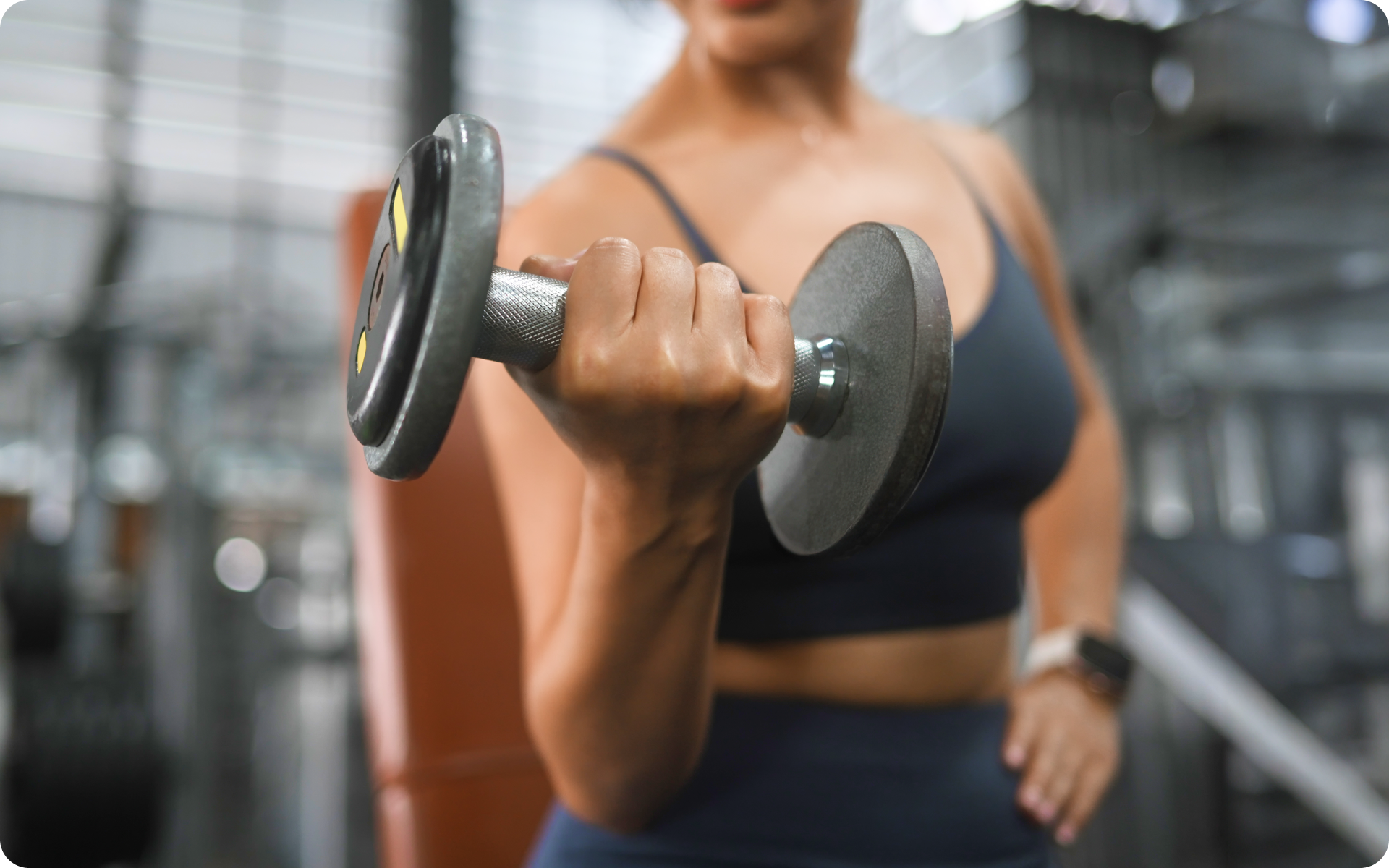
Dumbbell Bicep Curl
- Stand tall with your feet approximately hip-width apart.
- Hold a dumbbell in each hand with your palms facing forward.
- Bend your elbows to bring the weights toward your shoulders.
- Lower the weights with control.
Overhead Press
- Stand or sit tall with the weights at shoulder height.
- Turn your palms forward.
- Press the weights overhead in a smooth motion.
- Lower them back to shoulder height with control.
Read more: Arm Strength Exercises: 6 Moves for a Complete Arm Workout
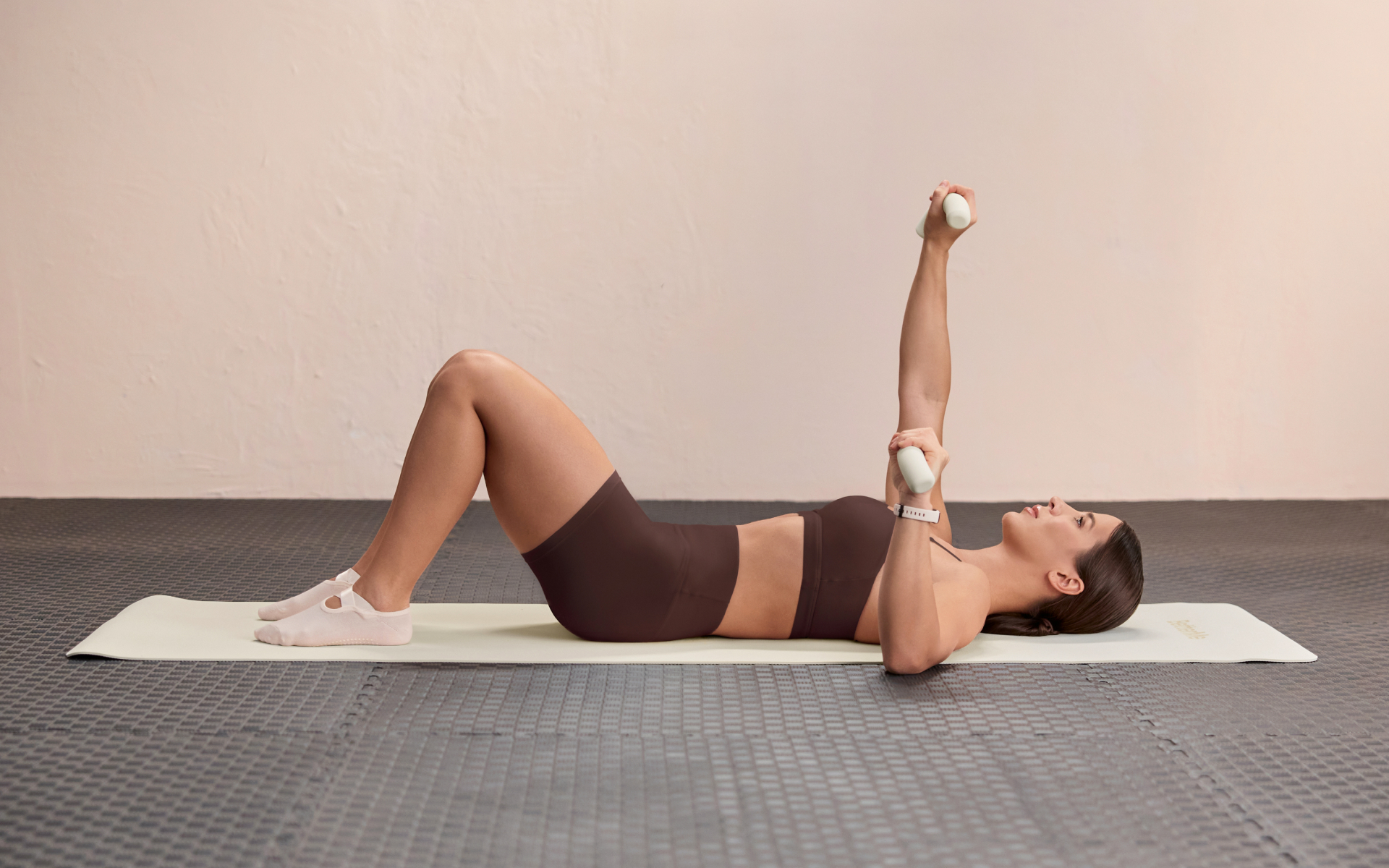
Triceps Extension
- Hold one dumbbell with both hands.
- Raise it overhead with your arms extended.
- Bend your elbows to lower the weight behind your head.
- Press the weight back up slowly.
Underhand Bent-Over Row
- Hold a dumbbell in each hand with an underhand grip.
- Hinge at the hips and keep your back long.
- Pull the weights toward your rib cage, keeping your elbows close to your sides.
- Lower them back down with control.
Close-Grip Modified Push-Up
- Start on your hands and knees.
- Place your hands closer together, just under or slightly inside your shoulders.
- Keep your elbows close to your sides as you lower your chest toward the floor.
- Press back to the starting position with control, focusing on the triceps.
Can You Do Arm Exercises at Home Without Equipment?
Yes, you can train your upper body at home without formal equipment. Bodyweight movements can still challenge the arms (5). Arm exercises for women at home can be useful when you want a practical routine that fits around a busy schedule. You can also use household items, such as water bottles or backpacks, if you want light added resistance.
A chair arm workout can also be useful when you want a more supported setup. While sitting tall on a sturdy chair, you can do seated bicep curls, overhead presses, front raises, arm circles, or light triceps extensions. This setup can make upper-body training feel more manageable without the need for floor exercises. Many of these movements can also be adapted as seated arm exercises for seniors, as the chair provides additional support and stability while allowing the upper body to move through a comfortable range of motion.
A calisthenics workout for arms can also work well at home if you prefer bodyweight training. Push-up variations, triceps dips, planks, and slow arm circles can challenge the upper body without dumbbells or machines. You can adjust the difficulty by changing your angle, tempo, or number of reps.
If a movement feels too difficult, use a regression. A regression is a simpler version of the same pattern. For example, wall push-ups can feel more approachable than floor push-ups. From there, you might move to incline push-ups, then knee push-ups, and later to floor push-ups.
If a movement starts to feel easier, use a progression. A progression adds challenge without changing the goal of the exercise. You might slow the lowering phase, add a pause, increase reps, or change your angle to create more effort (6).
Arm toning exercises for females without weights often rely on higher reps, slower tempo, and careful control. Triceps dips on a sturdy surface, push-up variations, planks, and arm circles can all fit into a home routine. These options may help you build a steady practice without needing much space.
Equipment vs. Bodyweight Comparison
| Feature | With weights | Without equipment |
|---|---|---|
| Resistance type | Dumbbells, bands, or other tools | Body weight and gravity |
| Progression method | Increase load gradually | Change angle, tempo, or reps |
| Convenience | Requires some gear | Can be done in many spaces |
Whether you’re a workout beast or just a beginner making your first foray into the world of fitness and dieting – BetterMe has a lot to offer to both newbies and experts! Install the app and experience the versatility first-hand!
How Often Should Women Do Arm Exercises?
Many people do well with 2-3 upper-body sessions per week. This schedule often gives you enough practice while still leaving room for recovery. The right frequency depends on your starting point, energy, schedule, and the rest of your routine. A plan you can repeat tends to be more helpful than one that feels too hard to maintain.
Spacing sessions across the week may help. For example, you might train your upper body on Monday and Thursday. This gives your muscles time to recover before the next session. Recovery supports progress just as much as the workouts themselves.
Arm exercises for women without weights can also fit into shorter sessions. You might do a 15-20 minute home workout, then add walking, lower-body work, or full-body training on other days. This kind of flexibility can make your routine easier to maintain.
If you feel unusually run-down, it may help to scale back for a few days. A steady routine doesn’t need to look identical every week. Small adjustments can help you remain consistent over time.
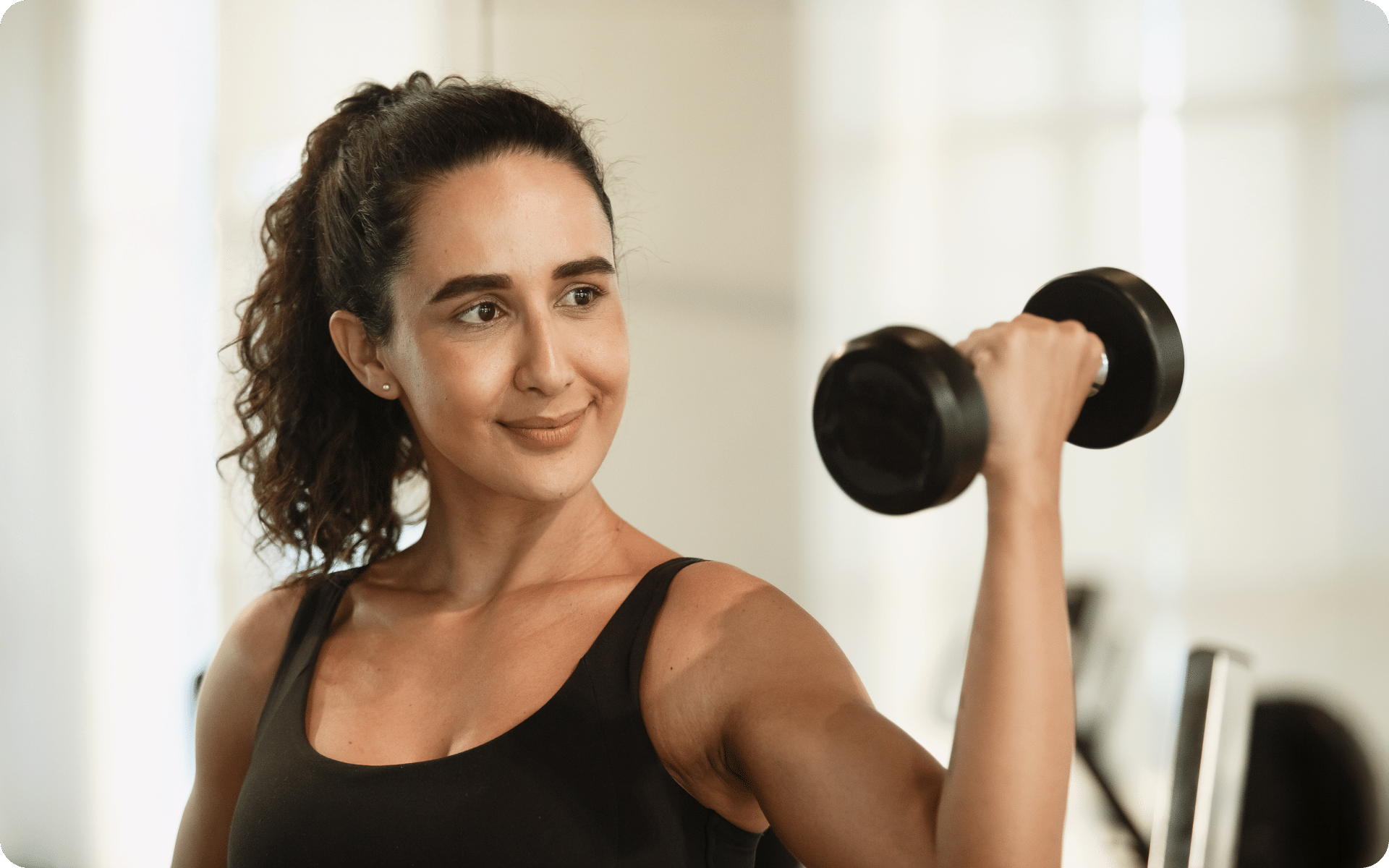
How Long Does It Take to See Results from Arm Exercises?
Many people notice changes in strength or workout confidence before they notice visual changes. You may feel steadier during daily tasks or find that your usual exercises start to feel more manageable within a few weeks.
Visual changes often take longer. Individual outcomes vary and depend on your starting point, consistency, recovery, sleep, food intake, stress, and overall activity.
Muscle definition usually develops gradually (7). For some people, this may take several weeks, while for others, it may take longer. Your experience depends on more than the workout itself.
It can help to track progress in different ways. You might notice that you can do more reps, use a slightly heavier load, or move with better control. Those changes count too, even if the mirror takes longer to reflect them.
Try to keep your expectations flexible. Progress is rarely perfectly linear. A steady routine, enough recovery, and realistic pacing can help you build something more lasting.
Read more: Arm Toning Exercises for Females: A Complete Guide to Sustainable Progress
What Mistakes Should You Avoid During Arm Workouts?
Common mistakes include rushing reps, using too much momentum, skipping rest, and choosing loads that make form harder to maintain. Small adjustments can make your workouts feel more useful and more manageable. Paying attention to technique often matters more than trying to do everything at once.
- Using momentum: Swinging the weights can shift work away from the target muscles—move slowly enough to stay in control.
- Holding your breath: Steady breathing can help you stay focused during a set. Try exhaling during the harder part of the rep.
- Skipping warm-ups: A brief warm-up can help you ease into the session—arm circles, shoulder rolls, and light reps work well.
- Choosing too much weight: Heavier is not always better. Pick a load that lets you move with control.
- Doing the same routine for too long: Repeating the same plan for months can feel stale. Small changes in reps, tempo, or load can help.
- Ignoring recovery: Muscles need time between sessions. Rest, sleep, and pacing all matter.
Frequently Asked Questions
Can women build arm strength without getting bulky?
Yes, many women can build arm strength without developing a much larger look. Muscle size depends on several factors, including training style, food intake, recovery, and genetics.
For many people, regular upper-body training supports a stronger, more defined appearance rather than dramatic size changes. A balanced routine can help you build strength at a pace that suits your goals.
What weights should women use for arm exercises?
The right weight is the one that feels manageable at the start and challenging by the last few reps. That amount varies from person to person and from exercise to exercise. If your form changes a lot before the set ends, the weight may be too heavy. Starting lighter and adjusting over time often works well.
Can you tone your arms in 7 days?
No, noticeable arm changes usually take longer than 7 days. In one week, you may feel more engaged, more confident, or more aware of your muscles during movement. Visible changes usually need more time and steady effort. Individual results vary, so it helps to think in terms of weeks and months, not days.
Is a 20-minute arm workout enough?
Yes, a 20-minute arm workout can be enough for many people. Short sessions can still be useful when they include focused exercises, controlled reps, and a level of effort that matches your ability. This approach may work particularly well on busy days. Consistency often matters more than workout length alone.
What foods help tone your arms?
No single food tones your arms on its own. A balanced eating pattern can support your workouts and recovery over time. Many people benefit from meals that include protein, fiber-rich carbohydrates, and healthy fats. Foods such as beans, fish, tofu, eggs, whole grains, nuts, seeds, fruits, and vegetables can all fit into that pattern.
The Bottom Line
Building upper-body strength takes time, practice, and a routine you can return to regularly. Arm exercises for women can support strength, posture, and day-to-day movement in a practical way. Start with a few basics, keep the pace realistic, and build from there.
DISCLAIMER:
This article is intended for general informational purposes only and does not serve to address individual circumstances. It is not a substitute for professional advice or help and should not be relied on for making any kind of decision-making. Any action taken as a direct or indirect result of the information in this article is entirely at your own risk and is your sole responsibility.
BetterMe, its content staff, and its medical advisors accept no responsibility for inaccuracies, errors, misstatements, inconsistencies, or omissions and specifically disclaim any liability, loss or risk, personal, professional or otherwise, which may be incurred as a consequence, directly or indirectly, of the use and/or application of any content.
You should always seek the advice of your physician or other qualified health provider with any questions you may have regarding a medical condition or your specific situation. Never disregard professional medical advice or delay seeking it because of BetterMe content. If you suspect or think you may have a medical emergency, call your doctor.
SOURCES:
- Exercise metabolism and adaptation in skeletal muscle (2024, pmc.ncbi.nlm.nih.gov)
- The Effects of Combining Aerobic and Heavy Resistance Training on Body Composition, Muscle Hypertrophy, and Exercise Satisfaction in Physically Active Adults (2023, mdpi.com)
- Loading Recommendations for Muscle Strength, Hypertrophy, and Local Endurance: A Re-Examination of the Repetition Continuum (2021, mdpi.com)
- Give it a rest: a systematic review with Bayesian meta-analysis on the effect of inter-set rest interval duration on muscle hypertrophy (2024, frontiersin.org)
- Benefits of Bodyweight Training (2025, humankinetics.me)
- Effects of Resistance Training Overload Progression Protocols on Strength and Muscle Mass (2024, pubmed.ncbi.nlm.nih.gov)
- Load-induced human skeletal muscle hypertrophy: Mechanisms, myths, and misconceptions (2026, sciencedirect.com)
 Reviewed by