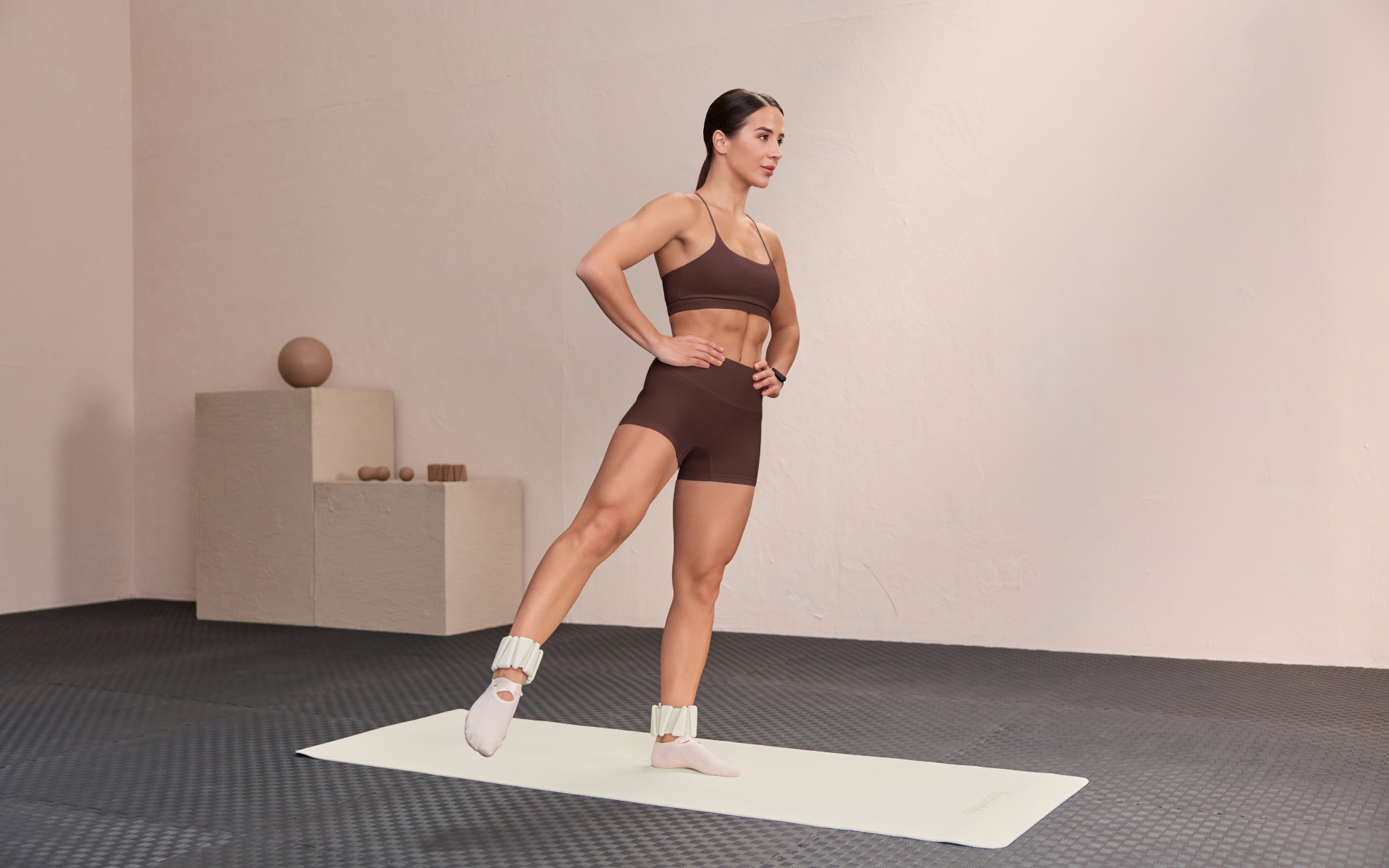
A squat workout plan organizes squat variations into repeatable sessions for your lower body. This low-impact example uses chair or bodyweight squats, a choice of lunge, sumo squats, and an optional wall sit. Begin with the sample workload below and use a range you can control comfortably.
You can follow this squat workout plan at home with a stable chair, a wall, and floor space. For a longer schedule to compare, see our 6-week squat program.
Key takeaways
- Squats involve the knee and hip extensors, including the quadriceps and gluteus maximus (1).
- This sample starts with two sessions on nonconsecutive days each week.
- Choose one lunge option per session, alongside the two squat blocks.
- The wall sit is optional and starts with one 20-30 second hold.
- General beginner resistance-training guidance recommends 2 to 3 weekly sessions and gradual increases in resistance (2).
- Allow 5 to 10 minutes each for a gradual warm-up and cool-down (3).
What is a low-impact squat workout plan?
A low-impact squat workout plan uses controlled squat variations with a comfortable range of motion. It can help you practice lower-body strength, mobility, and balance while keeping the movement measured.
If you have health concerns or are returning to exercise after a strain, ask a qualified healthcare professional before starting. Stop a movement that causes discomfort.
Squats involve several lower-body muscles and require control of your trunk. Technique changes how the workload is distributed (1):
- Lower-body work: Squats challenge the muscles that extend the knees and hips, including the quadriceps and gluteus maximus.
- Movement practice: A chair squat rehearses lowering to a seat and standing back up.
- Trunk control: Keeping your torso steady is part of controlling the squat movement.
Read more: 30-day calf challenge explained: structure, tips, and FAQs
What does the sample squat workout include?
This squat workout plan for beginners uses two nonconsecutive sessions per week, such as Monday and Thursday. General resistance-training guidance recommends 2 to 3 weekly sessions for beginners (2). The table covers working sets only; allow 5 to 10 minutes each for warming up and cooling down (3). These set counts are an adjustable example, not a tested program with promised results.
| Exercise block | Sets | Repetitions or hold | Rest |
|---|---|---|---|
| Chair or bodyweight squat | 2 | 8-12 | 60-90 sec |
| Curtsy lunge option | 2 | 6 per side | 60-90 sec |
| Forward lunge option | 2 | 8 per side | 60-90 sec |
| Lateral lunge option | 2 | 8 per side | 60-90 sec |
| Sumo squat | 2 | 10-12 | 60-90 sec |
| Optional wall sit | 1 | 20-30 sec | As needed |
Choose only one of the three lunge options. Rest longer whenever you need it to repeat the movement with control.
Warm-up
Begin with 5 to 10 minutes of easy walking and comfortable practice movements (3). Try a few shallow squats before starting your working sets.
1. Chair squat or bodyweight squat
- Stand in front of a stable chair with your feet about shoulder-width apart.
- For a bodyweight squat, use the same stance without the chair.
- Keep your chest lifted.
- Move your hips back.
- Bend your knees within a comfortable range.
- For a chair squat, sit down lightly on the seat.
- Press through your feet to return to standing.
- Complete 2 sets of 8-12 repetitions, resting 60-90 seconds between sets. Choose either the chair squat or bodyweight squat for this block.
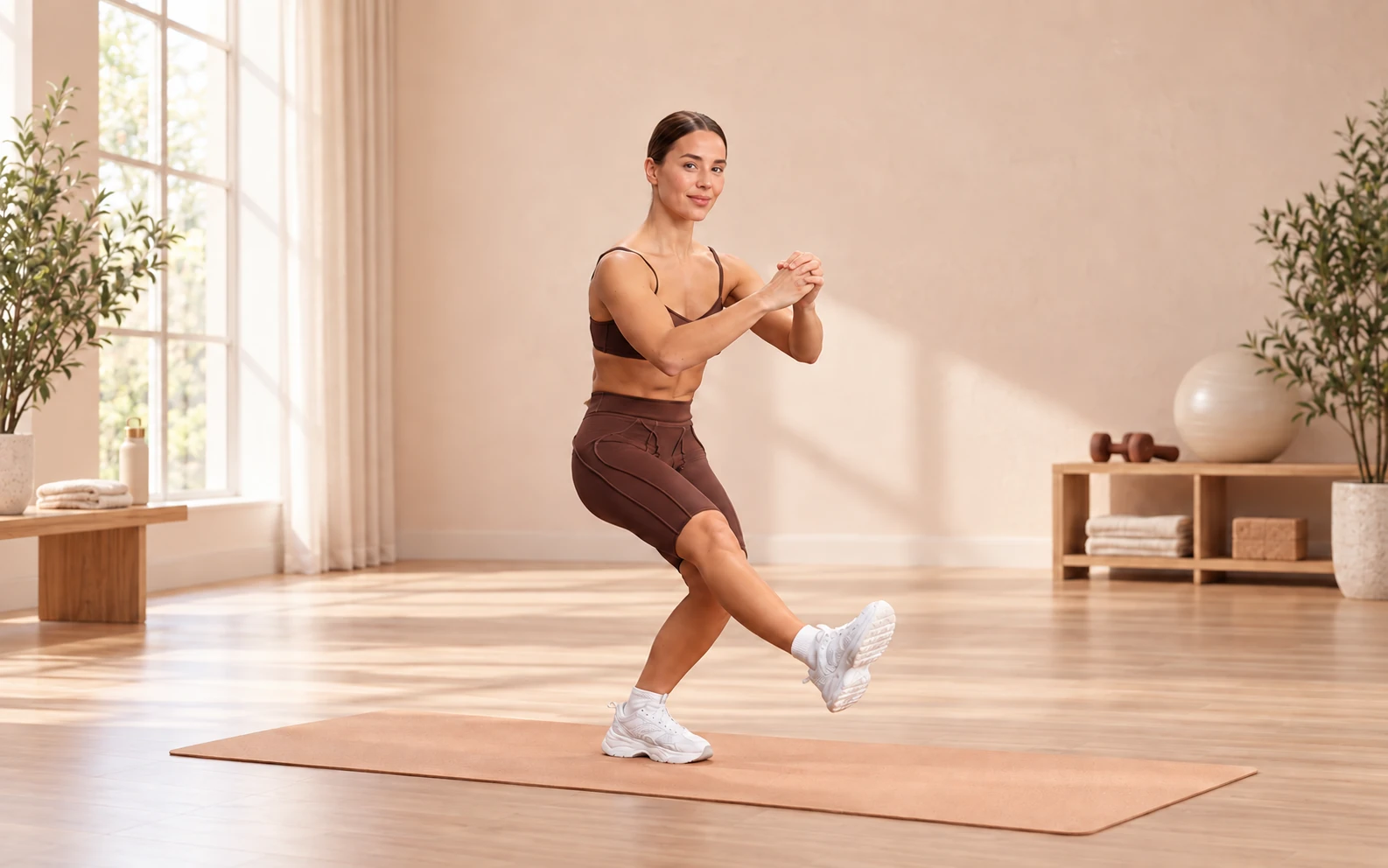
2. Curtsy lunge option
- Stand tall and upright with your feet hip-width apart.
- Step your right leg a short distance diagonally behind your left leg.
- Bend both knees within a comfortable range.
- Keep your front foot planted and your torso steady.
- Return to standing position by pushing through the front foot.
- Repeat on the other leg for 2 sets of 6 repetitions per side, resting 60-90 seconds between sets. Choose this, the forward lunge, or the lateral lunge as your single lunge block.
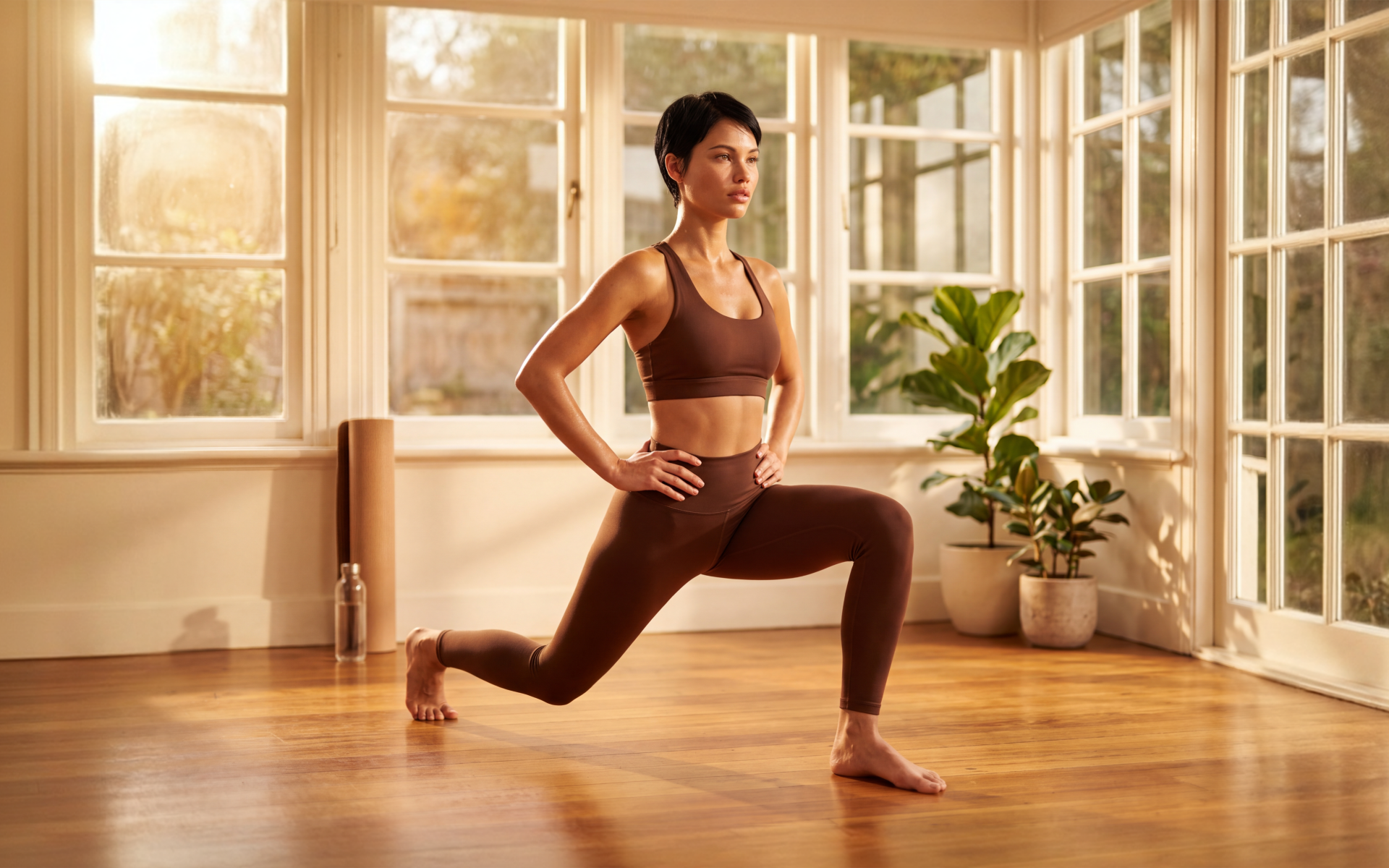
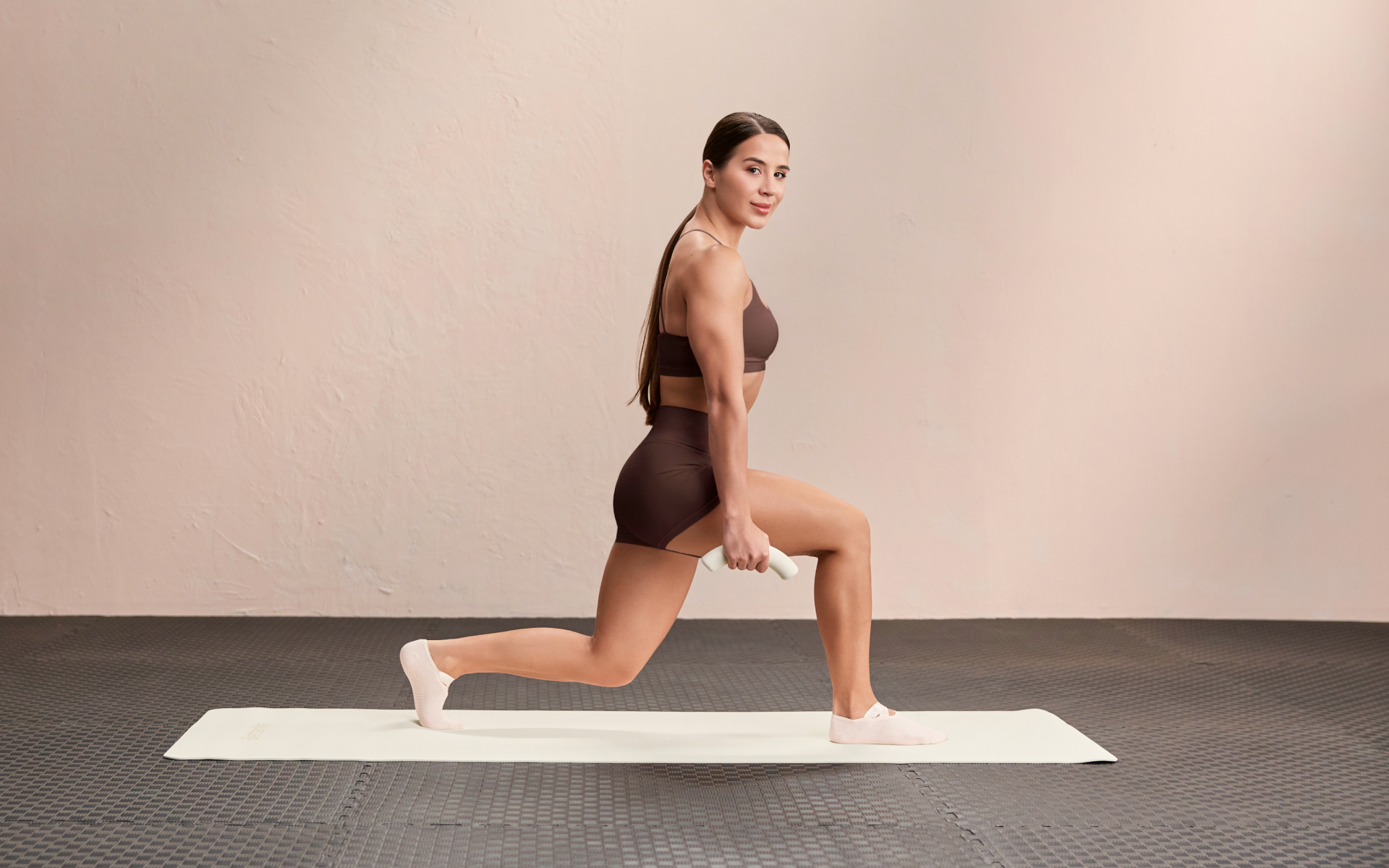
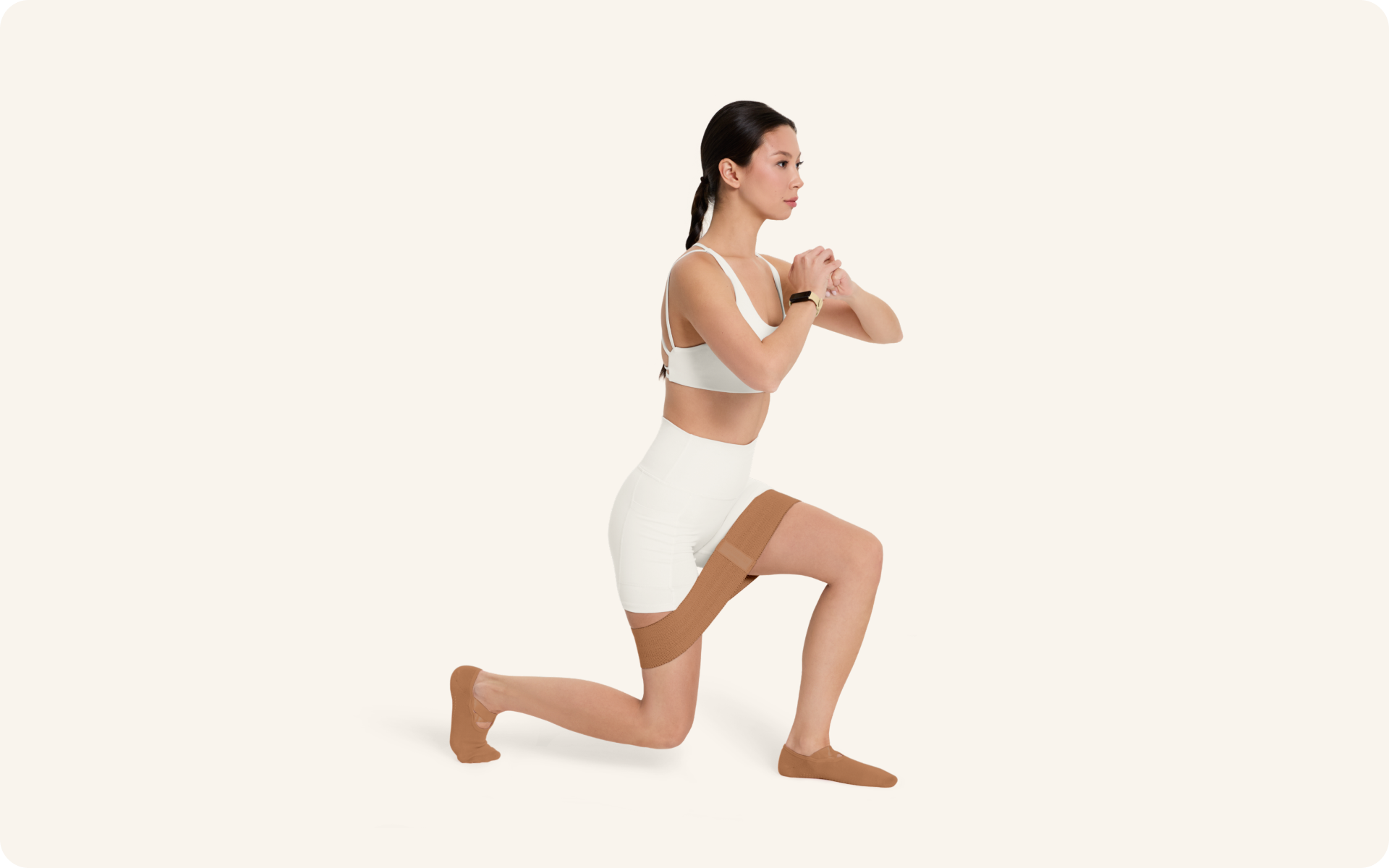
3. Forward lunge option
- Stand tall with your head and chest up.
- Step forward with your right leg.
- Bend both knees and lower within a range you can control.
- Push off your right leg by extending your knee and return to the standing position.
- Repeat on the other side for 2 sets of 8 repetitions per leg, resting 60-90 seconds between sets.
Workouts, weight management tools, and recipe ideas come together in the BetterMe: Health Coaching app, giving you practical support for building a more consistent wellness routine.
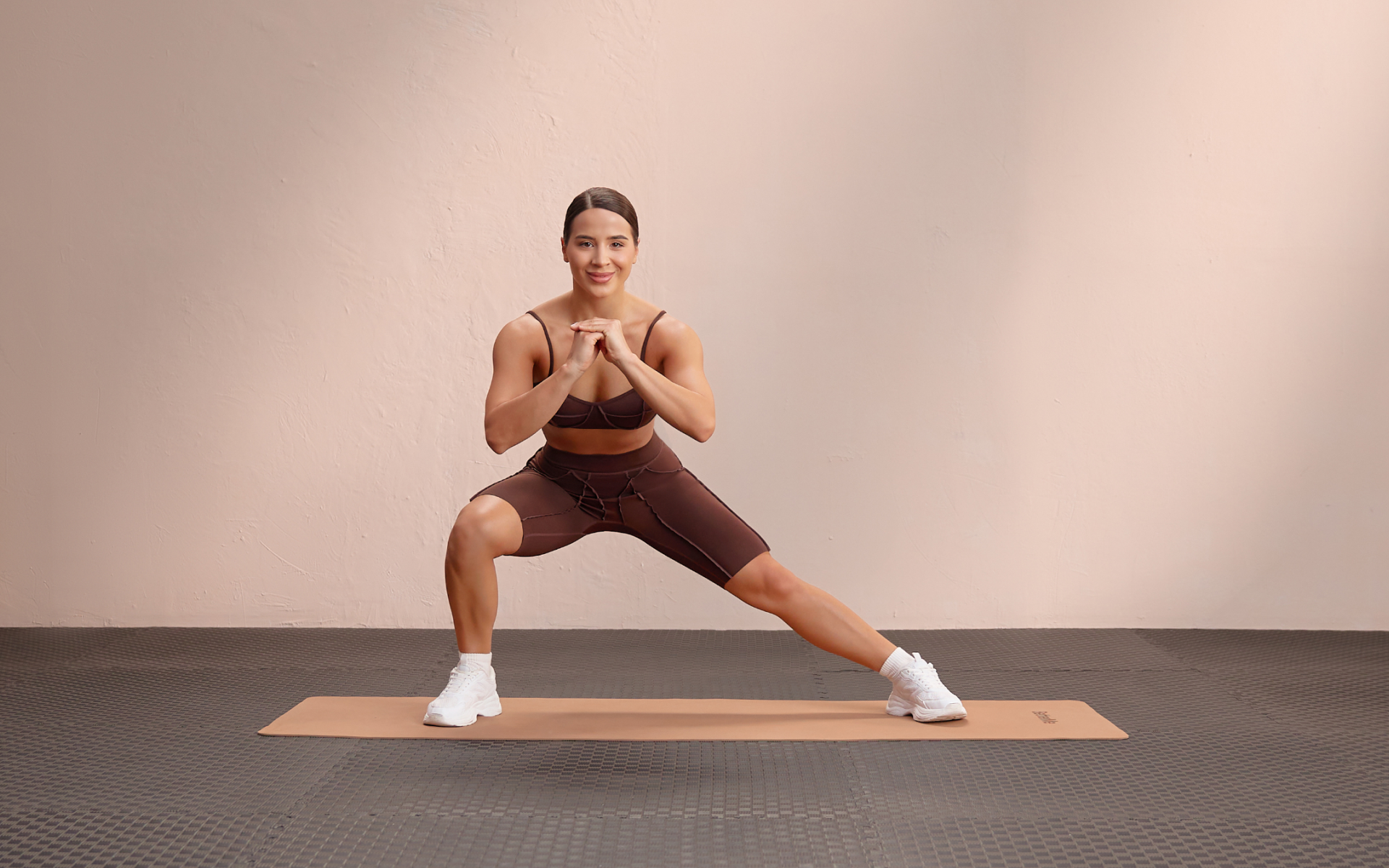
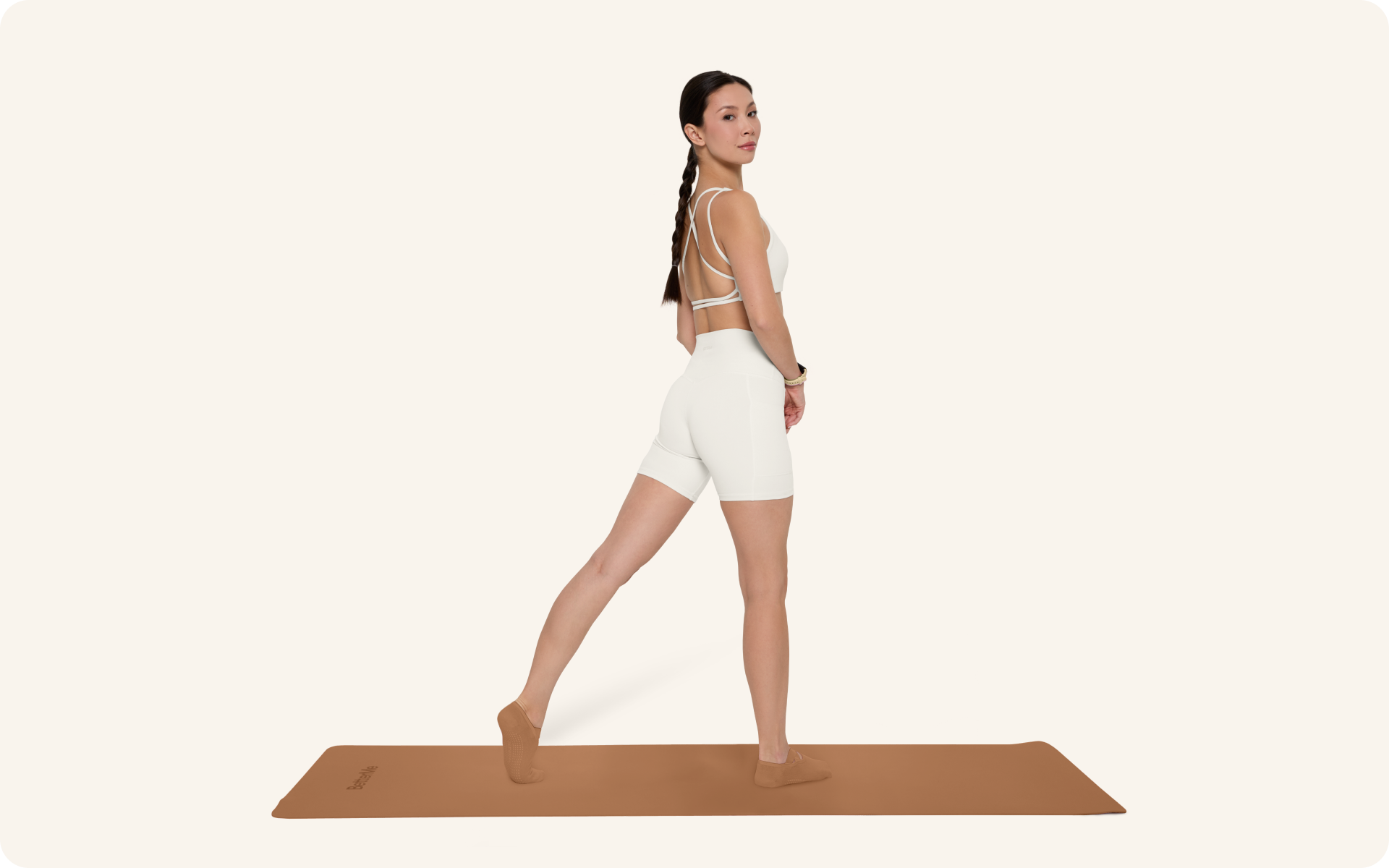
4. Lateral lunge option
- Stand tall with your head and chest up.
- Take a step laterally with your right leg.
- Bend your right knee while sending your hips back, keeping your left leg comfortably extended.
- Push off your right leg by extending your knee and return to the midline/standing position.
- Repeat on the other side for 2 sets of 8 repetitions per leg, resting 60-90 seconds between sets.
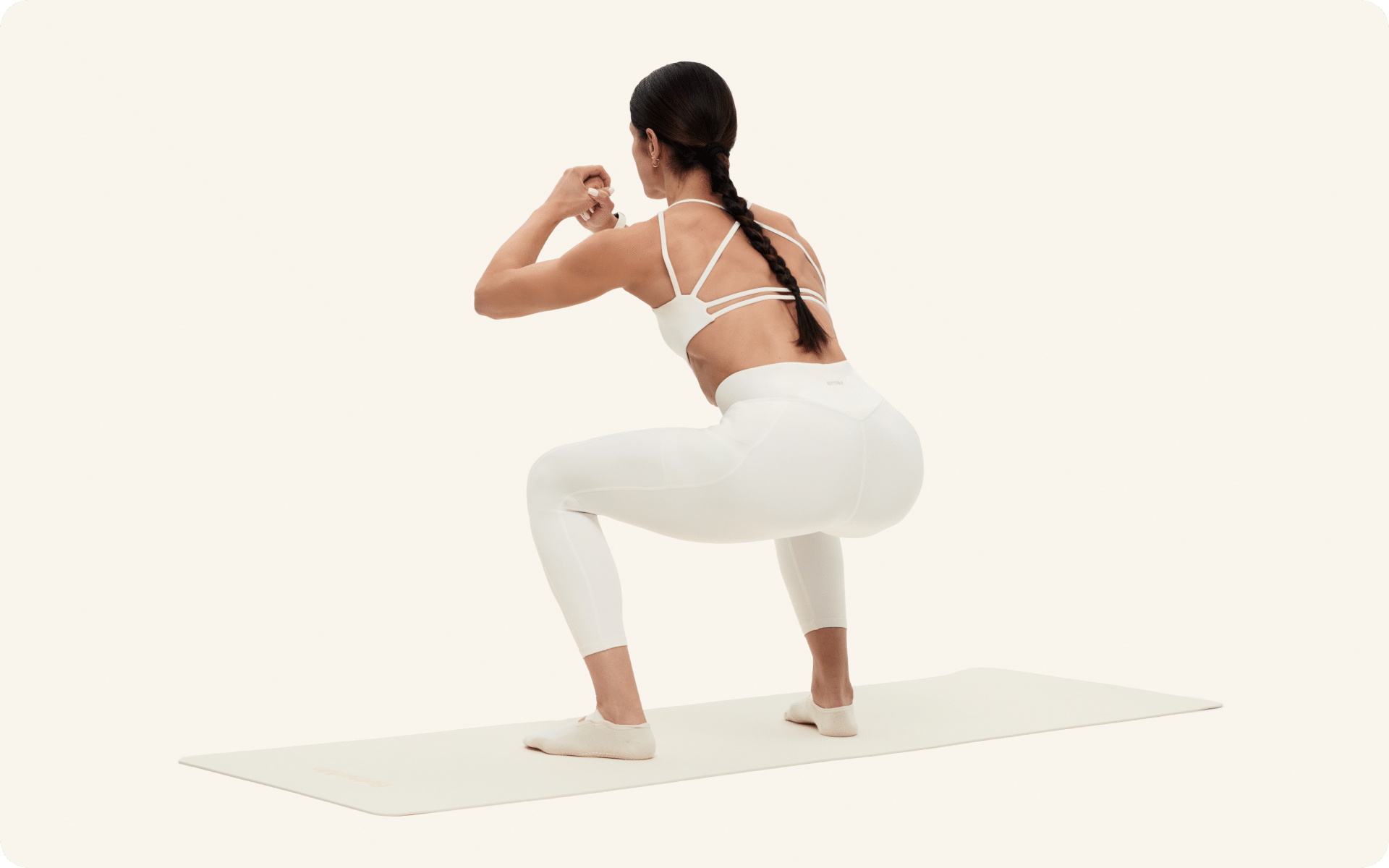
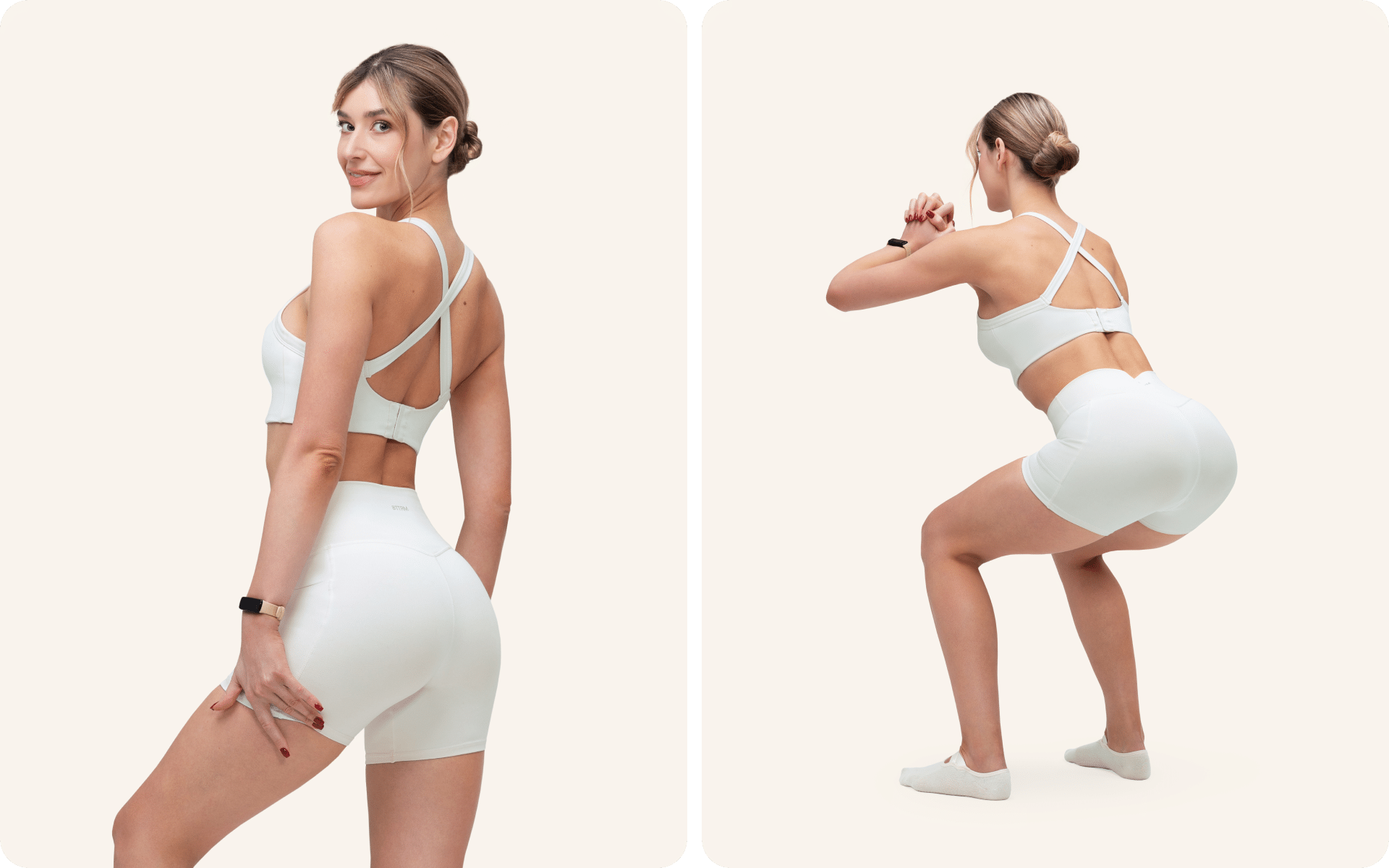
5. Sumo squat
- Stand upright with your feet slightly wider than shoulder-width apart.
- Turn your toes slightly outward to a comfortable angle.
- Bend your knees and hips to lower with control.
- Press through your feet to return to standing.
- Complete 2 sets of 10-12 repetitions, resting 60-90 seconds between sets.
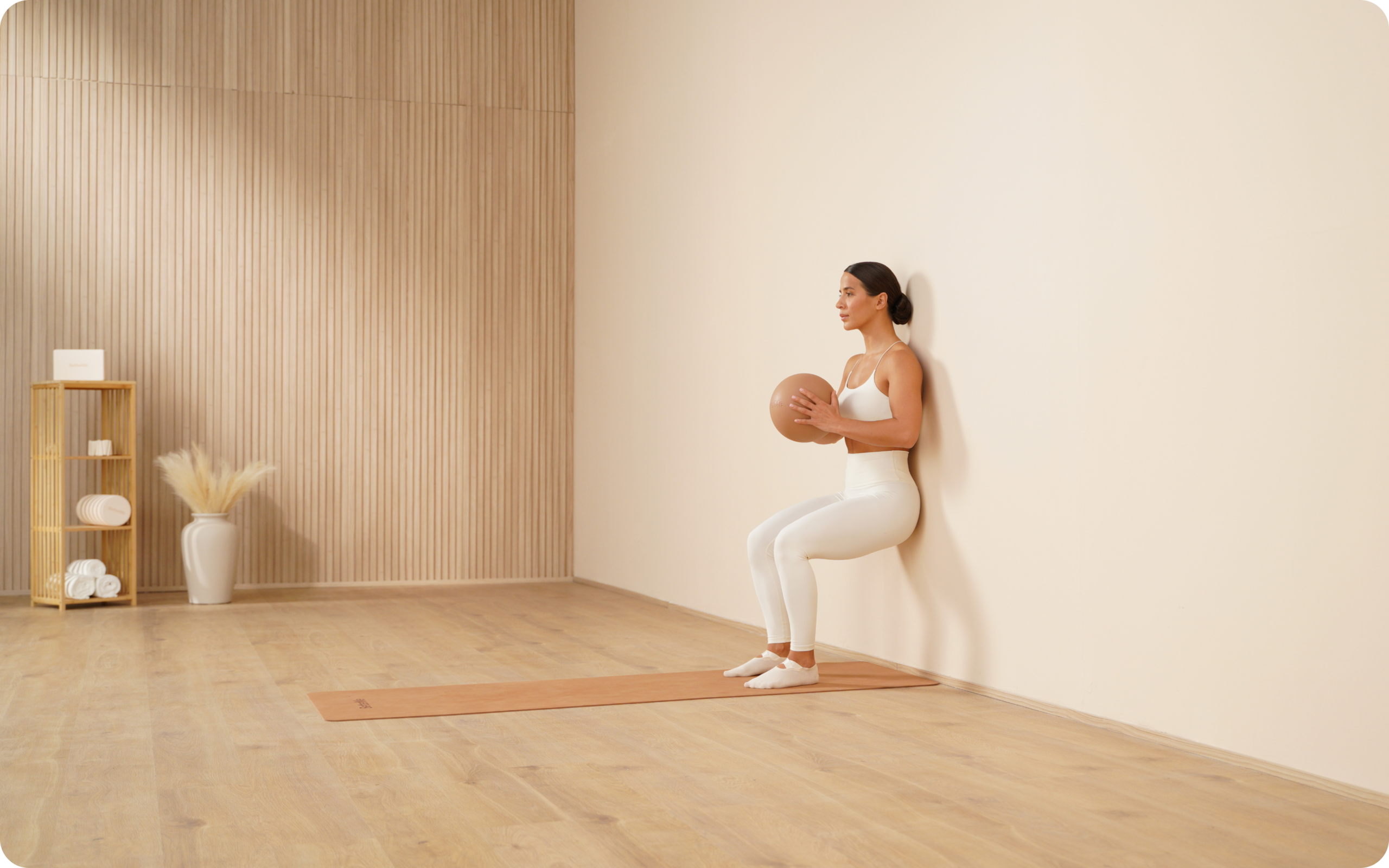
6. Optional wall sit
- Finish the workout with a wall sit. Stand with your back against a wall.
- Walk your feet a little bit forward.
- Slide down the wall as if sitting in a chair.
- Stop at a comfortable depth with your back supported against the wall.
- Hold that position for about 20-30 seconds.
- Stand back slowly to your starting position.
- Start with 1 hold. Omit the wall sit if your legs are already fatigued.
Can I build muscle with just squats?
Squats can contribute to lower-body muscle development, but they do not train every major muscle group. Include other movements for a balanced routine. Muscle growth can occur across a range of resistance loads when the work is sufficiently challenging (4).
Increase the challenge gradually as the current workload becomes manageable. In a 10-week study of 39 untrained adults, adding load or repetitions both improved strength and muscle size; the study did not test this exact squat plan (5).
Can squats be low-impact?
Yes. Chair squats and controlled bodyweight squats keep your feet on the floor. Jump squats add a jump, so any discussion of jump squats benefits concerns a different exercise from this low-impact sample.
Read more: Leg workout for women: exercises, tips, and FAQs
How do you squat with good knee alignment?
Use a comfortable stance, keep your feet planted, and lower only as far as you can control. Squat mechanics vary with stance, trunk position, and depth (1). Practice these cues:
- Warm up: Start with easy movement and lighter practice repetitions.
- Foot position: Begin around shoulder width, then adjust to a stance that feels steady.
- Trunk position: Keep your torso controlled throughout the movement.
- Knee alignment: Let your knees move in the same general direction as your toes. Avoid forcing them inward or holding them behind your toes.
- Squat depth: Use a comfortable range that lets you keep your feet planted and maintain control.
- Tempo: Lower smoothly and stand up without bouncing.
- Load: Increase resistance in small steps.
- Comfort: Stop if a movement causes discomfort. Ask a qualified professional for help choosing an alternative if needed.
What is a good squat routine?
A useful routine combines a warm-up, manageable working sets, and time to cool down. Choose the workload according to your experience and how well you can repeat the movements. Our squats workout plan offers another schedule to compare.
- Warm-up: Use easy movement and practice sets to prepare for the session.
- Main routine: Choose the chair or bodyweight squat, one lunge option, and the sumo squat. Rest longer than the sample interval if you need it to maintain control.
- Optional finisher: Add the wall sit only if you can hold the position comfortably. Extra fatigue is not a requirement for a useful session.
- Cool-down: Finish with 5 to 10 minutes of easy movement, gradually reducing your effort (3). Keep any stretches comfortable and breathe normally.
How long does it take to see results from squats?
There is no fixed timeline for results from this squat routine. Training experience, consistency, workload, and other individual factors affect your response. Track the repetitions and resistance you can perform with control, and review the log before increasing the challenge.
- Repeat the same setup until the top of the repetition range feels manageable. For women choosing a squat workout plan, the starting workload should reflect experience and movement control.
- A barbell squat workout plan or single-leg box squats would need separate setup instructions. If you need a no-squat leg workout, ask a qualified professional to help choose movements that suit you.
- Then increase one variable, such as repetitions or a small amount of resistance, while keeping your technique steady (2, 5).
- For another month-long structure, see the 28-day squat challenge. Individual results vary.
Whether you’re just starting your fitness journey or looking to add more structure to your routine, BetterMe offers tools that can support different wellness goals. Explore the app and see how its workout, nutrition, and habit-building features can fit into your lifestyle.
FAQs
How many squats should you do per session?
In this sample, the two squat blocks total 36-48 repetitions: 2 sets of 8-12 chair or bodyweight squats and 2 sets of 10-12 sumo squats. The chosen lunge block is additional; reduce the sets if the workload is too demanding.
Is it better to do squats fast or slow?
Use a controlled descent and a steady return to standing. If you start bouncing or losing balance, pause and reduce the pace or repetition count.
Which squat variations work the glutes?
Several squat variations recruit the gluteus maximus. Muscle-activation research also examines exercises such as hip thrusts and step-ups, but those measurements do not establish one universally superior exercise for long-term growth (6).
Can you do squats every day?
Use nonconsecutive days for demanding sessions in this sample. Take extra rest if fatigue changes your technique.
The bottom line
A squat workout plan gives you a repeatable way to practice lower-body movements. Start with a version you can control, choose one lunge option, and leave rest days between demanding sessions. Use your training log to guide gradual changes and stop movements that cause discomfort.
You can also visit the BetterMe workout quiz to see its current options.
DISCLAIMER:
This article is intended for general informational purposes only and does not serve to address individual circumstances. It is not a substitute for professional advice or help and should not be relied on for making any kind of decision-making. Any action taken as a direct or indirect result of the information in this article is entirely at your own risk and is your sole responsibility.
BetterMe, its content staff, and its medical advisors accept no responsibility for inaccuracies, errors, misstatements, inconsistencies, or omissions and specifically disclaim any liability, loss or risk, personal, professional or otherwise, which may be incurred as a consequence, directly or indirectly, of the use and/or application of any content.
You should always seek the advice of your physician or other qualified health provider with any questions you may have regarding a medical condition or your specific situation. Never disregard professional medical advice or delay seeking it because of BetterMe content. If you suspect or think you may have a medical emergency, call your doctor.
SOURCES:
- A Biomechanical Review of the Squat Exercise: Implications for Clinical Practice (2024, ijspt.scholasticahq.com)
- American College of Sports Medicine position stand. Progression models in resistance training for healthy adults (2002, pubmed.ncbi.nlm.nih.gov)
- Warm Up, Cool Down (2024, heart.org)
- Loading Recommendations for Muscle Strength, Hypertrophy, and Local Endurance: A Re-Examination of the Repetition Continuum (2021, pmc.ncbi.nlm.nih.gov)
- Effects of Resistance Training Overload Progression Protocols on Strength and Muscle Mass (2024, pubmed.ncbi.nlm.nih.gov)
- Gluteus Maximus Activation during Common Strength and Hypertrophy Exercises: A Systematic Review (2020, pmc.ncbi.nlm.nih.gov)
 Reviewed by