
Blog Fitness Pilates Pilates for Weight Loss: Potential Benefits and Effectiveness

Pilates for Weight Loss: Potential Benefits and Effectiveness

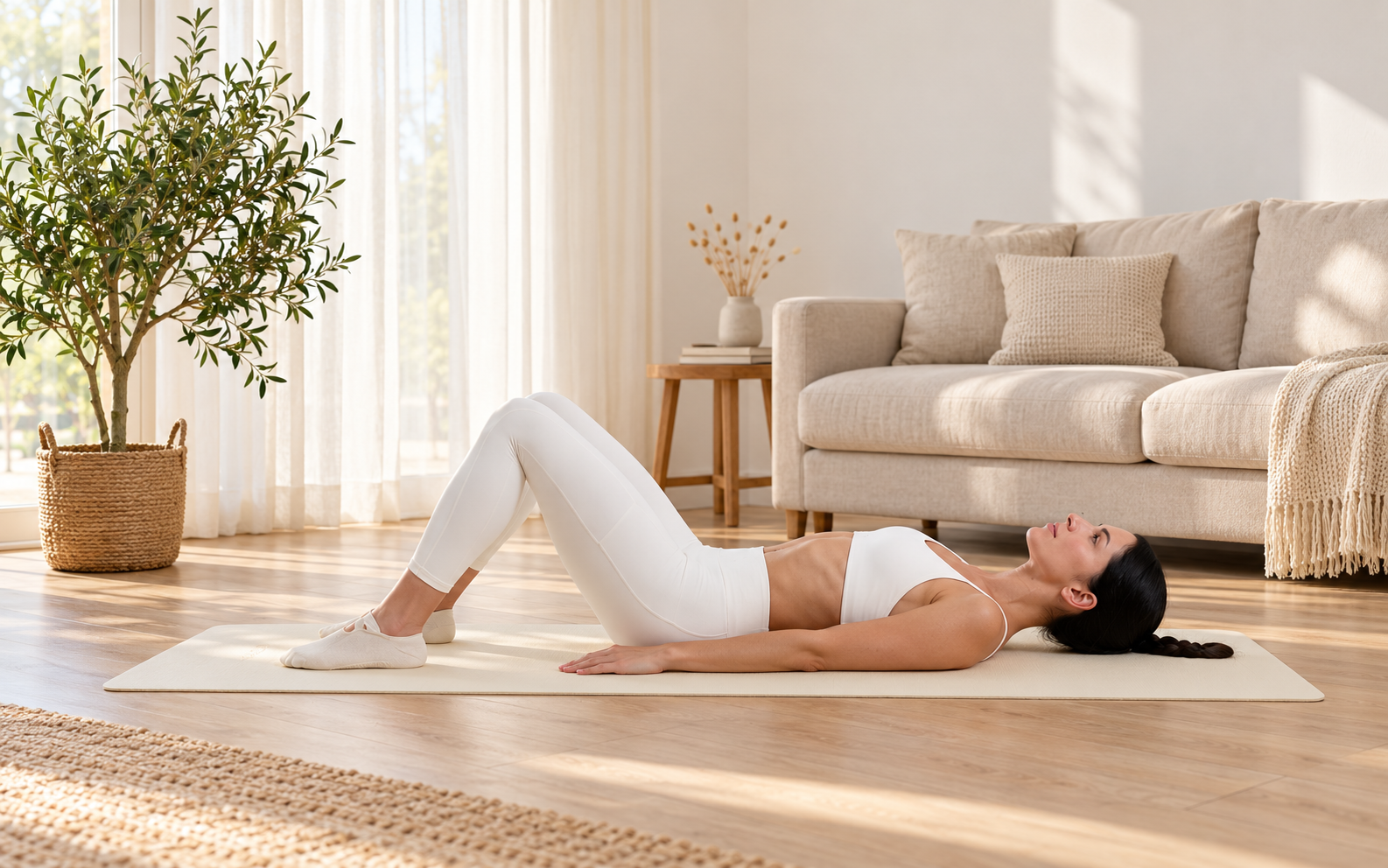
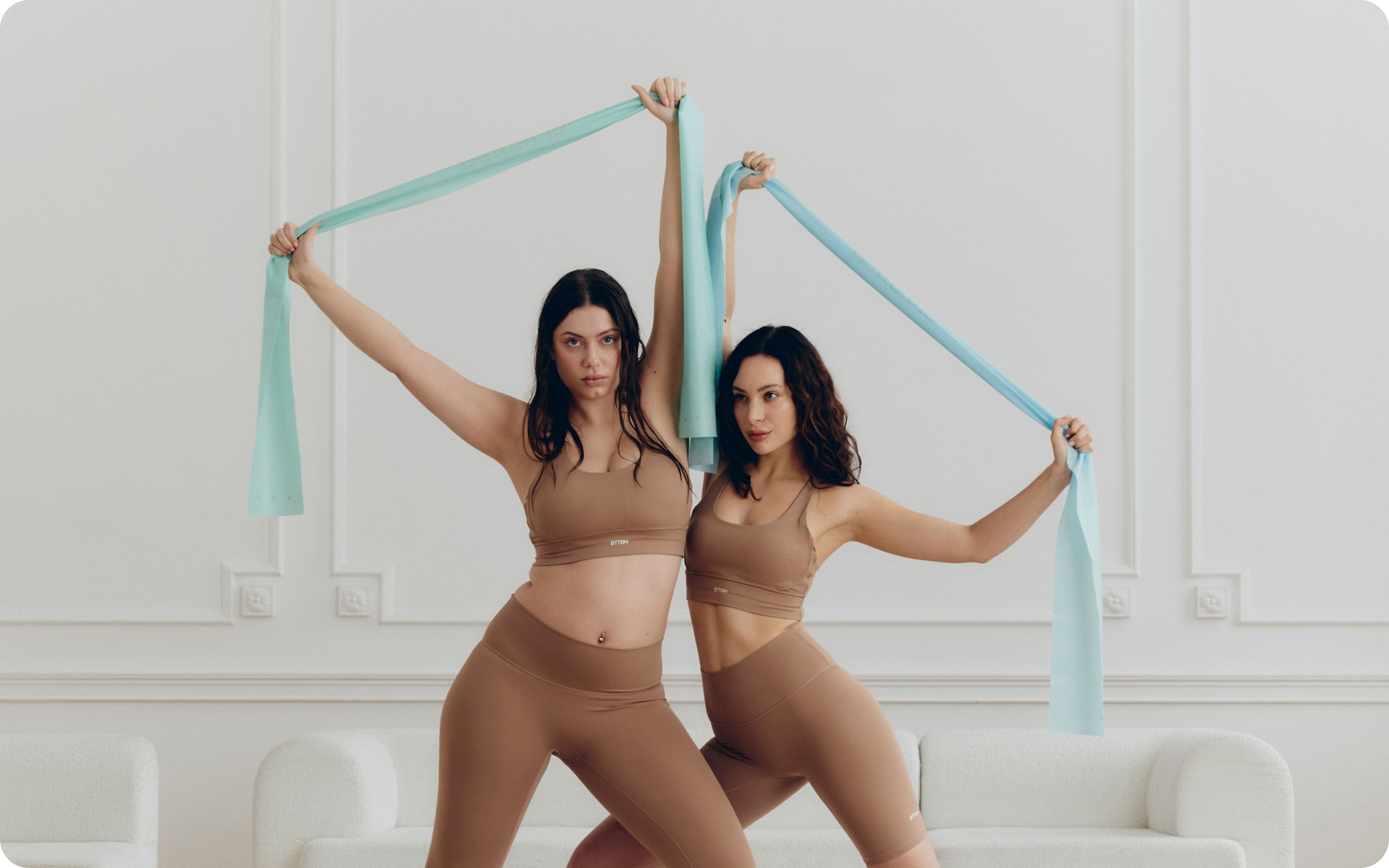
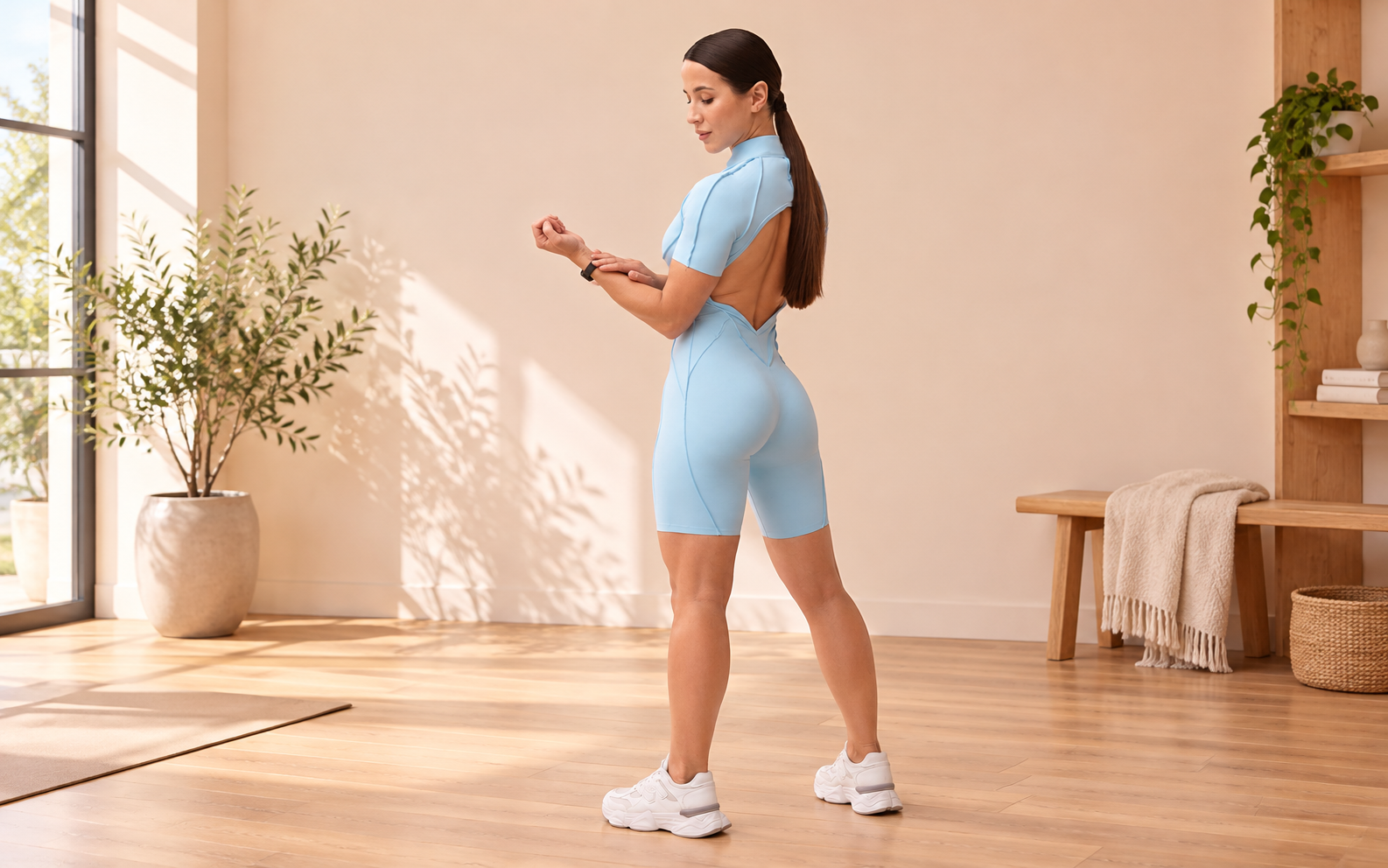
Woman showing her toned midsection in a bright living room, illustrating Pilates for weight loss and core-strengthening progress.

Pilates for weight loss can be a realistic, low-impact option for many people looking to manage their weight and build a stronger body. Research suggests it may help reduce body fat, support core strength, and improve flexibility—especially when practiced consistently. Results tend to vary based on frequency, duration, and individual factors. This article breaks down what the research suggests, which Pilates types may work well for you, and how to get started.

Pilates for weight loss has attracted growing interest from people who want a gentler, more accessible alternative to traditional gym workouts. Pilates is a structured movement method that combines controlled, repetitive exercises designed to build core strength, improve posture, increase flexibility, and develop muscular endurance. Originally developed in the early 20th century, it has since evolved into several styles suited to different goals and fitness levels.

This article is for anyone who is curious about whether Pilates can support weight management—whether you are completely new to exercise, returning after a break, or simply exploring a fresh approach. You will find an honest look at how different Pilates types compare, what the research suggests about their effectiveness, and practical information to help you decide where to start.

From mat routines you can do at home to resistance-based sessions with a Pilates ring, there are accessible options here for people at every level. We will also cover how Pilates compares to strength training and cardio so you can make an informed choice.

Please note: This article is for general informational purposes only and is not a substitute for professional medical or fitness advice. Consider consulting a qualified professional before starting any new exercise program.

Potential of Pilates for Weight Loss

Pilates can support weight loss when practiced consistently as part of an active lifestyle. Research suggests that regular Pilates sessions may reduce body fat, lower BMI, and decrease waist circumference—particularly in people who are new to exercise. Results tend to improve with longer practice periods (1). While it may not burn as many calories per session as high-intensity cardio (2), its low-impact nature makes it accessible and sustainable for many people.

The connection between Pilates and weight loss is supported by a growing body of research. 

One study found that a group of overweight and obese women who completed a structured Pilates program over eight weeks saw meaningful reductions in body fat mass, waist circumference, abdomen circumference, and BMI—compared to a group that did not participate in any physical activity during the same period (3). This suggests that even a relatively short, consistent Pilates routine may produce changes in body composition.

Is Pilates Hard? The Answer Might Inspire You
See also

A 2021 meta-analysis added further support to these findings, suggesting that Pilates exercises for weight loss may produce meaningful reductions in body weight and fat across multiple studies (4). This broader view helps show that the results are not limited to individual cases and may reflect a general pattern.

A study following participants over an extended period found that the longer individuals engaged in regular Pilates, the more noticeable their improvements in body weight and body fat percentage tended to become. The results were noticeable in both those who were overweight and those who were obese, though outcomes were often more pronounced in the latter group (4). 

This points to Pilates as a particularly valuable option for beginners who are managing higher body weight and want to start moving without the physical demands of high-impact exercise.

It is worth noting that Pilates alone may not create the same calorie deficit as intense cardio workouts. However, when combined with a balanced, calorie-conscious eating approach, it can become a practical and sustainable part of a weight management plan (5). 

The benefits of Pilates often extend beyond the scale—improved posture, functional strength, and body awareness can all contribute to a more active, engaged lifestyle over time.


Is 20 Minutes of Daily Pilates Enough for Weight Management?

Yes, 20 minutes of Pilates daily can contribute meaningfully to weight management—especially for beginners. Public health guidelines suggest that adults aim for at least 150 minutes of moderate physical activity each week (6). Twenty minutes a day gets you close to that target and helps build a consistent movement habit. Over time, building up to longer sessions may enhance results further.

Starting small is often a helpful strategy, particularly if you have been inactive or are juggling a busy schedule. A 20-minute Pilates workout for weight loss at home for beginners can raise your heart rate, engage multiple muscle groups, and help you build the consistency that longer-term progress tends to depend on.

Think of 20 minutes as a foundation, not a ceiling. Public health guidance recommends that adults accumulate at least 150 minutes of moderate-intensity physical activity per week (6). Five 20-minute sessions puts you right at that mark. And while a full Pilates class typically runs 45–60 minutes, starting at 20 minutes daily is a realistic, sustainable entry point.

A key advantage of a daily 20-minute practice is consistency. Research suggests that regular movement—even in shorter sessions—often delivers better outcomes than sporadic longer workouts (7). A steady Pilates and weight loss routine helps your body adapt, your muscles strengthen, and your calorie expenditure accumulate over time.

Gym Workout to Lose Belly Fat and Strengthen Your Core
See also

If you’re working out at home, a 20-minute fat burning Pilates session can be structured around bodyweight movements that target the core, legs, and arms together. As your fitness level improves, you can increase the duration, add a Pilates ring for resistance, or introduce more challenging sequences.

The takeaway: movement matters. Whether it’s 10 minutes or an hour, showing up consistently is what tends to create change. Twenty minutes of Pilates each day is a genuinely solid place to begin.

BetterMe: Health Coaching app helps you achieve your body goals with ease and efficiency by helping to choose proper meal plans and effective workouts. Start using our app and you will see good results in a short time.

Types of Pilates and Their Role in Weight Management

Several Pilates styles can support weight management, and the option that works for you often depends on your access, fitness level, and personal preferences. Reformer Pilates tends to offer the highest resistance load, while mat and wall Pilates are more accessible for home practice. All styles engage the core and build muscular endurance, which can contribute to calorie burn and improved body composition over time.

Here is a breakdown of the main types:

Reformer Pilates for weight loss uses a sliding carriage, springs, ropes, and pulleys on a specialized machine. The added resistance challenges your muscles more intensely, making it one of the more physically demanding options (3). 

Sessions can be tailored to different fitness levels, making reformer Pilates for weight loss an option worth exploring if you have access to a studio.

Mat Pilates for weight loss relies solely on body weight and a mat. It is one of the most accessible forms of Pilates and a natural starting point for Pilates for weight loss at home for beginners. No equipment is needed, which can remove barriers to consistency (8).

Classical Pilates follows the original method developed by Joseph Pilates, sometimes called “Contrology.” It incorporates both mat work and specialized equipment such as the Reformer, Cadillac, and Wunda Chair. Classes follow a set sequence of movements and are taught with fidelity to the original system (9).

Contemporary Pilates blends traditional Pilates principles with modern knowledge drawn from fields such as physiotherapy and biomechanics. It is more adaptable than classical Pilates, with variations that differ between studios and instructors (9).

Clinical Pilates is distinct from the above styles and is not a weight-loss tool. It is often integrated into physical therapy programs to support recovery and physical conditioning under professional guidance (9).

30 Minute At Home Pilates Workout Plan For Beginners
See also
Pilates Type Equipment Needed Suited For Accessibility
Reformer Reformer machine Resistance training, toning Studio-based
Mat Mat only Beginners, home practice High
Classical Mat + studio equipment Traditional method, full system Studio-based
Contemporary Varies Adaptable goals Studio or home
Wall Pilates Wall + mat Core strength, home use Very high

Wall Pilates and Its Role in Core Strength

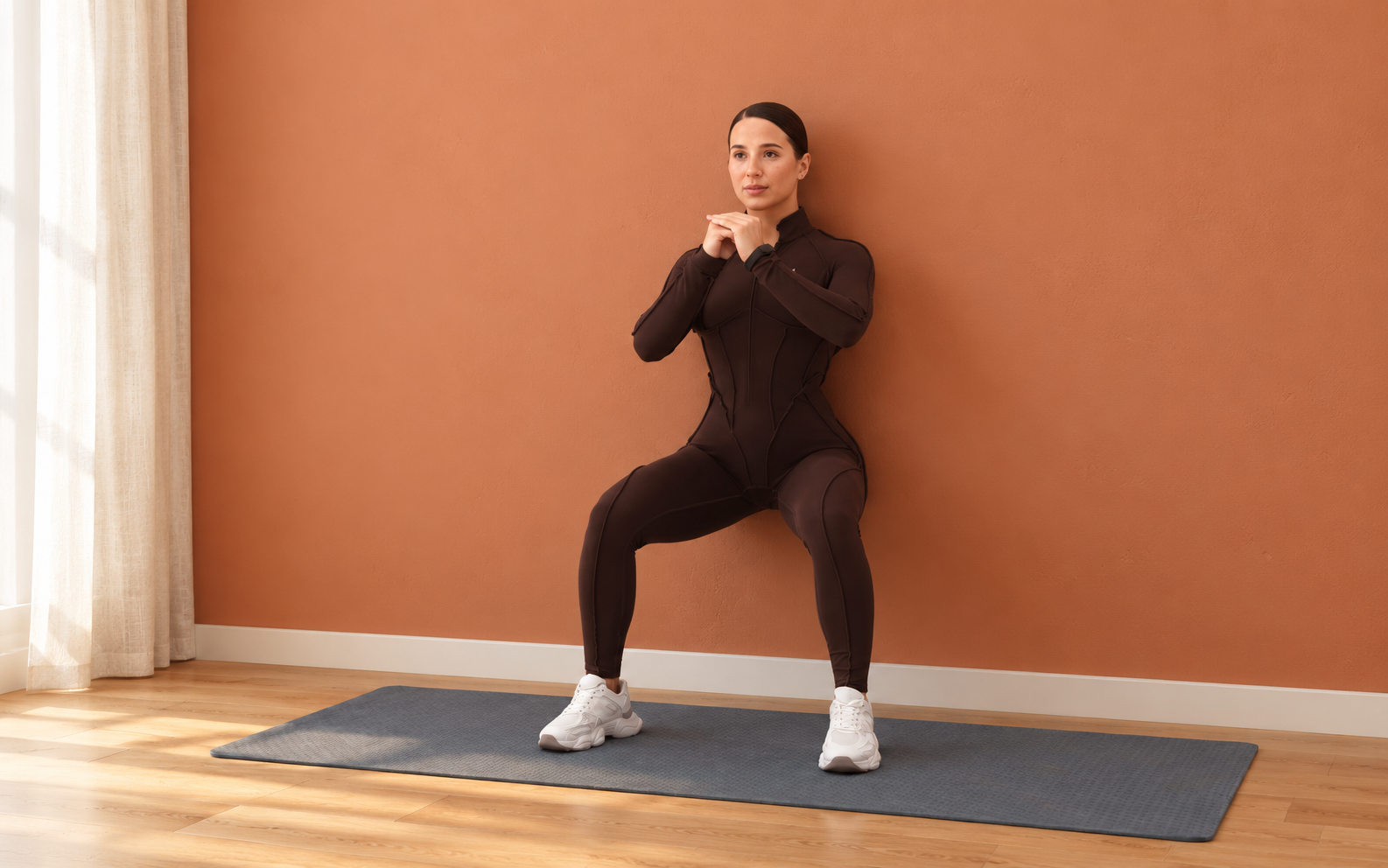
It can be an effective at-home option for building core strength, improving stability, and supporting weight management. By using a wall as a substitute for the Reformer, you can create meaningful resistance and challenge your balance without any equipment. It is particularly useful for beginners exploring Pilates for weight loss at home for beginners who want a structured, low-cost starting point.

Wall Pilates combines elements of classical and mat Pilates, adapted for home use. The wall provides a fixed surface for pressing, pushing, and stabilizing—movements that engage the core deeply and challenge your proprioception, or your body’s sense of its own position in space.

Because so many wall Pilates exercises require you to control your body against a stable surface, they tend to recruit the deep abdominal muscles, the glutes, and the stabilizers of the hips and lower back together. This multi-muscle engagement means your body is often working harder than it might appear from the outside, and that can translate to a more meaningful calorie burn over time (10).

A regular wall Pilates routine may also help improve posture and reduce the muscular imbalances that can develop from long periods of sitting (11)—something many people in desk-based jobs experience. Better postural alignment can make everyday movement feel easier and more efficient, which in turn may encourage more physical activity throughout the day.

Whether you are fitting in a session before work, during a lunch break, or after the kids are in bed, wall Pilates requires nothing more than a clear wall and a mat. That simplicity makes it one of the most consistency-friendly formats available.

Read more: Wall Pilates for Butt: A Quick Guide for Beginners

Role of Pilates Rings in Adding Resistance

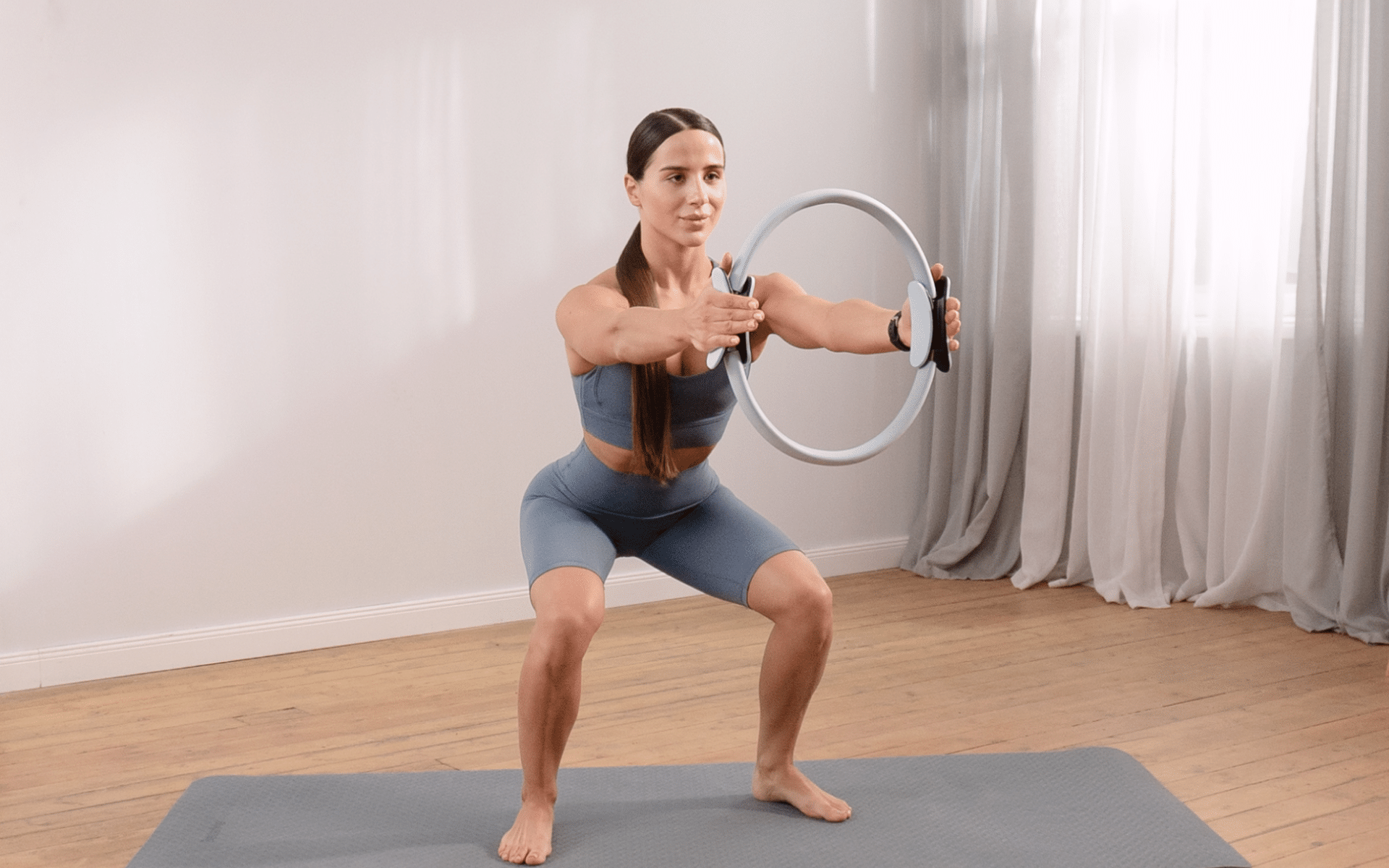
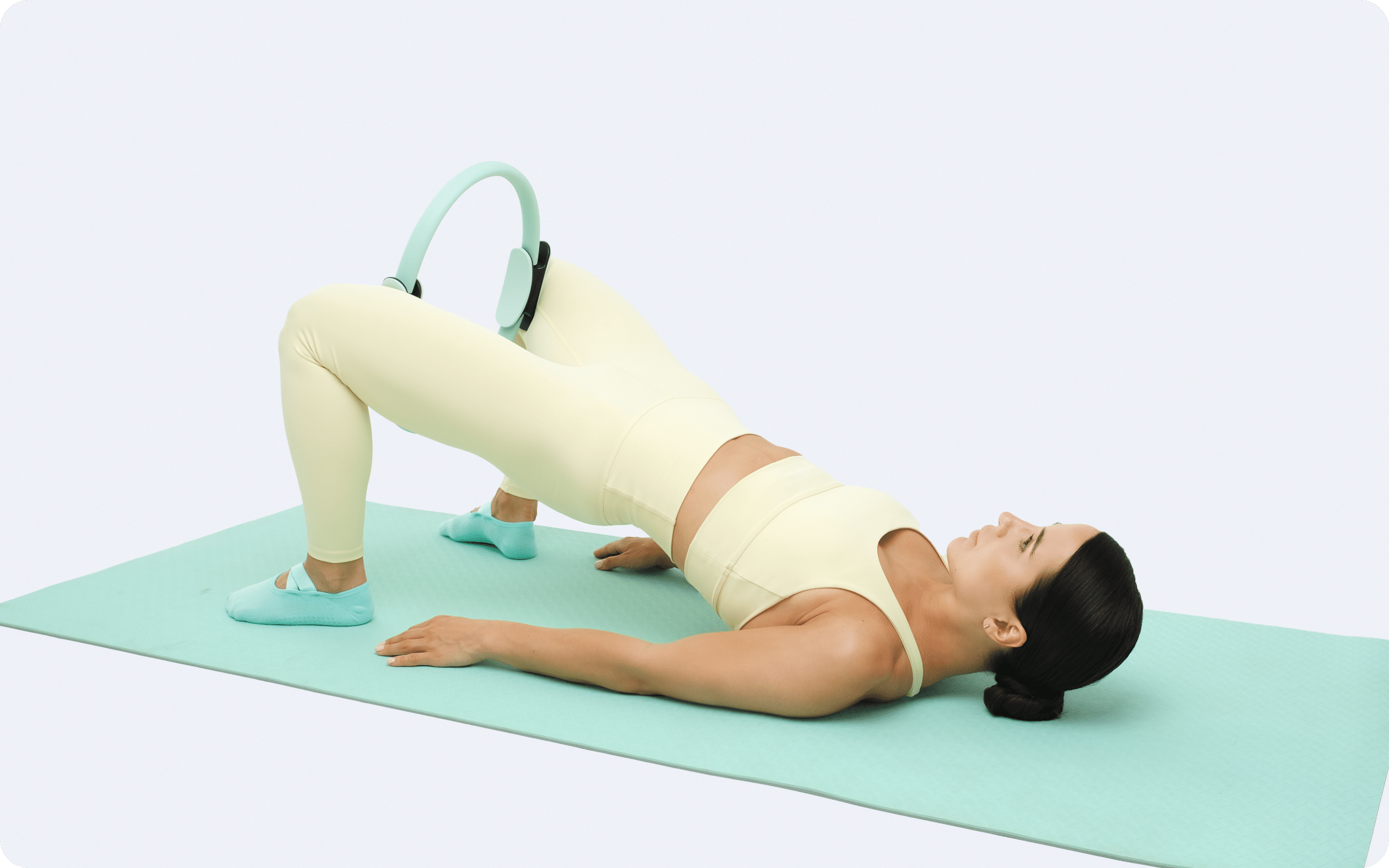
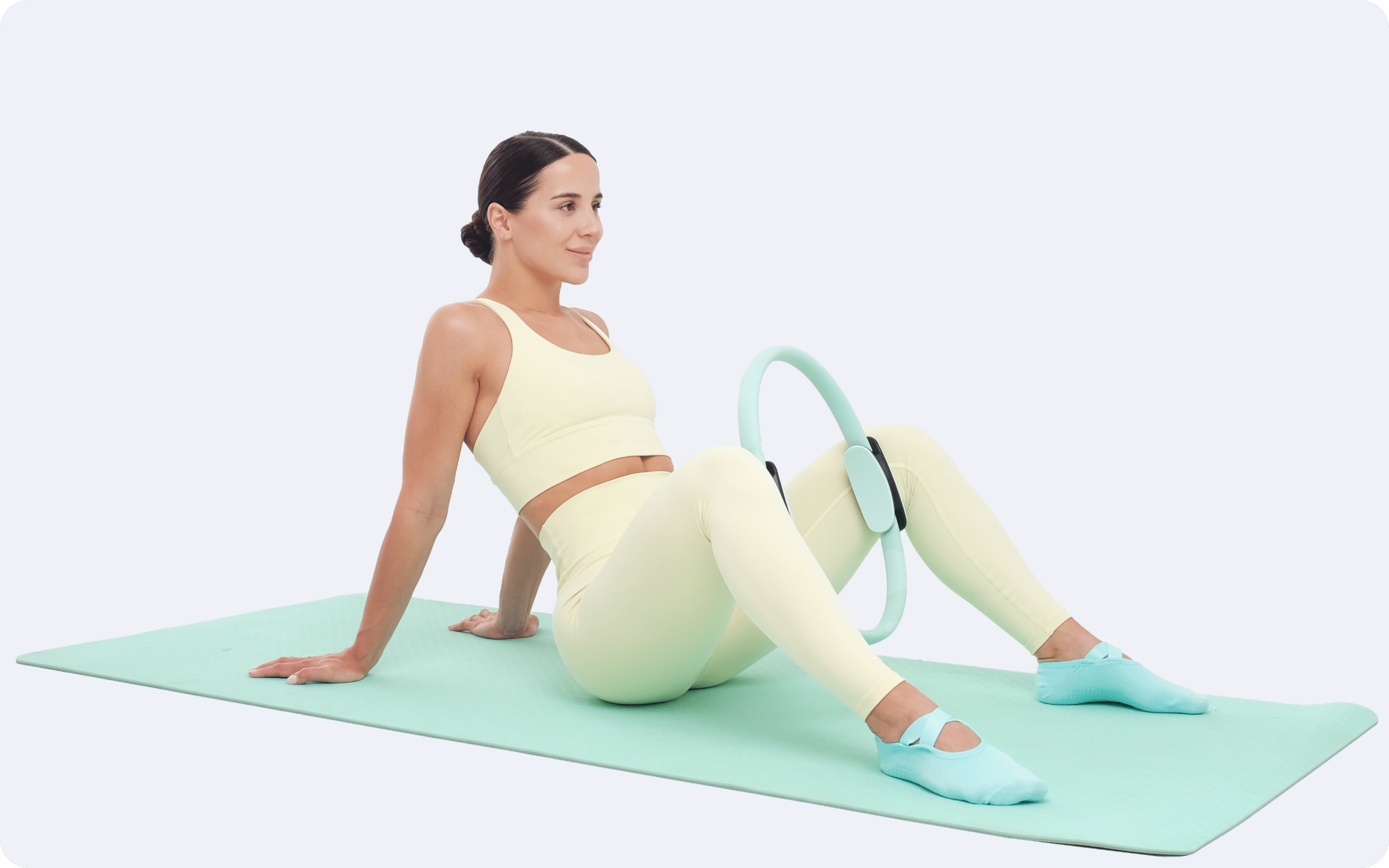
A Pilates ring—also called a magic circle—can add meaningful resistance to your routine and may help increase calorie burn, muscle engagement, and overall workout intensity (12). For anyone looking to progress beyond basic mat work, incorporating a ring into Pilates exercises for weight loss can challenge stabilizing muscles more deeply and support body composition results over time.

The ring is a lightweight, flexible loop typically made of rubber or metal with padded grips. It can be placed between the hands, ankles, thighs, or calves to create resistance in multiple planes of movement. This resistance encourages your muscles to work harder to maintain control, which builds strength and increases energy expenditure (12).

10 Benefits of Pilates: Why it’s Good for You
See also

Here are three effective Pilates ring exercises:

The Supine Twist

  1. Lie on your back on the mat with your arms extended out from your shoulders.
  2. Place the ring between your ankles and lift your legs, bending your knees to 90 degrees with toes pointed.
  3. Inhale and slowly lower your legs a few inches to the right.
  4. Hold for a breath, then exhale and return to center, initiating the movement from your core.
  5. Repeat on the left side, alternating for 6–8 reps per side.

Side Kneeling Oblique

  1. Kneel on the mat with your knees hip-width apart and the ring upright on your right side.
  2. Place your right palm on top of the ring and inhale to prepare.
  3. Reach your left arm up and exhale as you side-bend toward the ring, pressing down lightly for balance.
  4. Return to center—that is one rep.
  5. Complete 8 reps, then switch sides and repeat.

Side Heel Press

  1. Stand with legs wider than hip-width apart, toes rotated outward.
  2. Hold the ring above your head with both arms extended.
  3. Lunge to the right, bending your right knee and hip.
  4. Lift the heel of your right foot slowly, hold briefly, then lower it back down.
  5. Straighten your right leg and shift back to the starting position—that is one rep.
  6. Repeat, alternating sides for 4–6 reps.

Pilates and Abdominal Fat Management

Pilates may support abdominal fat reduction over time, particularly when practiced consistently alongside a balanced diet (5). Research suggests that regular Pilates practice can reduce waist and abdomen circumference (13). 

While it does not target fat in one specific area, the combination of core engagement, improved muscle tone, and overall calorie expenditure may contribute to a leaner midsection for many people (13).

For anyone focused on Pilates for belly fat, it helps to understand what is actually happening during a session. Pilates engages the deep core muscles—including the transverse abdominis, obliques, and pelvic floor—more intensely than many conventional exercises (14). That consistent engagement builds muscular endurance in the abdominal region, which may contribute to a firmer, more defined appearance over time.

Fat burning Pilates routines that focus on controlled movement and full-body engagement tend to be among the most helpful for overall body composition changes. Pairing these with a moderate calorie deficit gives the body the conditions it needs to draw from fat stores (5)—including in the abdominal area.

Does Pilates Tone Belly Fat?

Pilates does not spot-reduce belly fat, but it can help tone the muscles underneath it. The core-focused movements in a regular Pilates workout for weight loss strengthen the abdominal muscles over time (14). 

Are There Benefits to Stretching After Your Workout?
See also

As overall body fat decreases through consistent exercise and a balanced diet, those toned muscles may become more visible. For many people, this can lead to a firmer, more toned midsection—without needing to do endless crunches or high-impact ab work.

Intense sweat sessions, working weight loss tips, lip-smacking recipes come in one package with the BetterMe: Health Coaching app—all at your fingertips, start transforming your life now!

Pilates vs. Strength Training for Weight Management

Both Pilates and strength training offer distinct physical benefits, and neither is universally superior for weight management. Pilates tends to excel in flexibility, core strength, and accessibility, while strength training may produce greater muscle hypertrophy and a higher post-workout calorie burn. For many people, a combination of both—alongside some cardio—may support the most well-rounded results (15).

Understanding Pilates vs weight training starts with recognizing what each method prioritizes. Strength training—often called weight lifting—focuses on overloading muscles with external resistance to build size and strength. It tends to be effective at increasing lean muscle mass, which can raise your resting metabolic rate over time (16). However, it typically offers limited benefit for flexibility and may be harder to access without equipment or a gym.

Pilates, on the other hand, uses bodyweight and controlled movement to develop core stability, muscular endurance, and postural alignment. When you consider Pilates vs cardio, Pilates tends to burn fewer calories per session but builds functional strength that supports daily movement and may reduce the risk of strain (9).

The practical reality is that no single workout style addresses all aspects of fitness equally. That is why many fitness professionals suggest a blended approach: Pilates for core work and mobility, strength training for muscle development, and cardio for cardiovascular fitness and higher calorie burn.

Factor Pilates Strength Training Cardio
Calorie burn per session Moderate Moderate–high High
Muscle gain Low–moderate High Low
Flexibility High Low Low–moderate
Core strength Very high Moderate Low
Accessibility Very high Moderate High
Sustainability for beginners High Moderate Moderate

Read more: Pilates Full Body Workout for Beginners (No Equipment Needed)


Frequently Asked Questions

  • How much Pilates should I do a day to lose weight?

Most Pilates classes run 45–60 minutes, and that duration tends to produce the most noticeable results over time. That said, even 20 minutes of consistent daily practice can contribute to weight management, particularly when you are starting out. The key is showing up regularly rather than trying to do too much too soon.

  • Will 20 minutes of Pilates a day do anything for my fitness?

Yes, 20 minutes can make a real difference—especially for beginners. A short daily session may help improve core strength, posture, flexibility, and muscular endurance. Over time, as your fitness builds, you can extend the duration or increase the intensity to keep progressing.

  • How many calories does a 20-minute Pilates class burn?

A 20-minute Pilates session may burn roughly 70–80 calories (2), depending on factors like your body weight, muscle mass, age, gender, and the intensity of the workout. These are realistic estimates—results vary between individuals, and no single number applies to everyone.

  • What is a suitable Pilates option for beginners?

Mat Pilates and wall Pilates are generally suitable starting points for beginners. Both require minimal equipment, can be done at home, and allow you to build foundational strength and body awareness before progressing to more resistance-based formats like the Reformer.

  • Can you do Pilates barefoot?

You can practice Pilates barefoot, and many people do. However, grippy socks are often recommended, particularly for Reformer sessions or when working on smooth studio floors. They can help with traction and stability, which supports better form—especially during balance-focused movements.

The Bottom Line

Weight loss Pilates can be a practical, low-impact approach to managing your weight, building core strength, and supporting your overall physical fitness. Whether you choose mat, wall, or reformer Pilates, consistency tends to matter more than duration or intensity—especially at the start. 

Combining Pilates and weight loss efforts with a balanced diet and, where possible, other forms of movement, can help you work toward meaningful, lasting results. As with any new fitness routine, it is a good idea to consider consulting a qualified professional before you begin.

DISCLAIMER:

This article is intended for general informational purposes only and does not serve to address individual circumstances. It is not a substitute for professional advice or help and should not be relied on for making any kind of decision-making. Any action taken as a direct or indirect result of the information in this article is entirely at your own risk and is your sole responsibility.

BetterMe, its content staff, and its medical advisors accept no responsibility for inaccuracies, errors, misstatements, inconsistencies, or omissions and specifically disclaim any liability, loss or risk, personal, professional or otherwise, which may be incurred as a consequence, directly or indirectly, of the use and/or application of any content.

You should always seek the advice of your physician or other qualified health provider with any questions you may have regarding a medical condition or your specific situation. Never disregard professional medical advice or delay seeking it because of BetterMe content. If you suspect or think you may have a medical emergency, call your doctor.

SOURCES:

  1. The Effect of Pilates Exercises Applied to Overweight and Obese Women on Body Composition (2023, researchgate.net)
  2. Metabolic intensity and energy cost of Pilates exercises: an exploratory systematic review and meta-analysis of limited and heterogeneous evidence (2026, ink.springer.com)
  3. Effects of reformer pilates on body composition, strength, and psychosomatic factors in overweight and obese women A randomized controlled trial (2025, nature.com)
  4. Pilates for Overweight or Obesity: A Meta-Analysis (2021, frontiersin.org)
  5. The Effects of Online Home-Based Pilates Combined with Diet on Body Composition in Women Affected by Obesity: A Preliminary Study (2024, mdpi.com)
  6. American Heart Association Recommendations for Physical Activity in Adults and Kids (2024, heart.org)
  7. Research shows that short, intense workouts are beneficial (2023, uclahealth.org)
  8. The effects of mat Pilates exercise and barrel Pilates exercise on body composition and muscle activity in adult women (2025, sciencedirect.com)
  9. PILATES EXERCISES, TYPES, AND ITS IMPORTANCE: AN OVERVIEW (2023, researchgate.net)
  10. Efficacy of Pilates in Functional Body Composition: A Systematic Review (2022, mdpi.com)
  11. Effects of Pilates on Body Posture: A Systematic Review (2024, sciencedirect.com)
  12. Automated Pilates Ring Tracking and Motion Analysis (2024, ieeexplore.ieee.org)
  13. Effect of the ‘Pilates stance’ and Pilates-based matwork training on measurements of height, waist circumference, and interscapular distance (2024, sciencedirect.com)
  14. Effects of Core Stability Training on Deep Stabilizing Muscle Function and Neuromuscular Control (2025, mdpi.com)
  15. An Enjoyable Workplace Combined Exercise Program for Health Promotion in Trained Employees: Yoga, Pilates, and Circuit Strength Training (2023, mdpi.com)
  16. Resistance training – health benefits (2022, betterhealth.vic.gov)
150 million people
have chosen BetterMe

I absolutely love this app

Shy B.
Once again, I absolutely love this app doing Pilates as it is helping me shed inches and pounds. I never thought I’d like doing Pilates because it isn’t high impact. It does work❤️❤️

Rapid Results!

Amy F.
This app has given me an additional workout each day that incorporates flexibility, Pilates, and stretching, which I have needed for so long! The biggest change I have noticed is how much flatter my stomach is, my core is changing by the day!…. The kicker - I’ve only been using app for 1 week!

Only 15 minutes!

Amy M.
I needed somewhere to start because it's been a while since I've exercised. Always have loved pilates. This program is perfect for me. It gives me step by step video with warm up/cool down. I need someone to tell me what exercises to do- LOVE it! This may be 15 minutes but it works me out good! Some of the exercises kick my tail though!