
A 12 weeks mass building workout organizes strength training, progression, and recovery across three months. This sample workout routine uses four weekly upper/lower sessions, with adjustments for newer lifters. It provides a schedule for practicing and tracking your lifts. Muscle gain varies, so twelve weeks is a planning period rather than a deadline for results.
Muscular hypertrophy means an increase in muscle size. This muscle building workout explains exercises, sets, repetitions, and ways to adjust your training routine.
For more background on individual training considerations, explore our guide to female muscle growth.
Key takeaways
These points sum up the 12-week plan and the research behind it.
- Mechanical tension from resistance exercise helps stimulate muscle growth (1).
- Split and full-body routines can produce similar gains when weekly training volume matches (2).
- Increasing repetitions or weight can support progression; both worked in a study of previously untrained adults (3).
- Training every set to failure is not required for strength or muscle growth (4).
- Recovery needs vary with exercise selection, training volume, and effort (5).
- This 12-week workout plan is an adjustable example, not a guarantee of muscle gain.
Can you build muscle in 12 weeks?
Yes, gaining some muscle within three months is possible. A ten-week resistance-training study found increases in previously untrained adults (3). Your results can differ. This 12-week muscle building plan combines repeated exercise with recovery and gradual adjustments.
Mechanical tension is force experienced by muscle fibers during resistance exercise. A recent review identifies it as a key hypertrophy stimulus (1). This does not mean every repetition must use maximal weight.
Training priorities:
- Enough hard weekly training volume
- Effort that feels challenging
- Gradual progression when performance allows
- Sufficient sleep, food, and recovery
A temporary muscle pump is not a measurement of lasting growth.
The sample phases provide review points rather than mandatory increases:
- Weeks 1 to 4: Week one starts with technique and manageable loads
- Weeks 5 to 8: Review repetitions and adjust resistance when ready
- Weeks 9 to 11: Continue progress while monitoring fatigue
- Week 12: Review the block and decide whether to maintain or reduce workload
Keep a training log for each training session. Changes in strength, repetitions, and muscle size do not necessarily occur at the same rate.

How much muscle mass can you gain in 12 weeks?
No fixed amount of lean muscle mass applies to everyone. Start with a workload you can repeat consistently and seek instruction for unfamiliar lifts.
Your starting point, training history, nutrition, and adherence affect your response. Research averages cannot predict your individual 12-week results.
Keep these points in mind before you begin:
- Volume means the work you complete. Track weekly sets per muscle group rather than treating a high set target as compulsory.
- Training frequency distributes that work across the week. A review of 14 studies found similar gains from split and full-body routines when volume matched (2).
- Effort should be challenging but controlled. New lifters can stop with more repetitions available while learning technique.
- Different loads can help you build muscle. A meta-analysis found similar hypertrophy with lighter and heavier loads, although heavier training improved maximal strength more (6).
Read more: 6-week female bodybuilder workout explained: structure, tips, and FAQs
What should you eat during a 12-week muscle-building program?
Review training and nutrition together when planning your meals. Include protein to support muscle repair, carbohydrates for fuel, and a varied diet (7). A registered dietitian can help develop your nutrition plan. This sample does not prescribe a universal calorie surplus or supplement routine.
Stop exercise for sharp pain, dizziness, or loss of control. Persistent discomfort warrants assessment from a qualified healthcare professional.
What should a 12 week mass building workout include?
This training schedule uses an upper/lower split four times per week. Wednesday, Saturday, and Sunday are rest days.
An upper/lower split means you train upper-body muscles on some days and lower-body muscles on others. This lets you train each muscle group twice a week.
Here is the weekly rhythm:
- Monday: Upper A
- Tuesday: Lower A
- Thursday: Upper B
- Friday: Lower B
RIR means repetitions in reserve: the controlled repetitions you estimate remain at the end of a set (8). Start with one or two sets per exercise. The ranges below are adjustable examples, not minimums. Repetitions apply to each side for split squats.
| Phase | Weeks | Day | Focus & sample exercises | Sets | Reps | Rest | RIR |
|---|---|---|---|---|---|---|---|
| Foundation | 1 to 4 | Upper A | Bench press, chest-supported row, lat pulldown, lateral raise | 1 to 2 | 8 to 12 | 90 sec to 3 min | 2 to 3 |
| Lower A | Squat, Romanian deadlift, leg press, seated leg curl, calf raise | 1 to 2 | 8 to 12 | 2 to 3 min | 2 to 3 | ||
| Upper B | Overhead press, lat pulldown, bench press, chest-supported row, curl | 1 to 2 | 8 to 12 | 90 sec to 3 min | 2 to 3 | ||
| Lower B | Hip thrust, split squat, seated leg curl, calf raise | 1 to 2 | 8 to 12 | 2 to 3 min | 2 to 3 | ||
| Build | 5 to 8 | All 4 days | Repeat exercises; add reps or weight only with control | 1 to 3 | 8 to 12 | 60 sec to 3 min | 2 to 3 |
| Practice | 9 to 11 | All 4 days | Maintain manageable volume; no compulsory failure sets | 1 to 3 | 8 to 12 | 60 sec to 3 min | 2 to 3 |
| Review | 12 | All 4 days | Maintain, or reduce work if fatigue has accumulated | Adjust | 8 to 12 | 2 min | 3 or more if easing |
Repeat a phase of the program when needed. You do not need to increase sets, weight, and effort together.
Which exercises should form the foundation of the program?
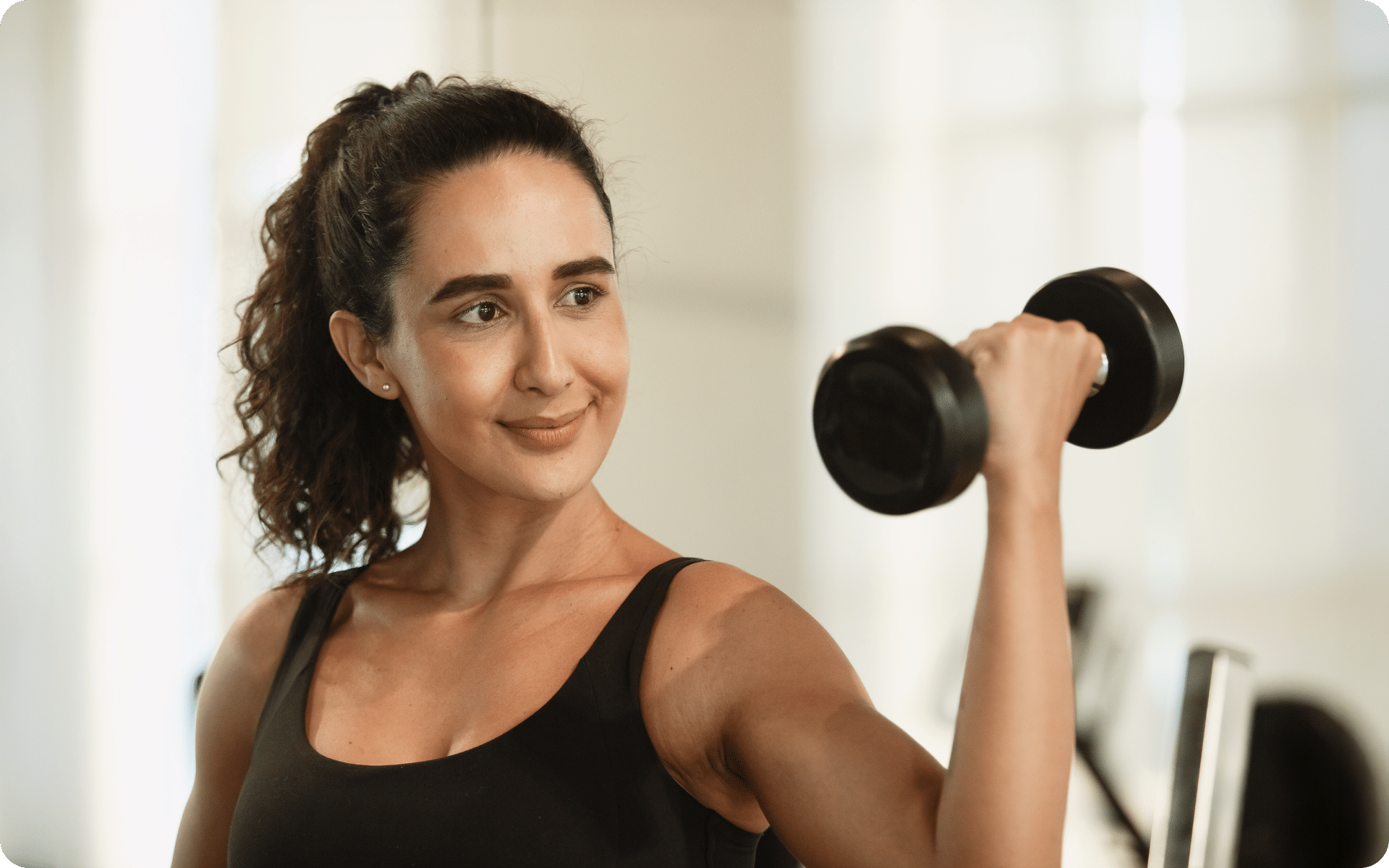
Choose exercises you can perform with control and repeat consistently. The sample combines presses, pulls, squats, and hip-dominant movements.
The comparison below describes possible alternatives. Substitutions may change which muscles and movements receive training.
| Exercise | Main muscles trained | Why it earns a place | Possible alternative |
|---|---|---|---|
| Bench press | Chest, shoulders, triceps | Loadable and easy to track over weeks | Machine chest press |
| Squat | Quads, glutes | Trains large lower-body muscles at once | Leg press or hack squat |
| Romanian deadlift | Hamstrings, glutes | Loads the back of the legs well | Seated leg curl |
| Chest-supported row | Upper back, biceps | Chest support limits unsupported trunk work | Cable row |
| Overhead press | Shoulders, triceps | Trains overhead pressing strength | Machine shoulder press |
| Lat pulldown | Lats, biceps | Beginner-friendly vertical pull | Assisted pull-up |
Isolation exercises add focused work, but they still contribute to fatigue. Add them only when your current workload is manageable.
For more ways to organize training by body region, explore our muscle group workouts.
Exercise instructions
Before working sets, begin with light movement and unloaded practice. Gradually rehearse each unfamiliar lift with comfortable resistance. Use rack safeties or a qualified spotter for barbell squats and bench presses. Ask staff to demonstrate machine adjustments.
Workouts, weight management tools, and recipe ideas come together in the BetterMe: Health Coaching app, giving you practical support for building a more consistent wellness routine.
Bench press
- Lie flat with feet planted and a slight arch in your back.
- Grip the bar a little wider than shoulder width.
- Lower the bar to your mid-chest with control.
- Press it back up until your arms are straight.
Squat
- Set the bar across your upper back, feet shoulder-width apart.
- Brace your core and keep your chest up.
- Bend your knees and hips through a comfortable, controlled range.
- Drive through your feet to stand tall.
Romanian deadlift
- Hold the bar in front of your thighs.
- Keep a slight knee bend and flat back.
- Push your hips back as the bar lowers along your legs.
- Squeeze your glutes to return upright.
Chest-supported row
- Lie chest-down on an incline bench.
- Let your arms hang holding dumbbells.
- Pull your elbows back and squeeze your upper back.
- Lower with control.
Overhead press
- Hold the bar at shoulder height, elbows under the bar.
- Brace your core and squeeze your glutes.
- Press overhead without arching your lower back.
- Lower it back to your shoulders slowly.
Lat pulldown
- Grip the bar wider than shoulder width.
- Sit tall and secure your thighs under the pad.
- Pull the bar to your upper chest.
- Let it rise back up with control.
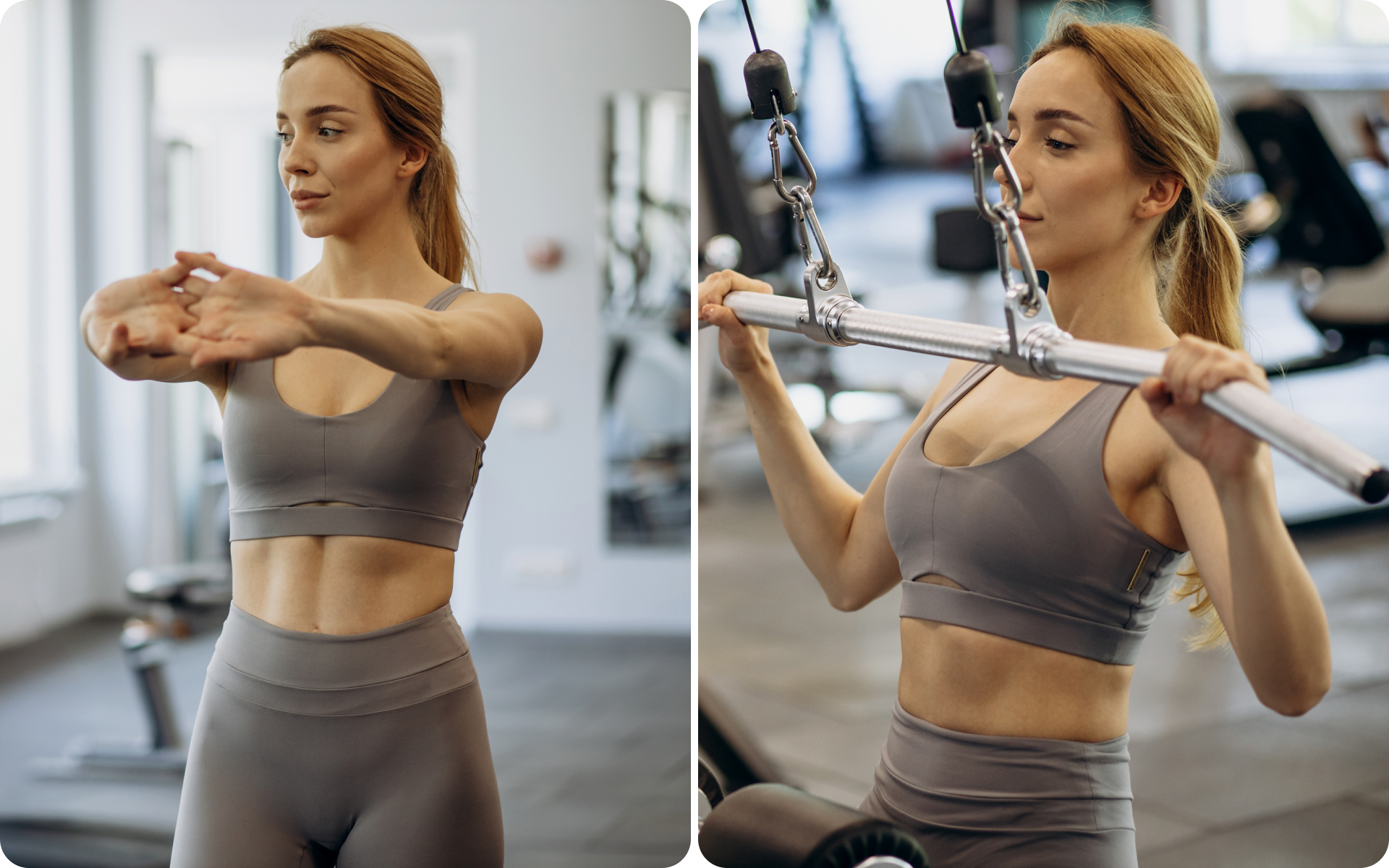
Lateral raise
- Hold light dumbbells by your sides.
- Raise your arms toward shoulder height with a slight elbow bend.
- Lower without swinging.
Leg press
- Sit with your back and pelvis supported against the pad.
- Lower the platform through a comfortable range while keeping your heels supported.
- Press away without forcefully locking your knees.
Seated leg curl
- Adjust the seat and pads to fit your legs.
- Curl your heels downward against the resistance.
- Return slowly without lifting your hips.
Calf raise
- Stand near a stable support with your feet hip-width apart.
- Rise onto the balls of your feet.
- Lower your heels with control.
Dumbbell curl
- Hold dumbbells with palms facing forward.
- Bend your elbows without swinging your torso.
- Lower the weights slowly.
Hip thrust
- Rest your upper back against a secured bench, with knees bent and feet planted.
- Secure a comfortable padded load across your hips, or begin without added weight.
- Lift until shoulders, hips, and knees align without arching your lower back.
- Lower with control.
Split squat
- Stand in a staggered stance near a stable support.
- Bend both knees to lower through a comfortable range.
- Push through your front foot to stand.
- Complete the prescribed repetitions on both sides.
How should the 12-week plan progress through its phases?
Keep repetitions and rest reasonably consistent while assessing whether you need more workload. Progression does not require harder training every week.
A set is a group of reps done back-to-back. A rep is one full movement, like one squat.
The RIR-based RPE scale expresses effort from one to ten. RPE 9 corresponds to about one repetition remaining (8).
Reduce the load if you cannot complete the lower repetition target with control.
If these sets remain manageable across several sessions, consider one extra repetition before adding another set.
Sample sets and reps:
- Reps: Use 8 to 12 as this plan’s starting range, not a uniquely effective hypertrophy range (6).
- Sets: Begin with one or two; add only when your response supports it.
- Effort: Leave about two or three repetitions available; beginners may leave more.
How important are rest and recovery for muscle growth?
Rest supports your ability to repeat demanding training. Recovery varies with workload and effort (5). Use these adjustable rest examples:
- 2 to 3 minutes for heavier compounds like squats, presses, and rows
- 60 to 90 seconds for lighter isolation work like curls and raises
In a small study of trained women, three-minute rests preserved more machine-exercise volume than one-minute rests (9). Extend rest when needed to repeat controlled repetitions.
Read more: 6-week workout plan to gain muscle mass and strength safely And quickly
How can you apply progressive overload without increasing weight every workout?
Adding repetitions is one way to progress without changing weight. A study compared increasing repetitions with increasing load over ten weeks (3).
Both approaches improved strength and muscle size in 39 previously untrained adults. The findings concern that study’s lower-body program.
This progressive overload program offers several options:
- Add reps. For example, aim for 10 reps per set before increasing weight.
- Use double progression. Stay at one weight until you hit the top of your rep range on all sets, then add a little load.
- Add a set. If recovery is good and progress stalls, add one set to a key movement.
- Maintain technique. Avoid trading control for heavier weights or extra repetitions.
Change one variable at a time so your training log remains useful. Repeat the same workload when recovery is limited.
When should you keep the same weight instead of progressing?
Keep the same weight when you have not yet mastered your current load or reps.
Forcing heavier weights too soon can hurt your form and cut your volume.
Hold the weight steady when any of these are true:
- Your reps fell below your target range
- Your technique got noticeably worse
- Your range of motion shortened
- The set relied on momentum
- Your sleep or nutrition was off recently
- Joint discomfort is building
Hold or reduce the load when necessary. Persistent joint discomfort needs assessment rather than repeated attempts to train through it.
How can you adjust the plan if you miss a workout?
Resume your schedule after a missed workout without doubling the next session. Choose an option that leaves recovery time between repeated muscle-group sessions.
Choose one of these options:
- Slide the week forward. Missed Tuesday? Do it Wednesday and shift the rest back.
- Skip the missed session and continue your usual sequence without adding compensatory sets.
- If missed sessions become frequent, use a shorter routine or fewer weekly sessions.
Avoid these catch-up strategies:
- Do not attempt a 3-hour catch-up marathon
- Do not suddenly double your weekly volume
- Do not push every set to failure to make up
BetterMe can help you add more structure to your daily wellness routine with workouts, meal planning tools, and habit-building features. Explore the app and take a practical step toward a routine that feels more manageable for you.
What should you do after completing the 12 weeks?
Review your training log after week 12. Decide whether to repeat, simplify, or adjust the next block based on performance and recovery.
A planned review does not require a mandatory break or a weight-loss phase.
Consider these options:
- Repeat this 12 week program if it remains manageable.
- Reduce exercises or sets when recovery repeatedly limits your performance.
- Review nutrition with a qualified professional if intake or weight changes concern you.
- Seek coaching to build strength in specific lifts.
If you prefer training without a gym next, try our 30-Day Muscle-Building Workout at Home.
Frequently asked questions
How many days per week should you train during a muscle-building program?
This sample uses four weekly sessions. Full-body workouts on fewer days can bring similar gains when weekly volume matches (2).
Do you have to lift heavy to build muscle?
No. A meta-analysis found that lighter and heavier loads produced similar muscle growth across included training programs (6). Heavier loads improved maximum strength more. Choose a load you can control and adjust effort as you gain experience.
Should you train to failure on every set?
No. A meta-analysis found no overall strength or hypertrophy advantage for failure training in young adults (4). This sample leaves repetitions in reserve. Stop when control deteriorates, even if the repetition target remains unfinished.
How often should you increase the weight you lift?
Increase weight after reaching the top of your chosen repetition range with control and the intended effort. Use the smallest practical increment. Keep the same weight if repetitions or recovery worsen. There is no compulsory weekly increase.
Can you repeat the same exercises for 12 weeks?
Yes. Repeating exercises makes changes in repetitions and load easier to compare. Change a movement when equipment, comfort, or your goals require it. Persistent discomfort calls for assessment before you try another variation.
The bottom line
A structured 12-week training plan provides practice, progression, and recovery. Begin with manageable sets, use controlled repetitions, and review your training log. Increase training demands when your performance supports it. Twelve weeks can establish useful habits, but it cannot guarantee a particular muscle gain or appearance.
DISCLAIMER:
This article is intended for general informational purposes only and does not serve to address individual circumstances. It is not a substitute for professional advice or help and should not be relied on for making any kind of decision-making. Any action taken as a direct or indirect result of the information in this article is entirely at your own risk and is your sole responsibility.
BetterMe, its content staff, and its medical advisors accept no responsibility for inaccuracies, errors, misstatements, inconsistencies, or omissions and specifically disclaim any liability, loss or risk, personal, professional or otherwise, which may be incurred as a consequence, directly or indirectly, of the use and/or application of any content.
You should always seek the advice of your physician or other qualified health provider with any questions you may have regarding a medical condition or your specific situation. Never disregard professional medical advice or delay seeking it because of BetterMe content. If you suspect or think you may have a medical emergency, call your doctor.
SOURCES:
- Load-induced human skeletal muscle hypertrophy: Mechanisms, myths, and misconceptions (2025, pubmed.ncbi.nlm.nih.gov)
- Efficacy of Split Versus Full-Body Resistance Training on Strength and Muscle Growth: A Systematic Review With Meta-Analysis (2024, pubmed.ncbi.nlm.nih.gov)
- Effects of Resistance Training Overload Progression Protocols on Strength and Muscle Mass (2024, pubmed.ncbi.nlm.nih.gov)
- Effects of resistance training performed to repetition failure or non-failure on muscular strength and hypertrophy: A systematic review and meta-analysis (2022, sciencedirect.com)
- The Importance of Recovery in Resistance Training Microcycle Construction (2024, pmc.ncbi.nlm.nih.gov)
- Influence of resistance training load on measures of skeletal muscle hypertrophy and improvements in maximal strength and neuromuscular task performance: A systematic review and meta-analysis (2021, pubmed.ncbi.nlm.nih.gov)
- Nutrition and athletic performance (2026, medlineplus.gov)
- Novel Resistance Training-Specific Rating of Perceived Exertion Scale Measuring Repetitions in Reserve (2016, pubmed.ncbi.nlm.nih.gov)
- The Effect of Rest Interval Length on Upper and Lower Body Exercises in Resistance-Trained Females (2021, pmc.ncbi.nlm.nih.gov)
 By

 Reviewed by