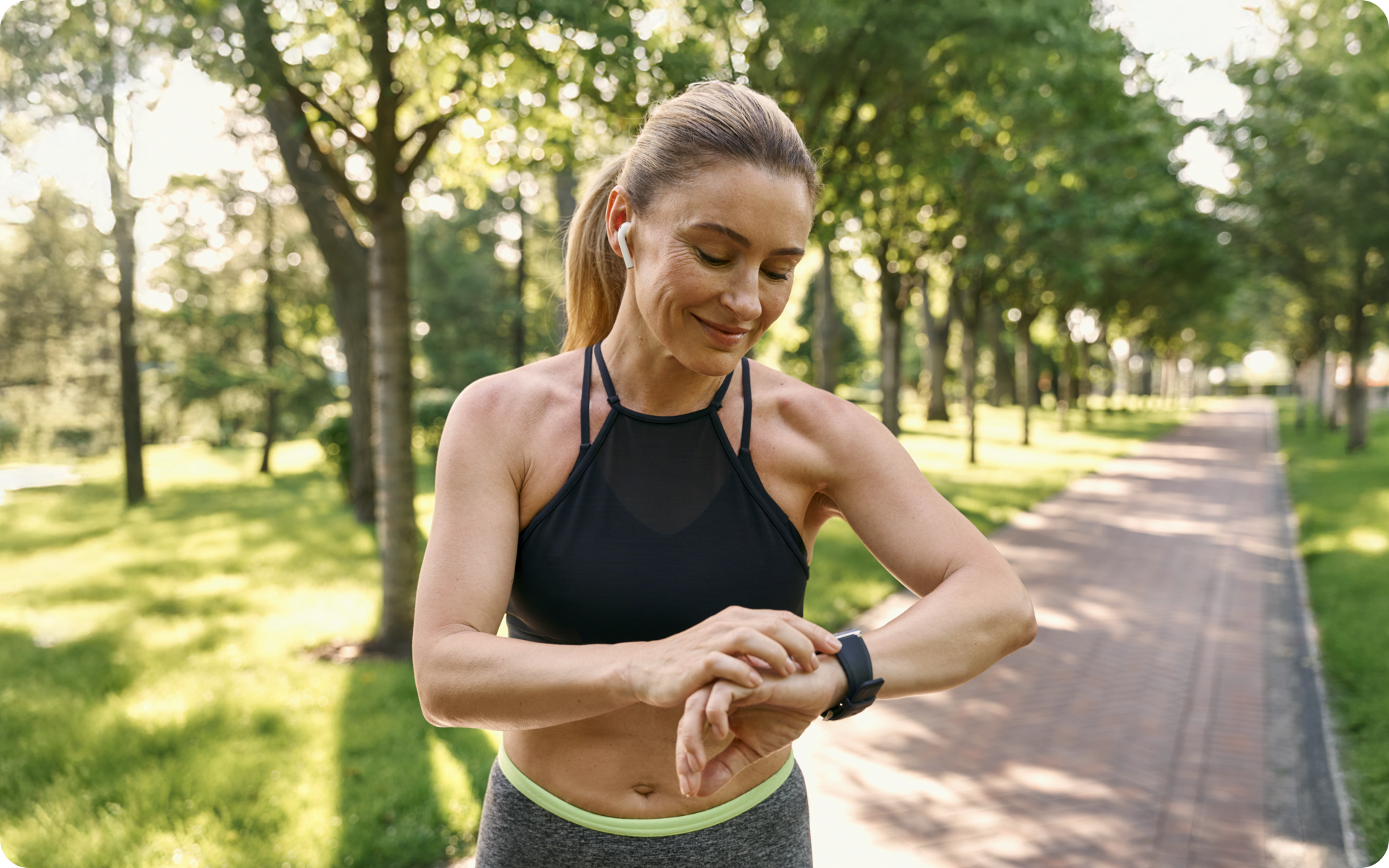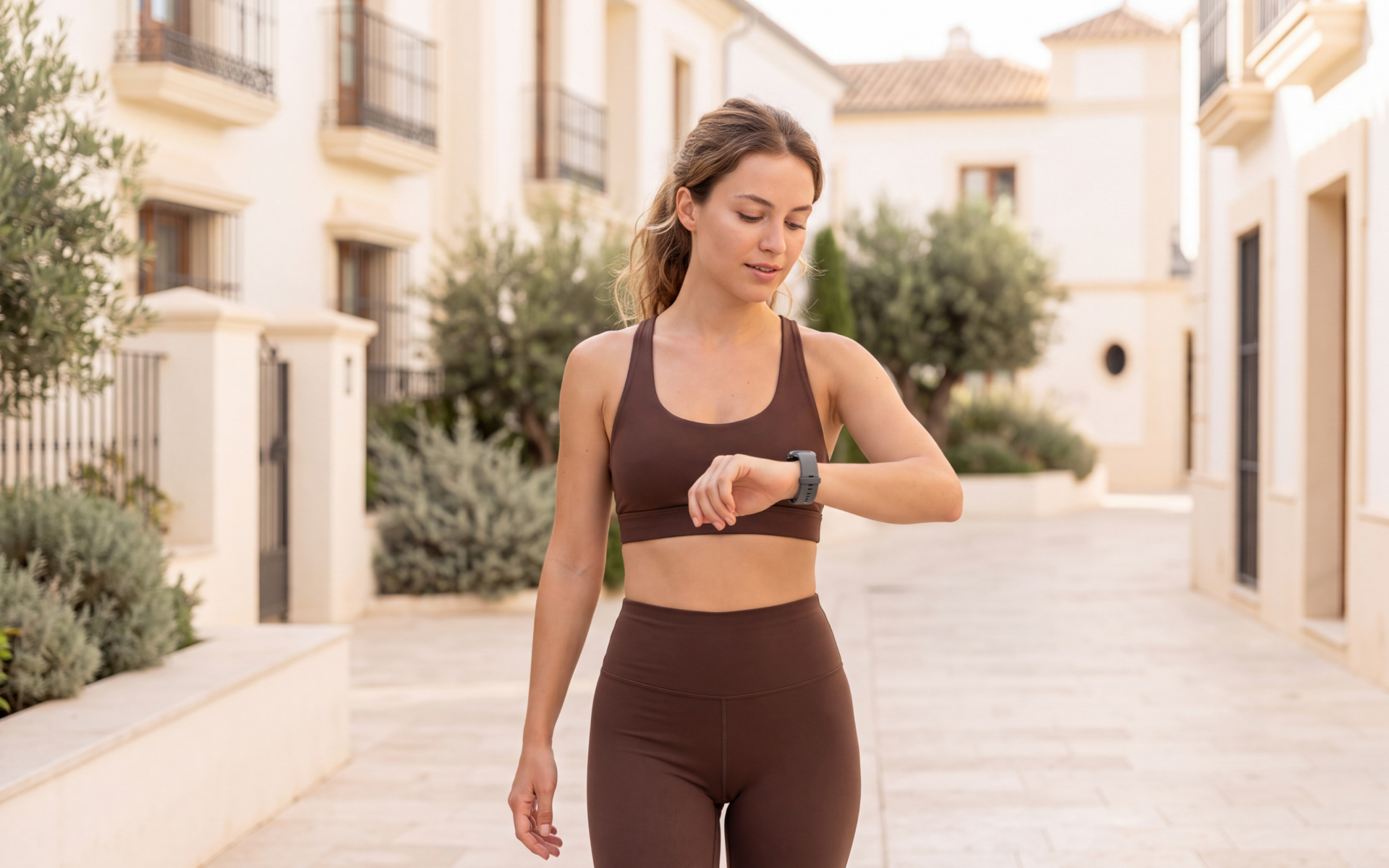
For 20,000 steps, calories burned depend on distance, body weight, pace, and terrain. A step count alone cannot give a reliable calorie total. Use measured walking time or distance for a rough estimate, and choose a manageable target. Our indoor walking exercises offer options for adding movement at home.

Following exercise and diet plans is the key in your fitness journey and greatly impacts results. In 4 weeks users can typically expect to lose not more than 1-2 lbs per week. Individual results may vary.
Key takeaways
- A step count alone does not determine calories burned; walking distance and body size matter (1).
- For a 154 lb person, an activity table estimates about 280 calories per hour at 3.5 mph (2).
- General adult activity guidance does not require 20,000 steps daily (3).
- Weight loss depends on overall energy balance, including food intake and activity (4).
- At 100 steps per minute, 20,000 steps take 200 minutes. One study linked that cadence to moderate intensity in adults aged 21-40 (5).
- The sample schedule divides 20,000 steps into several walking periods; reduce it if the workload is too high.
- Exercise does not reliably target fat loss from a chosen body area (6).

How many steps a day for fat loss?
There is no required step count for fat loss. General adult guidance uses weekly activity time and strength-training frequency, rather than a 20,000-step daily target (3). Start from your current activity level.
Walking increases energy expenditure, but food intake and other activity also affect weight change (4, 2). A higher step count does not guarantee weight loss.
To choose a manageable target:
- Record your usual activity for several ordinary days.
- Add a short walk when it fits your schedule.
- Review how your feet, legs, energy, and recovery respond.
- Increase the amount only when the current routine feels manageable.
A smaller routine you can repeat is a reasonable option. You do not need to reach 20,000 steps to make walking part of your day.
Read more: Oblique Stretches To Guard Yourself From Back Injuries
Does 20,000 steps burn fat?
Walking uses energy and can contribute to weight loss when your overall activity and food intake produce an energy deficit (2). The number 20,000 is not a threshold at which fat loss begins.
It helps to separate two ideas:
- Calorie burn during the walk: The energy used while moving
- Fat loss over time: The slow change in body composition
Your weight can stay stable despite a high step count if overall energy intake and expenditure remain similar (4). Short-term scale changes also do not measure body-fat change directly.
Consider the whole routine, including meals, walking, other exercise, and recovery.

How many calories does 20k steps burn?
There is no single calorie total for 20,000 steps. A study of adults walking one mile found group averages of about 94 and 98 calories, with substantial variation between participants (1). Those averages are not a universal calories-per-step conversion.
Here is a worked example using an activity-table estimate of 280 calories per hour for a 154 lb person walking at 3.5 mph (2). Assume an average step length of 0.75 meters: 20,000 steps cover 15 kilometers, or about 9.3 miles. At that speed, the walk takes about 2 hours 40 minutes, giving roughly 745 calories. The assumed step length and body weight are part of the calculation, not measurements of your walk.
For your own estimate, use measured distance or moving time and a value appropriate to your body weight and pace. Check whether a device reports active calories or total calories, which also include energy used at rest. These measures are not interchangeable.
The worked example uses these inputs:
- 20,000 steps multiplied by an assumed 0.75 meters per step = 15 kilometers.
- 15 kilometers is approximately 9.3 miles.
- 9.3 miles divided by 3.5 mph = approximately 2.66 hours.
- 2.66 hours multiplied by 280 calories per hour = approximately 745 calories (2).
Workouts, weight management tools, and recipe ideas come together in the BetterMe: Health Coaching app, giving you practical support for building a more consistent wellness routine.
What affects how many calories you burn from 20,000 steps?
Body weight, distance, and walking speed affect the energy used during a walk (1, 2). Inclines and surfaces can also change the effort. A step counter does not capture all of these differences.
When comparing walks, record:
- Body weight used by your calorie calculator.
- Walking pace and moving time.
- Distance covered, since step length varies.
- Surface, such as pavement, trail, or sand.
- Whether the route includes hills.
- Any load you carried.
- Whether the estimate refers to active or total calories.
The table compares example paces. It does not assign a calorie ranking across people or routes.
| Effort level | Pace (mph) | What to record |
|---|---|---|
| Easy stroll | 2.0-2.5 | Time and distance |
| Moderate walk | 3.0-3.5 | Time and distance |
| Brisk walk | 3.5-4.0 | Time and distance |
| Incline or loaded walk | 3.0-4.0 | Time, distance, incline, and load |
Start with a route and pace you can manage. You do not need to add hills or carry weight to make a walk count.

Is walking 20,000 steps a day realistic?
Walking 20,000 steps a day is realistic for some people, but not an easy daily habit for everyone. It’s a high activity level that asks for time and recovery.
It may fit well if you:
- Already walk a lot for work or errands
- Have 2-4 hours of movement you can spread out
- Recover well and enjoy being on your feet
- Can complete the current walking workload without pain or unusual fatigue
It may feel like a stretch if you:
- Work a desk job with little free time
- Would be increasing sharply from your current daily activity
- Already feel run-down or under-rested
- Want to keep time for strength work and sleep
Choose a target that leaves room for recovery, strength work, and other commitments. A temporary challenge can still be too demanding if it increases your workload too quickly.
Read more: The Ultimate Walking Plan To Lose Weight And Tone Up
How long should it take to walk 20,000 steps?
The time depends on cadence, which means steps per minute. Divide 20,000 by your average cadence to estimate moving time, then allow extra time for breaks.
In a study of adults aged 21-40, about 100 steps per minute corresponded to a practical threshold for moderate-intensity walking (5). At that cadence, 20,000 steps take 200 minutes, or 3 hours 20 minutes. Individual effort can differ.
These are calculated moving times at example cadences:
- 80-95 steps per minute: about 3 hours 31 minutes to 4 hours 10 minutes.
- 100 steps per minute: 3 hours 20 minutes.
- 110-130 steps per minute: about 2 hours 34 minutes to 3 hours 2 minutes.
You can spread walking across the day. Include breaks and use your actual step count to see how much different activities contribute.

How can you fit 20,000 steps into your daily routine?
If 20,000 steps fits your current capacity, divide the total across the day. The sample below uses an assumed cadence of 100 steps per minute; it is a scheduling example, not a daily recommendation.
Sample schedule totaling 20,000 steps:
- Morning walk: 40 minutes, about 4,000 steps.
- Three after-meal walks: 10 minutes each, about 3,000 steps total.
- Walking calls: 20 minutes, about 2,000 steps.
- Errands on foot: 30 minutes, about 3,000 steps.
- Evening walk: 40 minutes, about 4,000 steps.
- Other walking: 40 minutes accumulated, about 4,000 steps.
A few habits can make the total easier to reach:
- Park farther from entrances
- Take stairs when you can
- Walk while catching up on a podcast
- Use an indoor route when outdoor conditions do not suit you.
If you often walk indoors, you might wonder, is walking in place the same as walking outside for step counting?
How many calories should I consume if I’ve walked 20,000 steps?
There is no universal calorie intake for a day with 20,000 steps. Your needs depend on body size, activity, goals, and health. A step count cannot tell you how much to eat.
A review of weight-management diets describes energy deficits used in clinical weight-loss approaches (4). That does not make a fixed 500-calorie deficit appropriate for everyone.
A registered dietitian can help you set an intake that accounts for your activity and nutritional needs.
Useful information to bring to that discussion includes:
- Your usual meals and appetite.
- Walking time, distance, and any other exercise.
- Fatigue or difficulty recovering.
- Weight trends, if monitoring weight is appropriate for you.
Reduce the workload and seek advice if your walking routine repeatedly leaves you exhausted or unwell.
Why am I not losing weight walking 20,000 steps a day?
A step count does not show your overall energy balance, so walking 20,000 steps cannot guarantee weight loss (4). Review the full routine before assuming that you need more exercise or less food.
Consider these questions:
- Has your food intake changed with your activity?
- Are you treating an estimated calorie total as an exact measurement?
- Has the extra walking displaced other activity?
- Are you comparing short-term scale readings?
- Are you recovering adequately between demanding days?
- Does the routine leave you enough energy for daily life?
- Persistent fatigue, pain, or unexplained weight changes warrant advice from a healthcare professional.
Choose a workload you can maintain. Increasing steps further is not automatically the appropriate next action.
Our article on whether walking makes your butt bigger discusses another common question about walking and appearance.
BetterMe can help you add more structure to your daily wellness routine with workouts, meal planning tools, and habit-building features. Explore the app and take a practical step toward a routine that feels more manageable for you.

FAQs
What type of walking burns the most fat?
No walking style can be ranked as producing the most fat loss for everyone. Pace changes energy expenditure per minute (2), but duration, food intake, and adherence also matter. Choose a pace and route you can repeat without pain or unusual fatigue.
Has anyone lost weight walking 20,000 steps a day?
Walking can contribute to weight loss, but the step total does not establish how much someone will lose (2). Food intake, other activity, and individual circumstances matter; another person’s results cannot predict yours.
Does walking pace affect calories burned?
Yes. The energy used per minute varies with walking speed and body weight (2). Duration also matters: compare the total time and distance of walks rather than assuming a faster but shorter walk always uses more energy.
What happens if I walk 20,000 steps a day for a month?
At an average cadence of 100 steps per minute, that target means about 3 hours 20 minutes of walking each day. A month-long challenge does not predict weight loss, fitness gains, mood, or sleep changes. Monitor fatigue and foot or joint pain, and reduce the workload if recovery is difficult.
Can walking get you a flat stomach?
Walking cannot guarantee a flat stomach. It can contribute to overall energy expenditure (2), but exercise does not reliably choose where body fat is lost (6). Body shape also varies between people.
The bottom line
Estimate walking calories from body weight, measured time or distance, and pace. Treat the result as an estimate and choose a step target that fits your current capacity. Start with a manageable walk, record how it feels, and adjust gradually instead of treating 20,000 steps as a requirement.
DISCLAIMER:
This article is intended for general informational purposes only and does not serve to address individual circumstances. It is not a substitute for professional advice or help and should not be relied on for making any kind of decision-making. Any action taken as a direct or indirect result of the information in this article is entirely at your own risk and is your sole responsibility.
BetterMe, its content staff, and its medical advisors accept no responsibility for inaccuracies, errors, misstatements, inconsistencies, or omissions and specifically disclaim any liability, loss or risk, personal, professional or otherwise, which may be incurred as a consequence, directly or indirectly, of the use and/or application of any content.
You should always seek the advice of your physician or other qualified health provider with any questions you may have regarding a medical condition or your specific situation. Never disregard professional medical advice or delay seeking it because of BetterMe content. If you suspect or think you may have a medical emergency, call your doctor.
SOURCES:
- Comparison of energy expenditure to walk or run a mile in adult normal weight and overweight men and women (2010, pubmed.ncbi.nlm.nih.gov)
- Physical Activity and Your Weight and Health | Healthy Weight and Growth (2026, cdc.gov)
- WHO guidelines on physical activity and sedentary behaviour (2020, who.int)
- Optimal Diet Strategies for Weight Loss and Weight Loss Maintenance (2021, pubmed.ncbi.nlm.nih.gov)
- Walking cadence (steps/min) and intensity in 21-40 year olds: CADENCE-adults (2019, link.springer.com)
- A proposed model to test the hypothesis of exercise-induced localized fat reduction (spot reduction), including a systematic review with meta-analysis (2022, hummov.awf.wroc.pl)

 Reviewed by