The pursuit of strength and a well-conditioned physique often leads to a common question: how much time is truly necessary in the gym?
Many believe that optimal results demand five or six days of training each week, following complex splits that isolate different muscle groups. However, a significant body of scientific research and practical application points toward a more efficient and sustainable approach: performing two full-body workouts a week.
This method is not a compromise; for many, it is the most effective path to achieving significant gains in muscle, strength, and overall health.
This guide will deconstruct the science behind twice-weekly full-body training. We will explore its effectiveness for muscle growth, provide a structured workout routine, and address key questions about frequency, duration, and nutrition.
By the end, you will understand why this minimalist approach delivers maximal results and how to implement it for your own fitness goals.
Is Full Body Workout Twice a Week Enough to Build Muscle?
Yes, for the majority of individuals, from beginners to experienced lifters, two full-body workouts per week are more than enough to stimulate significant progress. The effectiveness of a training program is determined less by the number of days you are in the gym and more by two key physiological principles: muscle protein synthesis (MPS) and total training volume.
Muscle Protein Synthesis
Muscle protein synthesis is the biological process of repairing and rebuilding muscle fibers after the stress of resistance training. This adaptive response is what leads to muscle growth, or hypertrophy. This study by Damas et al. showed that following a workout, MPS rates remain elevated in young men for approximately 24 to 72 hours (1).
If you train a muscle group only once a week, you are leaving 4-5 days of potential growth stimulus on the table. By training your entire body twice a week, you create two distinct MPS spikes for every major muscle group, effectively doubling your opportunities for growth compared to a once-a-week “bro split” (2).
A landmark meta-analysis published in the journal Sports Medicine by leading researcher Brad Schoenfeld and his colleagues in 2016 confirmed this. They found that training a muscle group twice per week produced greater hypertrophic outcomes compared to training it just once (3). The jump from one to two sessions a week offers a substantial benefit.
BetterMe: Health Coaching app helps you achieve your body goals with ease and efficiency by helping to choose proper meal plans and effective workouts. Start using our app and you will see good results in a short time.
Total Training Volume
Furthermore, a study published in Frontiers in Physiology in 2022 showed that as long as total weekly training volume—the total number of sets and reps performed—is equal, the frequency of sessions becomes less critical (4).
This means you can achieve similar muscle and strength gains with two longer full-body sessions as you would with four shorter, split-body sessions (4). This insight is empowering for those with busy schedules, as it confirms that you don’t need to live in the gym to see fantastic results.
Read more: Is an Intense Workout Routine Right for You? What to Know Before You Start
Can You Build Muscle with Full Body Workouts?
Absolutely. Full-body workouts are an effective method for building muscle. The misconception that you must annihilate a single muscle group once a week comes from professional bodybuilding culture, where athletes have unique recovery advantages, including optimized nutrition, sleep, and often pharmaceutical support (5).
For the average person, a full-body approach is often superior for several physiological and neurological reasons.
Enhanced Neuromuscular Efficiency
Strength is a skill. Your brain (the central nervous system) learns to recruit muscle fibers more efficiently with repeated practice (6). When you perform a compound movement like a squat or a bench press, your brain coordinates a complex sequence of signals to activate the correct muscles with the right amount of force.
By training these movements twice per week, you double the number of practice opportunities while you are fresh. This leads to faster improvements in motor patterns, allowing you to lift heavier weights with better form (6), which is a primary driver of muscle growth (7).

Superior Recovery Management
A traditional five-day split might involve 15-20 sets for the chest on a single day. This extreme localized volume often creates significant muscle damage and central nervous system fatigue (8).
By the end of such a session, your brain’s ability to recruit high-threshold motor units—the muscle fibers with the greatest potential for growth—might be severely diminished, however there is more research needed (9). You may end up performing “junk volume” with compromised form.
A twice-weekly training frequency provides the ideal balance for a 2-day full-body workout muscle and strength program. It ensures each muscle group is stimulated often enough to maximize its growth window while allowing at least 48-72 hours for complete recovery and adaptation before the next session (3).
This rhythm of stimulus and recovery is the foundation of consistent, long-term progress. If you’re curious about recovery workouts, check out our earlier article.
Hormonal Response
Full-body workouts, which heavily feature large, multi-joint compound exercises, are known to elicit a more robust systemic hormonal response in the short term. Lifts like squats, deadlifts, and overhead presses stimulate a greater release of anabolic hormones such as testosterone and growth hormone compared to smaller isolation exercises (10).
This hormonal environment is more conducive to building muscle mass across the entire body (11).
To learn more about structuring this type of plan, you can explore this detailed guide on the 2-day full-body workout.
What Is an Effective 2 Full-Body Workouts a Week Workout Routine?
An effective routine is built on the principle of progressive overload, which means continually challenging your muscles to do more work over time (12). It should prioritize compound movements that engage multiple muscle groups simultaneously (13), ensuring efficiency and a significant metabolic and hormonal response (10).
Here is a sample A/B workout split. You would perform Workout A on your first training day of the week and Workout B on the second, with at least one full day of rest in between (e.g., Monday and Thursday). This structure ensures that while the primary movements change, your entire body is still trained in each session.
Workout A
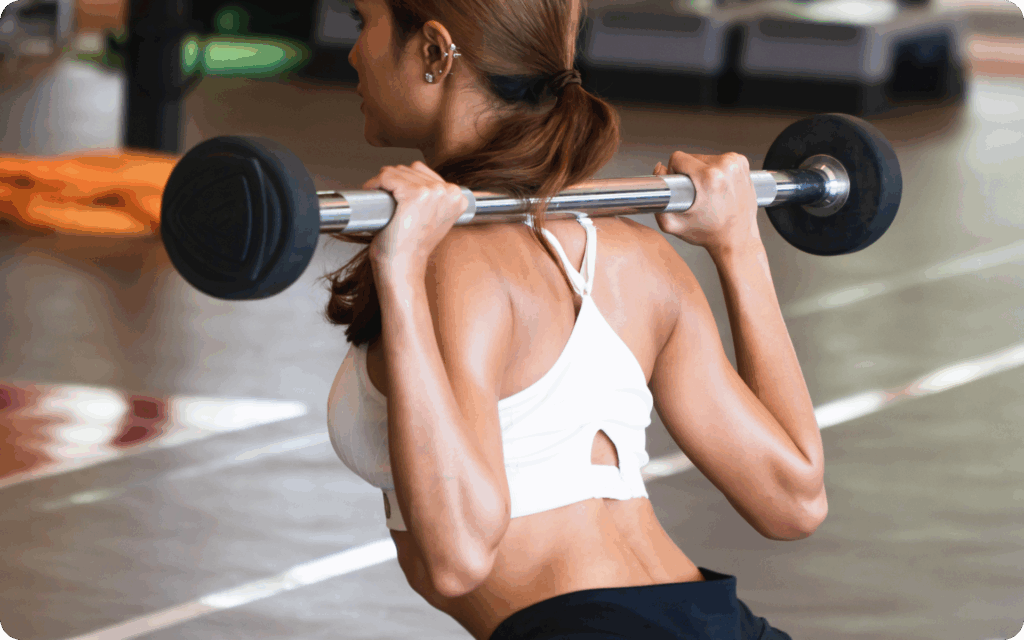
1. Barbell Back Squat (Targets: Quads, Glutes, Hamstrings, Core)
- Sets: 3
- Reps: 6-8
- Rest: 2-3 minutes
- Execution:
- Position the barbell across your upper back, resting on your traps, not your neck. Grip the bar just outside your shoulders.
- Stand with your feet shoulder-width apart, toes pointing slightly outward.
- Brace your core and keep your chest up. Initiate the movement by pushing your hips back and bending your knees, as if sitting in a chair.
- Descend until your thighs are parallel to the floor or just below, keeping your back straight.
- Drive through your heels to return to the starting position, squeezing your glutes at the top.
2. Flat Dumbbell Bench Press (Targets: Chest, Shoulders, Triceps)
- Sets: 3
- Reps: 6-8
- Rest: 2-3 minutes
- Execution:
- Lie on a flat bench with a dumbbell in each hand, resting on your thighs.
- Kick the dumbbells up to your chest one at a time, positioning them at the sides of your chest with your palms facing forward. Your feet should be flat on the floor.
- Press the dumbbells upward until your arms are fully extended but not locked.
- Slowly lower the dumbbells back to the starting position with control.
3. Bent-Over Barbell Row (Targets: Back, Biceps, Rear Deltoids)
- Sets: 3
- Reps: 8-10
- Rest: 2 minutes
- Execution:
- Stand with your feet shoulder-width apart, holding a barbell with an overhand grip slightly wider than your shoulders.
- Hinge at your hips, keeping your back straight, until your torso is nearly parallel to the floor. Let the barbell hang with your arms extended.
- Pull the barbell up toward your lower chest, squeezing your shoulder blades together.
- Lower the bar back to the starting position with control.
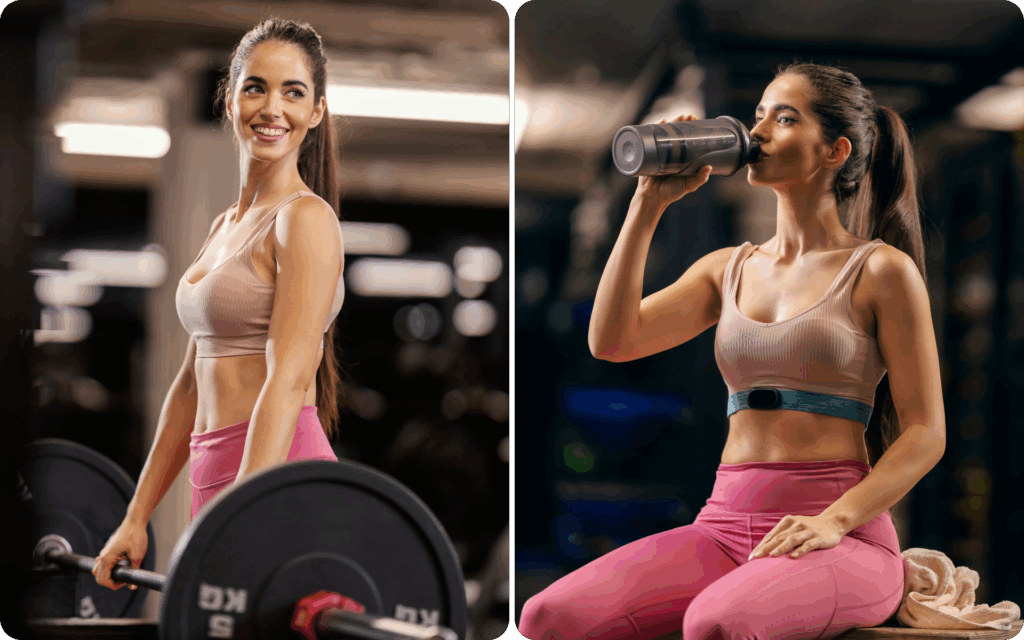
4. Seated Dumbbell Shoulder Press (Targets: Shoulders, Triceps)
- Sets: 3
- Reps: 8-10
- Rest: 2 minutes
- Execution:
- Sit on a bench with back support, holding a dumbbell in each hand at shoulder height, palms facing forward.
- Press the dumbbells directly overhead until your arms are fully extended.
- Slowly lower the weights back to the starting position.
5. Dumbbell Bicep Curls (Targets: Biceps)
- Sets: 2
- Reps: 10-12
- Rest: 90 seconds
- Execution:
- Stand or sit holding a dumbbell in each hand with an underhand grip, arms extended by your sides.
- Keeping your elbows pinned to your sides, curl the dumbbells up toward your shoulders.
- Squeeze your biceps at the top of the movement.
- Lower the dumbbells back down with control.

Workout B
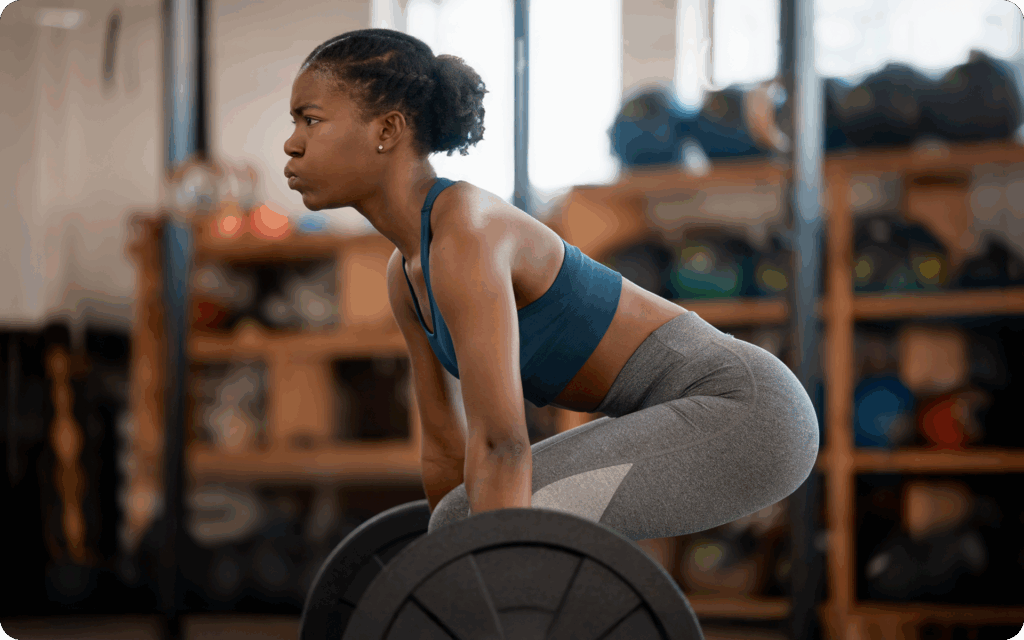
1. Barbell Deadlift (Targets: Hamstrings, Glutes, Back, Core, Quads)
- Sets: 3
- Reps: 5-6
- Rest: 3-4 minutes
- Execution:
- Stand with your mid-foot under the barbell. Your feet should be hip-width apart.
- Hinge at your hips and bend your knees to grip the bar with your hands just outside your shins.
- Keeping your back straight, chest up, and hips down, drive through your feet and pull the bar upward, keeping it close to your body.
- Stand up tall, pulling your shoulders back and squeezing your glutes.
- Lower the bar by reversing the motion, hinging at the hips first and then bending your knees.
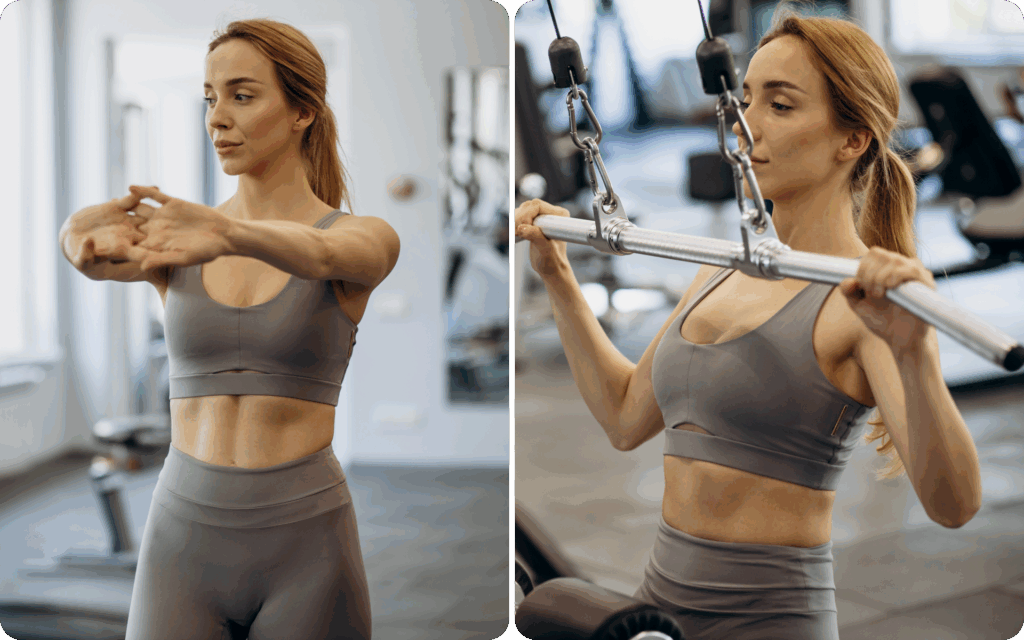
2. Pull-Ups or Lat Pulldowns (Targets: Back, Biceps)
- Sets: 3
- Reps: 6-10 (or as many as possible for pull-ups)
- Rest: 2-3 minutes
- Execution (Pull-Up):
- Grip a pull-up bar with your hands slightly wider than shoulder-width, palms facing away.
- Hang with your arms fully extended.
- Pull your body up until your chin is over the bar, focusing on driving your elbows down.
- Lower yourself back to the starting position with control.
3. Incline Dumbbell Press (Targets: Upper Chest, Shoulders, Triceps)
- Sets: 3
- Reps: 8-10
- Rest: 2 minutes
- Execution:
- Set a bench to a 30-45 degree incline.
- Lie back with a dumbbell in each hand, positioned at your upper chest.
- Press the dumbbells upward and slightly inward until your arms are fully extended.
- Lower the dumbbells slowly and with control.
4. Dumbbell Lunges (Targets: Quads, Glutes, Hamstrings)
- Sets: 3
- Reps: 10-12 per leg
- Rest: 2 minutes
- Execution:
- Stand tall, holding a dumbbell in each hand.
- Take a large step forward with one leg, lowering your hips until both knees are bent at a 90-degree angle. Ensure your front knee does not go past your toes.
- Push off your front foot to return to the starting position.
- Alternate legs with each repetition.
Whether you’re a workout beast or just a beginner making your first foray into the world of fitness and dieting – BetterMe has a lot to offer to both newbies and experts! Install the app and experience the versatility first-hand!
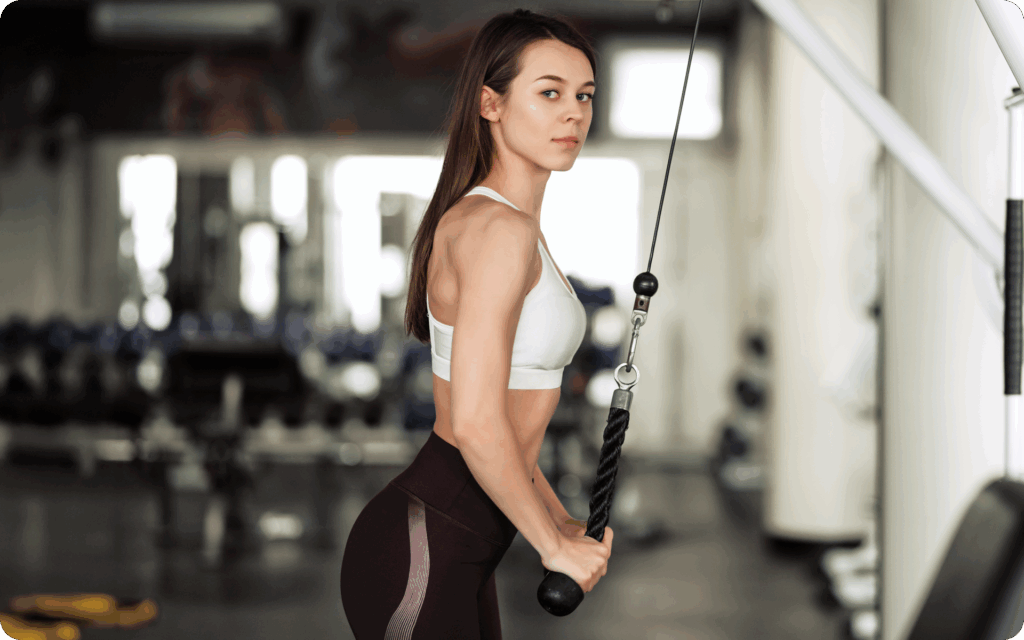
5. Triceps Pushdowns (Targets: Triceps)
- Sets: 2
- Reps: 10-12
- Rest: 90 seconds
- Execution:
- Attach a straight bar or rope to a high-pulley cable machine.
- Grip the attachment with an overhand grip and position your elbows close to your body.
- Push the bar down until your arms are fully extended, focusing on squeezing your triceps.
- Allow the bar to return to the starting position with control.
For more ideas on structuring your weekly training, check out this guide on building a 2-day workout routine.
How Long Should a Full-Body Workout Last?
A well-structured full-body workout should last between 60 and 90 minutes. This duration provides enough time to adequately warm up, perform the main compound lifts with sufficient rest, and finish with any accessory work without rushing.
Here’s a breakdown of the timing:
- Warm-up (5-10 minutes): This should include light cardio to increase blood flow and dynamic stretches (e.g., leg swings, arm circles) to prepare your joints and muscles for the movements ahead (14). It may also help to perform easier versions of each exercise you are about to do to further assist in injury prevention.
- Main Lifts (45-60 minutes): This is the core of your workout. Performing 4-5 compound exercises with 3-4 sets each, and resting for 2-3 minutes between sets, will naturally fall into this time frame. Adequate rest is non-negotiable; it allows your ATP-PC energy system to replenish, enabling you to perform each set with maximal effort and proper form (15). Resting for less than 60 seconds on heavy compound lifts can impair performance on subsequent sets (16).
- Accessory Work (10-15 minutes): This includes isolation exercises like bicep curls or triceps pushdowns. These movements require less rest (60-90 seconds) and complete the workout.
- Cool-down (5 minutes): Static stretching might help improve flexibility and begin the recovery process (14).
Training for longer than 90 minutes often leads to diminishing returns. Cortisol (a stress hormone) levels rise, and both physical and mental fatigue can degrade the quality of your reps (9). Efficiency is key. Focus on high-quality, intense work within this timeframe for the best full body workout twice a week results.
How Often Should You Do Full-Body Workouts?
As established, training each muscle group twice per week is the scientifically supported sweet spot for muscle growth (3). For a full-body routine, this translates to two sessions per week. This frequency allows for the optimal balance between stimulating muscle protein synthesis and providing adequate recovery time.
A meta-analysis published in the Journal of Sports Medicine found that for experienced lifters, training a muscle group twice per week yields the greatest strength results (17). Beginners may see improvements with up to three days, but the most significant leap in progress for all levels comes from moving from one to two sessions.
Is it possible to do full-body workouts more often? Yes, but it requires careful management of volume and intensity.
A three-day-per-week full-body program (e.g., Monday, Wednesday, Friday) can also be highly effective. However, the volume per session must be reduced to avoid overtraining. For instance, you might perform only 2 sets per exercise instead of 3-4.
For most people balancing fitness with work, family, and other commitments, two dedicated sessions per week provide a highly effective and sustainable stimulus for long-term progress.
This frequency is also ideal for a 2 day full body minimalist workout or a 2-day full-body workout plan female program, as it’s adaptable to any goal or experience level.
What Happens if You only Do Full-Body Workouts?
If you exclusively perform well-structured full-body workouts, you can expect a range of positive outcomes that extend far beyond the gym.
- Balanced Muscular Development: Full-body routines inherently promote a well-proportioned physique. Because every major muscle group is trained consistently, you avoid the muscular imbalances that can arise from poorly designed split routines where certain body parts are neglected (13).
- Enhanced Functional Strength: The emphasis on compound movements translates directly to real-world activities. You’ll find it easier to carry groceries, lift heavy objects, and perform daily tasks with greater ease and a lower risk of injury (18).
- Improved Cardiovascular Health: Performing large compound exercises with structured rest periods elevates your heart rate, providing more of a cardiovascular benefit than lifting for more isolated muscles (16).
- Significant Health and Longevity Benefits: Beyond aesthetics and performance, resistance training is a powerful tool for healthspan. Adults who strength train at have a 10-15% lower risk of all-cause mortality when compared to adults who did no resistance training, according to a 15-year cohort study (19).
There are no inherent downsides to only doing full-body workouts, provided they are programmed intelligently with a focus on progressive overload.
Many discussions on platforms like the 2-day full-body workout split Reddit threads confirm the real-world success that people have with this approach. It is a complete and sufficient system for achieving nearly any fitness goal, including weight loss, making it a perfect foundation for a 2 day a week workout plan for weight loss.
If you prefer to train without weights, you can also apply these principles to bodyweight exercises. For more on that, read this guide to the full-body calisthenics workout.

What Should I Eat After a Full-Body Workout?
Post-workout nutrition is crucial for optimizing recovery and maximizing the results of your training. After a strenuous full-body session, your body is in a state of repair. Your muscle glycogen stores are depleted, and your muscle fibers have undergone microscopic damage (20). The goal of your post-workout meal is to address these two issues.
Your meal should contain two key macronutrients:
Protein
Consuming protein provides your body with amino acids, the building blocks needed to repair damaged muscle tissue and synthesize new muscle (21).
Aim for 20-40 grams of high-quality, fast-digesting protein. Excellent sources include:
- whey protein shakes
- chicken breast
- fish
- eggs
- Greek yogurt

Carbohydrates
Consuming carbohydrates replenishes the glycogen that your muscles used for energy during the workout.Replenishing glycogen is essential for performance in your next training session (22). It also causes a spike in insulin, a hormone that helps shuttle nutrients (including amino acids) into your muscle cells (23).
Aim for 40-80 grams of carbohydrates, depending on the intensity of your workout and your personal goals.
Good sources include:
- rice
- potatoes
- oats
- fruit
The “anabolic window,” once thought to be a strict 30-60 minute period post-workout, is now understood to be more flexible (24). While it’s beneficial to eat within a couple of hours after training, the total protein and carbohydrate intake over the entire day is what matters most for long-term progress.
Read more: Meal and Workout Plan: Build Strength, Balance, and Consistency

For most people, full-body training is better because it offers higher frequency per muscle group (usually 2-3 times per week), which is optimal for muscle growth (3). It’s also more time-efficient and flexible, as missing one session doesn’t mean neglecting an entire muscle group for a week. Split routines can be effective for advanced bodybuilders with very specific goals but are often less practical and forgiving for the general population (5). It is typically better to work out harder (with higher intensity) for a shorter duration. Intensity, defined as the amount of weight lifted relative to your maximum capacity, is a primary driver of strength and muscle gain (25). However, if you are prone to injuries it is best to listen to your body and adjust your intensity as needed. Longer workouts often lead to accumulated fatigue, which degrades form and reduces the quality of your sets (9). A focused, intense 60-minute session will produce better results than a meandering, low-intensity two-hour session. Compound exercises are the fastest way to build overall muscle mass. These are multi-joint movements that recruit large amounts of muscle tissue. The most effective muscle-building exercises include squats, deadlifts, bench presses, overhead presses, and rows. These lifts stimulate the greatest hormonal response and allow you to use the heaviest loads, providing a powerful stimulus for growth (10, 16). The days between your full-body workouts are when the magic of adaptation happens. Focus on active recovery. This includes activities like walking, light jogging, stretching, or foam rolling. These activities increase blood flow, which can help reduce muscle soreness and speed up the delivery of nutrients to your muscles (26). Prioritizing sleep (7-9 hours per night) and maintaining a nutrient-dense diet are also critical for maximizing recovery and growth (27, 28).Frequently Asked Questions
Is it better to train full body or split?
Is it better to workout longer or harder?
What exercises build muscle the fastest?
What to do in between full-body workouts?
The Bottom Line
Embracing a training frequency of two full-body workouts a week is not a shortcut; it is a strategic and scientifically-validated method for achieving remarkable fitness outcomes. This approach respects the body’s natural rhythms of stimulus and recovery, maximizes the biological windows for muscle growth, and promotes long-term adherence by fitting into the realities of a busy life.
The evidence is clear: you do not need to spend endless hours in the gym. With two focused, high-quality sessions per week, you have all the tools necessary to transform your physique and performance.
DISCLAIMER:
This article is intended for general informational purposes only and does not serve to address individual circumstances. It is not a substitute for professional advice or help and should not be relied on for making any kind of decision-making. Any action taken as a direct or indirect result of the information in this article is entirely at your own risk and is your sole responsibility.
BetterMe, its content staff, and its medical advisors accept no responsibility for inaccuracies, errors, misstatements, inconsistencies, or omissions and specifically disclaim any liability, loss or risk, personal, professional or otherwise, which may be incurred as a consequence, directly or indirectly, of the use and/or application of any content.
You should always seek the advice of your physician or other qualified health provider with any questions you may have regarding a medical condition or your specific situation. Never disregard professional medical advice or delay seeking it because of BetterMe content. If you suspect or think you may have a medical emergency, call your doctor.
SOURCES:
- Resistance training‐induced changes in integrated myofibrillar protein synthesis are related to hypertrophy only after attenuation of muscle damage (2016, pmc.ncbi.nlm.nih.gov)
- Resistance Training Recommendations to Maximize Muscle Hypertrophy in an Athletic Population: Position Stand of the IUSCA (2021, researchgate.net)
- Effects of Resistance Training Frequency on Measures of Muscle Hypertrophy: A Systematic Review and Meta-Analysis (2016, link.springer.com)
- Equal-Volume Strength Training With Different Training Frequencies Induces Similar Muscle Hypertrophy and Strength Improvement in Trained Participants (2022, frontiersin.org)
- Training Programs Designed for Muscle Hypertrophy in Bodybuilders: A Narrative Review (2020, mdpi.com)
- Neural Adaptations to Resistive Exercise (2012, link.springer.com)
- Anabolic signals and muscle hypertrophy – Significance for strength training in sports medicine (2025, sciencedirect.com)
- Central and Peripheral Fatigue in Physical Exercise Explained: A Narrative Review (2021, mdpi.com)
- The Effect of Resistance Training on Motor Unit Firing Properties: A Systematic Review and Meta-Analysis (2022, frontiersin.org)
- Hormonal Responses and Adaptations to Resistance Exercise and Training (2012, link.springer.com)
- Links Between Testosterone, Oestrogen, and the Growth Hormone/Insulin-Like Growth Factor Axis and Resistance Exercise Muscle Adaptations (2021, frontiersin.org)
- Effects of Resistance Training Overload Progression Protocols on Strength and Muscle Mass (2024, pubmed.ncbi.nlm.nih.gov)
- 5 Benefits of Compound Exercises (2016, acefitness.org)
- Warm Up, Cool Down (2024, heart.org)
- Acute Effect of Fixed vs. Self-Selected Rest Interval Between Sets on Physiological and Performance-Related Responses (2024, mdpi.com)
- Give it a rest: a systematic review with Bayesian meta-analysis on the effect of inter-set rest interval duration on muscle hypertrophy (2024, frontiersin.org)
- The Effect of Weekly Set Volume on Strength Gain: A Meta-Analysis (2017, link.springer.com)
- Aging With Strength: Functional Training to Support Independence and Quality of Life (2025, pmc.ncbi.nlm.nih.gov)
- Weight training and risk of all-cause, cardiovascular disease and cancer mortality among older adults (2024, pmc.ncbi.nlm.nih.gov)
- Pathophysiology of Exercise-Induced Muscle Damage and Its Structural, Functional, Metabolic, and Clinical Consequences (2020, pmc.ncbi.nlm.nih.gov)
- Amino acids regulating skeletal muscle metabolism: mechanisms of action, physical training dosage recommendations and adverse effects (2024, nutritionandmetabolism.biomedcentral.com)
- High-Quality Carbohydrates and Physical Performance (2018, journals.lww.com)
- Is carbohydrate needed to further stimulate muscle protein synthesis/hypertrophy following resistance exercise? (2013, pmc.ncbi.nlm.nih.gov)
- Nutrient timing revisited: is there a post-exercise anabolic window? (2013, pmc.ncbi.nlm.nih.gov)
- An Introduction to Intensity (n.d, us.humankinetics.com)
- Active recovery is better than passive recovery to optimizing post- exercise body recovery (2022, researchgate.net)
- Sleep and muscle recovery: Endocrinological and molecular basis for a new and promising hypothesis (2011, sciencedirect.com)
- Editorial: Nutritional Strategies to Promote Muscle Mass and Function Across the Health Span (2020, frontiersin.org)
 By
By 
 Reviewed by
 Reviewed by