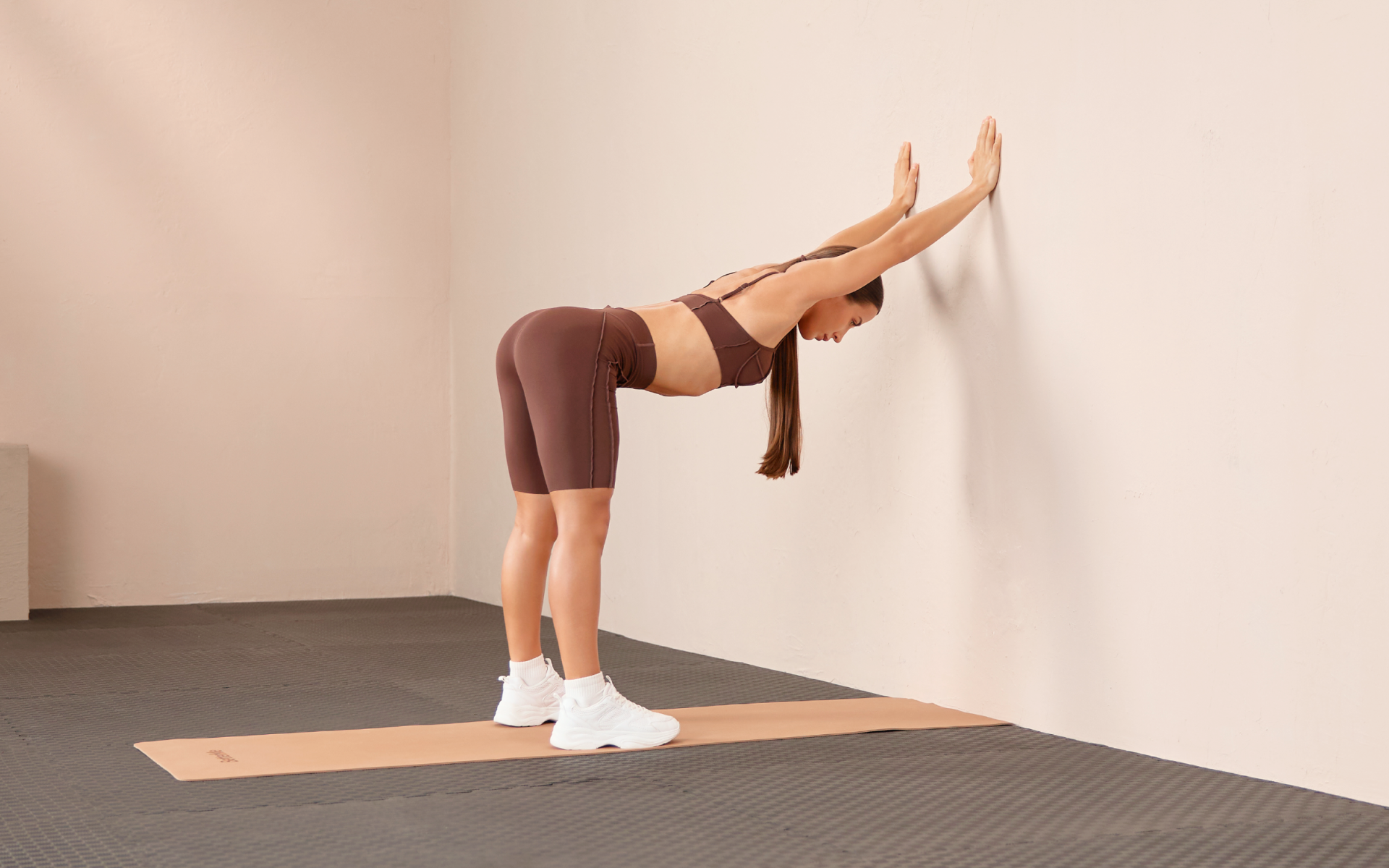
Good posture is more than just standing up straight, it’s about maintaining a neutral alignment of your head, ribcage, and pelvis. This alignment helps distribute forces evenly across your muscles and joints, which can support efficient movement.
Many people find their posture deviates from this neutral position due to daily habits. Using a wall can provide tactile feedback to help you understand what better alignment feels like.
This guide will explore simple yet effective wall posture exercises you can do at home to build body awareness and support a more balanced posture. We’ll cover the causes of poor posture and provide 3 exercises to improve posture that you can start today.
What Are Wall Posture Exercises?
Wall posture exercises are simple alignment drills that are performed against a wall to build body awareness and practice a more neutral position. Think of the wall as a guide that provides instant feedback on your body’s alignment.
These exercises typically target muscles in the upper back, shoulders, neck, and core, which are essential for maintaining an upright stance. Wall posture exercises aren’t meant to force your body into a rigid position. Instead, they’re gentle movements that may support better muscular engagement and joint positioning over time.
They’re a great tool for anyone who is looking to mindfully connect with their body and improve their postural habits. One of the main wall posture exercise benefits is its simplicity, which makes it user-friendly for nearly everyone.
Read more: Wall Calf Stretch Exercise: How to, Common Mistakes and Related Exercises
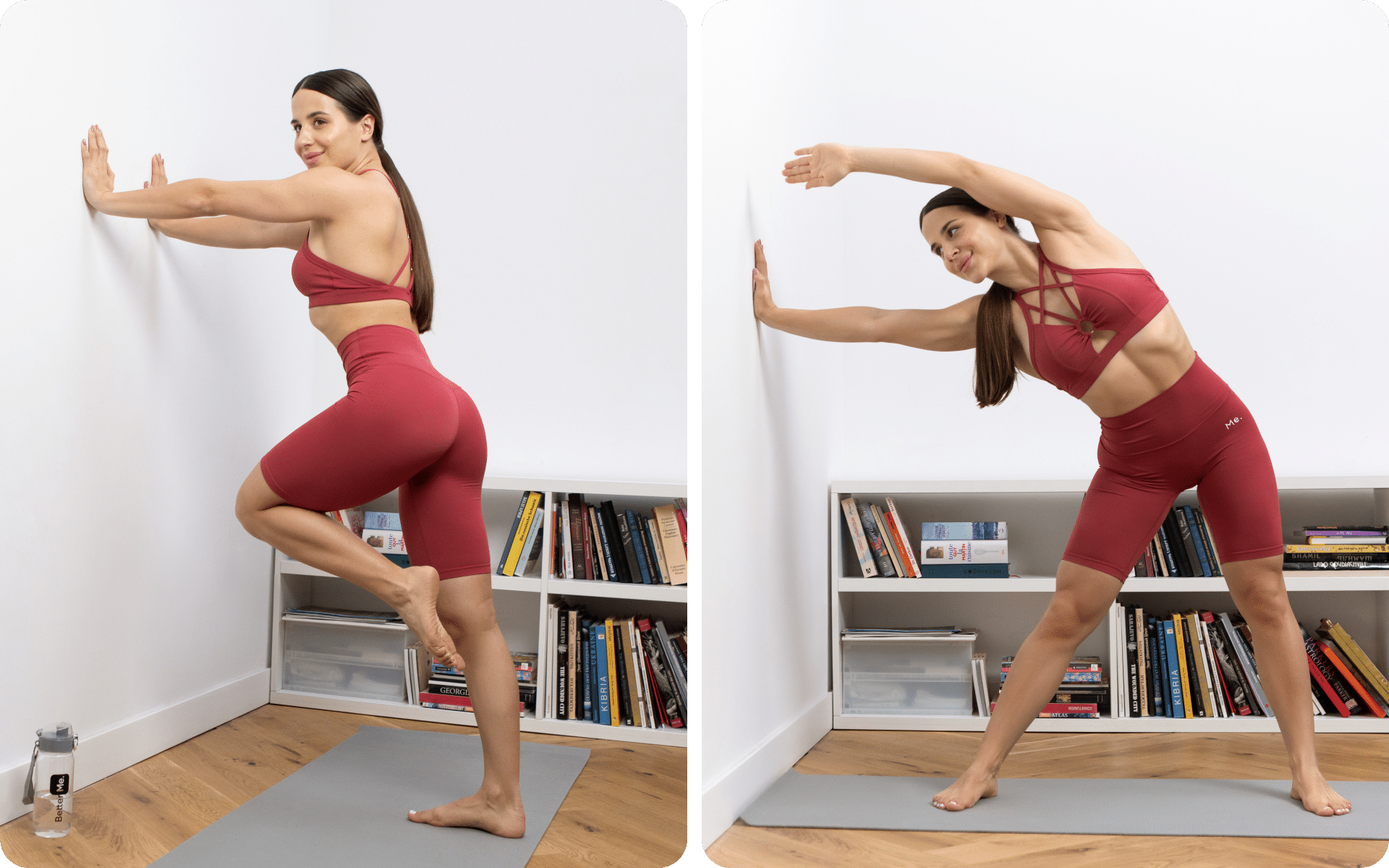
What Is the Root Cause of Poor Posture?
Poor posture often develops from a combination of daily habits, environmental factors, and physiological responses. There isn’t a single root cause, and it’s typically a mix of several contributing factors that accumulate over time.
One of the most common contributors is a sedentary lifestyle. Spending long hours sitting, whether at a desk, in a car, or on a couch, can lead to muscle imbalances (1).
For example, prolonged sitting often causes the hip flexor muscles to shorten and tighten while the gluteal muscles weaken. This combination can cause the pelvis to tilt forward, which disrupts the neutral alignment (2, 3).
Another significant factor is the consistent use of handheld technology, which leads to a condition often called “tech neck”. When you tilt your head forward to look at a phone or screen, you increase the load on your cervical vertebrae (4).
The human head weighs about 10–12 pounds, but tilting it forward by just 15 degrees can increase the effective weight on your neck to 27 pounds. At a 60-degree angle, that load can jump to 60 pounds. This sustained forward head posture can lead to strain on the neck and upper back muscles (5).
How to Improve Posture on a Wall
Using a wall is an effective way to improve your postural awareness as it provides immediate, tangible feedback. The goal is to re-educate your body on what neutral alignment feels like. Here are some steps to practice and improve your posture using a wall.
- Stand with your back against a wall, with your feet approximately six inches away from it.
- Aim to have three main points of contact: the back of your head, your upper back (between the shoulder blades), and your sacrum (the bony area at the base of your backbone).
- There should be a small, natural curve and space at your lower back and neck.
- Gently engage your core muscles by drawing your belly button toward your back. This helps to stabilize your pelvis and prevent your lower back from arching too much.
- Tuck your chin slightly, as if making a double chin, to lengthen the back of your neck.
- Hold this position for 30-60 seconds, focusing on your breathing and maintaining the points of contact.
This simple practice of wall exercises for posture helps build the endurance of your postural muscles.
BetterMe: Health Coaching app helps you achieve your body goals with ease and efficiency by helping to choose proper meal plans and effective workouts. Start using our app and you will see good results in a short time.
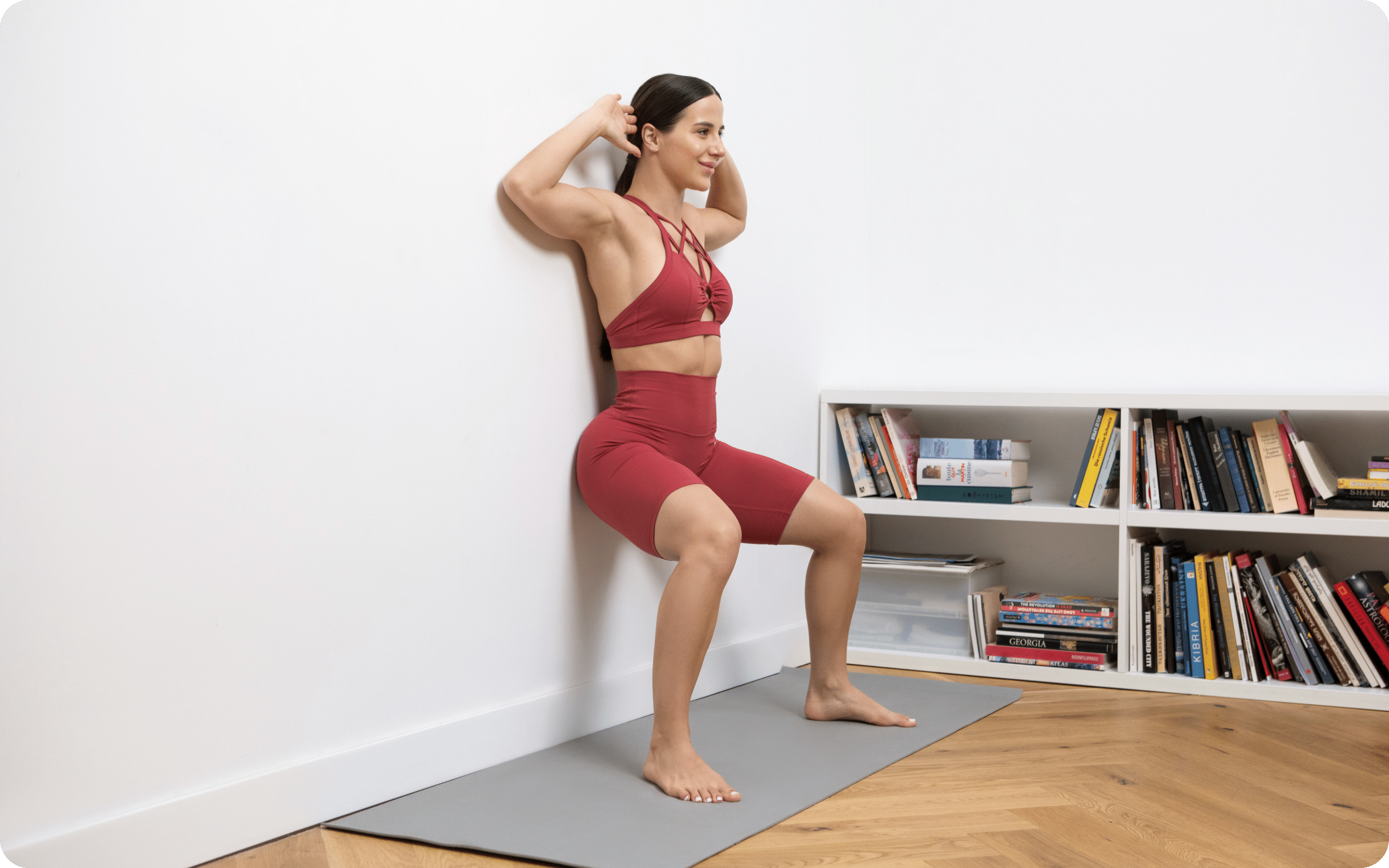
What Are Some of the Best Wall Posture Exercises for a Beginner?
For beginners, the best wall posture exercises are those that are simple to perform yet effective at building awareness and strengthening key postural muscles. Here’s a simple program you can practice at home. These exercises are gentle enough for most people, including older adults, which makes them a practical option when looking for beginner-friendly posture exercises for seniors.
Program Notes:
- Equipment: A flat wall.
- Frequency: Perform this routine 3-5 times per week.
- Focus: Concentrate on slow, controlled movements and maintaining contact with the wall.
| Exercise | Sets | Reps/duration | Rest |
|---|---|---|---|
| Wall stand | 3 | 30-60 seconds | 30 seconds |
| Wall chin tucks | 2 | 10 reps | 30 seconds |
| Wall angels | 2 | 8-10 reps | 30 seconds |
Wall Stand
- Stand with your back against a wall, your feet about hip-width apart and a few inches from the wall.
- Lean back until your head, upper back, and sacrum are touching the wall.
- Gently engage your core and slightly tuck your chin.
- Hold this position, breathing naturally, while maintaining the three points of contact.
Wall Chin Tucks
- Assume the wall stand position with your head, upper back, and sacrum against the wall.
- Without tilting your head up or down, gently glide your head straight back to press it into the wall, creating a “double chin” effect. You should feel a stretch at the back of your neck.
- Hold for 2-3 seconds before releasing.
- Repeat for the prescribed number of repetitions.
Wall Angels
- Begin in the wall stand position.
- Raise your arms to the side with your elbows bent at a 90-degree angle, forming a “W” shape. Try to keep your wrists and elbows in contact with the wall.
- Slowly slide your arms upward along the wall, straightening them as much as you can without allowing your back to arch or your shoulders to shrug.
- Lower your arms back down to the starting position in a slow, controlled motion.
These wall posture exercises at home are designed to be user-friendly and effective, and they can pair well with other stretches to improve posture for even better body awareness and mobility.
What Happens if I Do Wall Posture Exercises Every Day?
Performing wall posture exercises daily can lead to several positive outcomes, particularly in terms of muscular endurance and proprioception, which is your body’s awareness of its position in space.
Consistent practice helps reinforce the neural pathways that control your posture, which makes it more natural for you to maintain a better alignment throughout the day without consciously thinking about it.
Daily practice can help increase the endurance of the muscles in your upper back, neck, and core. When these muscles are stronger, they better support your back and resist the pull of gravity and poor habits, such as slouching. This consistency may also help alleviate some of the discomfort associated with poor posture, such as tension in the neck and shoulders.
However, it’s important to listen to your body. While these are gentle exercises, doing too much too soon could cause muscle fatigue. If you feel any discomfort, it’s best to take a rest day.
The goal is consistency over intensity. Even just 5-10 minutes of posture exercises each day can contribute to long-term postural improvements. The key wall posture exercise benefits come from making it a regular habit.
Read more: Wall Stretches for Legs: A Beginner’s Guide to Better Flexibility
Frequently Asked Questions
Why do wall angels feel so good?
Wall angels can feel good because they stretch tight chest muscles (pectorals) while simultaneously activating muscles in the upper back, such as the rhomboids and lower trapezius. This combination of stretching and strengthening helps counteract the effects of slouching.
Why are wall angels so difficult?
Wall angels are difficult for many people due to limited shoulder mobility and tightness in the chest and latissimus dorsi muscles.
Maintaining contact between your arms, upper back, and head against the wall requires a level of flexibility and muscular control that many people lack due to sedentary lifestyles.
Does sleeping position affect posture?
Yes, your sleeping position can affect your posture. Sleeping on your stomach may force your head and neck into a rotated position for hours, potentially straining your neck (6).
Sleeping on your back with a supportive pillow is often considered best for back alignment, while side sleeping with a pillow between your knees can also help keep your hips, pelvis, and back aligned (7).
The Bottom Line
Ultimately, improving your posture is a gradual process that requires consistent practice. Integrating these simple wall exercises into your routine can help you lay a stronger foundation for better alignment.
DISCLAIMER:
This article is intended for general informational purposes only and does not serve to address individual circumstances. It is not a substitute for professional advice or help and should not be relied on for making any kind of decision-making. Any action taken as a direct or indirect result of the information in this article is entirely at your own risk and is your sole responsibility.
BetterMe, its content staff, and its medical advisors accept no responsibility for inaccuracies, errors, misstatements, inconsistencies, or omissions and specifically disclaim any liability, loss or risk, personal, professional or otherwise, which may be incurred as a consequence, directly or indirectly, of the use and/or application of any content.
You should always seek the advice of your physician or other qualified health provider with any questions you may have regarding a medical condition or your specific situation. Never disregard professional medical advice or delay seeking it because of BetterMe content. If you suspect or think you may have a medical emergency, call your doctor.
SOURCES:
- Relationship between Physical Activity and Sedentary Behavior, Spinal Curvatures, Endurance and Balance of the Trunk Muscles-Extended Physical Health Analysis in Young Adults (2023, mdpi.com)
- The straight and narrow of posture: Current clinical concepts (2021, racgp.org.au)
- Sitting and low back disorders : an overview of the most commonly suggested harmful mechanisms (2018, researchgate.net)
- Text Neck Syndrome: Disentangling a New Epidemic (2022, pmc.ncbi.nlm.nih.gov)
- Evaluation of an assistive exosuit for alleviating neck and shoulder muscle fatigue during prolonged flexed neck posture (2024, link.springer.com)
- Examining relationships between sleep posture, waking spinal symptoms and quality of sleep: A cross sectional study (2021, journals.plos.org)
- Sleeping and the Spine (2024, spinehealth.org)
 Reviewed by
 Reviewed by