If you’ve ever woken up with stiff ankles or felt that nagging tightness in your lower legs after a run, you know exactly how limiting tight calves can be. Your calves are the workhorses of your lower body, responsible for propelling you forward with every step. Yet, they are often the most neglected muscle group until pain or stiffness sets in.
The wall calf stretch is a foundational movement that addresses this issue head-on. It’s simple, accessible, and remarkably effective for improving ankle mobility and reducing tension. But like any exercise, the difference between “just stretching” and actually improving your physiology lies in the details—angles, duration, and muscle activation matter.
In this guide, we will break down the mechanics of the wall calf stretch, explore the science behind why it works, and provide you with a structured approach to integrating it into your routine for optimal results.
What is the Basic Wall Calf Stretch Exercise?
The wall calf stretch is a static flexibility exercise designed to lengthen the muscles of the posterior lower leg—specifically the gastrocnemius and the soleus. It utilizes a wall as a stable anchor point, allowing you to leverage your body weight to apply controlled tension to these muscles.
This exercise is technically classified as a passive-static stretch because you are using an external object (the wall) and gravity to hold the muscle at its end range of motion without actively contracting the antagonist muscles.
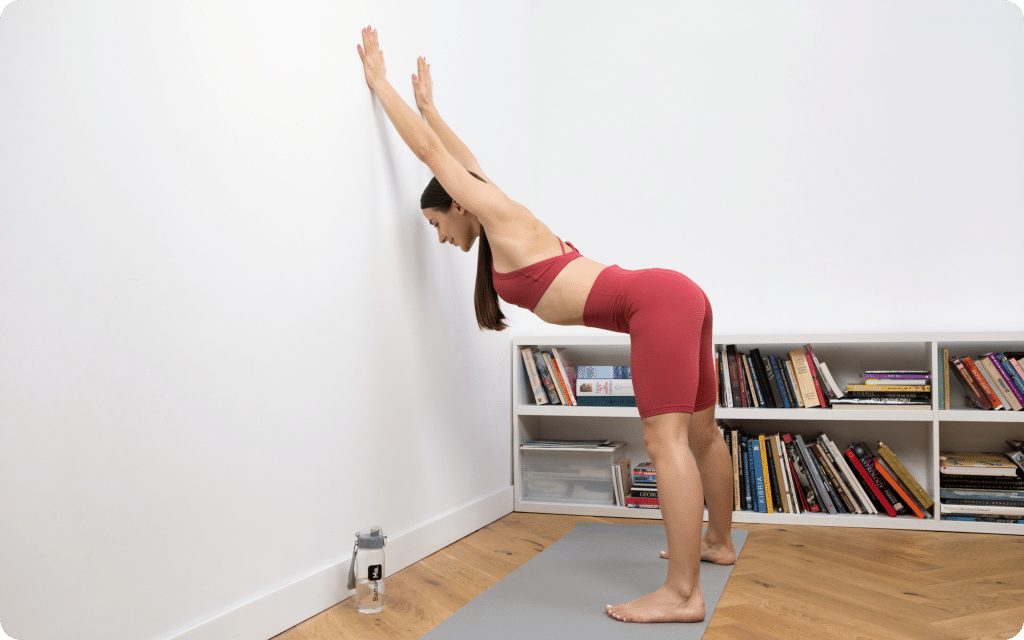
The anatomy targeted here is crucial to understand. The calf complex, or triceps surae, merges into the Achilles tendon, which attaches to the heel (1).
- Gastrocnemius: This is the larger, two-headed muscle visible just below the knee. It crosses two joints (the knee and the ankle) (2), meaning it is most effectively stretched when the knee is straight.
- Soleus: This lies underneath the gastrocnemius. It only crosses the ankle joint (3), meaning it is most effectively isolated when the knee is bent.
The basic wall calf stretch manipulates knee position to target these specific tissues, improving dorsiflexion (the ability to pull your toes toward your shins).
How to Stretch Your Calves Correctly?
Proper execution is vital to ensure you are targeting the muscle belly and not placing undue stress on the Achilles tendon or the plantar fascia. Below is a step-by-step breakdown of the standard execution.
Execution of the Standard Wall Calf Stretch
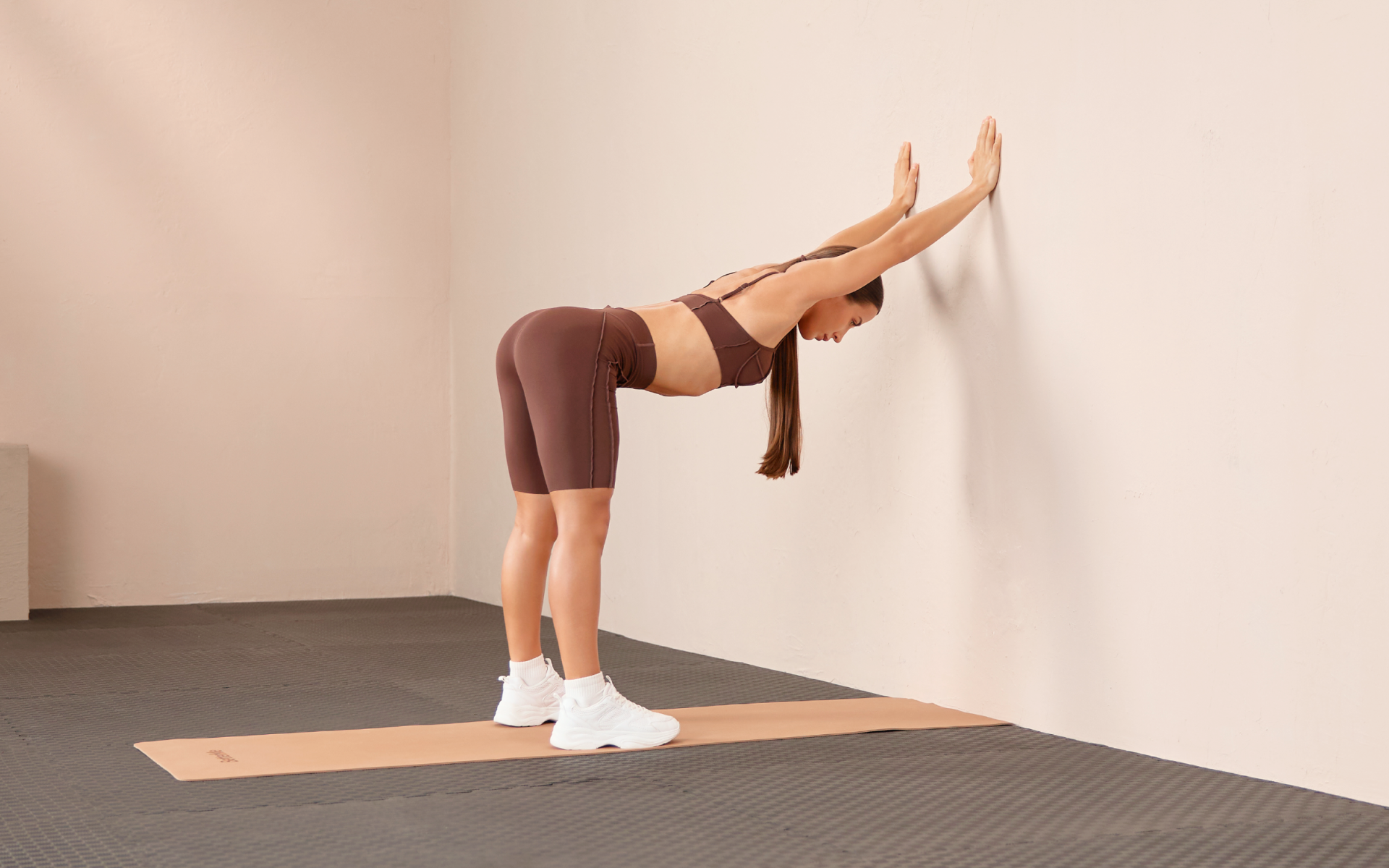
- Setup: Stand facing a wall, approximately one arm’s length away. Place both hands on the wall at shoulder height and shoulder-width apart.
- Position: Step your right foot back about 2-3 feet. Keep both feet parallel, pointing directly forward. Do not let the back foot rotate outward.
- Action: Keep your right leg straight and your right heel firmly planted on the ground. Slowly lean your hips forward toward the wall by bending your left knee.
- Tension: Stop when you feel a moderate, sustained pull in the upper portion of your right calf (gastrocnemius).
- Hold: Maintain this position statically without bouncing.
- Switch: Return to the starting position and repeat on the left leg.
Reasons why BetterMe is a safe bet: a wide range of calorie-blasting workouts, finger-licking recipes, 24/7 support, challenges that’ll keep you on your best game, and that just scratches the surface! Start using our app and watch the magic happen.
The Soleus Variation (Bent Knee)
To target the deeper soleus muscle, the setup changes slightly.
- Setup: Assume the same split stance as above, but bring the back foot in slightly closer (about 1-2 feet back).
- Action: Instead of keeping the back leg straight, bend both knees simultaneously, sinking your hips straight down toward the floor.
- Heel Contact: Ensure the back heel remains glued to the ground.
- Sensation: You should feel the stretch shift lower down the leg, closer to the Achilles tendon.
Read more: How Standing Wall Exercises Lead You to Next-Level Balance and Confidence
What Does the Wall Calf Stretch Do?
At a physiological level, the wall calf stretch induces mechanical tension on the sarcomeres (the functional units of muscle fibers). When you hold a static stretch, you trigger a response known as “stress relaxation.” Over the duration of the hold, the muscle-tendon unit becomes less resistant to the stretch, allowing for a temporary increase in range of motion (4).
Furthermore, consistent stretching over weeks or months can lead to structural adaptations. Research suggests that chronic static stretching may increase fascicle length (the length of the muscle fiber bundles), which contributes to lasting flexibility gains (5).
Functionally, this stretch improves ankle dorsiflexion. Limited dorsiflexion is a common mechanical breakdown that affects squat depth, running mechanics, and sprinting (6). By restoring this range of motion, you allow the tibia (shin bone) to travel freely over the foot, which is essential for efficient movement patterns.
What Is the Most Effective Wall Calf Stretch Exercise?
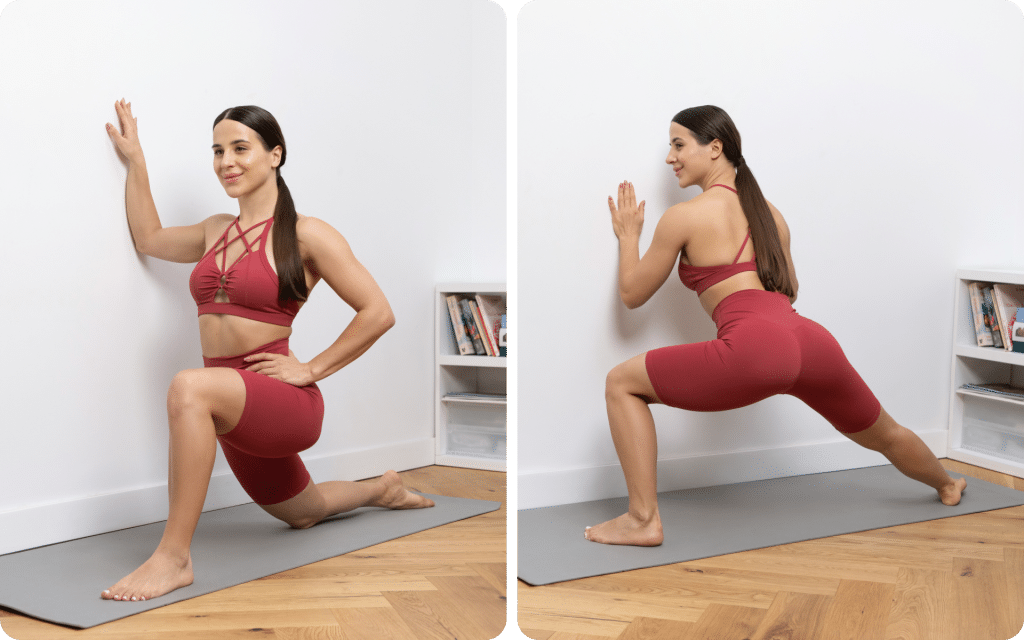
Effectiveness is determined by your specific goal. If your limitation is general tightness in the main calf muscle from running or walking, the straight-leg wall calf stretch is most effective because it targets the gastrocnemius, which is the primary power generator.
However, if you have limitations in deep squat depth or feel tightness lower in the leg, the bent-knee wall calf stretch is superior. This is because bending the knee puts the gastrocnemius on slack (since it crosses the knee joint), mechanically forcing the soleus to take the load of the stretch.
For a comprehensive routine, the most effective approach is a combination of both. Neglecting the soleus is a common oversight that leads to persistent ankle immobility.
Optimal Wall Calf Stretch Program
| Exercise | Sets | Duration | Frequency | Goal |
|---|---|---|---|---|
| Straight-Leg Wall Stretch | 2-3 | 30-45 seconds | Daily | Gastrocnemius flexibility |
| Bent-Knee Wall Stretch | 2-3 | 30-45 seconds | Daily | Soleus mobility & Squat depth |
| Dynamic Wall Calf Raises | 2 | 10-12 reps | Pre-workout | Activation & Blood flow |
Exercise Instructions
Straight-Leg Wall Stretch
- Stand facing a wall with hands at shoulder height.
- Step one leg back, keeping the knee fully extended (locked straight).
- Drive the heel of the back leg into the floor.
- Shift weight forward until a stretch is felt in the upper calf.
- Hold without bouncing.
Bent-Knee Wall Stretch
- Set up similar to the straight-leg stretch, but step the back foot in about 6 inches closer.
- Bend the back knee while keeping the heel firmly planted.
- Sit your hips downward rather than leaning forward.
- Focus on the sensation in the lower calf/Achilles area.
Dynamic Wall Calf Raises
- Stand facing the wall for balance.
- Rise up onto the balls of your feet, contracting the calves.
- Lower slowly to the floor.
- Perform rhythmically to increase tissue temperature before static stretching.
What Are the Benefits of Wall Stretches?
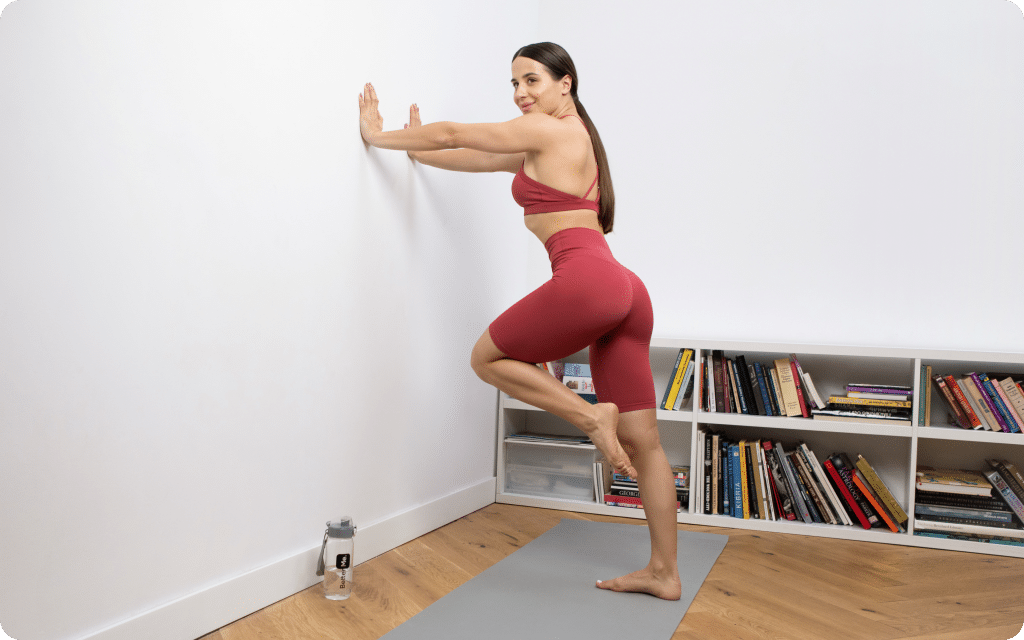
Integrating wall stretches into your routine offers benefits that extend beyond simple flexibility.
- Enhanced Ankle Mobility
The primary benefit is improved dorsiflexion. Adequate dorsiflexion (usually 15-20 degrees) is required for normal gait and athletic movements. Without it, the body compensates, often forcing the knee to collapse inward (valgus) or the foot to overpronate (flatten excessively) (6).
- Injury Prevention
Tight calves place excessive tension on the Achilles tendon and the plantar fascia (the connective tissue on the bottom of the foot) (7, 8). By maintaining optimal muscle length, you reduce the strain on these structures, potentially lowering the risk of Achilles tendinopathy and plantar fasciitis.
- Improved Athletic Performance
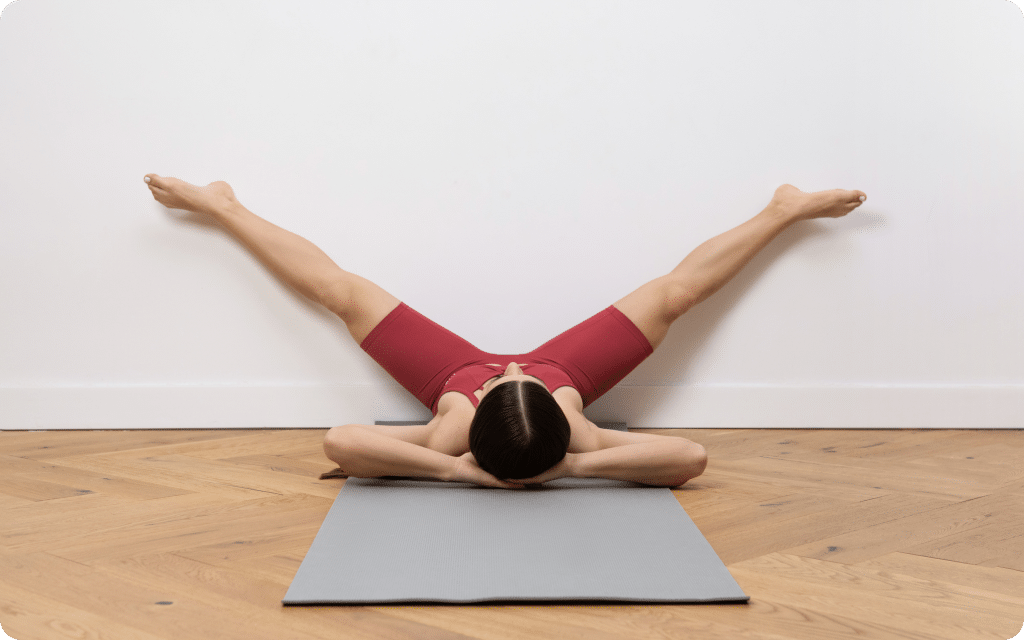
In activities like sprinting and jumping, the calf complex acts like a spring. A muscle that is too tight is stiff and prone to strain, while a muscle with optimal length-tension relationships can store and release elastic energy more efficiently (9). Wall calf stretch benefits include better force production during the push-off phase of gait.
- Postural Alignment
Tight calves can pull the pelvis into an anterior tilt or cause the knees to hyperextend while standing. Releasing this tension helps neutralize pelvic alignment and improves standing posture.
If you are looking for a low-impact way to engage the core while stretching, you might explore wall Pilates double leg stretch variations to complement your routine.
Whether you’re a workout beast or just a beginner making your first foray into the world of fitness and dieting – BetterMe has a lot to offer to both newbies and experts! Install the app and experience the versatility first-hand!
How Long Should You Hold a Calf Stretch?
The duration of a stretch is a critical variable often debated in sports science. Current evidence suggests that “micro-stretching” (holding for less than 15 seconds) provides insufficient stimulus for deformation of the muscle tissues (10).
For static stretching aimed at increasing range of motion, the gold standard recommendation is 30 to 60 seconds.
- Under 30 seconds: Often insufficient to overcome the stretch reflex (the body’s protective mechanism that causes a muscle to contract when stretched).
- 30-60 seconds: This is the sweet spot. It allows the neural activity in the muscle spindle to decrease, permitting the muscle fibers to relax and lengthen.
- Over 60 seconds: While safe, research indicates diminishing returns. Holding a stretch for 2 minutes does not necessarily provide significantly more benefit than 60 seconds for the average individual.
Perform 2 to 4 repetitions per leg. This volume (total time under tension of roughly 2 minutes per muscle group) has been shown to be effective for long-term flexibility gains.
What Are Common Mistakes in Calf Stretches?
Even with a movement as simple as the wall calf stretch, subtle mechanical errors can render the exercise useless or even harmful.
1. Rotating the Back Foot Outward
The Error: When you step back, your toes point out to the side rather than straight ahead.
The Fix: Check your alignment before you lean. Your toes, knees, and hips should all face the wall squarely. If your foot turns out, you are bypassing the calf muscle and stressing the medial structures of the ankle.
2. Lifting the Heel
The Error: The heel of the stretching leg lifts off the ground as you lean forward.
The Fix: Keep the heel glued down. If you cannot keep it down, shorten your stance. The stretch only happens if the anchor points (heel and knee) are stable.
3. Collapsing the Arch
The Error: Allowing the foot to roll inward (overpronation) to achieve a “deeper” stretch feeling.
The Fix: Maintain a neutral arch. Press through the outer edge of your heel just as much as the inner edge.
4. Bouncing (Ballistic Stretching)
The Error: Bobbing back and forth rapidly.
The Fix: Hold the position statically. Bouncing can trigger the stretch reflex, causing the muscle to tighten up protectively rather than relax.
5. Hyperextending the Lower Back
The Error: Arching the lumbar spine aggressively while leaning into the wall.
The Fix: Engage your core and keep your spine neutral. The movement should come from the ankle, not the lower back.
Correcting these errors ensures you get the most out of your leg stretches after workout sessions.
Read more: Somatic Wall Pilates: A New Era Of Mind-Body Movement
What Happens if You Stretch Your Calf Too Much?
While flexibility is a goal, hypermobility (excessive range of motion) can be detrimental. There is a “Goldilocks zone” for muscle length.
- Diminished Power Output
If you perform aggressive static stretching (holds > 60 seconds) immediately prior to explosive activity (like sprinting or heavy lifting), you may temporarily reduce the muscle’s ability to produce force (11). This is why static stretching is best reserved for post-workout cool-downs or separate mobility sessions, rather than warm-ups.
- Joint Instability
The calf muscles provide dynamic stability to the ankle (12). If the muscles and tendons become too lax, the ankle joint relies more on passive structures (ligaments) for stability, which can increase the risk of sprains.
- Tissue Irritation
Aggressive stretching into pain can irritate the Achilles tendon or the sciatic nerve. A stretch should feel like a dull ache or tension, never a sharp, shooting, or burning pain. If you feel burning, you may be stretching the neural tissue rather than the muscle, which should be avoided.
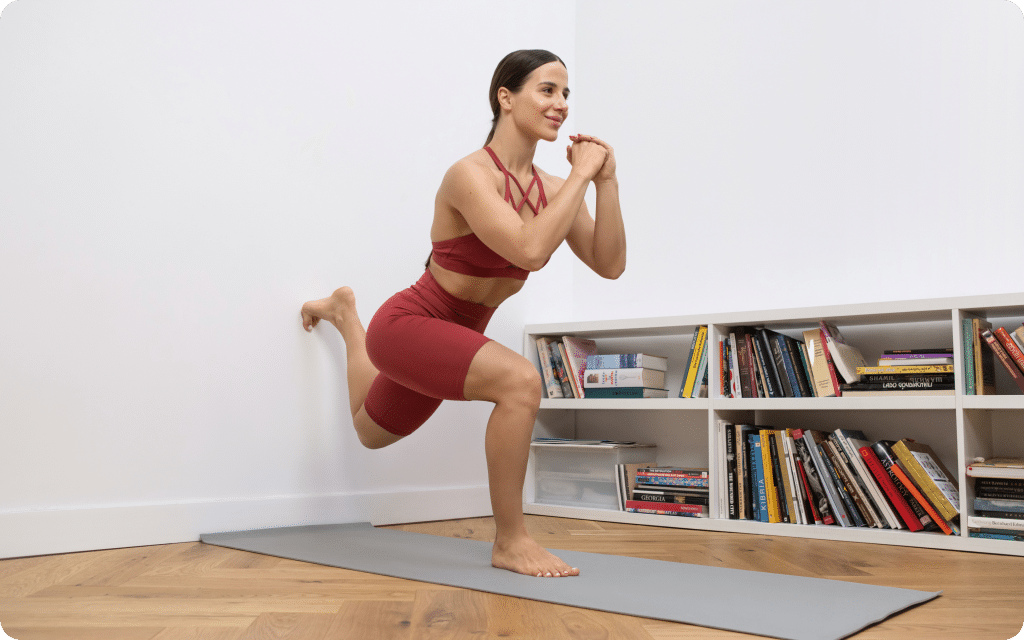
Related Exercises for Comprehensive Lower Leg Health
To fully optimize lower leg function, you cannot rely on the wall stretch alone. You must pair flexibility with strengthening.
- Eccentric Heel Drops
This is the gold standard for Achilles tendon health. Stand on a step, rise up on two feet, and lower slowly (over a 3-5 second count) on one foot. This strengthens the tendon while lengthening the muscle under load.
- Tibialis Raises
This exercise targets the tibialis anterior (the shin muscle), which is the antagonist to the calf. Strengthening the front of the lower leg can help balance the forces around the ankle and improve dorsiflexion through reciprocal inhibition (when the shin contracts, the calf must relax).
- Downward Dog
A classic yoga pose that acts as a functional chain stretch. It targets the calves, hamstrings, and lower back simultaneously. Pedaling the feet (alternating heel drops) in this position is an excellent dynamic variation.
For those interested in bodyweight training, incorporating calisthenics calf exercises can further build strength and resilience in the lower leg.
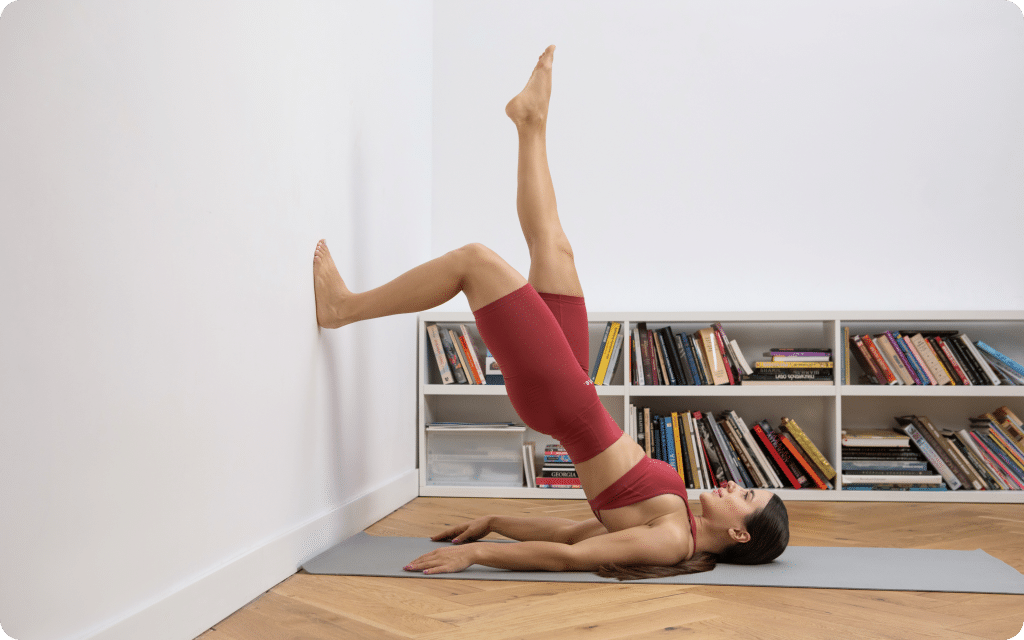
Specialized Variations
Wall Calf Stretch Exercise for Seniors
Seniors often face reduced elasticity in tendons and muscles. The wall calf stretch is particularly safe for this demographic because the wall provides stability, reducing fall risk.
- Modification: Seniors should focus on shorter hold times (15-20 seconds) with more frequency throughout the day to gently coax mobility without overstressing fragile tissues.
- Safety: Ensure the floor surface is non-slip.
Active Calf Stretch Wall Pilates
This variation incorporates movement. Instead of a static hold, you might perform a rhythmic “prancing” motion while leaning against the wall—alternating knee bends to dynamically pump fluid through the tissues. This aligns with Pilates principles of flow and control.
Wall Calf Stretch Exercise at Home
The beauty of this movement is its zero-equipment requirement. A doorframe, a sturdy fence, or a hallway wall all suffice. It removes the barrier to entry, making it easy to do while brushing your teeth or waiting for coffee to brew.
To relieve tight calves quickly, combine heat therapy to increase blood flow, foam rolling to release fascial tension, and dynamic stretching to mobilize the joint, followed by the static wall calf stretch for 30-60 seconds per side. Tight calves are typically caused by repetitive overuse (like running), prolonged periods of inactivity (sitting), wearing high-heeled shoes that shorten the muscle fibers, or compensatory mechanics from weak glutes or feet. The best time to perform static wall stretches is after a workout or a walk when the muscles are warm and pliable; doing them “cold” is less effective and carries a slightly higher risk of strain. No, wall sits primarily target the quadriceps and glutes isometrically; while your calves stabilize your feet, they are not the primary movers or the focus of the exercise. Yes, stretching the calves daily is generally safe and recommended, especially if you have restricted ankle mobility or a sedentary lifestyle, as daily consistency yields better flexibility adaptations than infrequent, intense sessions.Frequently Asked Questions
How do you get rid of tight calves ASAP?
What causes tight calves?
What is the best time to do wall stretches?
Do wall sits work your calves?
Should you stretch calves daily?
The Bottom Line
The wall calf stretch is a deceptively simple tool with profound benefits for your movement health. It is not just about feeling loose; it is about restoring the mechanical capacity of your ankles, protecting your Achilles, and optimizing how you walk, run, and squat.
Remember, flexibility is not achieved overnight. It is the result of consistent, low-intensity inputs over time. By incorporating the straight-leg and bent-knee variations into your daily routine—and respecting the principles of proper alignment and duration—you can undo years of tension and move with greater freedom.
Start today. Find a wall, check your alignment, and give your calves the relief they deserve. Your future self, with healthy ankles and a spring in their step, will thank you.
DISCLAIMER:
This article is intended for general informational purposes only and does not serve to address individual circumstances. It is not a substitute for professional advice or help and should not be relied on for making any kind of decision-making. Any action taken as a direct or indirect result of the information in this article is entirely at your own risk and is your sole responsibility.
BetterMe, its content staff, and its medical advisors accept no responsibility for inaccuracies, errors, misstatements, inconsistencies, or omissions and specifically disclaim any liability, loss or risk, personal, professional or otherwise, which may be incurred as a consequence, directly or indirectly, of the use and/or application of any content.
You should always seek the advice of your physician or other qualified health provider with any questions you may have regarding a medical condition or your specific situation. Never disregard professional medical advice or delay seeking it because of BetterMe content. If you suspect or think you may have a medical emergency, call your doctor.
SOURCES:
- Achilles tendon: functional anatomy and novel emerging models of imaging classification (2013, pmc.ncbi.nlm.nih.gov)
- Anatomy, Bony Pelvis and Lower Limb, Gastrocnemius Muscle (2023, ncbi.nlm.nih.gov)
- The forgotten powerhouse: Variations of the soleus muscle and their clinical relevance (2025, sciencedirect.com)
- The relevance of stretch intensity and position—a systematic review (2015, frontiersin.org)
- Chronic Effects of Static Stretching Exercises on Skeletal Muscle Hypertrophy in Healthy Individuals: A Systematic Review and Multilevel Meta-Analysis (2024, link.springer.com)
- Role of ankle dorsiflexion in sports performance and injury risk: A narrative review (2023, researchgate.net)
- Current concept review of Achilles tendinopathy (2024, ncbi.nlm.nih.gov)
- Modulation in the elastic properties of gastrocnemius muscle heads in individuals with plantar fasciitis and its relationship with pain (2020, nature.com)
- Genetics of Muscle Stiffness, Muscle Elasticity and Explosive Strength (2020, pmc.ncbi.nlm.nih.gov)
- CURRENT CONCEPTS IN MUSCLE STRETCHING FOR EXERCISE AND REHABILITATION (2012, pmc.ncbi.nlm.nih.gov)
- Practical recommendations on stretching exercise: A Delphi consensus statement of international research experts (2025, sciencedirect.com)
- The gastrocnemius and soleus muscles deficits in functional ankle instability: an observational study (2025, link.springer.com)
 Reviewed by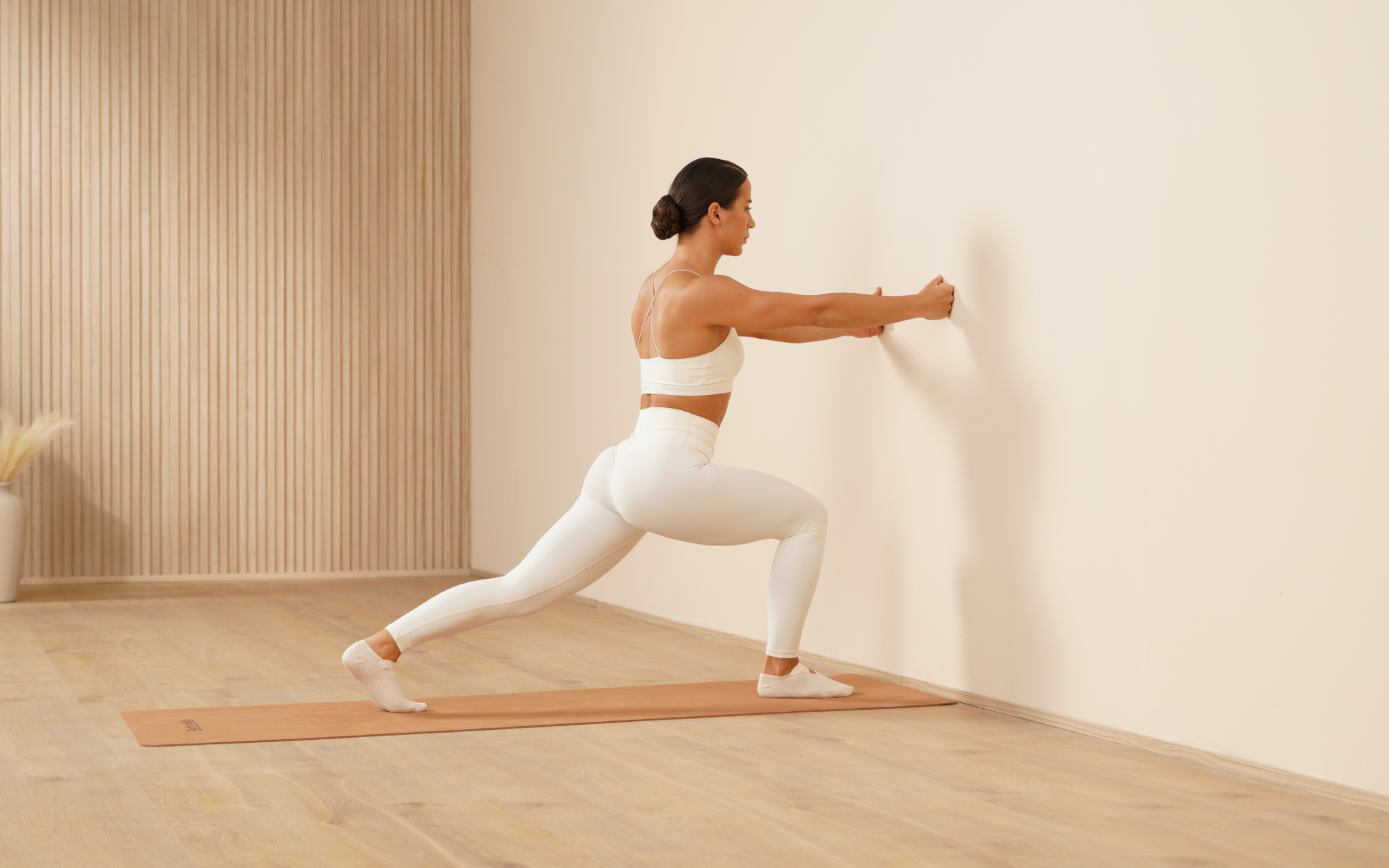
 Reviewed by