If you’ve ever felt disconnected from your body, carried chronic tension, or struggled to feel grounded in the present moment, you’re not alone. Many people experience this, particularly during periods of ongoing stress (1).
Standing somatic exercises offer a simple, approachable way to reconnect with your body and better understand how it responds to daily stress, all while staying upright and grounded. Unlike fast-paced workouts or rigid posture exercises, these practices focus on slow, mindful movement and internal awareness (2). Without the need for any special equipment or floor work, standing somatic exercises are also easy to practice almost anywhere, whenever you need a quick break to pause, reset, and rebalance.
If you’re looking for a practical way to support mind-body balance and encourage more natural, intuitive movement, this guide will walk you through how standing somatic exercises work, who they’re for, and how to start gradually and within your comfort level.
What Are Standing Somatic Exercises?
Standing somatic exercises are based on principles of somatic movement and internal awareness, all performed in an upright standing position rather than through floor work or rigorous movement (2, 3).
Instead of focusing on fitness or appearance-based goals, somatic movement invites you to look inward and notice how movement feels from the inside (4). In other words, it’s the internal experience of movement rather than using movement for external goals. The goal is to increase awareness of subtle sensations so you can better understand how your body responds to stress, movement, and rest.
An important aspect of somatic movement is tuning into your body as you move, using three main types of body awareness (5):
- Interoceptive: Noticing internal sensations such as breathing, heart rate, muscle tension, or waves of relaxation
- Exteroceptive: Sensing external stimuli such as sounds, temperature, or contact with your environment
- Proprioceptive: Understanding your body’s position, balance, and how it moves in your current space
By strengthening these forms of awareness, simple somatic exercises can help you notice patterns in how you move and hold tension (2). Over time, this practice may support tension release and help you feel more settled, making everyday movement feel easier, natural, and intuitive (6). The key to somatic movement is not perfect technique or precision, but rather tuning in and responding to your body’s needs in the present moment.
Before you start any new somatic practice, it’s important to consult a healthcare provider to make sure it is aligned with your health needs and goals, particularly when managing an injury, medical condition, or mental health concerns.
Read more: What Is the Best Somatic Meditation to Deal with Stored Emotions?
Why Are Standing Exercises Useful?
Standing somatic exercises are particularly useful as they reflect how the body moves naturally in everyday life, allowing you to apply the benefits beyond practice and into day-to-day movement.
As most daily activities – such as walking, cooking, reaching, or working – happen while standing, practicing somatic awareness in this upright position can help you carry what you learn into how you move each day. Put simply, rather than telling the body how it should stand, these exercises encourage you to notice how you are already standing and explore small, supportive adjustments that feel natural and sustainable (7).
Also, for anyone who sits for extended periods of time, standing somatic exercises make for helpful mini-breaks throughout the day. Taking a few slow, mindful movements when you stand up or in the middle of a long task can help you recenter, ease tension, and support other mind-body benefits that are linked to reducing sedentary habits (8).
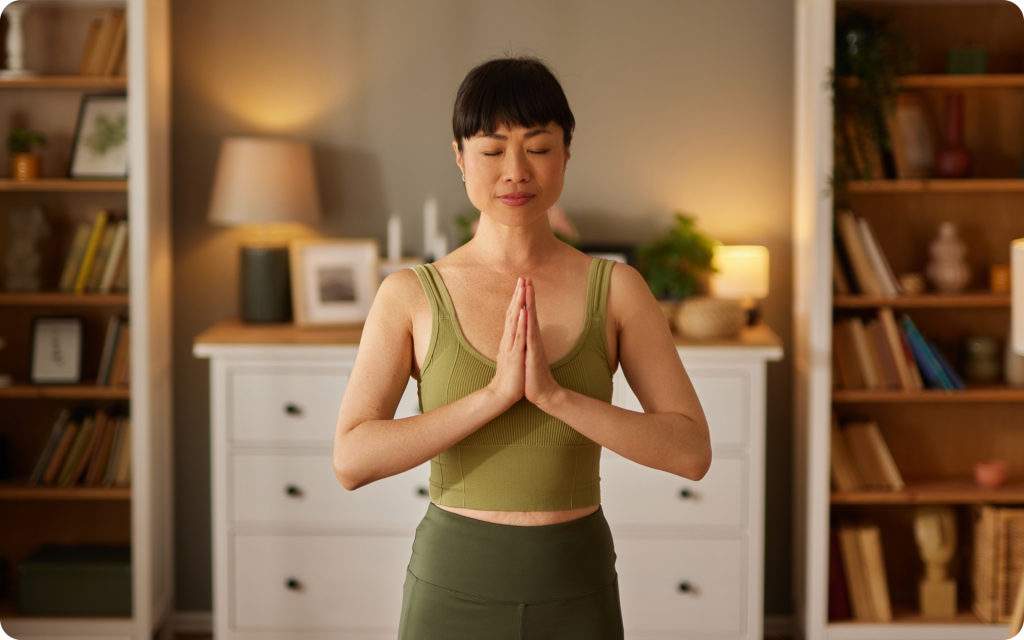
If you’d like to make somatic exercises a regular part of your day-to-day life, one helpful approach is to pair them with routines you already have – a strategy that’s often referred to as “habit stacking” (9). Here are a few easy ways to get started (10):
- Morning reset: Start your day with a brief standing somatic exercise to ground yourself and set a calm, mindful tone for the day ahead
- Workday breaks: After long periods of sitting or during stressful moments, try a few slow, intentional movements to ease tension and recenter
- Preparing for movement: Practice standing exercises before walks, workouts, or other physical activity to help your body transition more smoothly
BetterMe: Health Coaching app helps you achieve your body goals with ease and efficiency by helping to choose proper meal plans and effective workouts. Start using our app and you will see good results in a short time.
Who Can Benefit from Standing Somatic Exercises?
Standing somatic exercises offer gentle, accessible ways to support both the mind and body, and they can benefit a wide range of people, including:
- Beginners who are just starting out with somatic practices
- Anyone who feels intimidated or overwhelmed by traditional exercise routines
- People with mild balance, mobility, alignment, or posture concerns (11, 12)
- Individuals living with ongoing physical discomfort or recurring physical symptoms (3)
- Those who are experiencing chronic stress and tension (13)
- People who struggle with body image, body dissatisfaction, or feel disconnected from their overall physical self (14)
- Those who are using standing physical therapy exercises for recovery, with guidance from a qualified professional (12, 15)
It’s important to remember that somatic practices aren’t about performance, strength, or fitness goals. Instead, they’re focused on tuning in and responding to your body’s needs in the present moment. If you’re unsure how this practice might benefit you, it’s best to check in with a healthcare provider to get more personalized guidance and support.

Which Standing Somatic Exercises Improve Posture?
Posture often suffers when muscles in the neck, shoulders, back, and jaw become chronically tense, often leading to stiffness, slouching, and general discomfort (16).
This tension is commonly linked to ongoing stress, which can show up in the body as persistent tightness, particularly the fight-or-flight response (17). When this state of stress becomes chronic, these muscles can stay tight without you even realizing it, which may contribute to poorer posture over time.
Standing somatic exercises help bring attention to these unconscious patterns. Instead of forcing the body into “perfect posture”, these practices focus on gentle awareness and small adjustments, which may support a more comfortable, natural alignment over time. (7, 11). That being said, these exercises aren’t a replacement for medical care for serious postural issues or injuries unless recommended and used under professional guidance.
What Are Some Standing Somatic Exercises for Beginners?
When approaching somatic exercise, it’s important to focus on movements that feel supportive rather than demanding. These exercises should feel slow and intuitive, while moving at a pace that feels natural for your body. If anything ever starts to feel uncomfortable or overwhelming, pause or modify the exercise as needed.
To help you get started, below are three standing somatic exercises for beginners that you can try on your own:
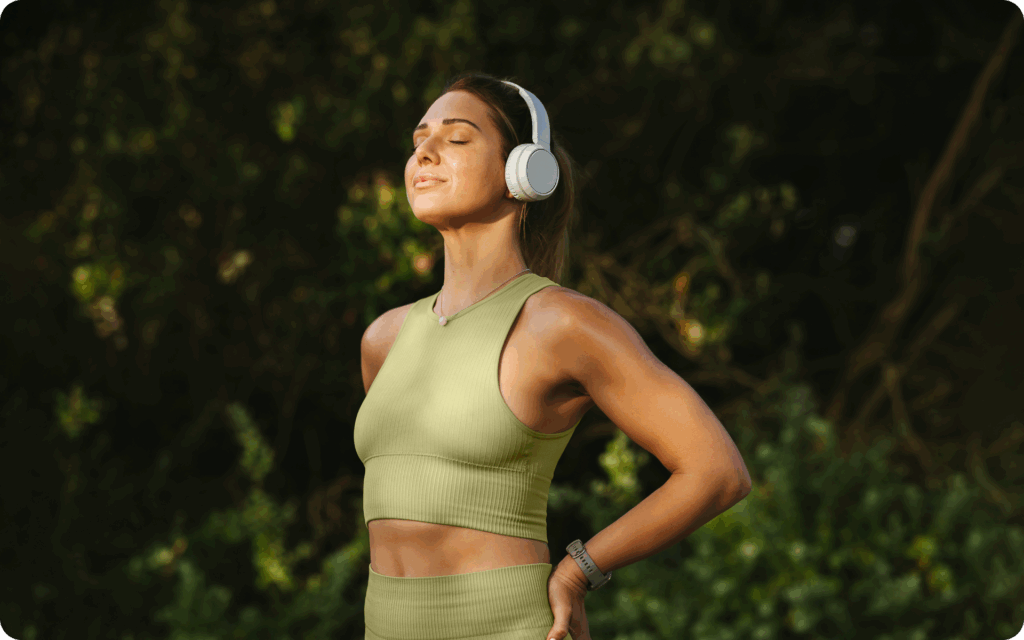
Standing Meditation
Standing meditation is a simple exercise that combines upright stillness with somatic awareness, which makes it a useful option when sitting feels uncomfortable or you need a grounding pause in stressful moments (18). Here’s how to do it on your own:
- Stand with your arms relaxed by your sides
- Soften or close your eyes, taking a few deep breaths to center yourself
- Take a moment to notice any sensations that arise, such as your feet connecting with the floor, stiffness, or tingling
- As you’re doing this, also observe your breath moving through your diaphragm, inhaling through your nose and exhaling through your mouth
- If you notice any tension, allow it to soften naturally without forcing change
- Finish with one final full-body scan to recenter yourself before moving on
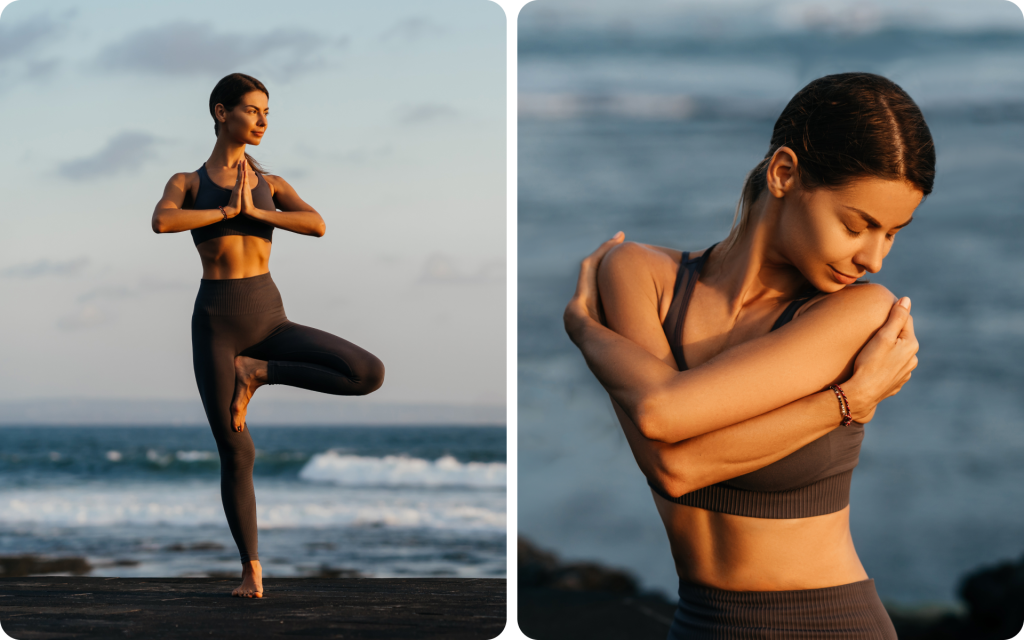
Dynamic Standing Balance
Dynamic standing balance exercises are helpful for coordination, tension release, and posture control, all of which play a role in supporting stability and confidence in everyday movement (19). Here’s how to do it on your own:
- Stand comfortably with both feet grounded and your arms relaxed
- Take a few steady, deep breaths to center yourself before beginning
- Once ready, gently shift your weight onto one foot without lifting the other, then slowly lift the opposite heel for a moment before lowering it back down
- As you balance gently to one side, notice any sensations or impulses that arise with curiosity, allowing any areas of tension to soften naturally
- Switch sides and repeat this process, keeping your movements slow, intuitive, and aligned with your breathing
- Finish with a few more grounding deep breaths to conclude the exercise
Standing Pilates-Inspired Movement
Standing Pilates exercises adapted for somatic practice focus on slow, controlled movements with an emphasis on body awareness rather than strength, repetition, or other fitness-based results (20). Here’s a simple routine you can try on your own:
- Stand with your feet hip-width apart and your knees slightly bent
- Take a few steady, deep breaths to center your awareness in the present
- Place one hand on your chest and the other on your abdomen
- Slowly begin to shift your weight forward and back at your own pace, noticing any internal sensations or bodily cues that arise
- After a moment, return to the center and take a few more deep breaths
- Gently roll your shoulders up, back, and down, paying attention to any changes in your breathing, posture, or other bodily cues
- Then return to the center and take a few deep breaths once again
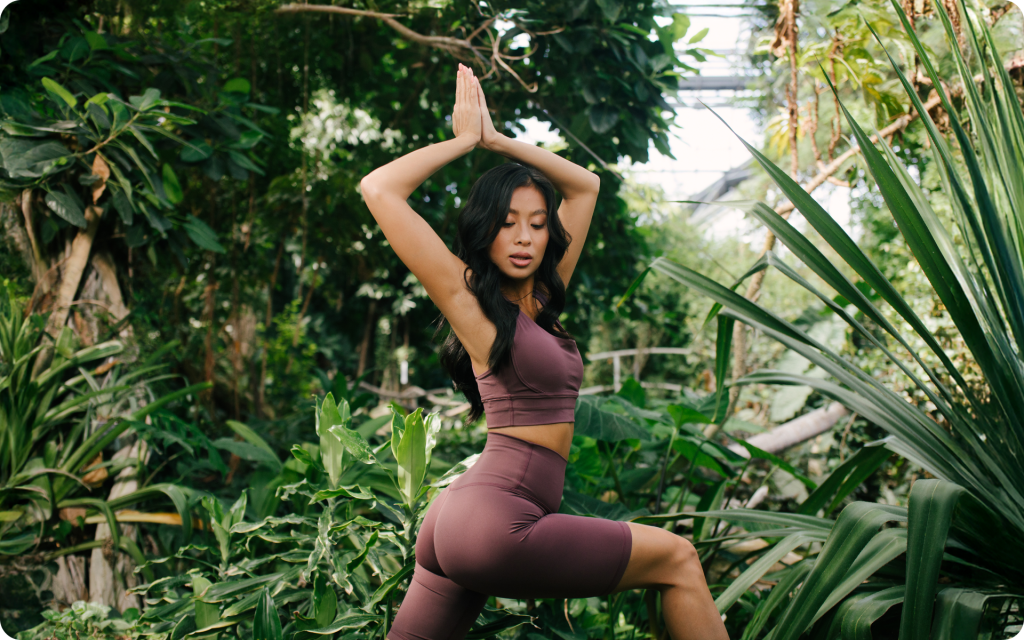
- Reach one arm overhead and slightly lean to the opposite side, paying attention to how your spine and muscles respond, then switch sides
- Finish with a full-body scan and a few final deep breaths, noticing any shifts before moving on with your day
Read more: Pilates vs Somatic Pilates: What’s the Difference?
Are Standing Somatic Exercises Good for Daily Practice?
Yes, standing somatic exercises are well-suited for daily practice, as they’re relatively low-impact, adaptable, and easy to integrate into everyday routines. You don’t need to designate a full session to get started – even a few mindful moments can help interrupt stress patterns and improve overall body awareness.
Keep in mind that somatic exercises work best when practiced consistently rather than intensely. They shouldn’t feel like a chore or an obligation, but rather small and calming pauses that help recenter your mind and body whenever you need them.
Beginners should ease into the practice by choosing one exercise to start and practicing it consistently each day to build a sustainable habit. Once you feel comfortable, you can gradually explore new somatic exercises and expand your routine as you see fit.
For additional somatic exercises and structured routines to support mind-body balance, the BetterMe app is a helpful resource to keep on hand.
What Results Can Standing Somatic Exercises Provide?
Standing somatic exercises can support a range of mind-body benefits, although results may vary for each person depending on health, lifestyle, and individual goals. While they aren’t a cure-all, practicing them consistently together with other healthy habits may lead to noticeable improvements over time, which may include:
- Better posture (7, 11)
- Reduced chronic pain symptoms (3)
- Reduced tension and stress levels (6, 13)
- Stronger mind-body awareness (2)
- Improved emotional regulation (13)
It’s important to remember that these changes are often subtle at first, but tend to build gradually over time, so consistent practice is the key to seeing long-term results.
Standing somatic exercises may support flexibility, although that isn’t their primary goal. Rather than focusing on fitness directly, somatic practices focus on internal awareness during movement (4). By helping reduce built-up stress and tension, these exercises support more comfortable, functional movement, which may lead to feelings of improved flexibility over time (12). Standing somatic exercises don’t directly “fix” posture in a corrective sense. However, they can help address underlying nervous system patterns that are linked to chronic tension and misalignment (11). Therefore, while they’re not a cure-all, engaging in regular somatic exercises may naturally support healthier, more sustainable posture over time. Yes, most standing somatic exercises are well-suited for beginners, as they’re relatively low-impact, simple to follow, and easy to adapt based on comfort level. As the focus is on internal sensation rather than performance or fitness outcomes, this practice is often quite approachable and non-intimidating for many people. Neither standing nor seated somatic exercises are better overall, as each offers unique benefits that can be useful depending on your needs and goals. For example, standing exercises tend to support functional everyday movement, while seated exercises can provide more stability for longer or more restorative sessions. Trying out both can help you understand what works best for your mind and body, so there’s no need to limit yourself to just one approach.Frequently Asked Questions
Do standing somatic exercises improve flexibility?
Can standing somatic exercises fix posture?
Are standing somatic exercises beginner-friendly?
Standing or seated somatic exercises - which is better?
The Bottom Line
Standing somatic exercises offer a simple, accessible way to support both mental and physical well-being through mindful movement. By bringing greater awareness to how your body responds to everyday movement, this practice can help you release tension, restore balance, and move through life with greater comfort, ease, and confidence.
For more somatic resources and structured routines, explore the BetterMe app to continue building your supportive wellness routine.
DISCLAIMER:
This article is intended for general informational purposes only and does not serve to address individual circumstances. It is not a substitute for professional advice or help and should not be relied on for making any kind of decision-making. Any action taken as a direct or indirect result of the information in this article is entirely at your own risk and is your sole responsibility.
BetterMe, its content staff, and its medical advisors accept no responsibility for inaccuracies, errors, misstatements, inconsistencies, or omissions and specifically disclaim any liability, loss or risk, personal, professional or otherwise, which may be incurred as a consequence, directly or indirectly, of the use and/or application of any content.
You should always seek the advice of your physician or other qualified health provider with any questions you may have regarding a medical condition or your specific situation. Never disregard professional medical advice or delay seeking it because of BetterMe content. If you suspect or think you may have a medical emergency, call your doctor.
SOURCES:
- Stress effects on the body (2018, apa.org)
- The Body Can Balance the Score: Using a Somatic Self-Care Intervention to Support Well-Being and Promote Healing (2025, nih.gov)
- Moving With Pain: What Principles From Somatic Practices Can Offer to People Living With Chronic Pain (2021, nih.gov)
- What is Somatic Movement? (2016, somaticmovementcenter.com)
- An Overview of the Bodily Awareness Representation and Interoception: Insights and Progress in the Field of Neurorehabilitation Research (2024, nih.gov)
- Somatic Movement to Stimulate and Soothe the Nervous System (2025, journals.sagepub.com)
- Interoceptive posture awareness and accuracy: a novel photographic strategy towards making posture actionable (2024, nih.gov)
- An intervention to reduce sitting and increase light-intensity physical activity at work: Design and rationale of the ‘Stand & Move at Work’ group randomized trial (2018, nih.gov)
- Leveraging cognitive neuroscience for making and breaking real-world habits (2025, sciencedirect.com)
- Developing Your Daily Practice of Clinical Somatics Exercises (2023, somaticmovementcenter.com)
- Improving Posture and Alignment Through Somatics (2022, journals.sagepub.com)
- Somatic movement intervention among older adults to improve body awareness and spine mobility: A pilot study (2025, sciencedirect.com)
- Transforming Stress with Somatic Movement (2024, journals.sagepub.com)
- “I hate my body”: Somatic Movement Practices and Body Image (2022, journals.sagepub.com)
- Movement-Based Therapies in Rehabilitation (2020, nih.gov)
- The Effect of Sitting Posture and Postural Activity on Low Back Muscle Stiffness (2021, mdpi.com)
- Psychological Stress and the Autonomic Nervous System (2004, sciencedirect.com)
- Benefits of Tadasana, Zhan Zhuang and Other Standing Meditation Techniques (2019, researchgate.net)
- The Effect of Balance and Coordination Exercises on Quality of Life in Older Adults: A Mini-Review (2019, nih.gov)
- Somatic Education and Mind-Body Disciplines: Exploring the Effects of the Pilates Method on Life Satisfaction, Mindfulness and Self-Compassion (2022, researchgate.net)

 By
By