Hours spent sitting at a desk, in a car, or on the couch can lead to a common problem for many people: tight hip flexors. Interestingly, active, athletic people can be just as prone to tight hip flexors.
This group of muscles, located at the front of your hips, plays a vital role in nearly every move you make, from walking and running to simply standing up straight. Inactivity can leave them chronically shortened and stiff, while intense training and repetitive movements can overload them and trigger a tightening response.
When they become tight, it can set off a chain reaction of discomfort, affecting your posture, lower back, and overall mobility.
This guide provides a structured approach to understanding and addressing tight hip flexors. We’ll explore what causes this tightness, how to identify it, and provide a clear, science-backed routine of stretches and exercises to help you regain flexibility and strength. You’ll learn how to perform these movements correctly to maximize their benefits and avoid common mistakes.
What Is the Classic Standing Hip Flexor Stretch?
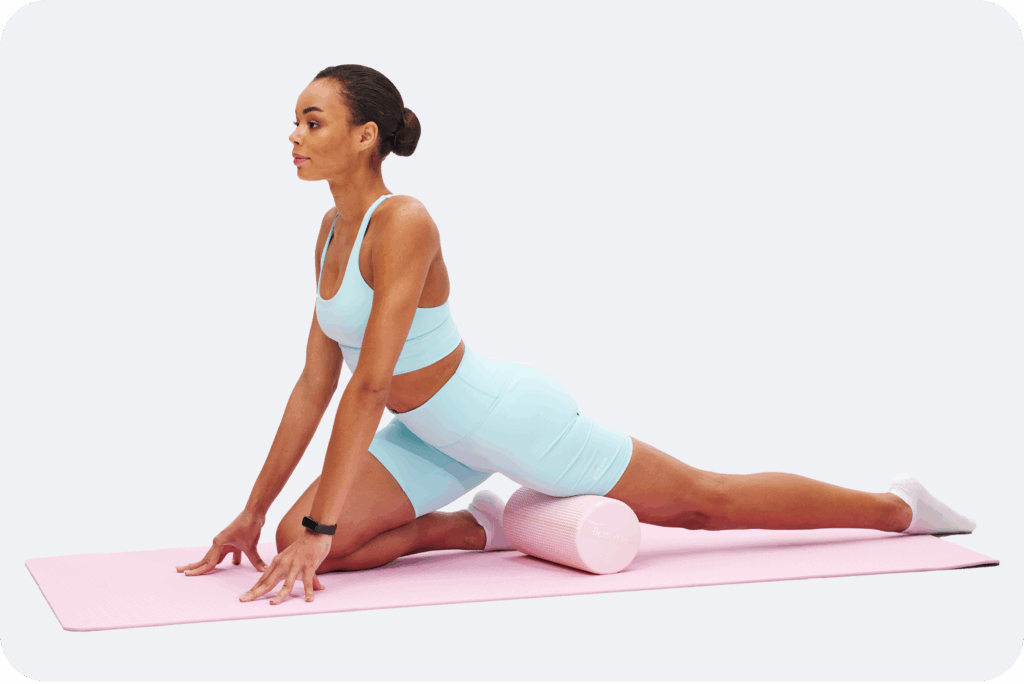
The classic standing hip flexor stretch is a foundational movement designed to lengthen the muscles at the front of your hip. It’s a convenient and effective way to counteract the effects of prolonged sitting. This stretch primarily targets the iliopsoas–a group consisting of the psoas major and iliacus muscles–and the rectus femoris, which is one of the four quadriceps muscles (1).
Collectively, these muscles connect your femur (thigh bone) to your pelvis and lower back (2). When you sit for extended periods, they are held in a shortened position, which can lead to a state of chronic tightness known as adaptive shortening (3).
Prolonged sitting greatly affects hip extension (4).The standing hip flexor exercises works by placing these muscles in an extended position, gently encouraging them to return to their natural length. It helps improve hip extension, which is crucial for a normal walking gait and proper athletic movement.
What Does a Tight Hip Flexor Feel Like?
Identifying the sensation of tight hip flexors is the first step toward addressing the issue. The symptoms can range from subtle stiffness to more pronounced pain, and they often manifest in ways you might not immediately connect to your hips.
Here are some common signs:
- A pulling sensation in the front of your hip or upper groin, especially when you try to stand up straight or extend your leg backward.
- Lower back pain or stiffness. Tight hip flexors can pull your pelvis into an anterior pelvic tilt, where the front of the pelvis drops and the back rises. This increases the curve in your lower back (lordosis) and can place stress on the lumbar spine (1).
- Difficulty standing fully upright. You might feel like you’re constantly in a slight forward bend at the hips.
- Hip or glute pain. When hip flexors are tight, your glute muscles can become underactive, a phenomenon sometimes called “gluteal amnesia.” This imbalance forces other muscles to compensate, which can lead to pain.
- Knee pain. An anterior pelvic tilt can alter the alignment of your entire leg, potentially causing stress on the knee joint during activities like walking or squatting.
Tight hips are an even bigger challenge for athletes. Our hip stretches for runners guide will help restore mobility, improve stride mechanics, and keep your training feeling smooth and pain-free.
BetterMe: Health Coaching app helps you achieve your body goals with ease and efficiency by helping to choose proper meal plans and effective workouts. Start using our app and you will see good results in a short time.
How To Loosen Tight Hip Flexors Quickly?
While “quickly” is a relative term, you can achieve noticeable relief from hip tightness with a focused and consistent approach. Lasting improvement requires a combination of releasing tension and strengthening opposing muscle groups.
Somatic exercises, which focus on the mind-body connection, can be particularly effective for releasing chronic, involuntary muscle tension (5).
Somatic exercises reprogram the sensory-motor system by bringing your awareness to internal sensations of movement (6). This helps you release habitual contractions that you may not even be conscious of. This process helps reverse what is known as Sensory-Motor Amnesia (SMA), where the brain has “forgotten” how to relax certain muscles (7).
Here is a short program combining somatic release with targeted strengthening to start loosening your hips.
Program Notes
- Glossary:
- Somatic Exercise: A gentle movement focused on internal sensation to release chronic muscle tension.
- Glute Bridge: An exercise to activate and strengthen the gluteal muscles.
- Equipment: A yoga mat or comfortable surface.
- Frequency: Perform this routine daily.
- Effort: Movements should be slow, gentle, and pain-free. Focus on the quality of the movement, not the quantity.
Hip Loosening and Activation Program
| Exercise | Sets | Reps/Duration | Rest |
|---|---|---|---|
| Arch and Flatten (Somatic) | 1 | 5-8 slow reps | None |
| Arch and Curl (Somatic) | 1 | 5-8 slow reps | None |
| Single-Leg Glute Bridge | 2 per leg | 10-12 reps | 30 seconds |
Exercise Instructions
Arch and Flatten
- Lie on your back with your knees bent and feet flat on the floor, about hip-width apart. Rest your arms at your sides.
- Inhale slowly as you gently arch your lower back, creating a space between your back and the floor. Feel your pelvis tilt forward.
- Exhale slowly as you flatten your lower back against the floor, pressing your pelvis back. Feel your abdominal muscles engage slightly.
- Focus on the sensation of your pelvis rocking back and forth. Move slowly and deliberately.
Arch and Curl
- From the same starting position, inhale and arch your lower back.
- Exhale as you simultaneously flatten your back and lift your head and shoulders a few inches off the floor, as if doing a small crunch.
- Inhale as you slowly lower your head and shoulders back down and return to the arched back position.
- The goal is to coordinate the movement of your spine and abdominal muscles.
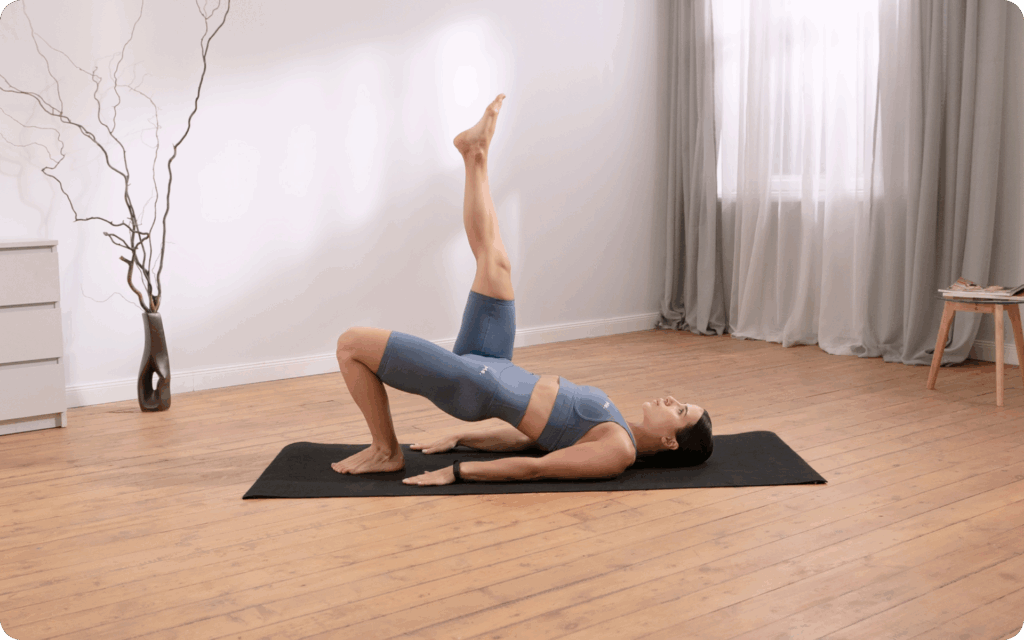
Single-Leg Glute Bridge
- Lie on your back with both knees bent and feet flat on the floor.
- Extend one leg straight out. Keep your thighs parallel.
- Press through the heel of the foot that’s on the floor, lifting your hips toward the ceiling. Squeeze your glute at the top.
- Ensure your body forms a straight line from your shoulders to the knee of the planted leg. Avoid arching your lower back.
- Slowly lower your hips back to the starting position. Complete all reps on one side before switching.
Read more: How To Perform Thigh Stretch Pilates For A More Flexible Body
How To Stretch Hip Flexors While Standing?
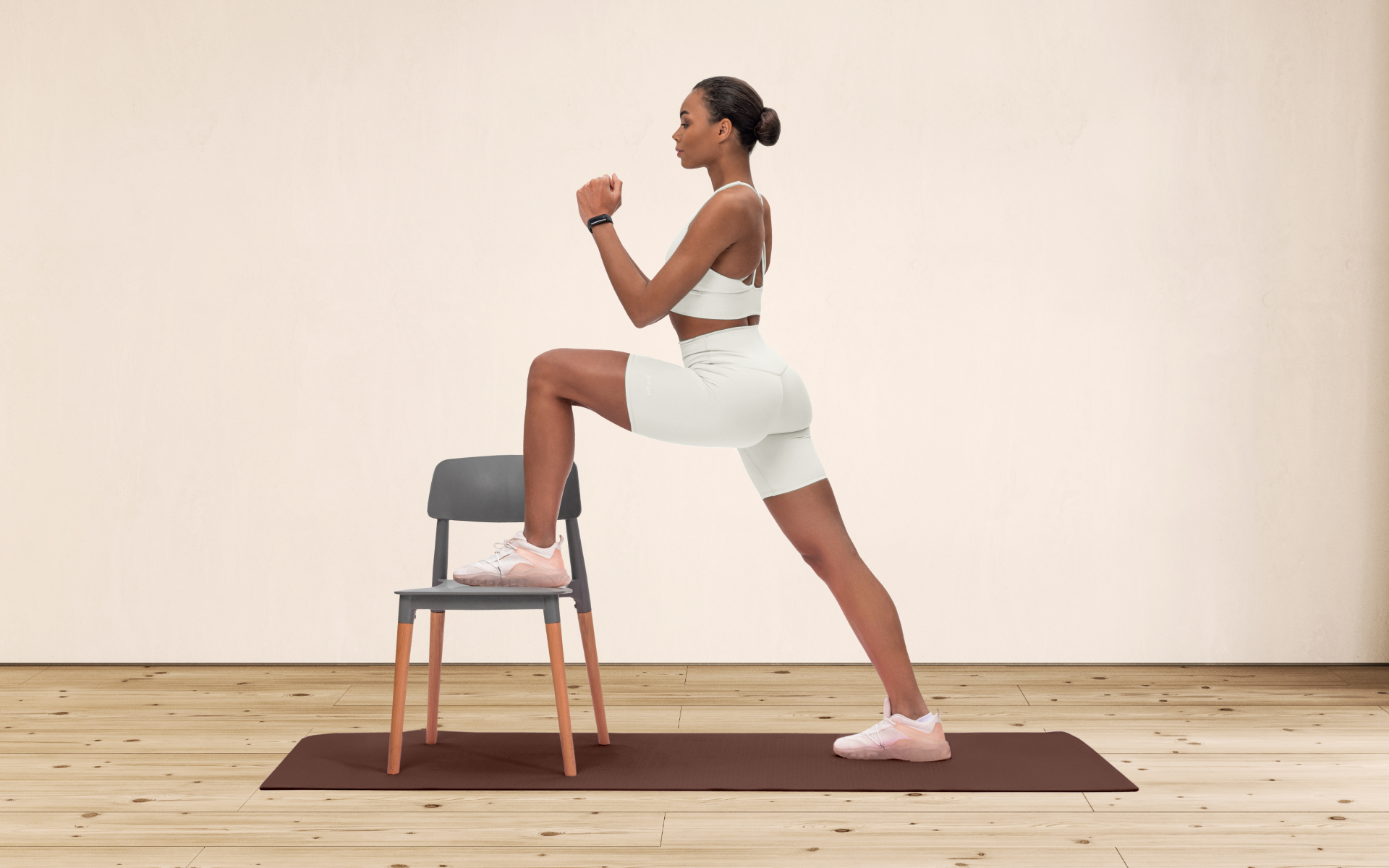
The standing hip flexor stretch is a practical option that you can do almost anywhere without needing to get on the floor. Proper form is key to ensuring you’re targeting the right muscles and not just compensating with your lower back.
Program Notes
- Glossary:
- Posterior Pelvic Tilt: The action of tucking your tailbone under, which flattens the lower back and engages the glutes. This is crucial for an effective hip flexor stretch.
- Equipment: A sturdy object like a wall or chair for balance (optional).
- Frequency: Perform this stretch 2-3 times per day, especially after long periods of sitting.
- Duration: Hold each stretch for 30-45 seconds. Do not bounce.
Standing Hip Flexor Stretch Program
| Exercise | Sets | Reps/Duration | Rest |
|---|---|---|---|
| Classic Standing Hip Flexor Stretch | 2 per leg | 30-45 seconds | 15 seconds |
| Standing Quad Stretch with Hip Extension | 2 per leg | 30-45 seconds | 15 seconds |
Exercise Instructions
Classic Standing Hip Flexor Stretch
- Stand with your feet together. Take a large step backward with your right leg, similar to a lunge position but with a shorter stance.
- Keep your back (right) leg straight and your front (left) knee slightly bent. Both feet should point forward.
- Engage your right glute and perform a posterior pelvic tilt. You should immediately feel a stretch at the front of your right hip.
- To deepen the stretch, gently bend your front knee further, shifting your weight forward while maintaining the posterior tilt. Avoid arching your back.
- Hold the position, breathing deeply. Switch legs and repeat.
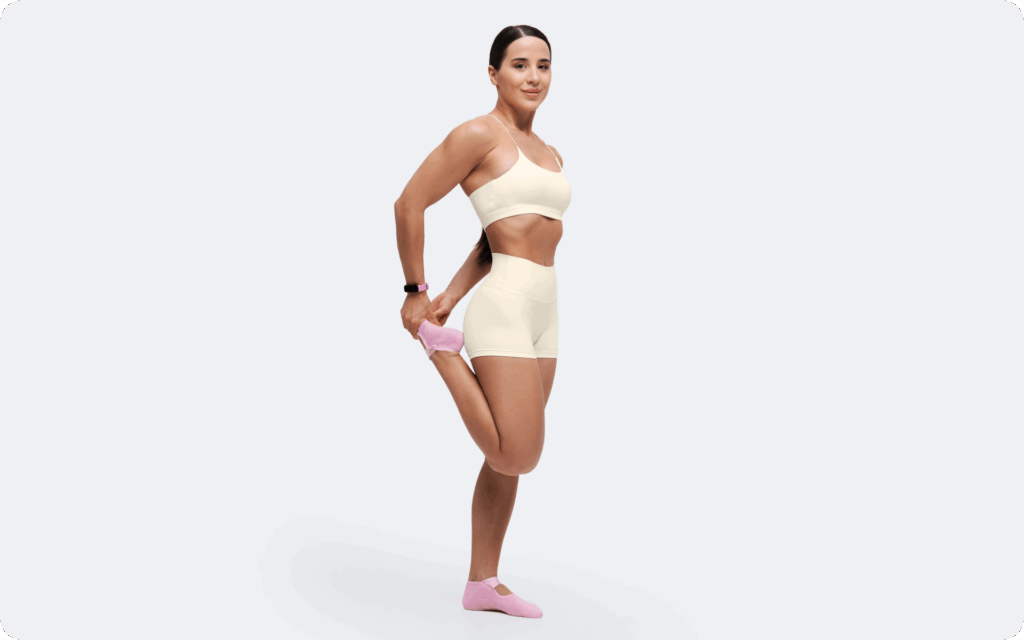
Standing Quad Stretch with Hip Extension
- Stand tall, holding onto a wall or chair for balance if needed.
- Grab your right ankle or foot with your right hand and pull your heel toward your glute. Keep your knees close together.
- Tuck your pelvis under (posterior pelvic tilt) and engage your right glute.
- Gently push your right hip forward without arching your back. This will intensify the stretch in both your quad (rectus femoris) and hip flexor.
- Hold the stretch before switching to the other side.
What Are Some Soft Standing Hip Flexor Stretches?
For individuals who find deep lunges or intense stretches uncomfortable, “soft” or gentle stretches are an excellent alternative. These movements prioritize mobility and active range of motion over passive, end-range stretching.
They are ideal for warm-ups or for people experiencing significant stiffness. Even older populations can benefit from these standing hip flexor stretches for seniors, thanks to their gentle, supported movements
Program Notes
- Glossary:
- Dynamic Stretch: A stretch performed through a controlled, active movement.
- Equipment: None.
- Frequency: Can be performed multiple times a day, particularly as a movement break.
- Effort: Focus on smooth, controlled motions.
Reasons why BetterMe is a safe bet: a wide range of calorie-blasting workouts, finger-licking recipes, 24/7 support, challenges that’ll keep you on your best game, and that just scratches the surface! Start using our app and watch the magic happen.
Soft Standing Mobility Program
| Exercise | Sets | Reps/Duration | Rest |
|---|---|---|---|
| Leg Swings (Forward and Backward) | 1 per leg | 15-20 swings | None |
| Leg Swings (Side to Side) | 1 per leg | 15-20 swings | None |
| Psoas March | 1 | 10 reps per leg | None |
Exercise Instructions
Leg Swings (Forward and Backward)
- Stand sideways to a wall or sturdy object, placing a hand on it for support.
- Keeping your torso upright and core engaged, swing your outside leg forward and backward in a controlled arc.
- Allow the momentum to carry your leg, but don’t force it beyond a comfortable range.
- Focus on opening up the hip at the end of each swing. Complete all reps and switch sides.
Leg Swings (Side to Side)
- Face the wall or support object, placing both hands on it for balance.
- Swing your right leg out to the right side and then across your body to the left.
- Keep the movement controlled, focusing on the adductor and abductor muscles of the hip.
- Complete all reps before switching to the left leg.
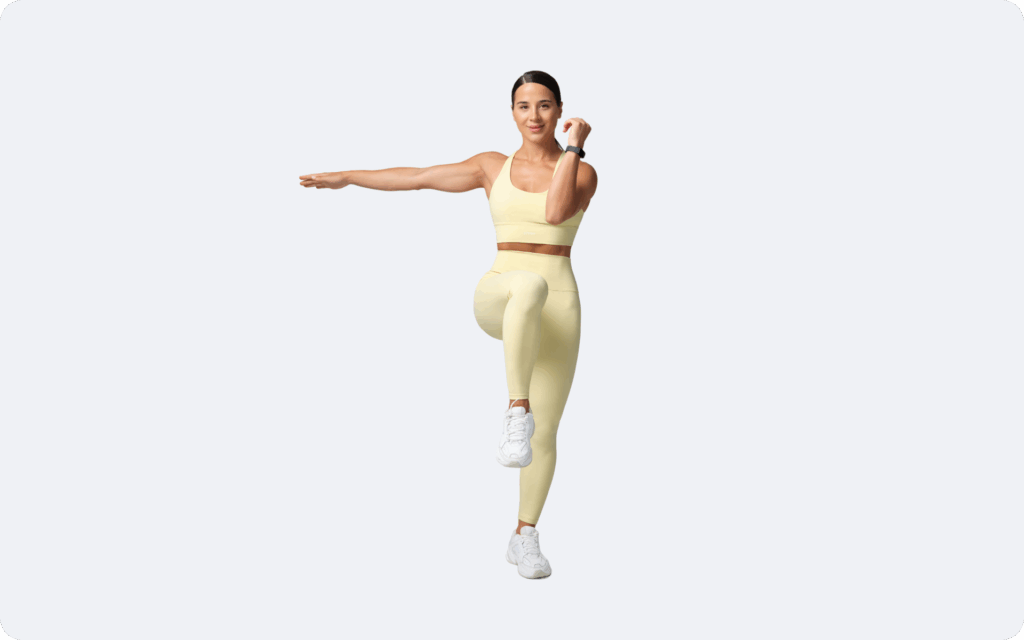
Psoas March
- Stand tall with your feet hip-width apart and your core engaged. Maintain a neutral spine.
- Slowly lift your right knee toward your chest, aiming for a 90-degree angle at the hip.
- Hold for a count of two, focusing on using your hip flexor to lift the leg, not momentum.
- Slowly lower the leg back to the starting position with control.
- Repeat with the left leg. This completes one rep.
Discover simple chair yoga moves to release tight hip flexors and ease stiffness in our chair yoga hip openers article.
How Long Does It Take to Loosen Tight Hip Flexors?
There is no one-size-fits-all timeline for loosening tight hip flexors. The duration depends on several factors, including:
- The severity of the tightness: Chronically shortened muscles will take longer to release than muscles that are only temporarily stiff.
- Consistency: Performing stretches and exercises daily or several times a week will yield faster results than sporadic efforts. A few minutes each day is more effective than one long session per week.
- Lifestyle: If you continue to sit for 8-10 hours a day without breaks, your progress will be slower. Integrating movement breaks, using a standing desk, and being more active in general are crucial.
- The underlying cause: If tightness is due to muscle imbalances (e.g., weak glutes or core), you won’t see lasting improvement until you address the weakness.
Generally, you may feel some immediate relief after a stretching session. However, creating lasting change in muscle length and function can take anywhere from a few weeks to several months of consistent work.
The key is patience and a holistic approach that includes stretching, strengthening, and lifestyle adjustments.
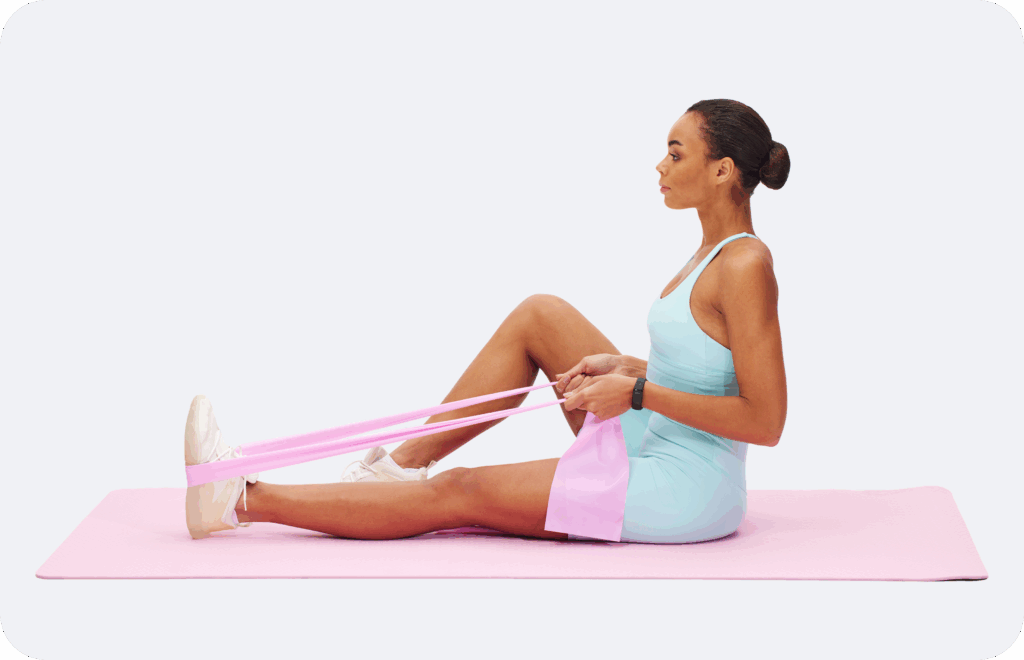
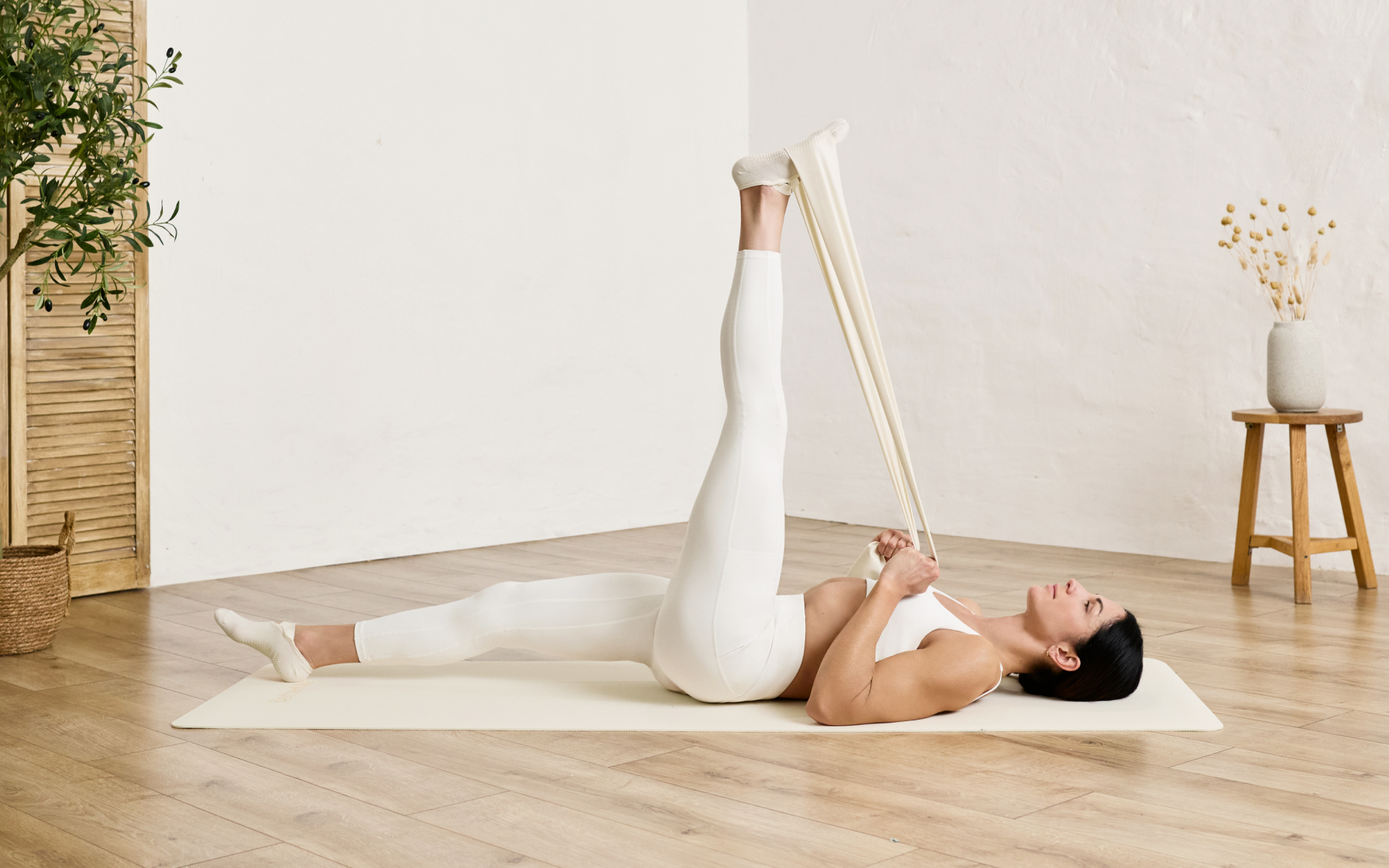
Read more: 5 Resistance Band Stretches to Improve Your Flexibility
What Are Common Mistakes in Hip Flexor Stretches?
Performing hip flexor stretches incorrectly can not only render them ineffective but may also lead to discomfort or injury. Being mindful of your form is essential.
Here are mistakes to avoid:
- Arching the Lower Back: This is the most common error. When you arch your back, you’re compensating for a lack of hip extension by moving your spine. This negates the stretch and can compress your lumbar vertebrae.
- The Fix: Actively engage your core and glutes to maintain a posterior pelvic tilt throughout the stretch.
- Not Engaging the Glutes: The glutes are the opposing muscles to the hip flexors (8). By consciously squeezing the glute of the stretching leg, you signal the hip flexor to relax through a process called reciprocal inhibition.
- The Fix: Squeeze your butt cheek on the side you’re stretching.
- Stretching Cold Muscles: Deep, static stretching is best done when your muscles are warm, such as after a workout or a brief warm-up (e.g., 5-10 minutes of light cardio). Stretching cold muscles can increase the risk of a strain (9).
- The Fix: Do dynamic movements like leg swings before holding a static stretch.
- Forcing the Stretch: Pushing into pain is counterproductive. When a muscle feels threatened, it will contract to protect itself, which is the opposite of what you want.
- The Fix: Go to the point of a gentle, pulling sensation and hold it. Breathe deeply to help the muscle relax.
Read our beginner hip flexor stretch which walks you through safe, simple steps to loosen tight hips.
Standing is generally better for your hip flexors than sitting because it places them in a more neutral, extended position. However, standing statically for very long periods can also lead to fatigue and discomfort (10). The best approach is to alternate between sitting and standing hip stretches and to incorporate more regular movement, such as walking throughout the day. Massage, particularly techniques like deep tissue or self-myofascial release (foam rolling), can help release tension in tight hip flexors (11, 12). However, it’s important to distinguish between “tight” and “weak.” Sometimes, a muscle can be both. While massage addresses tightness, it does not improve strength. If your hip flexors are weak, you will need to incorporate specific strengthening exercises, like the Psoas March, to improve their function. Yes, there can be a link. A weak core, particularly the deep abdominal muscles like the transverse abdominis, can lead to instability in the pelvis and lower back (13). To compensate for this lack of stability, the hip flexors (especially the psoas) may become overactive and chronically tight as they try to stabilize the spine and pelvis (14). Strengthening your core is often a key component of resolving long-term hip flexor issues. Walking is an excellent activity for hip mobility. The motion of extending your leg behind you as you push off for the next step provides a gentle, dynamic stretch for the hip flexors. A brisk walk with a full stride can help counteract the effects of sitting. However, if your hip flexors are very tight, your walking gait may be compromised. In this case, targeted stretches should be performed in addition to walking.Frequently Asked Questions
Is standing good for hip flexors?
Can massage help weak hip flexors?
Can a weak core cause tight hip flexors?
Is walking good to stretch hip flexors?
The Bottom Line
Regaining control and flexibility in your hips is a process of mindful movement and consistency. By combining somatic exercises to release chronic tension with targeted stretches and strengthening movements, you can effectively address tightness.
Listen to your body, focus on proper form, and integrate more movement into your daily routine. This structured approach will not only help your hips but will also contribute to better posture, reduced back pain, and improved overall physical well-being.
DISCLAIMER:
This article is intended for general informational purposes only and does not serve to address individual circumstances. It is not a substitute for professional advice or help and should not be relied on for making any kind of decision-making. Any action taken as a direct or indirect result of the information in this article is entirely at your own risk and is your sole responsibility.
BetterMe, its content staff, and its medical advisors accept no responsibility for inaccuracies, errors, misstatements, inconsistencies, or omissions and specifically disclaim any liability, loss or risk, personal, professional or otherwise, which may be incurred as a consequence, directly or indirectly, of the use and/or application of any content.
You should always seek the advice of your physician or other qualified health provider with any questions you may have regarding a medical condition or your specific situation. Never disregard professional medical advice or delay seeking it because of BetterMe content. If you suspect or think you may have a medical emergency, call your doctor.
SOURCES:
- The Influence of Stretching the Hip Flexor Muscles on Performance Parameters. A Systematic Review with Meta-Analysis (2021, mdpi.com)
- Hip Flexors – an overview (n.d., sciencedirect.com)
- CURRENT CONCEPTS IN MUSCLE STRETCHING FOR EXERCISE AND REHABILITATION (2012, pmc.ncbi.nlm.nih.gov)
- Prolonged sitting and physical inactivity are associated with limited hip extension: A cross-sectional study (2021, pubmed.ncbi.nlm.nih.gov)
- Moving With Pain: What Principles From Somatic Practices Can Offer to People Living With Chronic Pain (2021, frontiersin.org)
- Sensory-Motor Amnesia and Somatic Solutions (2018, ajkinesiol.org)
- Effect of Hanna Somatic Education on Low Back and Neck Pain Levels (2022, pmc.ncbi.nlm.nih.gov)
- Improved Hip Flexibility and Gluteal Function Following a Daily Lunge-and-Reach Stretching Intervention (2025, pmc.ncbi.nlm.nih.gov)
- Increased risk of muscle tears below physiological temperature ranges (2016, pmc.ncbi.nlm.nih.gov)
- Evidence of Health Risks Associated with Prolonged Standing at Work and Intervention Effectiveness (2014, pmc.ncbi.nlm.nih.gov)
- Deep Tissue Massage Therapy: Effects on Muscle Recovery and Performance in Athletes (2025, pmc.ncbi.nlm.nih.gov)
- A systematic review and meta-analysis of the effects of foam rolling on range of motion, recovery and markers of athletic performance (2020, sciencedirect.com)
- Core strengthening (2004, archives-pmr.org)
- Core Stability Exercise Principles (2008, researchgate.net)
 Reviewed by