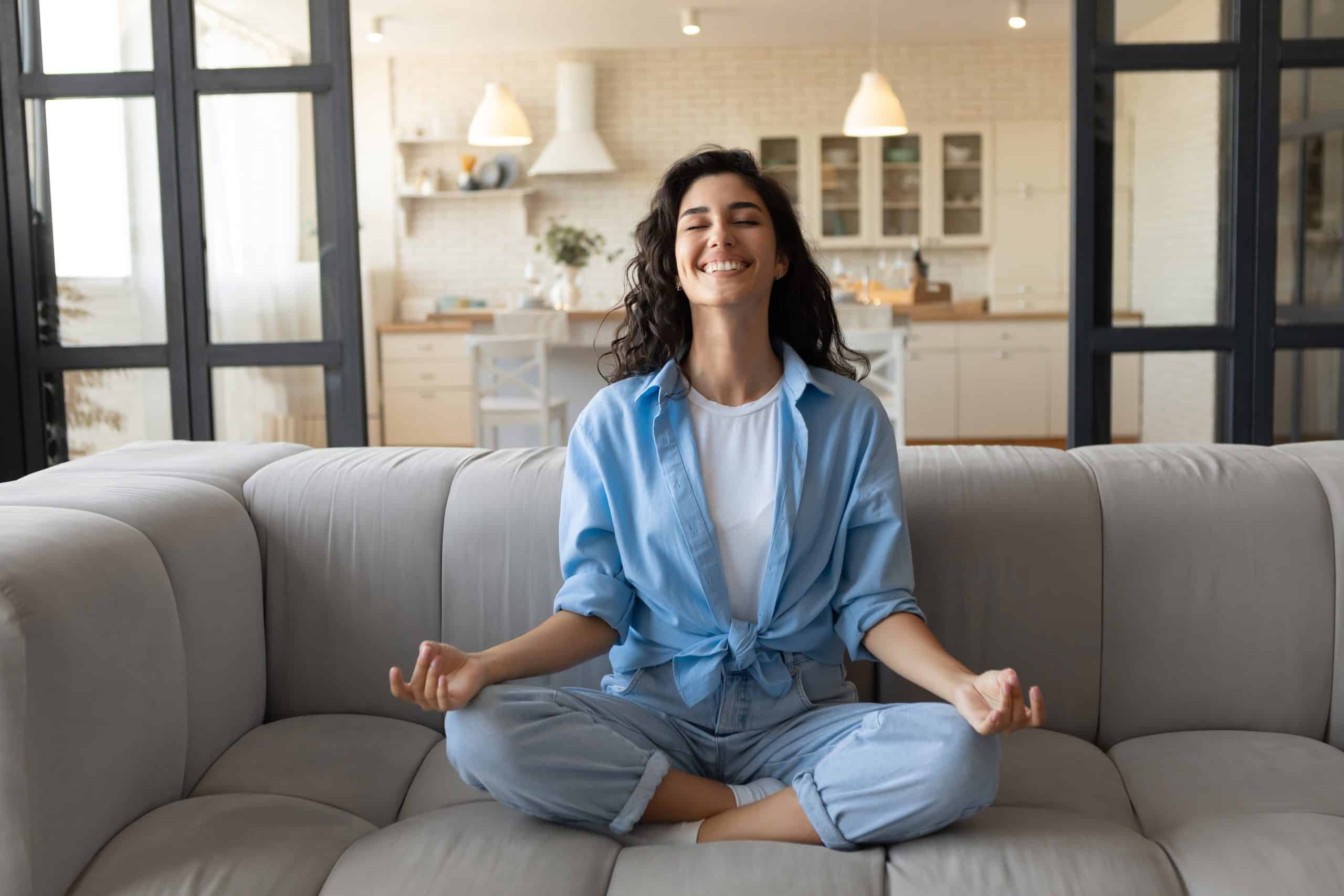
Hours spent hunched over laptops, driving in cars, and sitting at desks can take a toll on posture and contribute to back discomfort. But there’s an easy option to add more gentle movement to your day: yoga. Just a few minutes of yoga each day may help support better posture, release tension, and improve flexibility and range of motion.
But when you’re too tired or too busy to make it to a yoga class, don’t worry—you can still enjoy many of the everyday benefits of yoga with this easy sofa yoga routine. All you need is a sofa and a few minutes to yourself. Sofa yoga can work well for busy schedules and for people who prefer extra support while moving. Seniors and those who want a gentler option may especially enjoy the slow stretching and strengthening. If you’re pregnant or have any ongoing concerns, it’s best to check with a healthcare professional before starting a new exercise routine.
Get your personalized
meal plan!
Here’s everything you need to know to get started with sofa yoga:
Who Needs Sofa Yoga?
Truthfully, many people can benefit from doing some form of yoga on a regular basis. However, there are certain groups of people who may find sofa yoga particularly helpful.
This includes people who:
- Sit for long periods of time (e.g., office workers, truck drivers)
- Experience back discomfort or general body tension
- Are pregnant or recently gave birth (it’s best to check with a healthcare professional before starting a new routine)
- Have limited mobility due to age or prefer extra support while moving
- Want a low-impact form of exercise
- Want to learn basic yoga poses before moving on to a more advanced practice
Read More: The Ultimate Chair Yoga Guide For Beginners
Is Sofa Yoga Effective?
Sofa yoga can offer benefits similar to traditional yoga, with the added benefit of being more accessible for many people. It can be a good way to ease into a yoga practice, or to maintain your routine when you can’t make it to a class. With time, some people may notice:
Increased Flexibility
If you think that bending, twisting, and stretching are best left to contortionists who can tie themselves into pretzels, think again. These movements are actually part of the basic human repertoire and are important for maintaining the range of motion as we age.
Yoga may help stretch and lengthen muscles, which can support flexibility (2). Improved flexibility may support a more active lifestyle by making everyday movements feel more comfortable.
Improved Posture
It’s no secret that our modern lifestyles involve a lot of sitting. Whether it’s at a desk, in the car, or on the couch, all this sitting can contribute to poor posture and back discomfort.
Yoga may help counterbalance long periods of sitting by opening the chest and shoulders and encouraging a longer, more upright posture (2). Over time, some people may notice improvements in posture as they build strength, mobility, and body awareness.
Back Comfort and Tension Relief
Some sources suggest that exercise and gentle movement can be helpful for ongoing lower-back discomfort (3).
Yoga, in particular, may help support back comfort by strengthening the muscles that support the spine and improving range of motion (1). The gentle movements of sofa yoga can be a good option because they’re low-impact and controlled compared to more intense forms of exercise.
When it comes to different types of yoga, the BetterMe platform offers a variety of routines you can try. Support back comfort and overall wellbeing with more sofa yoga exercises in the app.
Reduced Stress Levels
In our fast-paced, always-on world, stress is unfortunately common. Over time, persistent stress can affect how we feel day to day, including our mood, stress levels, energy, and overall wellbeing. Yoga may help reduce stress for some people by encouraging deep breathing. In turn, deep breathing can support relaxation and a sense of calm (1).
Improved Digestion
Some people notice that stress can affect their digestion and overall comfort. The good news is that mindful breathing and gentle twists in yoga may help support digestive comfort for some people. In particular, twists can encourage gentle movement through the midsection and help you feel more relaxed during and after your practice (4).
Reduced Risk of Strain
Even the most advanced athletes take time off their sport to stretch and strengthen their muscles. That’s because taking care of our bodies can help reduce the risk of strain both on and off the playing field. The same is true for yoga. By building strength and flexibility, we can support more comfortable movement in everyday life (2).
Supports Cardiovascular Wellbeing
Yoga may also support overall wellbeing, including cardiovascular wellbeing, for some people (1). Some research suggests that regular yoga practice can be associated with improvements in everyday markers of wellbeing over time. Individual results can vary.
Supports Emotional Wellbeing
Inner peace may seem like a lofty goal, but yoga may help support emotional wellbeing. Some people find that yoga helps them feel calmer, improves mood, and supports focus and mental clarity. What’s more, yoga may help build body awareness and a more positive relationship with movement (2).
Will Sofa Yoga Help You Lose Weight?
In general, yoga isn’t a particularly strenuous form of exercise, so you may not burn many calories doing yoga on the couch. However, sofa yoga can help support your mental and physical readiness for more strenuous exercise, which may support weight-management efforts over time.
For example, sofa yoga may:
- Support joint mobility: you may move more comfortably and feel more prepared for other activities.
- Support core strength: core engagement is part of many movements and workouts.
- Help manage stress: stress can influence habits and motivation, so relaxation practices may be helpful for some people.
- Support mood: a positive mindset can make it easier to stick with healthy routines.
- Support sleep habits: good sleep can play a role in overall wellbeing and weight-management efforts.

Can You Do Sofa Yoga Every Day?
Many people can include sofa yoga in their routine daily, especially if they keep the movements gentle and controlled. In fact, practicing regularly may help you get more comfortable with the poses over time. However, if you’re new to yoga, it’s best to start slowly and build up gradually. For example, you might start with 10 minutes of sofa yoga per day and then increase your practice time as you feel ready.
Read More: Should You Do Chair Yoga Every Day?
What Do You Need To Do Sofa Yoga?
All you need for sofa yoga is a comfortable spot on your couch (or another sturdy piece of furniture) and some loose-fitting clothing. You might also want to have a blanket or towel handy to use as props. If you’re new to yoga, it can be helpful to practice in front of a mirror so you can check your alignment.
You’ll need a guide to lead you through the routine. This can be an online video, a book, or a smartphone app. The BetterMe app, for example, offers sofa yoga content with illustrated pose guides.
Once you’ve found a guide, simply follow along and practice at your own pace. Focus on your breath and listen to your body. If a particular pose feels uncomfortable, try a modification or skip it altogether. The most important thing is that you feel relaxed and comfortable during your practice.
Which Sofa Yoga Routine Is Best for Back Comfort?
If you’re looking for a sofa yoga routine that may support back comfort and help release tension, there are a few poses that many people find helpful. The sofa yoga routine in the BetterMe app includes some of these poses, along with others that can support flexibility.
Sofa Cat-Cow Stretch
The cat-cow stretch is a simple pose that may help release tension and support mobility through gentle movement. It works areas like the back, neck, and shoulders.
To do the cat-cow stretch:
- Start on your hands and knees on the sofa with your wrists under your shoulders and your knees under your hips.
- As you inhale, arch your back and tilt your head up to the ceiling, letting your belly sink toward the floor. This is the cow pose.
- As you exhale, round your back and tuck your chin to your chest, drawing your belly up toward your spine. This is the cat pose.
- Continue alternating between the cow and cat poses for 10-20 breaths.

Sofa Cobra Pose
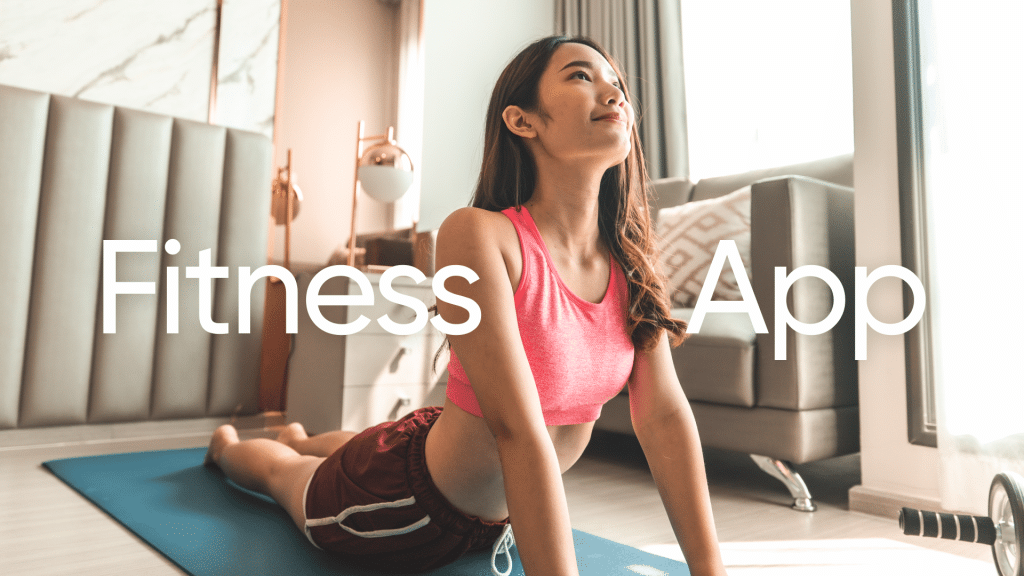
The cobra pose is a great stretch for areas like the back, neck, and shoulders. It can also help open up the chest and support posture awareness.
To do the cobra pose:
- Lie on your stomach on the sofa with your legs straight behind you and your hands on the floor next to your shoulders.
- As you inhale, press down into your hands and lift your head, chest, and upper back off the floor. Keep your lower back pressed into the sofa.
- Hold the pose for a few breaths, then exhale and release back down to the starting position.
Sofa Child’s Pose
Child’s pose is a restorative pose that may help release tension through the back and shoulders. It can also be a nice option if you’re feeling tense and want to slow down.
To do child’s pose:
- Start on your hands and knees on the sofa with your wrists under your shoulders and your knees under your hips.
- As you exhale, sink your hips back toward your heels and stretch your arms out in front of you, resting your forehead on the sofa.
- Hold the pose for a few breaths, then inhale and press back up to the starting position.
Supported Bridge Pose
The supported bridge pose is a great way to stretch areas like the back, glutes, and thighs. It may also help release tension and support back comfort when performed with good form.
To do the supported bridge pose:
- Sit on the floor with your back against the sofa and your feet flat on the floor in front of you.
- As you exhale, press down into your feet and lift your hips off the floor. The goal is to create a straight line from your knees to your chest. If your hips are not high enough, place a pillow or blanket under your glutes for support.
- Hold the pose for a few breaths, then exhale and release back down to the starting position.
The Bottom Line
If you’re looking for an easy, low-impact way to support back comfort and release tension, sofa yoga can be a great option. The poses in this article are just a few of the many that can help you move more comfortably and improve flexibility over time. For more ideas, check out the sofa yoga content in the BetterMe app.
DISCLAIMER:
This article is intended for general informational purposes only and does not serve to address individual circumstances. It is not a substitute for professional advice or help and should not be relied on for making any kind of decision-making. Any action taken as a direct or indirect result of the information in this article is entirely at your own risk and is your sole responsibility.
BetterMe, its content staff, and its medical advisors accept no responsibility for inaccuracies, errors, misstatements, inconsistencies, or omissions and specifically disclaim any liability, loss or risk, personal, professional or otherwise, which may be incurred as a consequence, directly or indirectly, of the use and/or application of any content.
You should always seek the advice of your physician or other qualified health provider with any questions you may have regarding a medical condition or your specific situation. Never disregard professional medical advice or delay seeking it because of BetterMe content. If you suspect or think you may have a medical emergency, call your doctor.
SOURCES:
- 9 Benefits of Yoga (n.d., hopkinsmedicine.org)
- Exploring the therapeutic effects of yoga and its ability to increase quality of life (2011, nih.gov)
- Exercise therapy for chronic low back pain (2021, nih.gov)
- Irritable Bowel Syndrome: Yoga as Remedial Therapy (2015, nih.gov)
 Reviewed by
 Reviewed by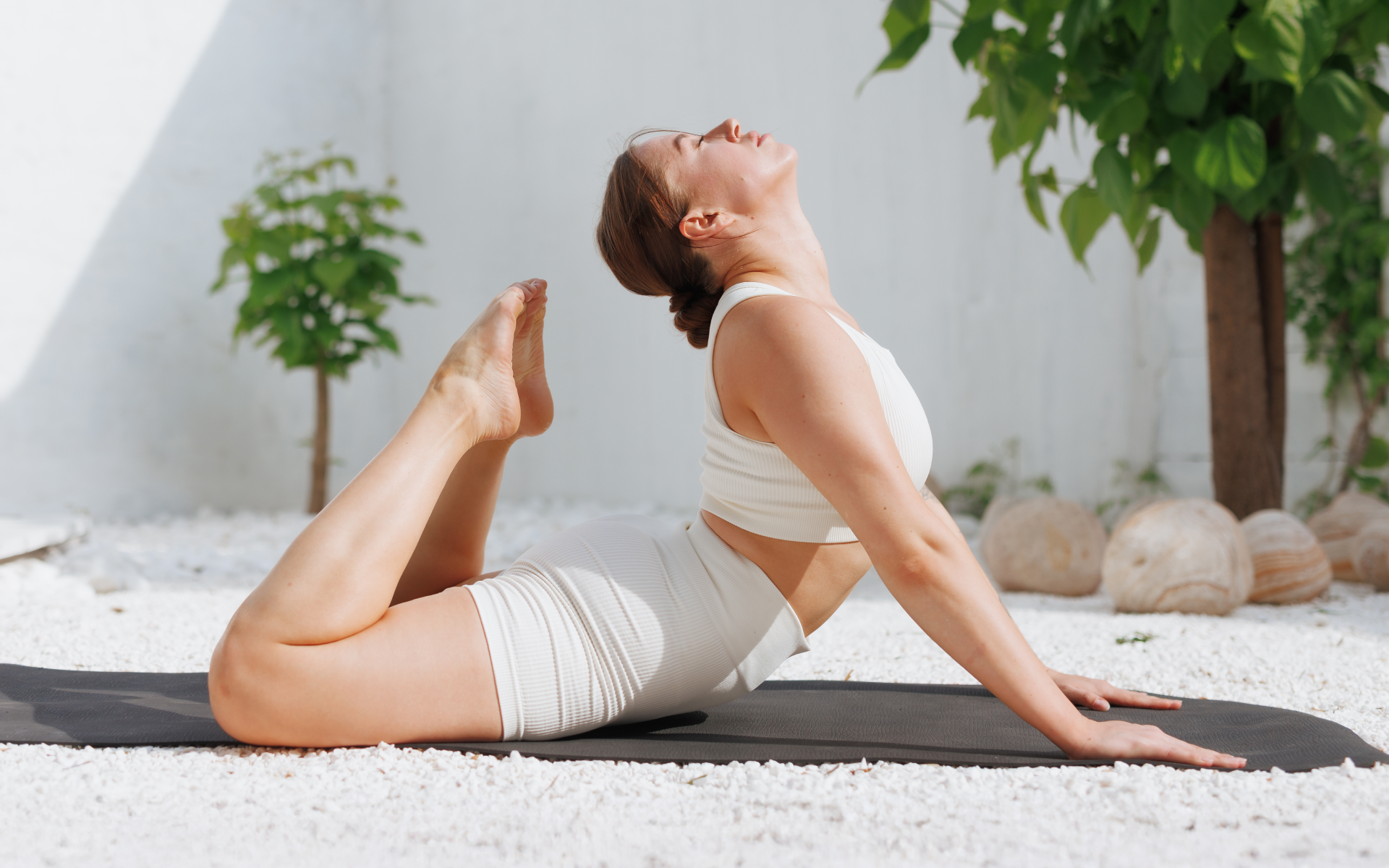
 Reviewed by
 Reviewed by
 Reviewed by