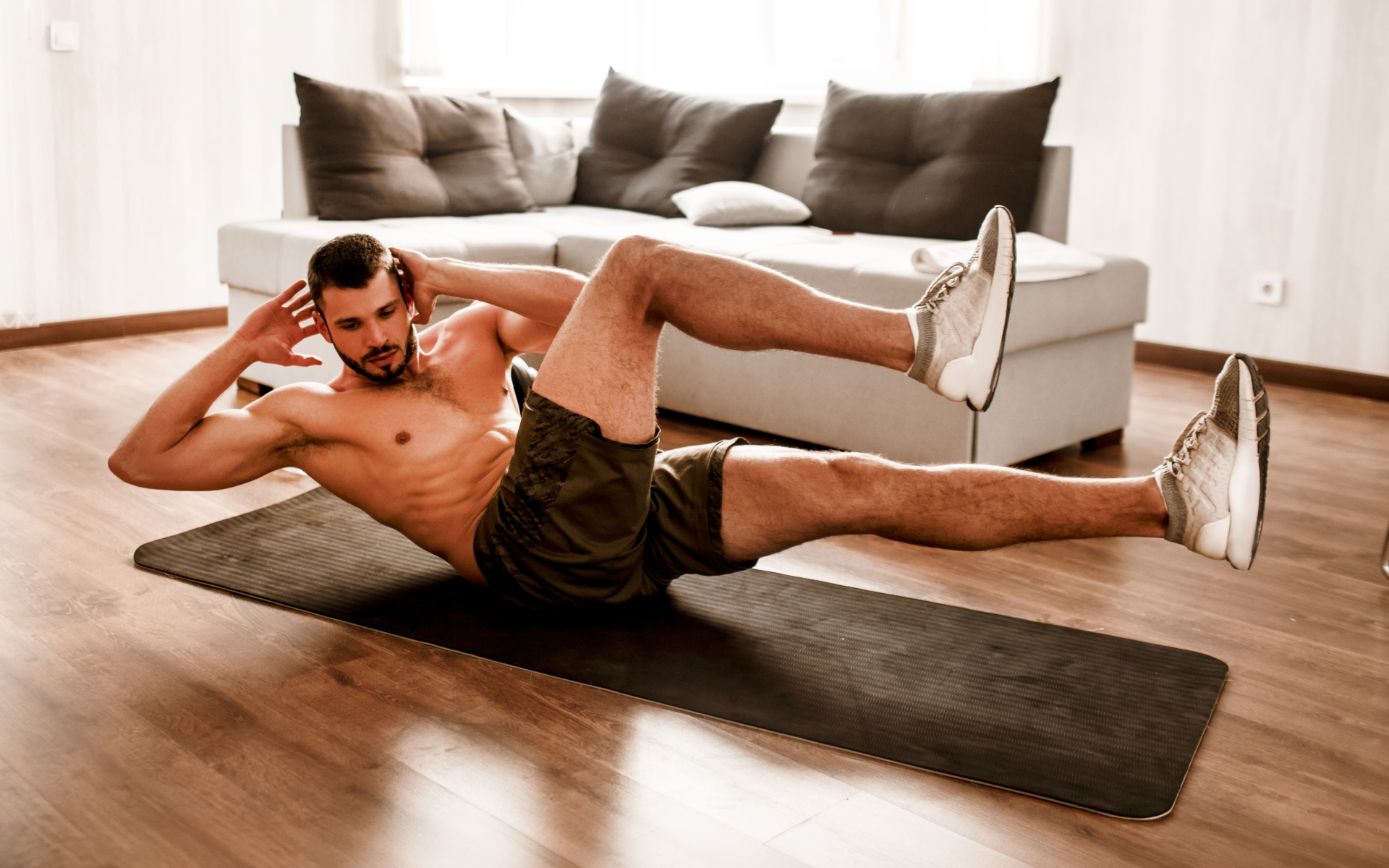
A lower ab workout for men focuses on movements that target the lower abdominal area to help build core strength and stability. While you cannot completely isolate the lower abs, exercises that involve lifting the legs or pelvis are excellent choices. Combining targeted movements with a balanced diet and regular physical activity can help you develop a stronger midsection over time.
Building a strong core is a common goal for many people. It often requires a mix of targeted training, consistency, and patience. The lower abdominals are a specific area that many men want to focus on for aesthetic and functional reasons.
However, achieving results requires more than just doing endless repetitions. It involves understanding how the muscles work together. You also need to perform the right exercises with proper form. Keep reading to learn about a practical lower ab workout for men that you can try.
Are Lower Abs Harder to Train Than Upper Abs?
Many people find that their lower abdominals seem harder to develop than the upper portion. The abdominal muscles are actually one continuous muscle group called the rectus abdominis that runs from your ribs down to your pelvis (1).
As it’s a single muscle, you cannot isolate the lower section completely. Whenever you contract your core, the entire muscle works together. However, certain movements can place more emphasis on the lower region.
The perception that the lower abs are harder to train often comes down to body composition. For some men, the lower belly is a common area for the body to store extra fat (2). This can obscure the muscles underneath, which makes them less visible.
Even with a strong core, those muscles may not show if the overlying tissue is thick. Genetics and age also play a role in how your body distributes mass (3). Therefore, nutrition and overall activity levels are just as important as the exercises you choose.
To see changes, consistency in your routine is key. Focus on exercises that flex the lower back and lift the pelvis. Over time, these movements can help strengthen the targeted area. If you want to learn more about how body composition affects muscle visibility, read more.
What Is the Best Lower Ab Exercise for Men?
There’s no single “best” exercise for the lower abdominals, and the best 6 pack ab workout usually includes a mix of movements that train the entire core. Different bodies respond to different movements. A well-rounded routine that includes a variety of exercises is often the most practical approach.
Using a combination of exercises helps engage the muscles from multiple angles. This variety can promote better overall core stability and endurance. Below is a table that compares some popular options you can include in your routine.
| Exercise | Primary focus | Equipment needed | Difficulty level |
|---|---|---|---|
| Hanging leg raises | Lower abs, hip flexors | Pull-up bar or Captain's chair | Advanced |
| Reverse crunches | Lower abs | Mat | Beginner |
| Mountain climbers | Overall core, cardio | None | Intermediate |
| Flutter kicks | Lower abs, endurance | Mat | Intermediate |
| Plank knee to elbow | Obliques, lower abs | None | Intermediate |
| Hollow body hold | Deep core stability | Mat | Advanced |
Many of these movements can also fit into a calisthenics workout abs routine, as they rely mainly on bodyweight control rather than machines or heavy equipment.
Hanging Leg Raises
Hanging leg raises are highly regarded for targeting the lower abdominal region. They require significant core control to prevent your body from swinging.
- Grab a pull-up bar with an overhand grip, your hands shoulder-width apart.
- Let your body hang naturally with your legs straight.
- Engage your core and slowly raise your legs until they are parallel to the floor.
- Lower your legs back down with control to the starting position.
Reverse Crunches
This is a gentle option that’s great for beginners. It focuses on lifting the pelvis, which engages the lower portion of the rectus abdominis.
- Lie flat on your back on a comfortable mat.
- Bend your knees at a 90-degree angle and lift your feet off the floor.
- Use your core to pull your knees toward your chest, lifting your hips slightly.
- Slowly lower your hips back to the mat with control.
Mountain Climbers
Mountain climbers combine core engagement with cardiovascular work. They can help increase your heart rate while working your midsection.
- Start in a high plank position with your hands directly under your shoulders.
- Keep your body in a straight line from your head to your heels.
- Bring your right knee toward your chest quickly.
- Return it to the start and immediately bring your left knee toward your chest.
- Continue alternating legs at a brisk pace.
Flutter Kicks
Flutter kicks are excellent for building endurance in the lower abdominals. They keep the muscles under constant tension.
- Lie on your back with your legs extended straight.
- Place your hands flat under your glutes for lower back support.
- Lift both legs a few inches off the floor.
- Keep your legs straight and alternate kicking them up and down slightly.
Whether you’re a workout beast or just a beginner making your first foray into the world of fitness and dieting – BetterMe has a lot to offer to both newbies and experts! Install the app and experience the versatility first-hand!
Plank Knee to Elbow
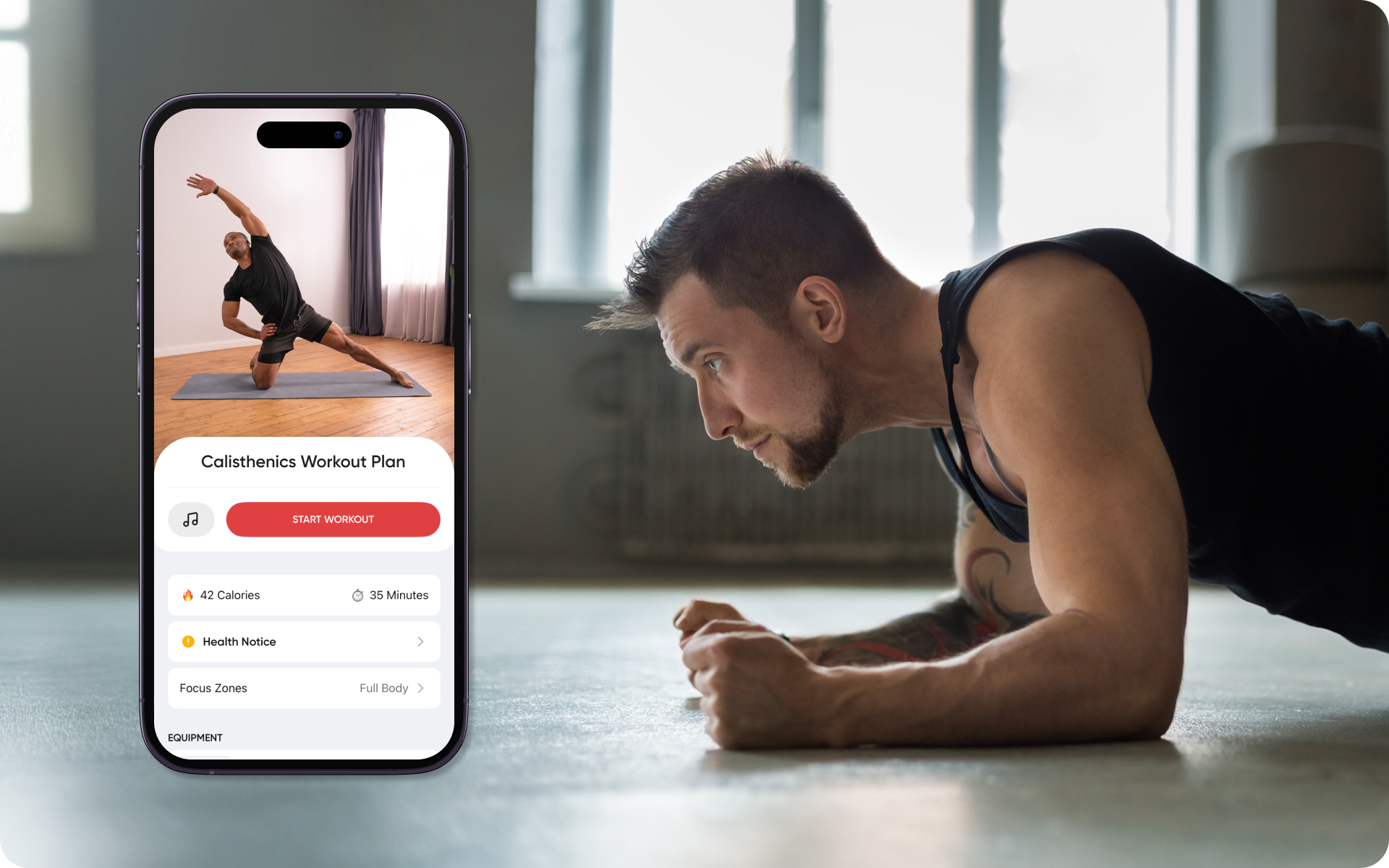
This variation of the plank adds a dynamic movement that engages the obliques and lower abs.
- Begin in a high plank position with a tight core.
- Slowly bring your right knee toward your right elbow.
- Hold for a brief second to feel the contraction.
- Return to the starting position and repeat with the left side.
Hollow Body Hold
The hollow body hold is a foundational gymnastics move. It promotes deep core stability and teaches you how to brace your midsection.
- Lie on your back with your arms extended above your head.
- Press your lower back firmly into the floor.
- Lift your legs, head, and shoulders a few inches off the mat.
- Hold this curved position, keeping your core tight and your breathing steady.
Read more: Upper-Body Gym Workout for Men
How to Structure a Good Lower Ab Workout for Men
Structuring a routine properly can help you get the most out of your efforts. You don’t need to train your core for hours. A short, focused session is often enough.
It’s usually practical to pick 3-4 exercises from the list above. Perform them as a circuit or in straight sets. Below is an example of a protocol you might want to consider.
| Protocol type | Sets | Reps/time | Rest between sets |
|---|---|---|---|
| Beginner circuit | 2-3 | 10-12 reps | 45-60 seconds |
| Endurance focus | 3-4 | 30-40 seconds | 30 seconds |
| Advanced strength | 4 | 15-20 reps | 60 seconds |
Start with a warm-up to get your blood flowing (4). Move through your chosen exercises with slow, deliberate control. Focus on the quality of each movement, rather than rushing through the repetitions.
Listen to your body and rest when you need to. If an exercise feels uncomfortable, try a simpler variation. As you become stronger, you can gradually increase the sets or the time under tension.
If you want to learn more about structuring effective workout plans, you can read more on lower ab workout for men with weights.
Intense sweat sessions, working weight loss tips, lip-smacking recipes come in one package with the BetterMe Well-Being Coach app—all at your fingertips, start transforming your life now!
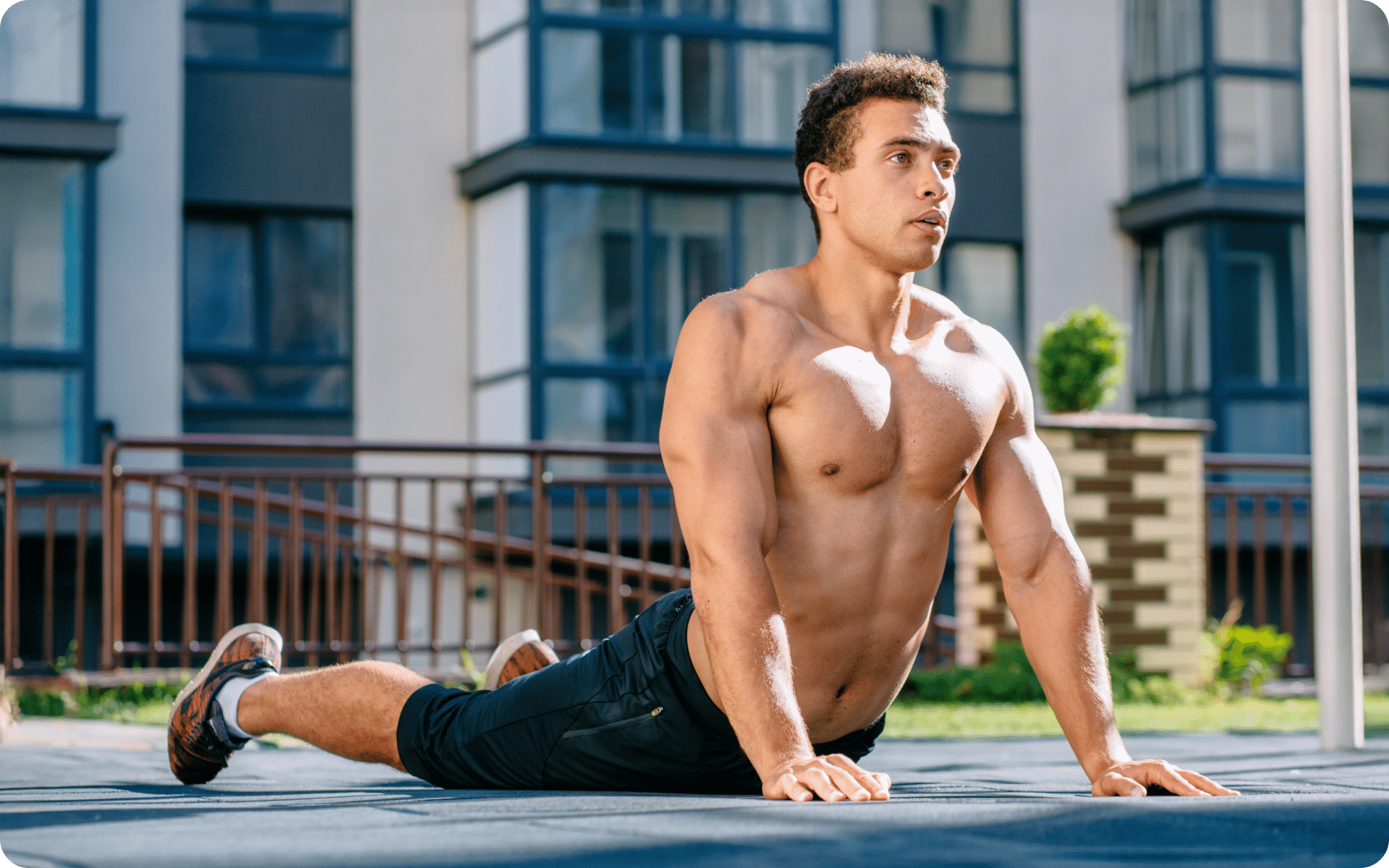
How to Work on Lower Abs for Men
Working on your lower abs consistently, with progressive overload, is a solid strategy (5). Over time, increase the length of your holds, and/or repetitions of your exercises. Ultimately, building abs requires more than just floor exercises. Your overall routine and lifestyle play a massive role. Nutrition is a major factor that will determine how visible your muscles are (6). If your goal is to get rid of belly fat men commonly struggle with, it’s important to combine consistent training with a calorie-controlled, nutrient-dense diet.
A diet that supports your goals is essential. Focus on lean proteins, complex carbohydrates, and plenty of vegetables. Managing your calorie intake can help you maintain a body composition where your muscles are more apparent (6).
In addition, full-body strength training can support your core goals. Compound movements such as squats and deadlifts require significant core stabilization (7). They work your abdominals indirectly while building overall strength.
Adequate sleep and recovery are also important. Your muscles need time to repair after a challenging session (8). Aim for quality rest each night to support your training efforts. Read more to explore more about how nutrition supports your fitness journey.
Read more: Full-Body Dumbbell Workout Men: The Ultimate Guide to Gains
How Many Times a Week Should a Man Lift Weights?
The frequency of your weightlifting sessions depends on your specific goals. For general muscle growth, many people aim for 3-4 days per week (9). This allows you to target different muscle groups while providing enough recovery time.
If your goal is simply to maintain your current strength, 2 days a week may be sufficient. Consistency is far more important than excessive frequency. It’s better to have two great workouts than four rushed ones.
When you train your core, you can treat it like any other muscle group. You don’t need to work it every single day. Giving your abdominals 48 hours of rest between intense sessions is a common and practical approach (10).
Ultimately, you should choose a schedule that fits your lifestyle. A routine you can stick to in the long term will yield the best outcomes (11).
Frequently Asked Questions
Why is it so hard to build muscle after 40?
Building muscle after 40 can feel more challenging due to natural physiological changes. One possible contributor is the age-related progressive loss of muscle mass, which is known as sarcopenia (12).
In addition, natural declines in testosterone can affect protein synthesis and muscle growth for some people (13). Changes in recovery time also mean that older adults may need more rest between sessions (14). However, with consistent resistance training and adequate nutrition, many people can still build and maintain muscle well into their later years (15).
Why are sit-ups no longer recommended?
Sit-ups are often discouraged as they can place unnecessary strain on the lower back. They primarily work the hip flexors, rather than isolating the abdominal muscles (16).
The repetitive spinal flexion that’s involved can cause discomfort for many people. Instead, fitness professionals often suggest movements that resist forces, such as planks or gentle crunch variations. These alternatives can help build core stability with less impact on the back.
Will 100 crunches a day give you abs?
Doing 100 crunches a day won’t automatically give you visible abs. Crunches can strengthen the abdominal muscles, but they don’t spot-reduce belly fat. For your muscles to be visible, you generally need to maintain a lower body fat percentage (17).
This is typically achieved through a combination of a balanced diet and full-body physical activity. Core exercises are just one part of a much larger picture.
What gym equipment is best for lower abs?
A Captain’s chair or a pull-up bar are excellent pieces of equipment for a lower ab workout in the gym. They allow you to perform hanging leg raises or knee raises with proper support.
A stability ball is also a great tool for adding an extra balance challenge to your routine. Using equipment can provide a greater range of motion and increased resistance. However, a simple mat is often all you need for effective floor-based movements.
Should I do lower ab workouts every day?
You don’t need to do lower ab workouts every day. As with any other muscle group, your abdominals require time to recover and repair after a workout. Training them 2-3 times a week is often sufficient for many people (9). Overtraining can lead to fatigue and poor form during your exercises. Focus on the quality of your workouts, rather than the daily frequency.
The Bottom Line
Developing a stronger core is a gradual process that requires a practical approach. The lower ab workout guide can be helpful if you’re unsure where to start. By incorporating these exercises into your regular routine, you can make steady progress over time. Remember that a lower ab workout for men works best when it’s paired with overall strength training and a balanced diet.
DISCLAIMER:
This article is intended for general informational purposes only and does not serve to address individual circumstances. It is not a substitute for professional advice or help and should not be relied on for making any kind of decision-making. Any action taken as a direct or indirect result of the information in this article is entirely at your own risk and is your sole responsibility.
BetterMe, its content staff, and its medical advisors accept no responsibility for inaccuracies, errors, misstatements, inconsistencies, or omissions and specifically disclaim any liability, loss or risk, personal, professional or otherwise, which may be incurred as a consequence, directly or indirectly, of the use and/or application of any content.
You should always seek the advice of your physician or other qualified health provider with any questions you may have regarding a medical condition or your specific situation. Never disregard professional medical advice or delay seeking it because of BetterMe content. If you suspect or think you may have a medical emergency, call your doctor.
SOURCES:
- Abdominal Muscles (2024, my.clevelandclinic.org)
- Why Do Men Accumulate Abdominal Visceral Fat? (2019, frontiersin.org)
- Genetics of Body Fat Distribution: Comparative Analyses in Populations with European, Asian and African Ancestries (2021, mdpi.com)
- Revisiting the ‘Whys’ and ‘Hows’ of the Warm-Up: Are We Asking the Right Questions? (2023, link.springer.com)
- Effects of Resistance Training Overload Progression Protocols on Strength and Muscle Mass (2024, pubmed.ncbi.nlm.nih.gov)
- Nutritional interventions in muscle hypertrophy research: a scientometric analysis within the context of resistance training (1992–2025) (2025, pmc.ncbi.nlm.nih.gov)
- Core Muscle Activity during Physical Fitness Exercises: A Systematic Review (2020, mdpi.com)
- Why Rest Days Are Important for Muscle Building (2023, nasm.org)
- The influence of resistance exercise training prescription variables on skeletal muscle mass, strength, and physical function in healthy adults: An umbrella review (2024, sciencedirect.com)
- The Importance of Recovery in Resistance Training Microcycle Construction (2024, jhk.termedia.pl)
- American College of Sports Medicine Position Stand. Resistance Training Prescription for Muscle Function, Hypertrophy, and Physical Performance in Healthy Adults: An Overview of Reviews (2026, journals.lww.com)
- Sarcopenia (2023, ncbi.nlm.nih.gov)
- Understanding the Secular Decline in Testosterone: Mechanisms, Consequences, and Clinical Perspectives (2026, mdpi.com)
- Age-Associated Differences in Recovery from Exercise-Induced Muscle Damage (2024, mdpi.com)
- Mitigating Sarcopenia with Diet and Exercise (2023, mdpi.com)
- Want a stronger core? Skip the sit-ups (2026, health.harvard.edu)
- Normal ranges of body weight and body fat (n.d., us.humankinetics.com)

 Reviewed by

 Reviewed by