Finding time for a comprehensive fitness routine is a challenge that many of us face daily. We often feel torn between the need to build strength, improve mobility, and manage our body composition, all while juggling a packed schedule.
But what if you didn’t need hours in the gym to achieve a balanced, functional physique? The solution lies in structured, efficient movement patterns that maximize metabolic output in minimal time.
This guide breaks down a specific protocol designed to address these needs effectively. We will explore the mechanics, benefits, and execution of Lessie’s full body Pilates workout that integrates resistance with control. If you are ready to enhance your physical capability without the fluff, you are in the right place.
What Is Lessie Full Body Pilates Workout?
The Lessie Full Body Pilates Workout is a structured exercise protocol that blends traditional Pilates principles with modern resistance training elements.
Unlike classical mat Pilates which often relies solely on body weight, this hybrid approach incorporates external load—specifically dumbbells and resistance bands—to increase mechanical tension on the muscles.
This routine is characterized by its high-density structure. It utilizes a continuous flow of movement with minimal rest, specifically structured as 30-second work intervals performed back-to-back.
By reducing rest periods, the workout maintains a sustained elevation in heart rate, bridging the gap between resistance training and cardiovascular conditioning. This makes it a full body pilates workout at home that requires minimal space but delivers measurable physiological stimulus.
The workout is designed to improve muscular endurance, core stability, and total body coordination. It adheres to the Pilates principle of “contrology,” where every repetition is performed with deliberate intent rather than momentum. This focus on precision ensures that the target muscle groups are effectively engaged throughout the range of motion.
For more resources on structured training, check out Lessie Fitness.
Are Full Body Pilates Workouts Effective?
Efficacy in training is defined by the ability of a stimulus to produce a specific adaptation, such as increased strength or improved endurance.
Full body Pilates workouts are highly effective because they utilize compound movements that recruit multiple muscle groups simultaneously.
Research indicates that multi-joint exercises, which engage larger amounts of muscle mass, elicit a greater hormonal response and caloric expenditure compared to isolation movements (1, 2).
Improved Muscular Endurance
By maintaining tension for 30-second intervals without immediate rest, this routine challenges the slow-twitch (Type I) muscle fibers. These fibers are responsible for sustaining activity over time (3). Improving the capacity of these fibers delays the onset of fatigue during daily activities, allowing you to perform physical tasks with greater efficiency (4).
Enhanced Core Stability
Every movement in this routine requires the stabilization of the trunk. Unlike passive stability provided by machines, this workout forces the deep abdominal muscles—specifically the transverse abdominis—to engage actively (5). A stronger core improves force transfer between the upper and lower body, reducing the risk of lower back discomfort (6).
Metabolic Conditioning
The structure of performing exercises back-to-back creates a metabolic demand that extends beyond the workout itself. This phenomenon, known as Excess Post-exercise Oxygen Consumption (EPOC), means your body continues to burn energy at an elevated rate as it recovers (7). This makes a full body pilates workout for weight loss a viable component of a broader body composition strategy.
Time Efficiency
For general population demographics, frequency and consistency are often more critical than intensity. A full body approach ensures that every major muscle group is stimulated in a single session. This allows for a training frequency of 2-3 times per week, which is sufficient to maintain health markers and induce strength adaptations in beginners (8).
For visual guides on similar efficient routines, visit Lessie Fitness YouTube.
Read more: Lessie Fitness YouTube: Your Guide To Effective Home Workouts
Which Muscles Does Lessie Full Body Pilates Target?
This routine is designed to provide a systemic stimulus, meaning it addresses the entire kinetic chain. The kinetic chain refers to the interconnected system of joints and muscles working together during movement.
When the kinetic chain operates efficiently, force is transferred smoothly from one segment of the body to another, resulting in better performance, improved coordination, and reduced risk of injury (9).
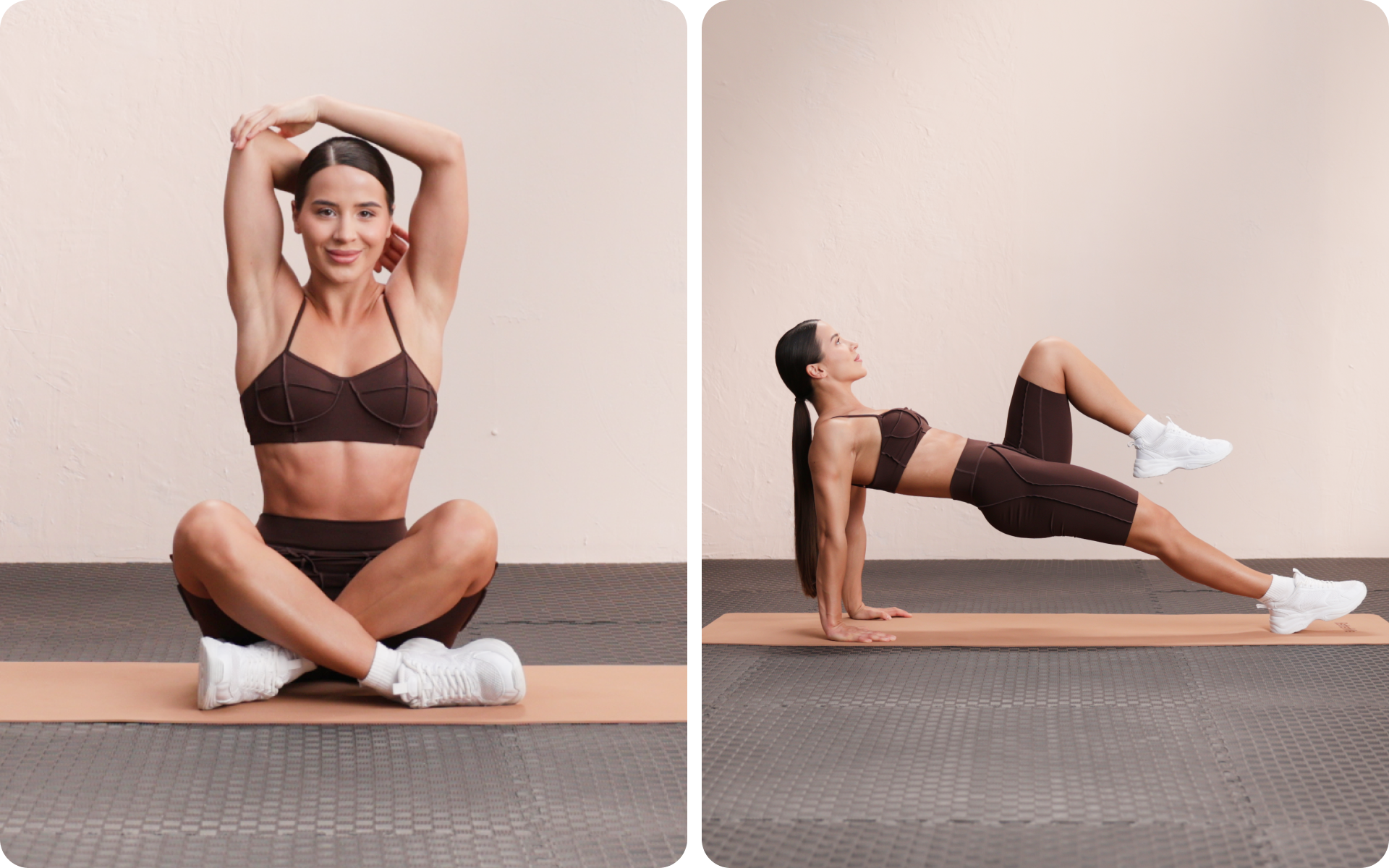
Lessie full body Pilates mainly targets:
- Quadriceps and Glutes: Movements like squats and knee lifts heavily recruit the anterior thigh and the gluteal complex. These are your primary movers for locomotion and standing (10).
- Deltoids (Shoulders): Exercises such as the front raise and shoulder press target the anterior and medial heads of the deltoid. Strengthening these muscles improves overhead stability (11).
- Triceps Brachii: The kickback variations isolate the back of the upper arm, essential for pushing movements (12).
- Core Complex: The “bird dog” and “dead bug” are foundational anti-rotation exercises that engage the rectus abdominis, obliques, and erector spinae. These muscles stabilize the spine and support force transfer during movement (13).
- Hip Flexors: Movements involving knee pulls and leg raises activate the iliopsoas, which is crucial for hip mobility and walking mechanics (14).
By targeting these areas simultaneously, you ensure a balanced development that supports functional daily movement.
What Is a Lessie Full Body Pilates Workout Plan?
This section outlines the specific parameters of the workout. Adhering to these variables is essential for safety and optimal results.
Program Notes:
- Glossary:
- ROM (Range of Motion): The full movement potential of a joint.
- Concentric: The lifting phase of an exercise (muscle shortening).
- Eccentric: The lowering phase of an exercise (muscle lengthening).
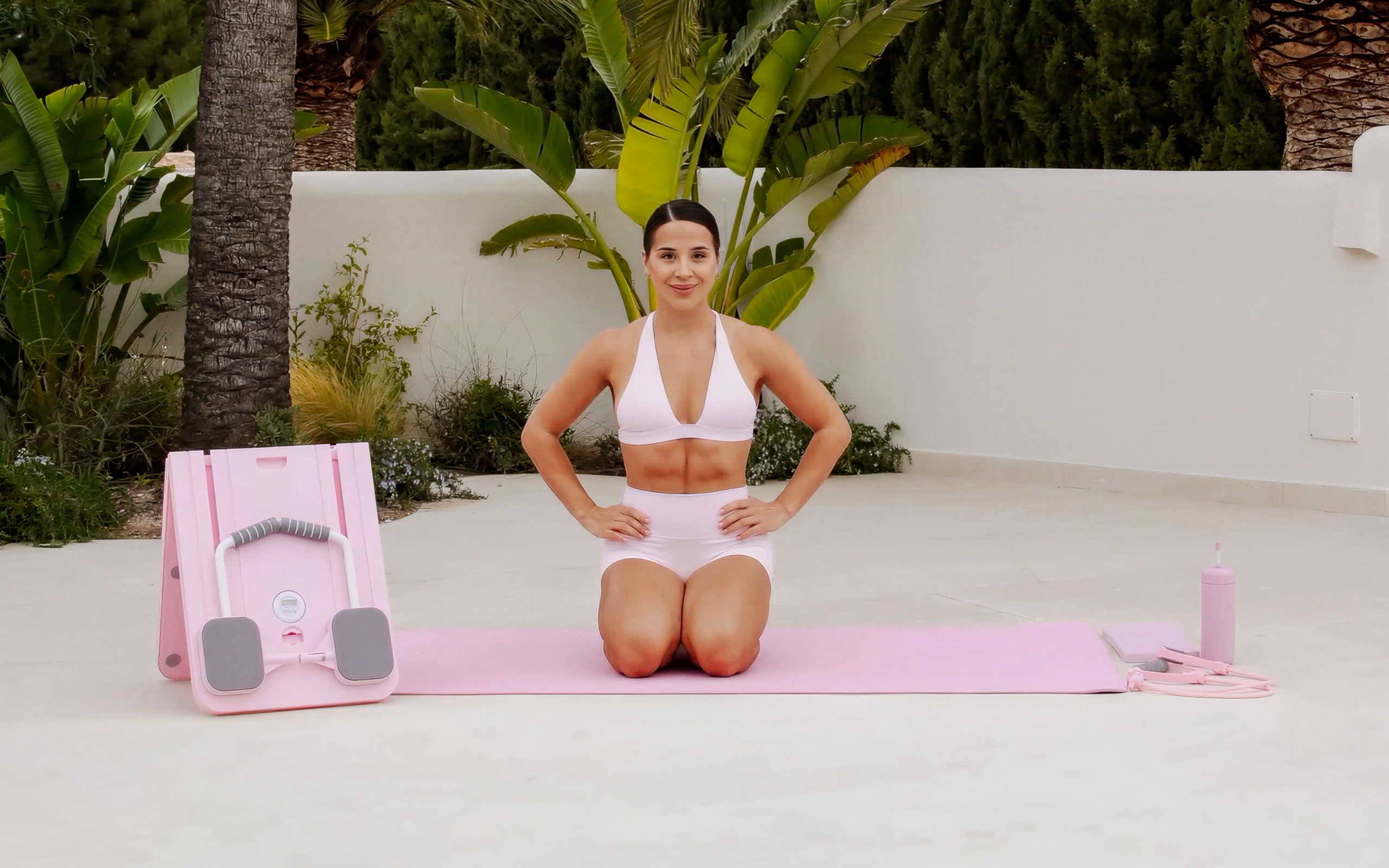
- Equipment Needed: One pair of light dumbbells (1-3 kg / 2-6 lbs) and a light resistance band (loop style), yoga mat.
- Split Structure: The workout is divided into two continuous circuits.
- Time Scheme: Perform each exercise for 30 seconds. Transition immediately to the next.
- Rest Scheme: Rest for 50 seconds between the first half (Exercises 1-6) and the second half (Exercises 7-12).
Exercise Instructions
1. Squat with Front Raise
- Stand with feet shoulder-width apart, holding a dumbbell in each hand at your sides.
- Initiate the squat by pushing your hips back and bending your knees until thighs are parallel to the floor.
- Simultaneously raise the dumbbells forward to shoulder height, keeping arms straight.
- Drive through your heels to return to standing while lowering the weights effectively.

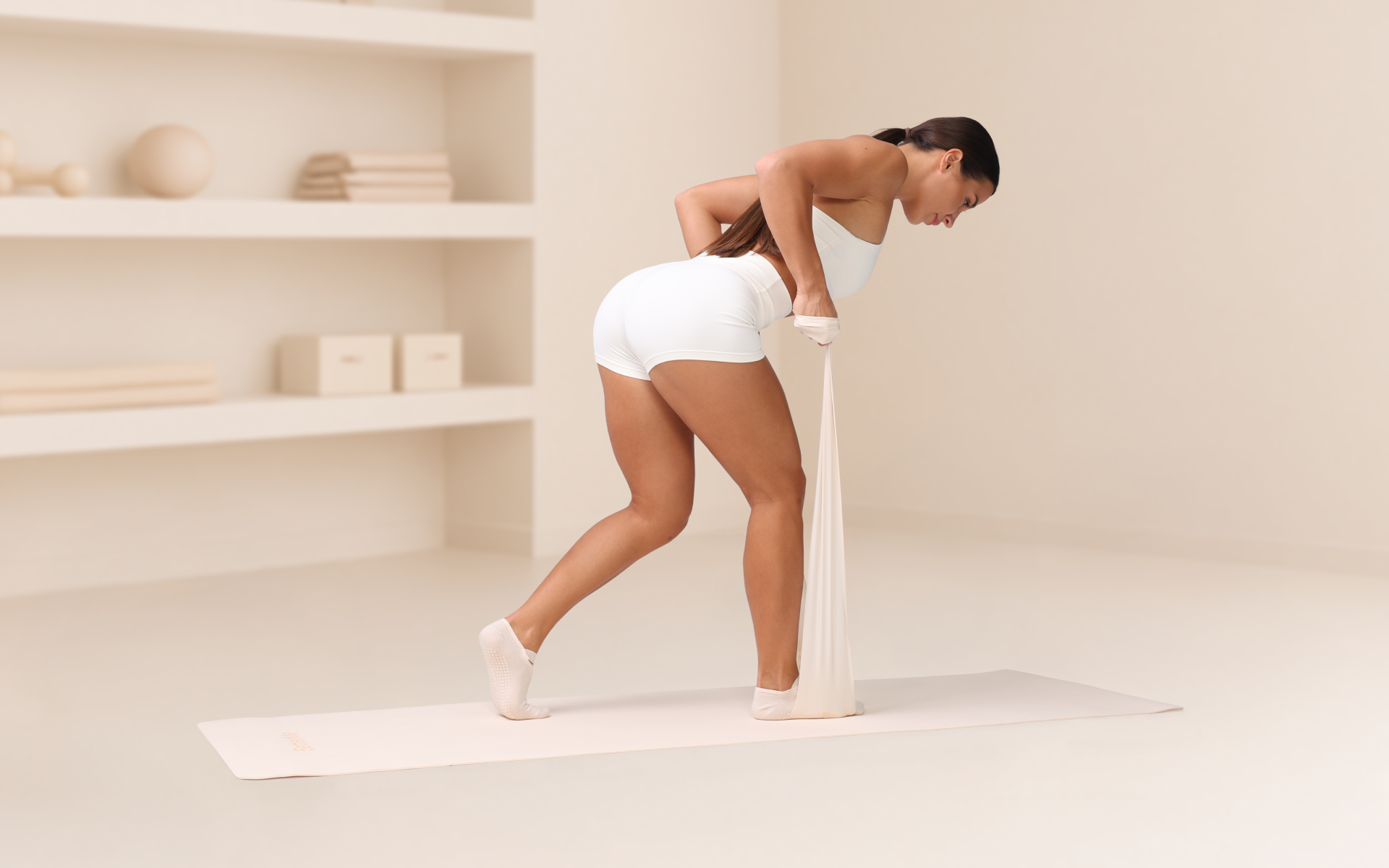
2. Tricep Kickback
- Hinge forward at the hips at a 45-degree angle, keeping a flat back.
- Pull your elbows up so your upper arms are parallel to the torso.
- Extend your forearms back until the arms are fully straight, squeezing the triceps.
- Return to the starting bent-arm position with control.

3. Side Step Shoulder Press
- Stand with feet together, dumbbells at shoulder height, palms facing forward.
- Step out to the right side while pressing the weights overhead.
- Step the right foot back to center while lowering weights to shoulder height.
- Alternate sides or perform all reps on one side if preferred.

4. & 5. Bird Dog (Right & Left)
- Start on all fours (quadruped position) with hands under shoulders and knees under hips.
- Simultaneously extend the right arm forward and the left leg back until parallel to the floor.
- Maintain a neutral spine; do not let your lower back arch.
- Hold for a brief second, then return to the start position without touching the floor if possible.

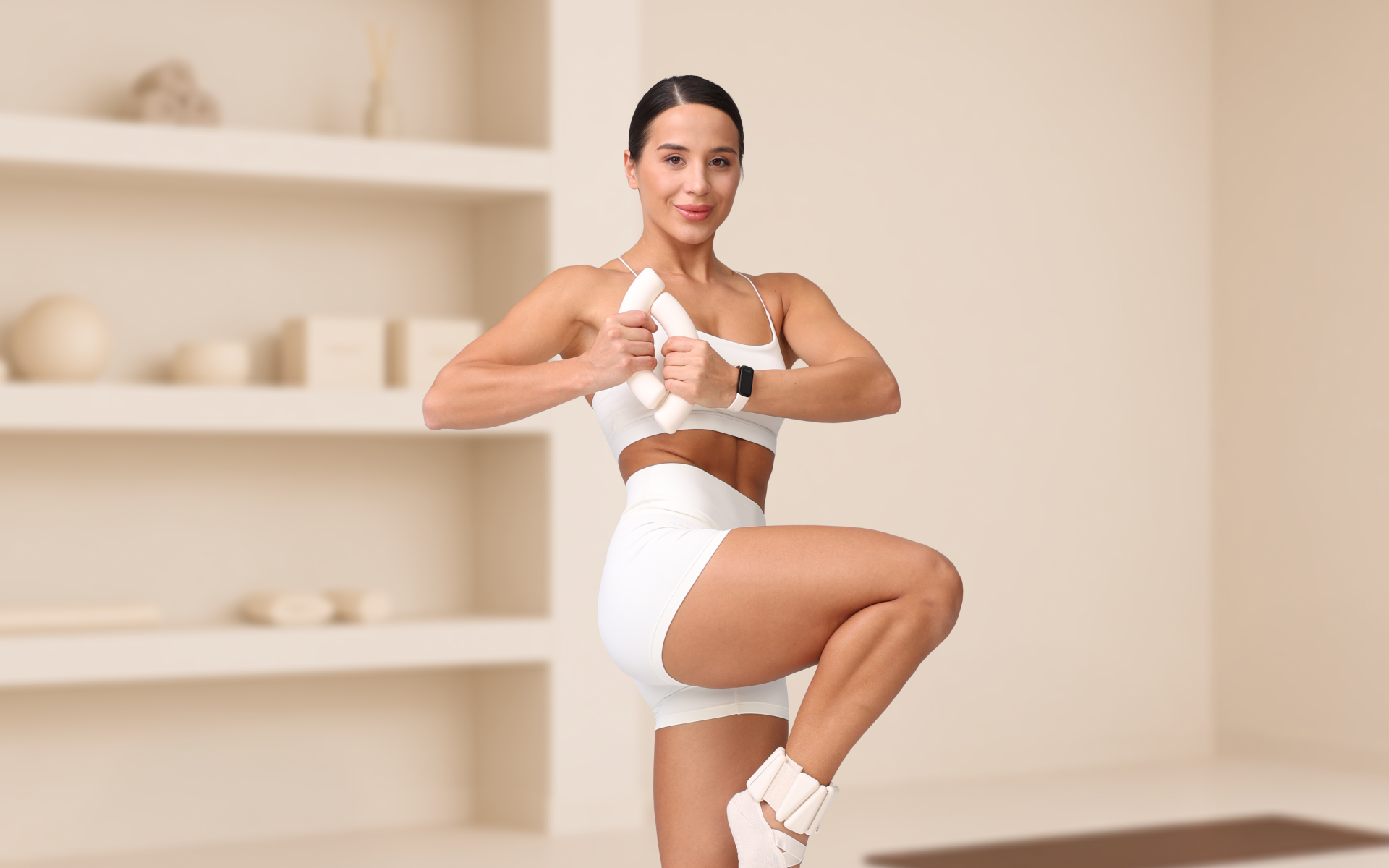
6. Knee Lifts
- Stand tall or lie supine (depending on the variation used in your flow).
- Draw one knee up toward the chest using your lower abdominals.
- Alternate legs in a rhythmic, controlled marching tempo.
- Ensure the torso remains upright and stable throughout the movement.
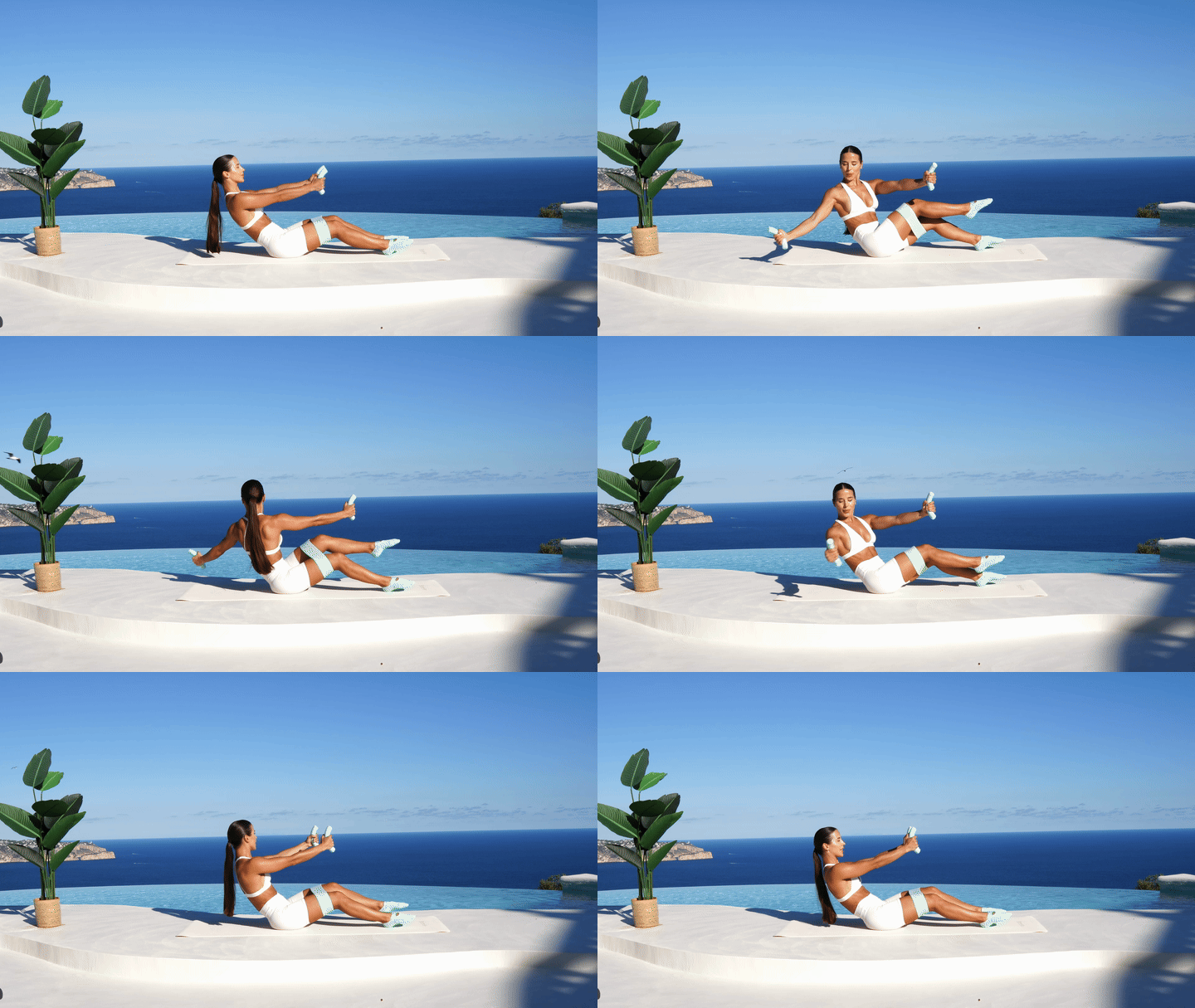
7. Curl with Knee Pull
- Stand holding dumbbells with palms facing up.
- As you curl the weights toward your shoulders, lift one knee to hip height.
- Lower the weights and the foot simultaneously.
- Alternate legs with each repetition.

8. & 9. Arm & Leg Raise
- Position the resistance band around your thighs, just above the knees.
- Lie on your side or assume a quadruped position.
- Lift the top leg against the resistance of the band while raising the opposite arm.
- Focus on the outer glute and shoulder stability.

10. Bridge with Arm Press
- Lie on your back with knees bent and feet flat on the floor. Hold dumbbells over your chest.
- Press your hips up toward the ceiling, engaging the glutes.
- Simultaneously press the dumbbells upward into a chest press.
- Lower hips and weights back to the starting position together.

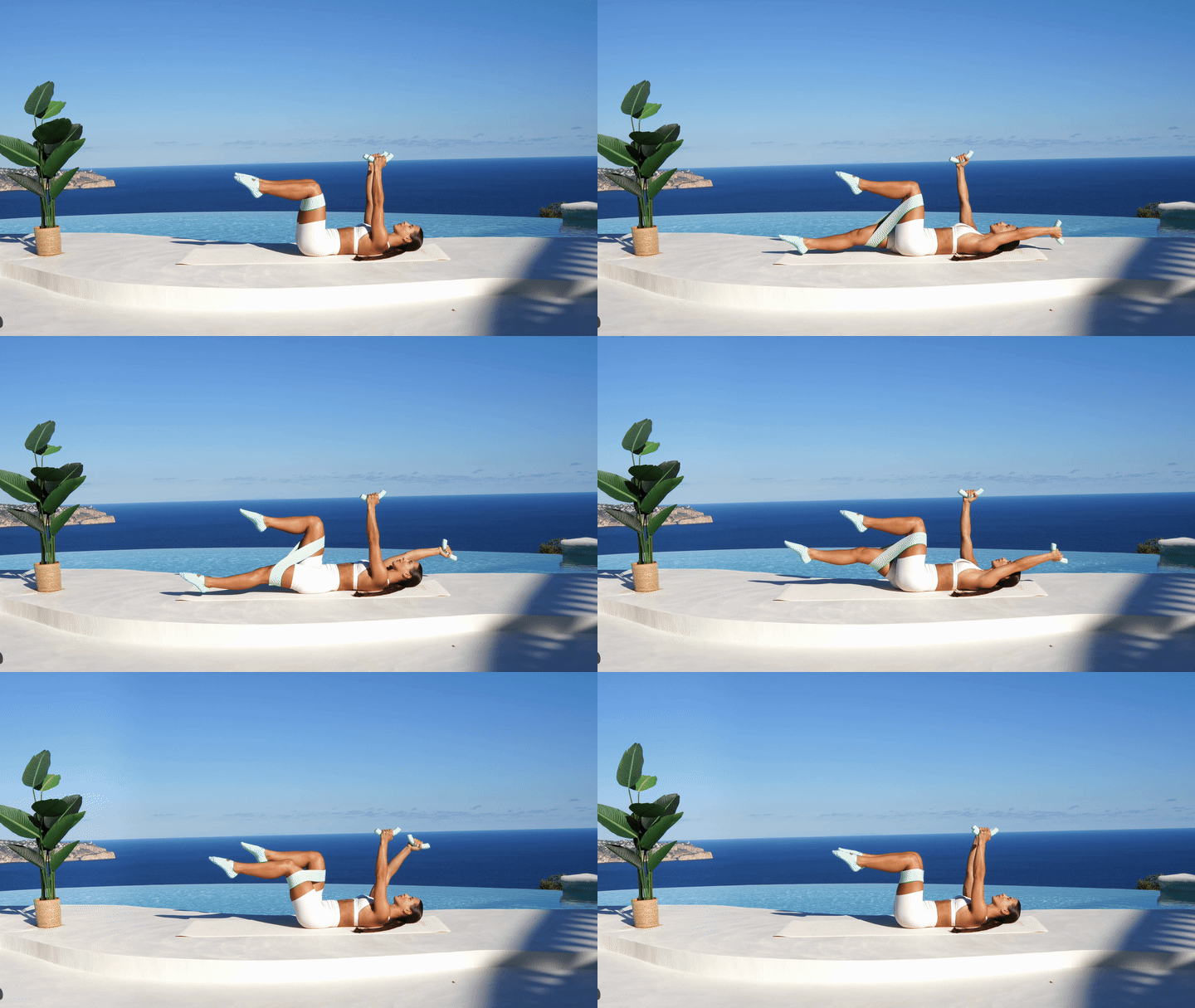
11. & 12. Dead Bug
- Lie on your back with arms extended toward the ceiling and legs in tabletop position (knees bent at 90 degrees).
- Lower the right arm behind your head and extend the left leg straight out.
- Keep your lower back pressed firmly into the mat; do not let it arch.
- Return to center and switch to the opposite arm and leg.
This full body Pilates Workout with equipment provides a comprehensive stimulus for the beginner. If you are looking to isolate upper body mechanics further, try our Arms & Abs Pilates Workout for Beginners.
Read more: Lessie Pilates Arms And Abs Workout For Beginners
How Quickly Can Lessie Full Body Pilates Transform Your Body?
It is important to manage expectations with a physiological reality check. Adaptations to exercise occur in phases.
Weeks 1-4: Neuromuscular Adaptation
In the first month, you will likely feel stronger, but this is primarily due to your nervous system becoming more efficient at recruiting muscle fibers (15). You will notice better balance and coordination during the pilates workout full body.
Weeks 6-8: Structural Changes
Visible changes in muscle tone (hypertrophy) typically begin to manifest after 6 to 8 weeks of consistent training (16). This assumes you are performing the routine 3-4 times per week and adhering to progressive overload—meaning you are gradually increasing the resistance or the quality of the reps.
Weeks 12+: Body Composition Shifts
Significant changes in body composition, such as noticeable fat loss or muscle definition, generally require 12 weeks of consistent effort combined with appropriate nutritional intake (16).
Remember, consistency is the primary driver of these results. To specifically target the midsection during this period, consider integrating a Pilates Core Workout for Beginners.
Read more: Lessie Pilates Core Workout For Beginners (With Equipment)
How to Maximize Your Full Body Pilates Routine?
To get the most out of this full body strength training routine, you must look beyond just completing the exercises.
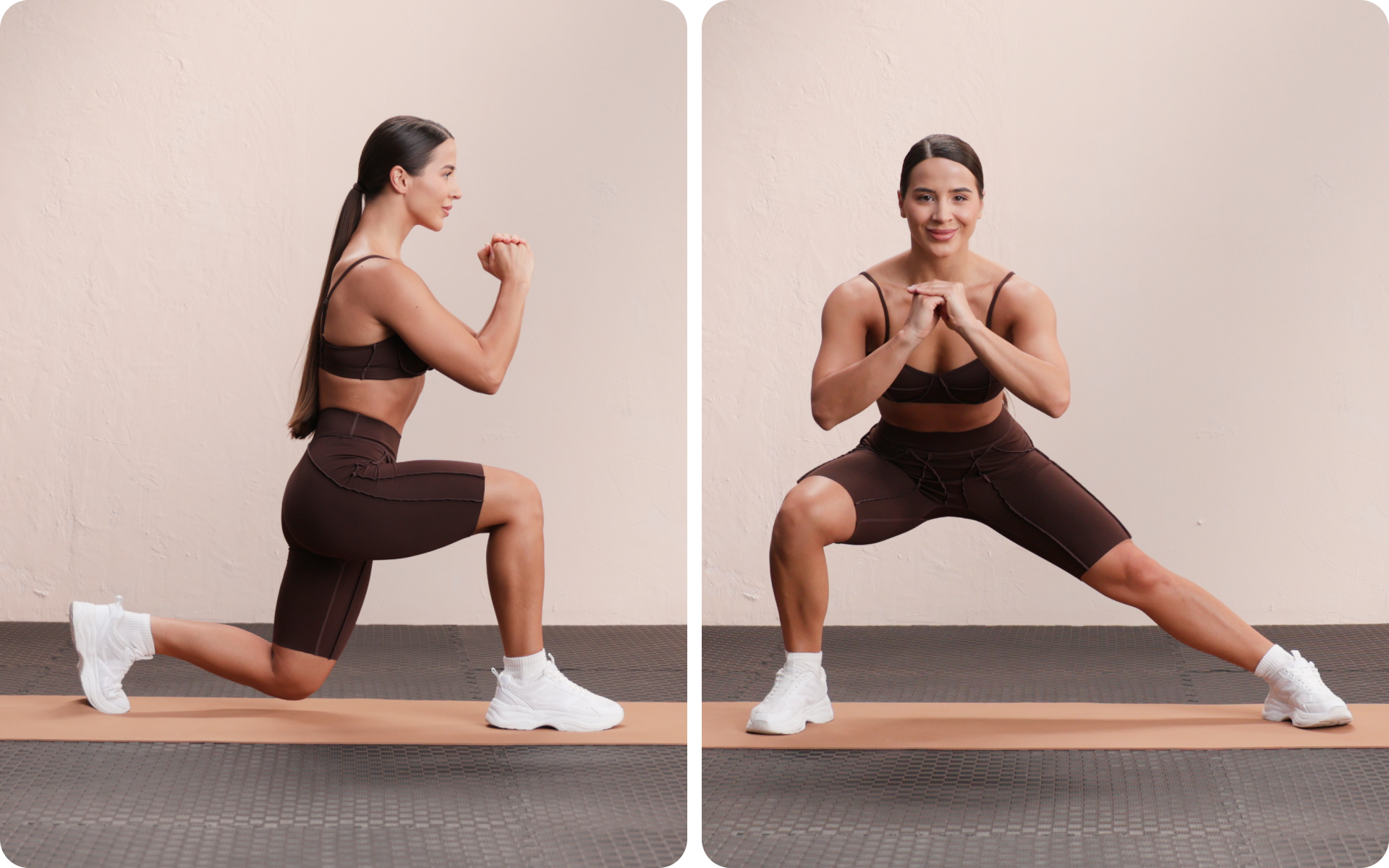
1. Prioritize Time Under Tension
Do not rush your repetitions. A 30-second interval allows for roughly 8-10 controlled repetitions. Slowing down the eccentric (lowering) phase of movements like the squat or bicep curl increases muscle fiber damage, which is a key mechanism for growth (17).
2. Focus on Breathwork
Breathing is a core pillar of Pilates. Exhale deeply on the exertion (the hard part of the lift) to engage the deep core muscles. Inhale on the return. Proper oxygenation delays fatigue and stabilizes the spine (18).
3. Progressive Overload via Band Tension
Once the bodyweight or light dumbbell versions feel manageable (RPE 6/10), increase the thickness of your resistance band. This applies greater force to the muscles without the need for heavy iron plates, keeping the workout joint-friendly.
4. Engage the Mind-Muscle Connection
Consciously think about the muscle you are working. For the glute bridge, focus on squeezing the glutes rather than just pushing with the hamstrings. Research shows that internal focus can increase muscle activation by significant margins during isolation exercises (19).
5. Maintain Kinetic Alignment
Form is paramount. In movements like the Bird Dog, ensure your hips remain square to the floor. Imagine a glass of water resting on your lower back; your goal is not to spill it. This discipline ensures the load stays on the muscles, not the joints.
6. Incorporate Active Recovery
On off days, engage in low-intensity steady-state cardio (LISS) like walking. This promotes blood flow, which aids in the removal of metabolic waste products and speeds up recovery, preparing you for your next session (20).
For lower body focus on these days, you might explore a Legs & Glutes Pilates Workout for Beginners.
Read more: Lessie Pilates Legs And Glute Workout For Beginners
Frequently Asked Questions
Do you need equipment for Lessie Fitness Pilates?
While many Pilates principles can be applied using bodyweight, this specific Lessie protocol utilizes light dumbbells and a resistance band to provide the external load necessary for strength adaptations.
Can you get in shape by only doing Pilates?
Yes, you can achieve significant improvements in muscular endurance, flexibility, and core strength using only Pilates (21), provided the intensity is sufficient to challenge your current fitness level.
What kind of body does Pilates get you?
Pilates typically promotes a “lean” physique characterized by improved posture and muscular definition, largely because it prioritizes high-repetition endurance training over heavy load hypertrophy training.
Do Pilates help you get abs?
Yes, Pilates is exceptionally effective for abdominal development because almost every movement requires the activation of the deep core stabilizers to maintain proper alignment (6).
What is the 80 20 rule in Pilates?
The 80/20 rule in this context often refers to the balance of nutrition and training; 80% of your body composition results come from nutrition habits, while 20% come from the Pilates training stimulus itself.
The Bottom Line
The Lessie Full Body Pilates Workout offers a practical, science-backed entry point into resistance training. By combining the precision of Pilates with the metabolic benefits of continuous circuit training, it provides a time-efficient solution for modern lifestyles.
Remember, the most effective program is the one you can adhere to consistently over time. Start with the weights you can control, master the movement patterns, and progress gradually.
DISCLAIMER:
This article is intended for general informational purposes only and does not serve to address individual circumstances. It is not a substitute for professional advice or help and should not be relied on for making any kind of decision-making. Any action taken as a direct or indirect result of the information in this article is entirely at your own risk and is your sole responsibility.
BetterMe, its content staff, and its medical advisors accept no responsibility for inaccuracies, errors, misstatements, inconsistencies, or omissions and specifically disclaim any liability, loss or risk, personal, professional or otherwise, which may be incurred as a consequence, directly or indirectly, of the use and/or application of any content.
You should always seek the advice of your physician or other qualified health provider with any questions you may have regarding a medical condition or your specific situation. Never disregard professional medical advice or delay seeking it because of BetterMe content. If you suspect or think you may have a medical emergency, call your doctor.
SOURCES:
- Hormonal responses and adaptations to resistance exercise and training (2005, pubmed.ncbi.nlm.nih.gov)
- DOES THE NUMBER OF JOINTS INVOLVED IN EXERCISE PROMOTE CHANGES IN ENERGY EXPENDITURE? (2020, scielo.br)
- Skeletal muscle fiber types: fast vs slow-twitch (2024, kenhub.com)
- Association of muscle fiber composition with health and exercise-related traits in athletes and untrained subjects (2021, pmc.ncbi.nlm.nih.gov)
- The Relationship of Trunk Muscle Activation and Core Stability: A Biomechanical Analysis of Pilates-Based Stabilization Exercise (2021, mdpi.com)
- Effects of Core Stability Training on Deep Stabilizing Muscle Function and Neuromuscular Control (2025, mdpi.com)
- EXPLORING EXCESS POST-EXERCISE OXYGEN CONSUMPTION (EPOC): ‘BURN BABY BURN!’ (n.d., nasm.org)
- Effects of Resistance Training Frequency on Measures of Muscle Hypertrophy: A Systematic Review and Meta-Analysis (2016, pubmed.ncbi.nlm.nih.gov)
- Role of kinetic chain in sports performance and injury risk: a narrative review (2023, pmc.ncbi.nlm.nih.gov)
- Hip and thigh muscles (2023, kenhub.com)
- Anatomy, Shoulder and Upper Limb, Deltoid Muscle (2024, ncbi.nlm.nih.gov)
- Triceps brachii muscle (2023, kenhub.gov)
- Abdominal Muscles (2024, my.clevelandclinic.org)
- Hip Flexors (2011, sciencedirect.com)
- The brain can make you stronger (2019, pubmed.ncbi.nlm.nih.gov)
- Adaptations to Endurance and Strength Training (2018, pmc.ncbi.nlm.nih.gov)
- Maximizing Muscle Hypertrophy: A Systematic Review of Advanced Resistance Training Techniques and Methods (2019, mdpi.com)
- Effects of Classical Breathing Exercises on Posture, Spinal and Chest Mobility among Female University Students Compared to Currently Popular Training Programs (2022, mdpi.com)
- External and Internal Focus of Attention Increases Muscular Activation During Bench Press in Resistance-Trained Participants (2018, pubmed.ncbi.nlm.nih.gov)
- Active recovery is better than passive recovery to optimizing post-exercise body recovery (2022, link.springer.com)
- Pilates for improvement of muscle endurance, flexibility, balance, and posture (2010, pubmed.ncbi.nlm.nih.gov)