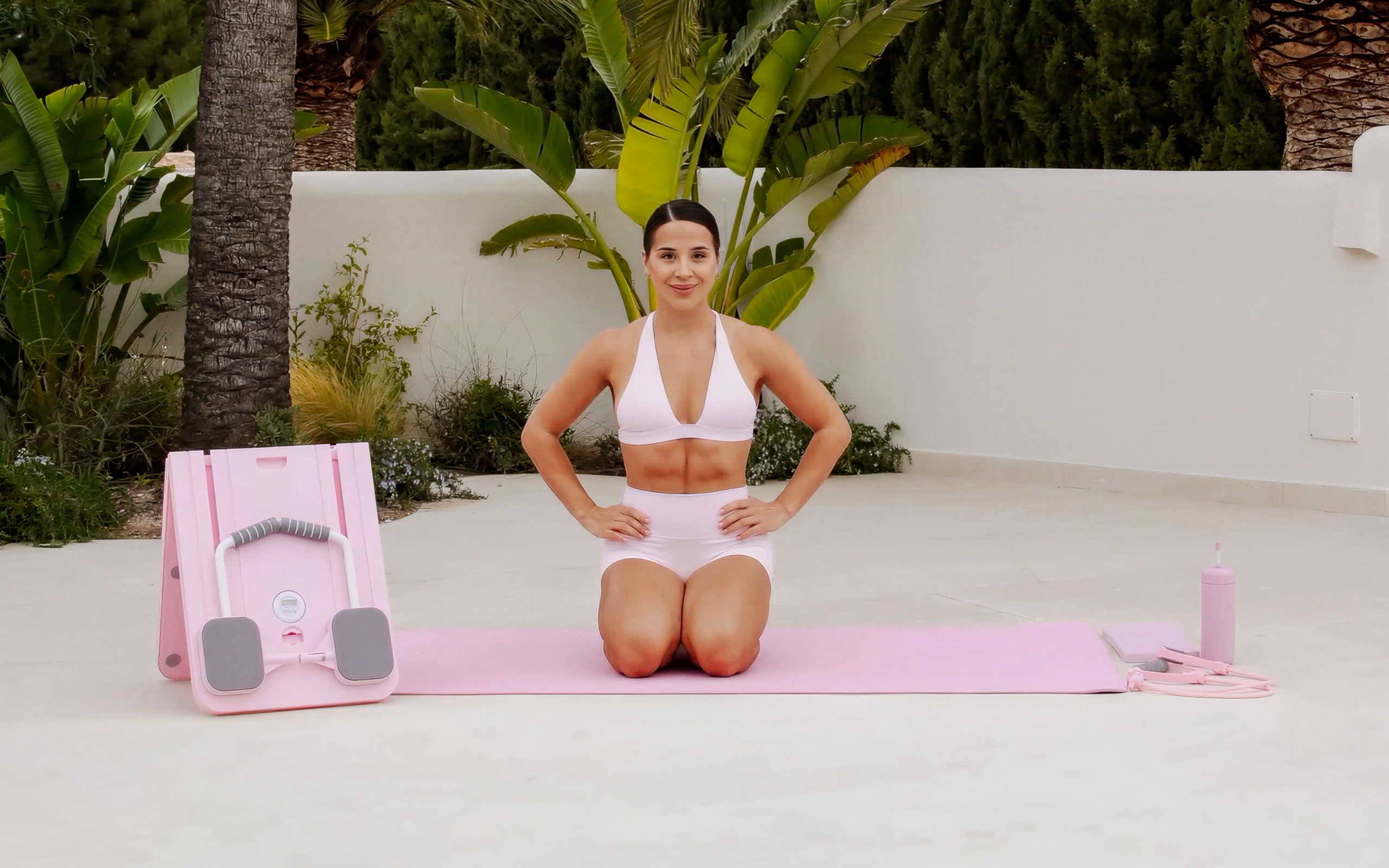
The journey to stronger muscles and a more resilient body often begins with the center–your core.
If you have been searching for a way to build a stable foundation without high-impact stress, you are in the right place.
This guide dissects a specific, equipment-based session designed to introduce you to the principles of control and precision.
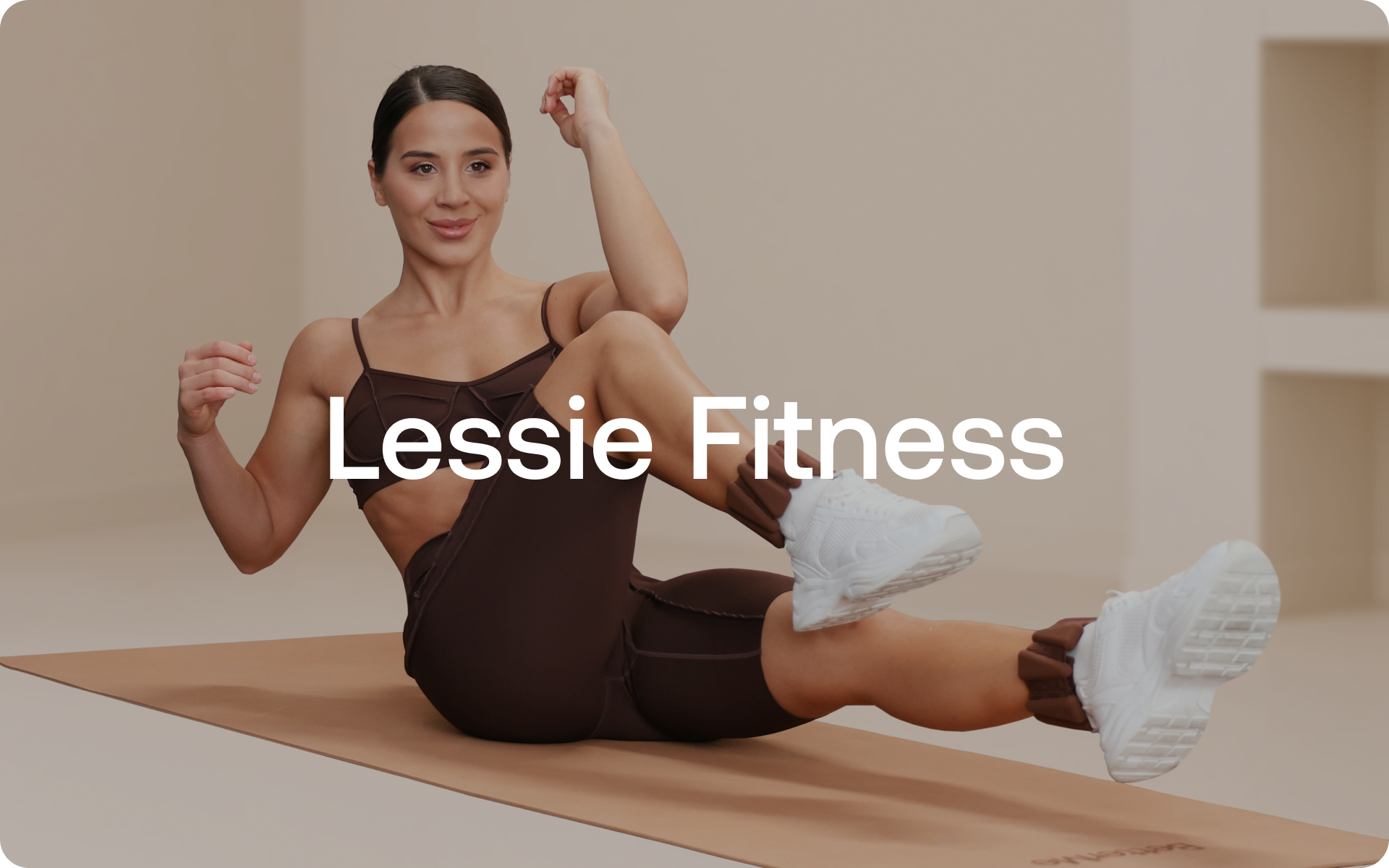
In this article, we explore the Lessie Fitness Pilates Core Workout for Beginners (with Equipment), a targeted routine that utilizes the Pilates ring to enhance engagement and feedback.
Whether you are recovering from an injury or simply aiming to optimize your movement patterns, this evidence-based guide provides the roadmap you need for a Pilates core workout with Pilates ring.
What Is Lessie Pilates Core Workout For?
At its heart, this workout cultivates a functional, robust “powerhouse.”
The term powerhouse often refers to the collective musculature of your trunk–specifically the abdominals, gluteals (buttock muscles), and lower back (1).
Unlike superficial abdominal training that focuses solely on the “6-pack” aesthetic, the Lessie Pilates core workout targets the deep stabilizing muscles.
These stabilizer muscles include the transverse abdominis and the pelvic floor.
Strengthening these areas is crucial for several reasons:
- Centralized Control: The powerhouse acts as the engine for all limb movement. A stable center allows you to move your arms and legs more efficiently and with less joint strain (2).
- Back Support: Deep core muscles act as a natural corset, providing intra-abdominal pressure that supports the lumbar spine during daily activities (3).
- Injury Prevention: By improving the stability of the pelvic and lumbar region, you reduce the risk of strains and compensatory injuries common in the lower back (4).
The Pilates Core Workout for Beginners emphasizes “centering.” This principle dictates that every movement should initiate from this stable core rather than the extremities. This approach ensures that you are not just moving, but moving well.
For those interested in exploring more about our fitness philosophy, read more about Lessie Fitness.
What Are The Key Exercises In Lessie Pilates Core Workouts?
The Lessie Pilates Core Workout is a structured interval session that balances effort with recovery. It utilizes a Pilates Ring (often called a Magic Circle) to provide resistance and proprioceptive feedback, helping you feel the engagement of the correct muscles.
Program Structure
The workout follows a high-density training format:
- First Half: 7 exercises performed back-to-back for 20 seconds each.
- Rest Interval: A 50-second recovery period to reset your breath and focus.
- Second Half: 7 exercises performed back-to-back for 20 seconds each.
Exercise Execution Guide
To ensure you get the most out of your Pilates core workout with a Pilates ring, correct form is non-negotiable.
Here is the step-by-step breakdown for optimal execution of the following exercises:
Modified Roll-ups
- Lie supine (on your back) with knees bent and feet flat on the floor, holding the ring above your chest.
- Inhale to prepare, lengthening the back of your neck.
- Exhale and peel your head and shoulders off the mat, reaching the ring toward your knees.
- Focus on depressing the ribcage down toward the hips rather than jamming the neck forward.
- Inhale to control the descent back to the starting position.
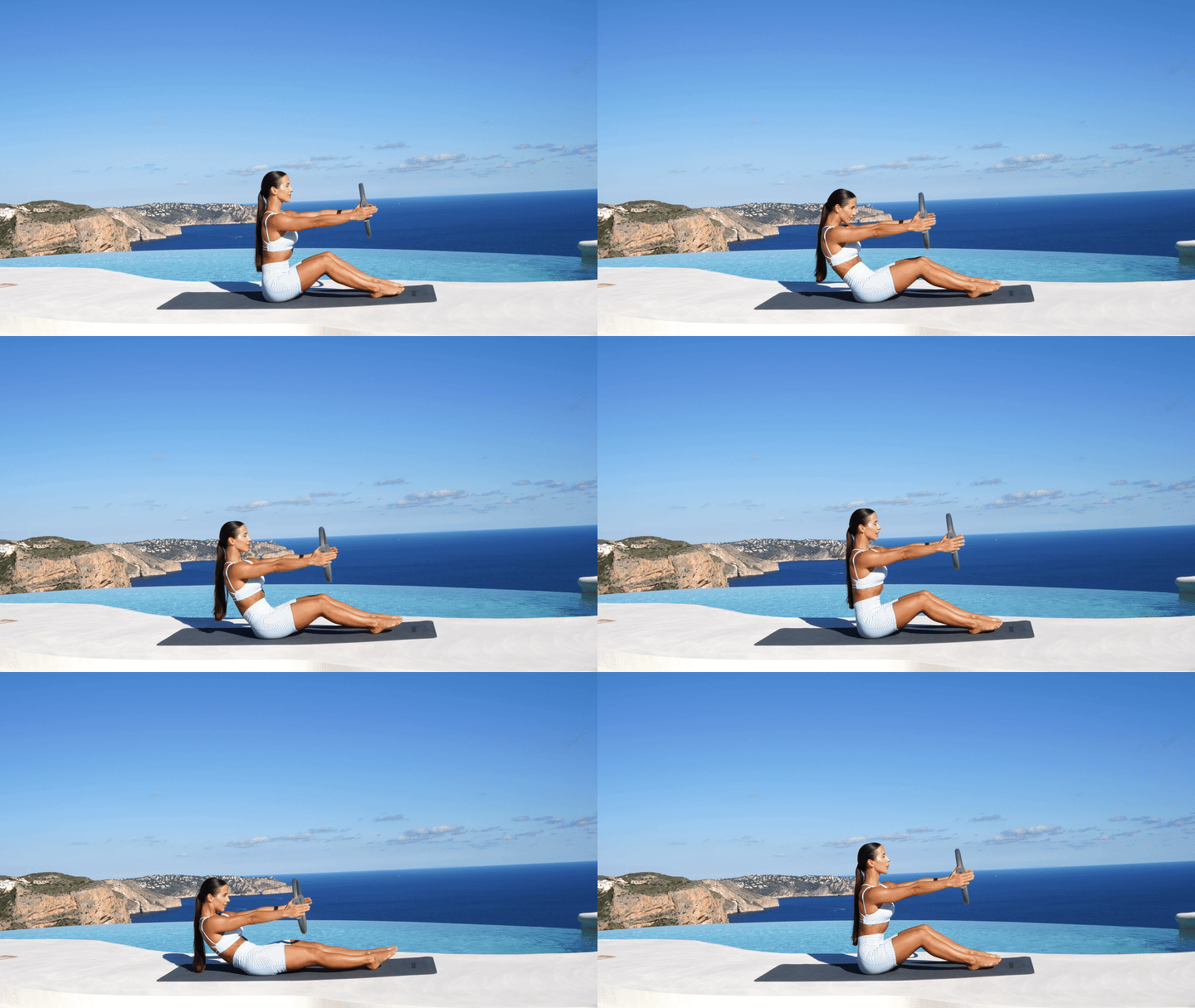
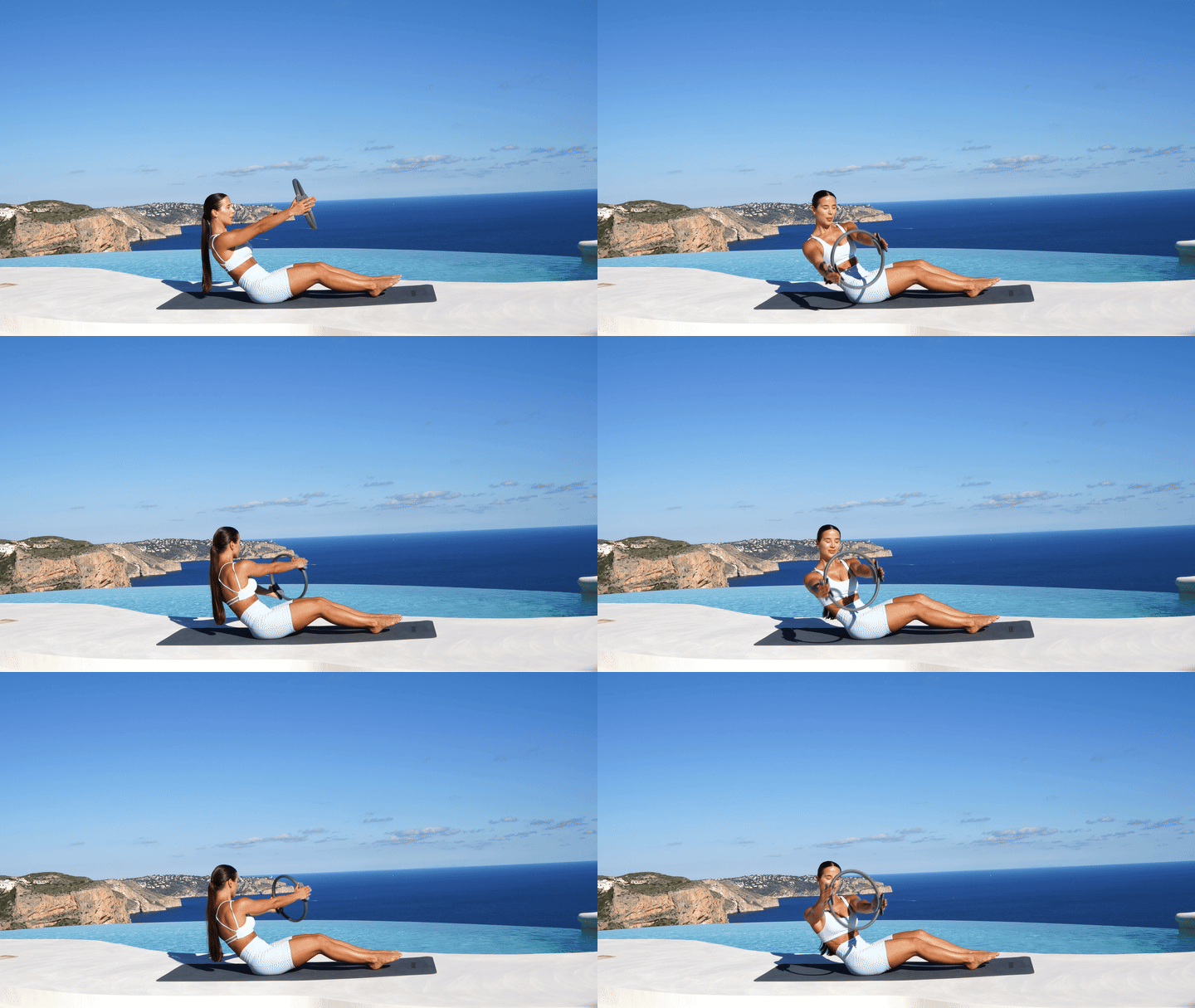
Oblique Twists
- Sit in a “V” position, torso slightly leaned back to engage the abs, knees bent.
- Hold the ring in front of your chest with your elbows soft.
- Exhale and rotate your torso to the right, keeping the hips completely square and still.
- Inhale to return to the center.
- Exhale and rotate to the left. Visualize wringing out your waist like a wet towel.
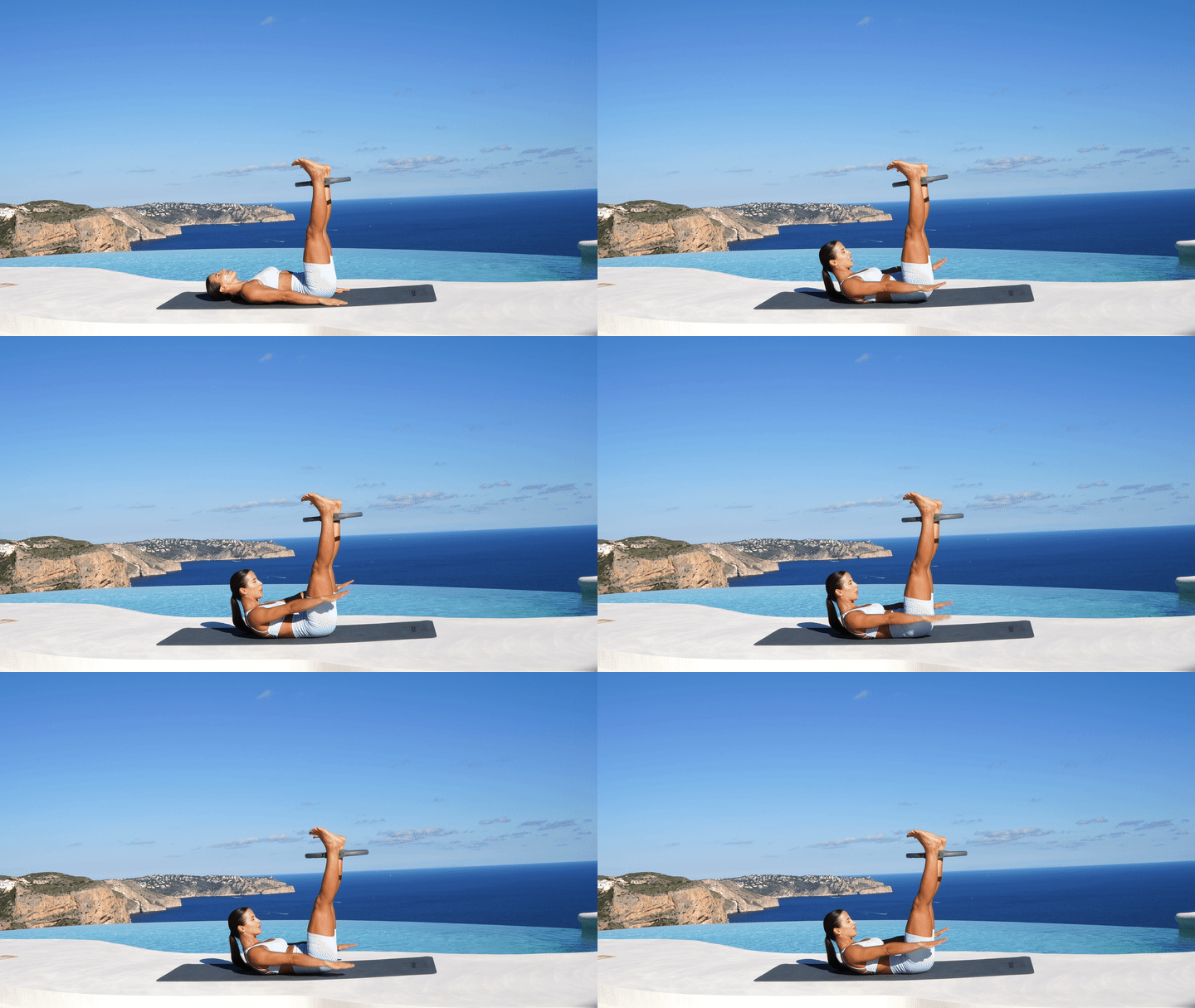
Modified Hundred
- Lie on your back with legs in a tabletop position (knees stacked over hips, shins parallel to the floor).
- Curl your head and shoulders up, looking at your navel. Place the ring between your ankles or hold it in your hands.
- Pump your arms vigorously up and down by your sides.
- Inhale for a count of 5 pumps; exhale for a count of 5 pumps.
- Maintain a neutral pelvis–avoid flattening your lower back completely or arching it excessively.
Windshield Wipers
- Lie on your back, arms extended to the sides in a ‘T’ shape for stability.
- Lift legs to tabletop position.
- Inhale and slowly lower both knees to the right side, keeping the left shoulder anchored to the floor.
- Exhale and use your obliques to pull the legs back to center.
- Repeat on the left side.
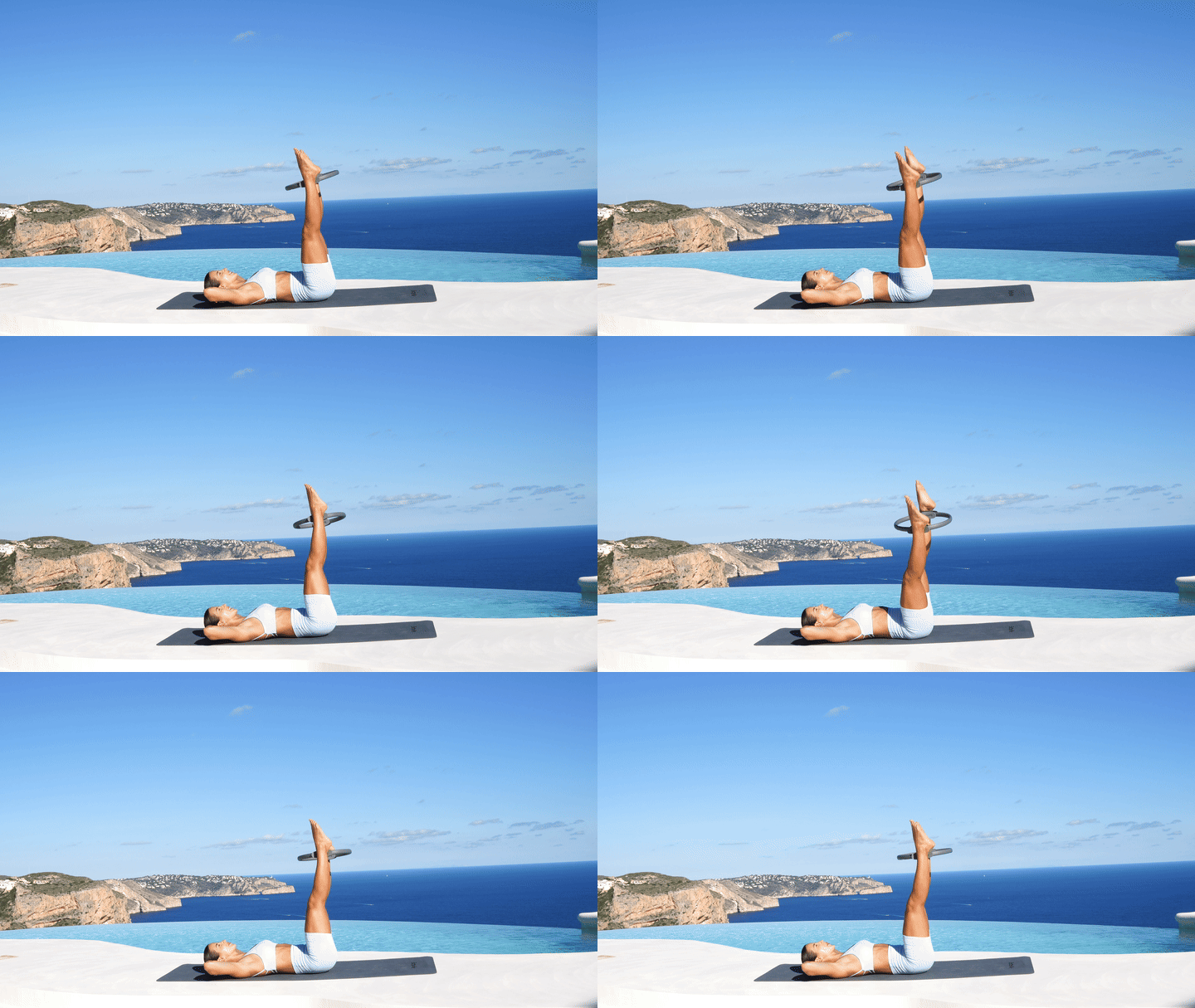
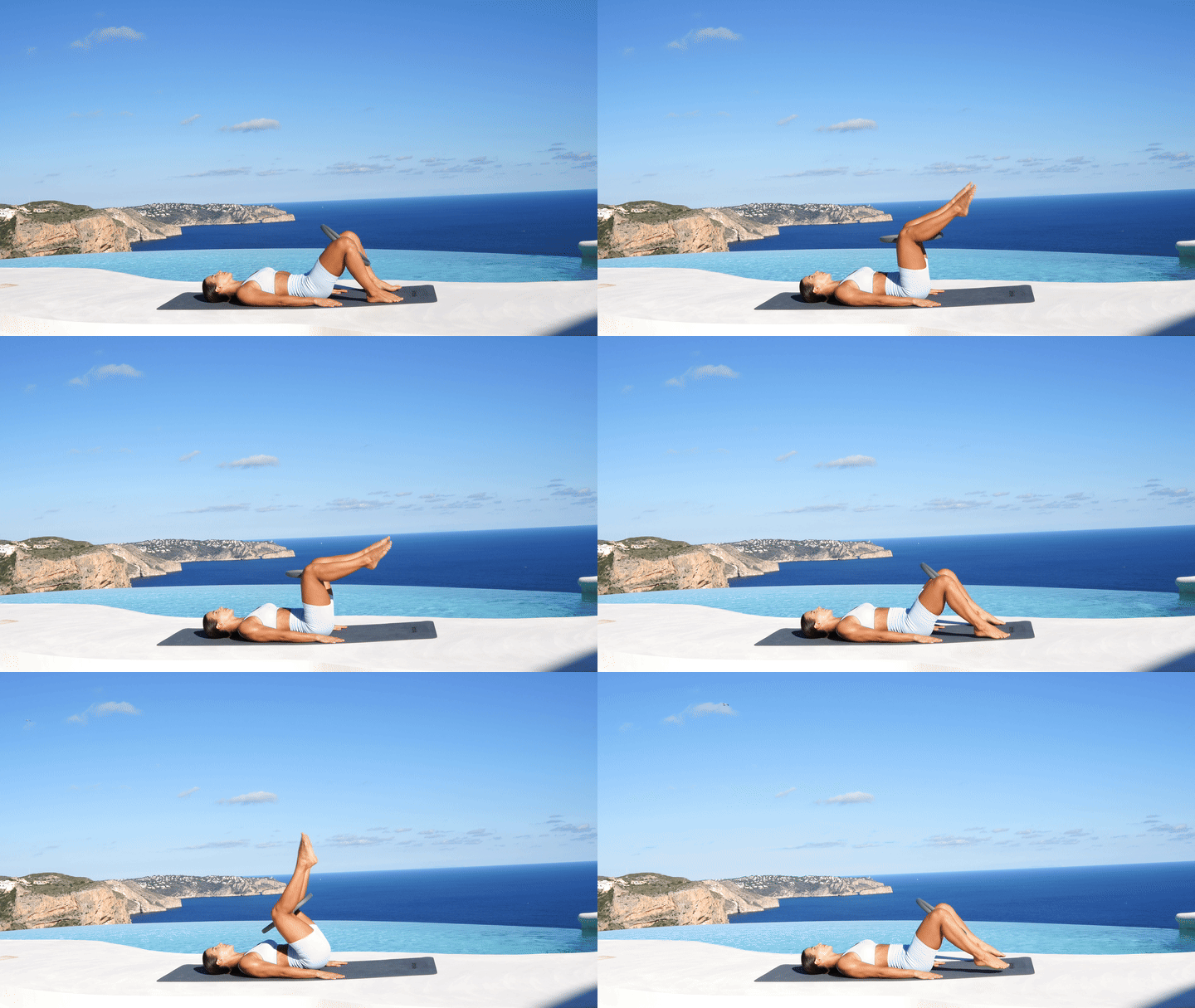
Supine Knee Extensions
- Lie on your back, holding the ring in both hands straight above your chest.
- Lift knees to the tabletop.
- Exhale to extend both legs out to a 45-degree angle (or higher if your back arches).
- Simultaneously, squeeze the ring gently with your hands to engage the pectorals and core.
- Inhale to return knees to tabletop.
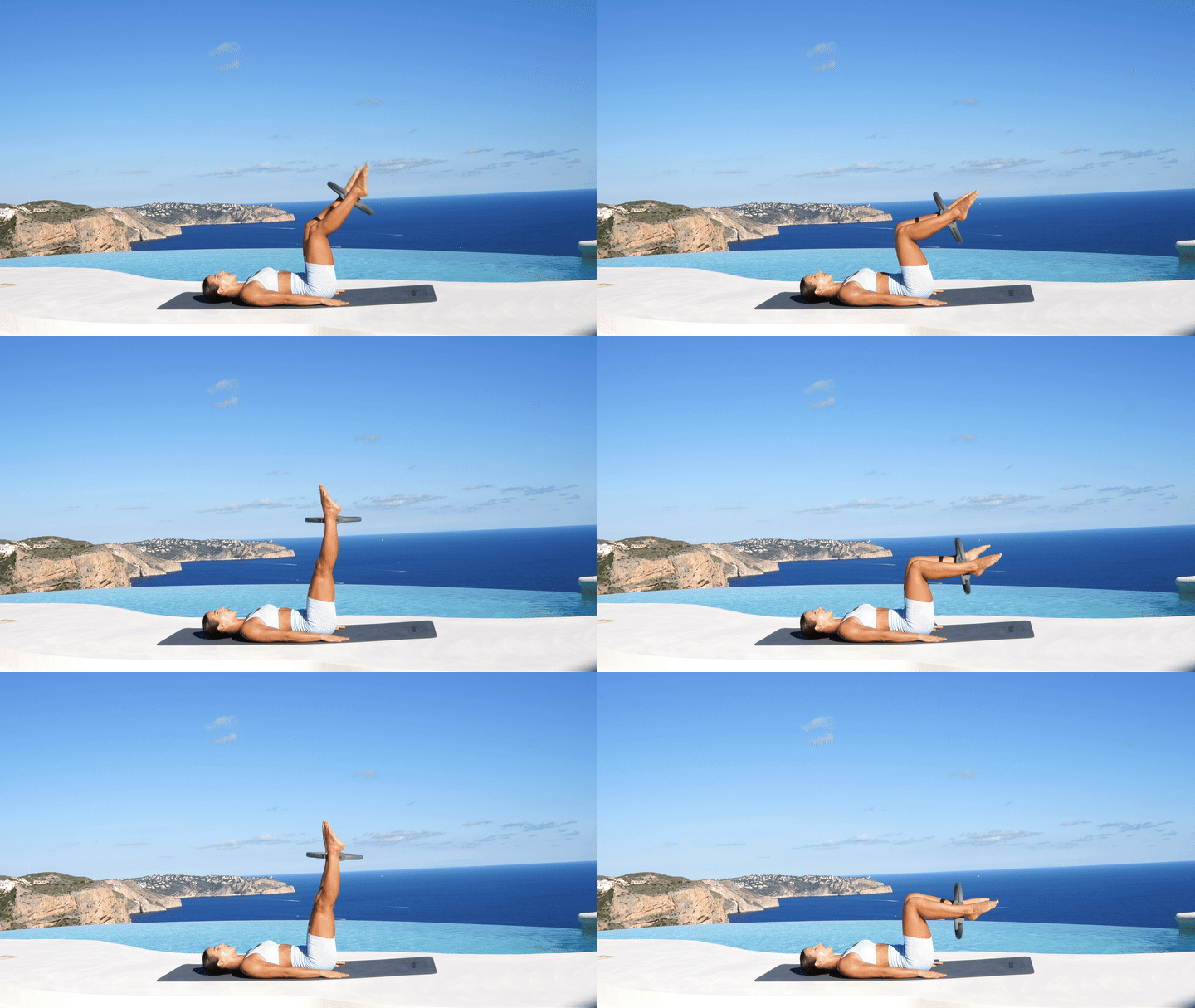
Single Leg Extensions (Right & Left)
- From the tabletop position, loop the ring (or just your hands if the ring is difficult) around the right foot.
- Extend the right leg straight out or up toward the ceiling while the left leg remains in tabletop or extends along the floor.
- Focus on stabilizing the pelvis so it does not rock side to side.
- Switch sides after 20 seconds.
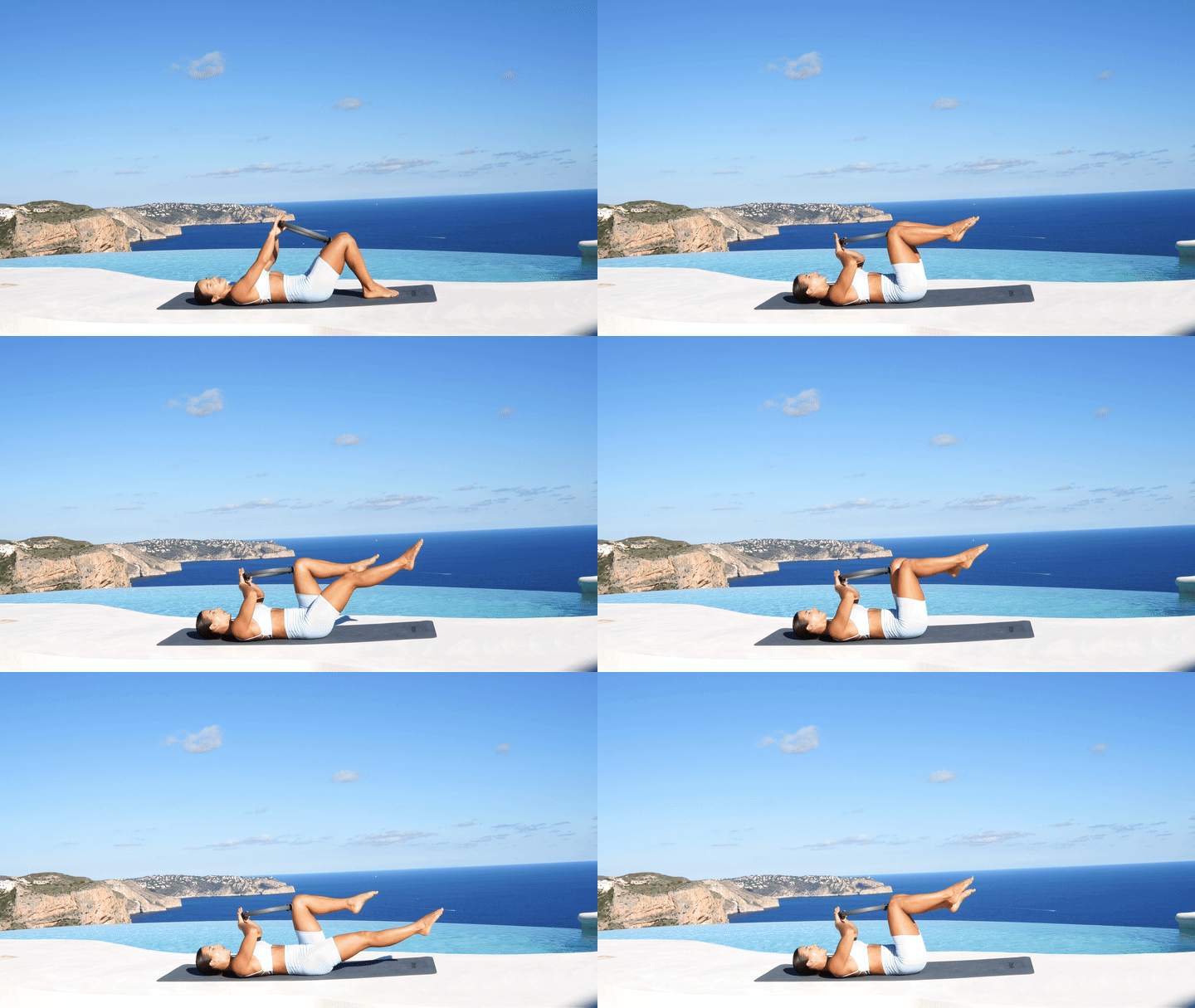
Tabletop Crunches
- Lie on your back, legs in tabletop, holding the ring directly above the chest.
- Exhale to curl the upper body up, sliding the ribcage toward the pelvis.
- Simultaneously extend the ring forward past your knees.
- Inhale to lower with control. Do not let the head simply drop; resist gravity.
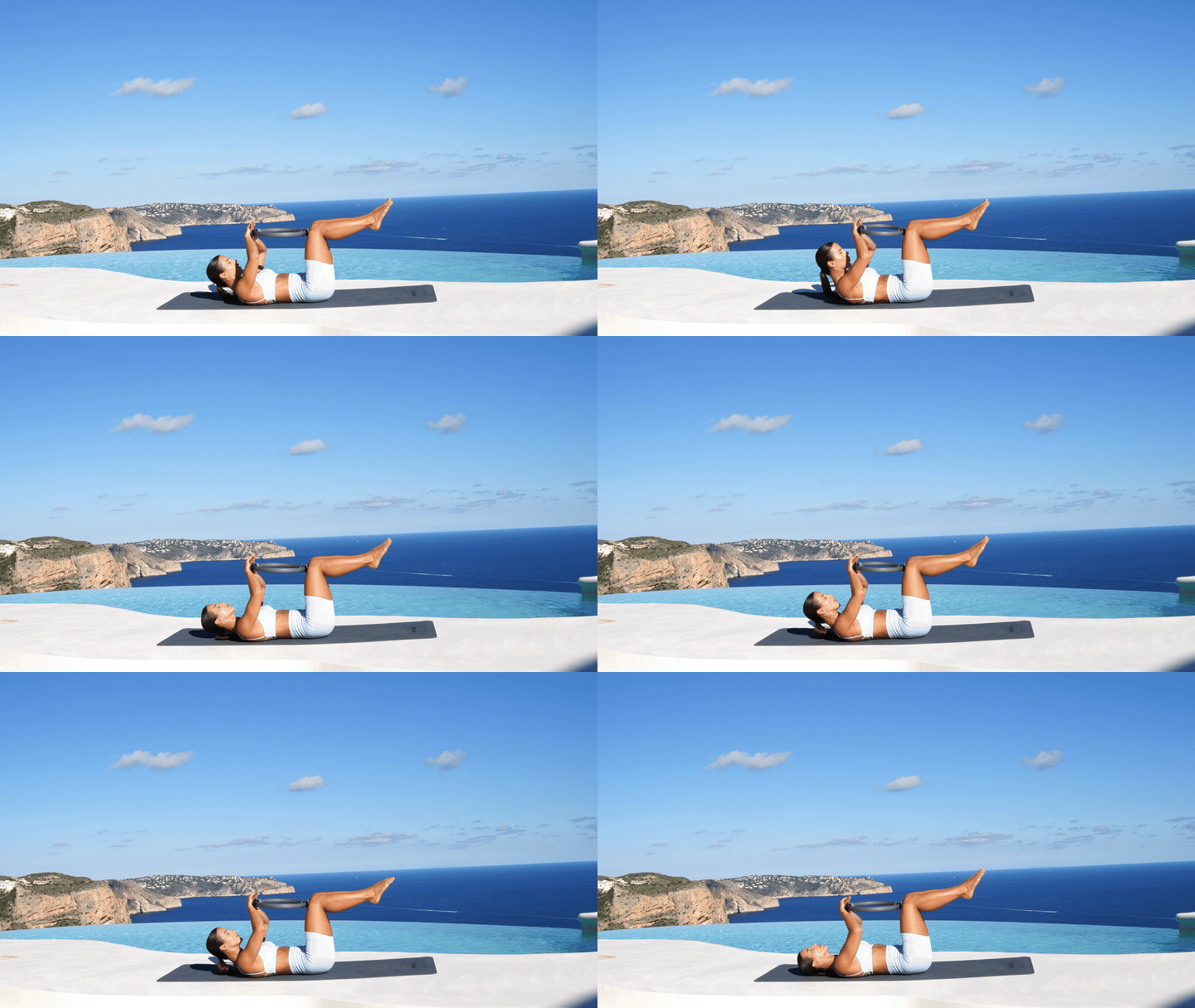
Kneeling Side Bend (Right & Left)
- Kneel on the mat. Extend your right leg out to the side, foot flat.
- Place your left hand on the floor under your shoulder. Place your right hand behind your head.
- Exhale and side-bend your torso toward the floor, then use your oblique muscles to lift the torso back to a diagonal line.
- Keep the chest open; do not let the top shoulder roll forward.
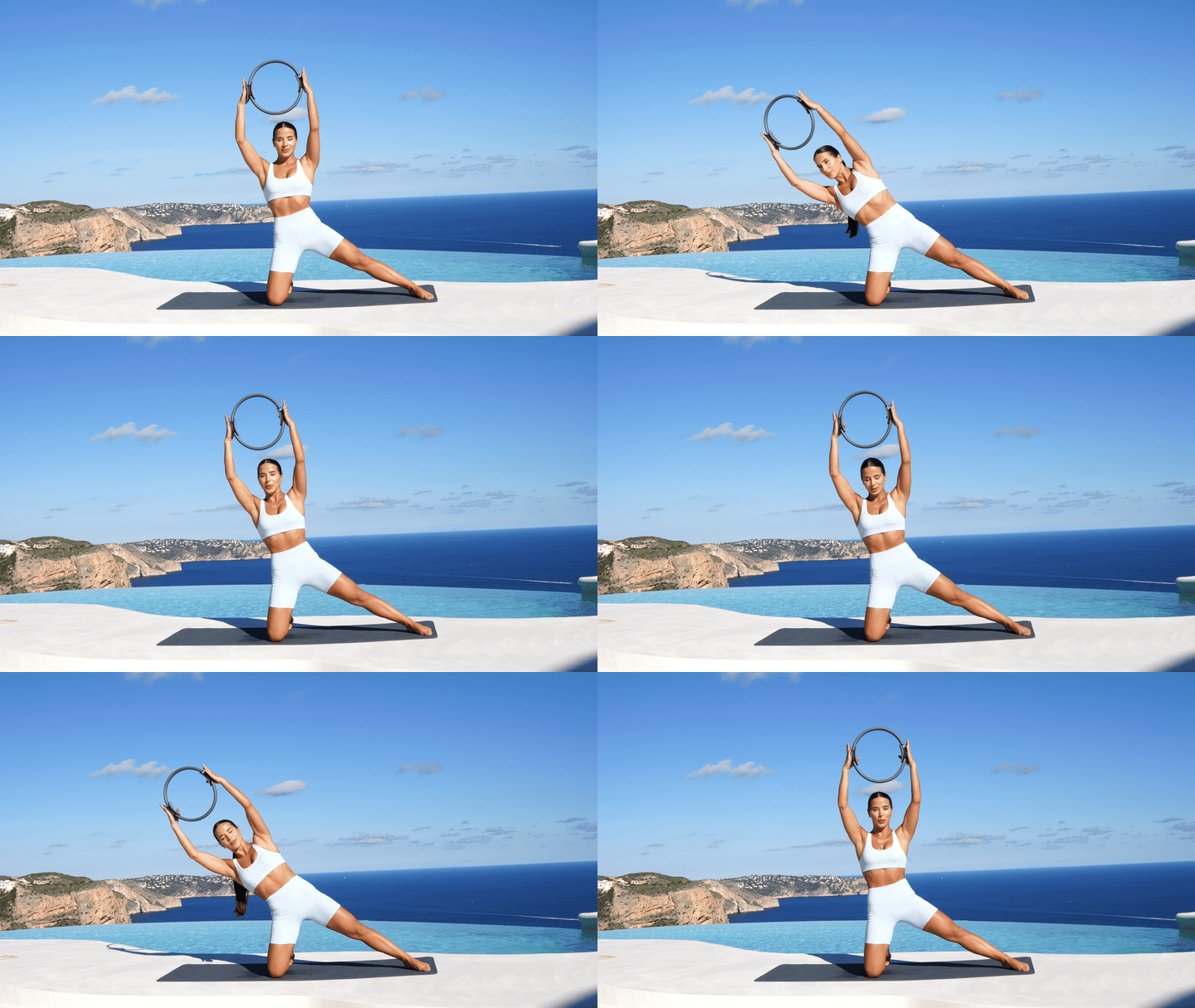
Supine Knee Raises
- Lie on your back, with your hands placed under your hips for pelvic support, if necessary.
- Start with legs extended straight on the floor.
- Exhale to draw knees into the chest.
- Inhale to extend legs back out, stopping before your lower back lifts off the mat.
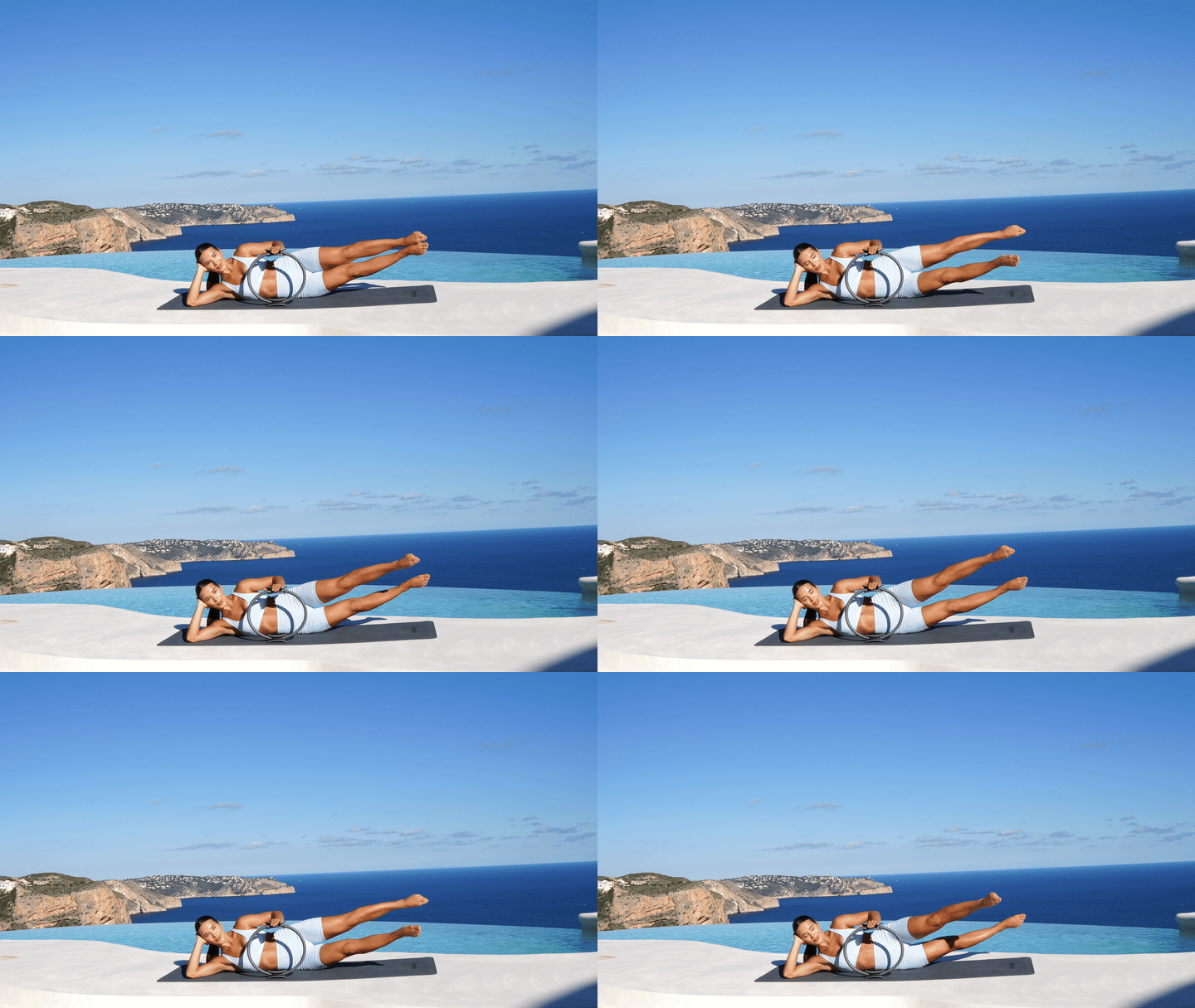
Leg Lifts with Press (Right & Left)
- Lie on your side. Hold the ring upright on the floor in front of your chest with your top hand pressing down on it.
- Bottom leg is slightly bent for stability; top leg is straight.
- Exhale to lift the top leg straight up.
- Simultaneously press down on the ring to engage the latissimus dorsi and core.
- Inhale to lower the leg.

Side-Lying Scissors (Right & Left)
- Lie on your side, body in a straight line.
- Lift the top leg to hip height.
- Swing the leg forward and backward in a scissoring motion.
- The goal is torso stability–your upper body should remain frozen while the leg moves freely in the hip socket.
For visual learners who want to see these movements in action, check out Lessie Fitness YouTube.
Read more: Lessie Fitness YouTube: Your Guide To Effective Home Workouts
How Long Is A Typical Lessie Pilates Core Workout Session?
One of the most appealing aspects of this routine is its efficiency. The entire Lessie Pilates Core Workout session lasts approximately 10 minutes.
This timeframe makes it highly accessible for beginners. The short duration ensures that you can maintain high-quality form throughout without reaching the point of fatigue-induced technique breakdown.
Neurologically, this is ideal for skill acquisition; frequent, short exposures to new movement patterns can often be more effective than infrequent, long-duration sessions (5).
Can I Do Lessie Pilates Core Workout at Home?
Absolutely. This routine is specifically engineered as a Pilates core workout at home, requiring minimal space and setup. To ensure safety and effectiveness, however, you should intentionally curate your environment.
Setting Up Your Space
Select a flat, non-slip surface. You need enough room to lie down fully extended and open your arms to the sides (for exercises like Windshield Wipers). Ensure the area is free of tripping hazards.
The Right Equipment
While you can perform the movements with bodyweight, the equipment explicitly mentioned enhances the results.
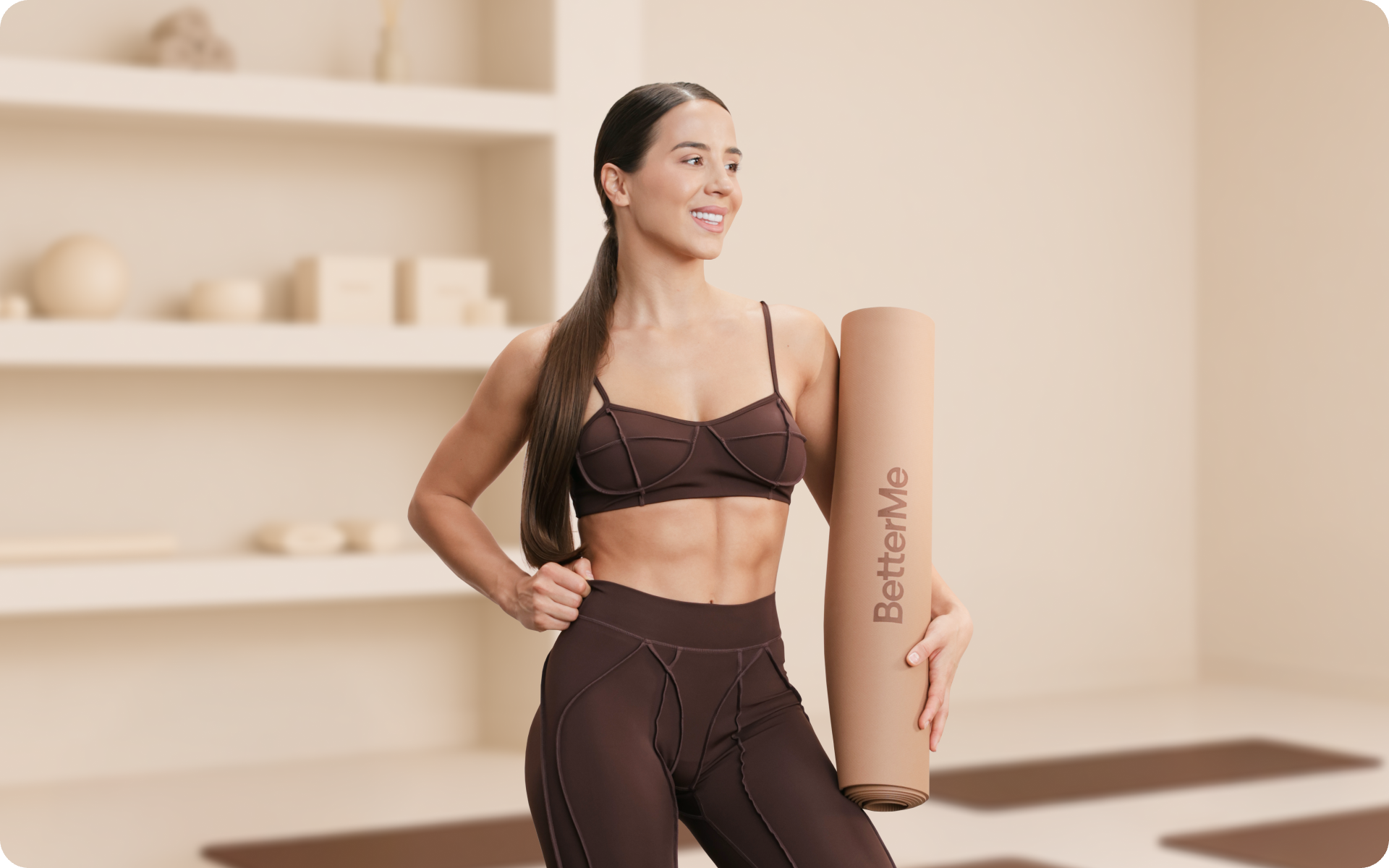
- The Mat: A standard yoga mat may be too thin for rolling exercises. We recommend a thicker mat, such as the BetterMe Everyday Exercise Mat, which provides good cushioning for the back and spine during roll-ups and supine work.
- The Resistance: The BetterMe Toning Pilates Ring is essential for this specific routine. It provides the resistance needed to activate the adductors (inner thighs) and arm muscles, which feed into the core through fascial chains.
Read more: How To Choose A Pilates Power Kit For At-Home Workouts
Mental Preparation
Treat your home workout with the same respect as a studio class.
Turn off notifications and dedicate the full 10 minutes to concentration–one of the key Pilates principles. Focus your mind on the muscle you are trying to work; this “mind-muscle connection” can significantly increase muscle recruitment (6).
For more targeted routines you can do from your living room, enjoy our Arms & Abs Pilates Workout for Beginners.
Read more: Lessie Pilates Arms And Abs Workout For Beginners
Can Lessie Pilates Core Workout Improve Posture?
Yes, the Lessie Pilates core workout can significantly improve your posture.
The relationship between the core and posture is foundational.
Research consistently shows that deep core stability–specifically the ability of the transverse abdominis and multifidus muscles to co-contract–can increase spinal stiffness and help support (7).
When these muscles are weak, the body relies on passive structures (such as ligaments) or compensatory patterns (such as arching the back) to stay upright, which can make maintaining neutral posture harder over time (8).
The “Perfect Posture” Myth
For decades, we were taught that there is a “perfect” posture for sitting, standing, etc. However, recent research suggests that postural variation is healthier than rigid fixation (9).
The goal is not to hold you back in a straight line all day. Instead, the goal is to have a “variable” spine–one that is strong enough to hold a neutral position when needed, but flexible enough to move through different ranges.
- Neutral Back: Exercises in this workout teach you to find “neutral back”–the position where your spinal curves are naturally balanced. This neutrality reduces shear force on the vertebrae.
- Dynamic Support: By strengthening the obliques and abdominals (as seen in the Oblique Twists and Knee Extensions), you create a muscular corset that supports the back dynamically as you walk, sit, and move.
As Joseph Pilates famously noted, if your spine is stiff at 30, you are old; if it is completely flexible at 60, you are young (10). This workout aims to give you that youthful mix of strength and mobility.
For a comprehensive approach to postural health, consider integrating our Full Body Pilates Workout for Beginners.
Read more: Lessie Full Body Pilates Workout for Beginners: A Complete Guide
Frequently Asked Questions
Can I get abs by doing Pilates?
Yes, you can develop abdominal muscle definition through Pilates. Pilates exercises like the Hundred and Roll-ups specifically target the rectus abdominis (the “six-pack” muscle) and the obliques.
However, visible definition also depends on overall body composition; you build the muscle through Pilates, but revealing it involves managing body fat levels through nutrition and overall activity.
Can Pilates flatten the belly?
Pilates for stomach and waist slimming is exceptionally effective at creating a flatter midsection. The results happen because Pilates exercises train the transverse abdominis, the deepest abdominal muscle (7).
When this muscle is strong, it acts like a corset, drawing the abdominal wall inward and reducing the distension that often causes a “pooched” belly look, even in lean individuals. This core muscle engagement factor is a core benefit of flat stomach Pilates.
What exercise burns the most belly fat?
Strictly speaking, no single exercise burns fat specifically from the belly; spot reduction is a physiological myth. Fat loss occurs systemically when you are in a caloric deficit.
However, full-body movements that elevate the heart rate, such as high-intensity interval training (HIIT) or vigorous compound strength movements, generally burn the most calories per minute (11, 12).
Pilates contributes to this by building muscle mass, which can elevate your resting metabolic rate over time (13).
How does Pilates toning ring advance your Pilates core session?
The Pilates ring (Magic Circle) advances your session by adding peripheral resistance that forces increased core recruitment. For example, squeezing the ring between your ankles during leg lifts activates the adductors (inner thighs).
The adductors share a neurological connection with the pelvic floor and deep abdominals; therefore, activating the inner thighs triggers a stronger reflex contraction in the deep core, making the exercise more intense and practical (14).
Can Lessie Fitness Pilates Core Workout for Beginners be modified for intermediate/advanced levels?
Yes, this workout is highly scalable. To advance the session, you can increase the work interval duration from 20–45 seconds. Additionally, you can increase the lever length–for example, by extending legs fully straight instead of keeping them in a tabletop position during the “Supine Knee Extensions,” which places a significantly higher load on the abdominal muscles.
The Bottom Line
The Lessie Pilates Core Workout offers a potent, time-efficient way to build a body that is not just aesthetically pleasing but also functionally robust. By integrating the Pilates ring and focusing on precise, controlled movements, you engage the deep musculature that supports your spine and enhances your posture.
Remember, consistency is the currency of fitness; a 10-minute session performed daily is infinitely more valuable than a grueling hour-long session performed once a month.
Start with these fundamentals, master the control, and watch your strength grow from the inside out.
DISCLAIMER:
This article is intended for general informational purposes only and does not serve to address individual circumstances. It is not a substitute for professional advice or help and should not be relied on for making any kind of decision-making. Any action taken as a direct or indirect result of the information in this article is entirely at your own risk and is your sole responsibility.
BetterMe, its content staff, and its medical advisors accept no responsibility for inaccuracies, errors, misstatements, inconsistencies, or omissions and specifically disclaim any liability, loss or risk, personal, professional or otherwise, which may be incurred as a consequence, directly or indirectly, of the use and/or application of any content.
You should always seek the advice of your physician or other qualified health provider with any questions you may have regarding a medical condition or your specific situation. Never disregard professional medical advice or delay seeking it because of BetterMe content. If you suspect or think you may have a medical emergency, call your doctor.
SOURCES:
- Discover the Powerhouse of Your Body: Core Fitness Training (n.d., americansportandfitness.com)
- Core-Muscle Training and Neuromuscular Control of the Lower Limb and Trunk (2019, pubmed.ncbi.nlm.nih.gov)
- A Systematic Review of the Effectiveness of Core Stability Exercises in Patients with Non-Specific Low Back Pain (2022, pmc.ncbi.nlm.nih.gov)
- Core Stability Training for Injury Prevention (2013, pmc.ncbi.nlm.nih.gov)
- Effectiveness of motor sequential learning according to practice schedules in healthy adults; distributed practice versus massed practice (2015, pubmed.ncbi.nlm.nih.gov)
- Importance of mind-muscle connection during progressive resistance training (2015, link.springer.com)
- The Relationship of Trunk Muscle Activation and Core Stability: A Biomechanical Analysis of Pilates-Based Stabilization Exercise (2021, mdpi.com)
- Development of low postural tone compensatory patterns – predicted dysfunction patterns in the upper part of the body (2014, researchgate.net)
- Postural variability: an effective way to reduce musculoskeletal discomfort in office work (2014, pubmed.ncbi.nlm.nih.gov)
- PILATES’ Return to Life Through Contrology (n.d., books.out.csli.me)
- High-intensity interval exercise induces 24-h energy expenditure similar to traditional endurance exercise despite reduced time commitment (2014, cdnsciencepub.com)
- DOES THE NUMBER OF JOINTS INVOLVED IN EXERCISE PROMOTE CHANGES IN ENERGY EXPENDITURE? (2020, scielo.br)
- Increasing muscle mass to improve metabolism (2013, pmc.ncbi.nlm.nih.gov)
- Co-activation of the Abdominal and Pelvic Floor Muscles During Voluntary Exercises (2001, researchgate.net)