
Combining intermittent fasting keto bodybuilding is possible, though it requires careful protein management, strategic meal timing, and an adaptation period. While conventional bodybuilding often relies on carbohydrates, some athletes successfully use this combination to support their body composition goals. Individual results vary considerably based on training intensity and nutrition.
Combining intermittent fasting keto bodybuilding is an approach that some athletes explore to see if it can support their muscle-building goals. Traditionally, the fitness community has relied heavily on frequent, carbohydrate-rich meals to fuel intense workouts and support recovery. However, as more people seek alternative ways to manage their energy and body composition, the combination of a ketogenic diet and time-restricted eating has gained interest.
If you are considering this path, it is important to understand that managing your macros and timing your meals becomes crucial. You will need to carefully balance your protein intake to support muscle repair without disrupting your metabolic state. Additionally, adjusting to a new energy source takes patience, as your body needs time to adapt.
This guide explores how these two methods can be structured together. You will find a sample meal plan, specific workout routines, and practical tips to help you navigate this approach.
Disclaimer: Combining IF and keto with a bodybuilding program is not suitable for everyone. Your individual health, activity level, and nutritional needs all influence how this approach works for you. Speak with a healthcare provider or registered dietitian before starting.
IF vs Keto Bodybuilding: How Each Works
Both IF and the keto diet have attracted interest in the fitness community for their potential effects on body composition and energy management. Before deciding how keto intermittent fasting bodybuilding strategies might fit into your routine, it helps to understand the core mechanics of each approach.
Intermittent Fasting
Intermittent fasting is an eating pattern that alternates between periods of fasting and eating (1). During the fasting window, you consume no calories, typically sticking to water, black coffee, or plain tea. During the feeding window, you consume your daily calorie and macronutrient requirements.
For bodybuilders, the focus during the feeding window must be on consuming enough nutrient-dense foods to support training and recovery. IF isn’t a diet that dictates exactly what to eat, but rather a schedule for when to eat.
The Keto Diet
The ketogenic diet is a high-fat, moderate-protein, and very low-carbohydrate eating plan (2). Some people exploring body composition management are drawn to the keto diet because of the metabolic state it promotes (3). By drastically reducing carbohydrate intake, the body uses fat-derived ketones as an alternative energy source instead of relying on glucose (2).
While a standard keto diet often limits protein to maintain this state, those engaged in bodybuilding ketosis typically need to adjust their protein intake upward to support muscle repair (4), finding a balance that meets their physical demands.

Approach Comparison
| Approach | Core Mechanism | Bodybuilding Benefit | Key Consideration |
|---|---|---|---|
| Intermittent Fasting (IF) | Restricts eating to a specific time window. | May help manage daily calorie intake and support metabolic flexibility. | Fitting adequate calories and protein into a shorter window can be challenging. |
| Keto Diet | Restricts carbohydrates to shift the body to fat-derived fuel. | Can support body composition goals and provide steady energy for some. | Requires careful protein management; the adaptation phase can lower training intensity. |
| IF + Keto Combined | Combines time-restricted eating with a fat-adapted metabolic state. | May offer a structured approach to managing body composition and energy. | Demands strict nutritional tracking and strategic workout timing to ensure recovery. |
Please note that intermittent fasting and the keto diet are not suitable for everyone. Before doing either, or both, be sure to speak to a doctor or a dietitian.
Read more: How Long Is It Safe To Fast: Are Long Or Short-Term Fasts More Effective?
Sample Intermittent Fasting Keto Bodybuilding Meal Plan
Creating an intermittent fasting bodybuilding diet requires planning to ensure you hit your macro goals within your eating window. Here is a sample keto bodybuilding diet meal plan to illustrate what a day of eating might look like.
Macro Summary Table
| Total Calories | Total Fat | Total Protein | Total Carbs |
|---|---|---|---|
| ~2,038 kcal | 113 g | 171 g | 19 g |
Note: This is a sample only; individual calorie and macro targets should be determined based on your personal goals, body weight, and activity level. You may need to scale portions up or down to meet your specific needs.
- Meal 1: 6 large fried eggs, 45 g of bacon, 85 g of broccoli cooked in bacon grease. This hearty first meal breaks your fast with a robust amount of protein and fats to supply steady energy. (Calories: 740. Fats: 49 g, Proteins: 53 g, Carbs: 6 g)
- Meal 2: 10 g coconut oil, 112 g of cooked chicken drumstick. A lighter option that provides easily digestible protein and additional fats, making it suitable for a pre-workout or mid-day snack. (Calories: 295. Fats: 20 g, Proteins: 24 g, Carbs: 0 g)
- Meal 3: 1 cheese stick and 33 g of almond butter. This simple, portable snack helps keep you satisfied and tops up your fat and protein intake between larger meals. (Calories: 282. Fat: 20 g, Proteins: 13 g, Carbs: 7 g)
- Meal 4: 224 g of salmon, 15 g coconut oil, 84 g cauliflower. A nutrient-dense main meal featuring high-quality protein and omega-3 fatty acids to support recovery. (Calories: 598. Fat: 25 g, Proteins: 59 g, Carbs: 4 g)
- Meal 5: 1 scoop protein shake. A convenient way to close your eating window, ensuring your muscles have the amino acids needed for overnight repair. (Calories: 110. Fat: 1 g, Proteins: 25 g, Carbs: 2 g)
Reasons why BetterMe is a safe bet: a wide range of calorie-blasting workouts, finger-licking recipes, 24/7 support, challenges that’ll keep you on your best game, and that just scratches the surface! Start using our app and watch the magic happen.
Bodybuilding Workout Plan for IF + Keto
Structuring a bodybuilding intermittent fasting routine requires attention to timing and progressive overload. If you are exploring intermittent fasting keto and working out, these foundational tips can help you set up a sustainable plan.
- Keep your plan simple. There are thousands of blogs and videos that offer advice on bodybuilding workouts, which can be confusing. Trying to cram multiple exercises into one session can lead to overtraining. Keep your workout plan as simple as possible by concentrating on full-body movements or basic splits that target major muscle groups effectively.
- Eat before and after your workouts. Timing your nutrition is an important part of the process. Some research suggests that adequate pre-workout nutrition is important for muscle growth and recovery over time (5), which is a consideration when timing meals around workouts during IF. Trying to position your workout within your feeding window can provide the energy and recovery nutrients needed.
- Incorporate weights to your routine. Bodyweight exercises are fantastic, especially when you are starting out; however, they can only provide so much resistance (6). To continue progressing, invest in light weights or use household items like soup cans or water bottles to challenge your muscles further.
- Join a gym. Working out in a dedicated environment gives you a community that can provide motivation. Having access to a wider variety of equipment also allows you to scale your workouts as you grow stronger.
- Experiment with different weights. Varying your training stimulus is generally recommended to support continued adaptation over time (7). Switch out your dumbbells for kettlebells, add some barbells, or try resistance bands to continually challenge your body.
Read more: HIIT Workouts With Weights: This Hardcore Strength-Boosting Routine Is Sure To Leave You Sore
Gain Muscle Workouts: 7 Key Exercises
Always remember to warm up before every workout. Warming up revs up your cardiovascular system by raising your body temperature and increasing blood flow. This preparation may help reduce muscle soreness and lessen your risk of strain (8). Here are 7 basic exercises that support intermittent fasting keto and weightlifting goals.
1. Squats
Squats are a foundational movement that targets the quadriceps, hamstrings, and glutes while engaging the core (9).
- Stand facing forward with your chest up.
- Place your feet shoulder-width apart or slightly wider and extend your hands straight out in front of you for balance.
- Bend at your knees and hips, sticking your hips back like you’re sitting into a chair. Keep your back neutral and do not let your lower back round.
- Squat down as low as you can, keeping your head and chest lifted. Press your weight back into your heels.
- Keep your body tight, and push through your heels to return to the starting position.
- Do this 10 to 15 times.
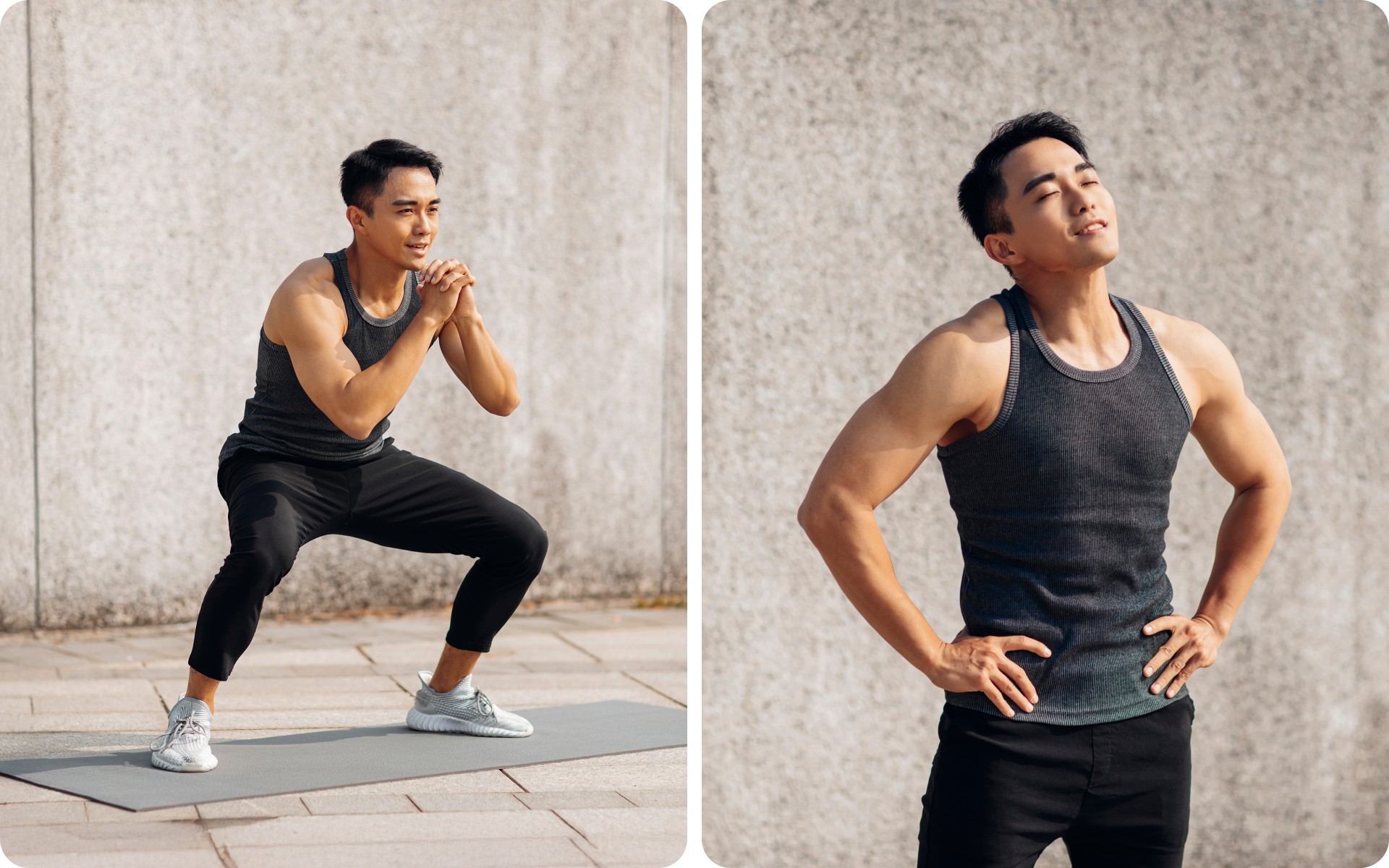
2. Deadlifts
Deadlifts are excellent for building the entire posterior chain, including the hamstrings, glutes, and lower back (10).
- Position the feet shoulder-width apart with toes under the bar.
- Stabilize the abdominal muscles by bracing them. Squat down, bending at the knees. Keep your back straight or arched slightly, not rounded.
- Grasp the bar just outside the line of the knees with an overhand or mixed grip.
- Lift the bar by pushing upward with the legs. Breathe out on exertion. The bar should rest at thigh level when standing.
- Lower the bar to the floor with a reverse motion, ensuring your back remains straight.
- Try doing this 10 to 15 times.
3. Bicycle Crunches
This movement targets the abdominal muscles, specifically the obliques, to support core stability.
- Lie down on your back. Bend your knees and plant your feet on the floor. Place your arms behind your head, pointing your elbows outward.
- Brace your abs. Lift your knees to 90 degrees and raise your upper body.
- Exhale and rotate your trunk, moving your right elbow and left knee toward each other while straightening your right leg.
- Pause before inhaling and returning to the starting position.
- Exhale. Move your left elbow to your right knee and extend your left leg. Pause. This completes 1 rep.
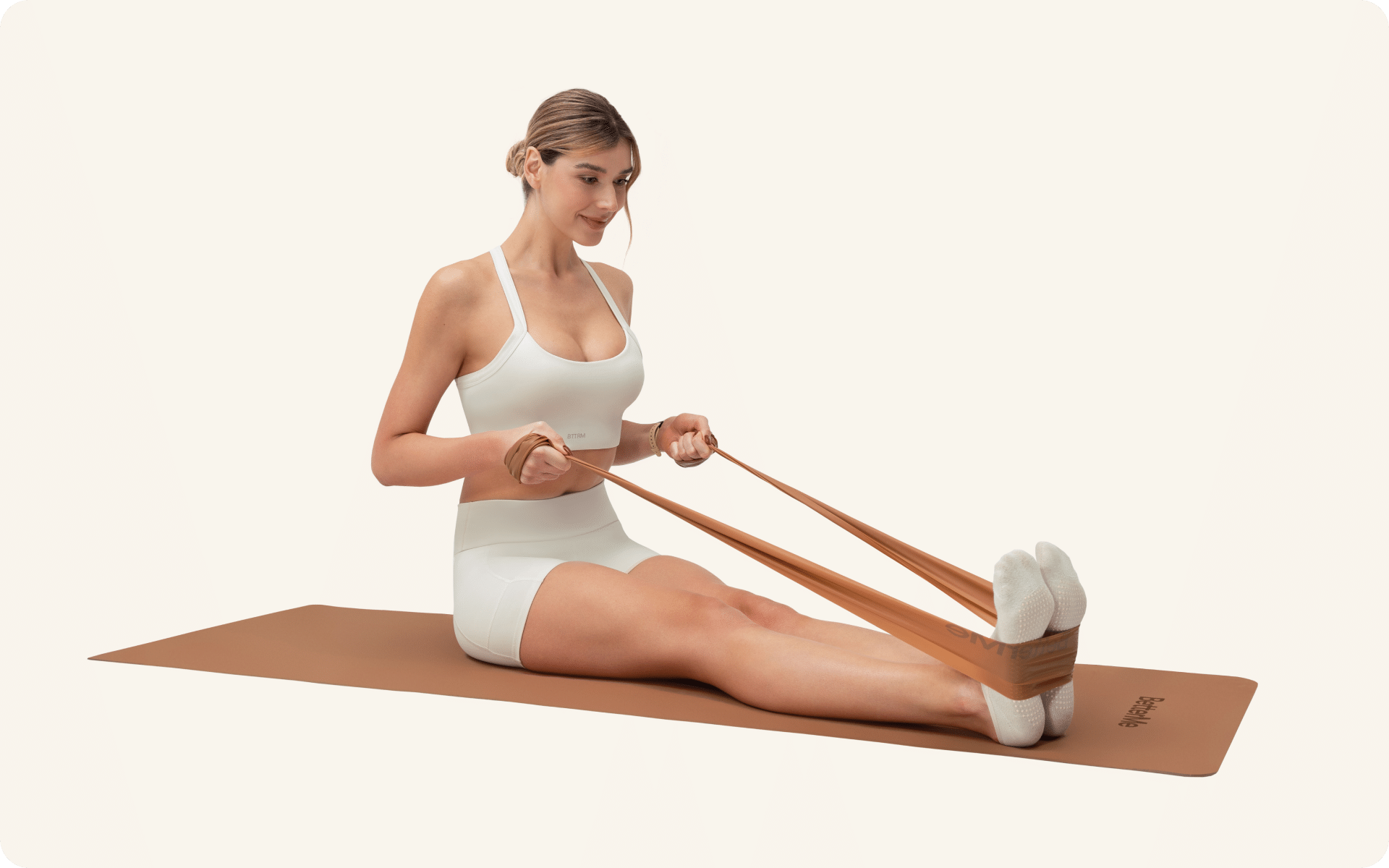
4. Seated Cable Row with Resistance Bands
Rows focus on the latissimus dorsi, rhomboids, and biceps, promoting a stronger upper back.
- Sit on the floor, legs together in front of you. Bend your knees slightly. Place the band around the soles of your feet and hold the ends.
- Exhale and pull the band until your hands are over your thighs, keeping your elbows tucked in and your back neutral. Pause for one second.
- Inhale and slowly extend your arms, counting to three.
- Complete a set of 10 to 15 times.
5. Dumbbell Bench Press
This exercise effectively targets the pectoral muscles, anterior deltoids, and triceps (11).
- Lie back on a bench holding a dumbbell in each hand just to the sides of your shoulders. Palms should face towards your feet.
- Press the weights above your chest by extending your elbows until your arms are straight.
- Bring the weights back down slowly past your shoulders. Bring them closer together at the top, but do not let them touch.
6. Split Squat with Dumbbells
Split squats are great for unilateral leg strength, targeting the quads and glutes one side at a time (12).
- Grab a pair of dumbbells and hold them at your sides, palms facing each other.
- Stagger your stance, with your front foot 2-4 feet in front of your rear foot.
- Lower your hips until your front thigh is at least parallel to the floor.
- Push through your front heel, extend the hips and knees to return to the start, and repeat on the opposite side.
7. Bicep Curls
Curls are an isolation exercise focusing specifically on the biceps brachii (13).
- Hold a dumbbell in each hand at the sides, palms facing in toward the thighs.
- Position your feet shoulder-width apart and brace the core.
- Lift one dumbbell toward the shoulder, rotating the arm so the palm faces upward.
- Keep the elbow close to the body. Exhale while lifting.
- Lower to the side and perform the movement with the other arm.
- Alternate until you complete 10 curls with each arm.
Whether you’re looking to simply pep up your fitness routine, jazz up your diet with mouth-watering low-calorie recipes or want to get your act together and significantly drop that number on your scale – BetterMe Well-Being Coach app has got you covered! Improve your body and revamp your life!
Which Intermittent Fasting Method Is Best for Bodybuilding?
Before determining which approach suits your intermittent fasting and bodybuilding routine, it helps to understand the different schedules. Here are the most common IF approaches, along with how they may fit a bodybuilding routine.
IF Methods Comparison Table
| Method | Fasting Window | Bodybuilding Suitability | Notes |
|---|---|---|---|
| 16:8 | 16 hours fasting, 8 hours eating | High | Very popular; allows enough time to consume required calories and time meals around workouts. |
| 14:10 | 14 hours fasting, 10 hours eating | High | Excellent for beginners; offers a slightly larger window to fit in protein and calories. |
| 12:12 | 12 hours fasting, 12 hours eating | High | A gentle starting point that closely mimics a standard eating schedule. |
| 5:2 Diet | Normal eating for 5 days, 500-600 calories for 2 days | Low to Moderate | Can be challenging for consistent workout energy and daily protein synthesis. |
| Eat-Stop-Eat | 24-hour fast, once or twice a week | Low | Prolonged fasts may make it difficult to support consistent training and muscle repair. |
Time-Restricted Eating (16:8, 14:10, 12:12)
These methods establish specific daily fasting and eating windows. A structured daily window can help organize your meals around your training schedule. The 16:8 method is widely used in the fitness community, while the 14:10 approach provides a gentler starting point (14).
The 5:2 Diet
This approach involves eating normally for five days a week while consuming a very low amount of calories on two non-consecutive days (15). For bodybuilding, managing intense workouts on the low-calorie days can require careful scheduling.
Eat-Stop-Eat (The 24-Hour Fast)
This involves fasting completely for 24 hours once or twice a week. You might fast from breakfast to breakfast or dinner to dinner. This method is not as easy as it sounds and may cause changes in mood or irritability (16). It is generally more challenging to pair with a consistent resistance training program.
How to Use IF for Bodybuilding: 3 Key Principles
For you to successfully use IF to support your training, there are a few practical guidelines to follow.
- Watch your overall intake. While supporting muscle may require consuming more calories than your baseline, you should still track what you eat. To support an active lifestyle, many people opt to consume a modest surplus, ensuring their bodies have the energy needed for workouts.
- Adhere to your scheduled hours. Consistency is helpful when practicing time-restricted eating. Sneaking in meals during fasting hours can complicate your tracking and disrupt the routine you are trying to establish.
- Focus on progressive training. Muscles respond to the stimulus provided by resistance exercises (17). As you work out, muscles experience stress, and when provided with adequate rest and nutrition, they adapt (18). Consistent strength training is what drives progress, regardless of your eating window.

IF + Keto for Cutting vs Bulking: What to Know
Bodybuilders typically organize their training into phases. If you are researching intermittent fasting bodybuilding cutting or intermittent fasting for cutting bodybuilding, understanding how to adjust your strategy is key.
Cutting vs Bulking Comparison Table
| Goal | Calorie Target | Protein Recommendation | IF Window Recommendation | Keto Adjustment |
|---|---|---|---|---|
| Cutting | Modest deficit | Higher (to preserve muscle) | 16:8 or 14:10 (helps manage hunger) | Strict carb management to support fat utilization |
| Bulking | Modest surplus | Moderate to High (supports growth) | 12:12 or 14:10 (allows more time to eat) | May require strategic fats to easily increase calories |
Cutting on IF + Keto
“Cutting” refers to a phase focused on reducing body fat while preserving lean muscle mass (19). Many athletes find that IF combined with keto can support a cutting phase by providing a structured way to maintain a calorie deficit while utilizing a fat-adapted metabolism (20). The key consideration during a cut is ensuring sufficient protein intake to maintain muscle, while avoiding a calorie deficit that is too severe.
Bulking on IF + Keto
“Bulking” focuses on increasing muscle mass, which typically requires a calorie surplus (19). The challenge of bulking on keto is that meeting high calorie needs without carbohydrates requires consuming a significant volume of fats. Additionally, a short IF window can make it physically difficult to eat enough food. To adapt this approach for a bulking phase, athletes often expand their eating window (such as 14:10) to comfortably consume the necessary calories to support heavy training.

Keto + IF Bodybuilding: What Results to Expect
When looking into keto diet bodybuilding results, it is important to have realistic expectations about the timeline and the physical experience.
Many people report an initial adaptation period that lasts roughly two to four weeks. During this time, energy levels may feel lower, and workout performance can temporarily dip as the body adapts to utilizing fat-derived fuel instead of readily available glucose.
After this adaptation phase, some athletes report feeling more stable energy during their training sessions. While building muscle on a keto and IF protocol is possible with sufficient protein and progressive training, the research is more limited than for conventional higher-carb diets. Some research suggests that individuals can experience favorable changes in body composition (21, 22), but individual outcomes vary greatly based on genetics, training consistency, and precise nutritional tracking.
Tips for IF + Keto Bodybuilding
Here are some practical things you can do to support your routine while combining these approaches.
Quick-Reference Tips Table
| Tip | Key Action |
|---|---|
| Meal Preparation | Prep ingredients weekly to ensure you hit macros. |
| Workout Programming | Follow a set plan to avoid wandering the gym. |
| Nutrient Density | Choose foods high in fiber, vitamins, and minerals. |
| Hydration | Drink plenty of water and unsweetened beverages. |
| Stay Busy | Keep your mind occupied during fasting hours. |
- Meal preparation. It is often easier to stick to a nutritional plan if you have the meals prepared. Keto macros can require precise measuring. Picking a day to prep nutrient-rich ingredients for the week makes it easier to assemble meals quickly.
- Make a workout program. Having a set program prevents you from wasting time deciding what exercises to do. With a routine in place, you can focus your energy on executing the movements.
- Choose nutrient-dense foods. When you do eat, select keto-friendly foods that are high in fiber, vitamins, and minerals. This helps provide your body with comprehensive nutrition (23).
- Stay hydrated. Drinking water, plain coffee, and tea during your fasting period is essential (24). Consistent hydration supports overall performance and recovery (25).
- Stay busy. Keeping yourself occupied with work, hobbies, or daily tasks can help make the fasting hours feel much more natural.
Frequently Asked Questions
Can you build muscle on keto and intermittent fasting?
Building muscle while combining keto and IF is possible but requires careful attention to protein intake, training, and calorie management. Conventional bodybuilding research typically favors higher carbohydrate protocols (26, 27), but some athletes have reported positive body composition outcomes with keto and IF (21, 22). Individual results vary considerably based on training habits and nutritional consistency.
Is keto good for bodybuilding?
The keto diet presents some challenges for bodybuilding—particularly during high-intensity training that relies on glucose (28)—but some athletes manage body composition goals on keto. The adaptation period (typically 2-4 weeks) may cause a temporary dip in performance. Adequate protein is critical when following this approach.
What is the best IF method for bodybuilding?
The 16:8 method is the most commonly used IF approach by people combining fasting with training, as it allows a structured eating window that can be timed around workouts. The 14:10 method is a gentler alternative for beginners (29). Most practitioners try to time their eating window to include both pre- and post-workout nutrition.
How do you time workouts with IF and keto?
Most guidance suggests timing workouts near the end of the fasting window or at the start of the eating window to ensure post-workout nutrition is available for recovery. Some keto-adapted athletes also train in a fasted state and find their energy is adequate after full adaptation. Individual responses vary greatly.
How much protein do I need for bodybuilding on keto?
Most guidance for keto bodybuilding suggests a higher protein intake than a standard ketogenic diet allows—typically closer to 1.5 -1.6g of protein per kilogram of body weight or lean mass (30). The challenge is that high protein can sometimes affect the depth of ketosis (31). Finding the right balance is a highly individual process.
Can intermittent fasting cause muscle loss?
Short-term IF (such as 16:8) is generally not associated with significant muscle loss when adequate protein is consumed during the eating window and resistance training is maintained (32). Severe calorie restriction poses a greater risk to muscle mass (33). Protein intake and consistent training are the most important factors in muscle maintenance (34).
Disclaimer: Combining IF and keto with a bodybuilding program is not suitable for everyone. Your individual health, activity level, and nutritional needs all influence how this approach works for you. Speak with a healthcare provider or registered dietitian before starting.
The Bottom Line
Intermittent fasting keto bodybuilding is an approach that requires dedication and precise nutritional tracking. Both IF and the ketogenic diet alter how your body manages energy, and combining them means carefully watching your daily intake to ensure you consume enough protein to support muscle repair. Watching your calorie intake and sticking to a consistent resistance training program matter deeply when pursuing these goals.
That being said, you should consult your doctor or dietitian before starting this regimen. Exhaustion, changes in mood, and temporary endurance issues are just some experiences you might encounter during the adaptation phase. These factors can vary depending on age, activity level, and overall health status.
DISCLAIMER:
This article is intended for general informational purposes only and does not serve to address individual circumstances. It is not a substitute for professional advice or help and should not be relied on for making any kind of decision-making. Any action taken as a direct or indirect result of the information in this article is entirely at your own risk and is your sole responsibility.
BetterMe, its content staff, and its medical advisors accept no responsibility for inaccuracies, errors, misstatements, inconsistencies, or omissions and specifically disclaim any liability, loss or risk, personal, professional or otherwise, which may be incurred as a consequence, directly or indirectly, of the use and/or application of any content.
You should always seek the advice of your physician or other qualified health provider with any questions you may have regarding a medical condition or your specific situation. Never disregard professional medical advice or delay seeking it because of BetterMe content. If you suspect or think you may have a medical emergency, call your doctor.
SOURCES:
- Intermittent fasting and health outcomes: an umbrella review of systematic reviews and meta-analyses of randomised controlled trials (2024, thelancet.com)
- The Ketogenic Diet: Clinical Applications, Evidence-based Indications, and Implementation (2025, ncbi.nlm.nih.gov)
- The Ketogenic Diet Through a Metabolomic Lens: Biochemical Pathways, Therapeutic Applications, and Analytical Challenges (2025, mdpi.com)
- International society of sports nutrition position stand: ketogenic diets (2024, tandfonline.com)
- Athletes’ nutritional demands: a narrative review of nutritional requirements (2024, frontiersin.org)
- No Time to Lift? Designing Time-Efficient Training Programs for Strength and Hypertrophy: A Narrative Review (2021, link.springer.com)
- Does Varying Resistance Exercises Promote Superior Muscle Hypertrophy and Strength Gains? A Systematic Review (2022, journals.lww.com)
- Aerobic exercise: How to warm up and cool down (2023, mayoclinic.org)
- A Biomechanical Review of the Squat Exercise: Implications for Clinical Practice (2024, pmc.ncbi.nlm.nih.gov)
- Electromyographic activity in deadlift exercise and its variants. A systematic review (2020, pmc.ncbi.nlm.nih.gov)
- A Comparison of Muscle Activation between Barbell Bench Press and Dumbbell Flyes in Resistance-Trained Males (2020, pmc.ncbi.nlm.nih.gov)
- Effect of unilateral training and bilateral training on physical performance: A meta-analysis (2023, frontiersin.org)
- Investigating the biomechanics of the biceps brachii muscle during dumbbell curl exercise: A comprehensive approach (2023, researchgate.net)
- Time-Restricted Eating and Its Metabolic Benefits (2023, mdpi.com)
- A randomised controlled trial of the 5:2 diet (2021, journals.plos.org)
- Intermittent Fasting: What It Is, Benefits and Schedules (2026, health.clevelandclinic.org)
- The influence of resistance exercise training prescription variables on skeletal muscle mass, strength, and physical function in healthy adults: An umbrella review (2024, sciencedirect.com)
- Anabolic signals and muscle hypertrophy – Significance for strength training in sports medicine (2025, sciencedirect.com)
- “Bulking and cutting” among a national sample of Canadian adolescents and young adults | Eating and Weight Disorders – Studies on Anorexia, Bulimia and Obesity (2022, link.springer.com)
- Keto Menu–Effect of Ketogenic Menu and Intermittent Fasting on the Biochemical Markers and Body Composition in a Physically Active Man—A Controlled Case Study (2023, mdpi.com)
- Role of a Ketogenic Diet on Body Composition, Physical Health, Psychosocial Well-Being and Sports Performance in Athletes: A Scoping Review (2020, mdpi.com)
- Intermittent Fasting: Does It Affect Sports Performance? A Systematic Review (2024, mdpi.com)
- Nutrition (2023, health.harvard.edu)
- Fasting: How to Guide (2021, mdpi.com)
- Hydration to Maximize Performance and Recovery: Knowledge, Attitudes, and Behaviors Among Collegiate Track and Field Throwers (2021, pmc.ncbi.nlm.nih.gov)
- The Effect of Carbohydrate Intake on Strength and Resistance Training Performance: A Systematic Review (2022, mdpi.com)
- The effect of a bodybuilding carbohydrate-loading protocol on anthropometry: Preliminary findings from a randomized crossover trial (2024, sciencedirect.com)
- From Metabolism to Medals: Contemporary Perspectives and Revisiting Carbohydrate Guidelines for Fueling Endurance Athletes during Exercise (2026, sciencedirect.com)
- Intermittent Fasting: Exploring Approaches, Benefits, and Implications for Health and Weight Management (2024, npjournal.org)
- Ketogenic Diet Plus Resistance Training Applied to Physio-Pathological Conditions: A Brief Review (2024, mdpi.com)
- Diet Review: Ketogenic Diet for Weight Loss (n.d., nutritionsource.hsph.harvard.edu)
- Short-term intermittent fasting and energy restriction do not impair rates of muscle protein synthesis: A randomised, controlled dietary intervention (2024, sciencedirect.com)
- A Systematic Review and Meta-Analysis of the Effect of Caloric Restriction on Skeletal Muscle Mass in Individuals with, and without, Type 2 Diabetes (2024, mdpi.com)
- Systematic review and meta‐analysis of protein intake to support muscle mass and function in healthy adults (2022, pmc.ncbi.nlm.nih.gov)

 Reviewed by
 By
By 
 By
By 
 Reviewed by