
Starting your fitness journey can feel overwhelming, particularly when you’re faced with endless workout splits and conflicting advice. But here’s the good news – as a beginner, you have a unique advantage that most people don’t realize.
Your body is primed for rapid improvement in strength, muscle size, and coordination. The key lies in choosing the right approach – one that maximizes these natural advantages while building sustainable habits.
Full-body workouts offer the perfect solution for beginners. They provide frequent practice with fundamental movement patterns, allow for optimal recovery between sessions, and deliver impressive results with just three gym visits per week.
This comprehensive guide will walk you through everything you need to know about designing and executing an effective full-body workout routine.
You’ll discover why this approach works so well for beginners, how to structure your sessions for maximum benefit, and receive a complete workout plan you can start using immediately.
Should Gym Beginners Do Full-Body Workouts?
The answer is a resounding yes, and the science backs this up. Full-body workouts are perfectly aligned with how beginners respond to resistance training.
- Rapid Neuromuscular Adaptation
As a new lifter, your initial weakness isn’t primarily due to a lack of muscle mass. Instead, it stems from poor neuromuscular coordination and limited motor control (1).
Your nervous system needs to learn how to recruit muscle fibers efficiently and coordinate complex movement patterns. By practicing these movements frequently – which full-body workouts allow – you’ll accelerate this learning process significantly (1).

- Optimal Recovery for Beginners
Beginners recover much faster than experienced lifters. While advanced athletes might need 48-72 hours to fully recover from an intense session that targets specific muscle groups, beginners can often return to the same exercises within 24-48 hours (2).
Full-body workouts capitalize on this enhanced recovery capacity. You can train the same movement patterns three times per week, providing optimal frequency for skill development and strength gains (3).
- Simplified Programming
Starting with a full-body approach eliminates the complexity of body part splits. You don’t need to worry about balancing pushing and pulling movements across different days or ensuring adequate volume for each muscle group (4).
Instead, you focus on mastering fundamental movement patterns: squatting, hinging at the hips, pushing, pulling, and core stabilization.
BetterMe: Health Coaching app helps you achieve your body goals with ease and efficiency by helping to choose proper meal plans and effective workouts. Start using our app and you will see good results in a short time.
- Enhanced Hormonal Response
Research has shown that compound movements create a more significant hormonal response compared to isolation exercises. This includes increased production of growth hormone and testosterone – both of which are crucial for muscle development and recovery (5). As full-body workouts tend to rely on compound movements, it’s a great way to reap said benefits.
- Time Efficiency
With just three training sessions per week, full-body workouts offer maximum results with minimal time investment. This approach fits perfectly into busy schedules while still providing the frequency needed for rapid improvement (4).
For beginners who are looking to establish a foundation, exploring a basic full-body workout can provide additional insights into movement selection and progression strategies.
Read more: How to Build a Gym Routine from Scratch (Beginner-Friendly Guide)
How Do You Structure a Full-Body Gym Session as a Beginner?
Creating an effective full-body workout requires systematic planning. Follow these steps to design sessions that maximize your progress while minimizing injury risk.
1. Start with a Proper Warm-Up
Begin every session with 5-10 minutes of light cardiovascular activity (6). This could include walking on a treadmill, cycling, or using an elliptical machine.
Follow this with dynamic movements that prepare your body for the exercises ahead:
- Arm circles and shoulder rolls
- Leg swings and hip circles
- Bodyweight squats and lunges
- Light torso rotations
2. Focus on Compound Movements
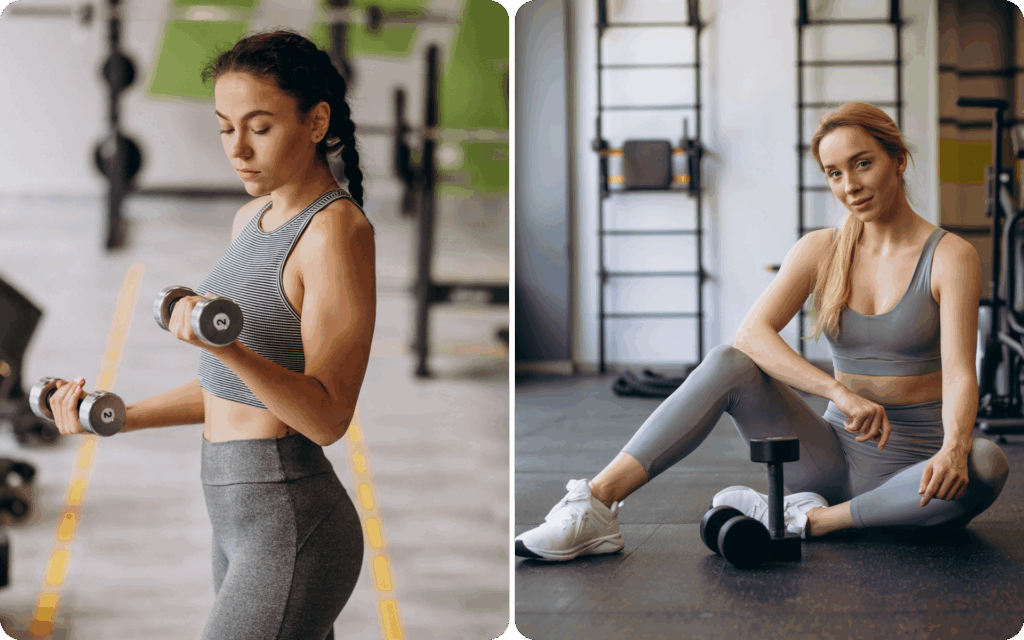
Prioritize exercises that work multiple muscle groups simultaneously. These movements provide the most bang for your buck and closely mimic real-world activities (3).
Essential compound movements include:
- Squats (target legs, glutes, core)
- Deadlifts (engage posterior chain, core)
- Bench press or push-ups (chest, shoulders, triceps)
- Rows (back, biceps, rear delts)
- Overhead press (shoulders, triceps, core)
3. Follow Proper Set and Rep Schemes
For beginners, aim for 3-4 sets per exercise with the following rep ranges (7):
- Strength development: 5-6 reps at 70-75% of your maximum effort
- Hypertrophy (muscle growth): 8-12 reps at moderate intensity
- Muscular endurance: 12-15 reps at lighter loads
4. Allow Adequate Rest Between Sets
Rest periods should match your training goals (8):
- Strength sets (5-6 reps): 2-3 minutes
- Hypertrophy sets (8-12 reps): 60-90 seconds
- Endurance sets (12-15 reps): 30-60 seconds

5. Include Core and Stability Work
Every session should incorporate exercises that challenge your core stability and improve overall body control (9):
- Planks and side planks
- Dead bugs
- Bird dogs
- Pallof press variations
6. Finish with Cool-Down and Stretching
End each workout with 5-10 minutes of light stretching or mobility work. Focus on areas that feel tight or were heavily worked during your session.
Understanding the broader benefits of full-body workout routines can help you appreciate why this systematic approach yields such impressive results for beginners.
What Is a Good Full-Body Workout Plan for Beginners?
This plan uses a combination of lower-rep, heavier sets (5 reps per set) to develop strength, and moderate-to-higher reps (8-20 reps per set) to maximize hypertrophy and muscle endurance (7).
For each main lift (such as squats, bench press, and deadlifts), perform five sets of five reps, resting for about 2-3 minutes between sets to support power output and recovery.
For accessory and hypertrophy-focused work, aim for sets of 8-15 reps and keep rest periods shorter – approximately 60-90 seconds between sets – to keep the muscles challenged and save time.
Beginners should prioritize learning proper form, starting with weights that they could lift comfortably for a couple of extra reps beyond the target, even if that means going lighter than expected.
Advanced trainees can push closer to technical failure on their final sets, but should still avoid sacrificing form for weight.
The schedule calls for three non-consecutive training days per week (for example, Monday, Wednesday, and Friday) to allow a full day of recovery between sessions.
On rest days, focus on active recovery methods such as walking, stretching, or light mobility work to promote blood flow and enhance recovery without taxing your muscles further.
| Exercise | Sets | Reps | Weight selection |
|---|---|---|---|
| Deadlift | 5 | 5 | Use 70-75% of your 1RM. Beginners: Use a weight you can lift for 7 reps, but stop at 5 |
| Front squat or goblet squat | 4 | 8-10 | Use a weight that feels challenging by the 8th rep, but allows perfect form |
| Dumbbell bench press | 4 | 8-12 | Use a weight you can lift for 12 reps, but stop at 10 |
| Barbell hip thrust | 4 | 8-12 | Use a weight that challenges you by the 10th rep, but doesn’t compromise form |
| Dumbbell shrugs | 3 | 12-15 | Use a weight that allows full range of motion without jerking |
| Bicep curl (barbell or dumbbell) | 3 | 12-15 | Use a weight that challenges you by the 15th rep, but doesn’t compromise form |
| Side plank (each side) | 3 | 30 secs | Bodyweight only. Focus on alignment and core engagement |
Rest Days: Active Recovery
- Low-Intensity Cardio: 30-45 minutes (e.g. walking, cycling, or swimming).
- Mobility Work: Foam rolling, dynamic stretches, and yoga.
- Optional Core Work: Add light core exercises such as bird dogs or dead bugs.
Reasons why BetterMe is a safe bet: a wide range of calorie-blasting workouts, finger-licking recipes, 24/7 support, challenges that’ll keep you on your best game, and that just scratches the surface! Start using our app and watch the magic happen.
Weight Selection Guidelines:
- Strength Sets (5 Reps): Use 70-75% of your 1-rep max. If you don’t know your 1RM, use a weight you can lift for 7 reps, but stop at 5.
- Hypertrophy Sets (8-12 Reps): Use a weight that feels challenging by the last 2-3 reps, but still allows perfect form.
- Endurance Sets (12-20 Reps): Use a lighter weight that allows you to complete all reps with control and no failure.
Read more:Total-Body Workout at Home: The Ultimate Research-Backed Guide
Is It Better to Train Full-Body or Split?
The choice between full-body and split training depends on several factors. Neither approach is universally superior – the best option aligns with your experience level, goals, and lifestyle constraints (10).
Experience Level Considerations
Beginners (0-1 year): Full-body workouts typically provide superior results. Your recovery capacity allows for frequent training of the same movement patterns, which accelerates skill acquisition and strength gains.
Intermediate lifters (1-3 years): Both approaches can work effectively. You may benefit from experimenting with upper/lower splits or push/pull/legs routines to increase training volume for specific muscle groups.
Advanced trainees (3+ years): Split routines often become necessary to provide adequate stimulus while managing recovery demands.
Recovery and Lifestyle Factors
Your individual recovery capacity significantly influences the optimal training approach (11). Factors that affect recovery include:
- Sleep quality and duration (aim for 7-9 hours each night)
- Stress levels from work and personal life
- Nutritional habits and meal timing
- Age and hormonal status
- Previous training history
If you can only commit to 2-3 gym sessions per week, full-body training maximizes your results. Those with 4-6 available training days may benefit from split routines.
Goal-Specific Considerations
Muscle building: Both approaches can stimulate hypertrophy effectively when the total weekly volume per muscle group remains similar.
Training Volume Distribution
Recent research has suggested that total weekly training volume per muscle group matters more than how that volume is distributed across sessions. Aim for 8-12 sets per major muscle group weekly, regardless of your chosen approach (12).
The key lies in progressive overload – gradually increasing the challenge through added weight, reps, or training density over time. For example, once you hit the upper limit for reps for a specific muscle group, you can add weight – 5lbs to upper-body movements, 10lbs to lower-body movements.
For female beginners specifically, women’s gym workouts for beginners can provide additional guidance for adapting these principles to individual needs and preferences.
Is 3 Days of Full-Body Workouts Enough?
Three full-body sessions per week can absolutely provide sufficient stimulus for significant improvements, particularly for beginners. However, the adequacy will depend on your specific goals and current fitness level.
Training Volume Requirements
Current research provides clear guidelines for weekly training volume (12):
Strength development: 8-12 sets per major movement pattern or muscle group weekly
Hypertrophy (muscle growth): 10-20 sets per muscle group weekly
Muscular endurance: 12-25+ sets per muscle group weekly
A well-designed three-day full-body routine can easily meet these volume recommendations. Each session typically includes 2-4 exercises per major movement pattern, with 3-4 sets each.
Frequency Benefits for Beginners
Training each muscle group three times per week offers several advantages:
Enhanced skill acquisition: Frequent practice accelerates motor learning and technique refinement (13).
Optimal protein synthesis: Each training session stimulates muscle protein synthesis for 24-48 hours (14).
Improved recovery: Beginners adapt quickly and can handle higher training frequencies (15).

Progressive Overload Opportunities
Three sessions per week provides ample opportunity for progressive overload – the primary driver of continued improvement (16). You can progress by:
- Adding weight to the bar
- Performing additional reps with the same weight
- Improving exercise technique and range of motion
- Reducing rest periods between sets
- Adding slight variations to exercises
Cardiovascular and General Health Benefits
The World Health Organization recommends 150-300 minutes of moderate-intensity aerobic activity per week, plus two or more days of muscle-strengthening activities (17).
Three full-body sessions, combined with some walking or light cardio on rest days, easily meets these guidelines while providing additional benefits, including:
- Improved cardiovascular health
- Enhanced bone density
- Better insulin sensitivity
- Reduced risk of chronic diseases
While there’s currently no minimum prescribed amount of daily steps, research has suggested that US adults should aim for 8,900 to 9,900 steps/day, 5 days a week. Furthermore, at least 3,000 of those steps should be performed at moderate intensity (18).
When Three Days Might Not Be Enough
As you advance, you may need additional training frequency or volume:
- Competitive athletes: May require sport-specific training 4-6 times weekly
- Advanced bodybuilders: Often benefit from higher weekly volumes (20+ sets per muscle group)
- Specific goal pursuit: Training for marathons, powerlifting meets, or other events may demand specialized programming
For most beginners who are pursuing general fitness, strength, and muscle development, three full-body sessions will provide an excellent foundation for long-term success.
Absolutely. Full-body workouts are not only okay at the gym, they’re often the most effective approach for beginners. Gym equipment allows you to perform the compound movements that form the backbone of successful full-body routines. The gym provides you with access to barbells, dumbbells, cable machines, and other equipment that is necessary for progressive overload. This variety enables you to target all major muscle groups effectively while gradually increasing the challenge as you improve. Many gyms also offer a supportive environment where you can learn proper technique, either through personal trainers or by observing experienced lifters. Just remember to start with lighter weights to master movement patterns before progressing to heavier loads.Frequently Asked Questions
Is it okay to do a full-body workout at the gym?
The Bottom Line
Full-body workouts represent the most efficient and effective approach for beginners to build strength, muscle, and movement competency. By training your entire body three times per week, you’ll maximize your natural adaptation advantages while establishing sustainable exercise habits.
The workout plan provided gives you everything needed to start on your fitness journey with confidence. Focus on mastering the fundamental movement patterns, prioritize progressive overload, and maintain consistency with your training schedule.
Remember that becoming stronger and more capable is a skill that is developed over time. Remain patient with the process, celebrate small improvements, and trust that consistent effort will yield remarkable results.
Your transformation starts with that first gym session. Take the plan, implement it systematically, and discover what your body can achieve when it’s given the right stimulus and adequate recovery.
DISCLAIMER:
This article is intended for general informational purposes only and does not serve to address individual circumstances. It is not a substitute for professional advice or help and should not be relied on for making any kind of decision-making. Any action taken as a direct or indirect result of the information in this article is entirely at your own risk and is your sole responsibility.
BetterMe, its content staff, and its medical advisors accept no responsibility for inaccuracies, errors, misstatements, inconsistencies, or omissions and specifically disclaim any liability, loss or risk, personal, professional or otherwise, which may be incurred as a consequence, directly or indirectly, of the use and/or application of any content.
You should always seek the advice of your physician or other qualified health provider with any questions you may have regarding a medical condition or your specific situation. Never disregard professional medical advice or delay seeking it because of BetterMe content. If you suspect or think you may have a medical emergency, call your doctor.
SOURCES:
- A Guide to Neuromuscular Training (2023, hss.edu)
- The Importance of Recovery in Resistance Training Microcycle Construction (2024, pmc.ncbi.nlm.nih.gov)
- 5 Benefits of Compound Exercises (2016, acefitness.org)
- No Time to Lift? Designing Time-Efficient Training Programs for Strength and Hypertrophy: A Narrative Review (2021, link.springer.com)
- Acute Hormonal Responses to Multi-Joint Resistance Exercises with Blood Flow Restriction (2022, mdpi.com)
- Warm Up, Cool Down (2024, heart.org)
- Loading Recommendations for Muscle Strength, Hypertrophy, and Local Endurance: A Re-Examination of the Repetition Continuum (2021, mdpi.com)
- Rest interval between sets in strength training (2009, pubmed.ncbi.nlm.nih.gov)
- Effects of Core Stability Training on Deep Stabilizing Muscle Function and Neuromuscular Control (2025, mdpi.com)
- Efficacy of Split Versus Full-Body Resistance Training on Strength and Muscle Growth: A Systematic Review With Meta-Analysis (2024, pubmed.ncbi.nlm.nih.gov)
- EXPLORING THE SCIENCE OF RECOVERY (n.d., nasm.org)
- A Systematic Review of The Effects of Different Resistance Training Volumes on Muscle Hypertrophy (2022, pmc.ncbi.nlm.nih.gov)
- Strength training as a dynamical model of motor learning (2023, tandfonline.com)
- Resistance training‐induced changes in integrated myofibrillar protein synthesis are related to hypertrophy only after attenuation of muscle damage (2016, pmc.ncbi.nlm.nih.gov)
- Muscle hypertrophy, hormonal adaptations and strength development during strength training in strength-trained and untrained men (2003, link.springer.com)
- Effects of Resistance Training Overload Progression Protocols on Strength and Muscle Mass (2024, pubmed.ncbi.nlm.nih.gov)
- Physical activity (2024, who.int)
- Steps to Better Cardiovascular Health: How Many Steps Does It Take to Achieve Good Health and How Confident Are We in This Number? (2010, link.springer.com)

 Reviewed by