Friluftsliv is a term many have not heard of before, until now.
A concept originating in the Norwegian and Scandinavian regions (1, 2, 3) that loosely translates into English as “open‑air life.” Pronounced “free‑loofts‑liv,” many people have been increasingly incorporating the philosophy into their lives, and after reading this, you may feel drawn to do the same.
As you make your way through this article, you will begin to learn the interconnectedness and the concepts underpinning this way of life, which, at its core, is the grounding force of something many of us are missing–time in nature, presence, simplicity, and a deeper connection to the world around us.
It’s not about doing more. It’s about stepping outside, slowing down, and remembering what it feels like just to be (4).
What Is The Meaning Of Friluftsliv?
In Norway, this saying isn’t as unusual as it might sound elsewhere.
The term friluftsliv (pronounced “free‑loofts‑liv”), “outdoor life” or open-air, is deeply embedded in the country’s heritage (1, 5, 6).
It is a tradition of spending time outdoors, of walking in nature, of stepping out from the rhythms of modern life and into the open air. But also one of incorporating nature and the outdoors into life, rather than treating them as a grand, inaccessible luxury.
The word doesn’t have a perfect equivalent in English, but most translations settle on “open‑air living” or “life in the fresh air.” The Norwegian government defines friluftsliv as embracing nature and enjoying the outdoors to recreate, rejuvenate, and restore balance among living things (6, 7).
Others describe it as living a simpler life, or a way of returning to our true home, nature.
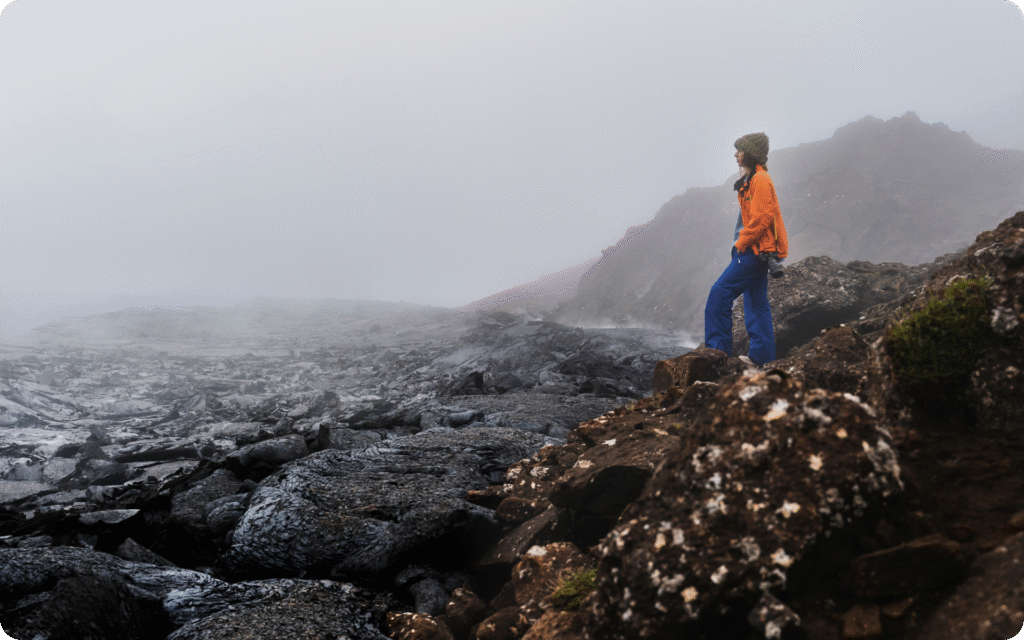
You could almost think of friluftsliv as the outdoors cousin of hygge, a term originating from Denmark that represents comfort, warmth, and the curating of a cozy indoor environment, especially in those cold months (8).
Curating a shared comfort, where friluftsliv is about simplicity and connection to the outdoors (9). Both share similar principles and values: being intentional, mindful, and present, and valuing connection and respect, whether indoors or outdoors.
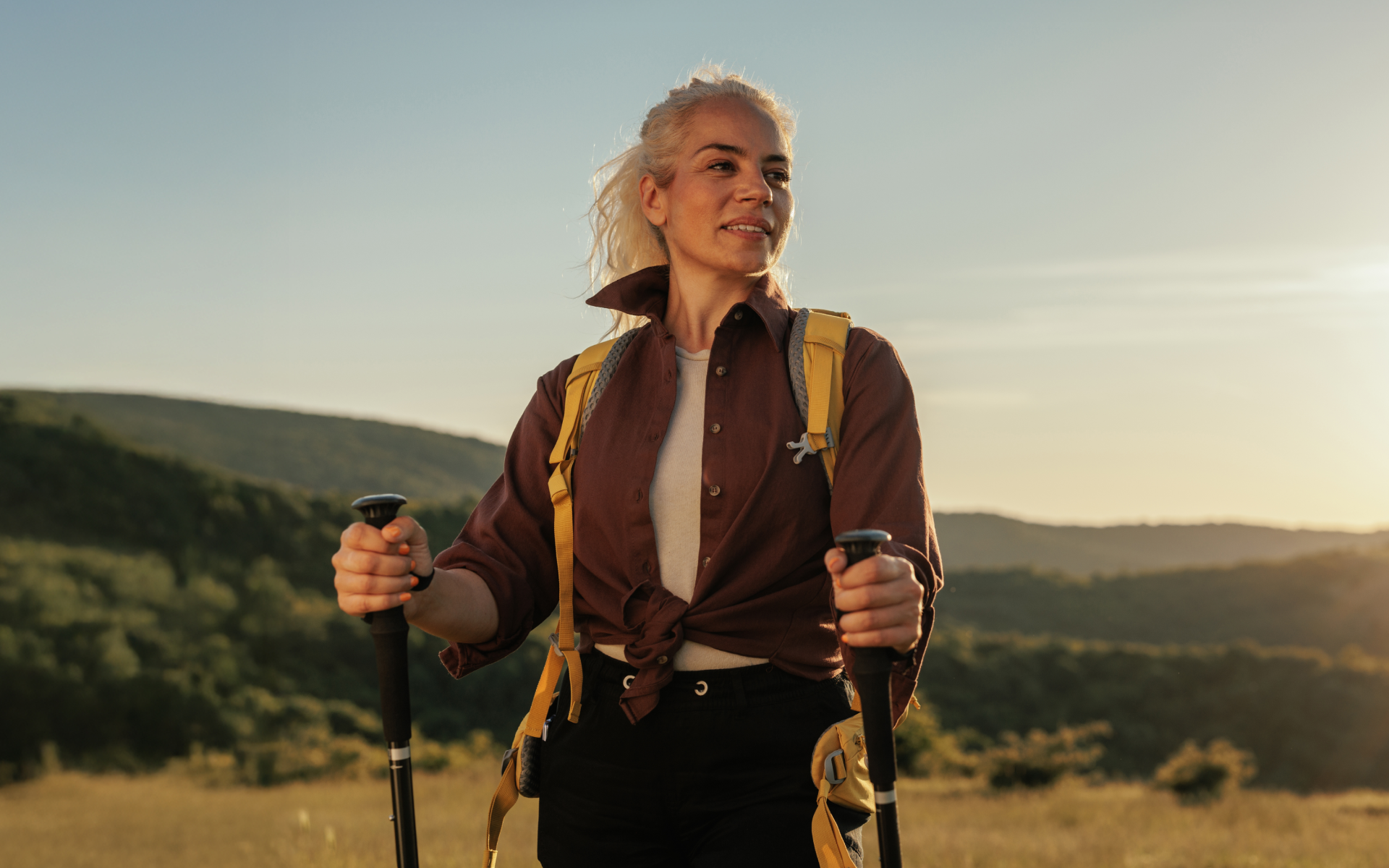
Friluftsliv focuses on simple ways to explore local nature areas and find joy in being outside, regardless of the weather or season. What sets friluftsliv apart from many other forms of “outdoor recreation” is that it tends to be non‑motorized, non‑competitive, and it doesn’t require tons of money or high‑end equipment (1).
Instead, it’s about using what’s nearby, being present, and letting nature do the heavy lifting. While it usually involves learning basic outdoor skills (10, 11), it doesn’t require being an expert or a hardcore adventurer–just someone with genuine curiosity and interest in the natural world.
More than a list of activities, friluftsliv is a culturally learned rhythm that revolves around a sense of oneness with nature, passed down from one generation to the next through direct experience (12).
Read more: Body Awareness Activities to Understand and Practice Mindful Connection with Your Body
Friluftsliv As A Cultural Tradition In Scandinavia
In Norway and across the Scandinavian countries, friluftsliv has deep historical and cultural roots. In Sweden, the tradition took shape in the late 1800s, as industrialization and urbanization accelerated and people sought a return to nature (1, 2, 12).
In Sweden, the idea of friluftsliv emerged as part of national identity: as their cities grew and modern life sped up, landscapes became places of escape, renewal, and being.
For the Scandinavian philosophy, the natural world, its forests, lakes, and mountains, were more than scenery; they were the core of life (3, 13).
Sweden actually has its own unique term, which could be viewed as an extension of friluftsliv: “Allemansrätten.”
Allemansrätten is actually a custom law providing everyone, locals and visitors alike, the right to access and roam freely in nature, even on private land (14).
It allows you to walk, hike, camp, kayak, or forage in the wild, as long as you do it responsibly.
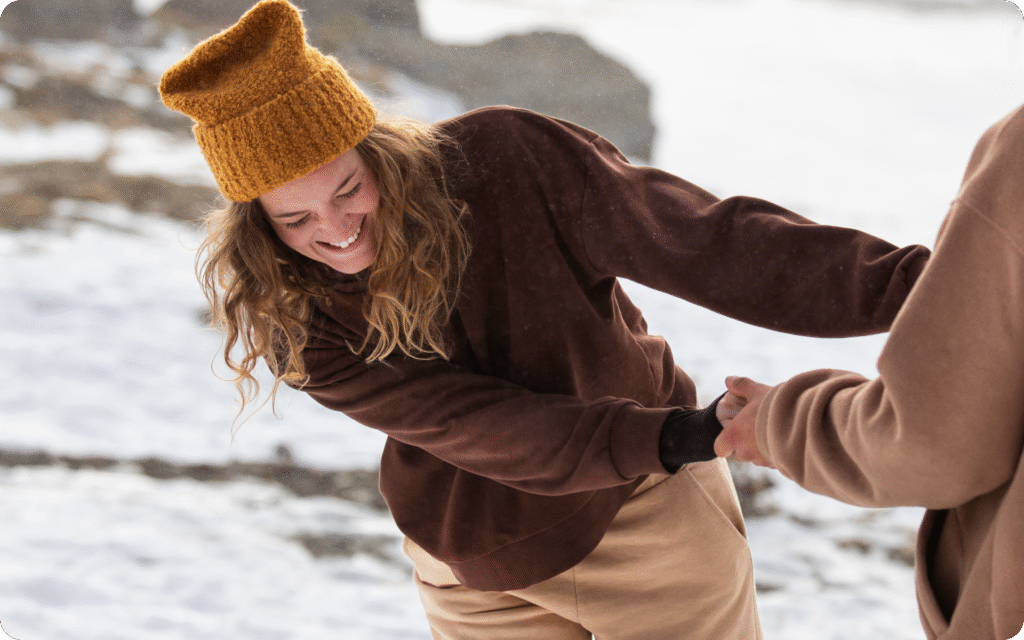
The rule is simple: don’t disturb, don’t destroy.
Respect wildlife, leave no trace, and give others space to enjoy it too. It’s more than just legal access–it’s a cultural commitment to keeping nature open and shared.
In Sweden, no one owns nature. It’s something everyone has a right to experience, protect, and pass on.
Norway also shared this concept. Of course, being next door neighbours, there are a lot of shared values and the right to roam; allemannsretten in Norwegian–allows people access to nature, even on private land, under certain conditions (15).
This legal framework embeds friluftsliv into national life (1).
The notion is simple: you don’t own nature, you belong to it–you can walk, sleep, hike, pick berries, as long as you remain respectful. In fact, one article notes nine out of ten Norwegians say they are interested in friluftsliv (14, 15).
The idea of friluftsliv has deep roots.
It goes back to early people living close to nature, gained strength during the 1800s Romantic movement, and continues to shape life today.
The word itself was first used in 1859 by Norwegian playwright Henrik Ibsen to describe a simple, free life in the open air (2). Over time, it’s taken on new forms–sometimes becoming more about adventure and gear. But at its heart, friluftsliv is still about something quiet and real: being outside, slowing down, and feeling connected to nature (2).
BetterMe: Health Coaching app helps you achieve your body goals with ease and efficiency by helping to choose proper meal plans and effective workouts. Start using our app and you will see good results in a short time.
How Does Friluftsliv Differ From Hiking?
Friluftsliv can, of course, include hiking; however, hiking is a particular activity.
The friluftsliv philosophy encompasses all activities and time spent outside in nature, from:
- Hiking
- Biking
- Meditating
- Walking
- Swimming
- Kayaking
- Camping
- Running
- Picking berries
- Foraging mushrooms
- And so on.
Hiking often has a goal–you’re walking towards the mountain top or a viewpoint, or a specific route. Friluftsliv, in contrast, emphasizes being with nature rather than above or against it. While hiking can certainly encapsulate this perspective as well, frilufstliv may take a slower pace and truly emphasizes immersing yourself in nature, letting nature and all of the elements shape your experience.
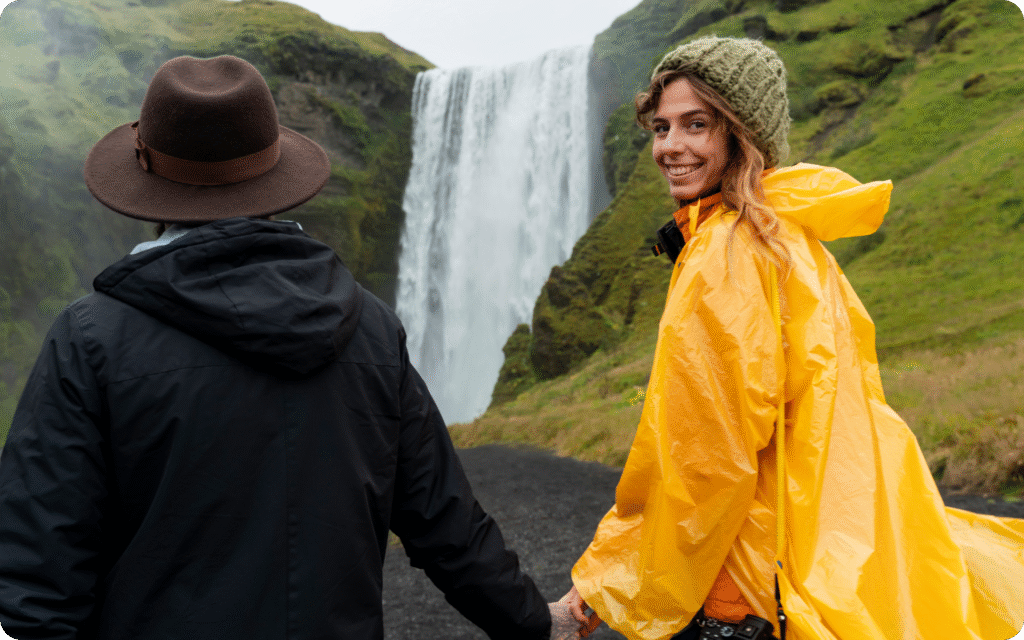
Friluftsliv can absolutely include hiking, but it’s not limited to it.
Hiking is typically a specific activity, often with a goal: reaching a summit, a viewpoint, or completing a set route. Friluftsliv is broader. It’s not just about what you do in nature–it’s about how you relate to it.
You could be walking, swimming, biking, kayaking, picking berries, skiing, or just sitting by a lake. Friluftsliv includes all of it.
It’s less about intensity or achievement and more about being present in the environment, letting nature shape the experience.
The philosophy doesn’t require dramatic landscapes or expensive gear. It’s about connection over competition. The difference lies in purpose over performance, allowing presence, a return to self, and a more profound sense of balance.
That said, if you’re heading into remote areas or changing conditions, having the proper Friluftsliv clothing, gear, and supplies–like water and layers–is still essential.
How Does Friluftsliv Reduce Stress?
The world today can be incredibly busy, fast-paced, demanding, overstimulating, and overwhelming. Friluftsliv is a break from the daily chaos.
It slows the rhythm and lets nature recalibrate the nervous system.
Spending time in nature has been shown to improve mood, reduce anxiety, and enhance focus (16, 17). Nature’s patterns, known as fractals, align with the brain’s default mode, which helps quiet mental chatter (18).
Friluftsliv isn’t just about being in nature; it can be a shift from noise to quiet.
An essential activity for maintaining balance and equilibrium in your nervous system. “Sitting quietly in the woods,” as one source puts it, “can be as good for our health as running up a mountain top” (1). Moreover, nature gently dissolves the ego. You stop thinking about your problems, your to‑do lists, and your inbox. You think about birdsong, leaves, and cool air. And that shift can be deeply restorative.
Read more: Gentle Somatic Yoga Sequence for Beginners: Move, Breathe, Release
How Do I Practice Friluftsliv Daily?
You don’t need a cabin in the woods or fancy gear.
You don’t need hours of free time. You just need to step outside–and actually be there.
Start with what feels good.
There’s no point forcing yourself into something that doesn’t stick. Maybe that means walking through a nearby park, sitting in your backyard, and meeting a friend for a stroll in the forest. The location doesn’t matter as much as your presence and awareness of your surroundings.
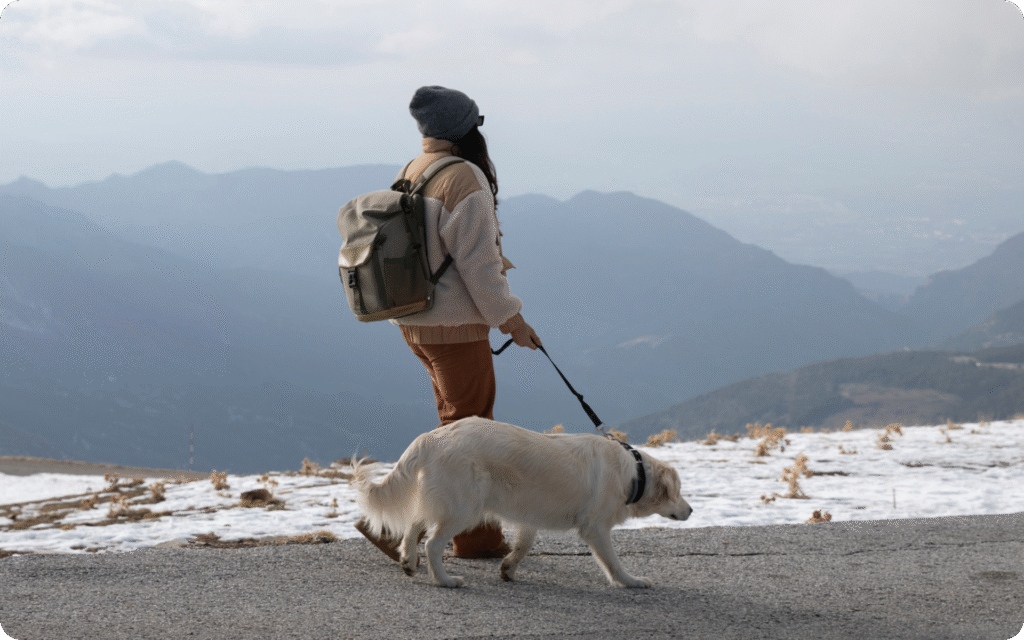
Here’s how to make this philosophy part of your everyday:
- Walk to your local park or trail–no agenda, just mindful movement.
- Go out in all weather. Wind, rain, cold–it’s part of it (as long as you dress appropriately for any weather changes).
- Don’t just move. Sit. Watch. Listen. Let nature do the talking.
- Bring a friend. Or don’t. Both count.
- Look up. Notice the trees. Hear the birds. Feel the air shift.
- Make it a habit, not a treat.
- Keep it low-effort: dress in layers, bring water, maybe a snack.
Friluftsliv isn’t about doing more. It’s about slowing down, being intentional, mindful, observant, and present. Mindfulness activities for adults, such as meditation and breathwork in nature, are helpful.
How Much Time Should You Spend In Nature?
You don’t need to move off-grid to feel the benefits of nature.
Research shows that just 2 hours a week outdoors–broken up however you like–can be enough to boost your mental and physical well-being.
Even 20 minutes in a natural space can lower stress and calm your nervous system.
The key isn’t how far you go–it’s that you go, and you do it regularly (16,17).
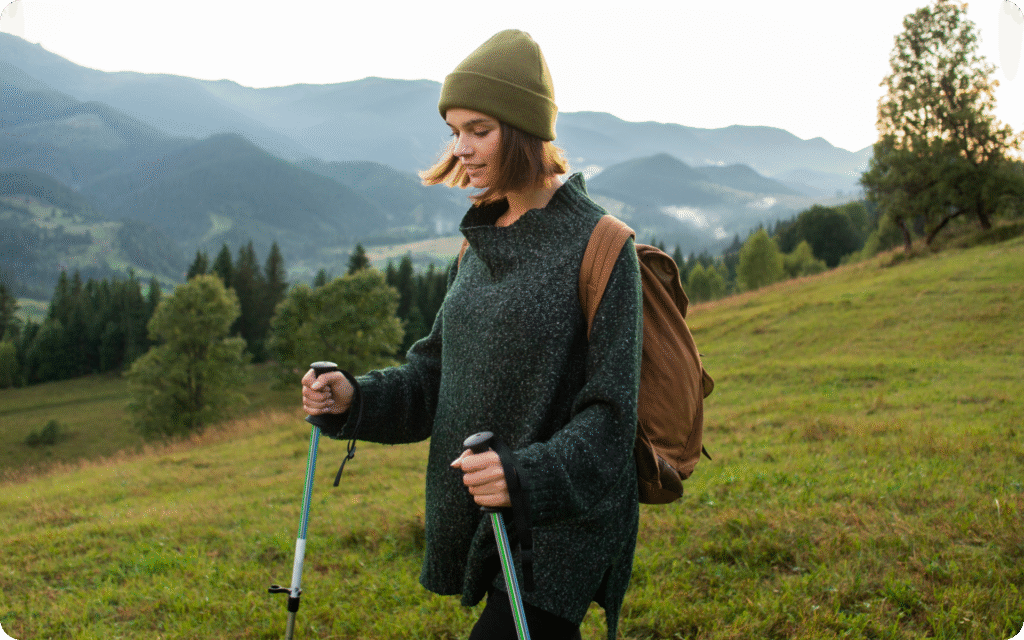
2 hours a week is the sweet spot:
- People who spent at least 120 minutes per week in nature were significantly more likely to report good health and high well-being than those who spent less time outside.
- This timeframe in nature held across age groups, income levels, and health conditions (16).
Even 20 minutes can help:
- A separate study found that just 20–30 minutes in a natural setting can lower cortisol levels, reduce stress, and improve mood (17).
A Norwegian survey found that even short periods outdoors significantly reduce stress and increase well-being. The key is regularity over intensity.
Aim for 2–3 outdoor sessions a week, each 30–60 minutes. But even 15 minutes a day works wonders (18).
Reasons why BetterMe is a safe bet: a wide range of calorie-blasting workouts, finger-licking recipes, 24/7 support, challenges that’ll keep you on your best game, and that just scratches the surface! Start using our app and watch the magic happen.
What Should You Wear For Friluftsliv Philosophy?
What you wear depends on the season, but the rule stays the same: keep it functional and comfortable. Your outfits must be supportive and suitable for the environment you’re entering.
Additionally, if it’s just to go for a walk in a local park, then you can get by with what feels best for you. Try the following clothing ideas for hiking, backpacking, outdoor exercises, and outside workouts in nature.
Spring
- Base layer: moisture-wicking shirt
- Light mid-layer: fleece or wool
- Waterproof outer shell (spring = rain)
- Sturdy walking shoes or boots
- A hat or a headband for the wind.
- Backpack with water, a snack, and an extra layer.
Summer
- Breathable base layer: cotton or quick-dry fabric
- Lightweight pants or shorts
- Sun hat or cap
- Light rain jacket (just in case)
- Trail shoes or lightweight hikers
- Small pack with water, sunscreen, and bug spray
Autumn
- Layer up: base, warm mid-layer, windproof shell
- Waterproof boots for wet ground
- Beanie or headband
- Gloves (weather can shift fast)
- Backpack with a warm drink, a snack, and spare socks
Winter
- Thermal base layer (wool or synthetic)
- Insulating mid-layer (fleece or down)
- Windproof and waterproof outer shell
- Insulated, grippy boots
- Warm hat, gloves, and wool socks
- Pack with a hot drink, a snack, and backup gloves
No matter the season, always:
- Dress in layers so you can adjust as you move
- Pack light but smart
- Focus on comfort and weather protection
Friluftsliv style isn’t about gear, it’s about being out there, connected and comfortable (2, 3).
Whether it’s cold or warm, the goal stays the same: stay dry, stay warm, and stay present.
Your gear should support the experience – not become the focus (2, 3).
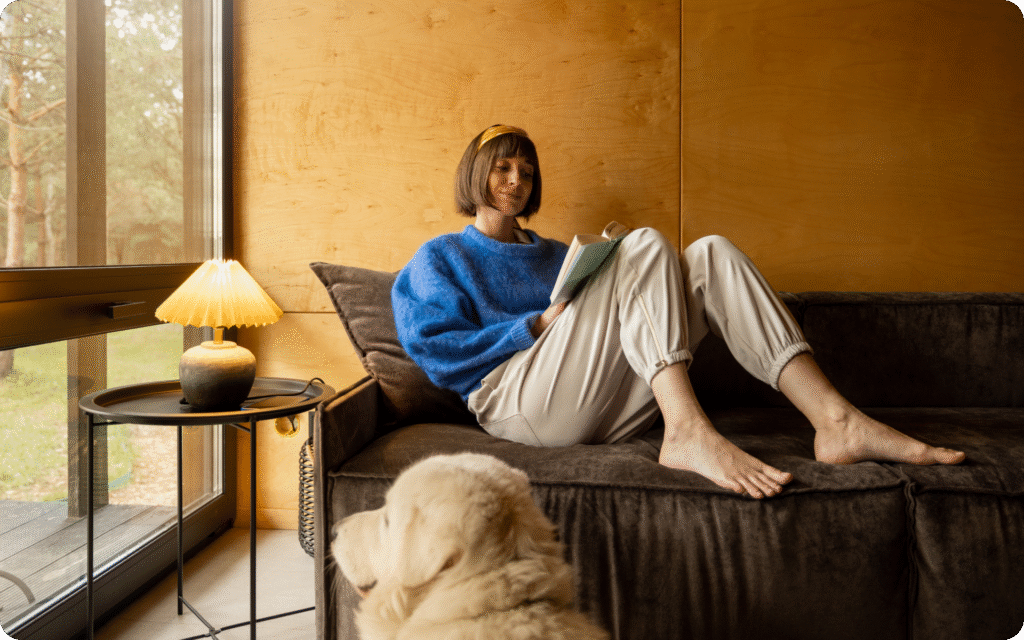
Spending time in nature supports both mental and physical health. It can reduce stress hormones, boost your immune system, improve sleep, and help restore focus. Even short, regular outdoor time can create measurable benefits to your overall well-being. It depends on your schedule, but aim for regular outings–ideally 3–4 times a week. Even 10 minutes outdoors can reduce stress, clear your head, and improve focus. What matters most is consistency, not intensity. Because your body and mind are wired for it, nature activates the parasympathetic nervous system, calming stress, lowering your heart rate, and resetting your senses. Natural sights, sounds, and rhythms align with how humans were built to function. Staying indoors too often can increase anxiety, lower mood, disrupt sleep, reduce vitamin D, and weaken your focus. Over time, it raises your risk of depression. We need nature – not as a luxury, but as a basic biological need.Frequently Asked Questions
Is living in nature healthier?
How often should you walk in nature?
Why do I feel so good in nature?
What happens if you stay indoors all the time?
The Bottom Line
Friluftsliv is not about gear, Instagram, or pushing limits. It’s about noticing the air, letting your breath match the breeze, and getting back in touch with nature. It’s a gentle rebellion against the noise of modern life–a way to reconnect, slow down, ground yourself, and breathe fresh air. Depending on your location, time available, resources, and preferences, you can adapt this to your own life and ideals.
You don’t need a forest or a hiking trail. A park bench, a patch of sky, a walk in the rain–that’s enough. The goal isn’t to escape life, but to return to it in a more grounded way.
Step outside. Watch the clouds. Stroll. Listen deeply. Let nature remind you who you are underneath it all. The air is open. The world is wide. And so are you.
DISCLAIMER:
This article is intended for general informational purposes only and does not serve to address individual circumstances. It is not a substitute for professional advice or help and should not be relied on for making any kind of decision-making. Any action taken as a direct or indirect result of the information in this article is entirely at your own risk and is your sole responsibility.
BetterMe, its content staff, and its medical advisors accept no responsibility for inaccuracies, errors, misstatements, inconsistencies, or omissions and specifically disclaim any liability, loss or risk, personal, professional or otherwise, which may be incurred as a consequence, directly or indirectly, of the use and/or application of any content.
You should always seek the advice of your physician or other qualified health provider with any questions you may have regarding a medical condition or your specific situation. Never disregard professional medical advice or delay seeking it because of BetterMe content. If you suspect or think you may have a medical emergency, call your doctor.
SOURCES:
- Visit Norway. Friluftsliv: The Norwegian love for the outdoors (2025,visitnorway.com)
- The Scandinavian Philosophy of Outdoor Life (2022, uia.no)
- Becoming-place: a rhizomatic exploration of friluftsliv in the Swedish school curriculum (2019, springer.com)
- How the Concept of Norwegian “Friluftsliv” Can Save Your Life. (2020, afroginthefjord.com
- Friluftsliv: The Scandinavian Philosophy of Outdoor Life (researchgate.net)
- Changes in friluftsliv (outdoor recreation) activities among Norwegian adolescents during the SARS-CoV-2 pandemic (2023,nih.gov)
- Creating a stronger family culture through “friluftsliv” (2023, childrenandnature.org)
- What do we mean by “hygge”? (nd., denmark.dk)
- Becoming-place: a rhizomatic exploration of friluftsliv in the Swedish school curriculum (2019. springer.com)
- What should a physical education teacher know? An analysis of learning outcomes for future physical education teachers in Sweden (2013, tandfonline.com)
- Outdoor learning: not new, just newly important (2018. springer.com)
- En av Sveriges största folkrörelser (svensktfriluftsliv.se)
- Nordic in nature: friluftsliv and environmental connectedness (2012, researchgate.net)
- The Right of Public access (nd,. vastsverige.com)
- Allemannsretten – the freedom to roam in Norway (nd., tromsooutdoor.no/_
- Spending at least 120 minutes a week in nature is associated with good health and wellbeing. (2019, nature.org)
- Urban nature experiences reduce stress in daily life, as measured by salivary biomarkers. Frontiers in Psychology (2019, frontiers.org)
- Nordic Slow Adventure: Explorations in Time and Nature (2015, researchgate.net)

 Reviewed by
 Reviewed by