Strong forearms contribute to grip performance in virtually every upper-body exercise — from deadlifts to pull-ups. Despite this, they’re one of the most commonly undertrained muscle groups. This guide covers the key exercises for forearm development, what equipment each one requires, and answers to common training questions.
Why Are Forearms Challenging to Develop?
Forearms contain more than 20 individual muscles organized into functional groups: flexors, extensors, pronators, and supinators (1). The brachioradialis — one of the most visible forearm muscles — originates on the upper arm and responds best to specific hand positions and loading patterns that many standard exercises don’t target directly (2).
Forearm muscles also have a relatively high proportion of slow-twitch fibers (3). These fibers are built for endurance and fatigue resistance, which means they tend to require higher training volumes and more frequent stimulation to develop compared to fast-twitch dominant muscles (4).
Your forearms also work during almost every daily activity — gripping, typing, carrying — which gives them a high baseline of endurance but can also make them resistant to the stress levels needed for meaningful growth. The most common reason forearms remain underdeveloped is simply insufficient training volume, not genetics alone.
What Forearm Exercises Actually Work?
Effective forearm training targets multiple movement patterns: wrist flexion, wrist extension, and grip-based loading. The exercises below cover all three.
1. Barbell Wrist Curl
Equipment: Barbell
Muscles targeted: Forearm flexors (wrist and finger flexors)
This is a foundational isolation exercise for the forearm flexors. The barbell allows you to load both arms simultaneously and progress weight incrementally.
How to perform:
- Sit on a bench with feet flat on the floor.
- Rest your forearms on your thighs, palms facing up, with wrists just past your knees.
- Hold the barbell with an underhand grip, hands shoulder-width apart.
- Allow the barbell to roll down to your fingertips, wrists fully extended.
- Curl the weight back up by flexing your wrists, squeezing at the top.
- Lower slowly back to the start.
- Do 12–15 reps.
Focus on the full range of motion — letting the weight roll into the fingertips before curling back up. Use moderate weight and prioritize control over load.
2. Barbell Reverse Wrist Curl
Equipment: Barbell
Muscles targeted: Forearm extensors
The extensors are typically weaker than the flexors and are often neglected in forearm training. Training them alongside flexion exercises supports balanced development and wrist stability.
How to perform:
- Sit on a bench with forearms resting on your thighs, palms facing down.
- Position your wrists just beyond your knees.
- Hold the barbell with an overhand grip.
- Lower the weight by extending your wrists downward.
- Curl the weight up by flexing your wrists toward your body.
- Squeeze at the top, then lower slowly.
- Do 12–15 reps.
Start lighter than regular wrist curls — the extensors fatigue quickly and handle less load than the flexors.
3. Dumbbell Wrist Curl
Equipment: Dumbbell
Muscles targeted: Forearm flexors (unilateral)
The single-arm version allows you to focus on each forearm independently and identify or address strength imbalances between sides.
How to perform:
- Straddle a bench and hold a dumbbell in one hand with an underhand grip.
- Rest your forearm on the bench so your wrist extends beyond the edge.
- Allow the dumbbell to roll into your fingertips with your wrist extended.
- Curl the weight up by flexing your wrist.
- Hold the contraction briefly, then lower slowly.
- Complete all reps on one side before switching.
- Do 12–15 reps per arm.
4. Dumbbell Reverse Wrist Curl
Equipment: Dumbbell
Muscles targeted: Forearm extensors (unilateral)
The unilateral reverse curl allows focused extensor work and is useful for correcting side-to-side imbalances.
How to perform:
- Straddle a bench, holding a dumbbell with an overhand grip.
- Rest your forearm on the bench at roughly 90 degrees.
- Lower the dumbbell as far as possible with your wrist extended.
- Reverse the motion by flexing your wrist upward.
- Squeeze the extensor muscles at the top.
- Lower slowly and repeat before switching arms.
- Do 12–15 reps per arm.
Use lighter weight than standard wrist curls. The extensors fatigue quickly and require patience to develop.
Read more: Workouts for Men Over 50 to Build Muscle: A Beginner’s Guide
5. Reverse Barbell Curl
Equipment: Barbell
Muscles targeted: Brachioradialis, forearm extensors, biceps
This compound movement targets the brachioradialis — one of the most prominent forearm muscles — while also working the biceps and upper arm. It allows heavier loading than isolation wrist movements and builds functional grip strength that carries over to other exercises.
How to perform:
- Stand upright holding a barbell with an overhand grip, hands shoulder-width apart, palms facing down.
- Keep your elbows tucked close to your sides throughout.
- Curl the barbell toward your upper chest, leading with your wrists.
- Squeeze your forearms at the top.
- Lower the weight slowly and with control.
- Do 8–12 reps.
6. Farmer’s Carry
Equipment: Dumbbells or kettlebells
Muscles targeted: Forearm flexors, grip muscles, traps, core
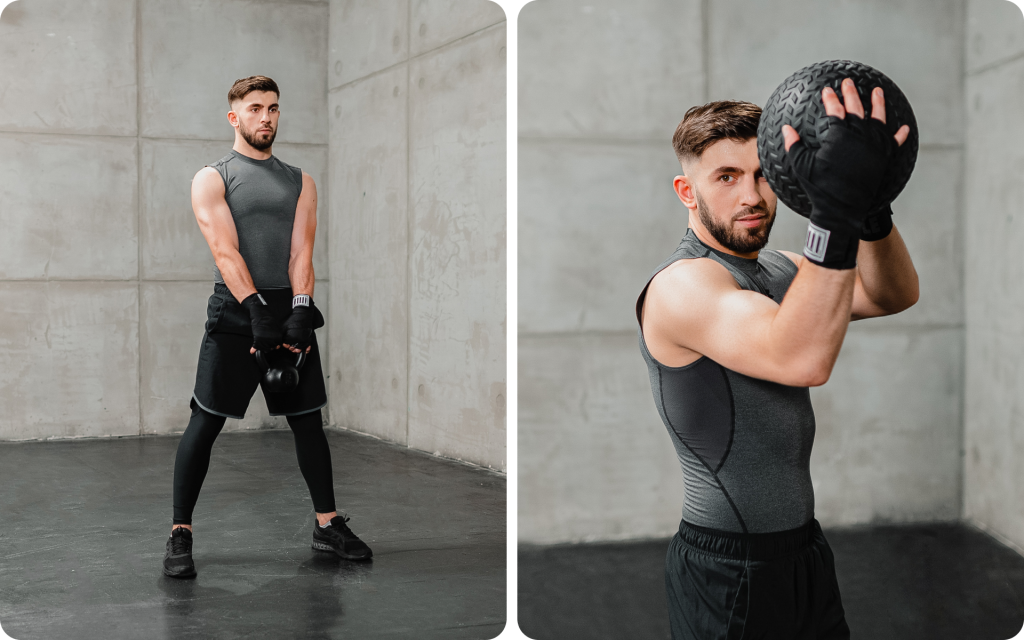
The farmer’s carry builds grip endurance and loads the entire forearm complex under sustained tension. It’s one of the most functional forearm exercises available and requires no specialized setup.
How to perform:
- Pick up a dumbbell or kettlebell in each hand.
- Stand tall with your shoulders back, core engaged, arms straight at your sides.
- Walk forward in a controlled, even stride — don’t let the weights swing.
- Keep your grip firm throughout and breathe steadily.
- Walk 20–30 meters, set the weights down, rest, and repeat for 3 sets.
Increase the load gradually as your grip endurance improves. This exercise also develops the stabilizing muscles of the wrist and hand that isolation exercises alone don’t reach.
Do You Need Equipment to Train Forearms?
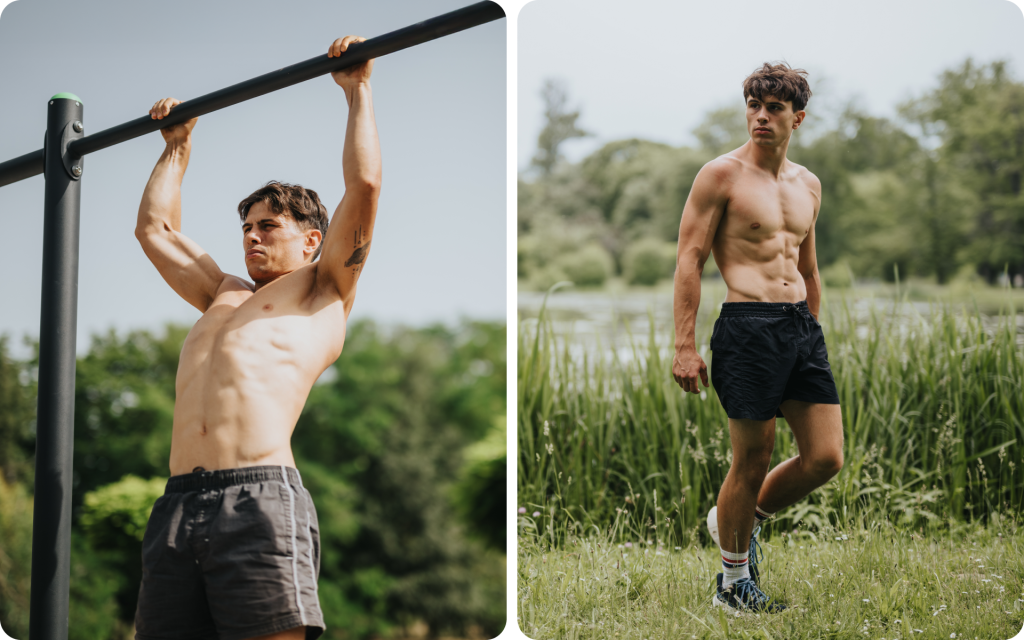
No — bodyweight options exist and can be effective, particularly for beginners. Dead hangs from a pull-up bar, towel pull-ups, and push-up holds all place meaningful demand on the forearm muscles and grip without any equipment.
That said, weighted exercises allow for progressive overload — the gradual increase in training demand that drives long-term strength adaptation (5). For most people, some form of external load (dumbbells, barbells, or resistance bands) will produce more consistent forearm development over time than bodyweight work alone.
What Equipment Is Most Useful for Forearm Training?
Each tool emphasizes different aspects of forearm development:
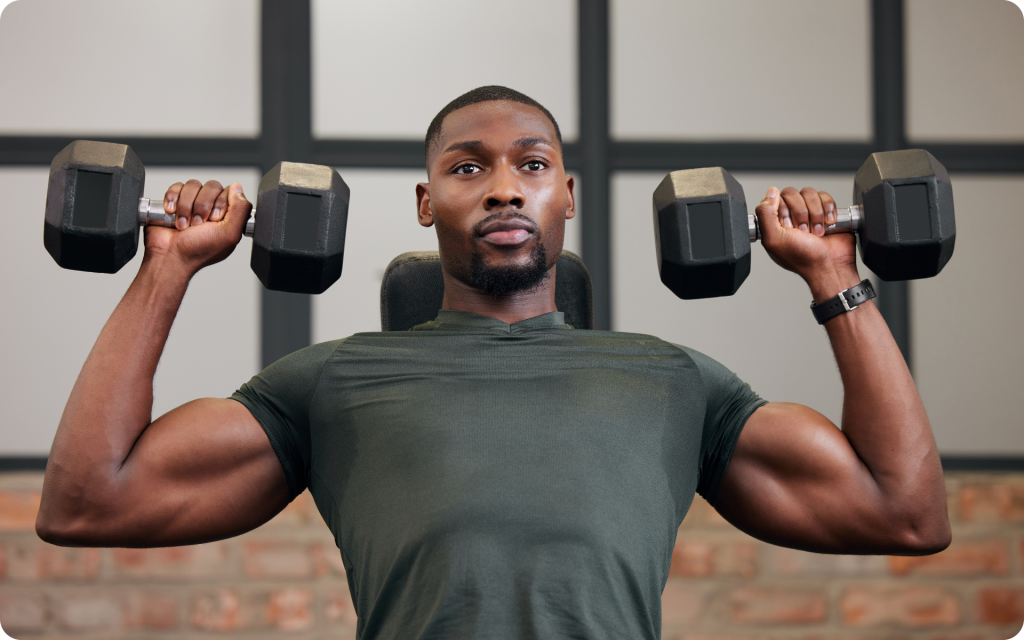
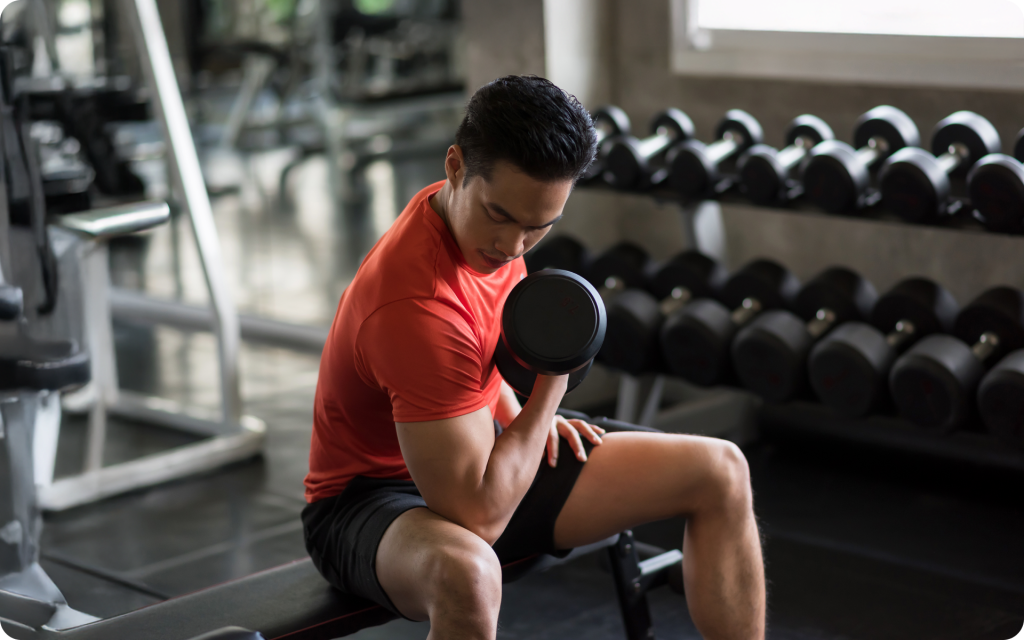
Dumbbells are the most versatile starting point. They allow unilateral training, are easy to progress in small increments, and work for wrist curls, reverse curls, and carries.
Barbells allow greater loading for bilateral exercises and are well-suited to wrist curls, reverse wrist curls, and reverse curls.
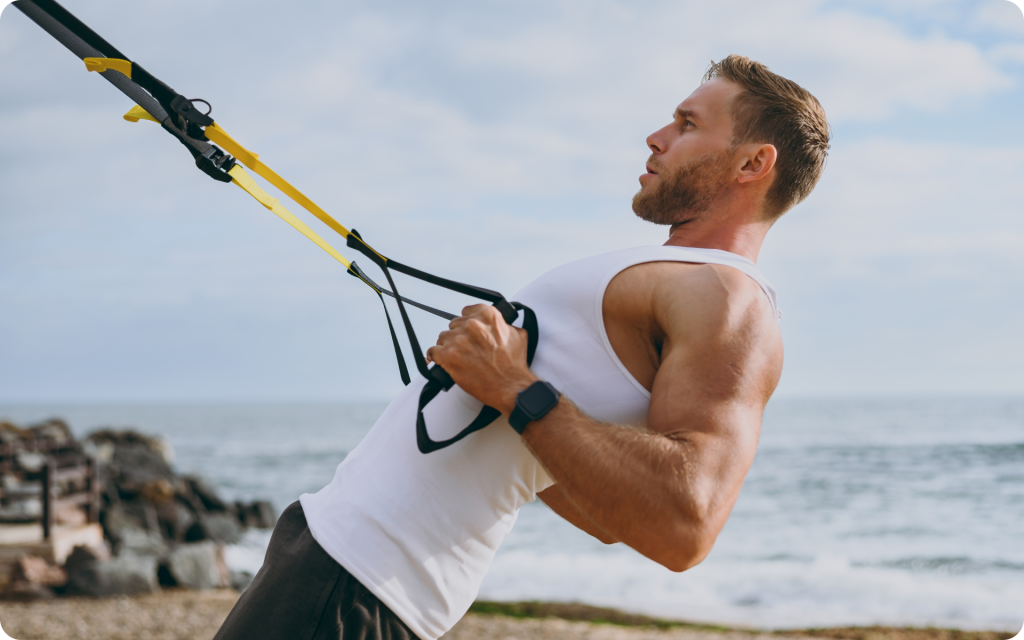
Resistance bands are particularly useful for wrist extension and flexion exercises, and add variable resistance that increases as the band stretches.
Hand grippers target the grip muscles specifically and can be used as a supplement to compound and isolation work. They provide a direct training stimulus for the muscles that control finger flexion.
Wrist rollers isolate the forearm flexors and extensors through repeated wrist flexion and extension under load. They’re a time-efficient way to add forearm volume without additional floor space.
Browse dumbbells, body bars, and grip training equipment at BetterMe Store.
How Should You Program Forearm Training?
A few principles apply to forearm training specifically:
Higher rep ranges work well. Because forearm muscles have a high proportion of slow-twitch fibers (3), they respond well to sets of 12–20 reps rather than the lower rep ranges used for larger muscle groups.
Frequency matters. Forearms can generally handle more frequent training than larger muscle groups. Two to three dedicated sessions per week, or adding forearm work at the end of upper-body days, is a practical approach.
Progressive overload applies. As with any muscle group, gradually increasing the weight, reps, or volume over time is what drives continued adaptation (5).
Don’t rely entirely on lifting straps. Using straps on every pulling exercise reduces the grip demand on your forearms. Using them selectively — for max-effort sets where grip is the limiting factor — preserves the training stimulus.
For more comprehensive forearm workouts that incorporate these exercises into complete training programs, consider varying your grip positions and rep ranges to maximize development.
Read more: Killer Gym Back and Bicep Workout for a Strong Upper Body
Alternative machine options include:
- Seated calf raise machines can be adapted for heavy wrist curls
- Preacher curl benches provide stable positioning for wrist curl variations
- Lat pulldown machines with rope attachments enable multiple forearm exercises
Machine limitations to consider:
Most gym machines are designed for larger muscle groups, which makes dedicated forearm machines rare. This scarcity means you’ll often need to adapt existing equipment for forearm training.
Fixed movement patterns in machines may not accommodate individual limb lengths and joint mechanics as effectively as free weights or cables (15).
Forearm equipment grip considerations become essential when selecting machines. Look for equipment that allows neutral wrist positioning and accommodates different hand sizes comfortably.
The cable machine’s versatility makes it the clear winner for gym-based forearm training, and it provides the widest range of exercise options with optimal resistance characteristics.
Yes, particularly if grip strength is a limiting factor in your other training. Stronger forearms contribute to performance in rows, deadlifts, pull-ups, and any loaded carry. Direct forearm work also supports wrist stability, which matters for pressing movements. Forearms can tolerate higher training frequency than most muscle groups due to their fiber composition and daily use. Short, moderate-intensity sessions can often be done daily or near-daily without issue. However, if you include high-volume or heavy wrist curl work, allowing 48 hours before repeating the same exercises helps manage cumulative fatigue (6). Hand grippers primarily develop grip strength by targeting the finger flexors. They contribute to forearm development but work a narrower range of muscles than full-range wrist curls and reverse curls. They’re best used as a supplement to compound and isolation exercises rather than a standalone approach. Push-ups engage the forearms as stabilizers during the movement, but they don’t provide the wrist flexion and extension range of motion that drives direct forearm development. They’re a useful general upper-body exercise, but not a primary forearm training tool.Frequently Asked Questions
Is it worth training forearms directly?
Can I train my forearms every day?
Do hand grippers build forearm size?
Do push-ups work forearms?
The Bottom Line
Forearm development requires targeting multiple movement patterns — wrist flexion, extension, and grip-based loading — with enough volume and frequency to stimulate these endurance-oriented muscles. The six exercises above cover the full forearm complex using basic equipment. Start with wrist curls and reverse curls to build the flexor-extensor balance, add reverse barbell curls for the brachioradialis, and include farmer’s carries for functional grip endurance. Progress the load consistently and the results will follow.
DISCLAIMER:
This article is intended for general informational purposes only and does not serve to address individual circumstances. It is not a substitute for professional advice or help and should not be relied on for making any kind of decision-making. Any action taken as a direct or indirect result of the information in this article is entirely at your own risk and is your sole responsibility.
BetterMe, its content staff, and its medical advisors accept no responsibility for inaccuracies, errors, misstatements, inconsistencies, or omissions and specifically disclaim any liability, loss or risk, personal, professional or otherwise, which may be incurred as a consequence, directly or indirectly, of the use and/or application of any content.
You should always seek the advice of your physician or other qualified health provider with any questions you may have regarding a medical condition or your specific situation. Never disregard professional medical advice or delay seeking it because of BetterMe content. If you suspect or think you may have a medical emergency, call your doctor.
SOURCES:
- Anatomy, Shoulder and Upper Limb, Forearm Muscles (n.d., ncbi.nlm.nih.gov)
- Anatomy, Shoulder and Upper Limb, Brachioradialis Muscle (n.d., ncbi.nlm.nih.gov)
- Association of Muscle Fiber Composition with Health and Exercise-Related Traits in Athletes and Untrained Subjects (2021, pmc.ncbi.nlm.nih.gov)
- Muscle Fiber Type Transitions with Exercise Training: Shifting Perspectives (2021, pmc.ncbi.nlm.nih.gov)
- Resistance Training Load Effects on Muscle Hypertrophy and Strength Gain: Systematic Review and Network Meta-Analysis (2021, pubmed.ncbi.nlm.nih.gov)
- Individual Differences in the Recovery of Muscle Damage After Exercise (2022, pmc.ncbi.nlm.nih.gov)
 Reviewed by
 Reviewed by