
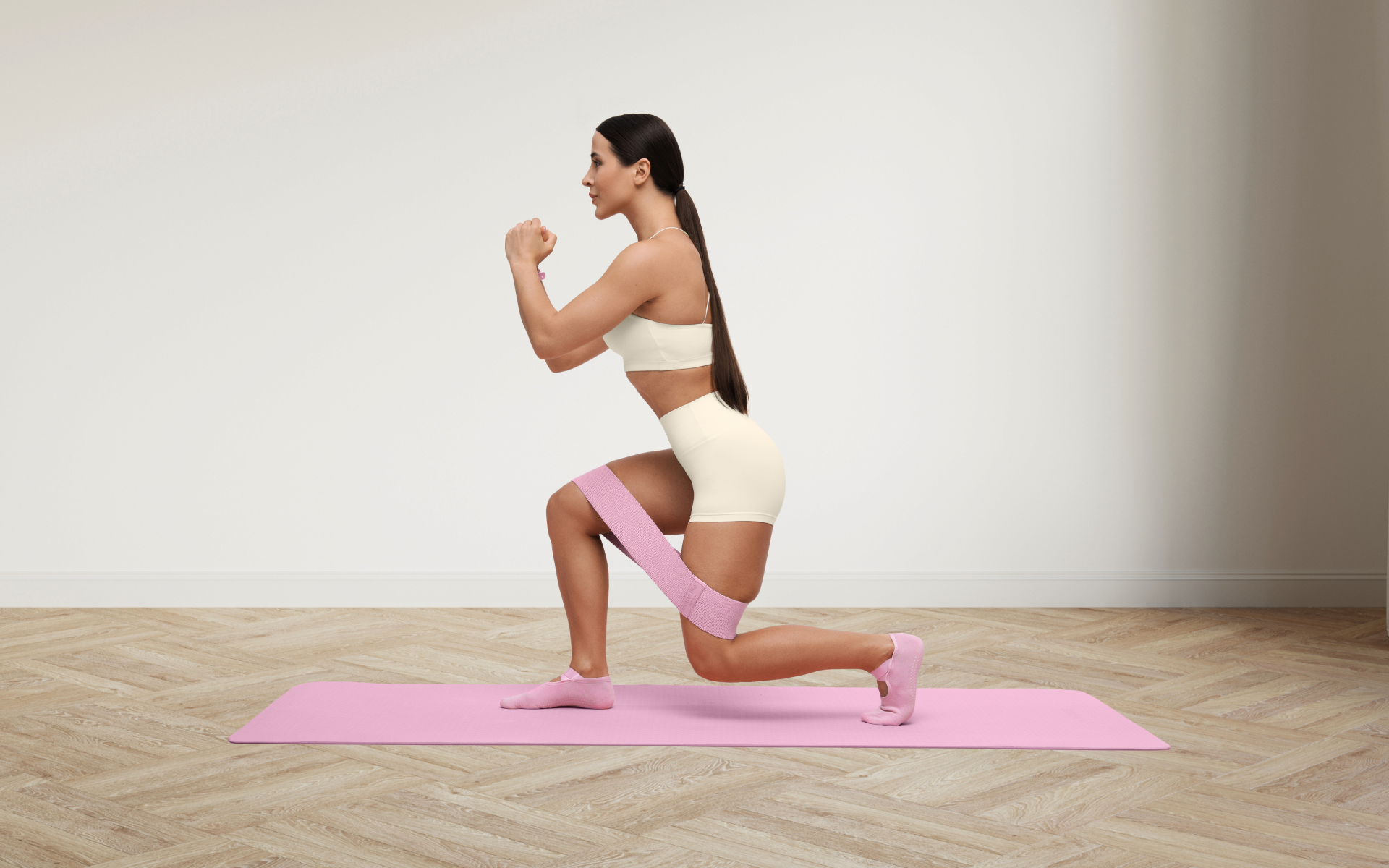
Circuit training stands out as one of the most effective ways to boost strength, endurance, and cardiovascular health within a single workout – right from your own home. Unlike traditional routines that separate cardio and resistance, circuit training weaves both into one time-efficient format.
And while you’ve probably seen the benefits of this training style repeated ad nauseam, you don’t see a lot of people explaining how to structure them effectively, particularly for those who train at home. What does an effective workout look like when you have limited time and equipment?
Here’s what you need to know for an effective circuit training session at home.
What Is Circuit Training?
Circuit training is a style of workout where you cycle through several exercises that target different muscle groups with minimal rest between them. Think of it as a series of fitness “stations” you visit one after another. After completing one full round, or “circuit”, you take a brief rest before starting again (1).
The core idea is to keep your heart rate elevated while working your entire body. This method combines the benefits of strength training and cardiovascular exercise into a single, highly efficient session (1). A well-designed circuit can improve multiple health markers simultaneously:
- Muscular strength
- Muscular endurance
- Cardiovascular
- Heart health
A typical circuit follows a similar format, including:
- 6 to 12 exercises
- Each exercise/station is used for a set number of repetitions (e.g. 10-15 reps) or a specific duration (e.g. 30-60 seconds)
- A short transition time (usually 15-30 seconds) between exercises (1)
Can You Do Circuit Training at Home?
Yes, you absolutely can. Circuit training is one of the most adaptable workout styles, which makes it perfect for a home environment. You don’t need a gym full of fancy machines to get an effective workout.
Circuit training at home without equipment can be done using only your body weight. There are several highly effective exercises that require no gear, such as:
- Push-ups
- Squats
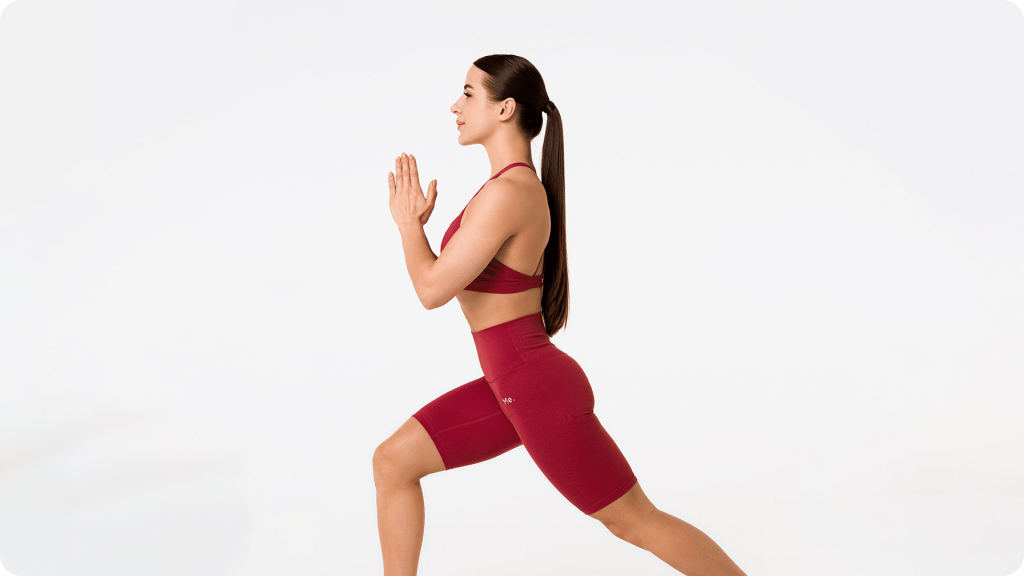
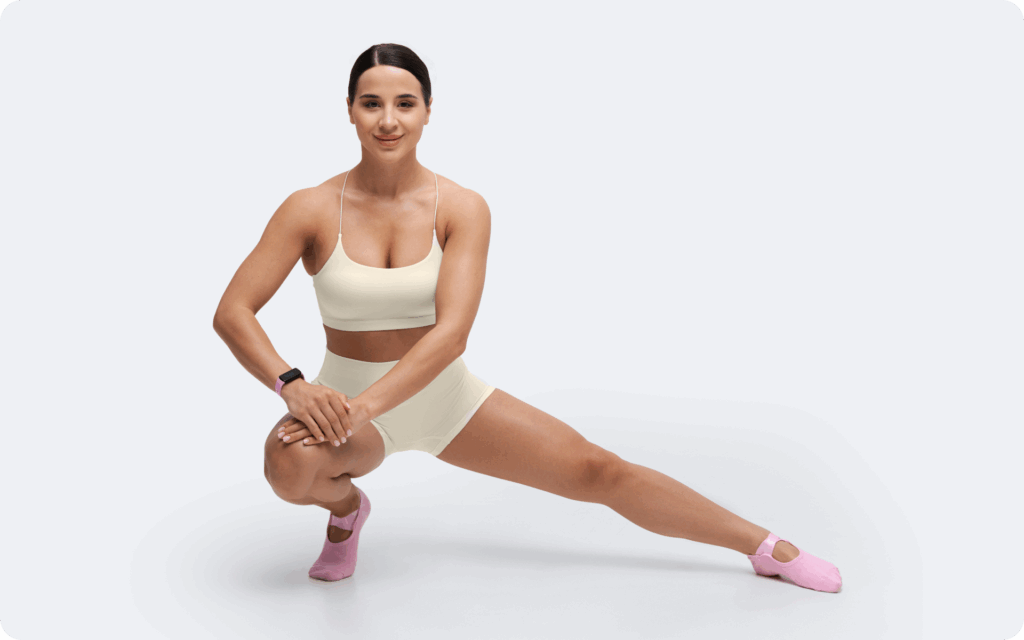
- Lunges
- Mountain climbers
- Burpees
- Planks
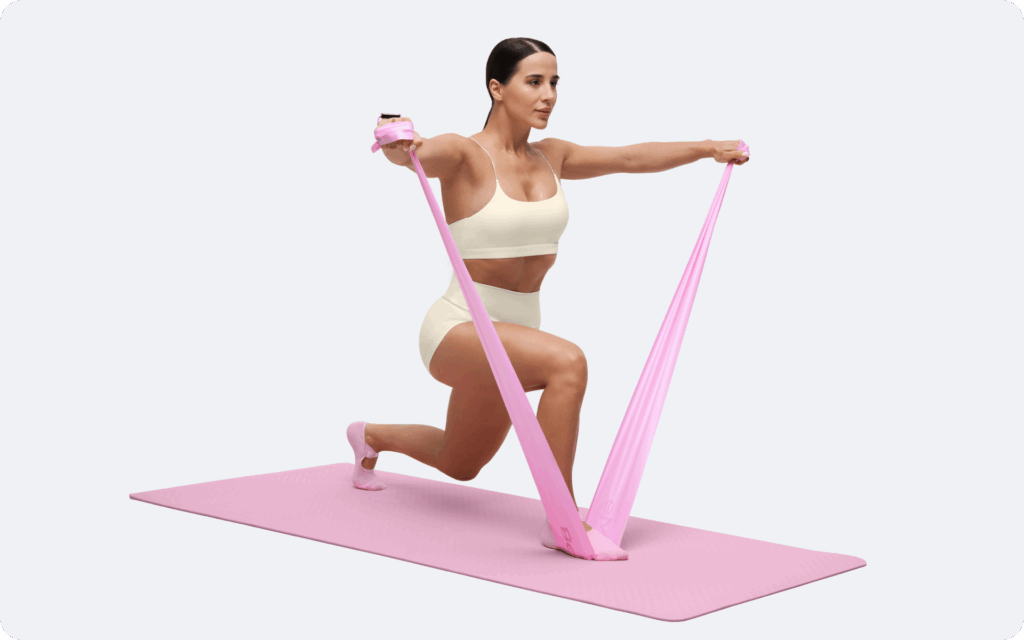
For those who are looking to increase the challenge, you can add some weights to your circuit training at home. A pair of dumbbells or resistance bands can unlock a huge variety of exercises.
The beauty of circuit training at home is its flexibility. Whether you have a full garage gym or just a small corner of your living room, you can create a powerful full-body circuit workout.
How Long Should a Beginner Do Circuit Training at Home?
For a beginner, the focus should be on consistency and mastering proper form, not on workout duration. A good starting point is a 20-30 minute session. This can be performed 2-3 times per week on non-consecutive days to allow for adequate recovery (2).
Here’s a more precise breakdown:
- Warm-up: 5 minutes of light cardio (such as jogging in place) and dynamic stretches (such as arm circles and leg swings).
- Circuit: 10-15 minutes. This would typically involve completing 2-3 rounds of a 5-8 exercise circuit.
- Cool-down: 5 minutes of static stretching, holding each stretch for 20-30 seconds.
Whether you’re a workout beast or just a beginner making your first foray into the world of fitness and dieting – BetterMe has a lot to offer to both newbies and experts! Install the app and experience the versatility first-hand!
As a beginner, your circuit training session should include:
- Exercise stations that last about 30-45 seconds.
- Use a 30-45 second rest/transition between exercises
- Rest 2 minutes between circuits
This structure keeps the workout manageable while still providing enough stimulus for adaptation.
It’s essential for beginners to prioritize technique over speed or intensity. As your fitness improves, you can gradually increase the workout duration, decrease rest times, or add more challenging exercises.
For more exercise ideas, explore these bodyweight exercises for women.
What Is a Moderate Circuit Training Plan at Home?
A moderate-effort circuit training plan is designed for people who have moved past the beginner stage and are ready for a greater challenge, without going all-out. As circuit training often blends strength moves and short, intense intervals, it’s usually more practical to gauge “moderate” by perceived exertion rather than relying on heart-rate targets or the talk test (3). Aim to keep most exercises at an RPE of about 6-7 out of 10 (roughly 60-70% effort) – you should feel challenged but still able to maintain good form and a steady pace.
This plan progresses by increasing the work-to-rest ratio, which can make the session much harder – especially :45/:15. Choose variations you can sustain with solid form for the full interval (e.g. incline/knee push-ups, controlled squats), or use a more manageable ratio such as :30/:30 before you progress. Dumbbells can be added to increase challenge, but only if your form stays consistent.
Read more: Body Recomp Workout Plan: Gain Muscle and Lose Fat
Moderate-Intensity Circuit Program
Program Notes:
- Glossary:
- 1RM (One-Repetition Maximum): The maximum amount of weight you can lift for a single repetition.
- RPE (Rate of Perceived Exertion): A scale from 1-10 to measure how hard you feel you’re working. Aim for an RPE of 6-7.
- Equipment: A pair of dumbbells (choose a weight that makes the last 2-3 reps of each set challenging).
- Split Structure: Full-body workout, performed 3 times per week.
- Set and Rep Scheme: Perform each exercise for 45 seconds, followed by 15 seconds of rest before moving to the next. Complete 3-4 full circuits. Rest for 90 seconds between circuits.
| Order | Exercise | Duration | Rest |
|---|---|---|---|
| 1 | Dumbbell goblet squats | 45 seconds | 15 seconds |
| 2 | Russian twists (with or without dumbbell) | 45 seconds | 15 seconds |
| 3 | Dumbbell renegade rows | 45 seconds | 15 seconds |
| 4 | Jumping jacks | 45 seconds | 15 seconds |
| 5 | Push-ups | 45 seconds | 15 seconds |
| 6 | Alternating dumbbell lunges | 45 seconds | 15 seconds |
| 7 | Dumbbell bicep curls to overhead press | 45 seconds | 15 seconds |
| 8 | Plank | 45 seconds | 15 seconds |
Exercise Instructions
Dumbbell Goblet Squats
- Stand with your feet slightly wider than shoulder-width apart, your toes pointing slightly out.
- Hold one dumbbell vertically against your chest with both hands, cupping the top end of the dumbbell.
- Keeping your chest up and back straight, lower your hips back and down as if sitting in a chair.
- Go as low as you can comfortably, ideally until your thighs are parallel to the floor.
- Push through your heels to return to the starting position, squeezing your glutes at the top.
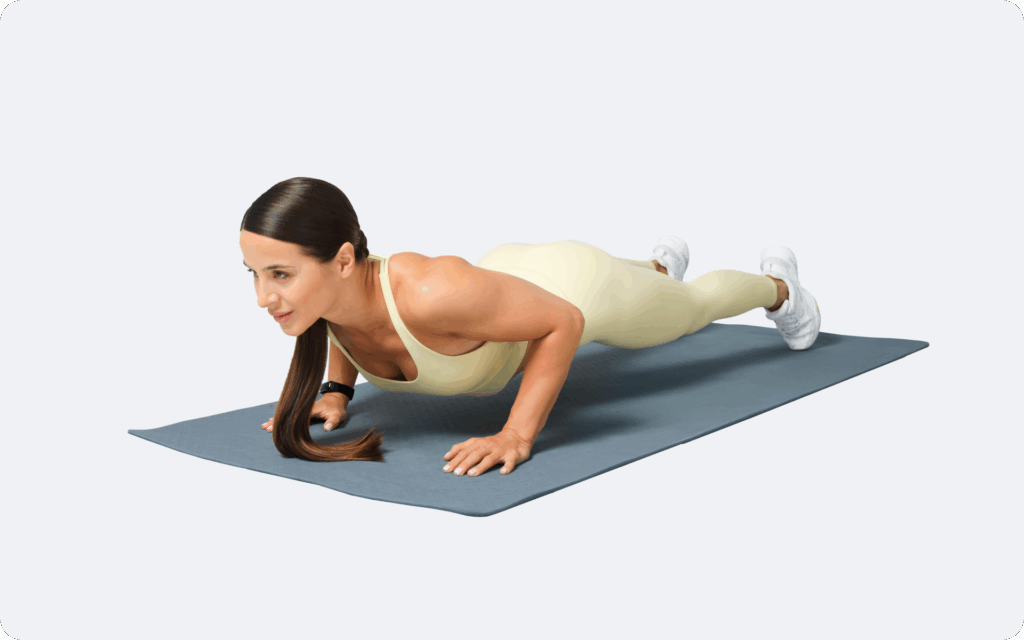
Push-Ups
- Start in a high plank position with your hands directly under your shoulders, and your body in a straight line from your head to your heels.
- Lower your body until your chest is just above the floor, keeping your elbows close to your body.
- Push back up to the starting position. For a modification, perform the push-ups on your knees.
Alternating Dumbbell Lunges
- Stand with your feet together, holding a dumbbell in each hand at your sides.
- Take a large step forward with your right leg, lowering your hips until both knees are bent at a 90-degree angle.
- Ensure your front knee is directly above your ankle and your back knee is hovering just off the floor.
- Push off your right foot to return to the starting position.
- Repeat with your left leg. Continue alternating legs.
Dumbbell Renegade Rows
- Place two dumbbells on the floor, about shoulder-width apart.
- Get into a high plank position, gripping the dumbbells with your hands. Your feet should be slightly wider than hip-width for stability.
- Keeping your core tight and hips level, pull one dumbbell up toward your chest, squeezing your back muscles.
- Lower the dumbbell back to the floor with control.
- Repeat on the other side. Continue alternating.
Jumping Jacks
- Stand with your feet together and your arms at your sides.
- In one motion, jump your feet out to the sides while raising your arms overhead.
- Jump back to the starting position. Repeat at a steady pace.
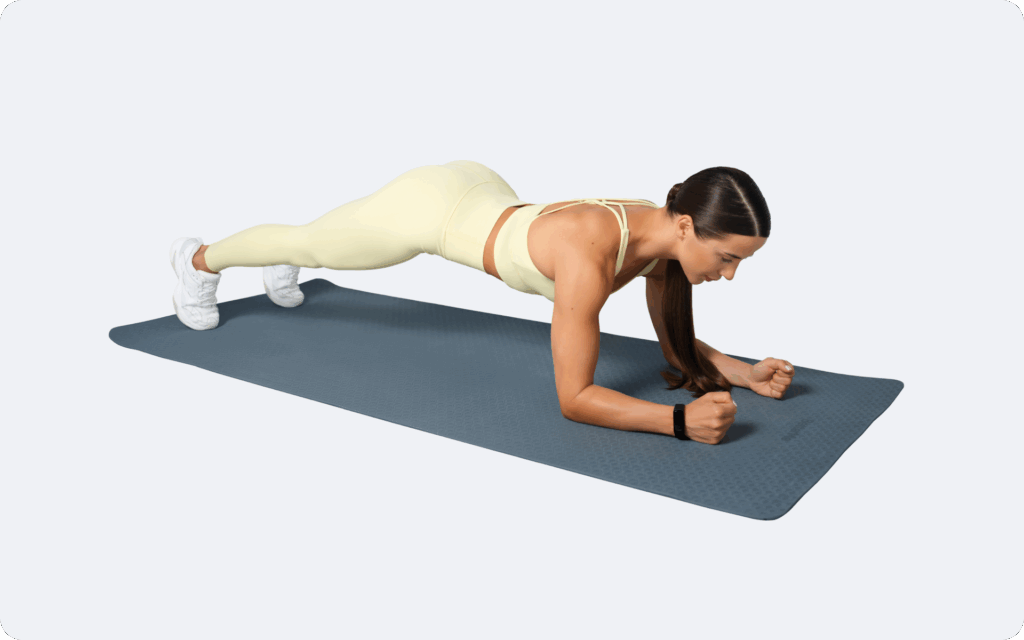
Plank
- Lie on your stomach and place your forearms on the floor, your elbows directly under your shoulders.
- Lift your hips off the floor, forming a straight line from your head to your heels.
- Engage your core and glutes to prevent your hips from sagging. Hold this position.
Dumbbell Bicep Curls to Overhead Press
- Stand with your feet shoulder-width apart, holding a dumbbell in each hand with your palms facing forward.
- Curl the dumbbells up to your shoulders, keeping your elbows tucked in.
- Once at your shoulders, rotate your wrists so your palms face forward and press the dumbbells directly overhead.
- Lower the dumbbells back to your shoulders, then back to the starting position.
Russian Twists
- Sit on the floor with your knees bent and your feet lifted off the ground. Lean back slightly to engage your core.
- Hold a dumbbell with both hands (or use no weight).
- Twist your torso from side to side, tapping the dumbbell on the floor beside you on each turn.
Learn more about how to structure circuit training for strength.
What Is a Good Circuit Training Routine for a Beginner?
A good circuit training at home for beginners should focus on fundamental movements, allow for longer rest periods, and use body weight or very light resistance. This helps lay a solid foundation of strength and coordination without overwhelming the system.
The goal is to master the exercises and build confidence. The following is a simple yet effective full-body circuit workout that can be done with no equipment.
Beginner Bodyweight Circuit Program
Program Notes:
- Glossary:
- AMRAP (As Many Reps As Possible): Perform the exercise with good form for the entire work duration.
- Equipment: None needed. A yoga mat is optional.
- Split Structure: Full-body workout, performed 2-3 times per week.
- Set and Rep Scheme: Perform each exercise for 30 seconds, followed by 30 seconds of rest. Complete 2-3 full circuits. Rest for 2-3 minutes between circuits.
| Order | Exercise | Duration | Rest |
|---|---|---|---|
| 1 | Bodyweight squats | 30 seconds | 30 seconds |
| 2 | Incline push-ups (on a wall or chair) | 30 seconds | 30 seconds |
| 3 | Alternating reverse lunges | 30 seconds | 30 seconds |
| 4 | Glute bridges | 30 seconds | 30 seconds |
| 5 | High knees | 30 seconds | 30 seconds |
| 6 | Bird-dog | 30 seconds | 30 seconds |
Exercise Instructions
Bodyweight Squats
- Stand with your feet shoulder-width apart, your chest up, and your core engaged.
- Lower your hips back and down, keeping your back straight and your weight in your heels.
- Descend until your thighs are parallel to the floor, or as low as is comfortable.
- Drive through your heels to return to a standing position.
Incline Push-Ups
- Place your hands on a sturdy, elevated surface such as a wall, countertop, or chair.
- Walk your feet back until your body forms a straight line.
- Lower your chest toward the surface, keeping your elbows at a 45-degree angle to your body.
- Press back to the starting position.
Alternating Reverse Lunges
- Stand tall with your feet hip-width apart.
- Step your right foot back, lowering both knees to a 90-degree angle. Your front knee should be over your ankle.
- Push off your back foot to return to the starting position.
- Repeat with the left foot. Continue alternating.
BetterMe will shake off your mental funk, rid you of your energy-zapping habits, and help you sculpt the body of your dreams. Intrigued? Hurry up and change your life for the better!
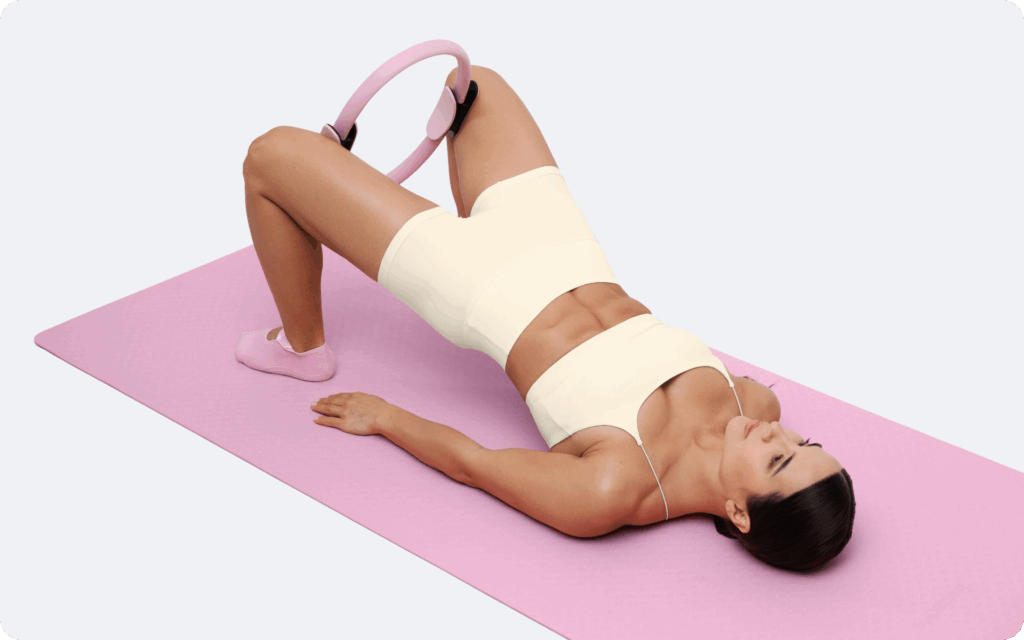
Glute Bridges
- Lie on your back with your knees bent, your feet flat on the floor close to your glutes, and your arms by your sides.
- Engage your core and lift your hips toward the ceiling by squeezing your glutes.
- Create a straight line from your shoulders to your knees. Hold for a moment at the top.
- Lower your hips back down with control.
High Knees
- Stand in place and jog, driving your knees up toward your chest as high as you can.
- Keep your core engaged and land softly on the balls of your feet.
- Move at a pace that feels challenging but sustainable for 30 seconds.
Bird-Dog
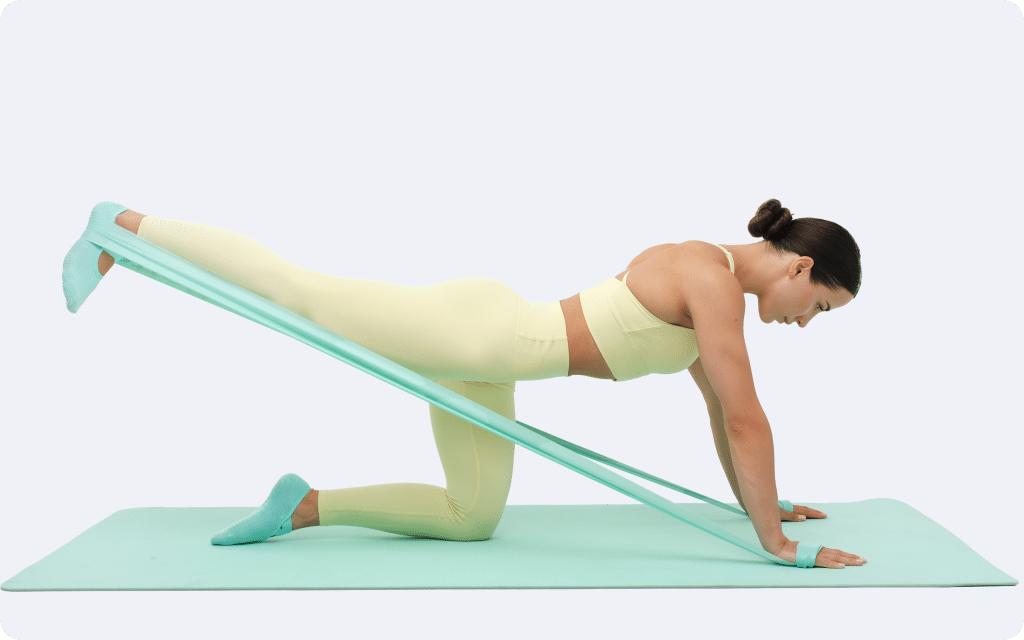
- Start on all fours, with your hands under your shoulders and your knees under your hips.
- Engage your core to keep your back flat.
- Simultaneously extend your right arm straight forward and your left leg straight back.
- Hold for a second, then return to the starting position.
- Repeat with your left arm and right leg. Continue alternating.
Read more: Strength and Conditioning Workout Plan: Benefits and Tips to Create a Beginner Plan
Can You Get Ripped with Circuit Training?
“Getting ripped” generally means achieving a low body fat percentage while maintaining or building muscle mass, resulting in a well-defined physique. Circuit training is an excellent tool for this goal, particularly when programmed correctly.
A study in the journal Lipids in Health and Disease compared high-intensity circuit training (HICT), low-intensity circuit training (LICT), and traditional endurance training (ET) in overweight men (4).
The HICT group, which combined resistance exercises with high-intensity cardio, saw the most significant reductions in fat mass, total cholesterol, and triglycerides. They also experienced a significant increase in HDL (“good”) cholesterol (4).
This suggests that the high-intensity nature of the workout is key. HICT creates a large metabolic demand, leading to significant calorie burn both during and after the workout – a phenomenon known as excess post-exercise oxygen consumption (EPOC) (5).
This elevated post-workout metabolism, combined with the muscle-building stimulus from the resistance exercises, creates the perfect environment for circuit training at home for weight loss and muscle definition.
To get ripped with circuit training, your program should include:
- High Intensity: Work at 75-85% of your maximum heart rate during cardio portions and use challenging weights (around 65-85% of your 1RM) for strength exercises (3, 6).
- Compound Movements: Prioritize exercises that work multiple muscle groups, like squats, deadlifts, and rows (7).
- Progressive Overload: Continuously challenge your body by increasing the weight, reps, or decreasing rest time (8).
- Consistent Nutrition: A calorie-controlled, high-protein diet is non-negotiable for revealing muscle definition (9).
What Are the Disadvantages of Circuit Training?
While circuit training is highly effective, it has a few potential drawbacks that are important to consider.
- Not Optimal for Maximal Strength: If your primary goal is to lift the heaviest weight possible, circuit training isn’t the best method. The minimal rest periods prevent the full recovery needed between heavy sets, limiting your ability to produce maximal force. A 2024 study from the University of Birmingham noted moderate-intensity circuits may allow higher volume and high-intensity (75% 1RM) circuits can produce greater muscle activation. However, neither is designed for pure strength development in the way traditional set-and-rep schemes are (10).
- Technique Can Suffer: The fast pace and accumulated fatigue can cause your form to break down, especially for beginners. This increases the risk of injury (11). It’s essential to choose exercises you can perform correctly even when you’re tired and to prioritize form over speed.
- Limited for Advanced Lifters: For highly trained individuals, bodyweight circuits may not provide enough resistance to stimulate further muscle growth. They would need to incorporate heavy weights or advanced plyometrics (12), which can be challenging to manage in a fast-paced circuit format.
- Can Be Overwhelming for True Beginners: While beginner programs exist, the concept of moving quickly between exercises with little rest can be mentally and physically daunting for someone who is completely new to exercise.
Discover more about the wide-ranging circuit training benefits here.
Neither is inherently “better” – they serve different purposes. Traditional sets with longer rest periods (2-5 minutes) are superior for developing maximal strength and power (13). With its minimal rest, circuit training is better for improving cardiovascular endurance and muscular endurance simultaneously, which makes it more time-efficient for general fitness and fat loss (2). That depends on your goals. Running is excellent for improving cardiovascular health and aerobic endurance. Circuit training provides a more balanced workout by incorporating strength training, which helps build and maintain muscle mass. For overall fitness and a more athletic physique, circuit training often has an edge as it combines both cardio and resistance work. A 2013 study found high-intensity circuit training was more effective than endurance training alone for improving blood pressure and lipoproteins (14). Yes, a 20-minute circuit workout can be very effective, as long as the intensity is high enough. Short, intense workouts can stimulate significant fitness and health improvements (15). This is particularly true for beginners or those who are short on time. Consistency is more important than duration. Circuit training and high-intensity interval training (HIIT) are related, but not identical. HIIT is a specific training method that is characterized by short bursts of all-out effort (90-100% max heart rate) followed by brief recovery periods. Circuit training can be a form of HIIT if the work intervals are performed at a very high intensity and the rest periods are short. However, circuit training can also be performed at a low or moderate intensity. Think of HIIT as a specific intensity protocol, while circuit training is a structural format for a workout.Frequently Asked Questions
Is it better to do a circuit or set?
Is circuit training better than running?
Is 20 minutes of circuit training enough?
Is circuit training like HIIT?
The Bottom Line
Circuit training is a versatile, efficient, and powerful method for improving your fitness from the comfort of your home. By structuring your workouts with a clear understanding of intensity, exercise selection, and progression, you can build a lean, strong, and resilient body.
It’s not about finding a magic workout, but about applying proven principles with consistency. The path to a better physique isn’t complicated – it just requires dedicated effort and intelligent programming.
DISCLAIMER:
This article is intended for general informational purposes only and does not serve to address individual circumstances. It is not a substitute for professional advice or help and should not be relied on for making any kind of decision-making. Any action taken as a direct or indirect result of the information in this article is entirely at your own risk and is your sole responsibility.
BetterMe, its content staff, and its medical advisors accept no responsibility for inaccuracies, errors, misstatements, inconsistencies, or omissions and specifically disclaim any liability, loss or risk, personal, professional or otherwise, which may be incurred as a consequence, directly or indirectly, of the use and/or application of any content.
You should always seek the advice of your physician or other qualified health provider with any questions you may have regarding a medical condition or your specific situation. Never disregard professional medical advice or delay seeking it because of BetterMe content. If you suspect or think you may have a medical emergency, call your doctor.
SOURCES:
- Circuit training (2021, researchgate.net)
- Effects of Resistance Circuit-Based Training on Body Composition, Strength and Cardiorespiratory Fitness: A Systematic Review and Meta-Analysis (2021, mdpi.com)
- Exercise intensity: How to measure it (2023, mayoclinic.org)
- Effects of high-intensity circuit training, low-intensity circuit training and endurance training on blood pressure and lipoproteins in middle-aged overweight men (2013, link.springer.com)
- Effects of exercise intensity and duration on the excess post-exercise oxygen consumption (2006, pubmed.ncbi.nlm.nih.gov)
- Loading Recommendations for Muscle Strength, Hypertrophy, and Local Endurance: A Re-Examination of the Repetition Continuum (2021, pmc.ncbi.nlm.nih.gov)
- 5 Benefits of Compound Exercises (2016, acefitness.org)
- Effects of Resistance Training Overload Progression Protocols on Strength and Muscle Mass (2024, pubmed.ncbi.nlm.nih.gov)
- Editorial: Nutritional Strategies to Promote Muscle Mass and Function Across the Health Span (2020, frontiersin.org)
- Comparing internal and external load demands to a moderate versus high intensity resistance circuit session (2024, etheses.bham.ac.uk)
- Training Load and Fatigue Marker Associations with Injury and Illness: A Systematic Review of Longitudinal Studies (2016, link.springer.com)
- Effects of Low- vs. High-Load Resistance Training on Muscle Strength and Hypertrophy in Well-Trained Men (2015, pubmed.ncbi.nlm.nih.gov)
- Twelve Weeks Rest–Pause and Traditional Resistance Training: Effects on Myokines and Performance Adaptations among Recreationally Trained Men (2023, mdpi.com)
- Effects of high-intensity circuit training, low-intensity circuit training and endurance training on blood pressure and lipoproteins in middle-aged overweight men (2013, link.springer.com)
- Can a 10 or 15-minute workout really help you get fit? A sports scientist explains (2025, port.ac.uk)
 Reviewed by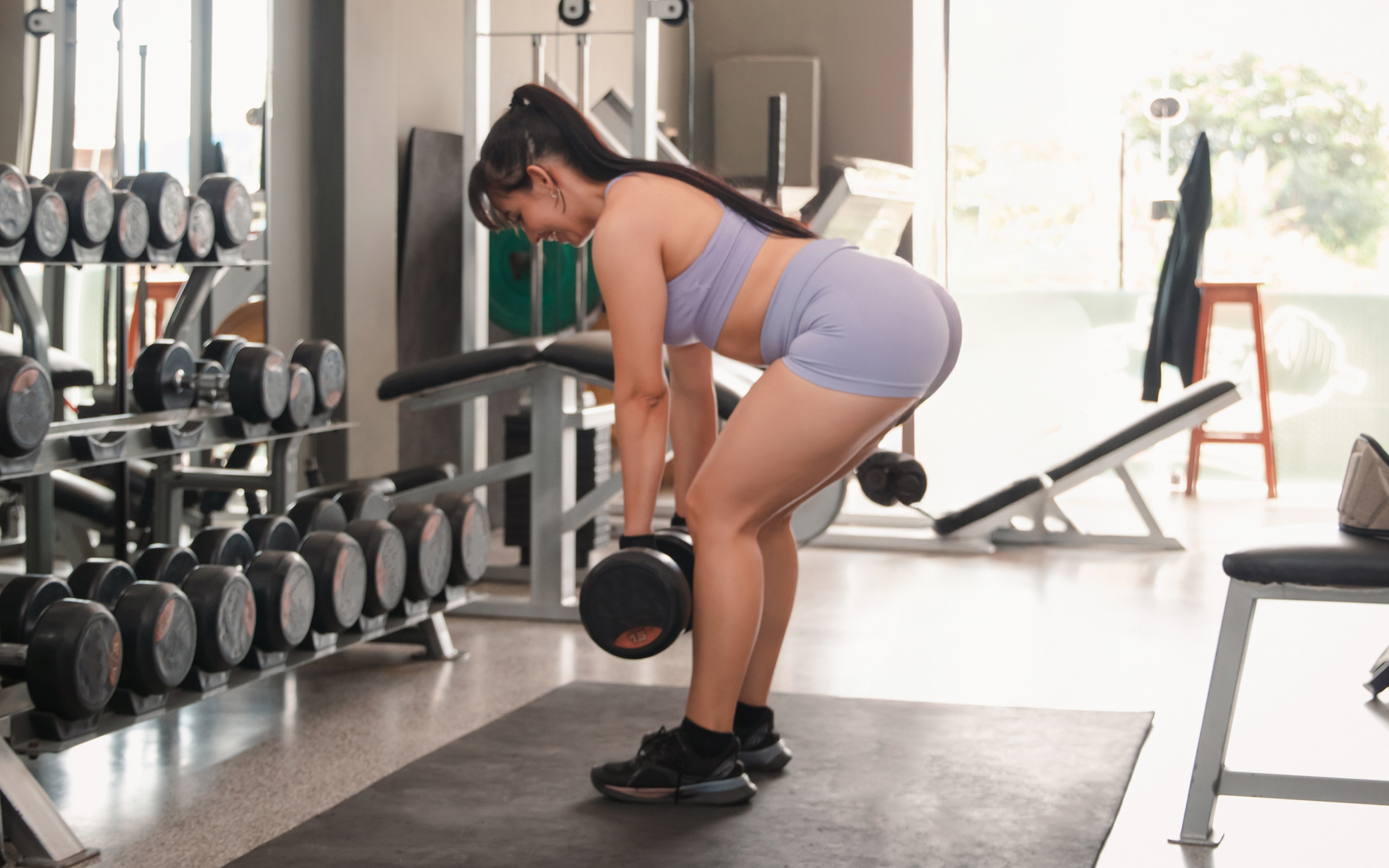
 Reviewed by

 By
By