Many older adults experience a gradual decline in joint mobility, making everyday movements like bending over or reaching for a shelf increasingly difficult.
This loss of flexibility is often linked to lower activity levels and age-related changes in how the body moves.
When we move less, the body may gradually feel tighter, which can make everyday movement feel more challenging over time.
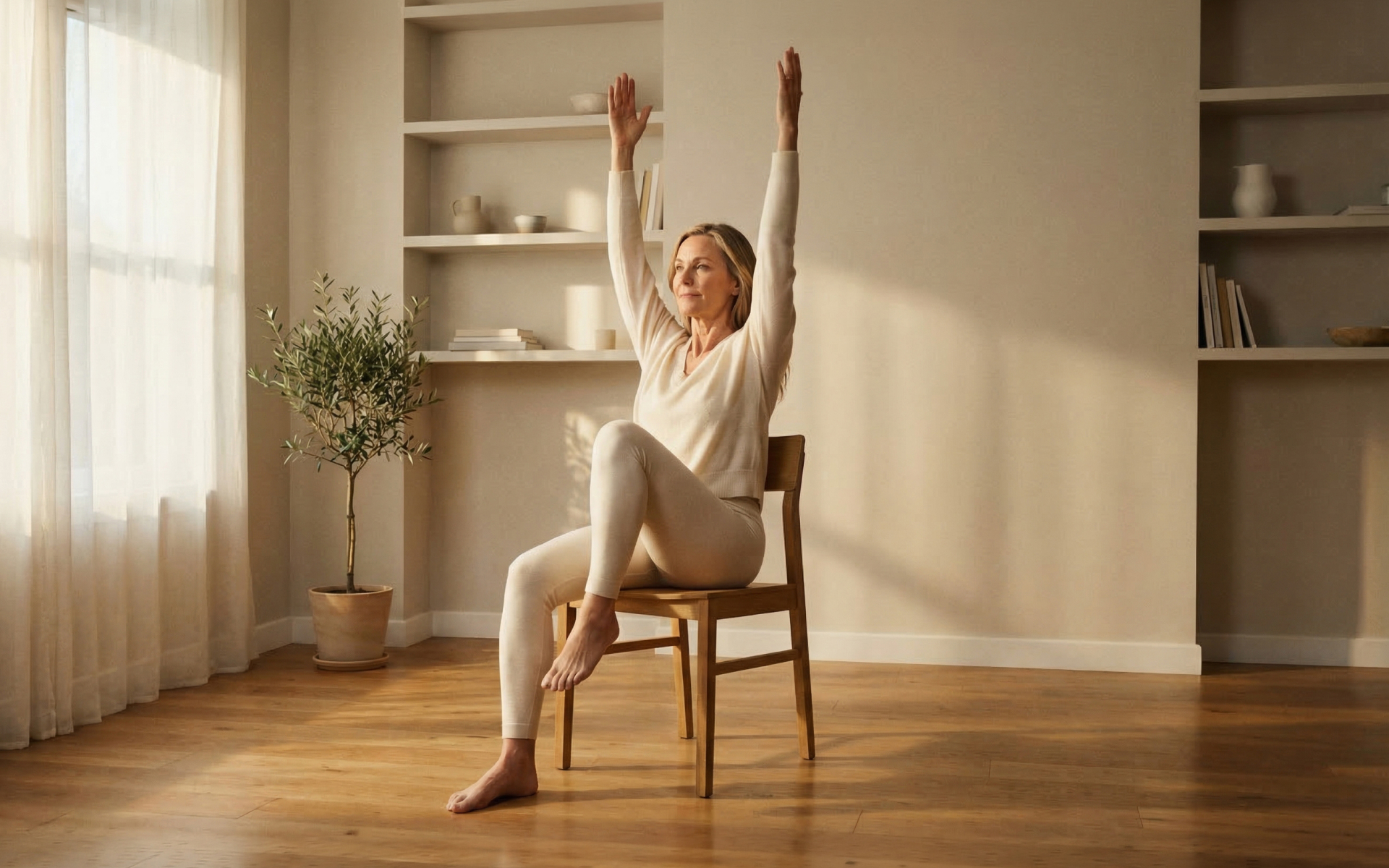
Regaining mobility does not always require floor exercises or complex routines. However, you can improve tissue elasticity and joint mobility using nothing more than a standard, sturdy dining chair.
Ahead, we share 8 chair stretching exercises that can create a supportive, controlled setup for gentle stretching and relaxation.
Can A Chair Be Useful For Stretching Routines?
Yes, a chair is an effective tool for stretching because it provides external stability, which reduces the demand for active postural control.
Balance is a neuromuscular process that relies on coordinated input from sensory systems (such as proprioception), along with continuous motor adjustments directed by the nervous system to maintain equilibrium (1).
When you attempt to stretch while standing or balancing, these systems remain engaged to keep you upright. Using a chair removes much of the balance requirement, reducing the need for constant postural corrections and allowing you to direct more attention to the target muscles during the stretch.
This stretching routine can be especially helpful for people returning to regular movement or experiencing age-related changes in joint mobility. By supporting the pelvis and lower body, a chair allows you to isolate the upper body or selectively stretch the lower limbs with potentially less strain to the back (2).
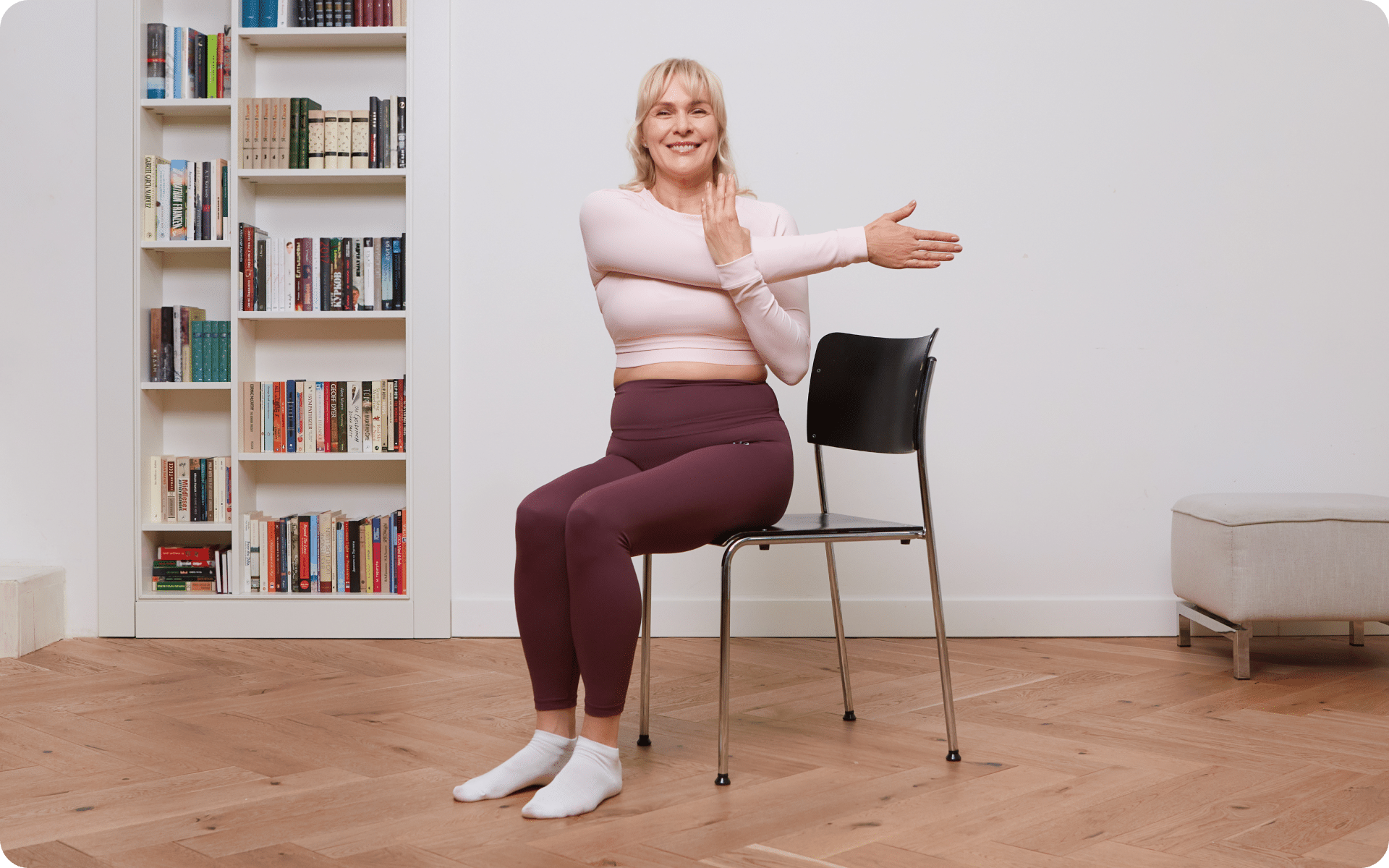
Here are the specific ways a chair may enhance a stretching routine:
- External stability: The chair offers a stable base of support, helping reduce the risk of falls during stretching movements and allowing your muscles to relax more fully.
- Controlled leverage and support: Using the chair’s backrest, arms, or seat, you can easily adjust your position and the amount of stretch, making it easier to adjust each movement to a comfortable range.
- Targeted muscle isolation: With your pelvis and lower body anchored, you can focus on stretching specific muscle groups without putting unnecessary pressure on other areas.
- Micro-progressions: You can use the arms or the back of the chair to control the exact degree of the stretch, adjusting the angle by merely 2–3 degrees at a time.
- Lower cardiovascular demand: Seated positions keep the heart rate closer to baseline (3), reducing fatigue that would limit your mobility work.
To maximize these benefits, you should pair seated upper-body stretches with targeted lower-body work. For instance, incorporating a dedicated routine of leg mobility exercises can support overall lower-body mobility.
BetterMe: Health Coaching app helps you achieve your body goals with ease and efficiency by helping to choose proper meal plans and effective workouts. Start using our app and you will see good results in a short time.
What Muscles Can Be Effectively Stretched While Seated?
You can stretch many major muscle groups while seated, including the back musculature, the shoulder girdle, and the entire lower kinetic chain.
Because the chair helps keep your body steady, it can make seated stretches easier to control (2).
Stretching involves gently moving the body into positions that lengthen certain muscles (4). When your hips are fixed securely to a seat, creating this distance becomes a matter of precise limb placement.
Here are some of the primary muscles you can stretch while seated, along with examples of the movements:
- Pectorals and Anterior Deltoids (Chest and Front Shoulders): Achieved by interlocking the fingers behind the back and extending the elbows.
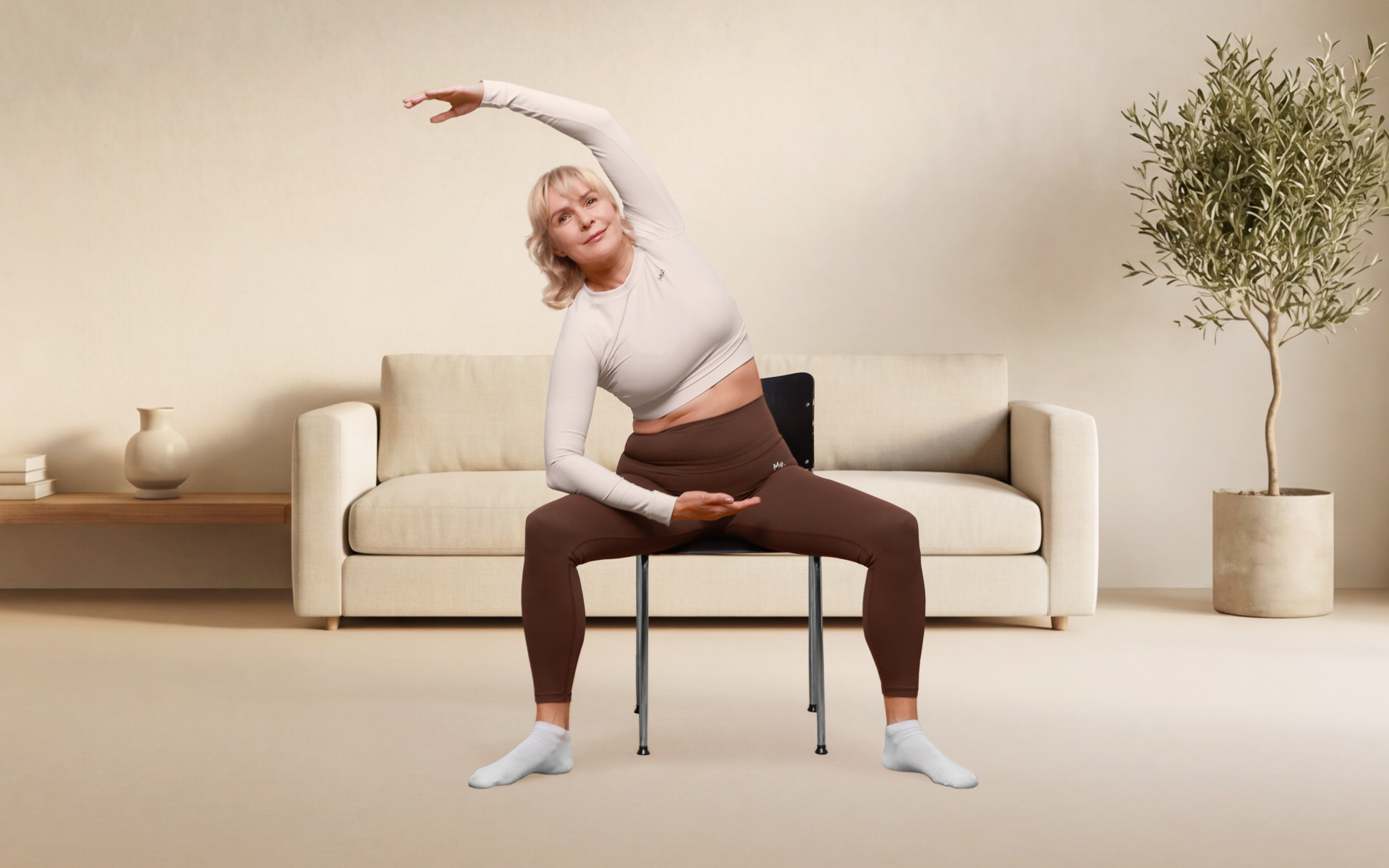
- Latissimus Dorsi and Obliques (Side of the Torso): Stretched by extending one arm overhead and laterally flexing the back to the opposite side.
- Lower Back: Targeted by flexing the back forward and bringing the chest toward the thighs.
- Gluteus Maximus and Piriformis (Hips): Effectively stretched by bringing one knee toward the chest or crossing one ankle over the opposite knee.
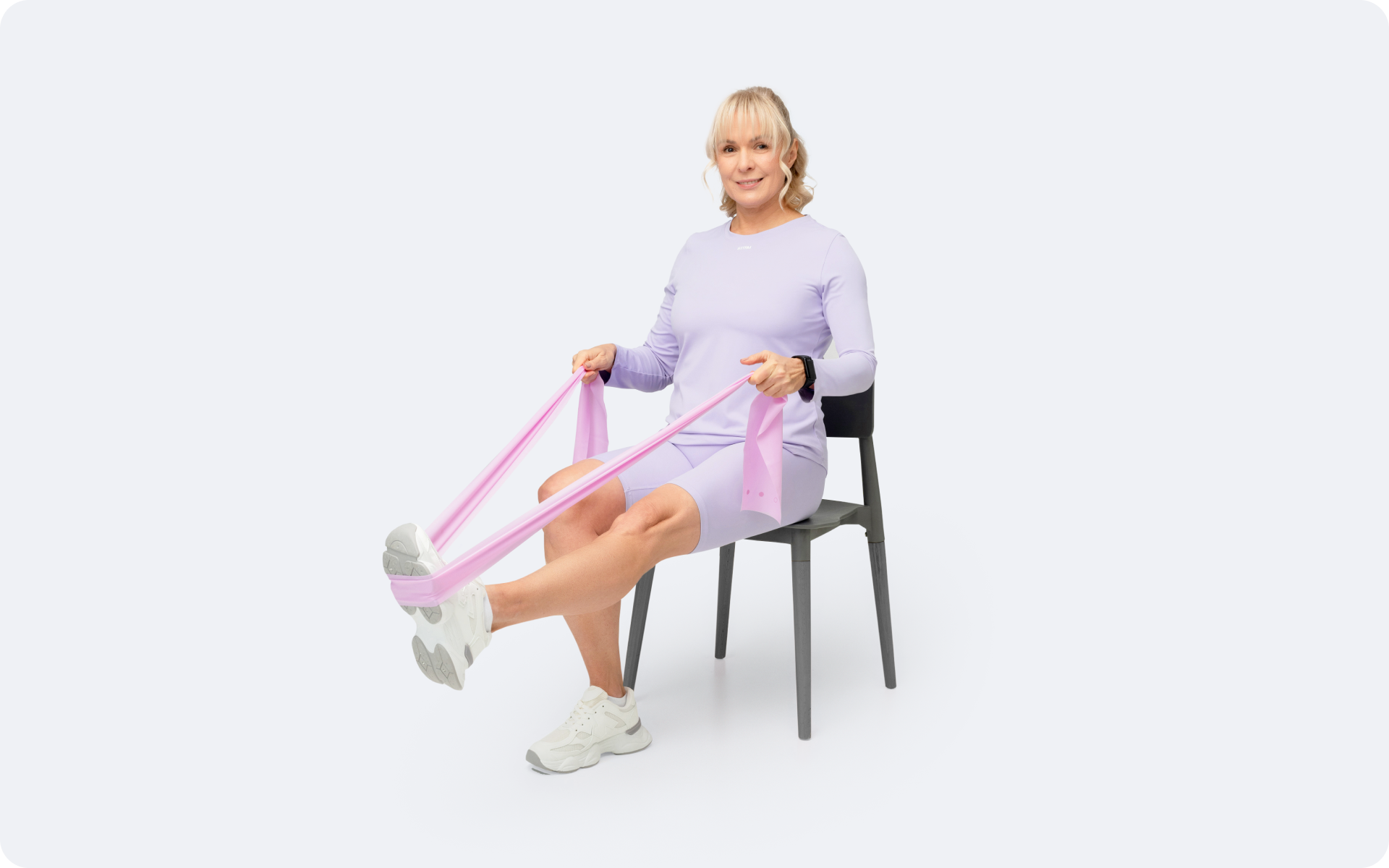
- Hamstrings (Back of Thigh): Lengthened by extending one leg straight out with the heel on the floor and hinging forward at the hips.
- Gastrocnemius and Soleus (Calves): Stretched by pointing the toes back toward the shin while the leg is extended.
What Are Some Gentle Chair Stretching Exercises To Begin With?
So, what are the gentle chair stretching exercises to try?
There are numerous gentle chair stretching exercises to begin with, but the most effective ones generally focus on back mobility, hip opening, and chest expansion.
To ensure you get the most out of these movements, we must approach them with the same structural rigor as any athlete’s training program.
Before we dive into the exercises, let’s establish the parameters of the program.
Program Notes:
- Equipment needed: A sturdy, armless chair with a firm seat. A yoga block is optional but recommended for shorter individuals.
- Split structure: This is a full-body mobility circuit designed for one complete session.
- Optimal hold times: Hold each static stretch for 30–45 seconds to allow the muscles to relax.
- Rest schemes: Take 15–20 seconds of rest between switching sides or moving to the next exercise to re-align your posture.
- Breathing: Inhale for 4 seconds through the nose, exhale for 6 seconds through the mouth during each stretch.
The Chair Stretching Program
| Exercise Name | Target Muscle Group | Sets | Hold Time / Reps |
|---|---|---|---|
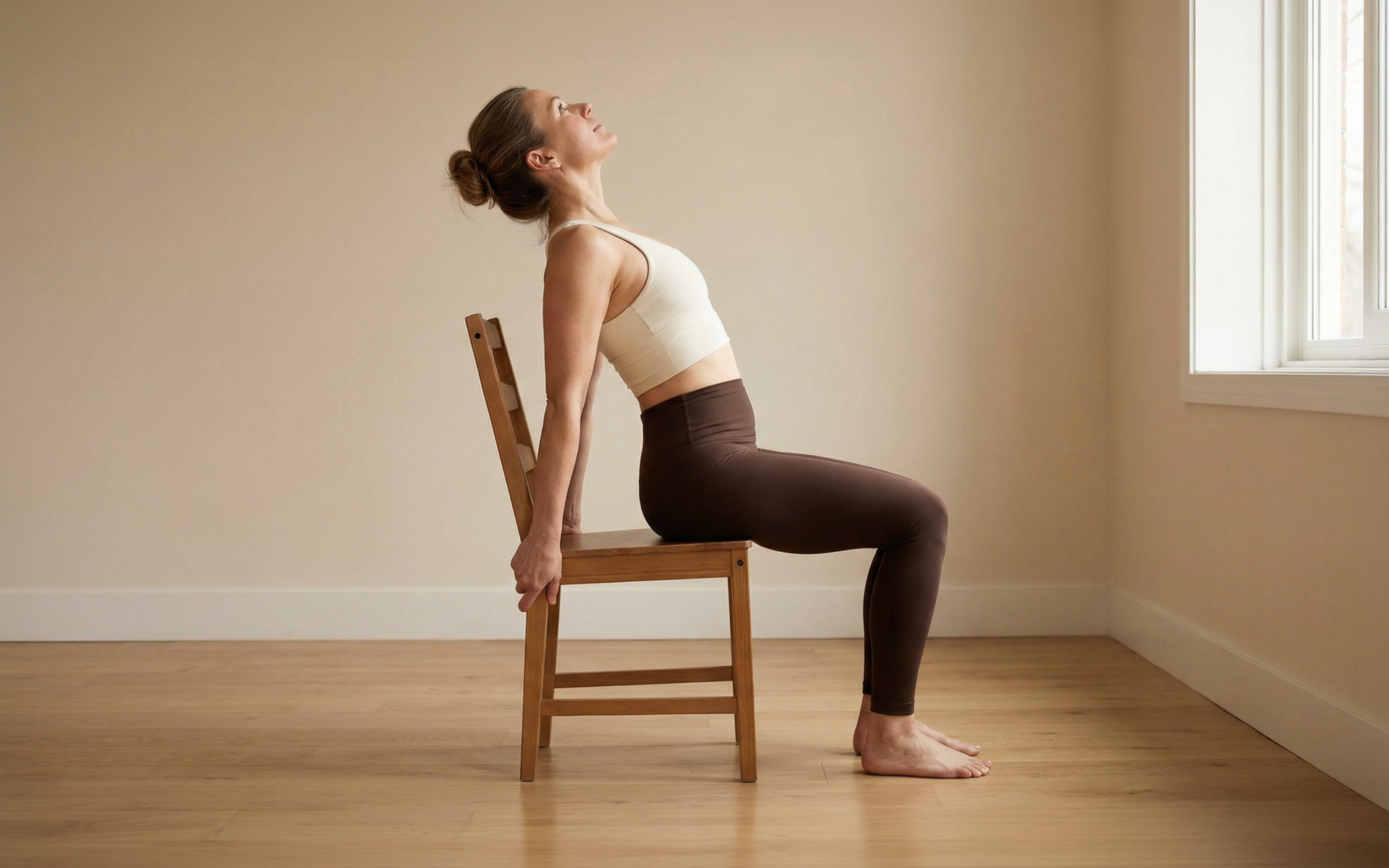
| 1. Seated Cat-Cow | Back, Core | 2 | 8-10 slow cycles |
| 2. Seated Torso Twist | Obliques, Back | 2 | 30 seconds per side |
| 3. Seated Side Bend | Latissimus Dorsi, Obliques | 2 | 30 seconds per side |
| 4. Seated Butterfly | Hip Adductors (Inner Thighs) | 2 | 45 seconds |
| 5. Hugging Knees | Glutes, Lower Back | 2 | 30 seconds per side |
| 6. Interlocked Finger Chest Opener | Pectorals, Anterior Deltoids | 2 | 30-45 seconds |
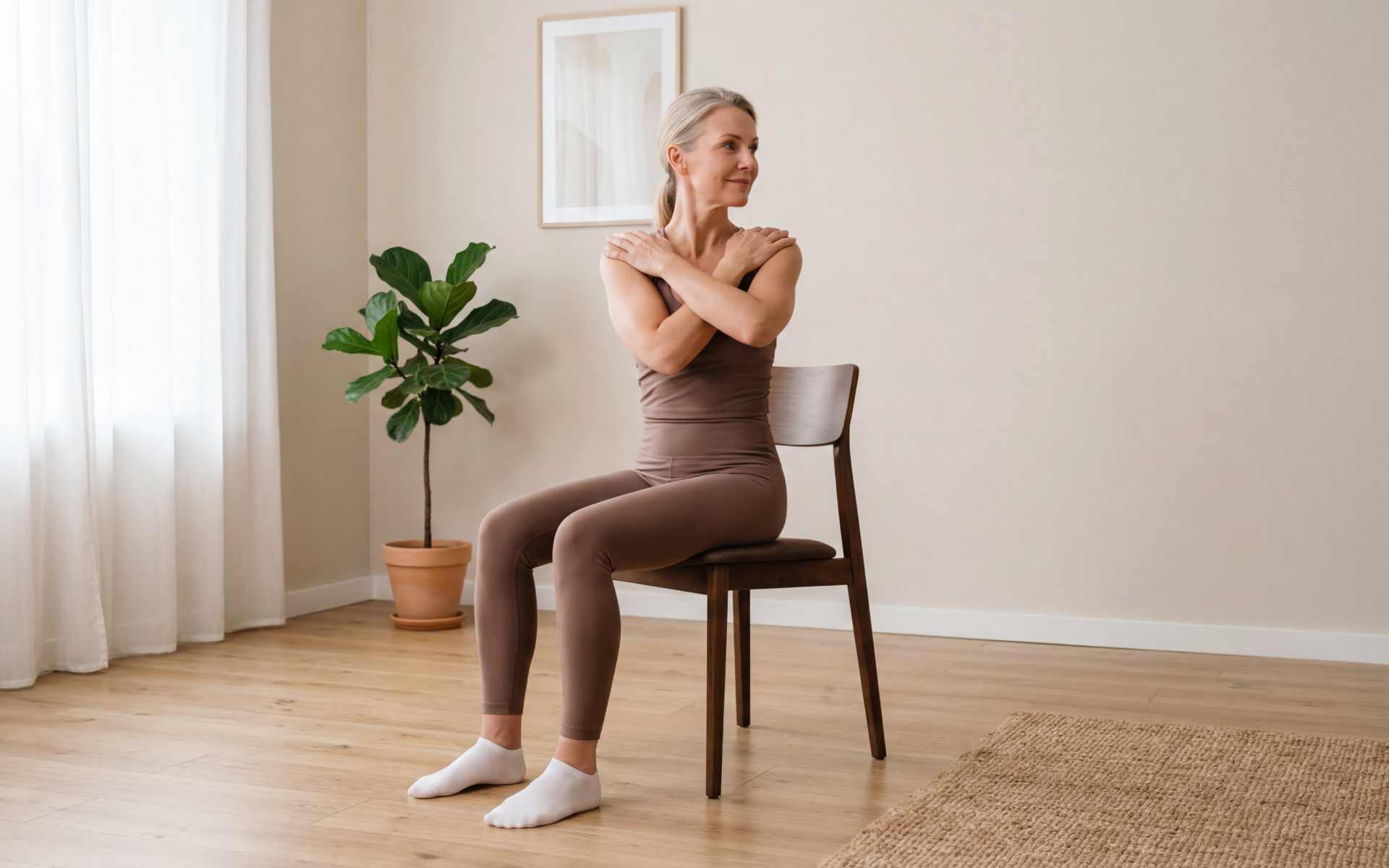
| 7. Seated Eagle Arms | Rhomboids, Trapezius | 2 | 30 seconds per side |
| 8. Seated Hamstring Extension | Hamstrings | 2 | 45 seconds per side |
Exercise Instructions
- Seated Cat-Cow
- Sit near the front edge of the chair with both feet flat on the floor, spaced roughly 12 inches apart.
- Place your hands on your mid-thighs, elbows slightly bent.
- Inhale deeply, arch your back to push your chest forward, and gently lift your chin toward the ceiling (Cow position).
- Exhale slowly, round your back backward, tuck your chin to your chest, and slide your hands toward your knees (Cat position).
- Move slowly through every vertebra, avoiding excessive strain on the neck.
- Seated Torso Twist
- Sit tall with your feet flat on the ground, and raise both arms straight up to your ears to elongate your back.
- Exhale and lower your right arm to grab the outside of your left knee.
- Place your left hand on the side or backrest of the chair for leverage.
- Gently press against your left knee with your right hand to rotate your torso to the left, initiating the twist from your waist rather than your neck.
- Hold the position, keeping both sitting bones firmly planted on the chair.
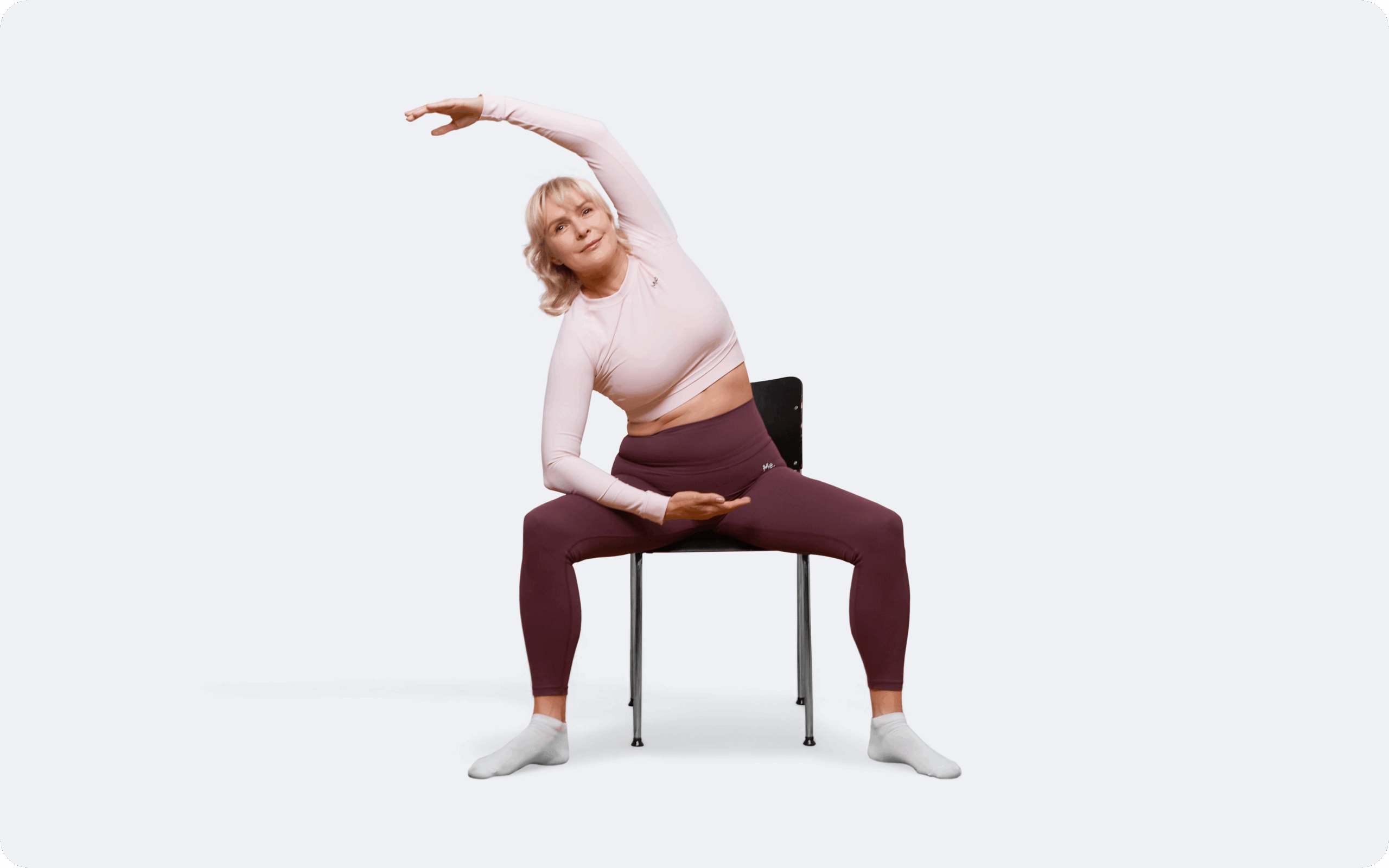
- Seated Side Bend
- Start in an upright, neutral seated position with your feet flat and shoulders relaxed.
- Take a deep breath and extend your left arm straight up toward the ceiling, keeping it close to your left ear.
- Exhale slowly and bend your torso to the right side, allowing your right arm to hang naturally or rest on the chair seat for support.
- Keep your chest open and avoid letting your left shoulder drag forward and downward.
- Focus the stretch on the left side of your ribcage and hold before switching sides.
- Seated Butterfly
- Place a yoga block or a firm, folded towel on the floor directly in front of your chair.
- Sit forward on the chair and place both feet onto the block.
- Let your knees fall open outward while keeping the soles of your feet pressed together.
- Rest your hands lightly on your inner thighs or knees, applying merely 1–2 pounds of gentle downward pressure.
- Maintain a tall posture and allow the hips to open naturally during the 45-second hold.
- Hugging Knees
- Sit upright with your back completely unsupported by the backrest to engage your core.
- Lift your right foot off the floor and slowly drag your right knee upward toward your chest.
- Use both hands to grasp the shin or the back of the thigh (whichever is more comfortable) and pull the leg closer to your torso.
- Keep your torso completely stationary; do not lean backward to meet the knee.
- Hold for the prescribed duration, feeling the stretch in the glute and lower back, then slowly lower the leg.
Read more: Chair Workout Plan for Seniors to Lose Belly Fat
- Interlocked Finger Chest Opener
- Sit near the middle of the chair with a straight back and feet flat on the floor.
- Reach both arms behind your lower back and interlace your fingers tightly.
- Slowly straighten your elbows and actively push your hands down toward the seat of the chair.
- Draw your shoulder blades together and lift your chest upward toward the ceiling.
- Ensure your grip is firm, but do not lock the elbows; maintain a micro-bend to ease the strain on your joints.
- Seated Eagle Arms
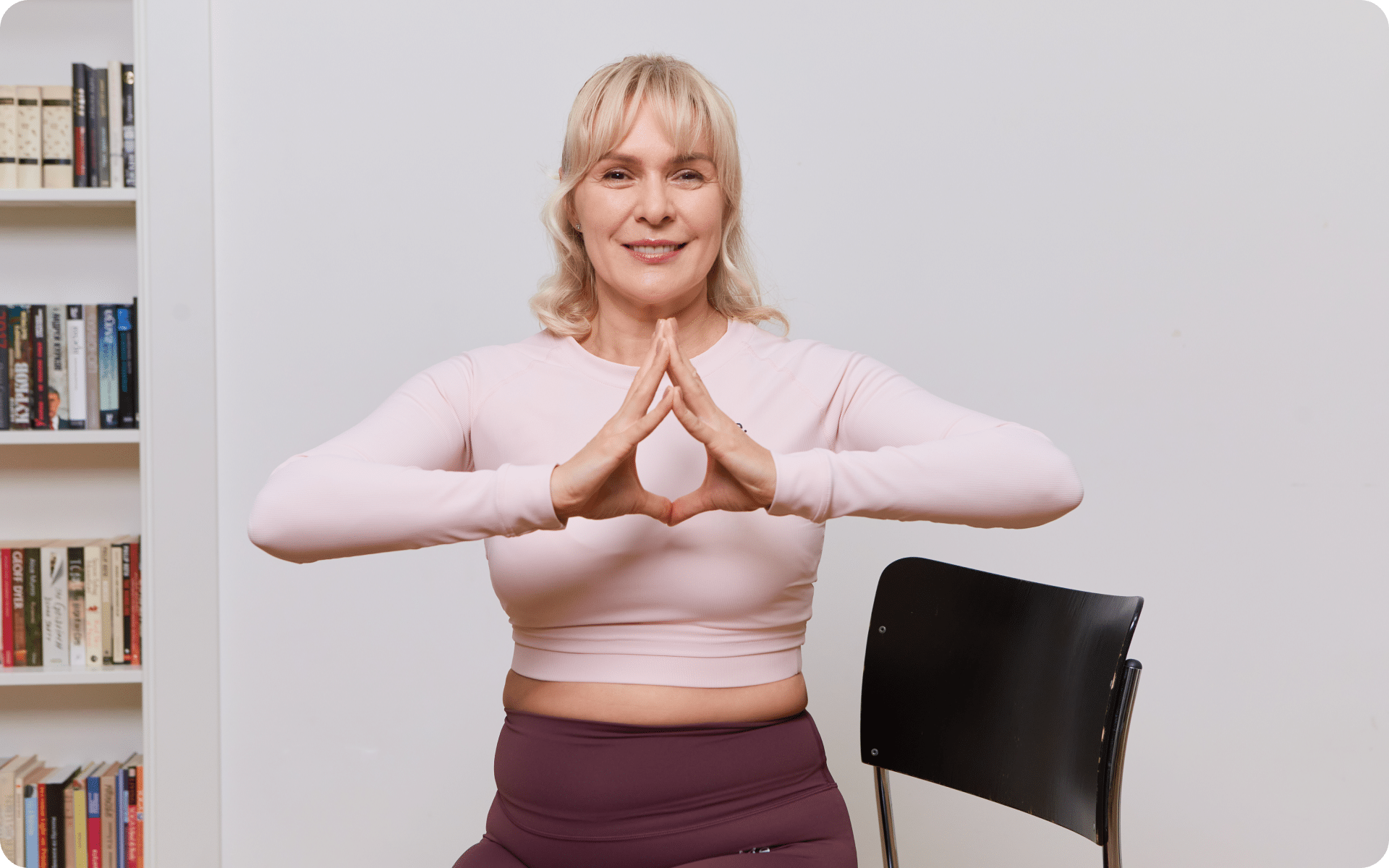
- Extend both arms straight out in front of your chest at shoulder height.
- Cross your right arm over your left arm, ensuring the cross happens above the elbows.
- Bend both elbows so your fingers point toward the ceiling.
- Wrap your forearms around each other and attempt to bring your palms together, or simply grab the thumb of the opposite hand.
- Inhale and slightly lift your elbows 1–2 inches to intensify the stretch across your upper back.
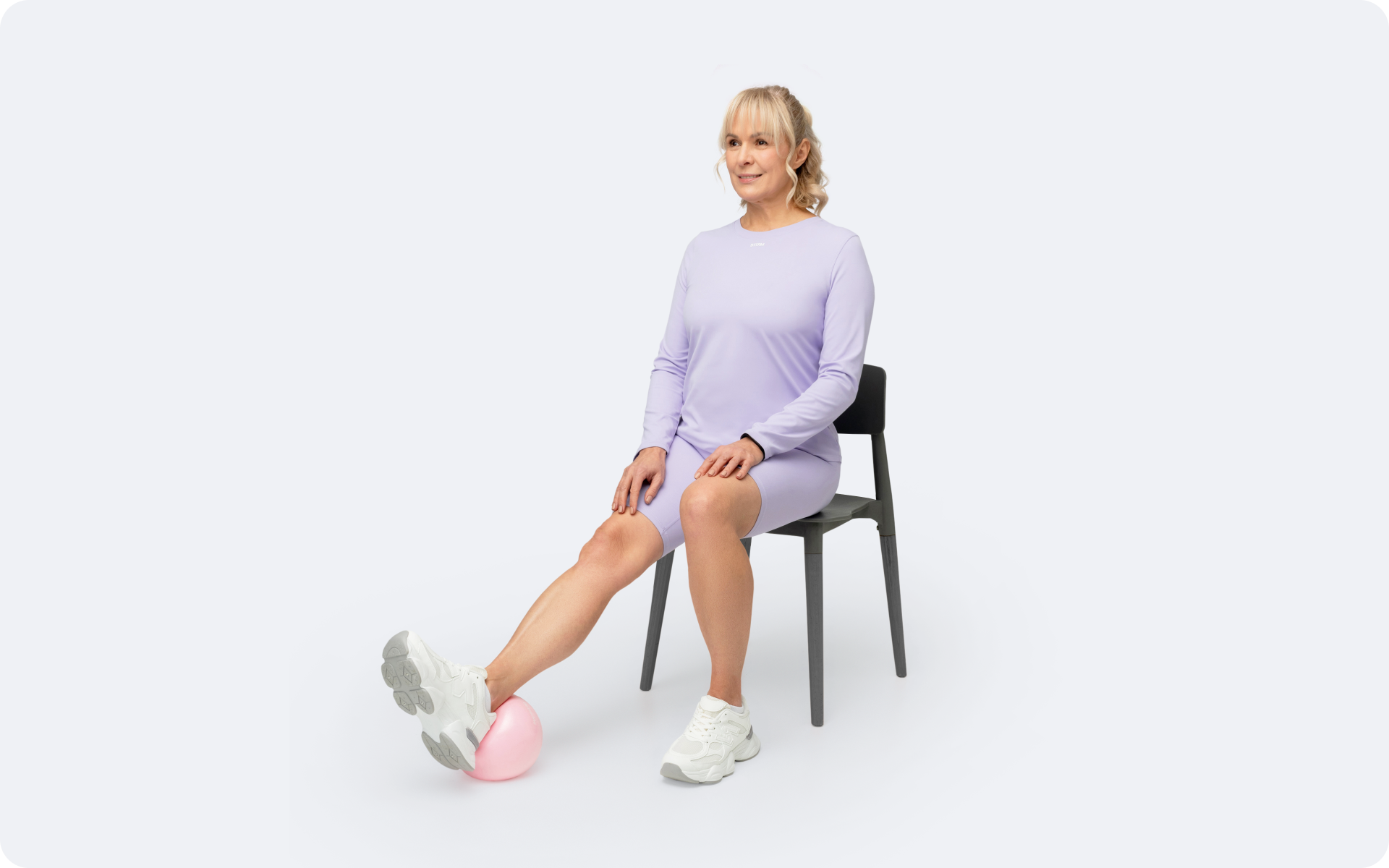
- Seated Hamstring Extension
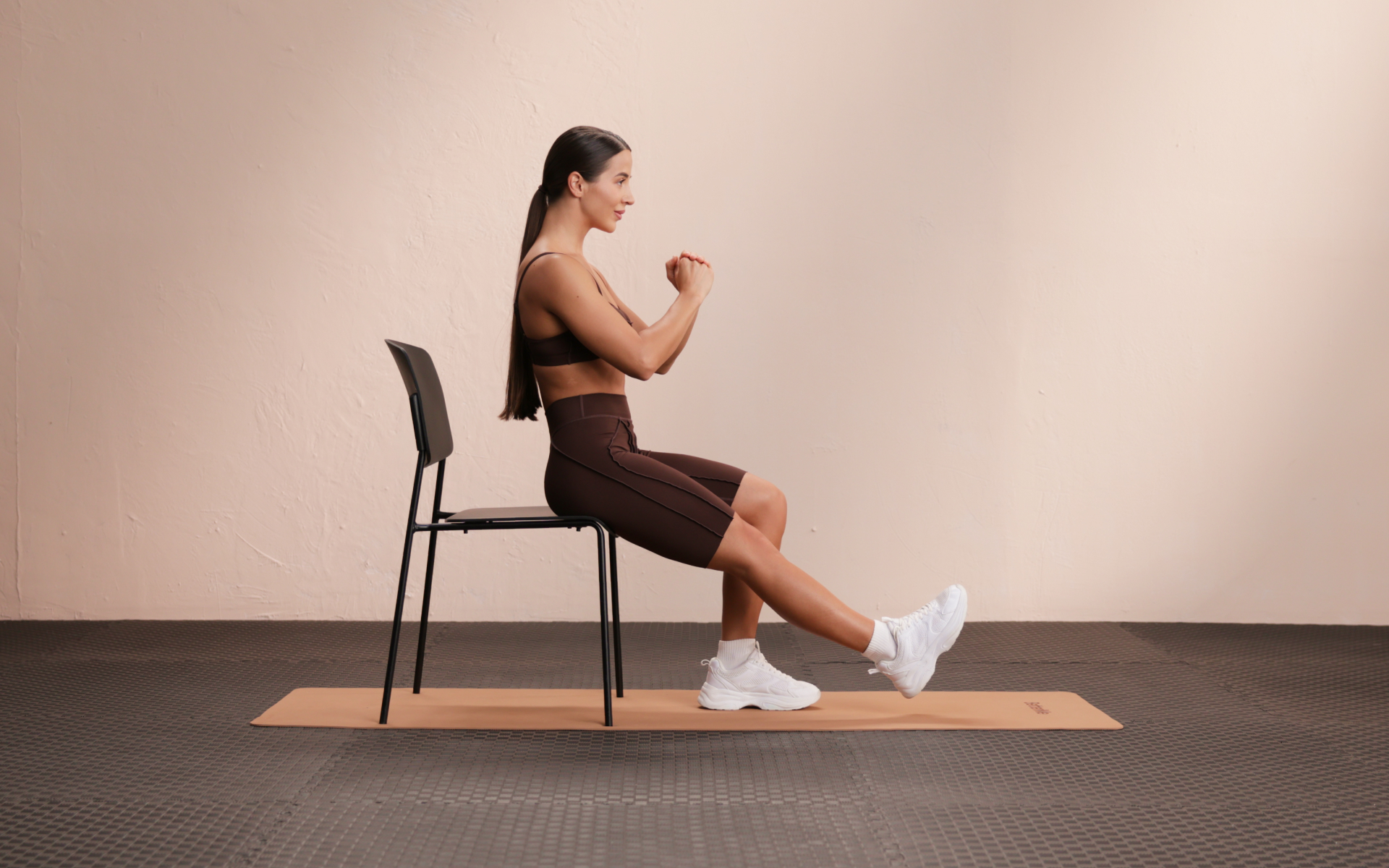
- Sit on the very edge of the chair so that your right leg can extend fully.
- Straighten your right leg out in front of you, resting your heel on the floor with your toes pointing up toward the ceiling.
- Keep your left foot flat on the floor with the knee bent at a 90-degree angle for stability.
- Place your hands on your left thigh for support, keep your back completely straight, and hinge forward at the hips.
- Stop hinging as soon as you feel a moderate, pulling sensation in the back of your right thigh.
These specific movements form the foundation of a highly effective routine. By mastering these basics, you can easily transition into more comprehensive protocols, such as chair yoga mobility exercises for seniors.
How To Progress Chair Stretching Exercises As A Senior?
As you become more comfortable, you can gradually adjust hold time, frequency, and range of motion.
If you perform the same stretches for the same duration for two years, your tissues will adapt, and your mobility improvements will plateau.
Just like strength training, flexibility requires progressive overload.
You need gradual progression so the body can become more comfortable with a wider range of motion.
Here is how you can systematically advance your stretching practice:
Increase the Isometric Hold Time
How to progress in chair stretching exercises for beginners usually starts with simply manipulating time under tension.
- Initially, a 20-second hold might be sufficient to elicit a relaxation response from the muscle.
- As your nervous system becomes accustomed to this tension, you should progressively increase the hold time to 45, then 60, and eventually 90 seconds per stretch.
The sustained mechanical tension encourages long-term structural adaptations in the fascia and muscle fibers (5).
Integrate Active Contractions (PNF Stretching)
Proprioceptive Neuromuscular Facilitation (PNF) is a widely accepted method for rapid gains in mobility (6). To use this, stretch a muscle to its mild end range, then actively contract the same muscle against an immovable object (like your hands) for 5–10 seconds.
Upon relaxing, you may find that your joint allows for another 10–15 degrees of range of motion. Learning how to progress in chair stretching exercises for seniors through PNF turns passive stretching into an active neurological drill.
Decrease in Points of Stability
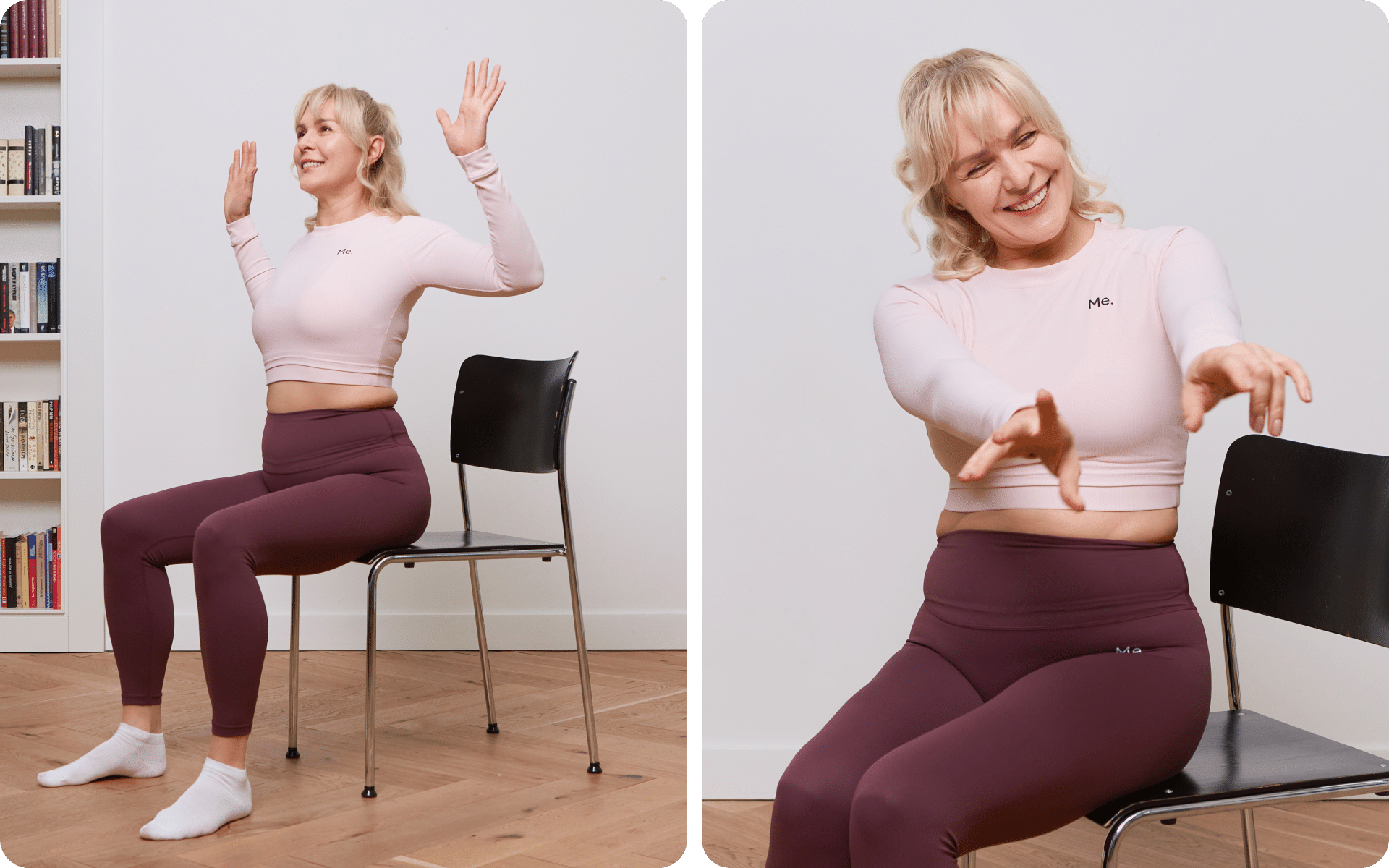
When considering how to progress in chair stretching exercises for older adults, manipulating stability is highly effective (7). If you are used to doing a torso twist while holding the back of the chair with both hands, progress by using only one hand, or eventually crossing your arms over your chest.
By removing the external leverage, your core musculature must work harder to actively pull you into the stretch, building strength at your end ranges of motion.
Reasons why BetterMe is a safe bet: a wide range of calorie-blasting workouts, finger-licking recipes, 24/7 support, challenges that’ll keep you on your best game, and that just scratches the surface! Start using our app and watch the magic happen.
Transition to Standing Modalities
The ultimate progression of chair workouts for seniors over 70 is using the chair as an assistive prop rather than a primary seat. You can progress by standing behind the chair (7), using the backrest lightly for balance, and performing standing hamstring stretches or calf stretches.
This introduces gravity and mild balance demands back into the equation, perfectly bridging the gap between seated safety and fully independent functional movement.
How Long Does It Take To Make Progress In Stretching?
It takes approximately 4–6 weeks of consistent practice to observe measurable, structural progress in muscle flexibility and joint range of motion (8).
During the first 1–3 weeks of a new stretching program, any increased mobility you experience is primarily neurological. Your brain is simply learning to tolerate the stretch sensation and is reducing the defensive muscle spasms that restrict movement (8).
True structural changes, in which the muscle fascicles add sarcomeres in series (the microscopic units of muscle tissue), require sustained mechanical tension over a longer period. Research indicates that holding stretches for a cumulative total of 5–10 minutes per muscle group, per week, yields optimal physiological lengthening (5).
Progress is highly individual and heavily dependent on your hydration status, sleep quality, and previous performance history. Tissues that have been immobilized for decades will naturally take longer to remodel than tissues that are regularly active.
Therefore, patience and precise measurement–such as noticing that you can reach 2 inches farther down your shin–are crucial for recognizing your progress.
Read more: A Guide to Seated Balance Exercises for Seniors to Stay Strong
How Often Should Chair Stretching Be Part Of Your Routine?
Chair stretching can be included 3–5 days per week if your goal is to build more consistent flexibility (9).
The adaptations required for muscle lengthening are transient; if you do not regularly expose your joints to their end ranges of motion, the tissues will quickly revert to their shortened state within 7–10 days of inactivity (10).
To maintain your current flexibility, 2 days a week is generally sufficient (9).
However, if your goal is to correct poor posture, reduce stiffness, or regain lost mobility, high-frequency, lower-intensity sessions are vastly superior to one grueling, painful session a week (5).
Doing 10 minutes of chair workouts at home every morning is a good starting point.
By integrating these routines consistently, you support overall wellbeing and daily comfort, much like following dedicated stretching exercises for seniors.
Frequently Asked Questions
What is the most effective stretching technique?
Proprioceptive Neuromuscular Facilitation (PNF) is often described as one effective stretching technique for increasing range of motion (6). It involves alternating isometric muscle contractions and passive stretching, which may help override the nervous system’s stretch reflex and move deeper into a stretch with control.
What muscles benefit most from stretching?
Postural muscles chronically shortened by modern sitting habits benefit most from stretching. These specifically include the hip flexors, the pectorals (chest), the anterior deltoids (front shoulders), and the hamstrings, all of which heavily influence back alignment and pelvic wellness (11). Taking frequent breaks throughout the day to stretch these muscles enhances postural variation.
How soon will stretching show results?
Research suggests that you will experience an immediate, temporary increase in flexibility neurologically within 10 minutes of a stretching session.
However, lasting, structural changes in tissue length typically take 4–6 weeks of consistent stretching applied at least 3 days per week (8).
What foods improve flexibility?
Eating foods rich in nutrients that support connective tissue health–including sufficient protein, vitamin C for collagen synthesis, and omega-3 fatty acids contributes to tendon and joint integrity (12).
While these nutrients support tissue wellness and function, improvements in flexibility primarily result from mechanical stretching and progressive exposure to end-range motion rather than from diet alone.
What is the number one fruit that seniors should eat every day?
Berries are frequently recommended as a top daily fruit choice for seniors due to their exceptionally high anthocyanin content. These specific antioxidants play a role in reducing systemic inflammation and also support neurological and cellular function (13). That said, all seniors benefit from a varied diet that includes a variety of fruits for different nutrients.
Can a 70-year-old regain flexibility?
Yes, a 70-year-old can absolutely regain flexibility.
While tissue elasticity naturally decreases with age due to collagen cross-linking, human muscle and fascia remain highly responsive to mechanical tension and consistent stretching protocols well into advanced age (14).
The Bottom Line
Improving your mobility is a goal well worth having at any age, but especially as you age. By utilizing a chair, you lower barriers to an active life. The 8 exercises detailed here provide a starting point for easing stiffness and supporting mobility over time. Your body adapts to whatever you ask of it consistently–so ask it to move freely, gently, and often.
DISCLAIMER:
This article is intended for general informational purposes only and does not serve to address individual circumstances. It is not a substitute for professional advice or help and should not be relied on for making any kind of decision-making. Any action taken as a direct or indirect result of the information in this article is entirely at your own risk and is your sole responsibility.
BetterMe, its content staff, and its medical advisors accept no responsibility for inaccuracies, errors, misstatements, inconsistencies, or omissions and specifically disclaim any liability, loss or risk, personal, professional or otherwise, which may be incurred as a consequence, directly or indirectly, of the use and/or application of any content.
You should always seek the advice of your physician or other qualified health provider with any questions you may have regarding a medical condition or your specific situation. Never disregard professional medical advice or delay seeking it because of BetterMe content. If you suspect or think you may have a medical emergency, call your doctor.
SOURCES:
- The Science Behind Balance Training in Physical Therapy: Preventing Falls through Neuromuscular Reeducation (2022, researchgate.net)
- Do Chair Based Exercises Help in Improving Balance, Physical Fitness, and Quality of Life in Various Populations? A Systematic Review (2024, researchgate.net)
- Differences of energy expenditure while sitting versus standing: A systematic review and meta-analysis (2018, researchgate.net)
- Muscle Stretching (n.d., sciencedirect.com)
- Improvements in Flexibility Depend on Stretching Duration (2023, pmc.ncbi.nlm.nih.gov)
- Practical recommendations on stretching exercise: A Delphi consensus statement of international research experts (2025, sciencedirect.com)
- Developing the principles of chair-based exercise for older people: a modified Delphi study (2014, pmc.ncbi.nlm.nih.gov)
- Muscle Architecture Adaptations to Static Stretching Training: A Systematic Review with Meta-Analysis (2023, link.springer.com)
- The ideal stretching routine (2023, health.harvard.edu)
- Detraining Effects Following Chronic Stretching Training on Range of Motion: A Systematic Review and Meta-Analysis (2025, link.springer.com)
- CURRENT CONCEPTS IN MUSCLE STRETCHING FOR EXERCISE AND REHABILITATION (2012, pmc.ncbi.nlm.nih.gov)
- The impact of nutrition on tendon health and tendinopathy: a systematic review (2022, pmc.ncbi.nlm.nih.gov)
- Recent Research on the Health Benefits of Blueberries and Their Anthocyanins (2019, pmc.ncbi.nlm.nih.gov)
- Structural and Functional Changes in the Coupling of Fascial Tissue, Skeletal Muscle, and Nerves During Aging (2020, frontiersin.org)
 Reviewed by
 Reviewed by