Calisthenics training uses your body weight as a form of resistance. Many celebrate the calisthenics practice for improving body strength, flexibility, and endurance.
This type of training is also convenient for anyone who can’t afford to commute to the gym or to other sports around the city. Common exercises such as squats, push-ups, or lunges are part of a calisthenics routine. So, if you’ve already done them, you’ve tried calisthenics.
Calisthenics has gained popularity among new trainees who want to shape up due to its efficiency and convenience for beginners.
This review will guide you through the key calisthenics positions to master. Try these basic 12 moves to enhance your daily routine. If you’re new to calisthenics or have trained some of its moves before, you’ll still find lots of benefits from reading this article.
Here you’ll explore:
- A practical order of calisthenics exercises to structure your routine
- Advanced positions to look forward to in the future
- Good ways to reduce strain risk
- Common mistakes
Let’s begin.
What Are the Basic Calisthenics Positions?
This review will cover the common calisthenics positions for beginners.
Here are 8 basic moves you can add to your routine, including some of the best calisthenics exercises for developing full-body control:
- Mountain climbers
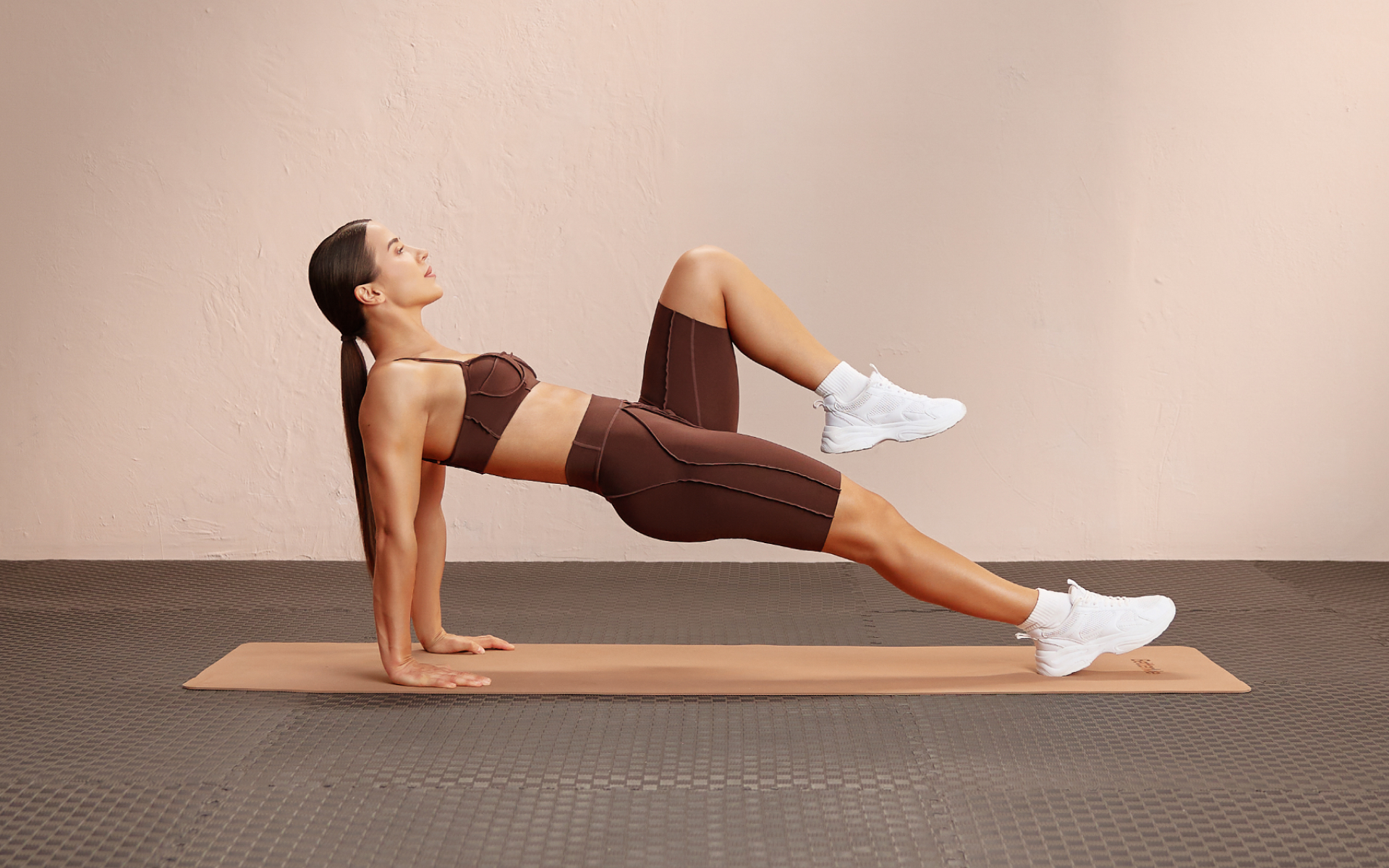
- Plank position
- Push-ups
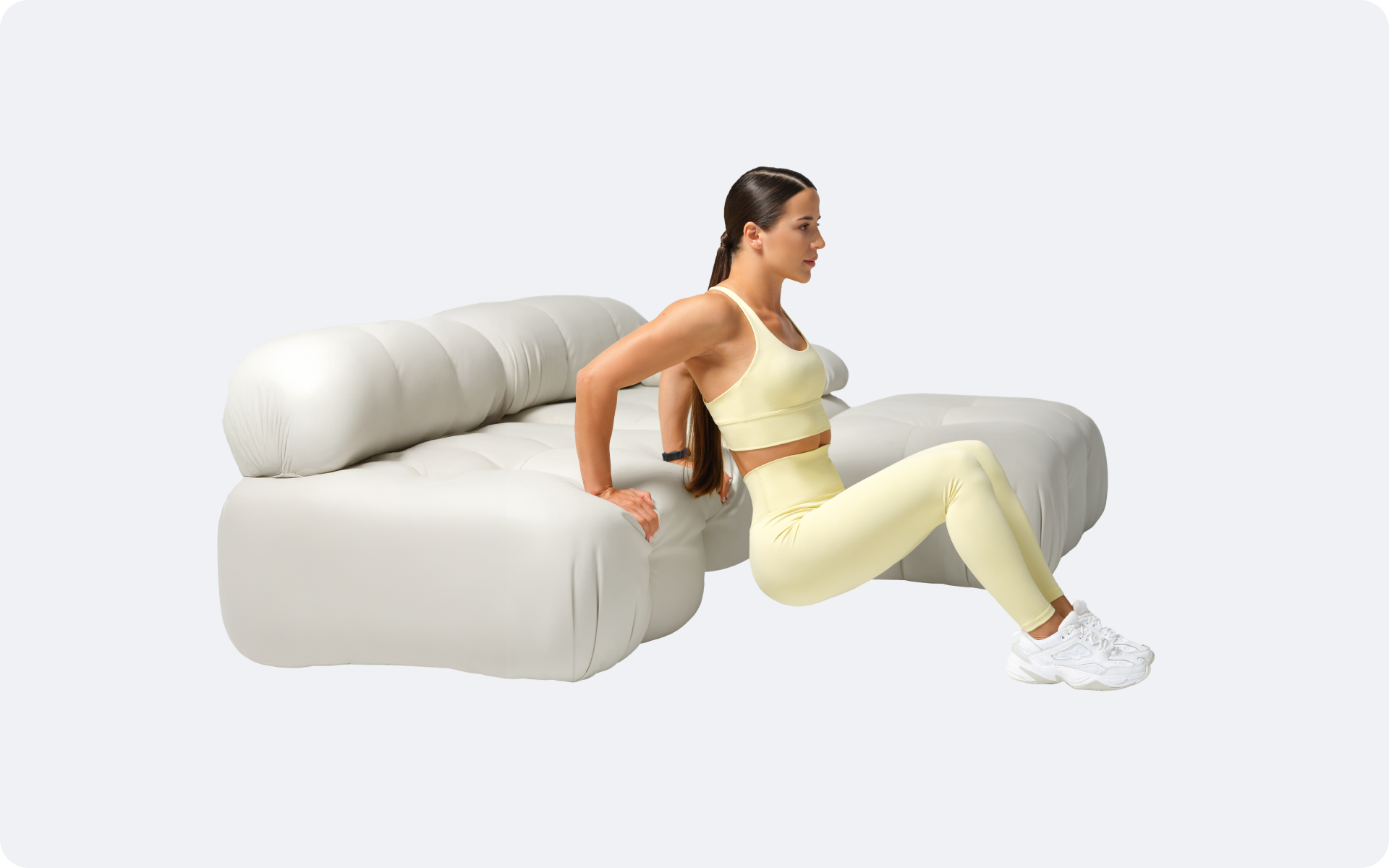
- Tricep dips
- Wall sits
- Tuck hold
- Hollow body hold
- Burpees
Mountain Climbers
The performance:
- Get in a high plank position, keeping your back straight, your hips low, and your core engaged.
- Bring your left knee under your chest toward your left elbow. Return your left leg to the plank position, then bring your right leg under your chest toward your right elbow.
- Repeat the sequence while alternating legs.
- Breathe deeply and concentrate on engaging your abdominal and gluteal muscles.
Plank Position
The performance:
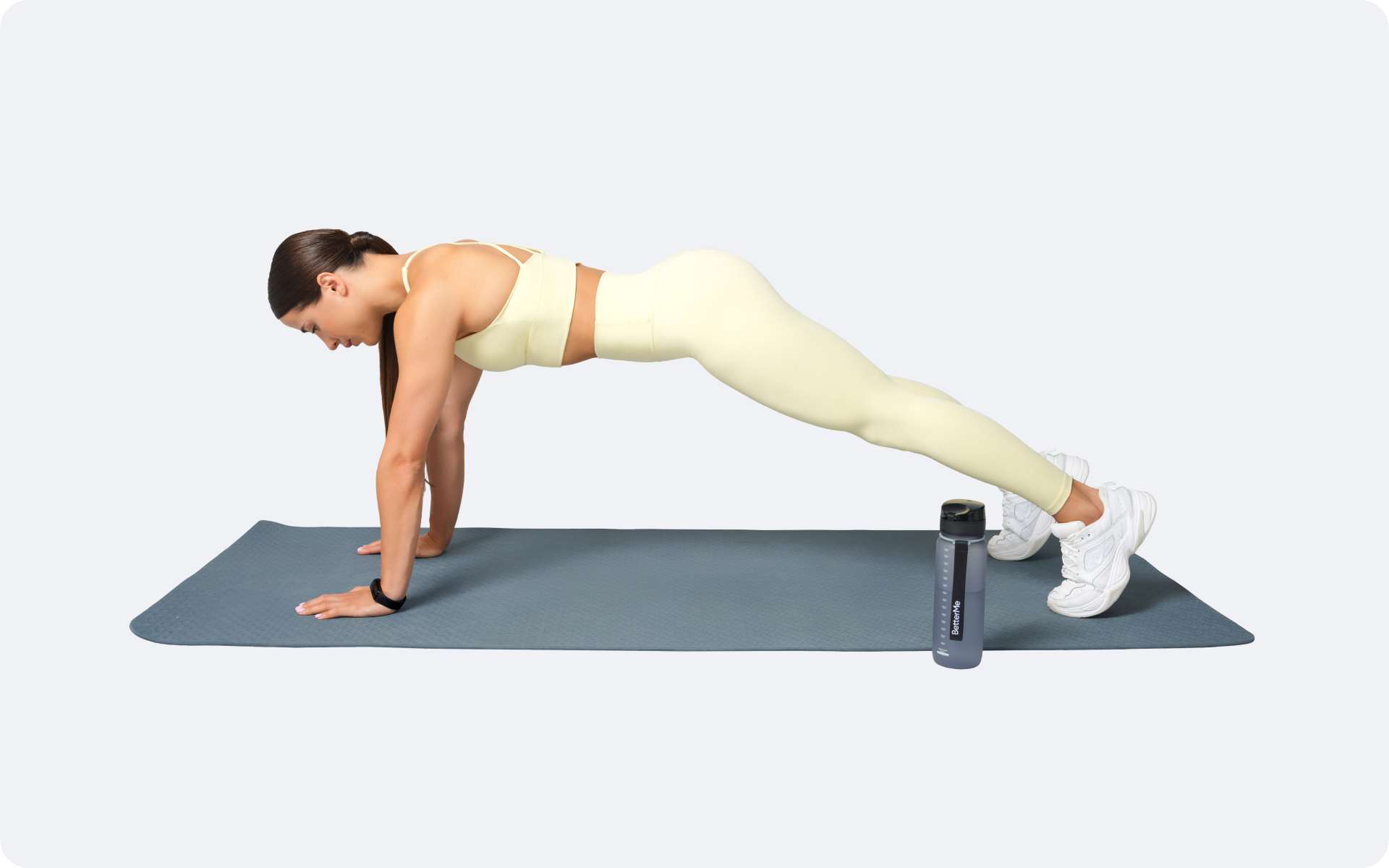
- Get into a plank position with your palms on the mat, your forearms on the floor, and your legs straight.
- Brace your core by breathing in through your chest and out through your stomach. The breath out will work to tighten the abdomen even further.
- Hold this position for 5-10 breaths or 30-60 seconds.
Push-Ups
The performance:
- Get on all fours with your palms on the mat slightly wider than shoulder-width apart.
- Keep your arms and legs straight, tucking your toes under to come into a plank position.
- Bend at your elbows and lower your body until your chest almost touches the mat.
- Pause for a few seconds and press down into the ground to straighten your elbows and push your body back up.
- Return to the starting position and repeat 8-10 times.
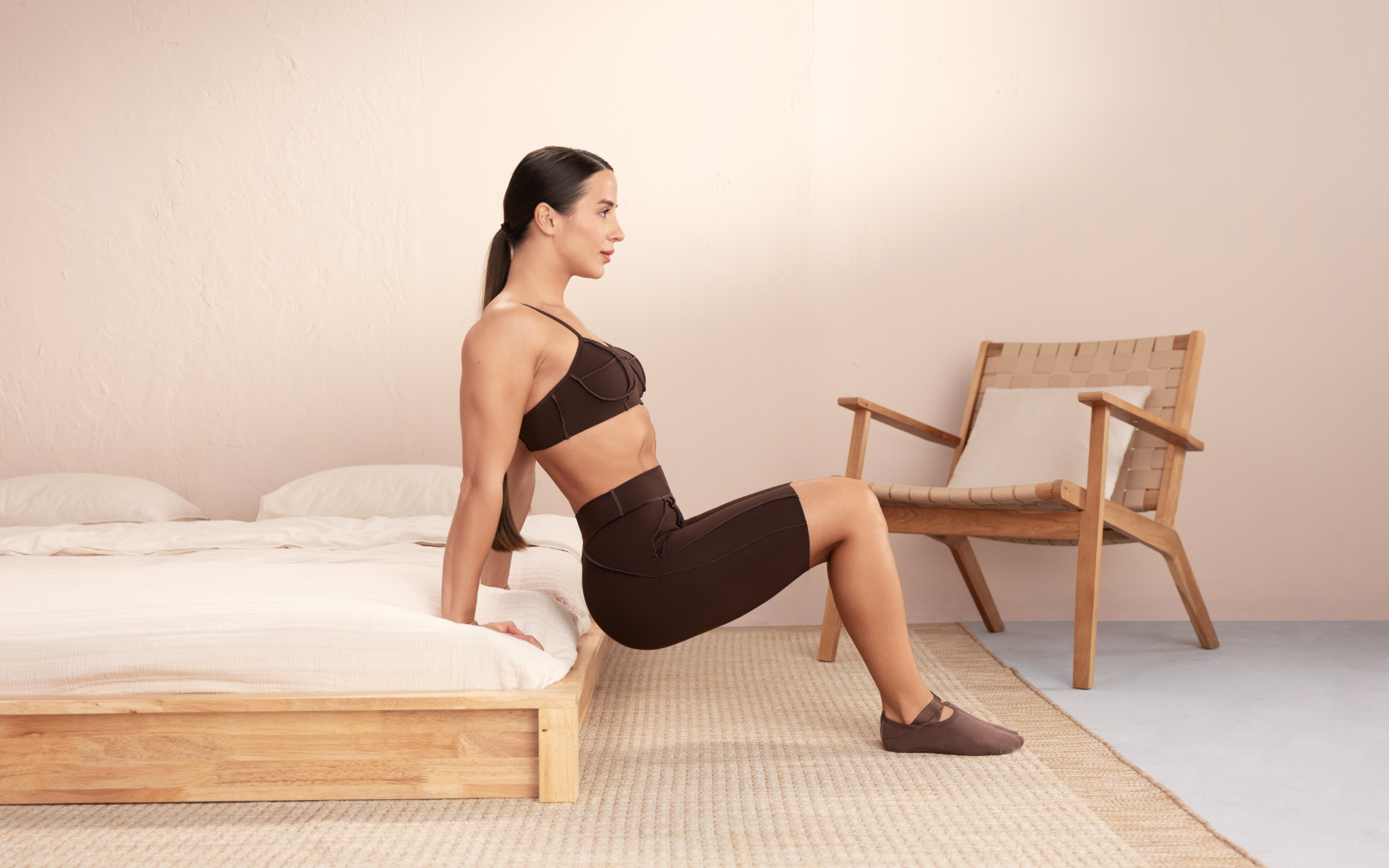
Tricep Dips
The performance:
- Sitting on the ground, place your palms behind you with your fingers facing your body.
- Move your butt back toward your hands, pressing down through your feet to lift your butt. Keep your knees bent.
- Bend your elbows to lower down into the dip, and then press through your hands to come to the starting position.
Read more: Beginner Calisthenics Workout at Home: Your Ultimate Guide
Wall Sits
The performance:
- Stand with your back against a stable wall, your feet hip-width apart, and your toes facing forward.
- Walk your feet out in front of you while keeping your back against the wall.
- Bend your knees, allowing your back to slide down the wall. Beginners can take one step out. Take two to three steps for a deeper sit, but don’t allow your knees to extend past your toes.
- Hold your squat for as long as you can, depending on your ability and the level of challenge you want. You need to feel your weight in your heels, not your toes.
- Push your palms against the wall and bend forward at your hips to exit the move.
Tuck Hold
The performance:
- Lie on the floor and bring your knees toward your chest, bending them at about a 90-degree angle.
- Keep your feet stacked and your shins parallel to the ground.
- Lift your shoulders slightly off the ground, keeping your neck in a neutral position.
- Reach your arms forward, parallel to the floor, and extend them toward your shins.
- Hold the position for a few seconds or up to one minute, depending on your fitness skills.
Hollow Body Hold
The performance:
- Lie on the floor, your legs extended, and your arms by your sides.
- Engage your core and drive your lower back into the ground.
- Squeeze your inner thighs together to help initiate the move. Your lower back should be on the floor.
- Keep your abs contracted and raise your legs 2-3 inches above the floor.
- Raise your head off the floor and extend your arms overhead and behind you. Make sure you continue to press your lower back into the floor.
- Hold for 30 seconds (or as long as you can) before lowering the legs and shoulders to the floor.
Burpees
The performance:
- Start with a squat position with your feet shoulder-width apart.
- Place both hands on the ground, shifting your weight to your hands.
- Kick your feet back to get in a plank position. Perform one push-up.
- Jump your feet forward to return to a squat position and stand up.
- Jump, reaching your arms above your head.
- Land softly with knees bent and immediately drop into a squat position.
- Repeat 10 times, or as many as you can.
Are Static Calisthenics Positions Enough to Build Strength?
Static calisthenics refers to a position you hold without moving your body.
For example, a plank or a tuck hold are good examples of static exercises. Isometric exercises may help support stability and strength development. However, static calisthenics on their own may not be enough if strength is your main goal (2).
However, one brief review suggested that isometric exercises may offer certain training benefits:
- Static exercises may improve strength at a biomechanically disadvantaged joint position of a specific movement.
- Static exercises induce less fatigue.
- Static exercises may support strength at specific joint angles compared to dynamic strength training (3).
The best combination for building strength in this case is a mix of dynamic and static calisthenics moves that engage multiple muscle groups and improve movement control.
Which Calisthenics Positions Help Build Core Control and Balance?
Different calisthenics positions help you build core strength and balance. The following are calisthenics poses for beginners and more advanced practitioners featuring static and dynamic moves. Use the calisthenics skills list to develop your practice.
Static Holds for Core Strength and Balance
Other calisthenics moves you could also benefit from are:
Superman Hold
How to perform:
- Lie on the floor in a face-down position, with your legs straight and your arms extended in front of you.
- Slowly lift your arms and legs around 6 inches off the floor, or until you feel your lower back muscles contracting.
- Hold this for as long as you can.
Wall Handstand (For Advanced Users)
How to perform:
- Get into an all-fours position with your knees and toes on the floor.
- Lift your hips over your knees, and press the soles of your feet against a sturdy wall. Keep your hands under your shoulders.
- Grip the ground with your hands, rotating your shoulders outward to engage your lats. Push your hips into the air to slowly walk your feet up the wall.
- While you’re walking up the wall, walk your hands toward the wall.
- Continue to walk up the wall until your legs are straight and your hands are directly underneath your shoulders.
- Your chin should be tucked throughout the movement, as if holding an egg under your chin. Your ears should be in line with the upper part of your arms.
- Squeeze your legs together, engaging your glutes and quads. Engage your core.
- Hold the position for the desired length of time, then walk your hands forward while walking your feet down the wall to return to the starting position.
BetterMe: Health Coaching app helps you achieve your body goals with ease and efficiency by helping to choose proper meal plans and effective workouts. Start using our app and you will see good results in a short time.
Dynamic Moves For Core Strength And Balance
There are more engaging movements to add to your training.
Hollow Body Rocks
How to perform:
- Lie on your back. Reach for the ceiling with your arms until your shoulder blades are off the floor. You should fully extend your arms.
- With your lower back to the floor, lift your legs 3-6 inches off the floor.
- Create tension by squeezing your legs, arms, and abs.
- Start to rock back and forth, holding the tension so as not to break the arch you’ve created with your legs and arms.
- Keep your abs engaged the entire time. Repeat as many times as you can with good form.
Pistol Squats (More Advanced Users)
How to perform:
- Pick a base leg to work on. Shift your other leg forward and lift your foot off the floor.
- Extend your arms in front of you for balance. Squeeze your abs and glutes to prepare for the movement.
- Push your hips back and slowly bend your knees to lower into the squat.
- Lower until you reach the bottom position, keeping your opposite leg elevated off the floor.
- Hold for a second and press off the floor with your planted foot to get back up to standing.
- Squeeze your glutes at the top.
How Long Should Each Position Be Held for the Best Results?
Your hold time for each calisthenics pose or move will depend on your goal and current fitness level. Calisthenics moves generally require different timing.
The table below shows approximate timings for different levels:
| Position | Beginners | Intermediate | Advanced |
|---|---|---|---|
| Mountain climbers | 20-30 seconds | 30-40 seconds | 1 minute+ |
| Plank position | 20-30 seconds | 35-45 seconds | 1 minute+ |
| Push-ups | 15-20 seconds (or 5-8 reps) | 20-30 seconds (or 8-10 reps) | 1 minute+ (11-20 reps) |
| Tricep dips | 15-25 seconds (or 5-9 reps) | 20-35 seconds (or 8-12 reps) | 1 minute+ (11-25 reps) |
| Wall sits | 20-30 seconds | 35-45 seconds | 1 minute+ |
| Tuck hold | 20-30 seconds | 35-45 seconds | 1 minute+ |
| Hollow body hold | 20-30 seconds | 30-40 seconds | 1 minute+ |
| Burpees | 15-25 seconds (or 5-7 reps) | 20-30 seconds (or 8-10 reps) | 1 minute+ (11-25 reps) |
| Superman hold | 20-40 seconds | 45-50 seconds | 1 minute+ |
| Hollow body rocks | 20-30 seconds | 40-45 seconds | 1 minute+ |
| Wall handstand | 10-20 seconds | 30-45 seconds | 1 minute+ |
| Pistol squats | 10-20 seconds (or 3 to 6 reps) | 25-45 seconds (or 6 to 8 reps) | 1 minute+ (or 10 to 13 reps) |
What Advanced Positions Should You Work Toward?
If you’re improving at calisthenics and the moves above feel easy for you, then it’s time to start focusing on progressive overload in your training.
You can master progressive overload in various ways, but the main principle is that you are making your workout more challenging.
Below, we discuss different advanced variations of traditional, easy calisthenics moves.
Advanced or expert-level calisthenics practitioners can try these moves if they find the basic calisthenics exercises too easy:
- V-sit: A challenging core exercise that improves hamstring flexibility.
- Human flag: Can challenge the shoulders, obliques, and lats.
- Planche: An iconic movement that demands tremendous upper body and core strength – it can support balance and upper-body control.
- Front lever: A great move to engage your core, back, and shoulders.
- Back lever: Another extreme position that demands mobility and posterior chain strength.
- Handstand press: One of the most complicated push-ups, which requires high upper-body strength and core control.
How to Transition From Beginner to Intermediate Holds
Transitioning from basic calisthenics beginner holds to intermediate ones requires consistent progression.
Here are 4 simple tips for you to follow to progress toward an intermediate level:
- Master the basic moves first. Focus on the proper form and technique rather than challenging yourself with impressive timing.
- Use progressive variations of each movement. For example, instead of doing a simple plank, try doing a plank with shoulder taps or an elevated version.
- Structure your training accordingly. Create a schedule with sets and reps, along with your time goals. This can help you focus on specific exercises and track your progress.
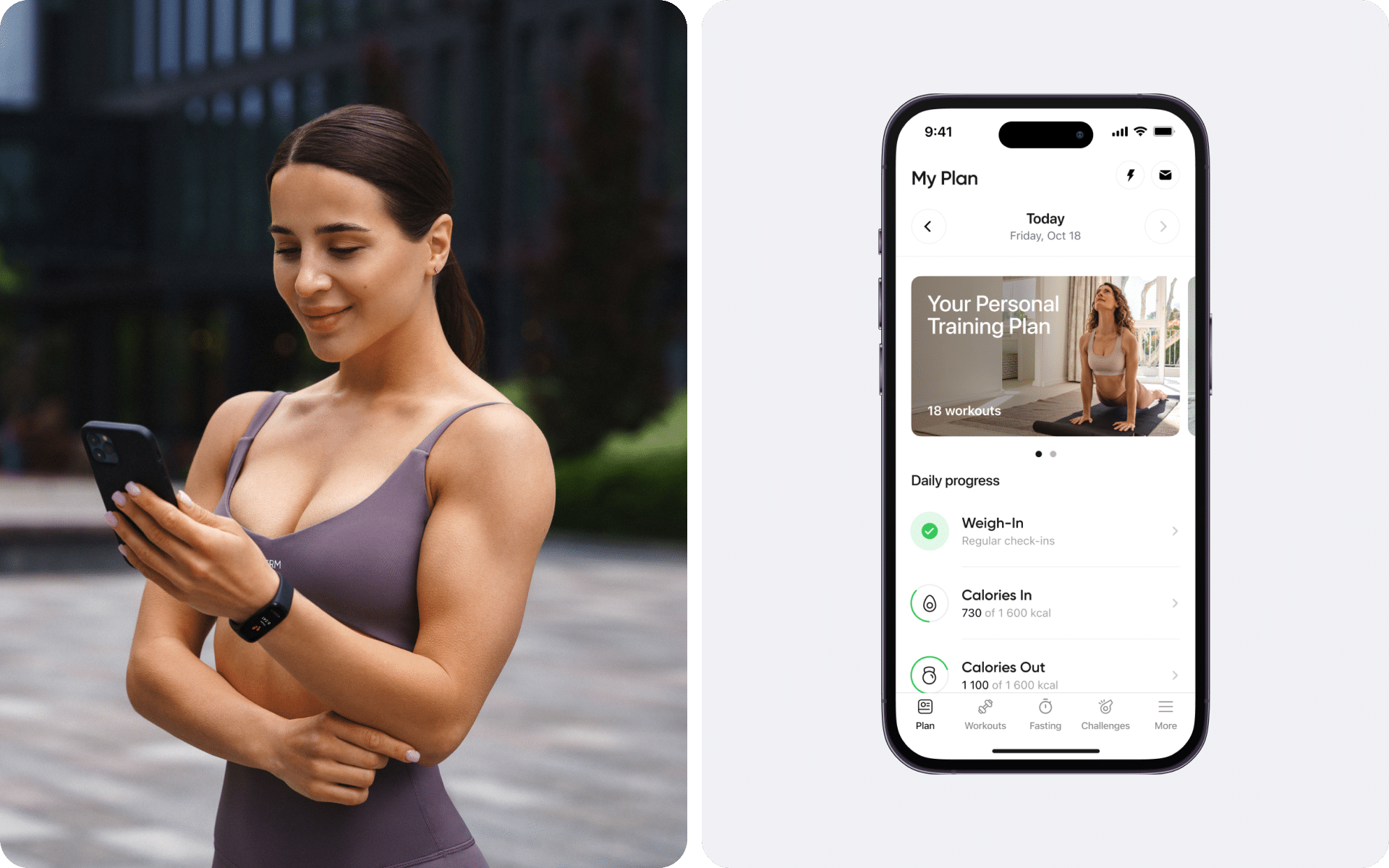
- Track your progress via an app or by writing notes. Keep weekly records to track your progress before and after, and gradually increase the timing, sets, and reps.
Intense sweat sessions, working weight loss tips, lip-smacking recipes come in one package with the BetterMe: Health Coaching app—all at your fingertips, start transforming your life now!
What Are Some Common Mistakes in Calisthenics Positions?
Many think calisthenics for beginners is an easy workout.
Bodyweight workouts may seem attainable, but people can still put excess strain on their joints or muscles even when doing simple moves.
Here are the common mistakes you need to avoid in calisthenics:
Mistake #1:
You don’t engage your core enough. This may lead to sagging and poor balance. Instead, keep your core tight and active throughout the entire movement.
Mistake #2:
You shrug your shoulders. This may cause instability. Instead, retract and protract your shoulder blades.
Mistake #3:
You forget to breathe. This can create tension and even fatigue. Instead, breathe rhythmically throughout the movement. Focus on breathing in as you brace for a lift and breathing out as you push the weight away or pull the weight toward you.
Mistake #4:
You position your wrists incorrectly. This can lead to wrist strain. Instead, warm up your wrists before the workout.
Mistake #5:
You don’t warm up at all. Not warming up may increase the risk of strain. A dynamic warm-up can improve your performance (4). Engage in an active warm-up routine for 5-10 minutes to prepare your joints for training.
Read more: Beginner-Friendly Calisthenic Movements for Everyday Fitness
How to Reduce Strain Risk and Train More Effectively
We all want to train with good form and reduce unnecessary strain because discomfort makes it impossible to continue training. To avoid strain, you should eliminate the mistakes mentioned in the previous section.
However, there are other factors to consider for a well-structured calisthenics workout:
- Prioritize proper form
Don’t focus on hitting a specific time or a specific number of reps. It’s more important to do the exercise correctly than it is to get as many reps as possible.
- Stick to hold times that match your fitness level
For example, if you’re a beginner, don’t strive to hold a plank for 60 seconds for the first time. Focus on holding the plank properly and breathing steadily throughout it. It’s more important to focus on your breathing during this exercise than on the duration you hold it.
- Progress gradually
It’s best to start your calisthenics workout journey by perfecting the basic and simple moves. Over time, you can progress to more intermediate or advanced positions, but only once you’ve mastered the basics.
For example, squats are suitable for beginners, but jumping squats may be too challenging for a beginner if they have not mastered a squat. The last thing you want is to overdo it and set your progress back.
- Warm up well before any workout
Wrist rolls, shoulder circles, plank taps, and high knee marching are good options for an active warm-up routine.
- Listen to your body and respond to discomfort
If you experience discomfort while performing a specific exercise, take a break and revisit it on another day.
- Allow for rest days
Give your muscles and joints time to rest for 1-2 days. Resistance training creates training stress, and rest days give your body time to adapt. Don’t ignore rest days if you want to achieve muscle growth.
- Do cool-downs
Cooling down after a calisthenics workout can help your body gradually return to a more relaxed state; cool-downs may help your body transition out of the workout and reduce post-workout stiffness (5). This can be anything from a light walk to lower your heart rate or some static stretching that focuses on the muscles that you just exercised.
Frequently Asked Questions
Are calisthenics positions good for flexibility?
Yes, calisthenics positions can benefit your flexibility, particularly when you combine them with proper technique and both dynamic and static positions.
What things should I look out for when creating a calisthenics workout program?
When creating a calisthenics workout program, focus on your specific goals, such as strength, endurance, skill, or flexibility, and ensure that you train all major muscle groups with a balanced approach that includes exercises for push, pull, legs, and core.
Utilize progressions to apply overload, prioritize proper form, and avoid overtraining by allowing adequate rest. Warm up properly, include skill work early in the session, and cool down afterward. Track your progress, listen to your body to reduce strain risk, and maintain variety to stay motivated and avoid plateaus.
What mistakes should I avoid with new calisthenics positions?
Some common mistakes to avoid with new calisthenics positions include skipping warm-ups, performing exercises with poor form, rushing to more challenging moves when you’re not strong enough, not breathing properly through the exercise, ignoring gradual progression, and pushing through discomfort.
Is proper breathing important during calisthenics positions?
Proper breathing is essential for any workout. If you don’t breathe well, you may feel dizzy or fatigued. Controlled breathing can help you maintain core stability, improve endurance, and support movement control.
The Bottom Line
We’ve just answered a highly asked question: “What are the key calisthenics positions to master?”
Most of the 12 moves mentioned here are suitable for beginners, while some are best suited for advanced-level trainees. Mix static and dynamic moves to improve your performance and build strength.
Warm up well, focus on proper form, and take a break from exercise if you feel discomfort and tiredness. Have fun!
DISCLAIMER:
This article is intended for general informational purposes only and does not serve to address individual circumstances. It is not a substitute for professional advice or help and should not be relied on for making any kind of decision-making. Any action taken as a direct or indirect result of the information in this article is entirely at your own risk and is your sole responsibility.
BetterMe, its content staff, and its medical advisors accept no responsibility for inaccuracies, errors, misstatements, inconsistencies, or omissions and specifically disclaim any liability, loss or risk, personal, professional or otherwise, which may be incurred as a consequence, directly or indirectly, of the use and/or application of any content.
You should always seek the advice of your physician or other qualified health provider with any questions you may have regarding a medical condition or your specific situation. Never disregard professional medical advice or delay seeking it because of BetterMe content. If you suspect or think you may have a medical emergency, call your doctor.
 By
By 
 Reviewed by