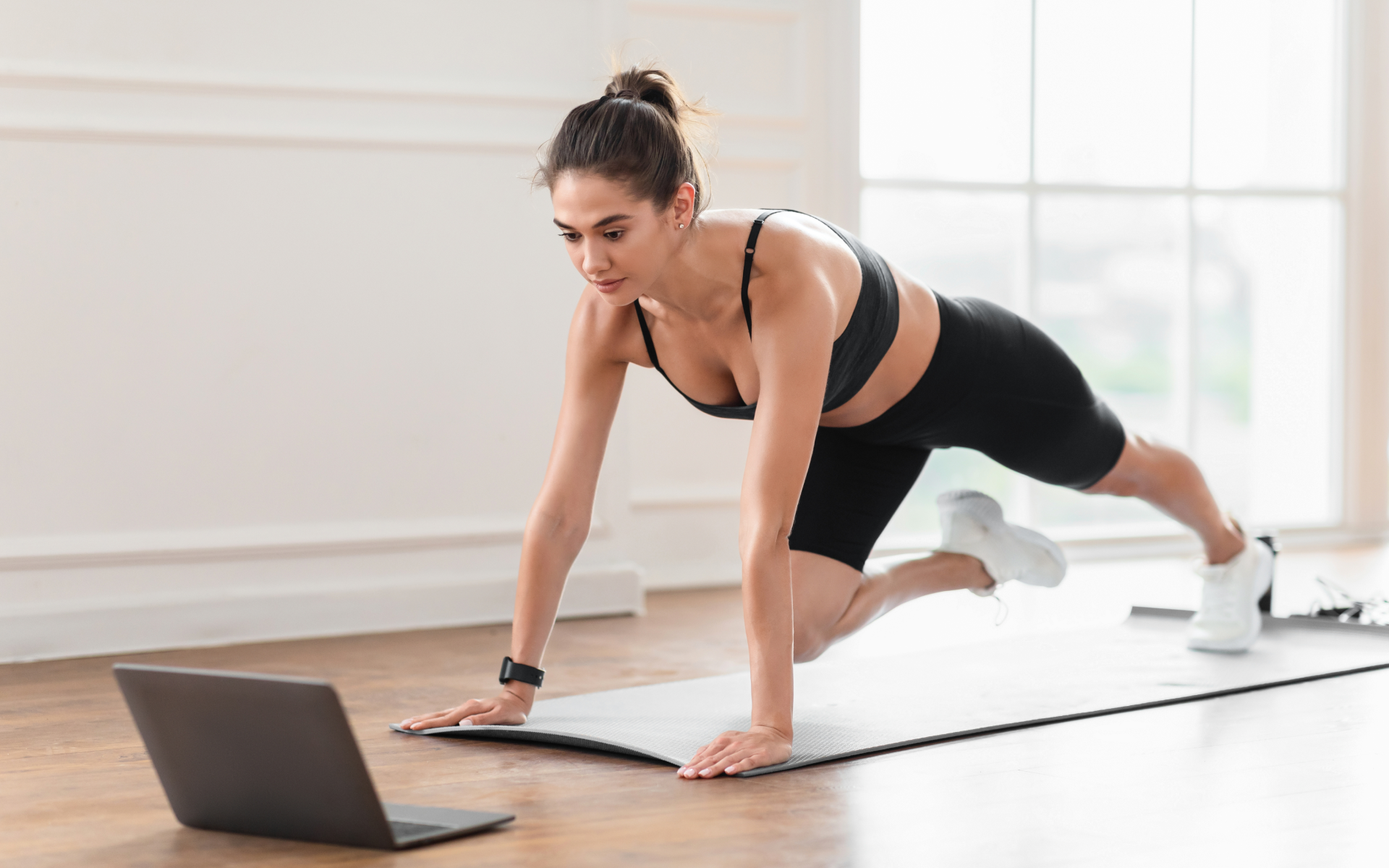

Was fitness a 2025 goal you unfortunately didn’t achieve? If so, you’re not alone. It’s normal for some yearly goals to fall through the cracks. However, as the new year begins, don’t find yourself in this position at the end of 2026.
Curating a good beginner workout plan now can help you hit the ground running come the new year, which can set you up for success and incredible progress/results. Read on to learn how to design the best beginner program for you – schedules, exercises to add to your routine, and more.
What Is a Supportive Beginner-Friendly Workout Plan?
A supportive beginner-friendly workout plan at home or the gym is one that helps the exerciser feel:
- Capable
- Motivated
- Safe as they work out.
Fitness can be scary for novices, and more often than not, failure and fear make them quit before they can start to reap the benefits of their routine.
To prevent this, a good beginner-friendly workout plan for men or women shouldn’t pressure the user to perform like a pro gym-goer or an athlete. Instead, it should meet them where they are, slowly allowing them to build their confidence, their performance, and their bodies.
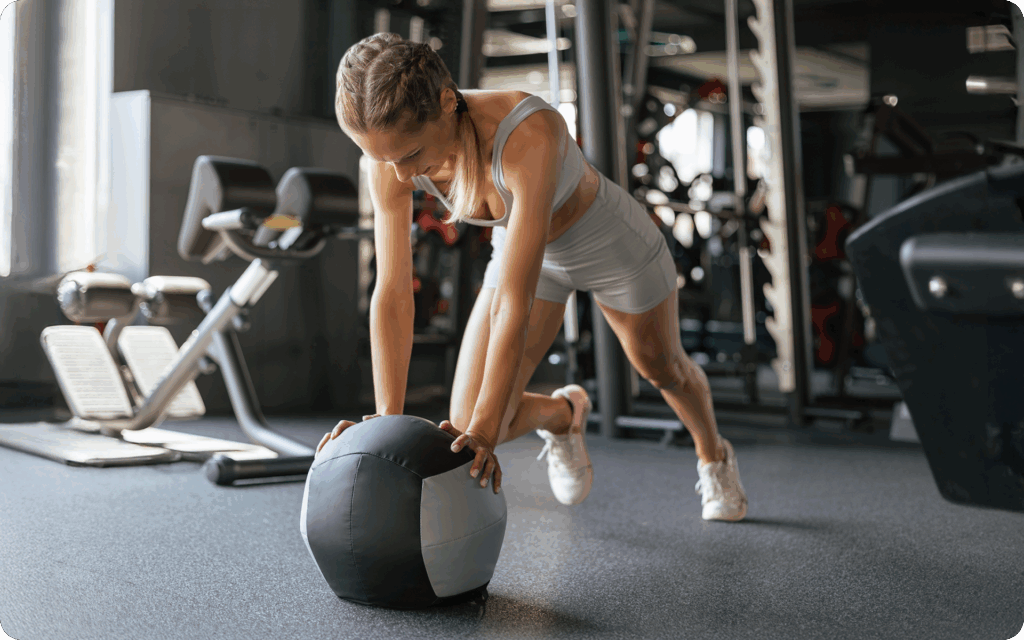
The key elements of a supportive plan include:
- Simple, paced workouts that gradually increase in intensity
- Prioritization of safety and workout form improvement
- Flexibility, where the routine adapts to best suit what the user is capable of and what they enjoy the most
- Self-compassion for when they fall short of their goals
- Ample rest for recovery and a healthy, balanced program
BetterMe will shake off your mental funk, rid you of your energy-zapping habits, and help you sculpt the body of your dreams. Intrigued? Hurry up and change your life for the better!
How Do I Start Exercising After Years of Inactivity?
Trying to devise a gym workout plan for female or male beginners after years of not exercising can feel intimidating. However, it doesn’t have to be. Here are some tips to help you slowly and safely fall back into a more active lifestyle:
Start Slow and Small
Your body is no longer where it was all those years ago when you were more active in the gym or fitness world. You’ve likely lost some of the muscle mass and endurance that you had back then.
Therefore, instead of rushing to pick up where you left off, start slower and smaller.
- If you were at an intermediate level before, start with beginner-friendly routines.
- If you were previously at the advanced level, start with intermediate-level workouts.
This is safer and also helps you gauge where your body is and what it can handle.
Work on Improving Your Consistency First
You fell off your routine because something, be it your lifestyle or health, interfered with your consistency. To ensure that you stick to your routine this time around, work on improving your consistency first before tackling the duration or even intensity of the routine.
Look at your schedule and find the days and times where you can comfortably slot in a workout.
Once you’ve found these, follow step one above and find easy workouts to start with. Challenge yourself to do these exercises on the chosen days and times for a month and see if you can stick to it.
Check out this simple 4-week beginner workout routine for consistency and improved fitness.
Choose Exercises That You Previously Enjoyed
Studies have shown that enjoyment of exercise has a positive influence on making exercise a habit. This naturally increases the intention to continue with a routine and increases exercise frequency (1, 2).
Therefore, to get yourself to stick to a workout program after years of inactivity, start with exercises you previously enjoyed and those that feel approachable. The enjoyment from doing activities you find fun, in addition to the ease of doing them, could help you fall back in love with fitness and stick to it.
Try this calisthenics beginner workout plan to help you remember your form and get back into exercising.
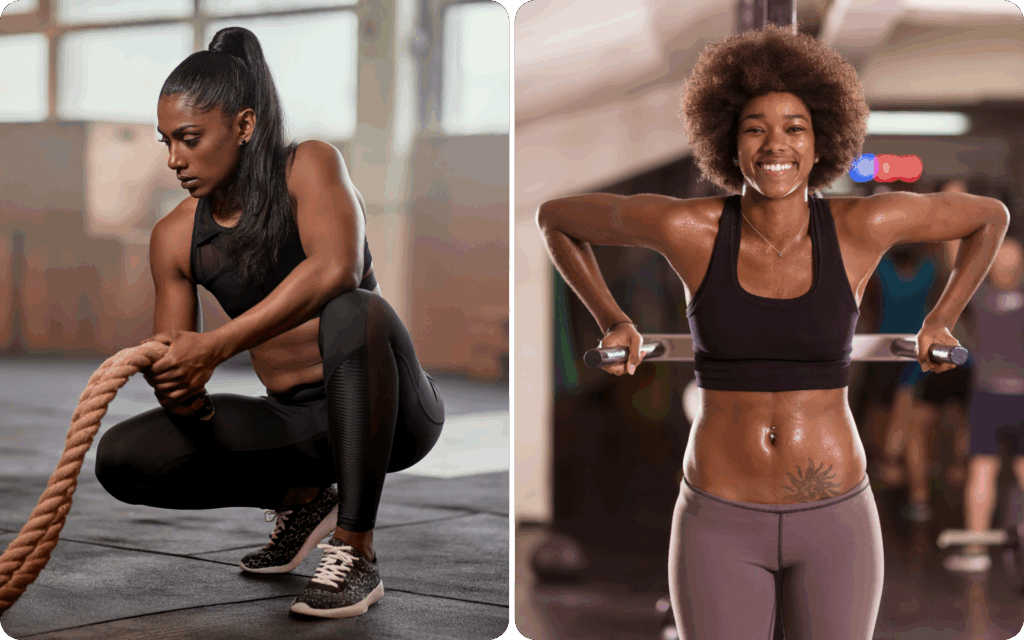
Try a Simple Weekly Structure
The World Health Organization recommends that adults engage in (3);
- At least 150 minutes of moderate-intensity physical activity throughout the week. These are minimum guidelines – if you can’t meet them yet, start lower and progress weekly until you reach them.
- 2 weekly strength training sessions.
If you don’t have a program to follow, try this beginner workout at home without equipment routine.
Listen to Your Body
It’s important to remember that you’re no longer ‘the old you’. Don’t expect your body to perform how it used to, and don’t compare the current you to who you were before.
Your coordination and stamina are likely less than they previously were. You may also feel more sore from less exercise than you did before. All of this is normal. Given time and consistency, your body will adapt. So keep going and be patient with yourself.
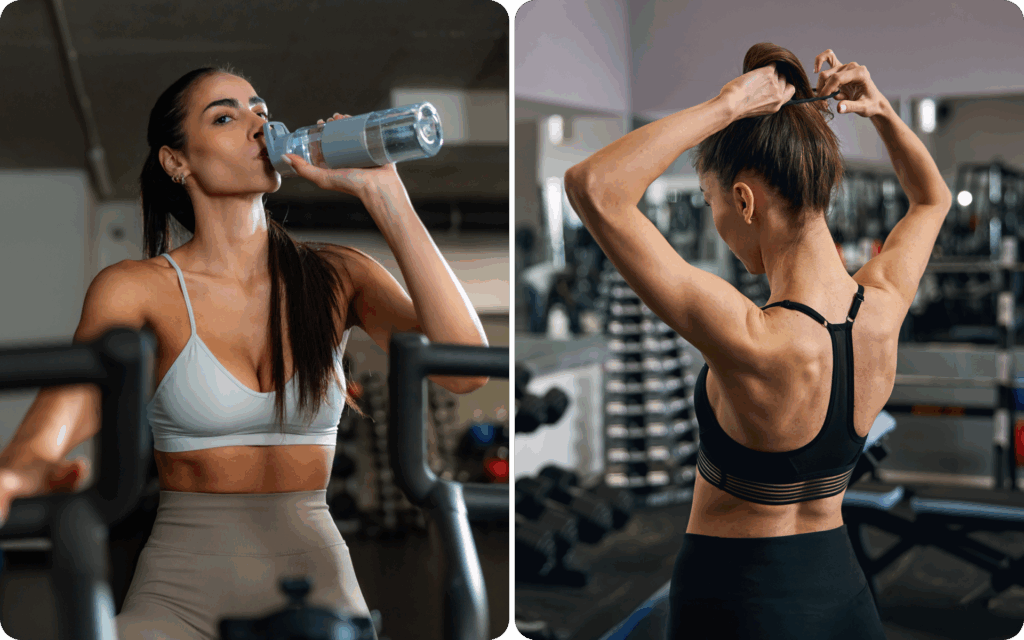
Warm Up, Cool Down, and Hydrate
Always spare 5-10 minutes before and after the main workout session to do dynamic and static stretches for your warm-up and cool-down. Doing this helps improve performance, reduces the risk of injury, and lowers the chances of post-exercise soreness (4, 5, 6).
Also, always make sure you’re constantly hydrated during the workout session and even when you’re not exercising. According to research, proper hydration improves performance, avoids ensuing thermal stress, particularly when exercising in warm and temperate environments, maintains plasma volume, delays fatigue, and prevents injuries associated with dehydration and sweat loss (7, 8).
Read more: Bodyweight Circuit Exercises: Your Definitive Scientific Guide
How to Build An Effective Workout Plan as a Beginner
Some tips to help you do this include:
- Know Your ‘Why’ and Set Realistic Goals
Be incredibly specific about why you are exercising. Instead of saying you’re working out to ‘get fit’, say you’re working out to:
“Lose weight and improve endurance so you can join your family/friends on a hike in 5 months.”
Once you know your ‘why’, you can then set up realistic and achievable goals to reach this goal. For example, for the above ‘why’, the goal should be to consistently follow a workout program that includes strength training and cardio workouts.
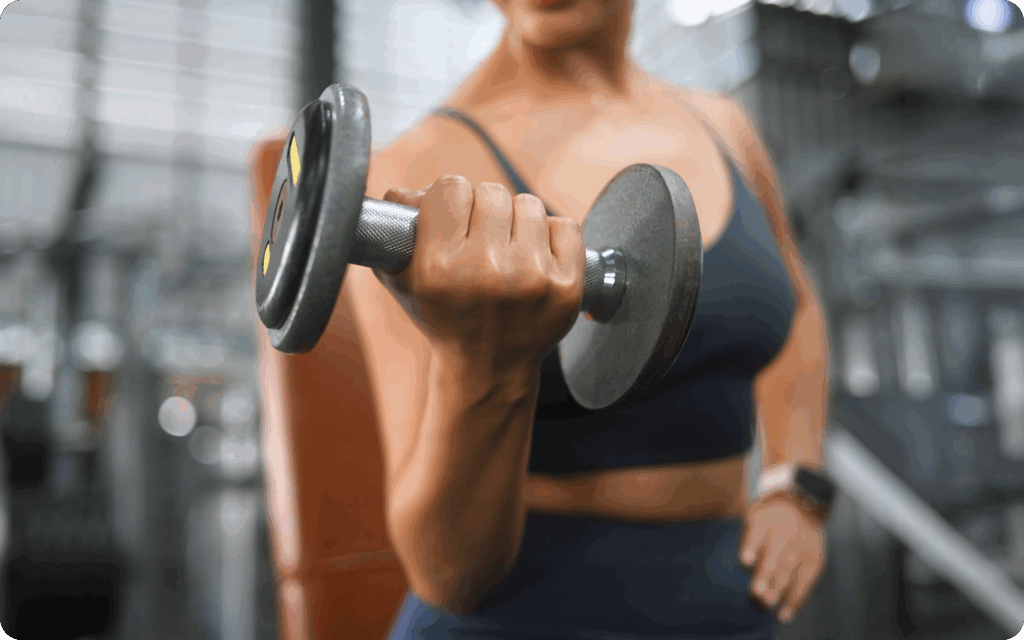
- Incorporate Progressive Overload
An effective workout plan always challenges you to do and be better. Therefore, when building your plan, you should allow for the gradual increase of weights, reps, sets, or difficulty of the overall program.
Doing this will help you keep increasing your desired fitness variable:
- Cardio endurance
- Muscle mass
- Strength
- Find a Routine That Works Best for You
To do this, you need to:
1. Decide if you can use machines, free weights, or your bodyweight:
Bodyweight training can be a great starting point as it’s accessible and helps you practice control and technique. However, bodyweight exercises aren’t automatically “easy” – many classic calisthenics moves (push-ups, pull-ups, dips, inverted rows) require significant strength and coordination, so it’s normal if you can’t do them yet.
2. Choose 1 exercise per movement pattern
Exercise movement patterns (also known as functional movements) refer to patterns that mimic how the body naturally moves. These patterns include:
- Squatting – achieved through a bodyweight squat and other squat exercises.
- Hinge – These movements require bending at the hips with minimal knee bend, extending the glutes. Examples include deadlifts and hip thrusts.
- Lunge – For this, you need to step forward, backward, or sideways, while lowering the body. Examples include walking lunges, forward and reverse lunges, and side lunges.
- Push – This involves moving a weight away from your body. Exercise examples include push-ups and overhead presses.
- Pull – The opposite of ‘push’. It involves moving a weight towards the body. Workout examples include pull-ups, chin-ups, and rows.
- Carry – This is moving while holding a weight in your hands. A real-life example is carrying groceries, while a workout example is the farmer’s carry.
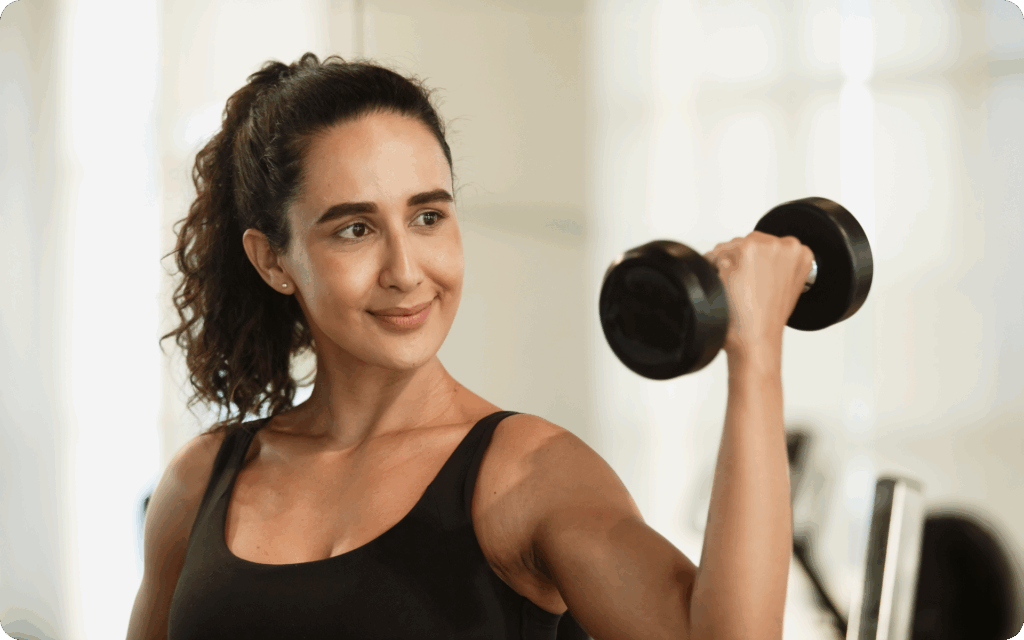
3. Choose a rep scheme for your goals (lay out rep schemes)
In strength training, rep schemes are structured sets and repetitions that vary by the ultimate goal. For example, if the goal is (9):
- Strength: the rep scheme should be 1-5 repetitions per set with heavy weights. This should be done with 80% to 100% of 1 repetition maximum (1RM)
1 repetition maximum refers to the heaviest weight you can lift for just one single repetition of an exercise with good form.
- Hypertrophy: the rep scheme should be 8-12 reps per set with moderate weights/load. This requires 60% to 80% of 1RM
- Endurance: 15+ reps per set with light loads. This requires loads that are below 60% of 1RM
4. Start with the biggest/hardest exercise.
You usually have the most strength, focus, energy, and determination at the start of your workout. Doing the biggest/hardest exercise first allows you to maximize your performance better than if you leave it for last.
5. Stagger upper- and lower-body movements
Don’t perform 2 consecutive upper- or lower-body movements. Instead, alternate or stagger the exercises by completing an upper-body movement, then following it up with a lower-body movement. This allows one muscle group to recover even as you continue with your workout, which is great for time efficiency
6. Space out your workout days
For example, Monday and Thursday, Tuesday and Friday, etc.
This allows for ample body and muscle recovery, particularly when combined with a healthy, high-protein diet. Remember that muscles won’t grow or become stronger without ample rest.
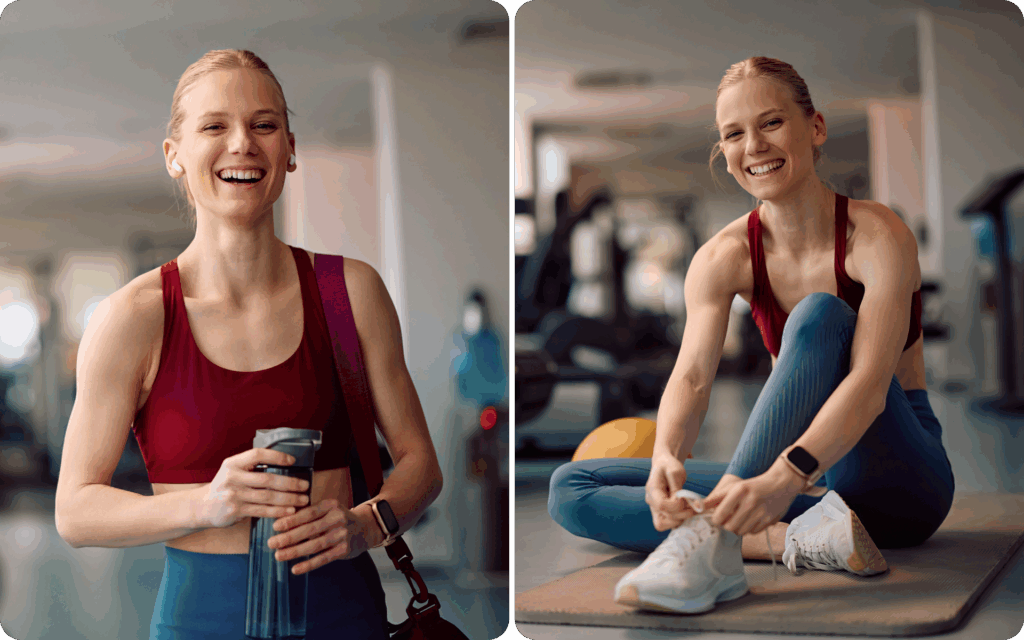
What Is a Beginner-Friendly Workout to Start with?
An example of a beginner-friendly program you could start with is as follows:
- Warm-up – Jumping jacks and dynamic stretches such as leg swings, in addition to arm, hip, and ankle circles. This should last 5-10 minutes.
- Main workout – Bodyweight squats, walking lunges, wall or knee push-ups, mountain climbers, 30-second elbow plank, and calf raises. Do 2 sets of 10 reps for all exercises, apart from the plank.
- Cool-down – At least 5 minutes of gentle full-body static stretches. Make sure to hold each stretch for at least 20 seconds.
Read more: Bodyweight Workout Routine: The Insights You Didn’t Know You Needed!
What Is a Balanced Workout Schedule for a Beginner?
This is a simple weekly plan that distributes the exercises evenly to help build a well-rounded routine and physique.
Such a routine should have full-body strength training workouts that target all the major muscles in the body, cardio exercise for endurance, and mobility exercises for flexibility.
Rest is also essential in any workout program, so make sure to set days aside for this.
Strength training exercises
- Squats (bodyweight or with light weights) – legs and glutes
- Incline or wall push-ups – chest, shoulders, triceps
- Deadlift (with light dumbbell or bodyweight) – hamstrings, glutes, lower back
- 30-second elbow plank – core/abdominal muscles
- Banded rows – upper back, biceps
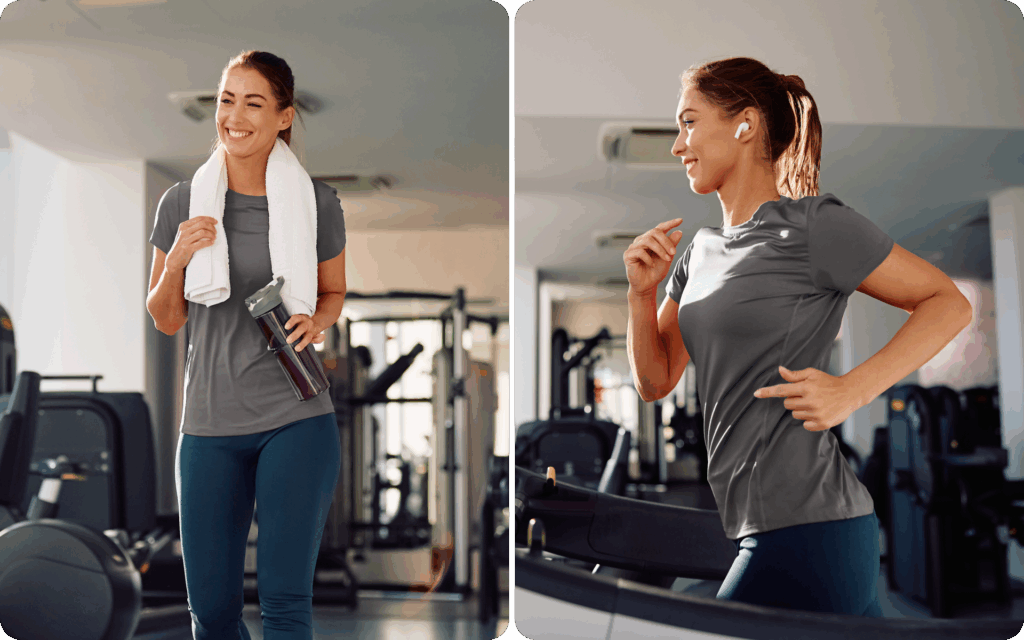
Cardio exercise options
- Walking, stationary biking, or using an elliptical
- Swimming, dancing, or light jogging
Mobility and flexibility exercises
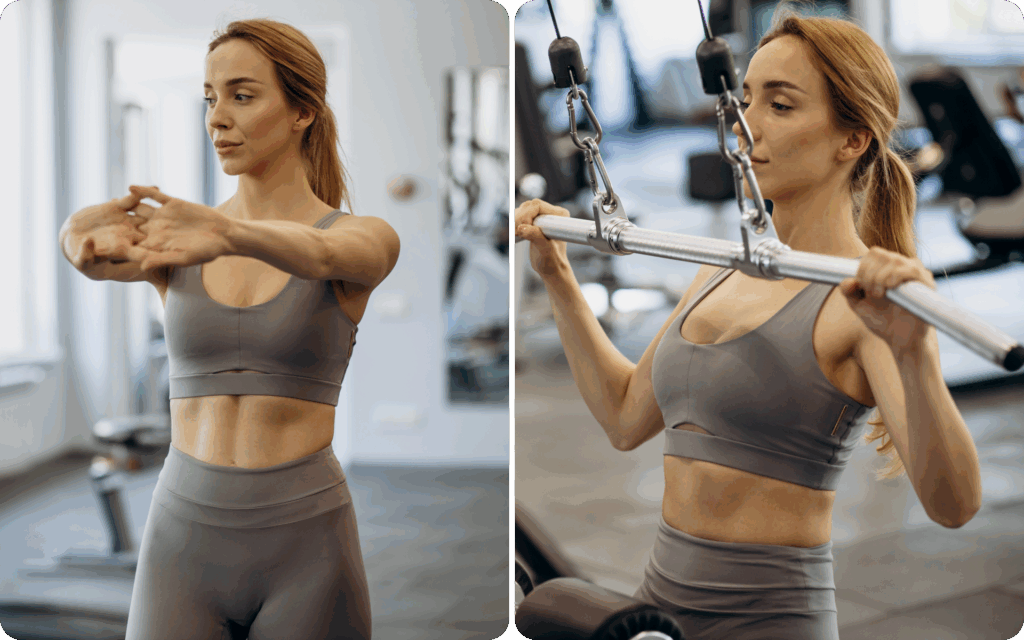
- Dynamic moves such as arm, hip, and ankle circles, leg swings, butt kicks, and walking lunges. These are great as warm-up exercises.
- Static stretches include chest opener, hip flexor stretch, standing hamstring stretch, frog pose, and pigeon pose. Static stretches are great for the cool-down session of every workout routine.
Points to note:
- Always include warm-up and cool-down sessions before and after your workout – at least 5 minutes.
- Mobility and flexibility exercises can also be done separately from an actual workout routine. They can be done daily for about 5-10 minutes.
An example of a balanced routine could be as follows:
- Mon – 30 minutes strength training with mobility as warm-up and cool down
- Tue – Active rest, i.e. a gentle walk, or mobility exercises
- Wed – Mobility exercises + 20-25 min of cardio
- Thurs – Passive rest
- Fri – 20 mins strength training + 10 mins cardio + mobility as warm-up and cooldown
- Sat and Sun – Rest
How Often Should a Beginner Work Out per Week?
A beginner should work out at least 2-3 times a week. Here’s a simple 3-day routine example:
Monday
- 5-minute warm-up – arm swings, leg swings, hip circles, and cat-cow stretch.
- Strength training
- Wall push-ups: 2 sets of 10 reps
- Bodyweight squats: 2 sets of 10
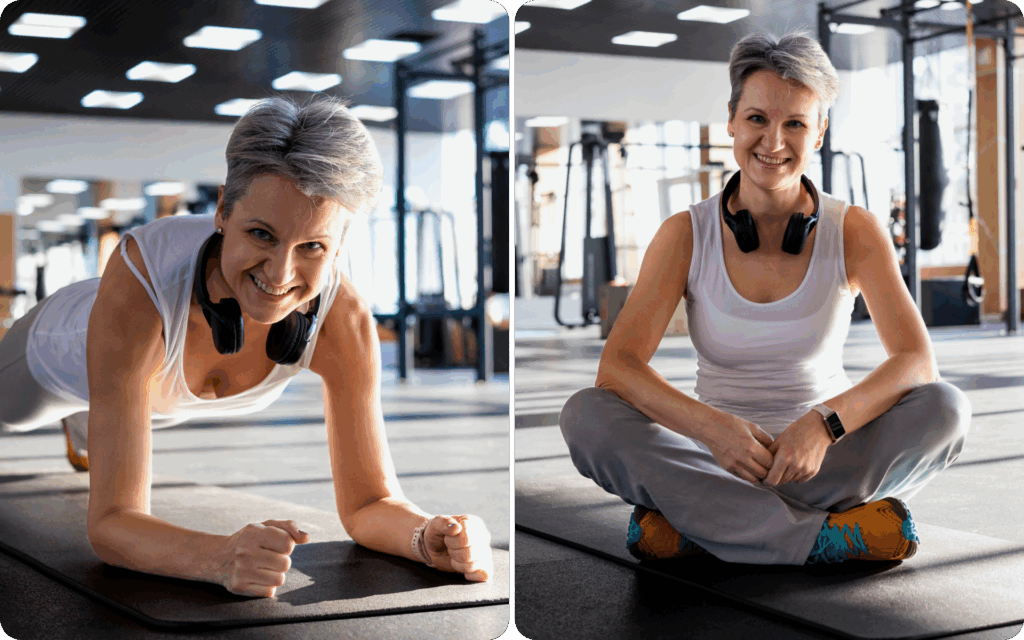
- 30-second plank
- Step-ups: 2 sets of 15 per leg
- Cardio – 10-minute brisk walk or jump rope
- End with 5-minute static stretches for cool-down
Wednesday
- 10-minute warm-up with dynamic stretches
- Strength training
- Deadlifts: 2 sets of 12
- Banded rows: 2 sets of 10
- Calf raises: 2 sets of 15
- 30-second plank
- Cardio – 10 minutes of swimming, jogging, or light cycling
- End with static stretches for 5-10 minutes
Whether you’re a workout beast or just a beginner making your first foray into the world of fitness and dieting – BetterMe has a lot to offer to both newbies and experts! Install the app and experience the versatility first-hand!
Friday
- 10-minute warm-up with dynamic stretches
- Strength exercises
- Bodyweight squats: 2 sets of 10
- Wall push-ups: 2 sets of 10
- Banded rows: 2 sets of 10
- Walking lunges: 2 sets of 10
- 30-second plank
- 10 minutes of cardio – jump rope or running
- End with a 5-10 minute cool-down session
Those with a more flexible schedule can attempt to push this to 4-5 times a week. The example given in the section above is a 4-day routine that could be perfect for those who have more flexible schedules.
Note that any at-home or gym workout plan for beginners should allow them to be consistent with their routine. This allows their bodies to adapt to this new program. It also allows for rest and recovery, which are essential for muscle growth and preventing overtraining (10).
Is It Better to Start with Cardio or Weights?
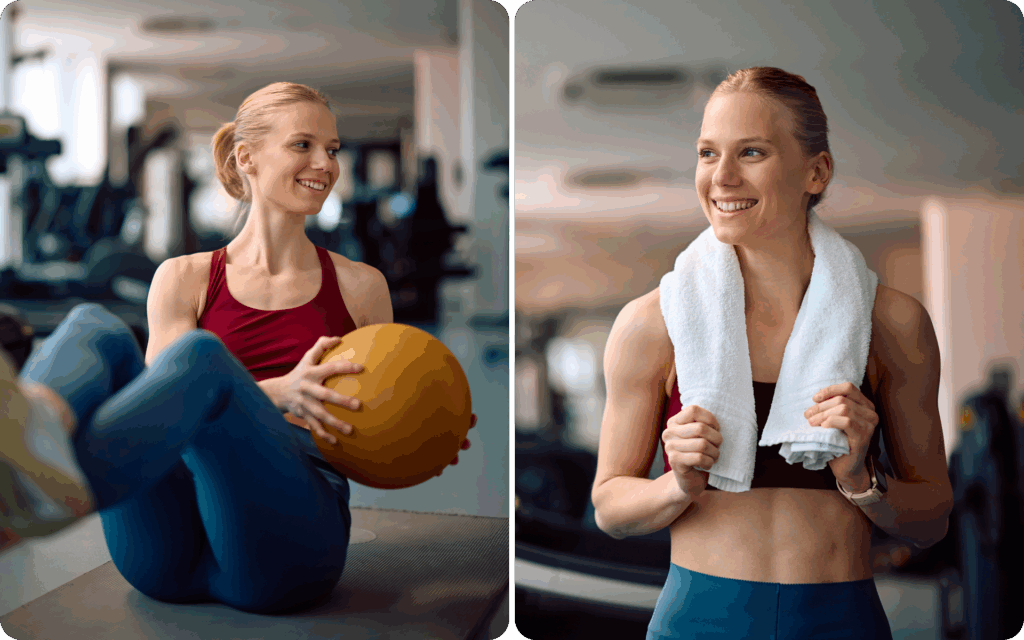
That depends on the overall goal of your program. If your goal is increased muscle mass or strength, then it’s better to start with cardio. However, if your goal is endurance, then start with cardio and end with weights. Note that regardless of your overall goal, you can always start with either to help challenge your body in a new way.
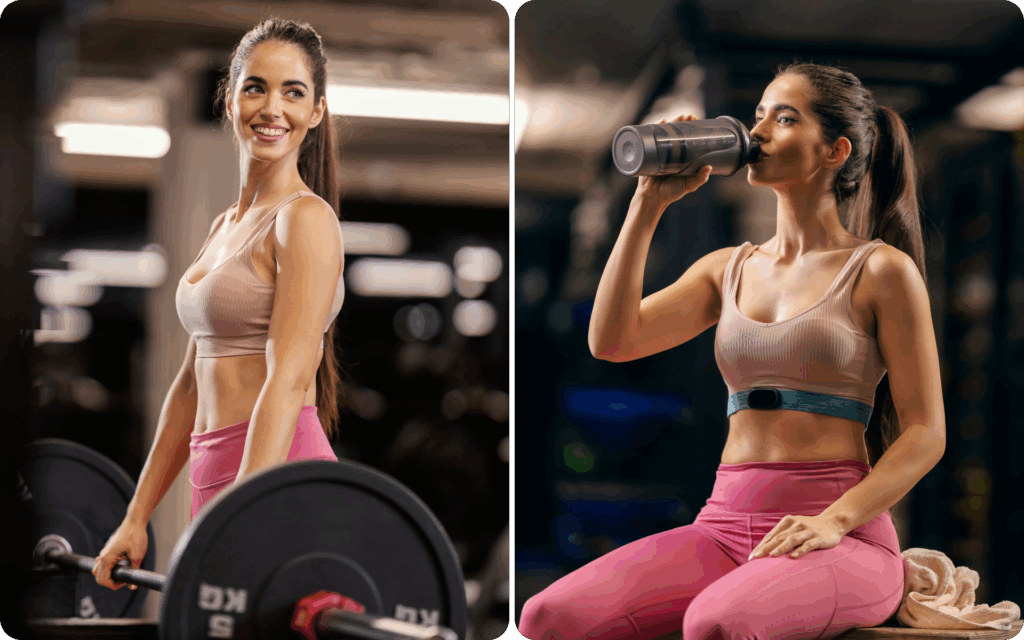
As mentioned in the section above, it depends on the overall goal of your workout program. Generally, it’s best to run after strength training. Yes, 20-30 minutes of cardio exercise after weight lifting is generally considered sufficient. If you prefer longer cardio sessions, you may want to separate them from strength training days. This is important as extended, intense cardio after strength training may lead to energy depletion and hinder muscle growth if your caloric requirements aren’t met. Neither option is inherently better. Choose the option that you prefer most and that fits seamlessly in your lifestyle/schedule. The most important thing is that you work out, not the time of day that you exercise. Yes, you can exercise on an empty stomach, particularly if you’re engaging in light workouts. However, as a beginner, you should eat a light meal before you train to see how your body reacts. Also, exercising while hungry may negatively affect your performance in moderate and high-intensity exercises.Frequently Asked Questions
Should I run or lift first?
Is 20 minutes of cardio after weights enough?
Is it better to work out in the morning or at night?
Is it OK to work out on an empty stomach?
The Bottom Line
You should keep in mind that the best beginner workout plan is one that targets your goals, fits your preferences and schedule, and works with your current fitness levels. If this routine is to work, make sure you remain consistent, stay hydrated, and fix your diet so it doesn’t sabotage your efforts.
DISCLAIMER:
This article is intended for general informational purposes only and does not serve to address individual circumstances. It is not a substitute for professional advice or help and should not be relied on for making any kind of decision-making. Any action taken as a direct or indirect result of the information in this article is entirely at your own risk and is your sole responsibility.
BetterMe, its content staff, and its medical advisors accept no responsibility for inaccuracies, errors, misstatements, inconsistencies, or omissions and specifically disclaim any liability, loss or risk, personal, professional or otherwise, which may be incurred as a consequence, directly or indirectly, of the use and/or application of any content.
You should always seek the advice of your physician or other qualified health provider with any questions you may have regarding a medical condition or your specific situation. Never disregard professional medical advice or delay seeking it because of BetterMe content. If you suspect or think you may have a medical emergency, call your doctor.
SOURCES:
- Enjoyment during Exercise Mediates the Effects of an Intervention on Exercise Adherence (2015, scirp.org)
- Enjoyment as a Predictor of Exercise Habit, Intention to Continue Exercising, and Exercise Frequency: The Intensity Traits Discrepancy Moderation Role (2022, pmc.ncbi.nlm.nih.gov)
- WHO GUIDELINES ON PHYSICAL ACTIVITY AND SEDENTARY BEHAVIOUR (2020, iris.who.int)
- Dynamic Warm-ups Play Pivotal Role in Athletic Performance and Injury Prevention (2025, sciencedirect.com)
- Warm Up, Cool Down (2024, heart.org)
- The Effectiveness of Post-exercise Stretching in Short-Term and Delayed Recovery of Strength, Range of Motion and Delayed Onset Muscle Soreness: A Systematic Review and Meta-Analysis of Randomized Controlled Trials (2021, frontiersin.org)
- Hydration during intense exercise training (2013, pubmed.ncbi.nlm.nih.gov)
- Fluids and hydration in prolonged endurance performance (2004, sciencedirect.com)
- Loading Recommendations for Muscle Strength, Hypertrophy, and Local Endurance: A Re-Examination of the Repetition Continuum (2021, pmc.ncbi.nlm.nih.gov)
- Beyond physical exhaustion: Understanding overtraining syndrome through the lens of molecular mechanisms and clinical manifestation (2025, sciencedirect.com)
 Reviewed by
 Reviewed by