Starting a fitness journey can feel like navigating a complex map without a compass. Many people start with enthusiasm, only to find themselves lost in a sea of conflicting advice and unrealistic expectations. The truth is, building a stronger, healthier body doesn’t require a gym membership or complicated equipment.
A pair of dumbbells and a solid plan can be incredibly effective, particularly when you’re just starting out. This guide provides a structured, science-backed 30-day workout plan that’s designed to help you build foundational strength, improve your fitness, and create lasting habits right from home.
What Is a Simple 30-Day Home Workout Plan?
A simple 30-day home workout plan is a structured exercise schedule you follow for one month to achieve specific fitness goals.
For a beginner, the primary focus is on:
- Consistency
- Learning proper exercise form
- Gradually increasing the body’s capacity for work
It isn’t about extreme transformations, but about laying a solid foundation for long-term health and fitness.
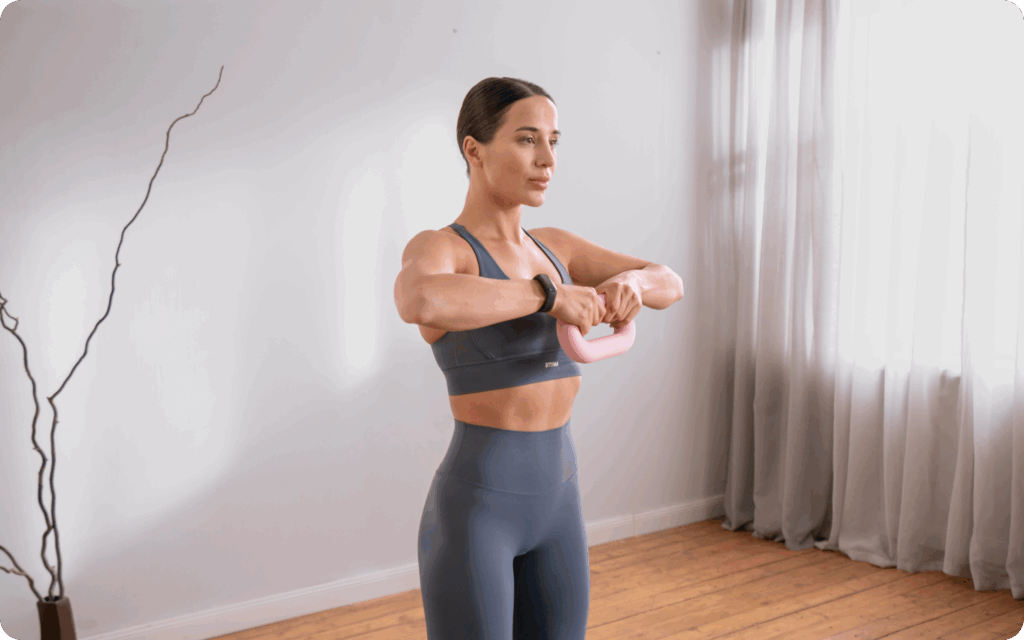
This type of plan typically involves:
- A defined schedule: It outlines which days you’ll work out and which days you’ll rest.
- Specific exercises: It details the movements you’ll perform, targeting all major muscle groups for balanced development.
- Clear instructions: It provides guidance on sets, repetitions, and rest periods to ensure you’re training effectively.
- Progressive overload: It incorporates methods to make the workouts more challenging over time, which is essential for continuous improvement (1).
A well-designed 30-day home workout for beginners combines strength training with cardiovascular exercise to improve both muscular strength and heart health. It serves as an introductory period to help you build the habit of regular physical activity and understand how your body responds to exercise.
Read more: At-Home Chair Pilates Workout Routines for Beginners
Can I Get in Shape in 30 Days?
The phrase “get in shape” can mean different things to different people. If your goal is to establish a consistent routine, feel more energetic, and see noticeable improvements in strength and endurance, then yes, you can absolutely get in shape in 30 days.
However, it’s important to set realistic expectations.
In the first few weeks of a new resistance training program, most of the strength gains you experience are due to neural adaptations. This means your brain becomes more efficient at communicating with your muscles, learning how to activate them more effectively to produce force (2).
Whether you’re a workout beast or just a beginner making your first foray into the world of fitness and dieting – BetterMe has a lot to offer to both newbies and experts! Install the app and experience the versatility first-hand!
You’ll feel stronger and more coordinated long before significant changes in muscle size become visible.
Here’s what you can realistically achieve in 30 days:
- Improved muscular strength: You’ll be able to lift more weight or perform more repetitions (2).
- Enhanced muscular endurance: Everyday tasks, such as carrying groceries or climbing stairs, will feel easier (3).
- Increased energy levels: Regular exercise boosts circulation and your body’s ability to produce energy (4).
- Better mood and mental clarity: Exercise is a powerful tool for reducing stress and improving cognitive function (5).
- Habit formation: Consistently following a plan for 30 days helps solidify exercise as a part of your lifestyle (6).
While you may notice some initial changes in your body composition, such as less bloating and clothes fitting a bit better, a dramatic physical transformation takes more than one month (2). Think of this 30-day period as the crucial first step that sets the stage for more significant, long-term results.
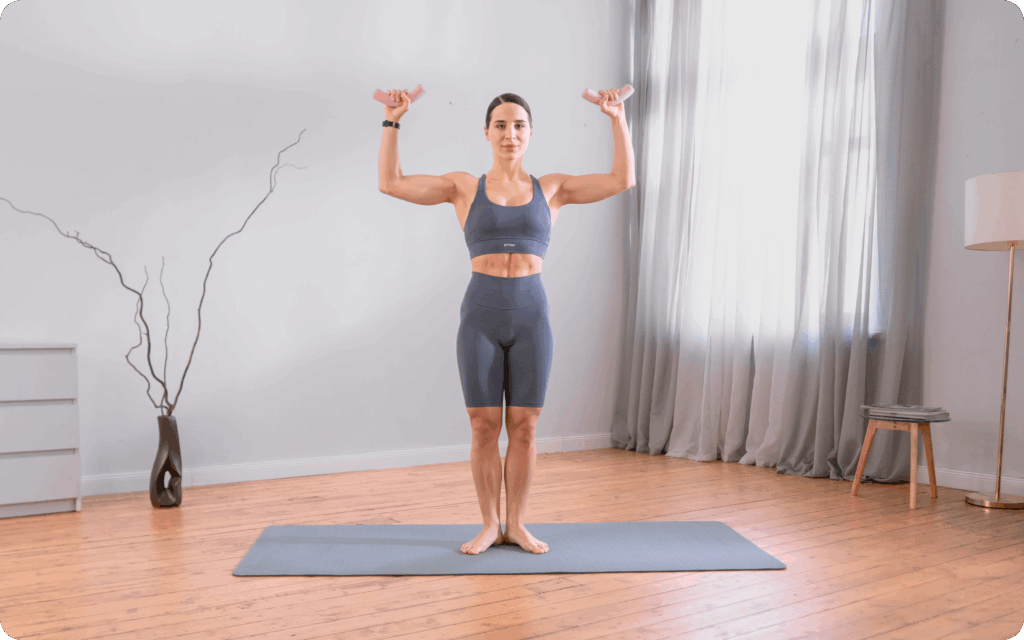
How to Transform Your Body in 1 Month
A true body transformation involves a holistic approach that integrates exercise, nutrition, and lifestyle habits. While 30 days is a starting point, implementing these strategies consistently will pave the way for lasting change.
Exercise Strategies
The cornerstone of changing your body composition is a well-structured exercise program.
- Prioritize resistance training: Lifting weights is the most effective way to build muscle and build a strong body. In addition, more muscle mass increases your resting metabolic rate, meaning you burn more calories even when you’re not exercising (7). At the same time, training sessions can burn a significant amount of calories by themselves. Focus on compound exercises – movements that work multiple muscle groups at once – to maximize efficiency (8).
- Incorporate cardiovascular exercise: Cardio is essential for heart health and calorie expenditure (9). A mix of low-intensity steady state (LISS) cardio, such as brisk walking, and eventually, high-intensity interval training (HIIT) can optimize fat loss without compromising muscle gains (10).
- Focus on progressive overload: To keep making progress, you must continually challenge your muscles. You can do this by increasing the weight you lift, performing more reps or sets, or reducing your rest time between sets (1).
- Ensure proper form: Executing exercises with correct technique is essential for preventing injury and ensuring the target muscles are doing the work (11). If you’re unsure, watch tutorials from qualified professionals or consider recording yourself to check your form.
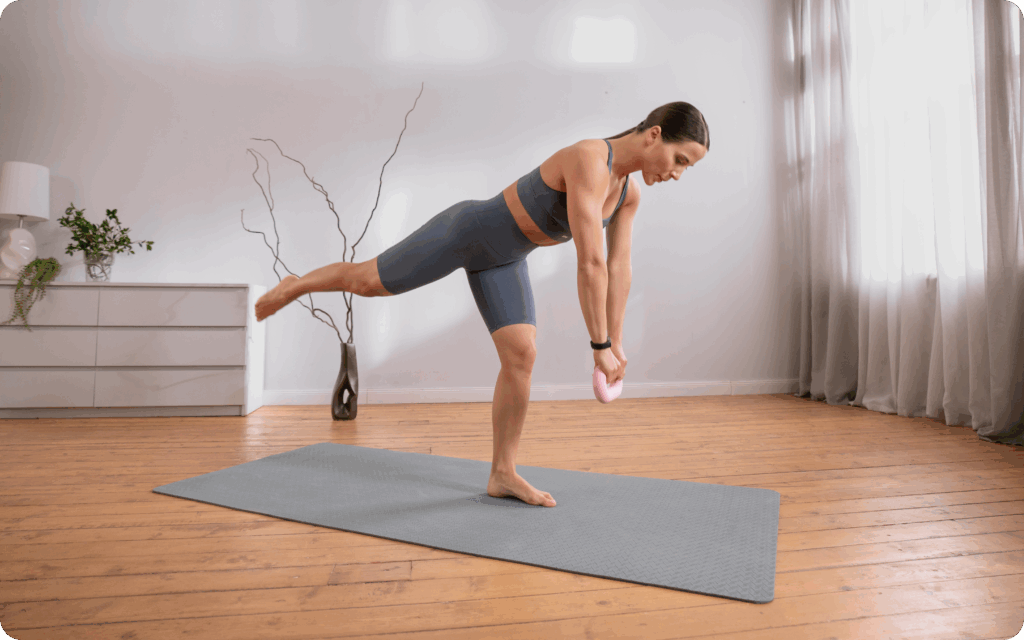
Dietary Strategies
Exercise is only one part of the equation; your diet plays an equally important role.
- Maintain a calorie deficit for fat loss: To lose fat, you need to consume fewer calories than your body expends (12). However, this deficit should be moderate – around 300-500 calories per day – to ensure you’re primarily losing fat (13), not precious muscle tissue.
- Prioritize protein intake: Protein is essential for repairing and building muscle. Aim for 1.6 to 2.2 grams of protein per kilogram of body weight (14). Good sources include lean meats, poultry, fish, eggs, dairy, and legumes.
- Consume adequate carbohydrates and fats: Carbohydrates provide the energy needed to fuel your workouts (15). Aim for 3-5 grams of carbohydrates per kilogram of body weight per day, depending on your activity level (17), with a focus on complex carbs such as oats, brown rice, and sweet potatoes.
- Focus on healthy fats. Healthy fats support hormone function (16). Target 0.8-1 gram per kilogram of body weight daily, prioritizing healthy sources such as avocados, nuts, seeds, and olive oil (18).
- Stay hydrated: Water is essential for countless bodily functions, including metabolism and performance. Aim to drink at least 2.7 to 3.7 liters of water per day, depending on your activity level and climate (19).
Lifestyle Strategies
Your habits outside of your workouts and meals significantly impact your results.
- Prioritize sleep: Your body repairs and builds muscle while you sleep. A lack of sleep can impair recovery, disrupt hunger hormones, and reduce your ability to train hard (20). Aim for 7-9 hours of quality sleep per night.
- Manage stress: Chronic stress elevates cortisol, a hormone that can promote fat storage and muscle breakdown (21). Incorporate stress-management techniques such as meditation, deep breathing, or spending time in nature.
- Be consistent: Consistency is the single most important factor for long-term success. It’s better to follow a good plan consistently than a perfect plan sporadically.
This full-body 30-day workout challenge is designed to help you integrate these principles into your life.
What Is an Effective 30-Day Home Workout Plan?
An effective plan for beginners should be simple, sustainable, and comprehensive. This 30-day full-body dumbbell workout focuses on compound movements to give you the most bang for your buck.
You’ll also incorporate two days of LISS cardio to support recovery and cardiovascular health, along with two essential rest days.
Program Notes
- Glossary of Terms:
- Rep (Repetition): One complete motion of an exercise.
- Set: A group of consecutive repetitions.
- 1RM (One-Repetition Maximum): The maximum amount of weight you can lift for a single repetition of a given exercise. For this program, you’ll use a weight that challenges you to complete the target rep range while maintaining good form.
- LISS (Low-Intensity Steady State): Cardiovascular exercise performed at a low intensity for a continuous period. Think of an effort level where you can still hold a conversation.
- Equipment Needed: A pair of adjustable dumbbells is ideal, but a few pairs of fixed-weight dumbbells will also work. You’ll also need a sturdy chair or bench.
- Split Structure:
- Day 1: Full-body strength
- Day 2: LISS cardio
- Day 3: Full-body strength
- Day 4: Rest
- Day 5: Full-body strength
- Day 6: LISS cardio
- Day 7: Rest
- Sets and Reps: For strength days, perform 3 sets of 8-12 reps of each exercise. This range is highly effective for building both muscle (hypertrophy) and strength. The goal is to choose a weight that makes the last 1-2 reps of each set feel challenging but achievable with good form.
- Rest Periods: Rest for 60-90 seconds between sets. This provides enough time for your muscles to recover for the next set without letting your heart rate drop completely.
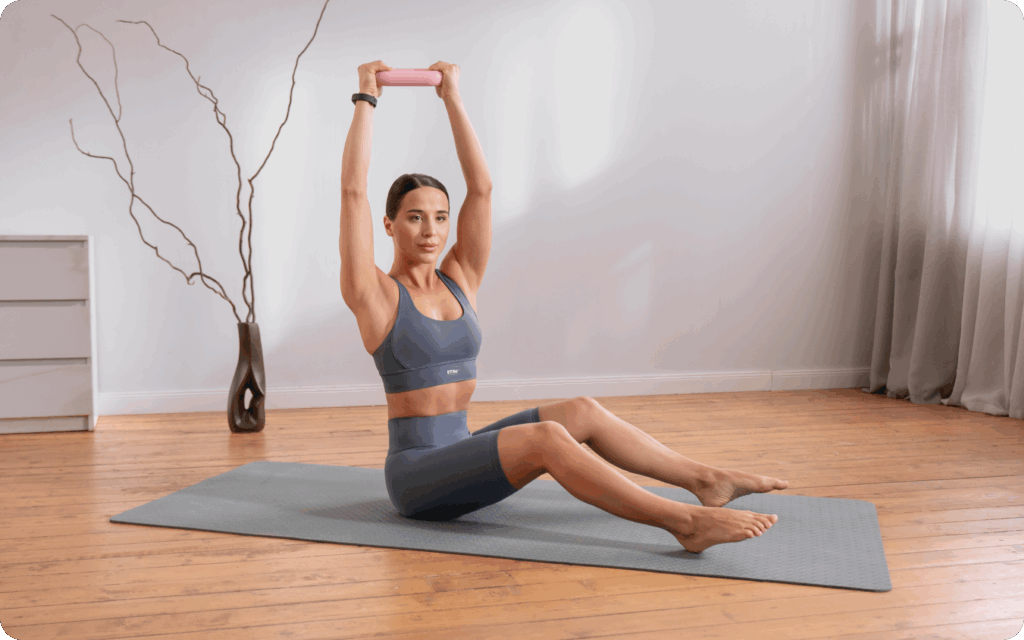
30-Day Dumbbell Workout Plan
| Exercise | Day 1 (full body) | Day 3 (full body) | Day 5 (full body) |
|---|---|---|---|
| Dumbbell goblet squat | 3 sets of 8-12 reps | 3 sets of 8-12 reps | 3 sets of 8-12 reps |
| Dumbbell bench press | 3 sets of 8-12 reps | 3 sets of 8-12 reps | 3 sets of 8-12 reps |
| Bent-over dumbbell row | 3 sets of 8-12 reps | 3 sets of 8-12 reps | 3 sets of 8-12 reps |
| Dumbbell Romanian deadlift | 3 sets of 8-12 reps | 3 sets of 8-12 reps | 3 sets of 8-12 reps |
| Dumbbell overhead press | 3 sets of 8-12 reps | 3 sets of 8-12 reps | 3 sets of 8-12 reps |
| Plank | 3 sets, hold for 30-60 secs | 3 sets, hold for 30-60 secs | 3 sets, hold for 30-60 secs |
| LISS cardio | Off | 30-45 mins (Day 2) | Off |
| LISS cardio | Off | Off | 30-45 mins (Day 6) |
Exercise Instructions
Dumbbell Goblet Squat
- Stand with your feet slightly wider than shoulder-width apart, your toes pointing slightly outward.
- Hold one dumbbell vertically against your chest with both hands, cupping the top head of the dumbbell.
- Keeping your chest up and back straight, lower your hips back and down as if sitting in a chair.
- Descend until your thighs are parallel to the floor or lower, ensuring your knees track in line with your toes.
- Drive through your heels to return to the starting position, squeezing your glutes at the top.
Dumbbell Bench Press
- Lie on a flat bench with your feet firmly on the floor. Hold a dumbbell in each hand with an overhand grip, positioned at the sides of your chest.
- Engage your core and press the dumbbells upward until your arms are fully extended over your chest.
- Slowly lower the dumbbells back to the starting position with control.
Bent-Over Dumbbell Row
- Stand with your feet shoulder-width apart, holding a dumbbell in each hand with your palms facing your body.
- Hinge at your hips, keeping your back straight, until your torso is nearly parallel to the floor. Your knees should be slightly bent.
- Pull the dumbbells up toward your lower chest, squeezing your shoulder blades together. Keep your elbows close to your body.
- Lower the dumbbells back to the starting position with control.
Dumbbell Romanian Deadlift (RDL)
- Stand with your feet hip-width apart, holding a dumbbell in each hand in front of your thighs with an overhand grip.
- Keeping your legs almost straight (a slight bend in the knees), hinge at your hips, pushing your butt back.
- Lower the dumbbells toward the floor, keeping them close to your legs. Your back should remain straight.
- Lower until you feel a deep stretch in your hamstrings, then drive your hips forward to return to the starting position.
Reasons why BetterMe is a safe bet: a wide range of calorie-blasting workouts, finger-licking recipes, 24/7 support, challenges that’ll keep you on your best game, and that just scratches the surface! Start using our app and watch the magic happen.
Dumbbell Overhead Press
- Sit or stand with your feet shoulder-width apart. Hold a dumbbell in each hand at shoulder height, with your palms facing forward and your elbows bent at a 90-degree angle.
- Engage your core to stabilize your spine.
- Press the dumbbells directly overhead until your arms are fully extended.
- Slowly lower the dumbbells back to the starting position.
Plank
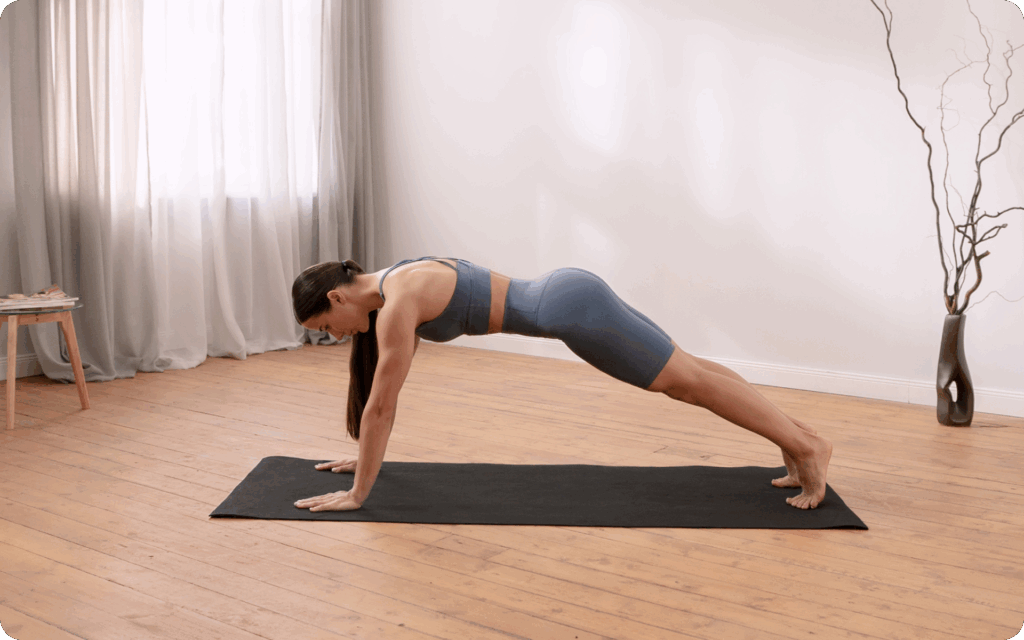
- Lie face down and place your forearms on the floor, with your elbows directly under your shoulders.
- Lift your hips off the floor, forming a straight line from your head to your heels.
- Engage your core and glutes to prevent your hips from sagging. Hold this position for the prescribed time.
Even without equipment, you can get started with a great routine. To learn more, check out the best at-home calisthenics workout.
Read more: Pilates Push Ups – The Complete Guide To Form And Technique
Can You See Results After 1 Month of Working Out?
Yes, you can absolutely see and feel results after one month of consistent training. However, the type of results will vary. It’s important to distinguish between performance-based results and aesthetic-based results.
Results you will likely see and feel:
- Increased Strength: You will notice a clear improvement in your ability to perform the exercises. The weights will feel lighter, and you’ll be able to complete more reps (2).
- More Energy: Your body becomes more efficient at producing and using energy, which leads to less fatigue throughout the day (4).
- Improved Mood: The endorphin release from exercise is a powerful mood booster (5).
- Better Sleep: Regular physical activity can improve sleep quality, helping you feel more rested (22).
Results that take more time:
- Significant Muscle Growth (Hypertrophy): While the process begins immediately, visible increases in muscle size typically take 6-8 weeks or more to become apparent (2).
- Major Fat Loss: Losing a significant amount of body fat is a longer-term process that requires sustained caloric deficit over several months (23).
- Complete Body Transformation: A dramatic change in your physique is the result of months, and even years, of consistent effort in both training and nutrition.
This 30-day workout plan at home is an excellent starting point, but remember that fitness is a marathon, not a sprint. To explore other options, consider this workout plan for women at home.
Yes, you can initiate the muscle-building process and gain strength in 30 days. While visible muscle growth takes longer, the foundational adaptations that occur in the first month are essential for future gains. They work very well for establishing a routine, learning proper form, building initial strength, and improving overall fitness. A 30-day plan is a fantastic launchpad for a long-term fitness journey. Losing 10 kg (approximately 22 pounds) in 30 days is incredibly aggressive and generally not recommended. A safe and sustainable rate of fat loss is 0.5-1 kg (1-2 pounds) per week (24). Rapid weight loss often involves losing significant muscle and water, which is detrimental to your metabolism and long-term health (25). Working out for 30 minutes a day can contribute to weight loss, as long as you’re also in a consistent calorie deficit through your diet. Exercise helps increase your daily calorie expenditure, which makes it easier to create that deficit. The best time to exercise is a time you can consistently stick to. Some research has suggested that there are minor performance benefits when working out in the afternoon (26), but the most important factor is adherence. Whether it’s morning, noon, or night, choose a time that suits your schedule and helps you stay on track.Frequently Asked Questions
Can I build muscle in 30 days at home?
Do 30-day workouts actually work?
Can I lose 10 kg in 30 days?
Will I lose weight if I work out for 30 minutes a day?
What is the best time of day to exercise?
The Bottom Line
Committing to a 30-day plan is the first powerful step toward a stronger and healthier version of yourself. This program provides the structure and knowledge you need to build momentum and create habits that last well beyond the first month.
Trust the process, celebrate your progress in strength and energy, and remember that every workout is an investment in your long-term well-being. If you’re looking for another challenge, you could try a different workout challenge for beginners.
DISCLAIMER:
This article is intended for general informational purposes only and does not serve to address individual circumstances. It is not a substitute for professional advice or help and should not be relied on for making any kind of decision-making. Any action taken as a direct or indirect result of the information in this article is entirely at your own risk and is your sole responsibility.
BetterMe, its content staff, and its medical advisors accept no responsibility for inaccuracies, errors, misstatements, inconsistencies, or omissions and specifically disclaim any liability, loss or risk, personal, professional or otherwise, which may be incurred as a consequence, directly or indirectly, of the use and/or application of any content.
You should always seek the advice of your physician or other qualified health provider with any questions you may have regarding a medical condition or your specific situation. Never disregard professional medical advice or delay seeking it because of BetterMe content. If you suspect or think you may have a medical emergency, call your doctor.
SOURCES:
- Effects of Resistance Training Overload Progression Protocols on Strength and Muscle Mass (2024, pubmed.ncbi.nlm.nih.gov)
- Adaptations to Endurance and Strength Training (2018, pmc.ncbi.nlm.nih.gov)
- Benefits of Physical Activity (2025, cdc.gov)
- Exercise sustains the hallmarks of health (2023, sciencedirect.com)
- Physical activity and mental health: a systematic review and best-evidence synthesis of mediation and moderation studies (2024, link.springer.com)
- A Behavioral Perspective for Improving Exercise Adherence (2024, link.springer.com)
- Increasing muscle mass to improve metabolism (2013, pmc.ncbi.nlm.nih.gov)
- What are compound exercises and why are they good for you? (2024, unsw.edu.au)
- Aerobic Exercise and Health Benefits (2020, researchgate.net)
- THE EFFECTIVENESS OF HIGH-INTENSITY INTERVAL TRAINING (HIIT) ON WEIGHT LOSS AND METABOLIC PARAMETERS: A SCOPING REVIEW (2025, researchgate.net)
- Exercise Biomechanics for Health: Evaluating Lifelong Activities for Well-Being (2023, mdpi.com)
- Fat Loss Depends on Energy Deficit Only, Independently of the Method for Weight Loss (2007, karger.com)
- What is the Required Energy Deficit per unit Weight Loss? (2008, pmc.ncbi.nlm.nih.gov)
- International Society of Sports Nutrition Position Stand: protein and exercise (2017, pubmed.ncbi.nlm.nih.gov)
- High-Quality Carbohydrates and Physical Performance (2017, pmc.ncbi.nlm.nih.gov)
- The Functions of Fats in the Body (2015, eufic.org)
- Carbohydrate and Exercise (2022, pressbooks.calstate.edu)
- How Many Grams of Fat Per Day to Lose Weight? (n.d., nasm.org)
- Water: How much should you drink every day? (2022, mayoclinic.org)
- The importance of sleep for performance and recovery (2020, hprc-online.org)
- Stress effects on the body (2024, apa.org)
- Effects of exercise on sleep quality in general population: Meta-analysis and systematic review (2025, sciencedirect.com)
- Physiological process of fat loss (2019, researchgate.net)
- Steps for Losing Weight (2025, cdc.gov)
- The Best Time of Day to Exercise for Metabolic Health (2021, ncbi.nlm.nih.gov)
- Risks Associated With Excessive Weight Loss (2024, ncbi.nlm.nih.gov)
 By
By 
 Reviewed by