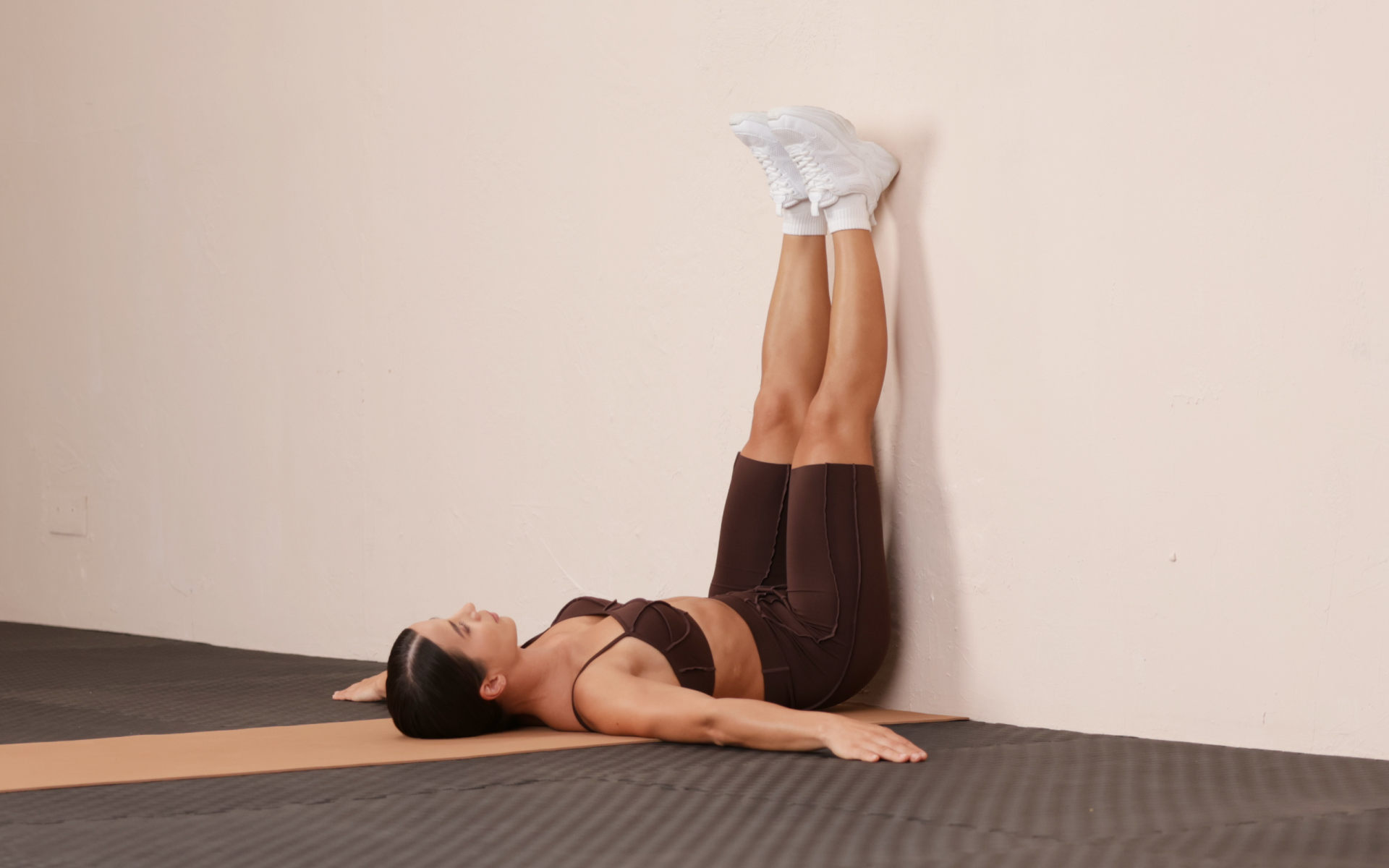
A 28-day Wall Pilates challenge can organize beginner practice without requiring daily workouts or a promised transformation. This calendar includes short wall-supported sessions, optional lighter movement, and rest. Repeat familiar exercises, use easier versions when needed, and treat each week as a chance to review rather than a deadline to advance.
Learn the starting position before beginning the calendar. Our Wall Pilates guide for beginners covers wall setup and a shorter first routine.
Key takeaways
- This editorial 28-day calendar contains 12 practice days, 8 optional lighter movement days, and 8 rest days.
- The four-week table organizes exercise themes and conditional progression.
- Sessions A and B each use three foundation exercises, starting with one set.
- Rest 30-60 seconds between movements, or longer when needed.
- Missed sessions do not require double workouts or removal of rest days.
- Pilates research does not verify a promised 28-day result for this wall challenge (1).
What is the 28-day wall Pilates challenge?
This challenge is a four-week practice calendar with repeated foundation sessions, optional lighter activity, and rest. Wall-supported Pilates uses contact with a stable wall to guide or support some movements. Pilates principles emphasize control, precision, and breathing (2); the goal here is to learn a repeatable practice.
BetterMe’s editorial calendar has 12 practice days, 8 optional lighter movement days, and 8 rest days. The counts describe this article’s schedule, not app usage or participant outcomes.
How does the four-week progression work?
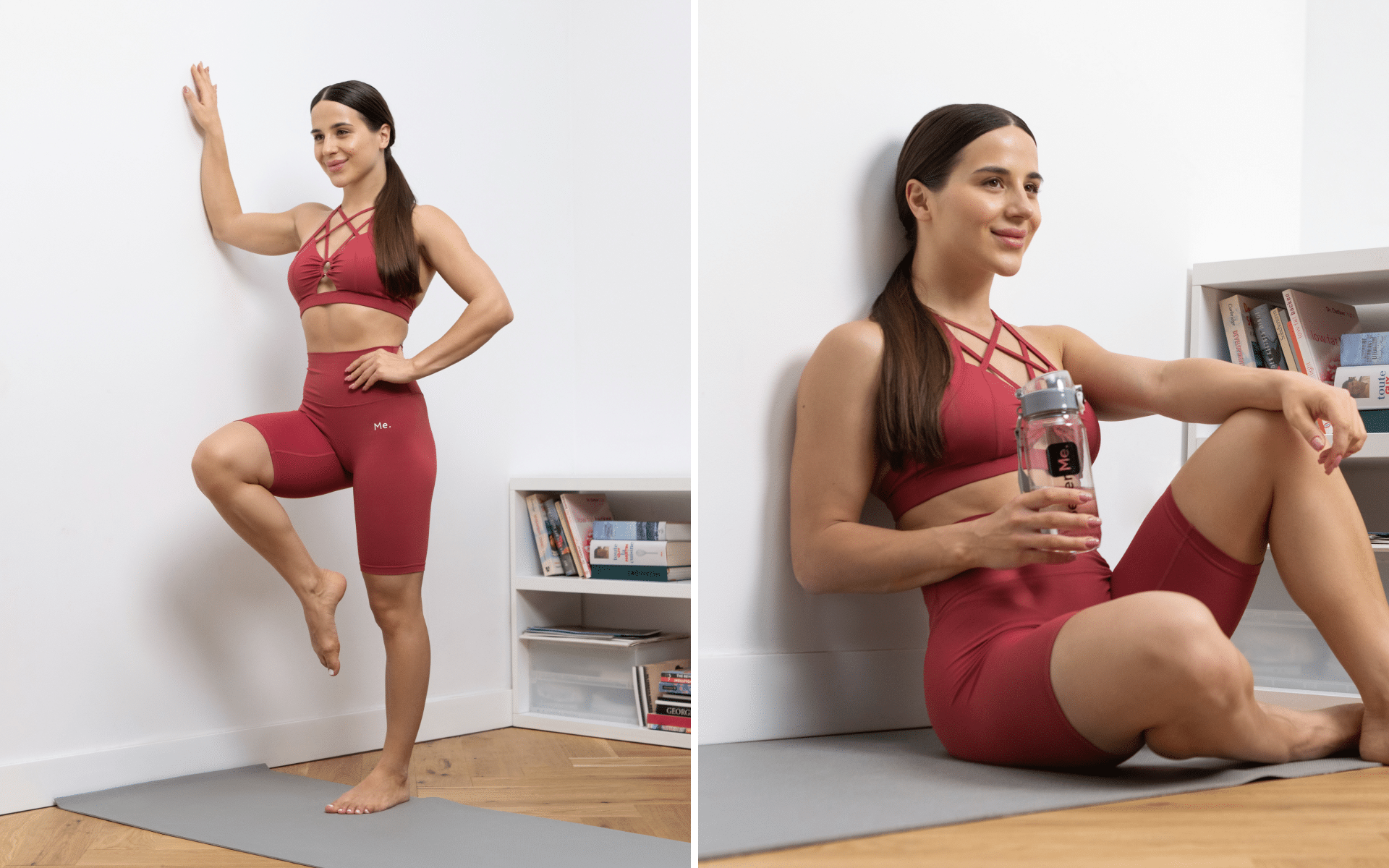
Repeat familiar movements before considering a small change. The four-row progression table keeps the original week-by-week structure, but an increase is optional rather than required by the date.
| Week | Focus | Key exercises | Session duration | Progression decision |
|---|---|---|---|---|
| 1 | Setup and control | Shallow wall squat, floor bridge, small pelvic tilt | 10-15 minutes | One set; easier versions |
| 2 | Familiar practice | Wall plank, supported march, heel slide | 10-15 minutes | Repeat week 1 targets if needed |
| 3 | Controlled range | Calf raise, small leg circle, supported side lift | 10-20 minutes | Add 1-2 reps to one movement if ready |
| 4 | Repeatable routine | Wall push-up, slow wall knee drive, gentle roll-down | 10-20 minutes | Keep the same dose or make one small change |
The exercise themes are options, not a requirement to replace your session each week. For complete movement instructions, use our Wall Pilates beginner exercise guide. More demanding variations can wait.
Intense sweat sessions, working weight loss tips, lip-smacking recipes come in one package with the BetterMe Well-Being Coach app—all at your fingertips, start transforming your life now!
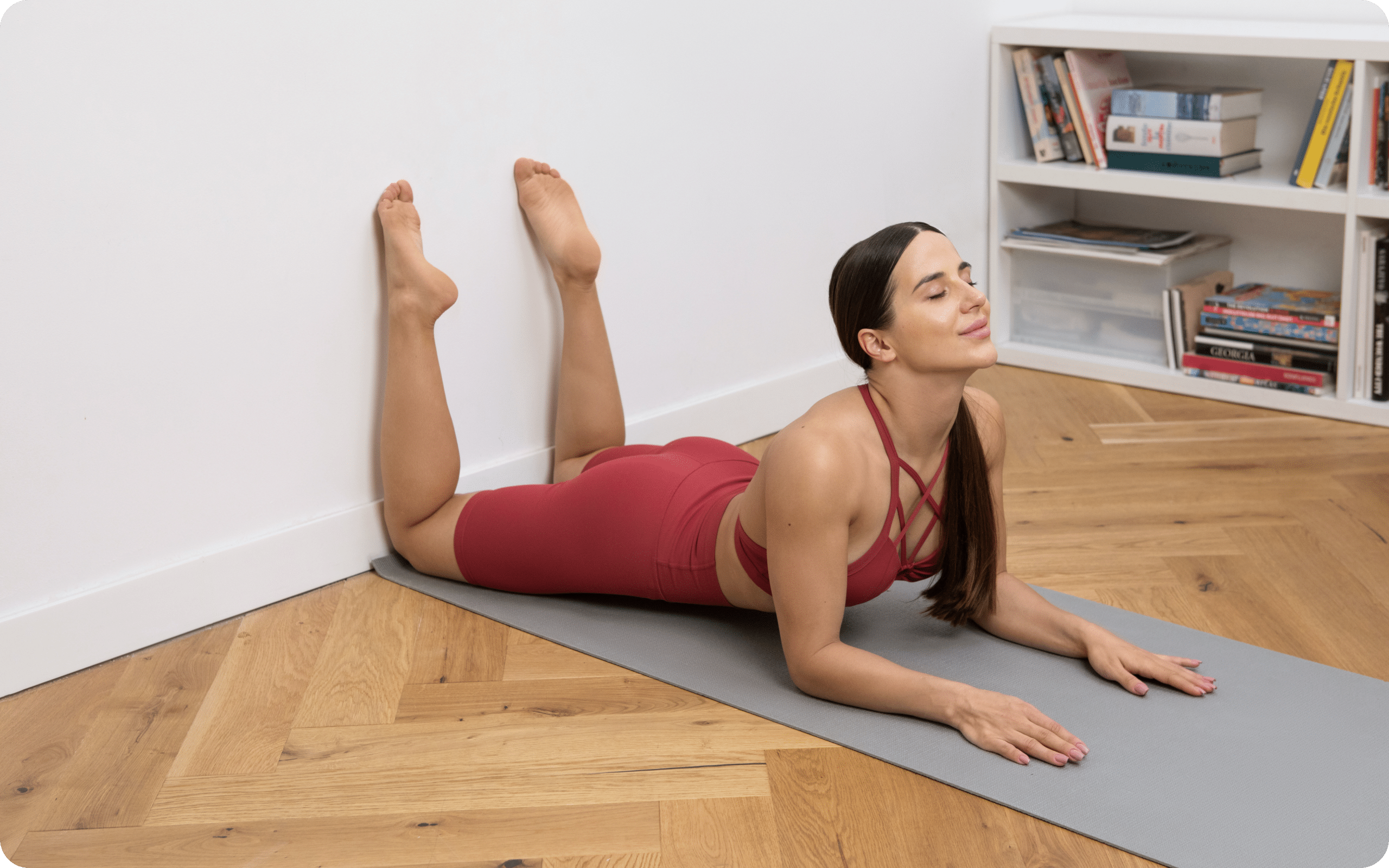
What should you do on each of the 28 days?
Follow the day label and use rest whenever an optional day or planned practice is not manageable. Time windows include preparation, rests, and a gentle finish. Before more demanding activity, allow 5-10 minutes for a gradual warm-up and cool-down (3); shorten the main selection or extend the time window to accommodate them.
| Day | Plan | Practice window | Adjustment |
|---|---|---|---|
| 1 | Session A | 10-15 minutes | Learn foundation versions |
| 2 | Optional lighter movement | 5-10 minutes | Walking or mobility; rest is an option |
| 3 | Session B | 10-15 minutes | Learn foundation versions |
| 4 | Rest | No workout target | No catch-up session |
| 5 | Session A | 10-15 minutes | Learn foundation versions |
| 6 | Optional lighter movement | 5-10 minutes | Walking or mobility; rest is an option |
| 7 | Rest | No workout target | No catch-up session |
| 8 | Session A | 10-15 minutes | Repeat targets |
| 9 | Optional lighter movement | 5-10 minutes | Walking or mobility; rest is an option |
| 10 | Session B | 10-15 minutes | Repeat targets |
| 11 | Rest | No workout target | No catch-up session |
| 12 | Session A | 10-15 minutes | Repeat targets |
| 13 | Optional lighter movement | 5-10 minutes | Walking or mobility; rest is an option |
| 14 | Rest | No workout target | No catch-up session |
| 15 | Session A | 10-20 minutes | One small change if ready |
| 16 | Optional lighter movement | 5-10 minutes | Walking or mobility; rest is an option |
| 17 | Session B | 10-20 minutes | One small change if ready |
| 18 | Rest | No workout target | No catch-up session |
| 19 | Session A | 10-20 minutes | One small change if ready |
| 20 | Optional lighter movement | 5-10 minutes | Walking or mobility; rest is an option |
| 21 | Rest | No workout target | No catch-up session |
| 22 | Session A | 10-20 minutes | Keep a repeatable version |
| 23 | Optional lighter movement | 5-10 minutes | Walking or mobility; rest is an option |
| 24 | Session B | 10-20 minutes | Keep a repeatable version |
| 25 | Rest | No workout target | No catch-up session |
| 26 | Session A | 10-20 minutes | Keep a repeatable version |
| 27 | Optional lighter movement | 5-10 minutes | Walking or mobility; rest is an option |
| 28 | Rest | No workout target | No catch-up session |
You can move practice days to fit your week while leaving a gap between more demanding sessions. A missed day does not require a double session.
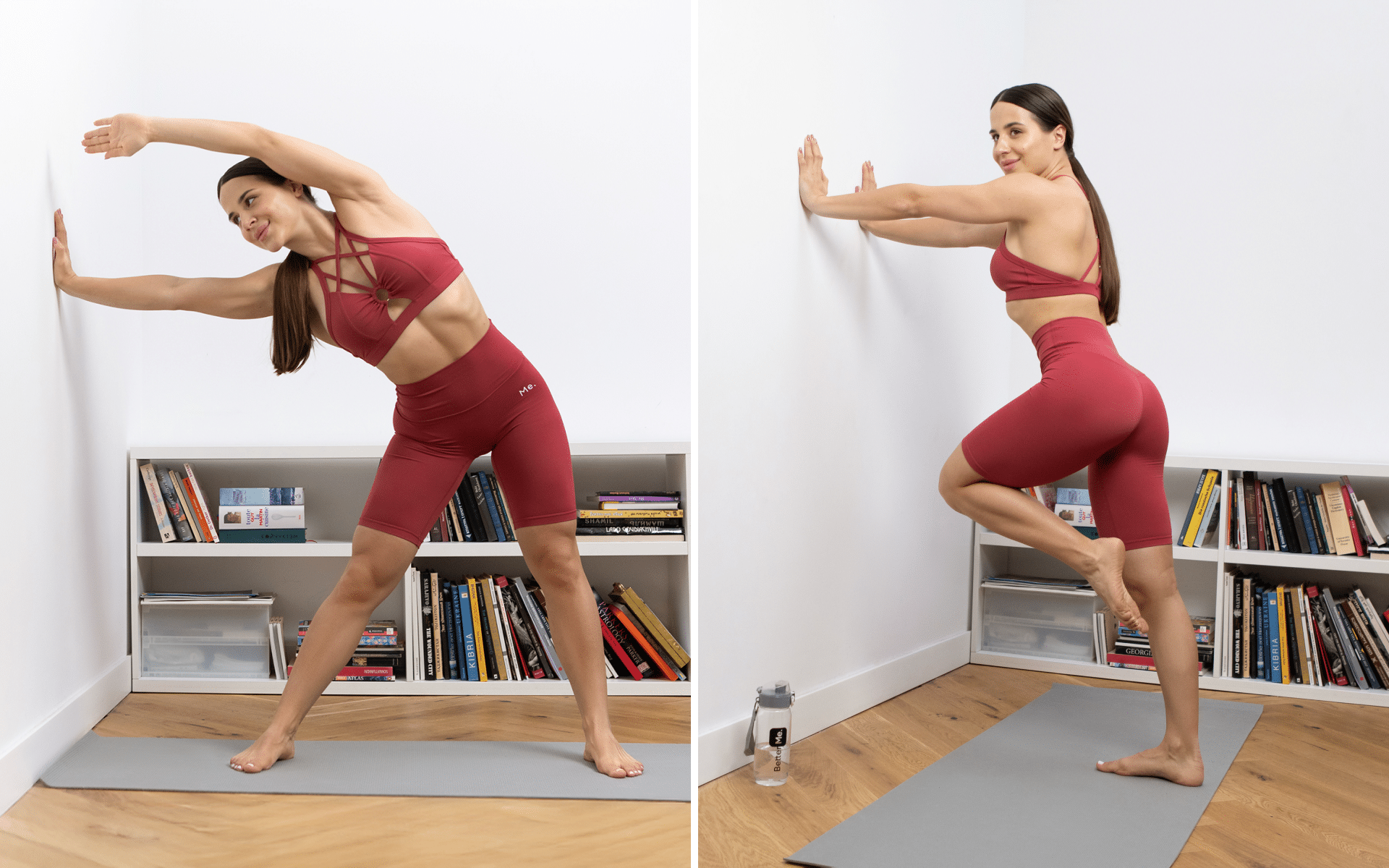
Which exercises make up sessions A and B?
Each foundation session contains three exercises and starts with one set. Rest about 30-60 seconds between movements, or longer if needed.
| Session | Movement | Initial target | Easier option |
|---|---|---|---|
| A | Shallow wall squat | 6-8 reps | Shorter slide |
| A | Floor bridge | 6-8 reps | Small lift or pelvic tilt |
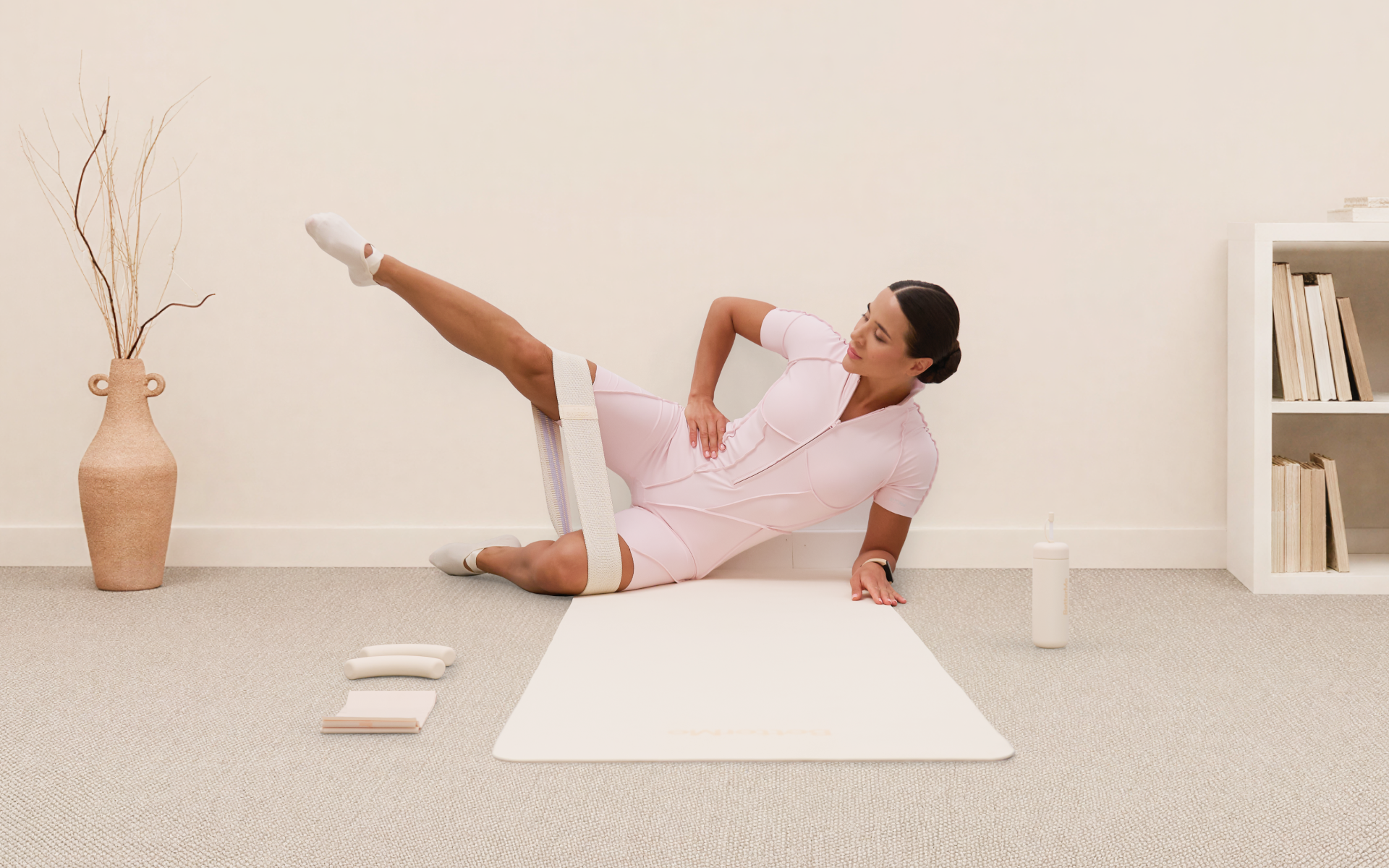
| A | Supported side leg lift | 4-6 per side | Smaller lift |
| B | Wall push-up | 6-8 reps | Stand closer |
| B | Wall plank | 10-15 seconds | Feet closer to wall |
| B | Supported calf raise | 6-8 reps | Smaller heel lift |
The timed 30-minute Wall Pilates plan explains numbered steps for these movement patterns. Use Session A or B as a short selection rather than completing the whole 30-minute routine on every calendar day.
Use a solid, unobstructed wall rather than a door, mirror, glass panel, or surface that could move. Clear pictures and furniture from the working area. Keep the floor dry, and use footwear or a mat that lets you maintain grip. Check that you have room to extend your arms and step back without hitting anything.
Keep both feet on the floor for standing wall planks and mountain climbers. A wall supports contact and balance; it does not provide a reformer’s moving carriage or spring resistance. If a movement causes discomfort, stop and choose a simpler option or seek qualified guidance.
How do you decide whether to progress?
Progress when your current movement stays controlled and the workload feels manageable at the next session. Add one or two repetitions to one movement, extend one short hold slightly, or use a little more comfortable range. Avoid changing all three together.
If breathing becomes strained or movement control fades, stop the set and keep the same targets next time. If a movement causes discomfort, stop and get guidance rather than using a smaller number to push through it. Our Wall Pilates plan-building guide explains how to adjust frequency and rest.
What can you expect after 28 days?
After 28 days, you can review attendance and which movements feel more familiar, but no physical result is guaranteed. Research on Pilates may support muscular endurance and flexibility, but it should not be presented as a test of this wall routine. A 12-week trial found endurance and hamstring flexibility gains, without balance or posture improvements compared with its control group (1). A review in adult women also found flexibility improvements across varied Pilates programs (4). Neither source validates the exact wall exercises or calendar in this article.
Activity can contribute to weight management, but results depend on activity, eating patterns, and individual circumstances (5). The wall does not make an exercise target fat in one area, and no change in appearance is promised. Track repeatable practice and movement control; individual results vary.
General adult activity guidance includes aerobic activity and strengthening on at least two days (6). Gentle wall sessions are not automatically moderate aerobic activity, so the challenge is one part of a wider routine. For a single-session alternative after day 28, use the nine-move Wall Pilates routine.
If you’d like additional structure and guidance, a wall pilates workout app can be a useful tool. The BetterMe app, for example, offers daily workout reminders, progressive workout plans, and step-by-step how-to guides for each movement — which can be especially helpful if you’re new to pilates wall exercises and want support staying consistent with your form.
Frequently Asked Questions
Does a 28-day wall Pilates challenge work?
The calendar can help you organize practice, lighter activity, and rest. It has not been tested to establish a specific performance, weight, or appearance result.
Should I do wall Pilates on all 28 days?
No, this calendar includes 12 practice days and scheduled rest. Optional movement days can also become rest when that fits your circumstances.
What if I cannot finish the session?
Stop at a manageable point and log the version you completed. Use fewer movements or the easier versions next time instead of trying to catch up with extra volume.
Do I have to make the exercises harder each week?
No, the week labels organize your review. Repeat the foundation version as long as you need, and change only one target when you feel ready.
The bottom line
Use the calendar to make practice predictable and rest visible. Keep the foundation version until it feels manageable, and finish the month by choosing a routine you can repeat.
DISCLAIMER:
This article is intended for general informational purposes only and does not serve to address individual circumstances. It is not a substitute for professional advice or help and should not be relied on for making any kind of decision-making. Any action taken as a direct or indirect result of the information in this article is entirely at your own risk and is your sole responsibility.
BetterMe, its content staff, and its medical advisors accept no responsibility for inaccuracies, errors, misstatements, inconsistencies, or omissions and specifically disclaim any liability, loss or risk, personal, professional or otherwise, which may be incurred as a consequence, directly or indirectly, of the use and/or application of any content.
You should always seek the advice of your physician or other qualified health provider with any questions you may have regarding a medical condition or your specific situation. Never disregard professional medical advice or delay seeking it because of BetterMe content. If you suspect or think you may have a medical emergency, call your doctor.
SOURCES:
- Pilates for Improvement of Muscle Endurance, Flexibility, Balance, and Posture (2010, journals.lww.com)
- Pilates: how does it work and who needs it? (2011, pmc.ncbi.nlm.nih.gov)
- Warm Up, Cool Down (2024, heart.org)
- Effects of Pilates Programs on Body Composition, Flexibility, Muscular Strength, Balance, Functional Performance and Respiratory Function in Adult Women: A Systematic Review and Meta-Analysis (2026, pmc.ncbi.nlm.nih.gov)
- Physical Activity and Your Weight and Health (2026, cdc.gov)
- Adult Activity: An Overview (2023, cdc.gov)
 Reviewed by
 Reviewed by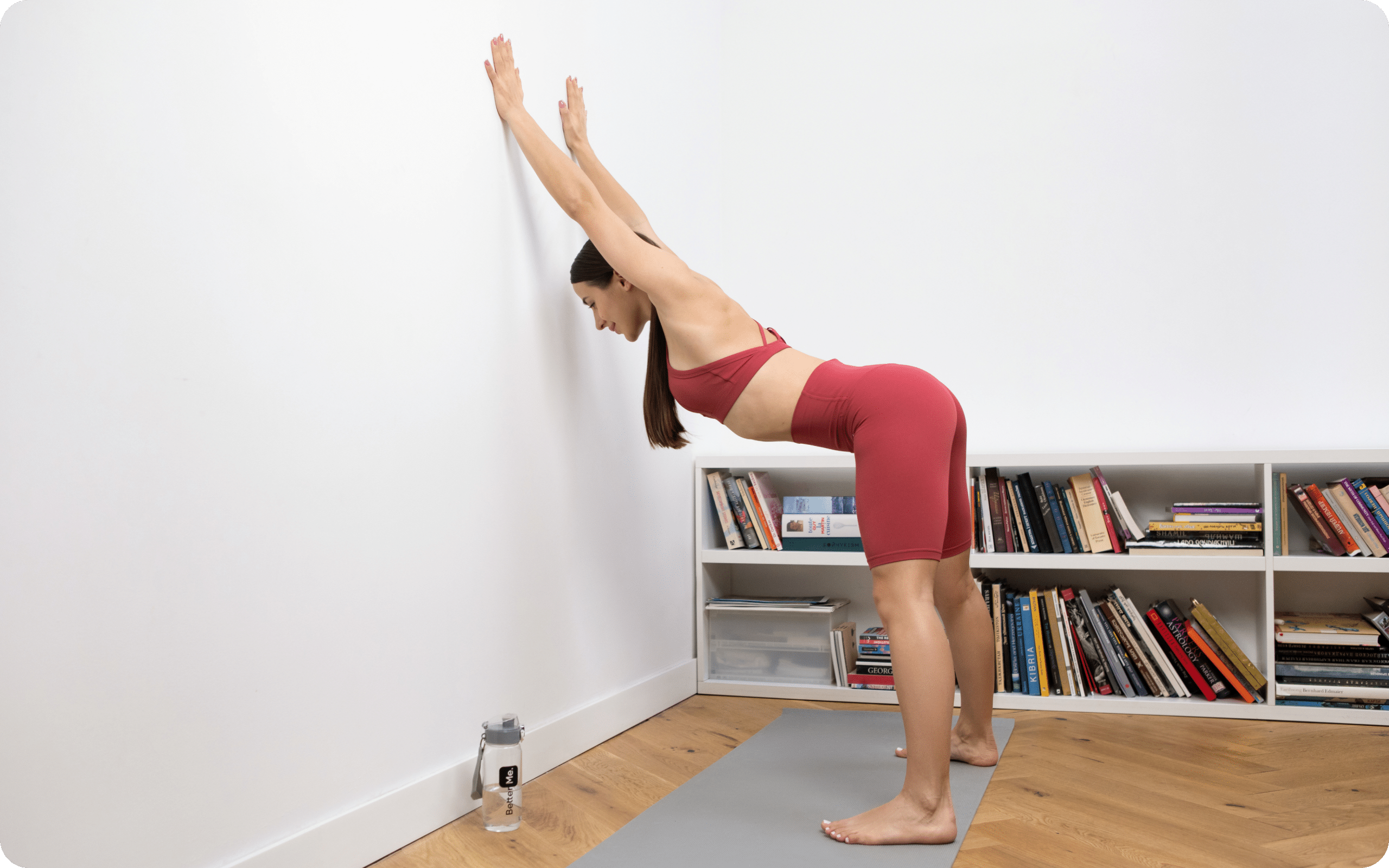
 Reviewed by