
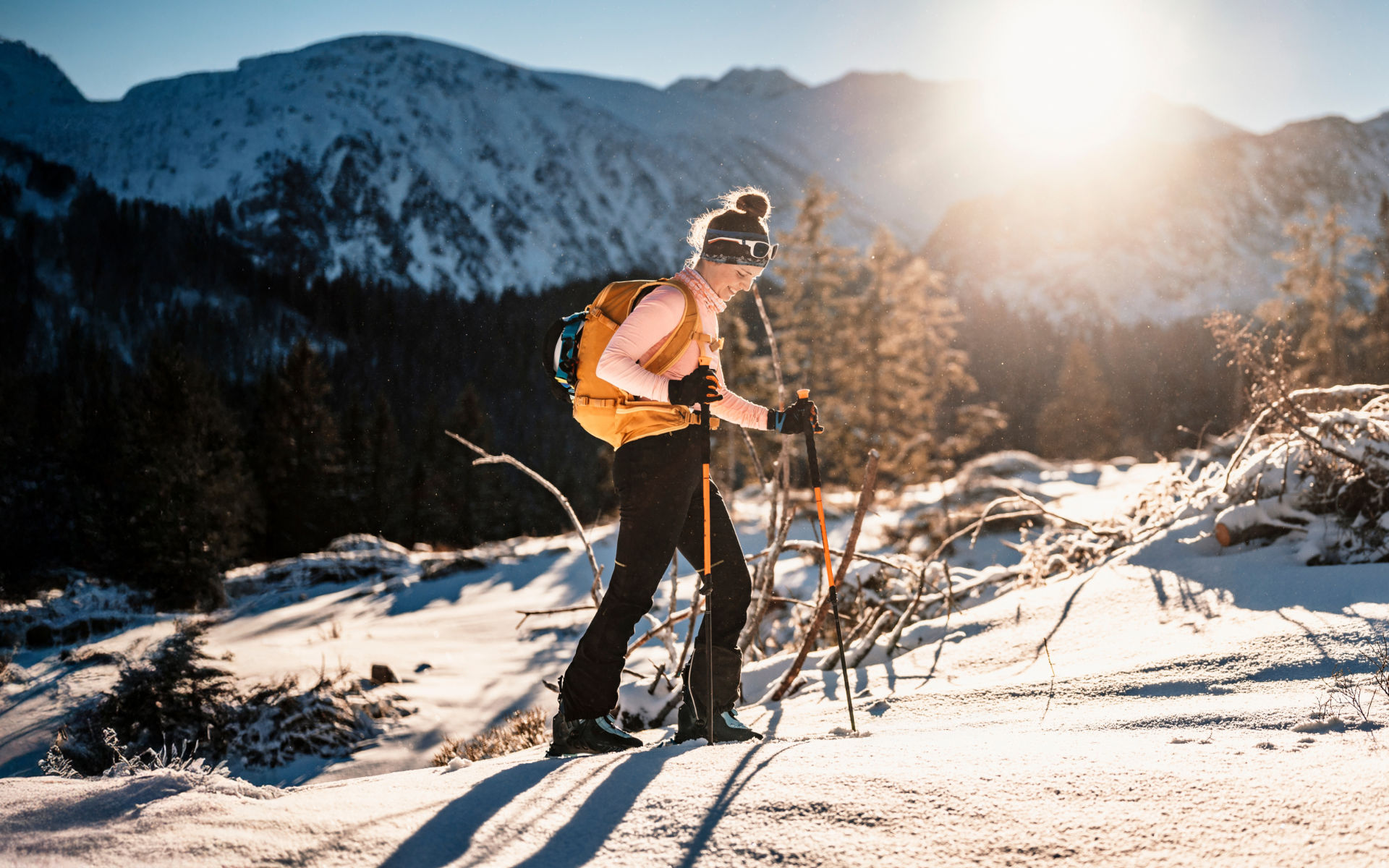
Winter transforms familiar trails into entirely new landscapes, offering a quiet beauty that few people get to witness. However, the cold brings specific challenges that require more than just enthusiasm to overcome.
According to data from the Outdoor Foundation, hiking is one of the most popular outdoor activities, but participation drops significantly during winter months. This is largely due to a lack of knowledge about safety and preparation. By understanding the fundamentals of cold-weather travel, you can unlock a season of adventure that others miss entirely.
In this guide, we’ll break down everything you need to know about winter hiking, from the physiological effects of cold on your body to the exact gear you need to stay safe.
What Is Winter Hiking?
Winter hiking is the activity of walking on trails or off-road terrain during the winter season, typically involving snow, ice, and temperatures below freezing (32°F / 0°C). Unlike summer hiking, where the primary challenges are often heat and hydration (1), winter hiking focuses heavily on thermoregulation – maintaining your body temperature – and navigating altered terrain (2).
It involves specific skills such as layering clothing effectively, using traction devices such as microspikes or snowshoes, and managing shorter daylight hours. It’s not simply “walking in the cold”, it’s a distinct discipline that requires a heightened level of situational awareness and preparation.
Key Differences from Three-Season Hiking
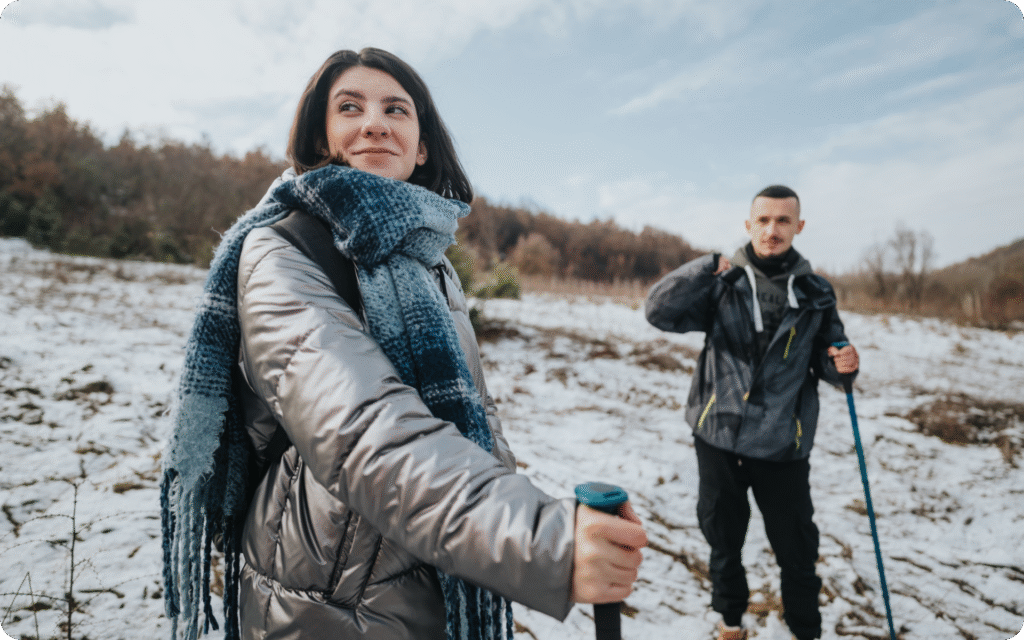
- Pace: Expect to move 20-30% slower than your usual summer pace due to snow resistance and heavier gear.
- Energy Expenditure: You will burn significantly more calories just to stay warm.
- Navigation: Trail markers may be buried under snow, requiring better map-reading skills.
Is It Okay to Hike in the Winter?
Yes, it’s absolutely okay to hike in the winter, as long as you’re adequately prepared. In fact, many outdoor enthusiasts prefer it. The absence of bugs, the crisp air, and the solitude offer a mental clarity that’s difficult to find during peak hiking season.
However, “okay” doesn’t mean “easy”. The margin for error is slimmer in winter. A twisted ankle in summer is an inconvenience, but in winter, without proper insulation, it can quickly escalate to a hypothermic emergency (3).
Reasons why BetterMe is a safe bet: a wide range of calorie-blasting workouts, finger-licking recipes, 24/7 support, challenges that’ll keep you on your best game, and that just scratches the surface! Start using our app and watch the magic happen.
The Benefits of Cold Weather Exposure
Research has suggested that exposure to cold temperatures can have distinct physiological benefits (4).
- Brown Fat Activation: Cold exposure can activate brown adipose tissue (BAT), which burns calories to generate heat, potentially aiding metabolic health (5).
- Mental Resilience: Overcoming the physical discomfort of cold builds mental toughness and resilience (4).
- Improved Sleep: Natural light exposure, even in winter, helps regulate circadian rhythms, which can be disrupted by shorter days (6).
While the physical demands are higher, the rewards – both physical and mental – are substantial. If you’re looking to challenge your cardiovascular system in a new way, winter hiking is an excellent option.
Are you curious about how hiking stacks up against running? Learn more about hiking vs running.
Is It Good for Your Lungs to Walk in the Cold?
There’s a common misconception that breathing cold air damages the lungs. For the vast majority of healthy individuals, walking in the cold is safe and can be invigorating.
Your body is designed to warm and humidify air before it reaches your lungs. As you inhale through your nose, the air is warmed to near body temperature (approx. 98.6°F / 37°C) and humidified (7). However, during intense exertion, you often switch to mouth breathing, which bypasses this warming mechanism (8).
The “Cold Burn” Sensation
If you feel a burning sensation in your chest, this is likely due to dry air, not just cold temperature. Cold air holds less moisture than warm air. When you inhale a large amount of dry air rapidly, it dries out the lining of your airways, which causes irritation (9).
To mitigate this:
- Breathe through your nose as much as possible to warm the air.
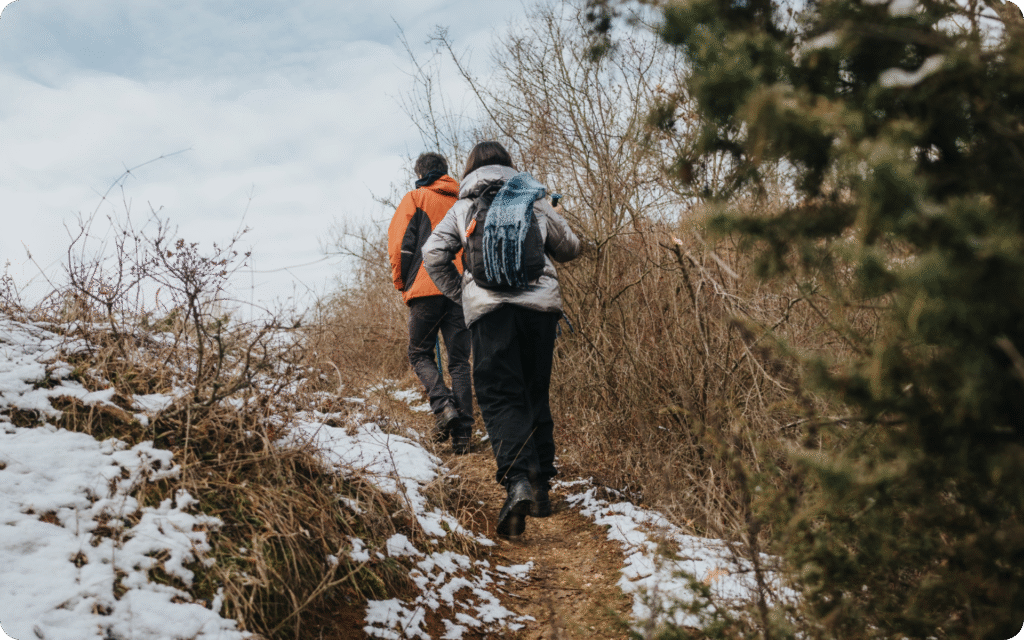
- Wear a buff or scarf over your mouth to trap moisture and heat from your exhaled breath, pre-warming the next inhalation.
- Pace yourself to keep your heart rate in Zone 2 (60-70% of your max heart rate), allowing for more controlled nasal breathing.
For those with exercise-induced asthma or Raynaud’s phenomenon, extra caution is required, and consulting a healthcare provider before you start a winter hiking routine is recommended.
Read more: Top 7 Winter Outdoor Activities to Boost Your Health
Is Winter Hiking Safe for Beginners?
Winter hiking is safe for beginners if – and only if – you respect the environment and follow a structured progression. It is not the time to attempt your longest or steepest hike to date.
Safety in winter is a calculated equation: Preparation + Skill Level = Safety Margin.
If you’re a beginner, your skill level is lower, so your preparation must be higher. You mitigate risk by choosing appropriate trails and carrying the right gear.
Beginner Safety Protocol
- Start Small: Choose a trail you have hiked in summer. Familiarity reduces the cognitive load of navigation.
- Short Duration: Aim for hikes under 2 hours initially. This minimizes exposure time if something goes wrong.
- Check Weather: Don’t hike if the wind chill is predicted to drop below -10°F (-23°C), as frostbite risk increases significantly.
- Tell Someone: Always leave a trip plan with a trusted contact. Include your route and expected return time.
With the right approach, winter hiking for beginners can be a safe gateway to year-round fitness.
Discover effective strategies for training in this guide: how to train for hiking.
How to Prepare for Winter Hiking Correctly
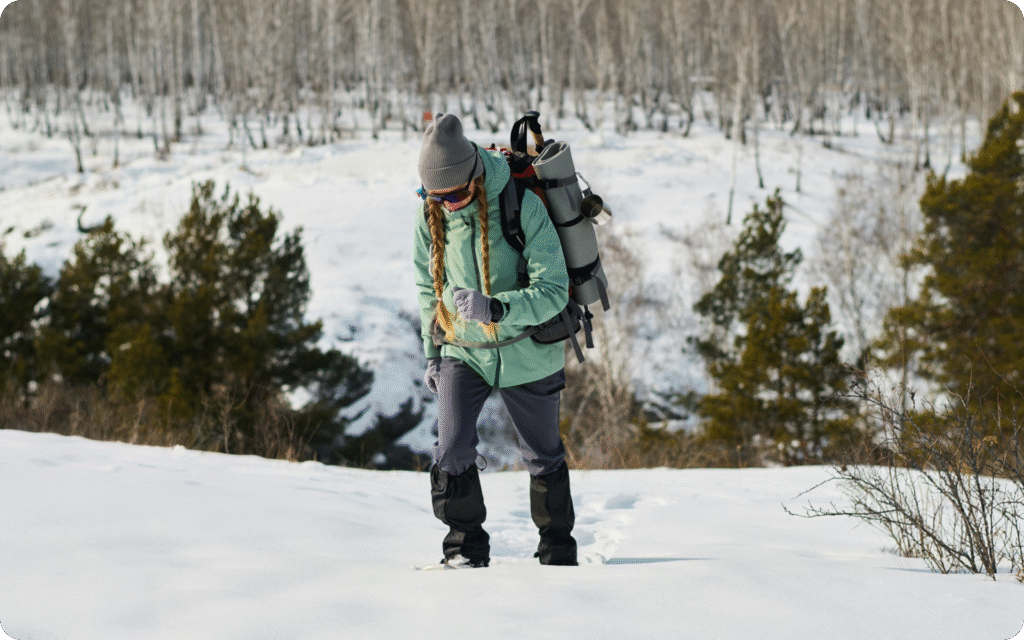
Preparation is the single most important factor in winter hiking. You cannot rely on improvisation when temperatures drop. Here’s a comprehensive breakdown of how to prepare effectively.
1. Route Planning and Research
You need to know exactly where you’re going and what conditions to expect.
- Check Trail Conditions: Look for recent trip reports on apps such as AllTrails or local hiking forums. “Recent” in winter means within the last 24-48 hours.
- Analyze Elevation: Calculate your total elevation gain. In winter, add 1 hour of hiking time for every 1,000 feet (300 meters) of elevation gain, in addition to your walking pace.
- Identify Bailout Points: Mark spots on your map where you can shorten the hike if you get tired or the weather turns.
2. Physical Preparation
Winter hiking requires more stability and strength than summer hiking.
- Warm-Up: Perform a dynamic warm-up indoors before you leave to increase tissue temperature (10).
- Hydration: Pre-hydrate with at least 16-20 ounces (500-600ml) of water before hitting the trail. You often feel less thirsty in the cold, but dehydration accelerates hypothermia (11).
- Fueling: Eat a meal containing complex carbohydrates and fats 2 hours before the hike to ensure sustained energy (2, 12).
3. Gear Systems Check
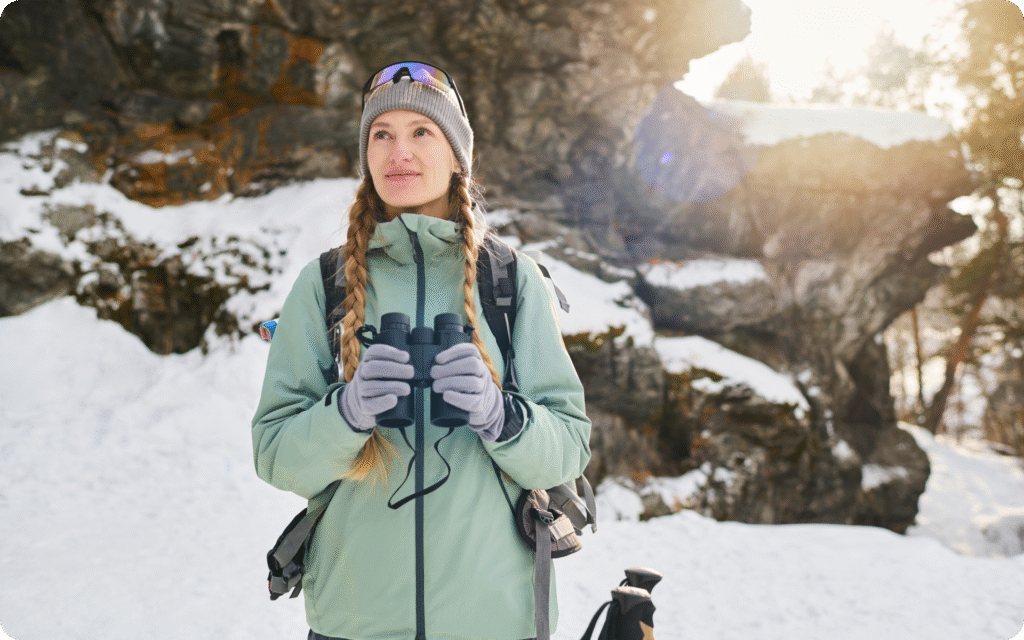
Before you leave the house, lay out every piece of gear.
- Inspect Traction: Check your microspikes for bent links or dull points.
- Test Headlamps: Ensure your headlamp has fresh batteries. Lithium batteries perform better in the cold than alkaline batteries.
- Pack Adjustments: Loosen your backpack straps to accommodate thicker winter layers.
4. Layering Strategy
Understanding how to layer is essential to prevent sweating. Sweat is your enemy in winter; if you get wet, you get cold.
- Base Layer (Wicking): Synthetic or merino wool – never cotton.
- Mid Layer (Insulation): Fleece or active insulation jacket.
- Outer Layer (Shell): Waterproof and windproof jacket to protect against elements.
- Puffy Jacket (Static Insulation): A heavy down or synthetic jacket kept in your pack for stops.
5. Managing Electronics
Cold drains batteries rapidly.
- Keep Phone Warm: Store your phone in an internal pocket close to your body heat.
- Bring a Power Bank: Carry a portable charger and keep it warm as well.
- Airplane Mode: Switch to airplane mode to conserve battery life while using GPS.
Find out how many calories you can burn while hiking by reading this article: calories burned hiking.
What Essentials Do I Need for Winter Hiking?
Your summer day pack won’t suffice for winter excursions. The consequences of missing gear are higher. This list covers the non-negotiables for a safe winter hike.
Navigation Tools
Winter obscures trails. You cannot rely solely on visual markers.
- Map and Compass: Batteries die, paper doesn’t. Know how to orient a map.
- GPS Device/Smartphone: Download maps for offline use.
Traction Devices
Footwear is your primary connection to the terrain.
- Winter Hiking Boots: Insulated and waterproof. Look for 200g-400g of insulation.
- Microspikes: Chains with small spikes that fit over boots for packed snow and ice.
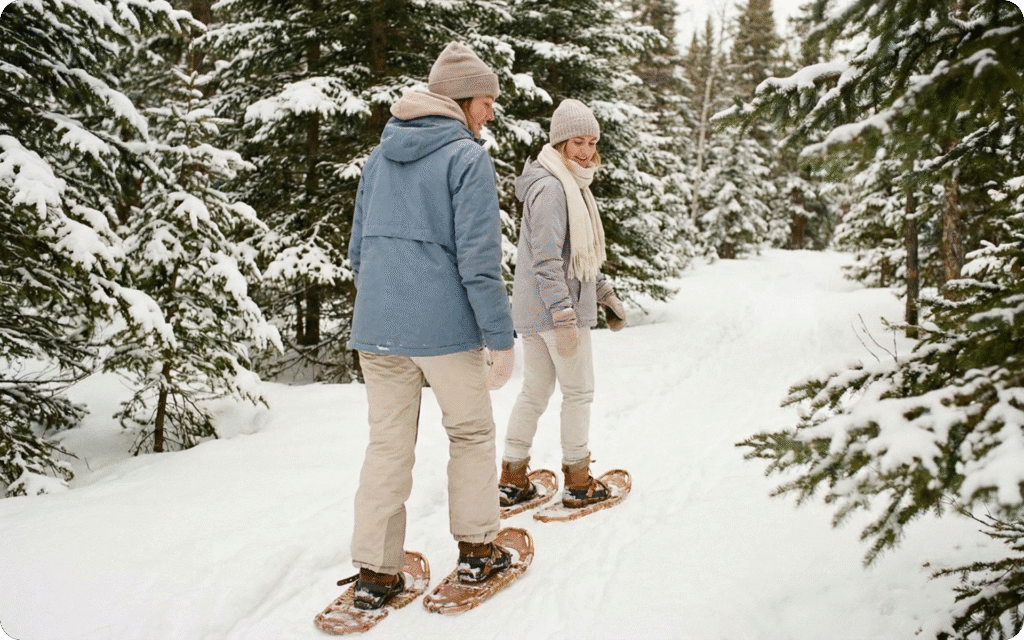
- Snowshoes: Required if snow is deeper than 8 inches (20 cm) to prevent post-holing (sinking deep into snow).
Thermal Regulation
- Extra Layers: Always pack one more insulation layer than you think you need.
- Hat and Gloves: Bring a lightweight pair for hiking and a heavy waterproof pair (mittens are warmer) for emergencies.
- Neck Gaiter: Essential for protecting the face from wind burn.
Safety and First Aid
- Headlamp: With extra lithium batteries. Winter days are short – getting caught in the dark is a common error.
- Emergency Bivy/Blanket: A reflective bag to retain body heat if you’re immobilized.
- Hand Warmers: Chemical heat packs can be lifesavers for numb fingers or toes.
- First Aid Kit: customized for winter (add blister care and meds that don’t freeze).
Nutrition and Hydration
- Insulated Water Bottle: Use a sleeve or wool sock to prevent water from freezing. Avoid hydration bladders as the tubes freeze easily.
- High-Calorie Snacks: Nuts, chocolate, and energy bars that don’t freeze rock-hard. You need dense calories to fuel heat production.
Essential Gear Checklist
| Category | Item | Specification |
|---|---|---|
| Footwear | Boots | Waterproof, 200g+ insulation |
| Traction | Microspikes or snowshoes | |
| Socks | Merino wool (heavyweight) | |
| Clothing | Base layer | Merino wool or synthetic top/bottom |
| Mid layer | Fleece pullover | |
| Shell | Hardshell jacket and pants (windproof) | |
| Insulation | Down/synthetic puffy jacket | |
| Accessories | Head | Wool beanie and buff |
| Hands | Liner gloves and waterproof mittens | |
| Safety | Light | Headlamp and spare lithium batteries |
| Shelter | Emergency bivy sack | |
| Fire | Waterproof matches/lighter | |
| Hydration | Water | 2 liters in insulated bottles |
Having these winter hiking essentials will ensure that you’re self-sufficient and responsible on the trail.
BetterMe: Health Coaching app helps you achieve your body goals with ease and efficiency by helping to choose proper meal plans and effective workouts. Start using our app and you will see good results in a short time.
How Cold Is Too Cold for a Winter Hike?
Determining “how cold is too cold” is subjective to your experience and gear, but there are objective physiological thresholds you should respect.
The Danger Zones
- 32°F to 15°F (0°C to -9°C): This is standard winter hiking weather. With proper movement and layering, this is comfortable for most beginners.
- 15°F to -10°F (-9°C to -23°C): This range requires specialized gear. Exposed skin can become uncomfortable quickly. Facial protection is mandatory.
- Below -10°F (-23°C): This is considered extreme cold for beginners. The risk of frostbite on exposed skin occurs in under 30 minutes.
Wind Chill Factor
Temperature is only half the story. Wind chill accelerates heat loss significantly (13).
- If the ambient temperature is 20°F (-6°C) and the wind is blowing at 20 mph (32 kph), the wind chill is 4°F (-15°C).
- Always check the “RealFeel” or wind chill forecast, not just the ambient temperature.
Beginner Threshold Recommendation
For your first few winter hikes, stick to days where the temperature is above 20°F (-6°C) and wind speeds are below 15 mph (24 kph). This provides a safety buffer where minor gear issues won’t result in immediate cold injuries.
As you gain experience with your layering systems and body’s response to exertion in the cold, you can gradually expand these limits.
Read more: Running in Winter: How to Stay Safe and Reap the Benefits According to Experts
Recommended Winter Conditioning Program
To enjoy winter hiking, you need a base level of strength and endurance. Walking in snow engages the hip flexors, glutes, and core more intensely than walking on firm ground (14).
The following program is designed to prepare your body for the specific demands of winter hiking.
Program Notes
- Frequency: Perform this routine 2-3 times per week.
- Equipment Needed: Dumbbells or kettlebells, resistance band, box or step.
- Rest Schemes: Rest 60-90 seconds between sets.
- Progression: Increase weight or reps every 2 weeks.
Glossary of Terms:
- RPE (Rate of Perceived Exertion): Scale of 1-10, where 10 is maximum effort. Aim for 7-8.
- Unilateral: Exercises performed one side at a time (e.g. lunges) to fix imbalances.
- Eccentric: The lowering phase of a movement.
Winter Hiking Prep Workout
| Exercise | Sets | Reps | Rest | Notes |
|---|---|---|---|---|
| Goblet squats | 3 | 12-15 | 60s | Builds leg endurance and core stability for carrying a pack |
| Step-ups | 3 | 10/leg | 60s | Mimics the stepping motion of hiking uphill |
| Romanian deadlifts | 3 | 10-12 | 90s | Strengthens the posterior chain (hamstrings/glutes) to prevent back pain |
| Plank | 3 | 45-60s | 60s | Core stability is essential for balance on uneven ice/snow |
| Farmer’s carry | 3 | 40m walk | 60s | Builds grip strength and postural endurance |
Exercise Instructions
Goblet Squats
- Stand with your feet shoulder-width apart, holding a weight against your chest with both hands.
- Lower your hips back and down as if sitting in a chair, keeping your chest up.
- Descend until your thighs are at least parallel to the floor.
- Drive through your heels to return to the starting position.

Step-Ups
- Stand in front of a sturdy box or step (knee height).
- Place your right foot entirely on the box.
- Drive through your right heel to lift your body up, bringing your left foot to meet the right.
- Lower yourself down with control (3 seconds down) using the same leg.
- Complete all reps on one side before switching.
Romanian Deadlifts (RDL)
- Stand holding weights in front of your thighs, your palms facing your body.
- Keep a slight bend in your knees, but don’t squat.
- Hinge at your hips, pushing your butt backward while lowering the weights toward your shins.
- Keep the weights close to your legs and your back flat.
- Lower until you feel a stretch in your hamstrings, then squeeze your glutes to return to standing.
Plank
- Get into a push-up position, but rest on your forearms instead of your hands.
- Your elbows should be directly under your shoulders.
- Engage your glutes and core to create a straight line from your head to your heels.
- Hold this position without letting your hips sag or hike up.

Farmer’s Carry
- Hold a heavy dumbbell or kettlebell in each hand by your sides.
- Stand tall, pulling your shoulders back and down.
- Walk forward at a normal pace, maintaining an upright posture.
- Resist the urge to lean side-to-side – keep your core braced tight.
Yes, hiking is an effective method for fat loss as it’s a low-impact, sustained aerobic activity that keeps you in the “fat-burning zone” (Zone 2 heart rate) for extended periods (15). When hiking in winter, your body burns additional calories to regulate its temperature (thermogenesis), which can further increase total energy expenditure compared to hiking in mild conditions (5, 16). The best time to hike in winter is early morning, ideally starting shortly after sunrise. This strategy maximizes your use of limited daylight hours, ensures you’re off the trail before temperatures drop rapidly at sunset, and often provides firmer snow conditions before the sun softens the pack. No, you shouldn’t hike on an empty stomach in winter, as your body requires significant energy to generate heat and fuel movement. It’s recommended to consume a meal that contains complex carbohydrates and protein 1-2 hours before your hike to maintain your blood sugar levels and core temperature (17).Frequently Asked Questions
Can you lose belly fat by hiking?
When is the best time to hike?
Should I hike on an empty stomach?
The Bottom Line
Winter hiking provides a unique opportunity to see the world from a different perspective – one that’s quieter, wilder, and more demanding. It forces you to be present, to listen to your body, and to respect the raw power of nature. While the learning curve may seem steep, the principles of layering, preparation, and pacing are quickly mastered with practice.
By following the guidelines laid out here – preparing your gear, respecting the weather, and conditioning your body – you can transition from a summer hiker to a four-season adventurer.
DISCLAIMER:
This article is intended for general informational purposes only and does not serve to address individual circumstances. It is not a substitute for professional advice or help and should not be relied on for making any kind of decision-making. Any action taken as a direct or indirect result of the information in this article is entirely at your own risk and is your sole responsibility.
BetterMe, its content staff, and its medical advisors accept no responsibility for inaccuracies, errors, misstatements, inconsistencies, or omissions and specifically disclaim any liability, loss or risk, personal, professional or otherwise, which may be incurred as a consequence, directly or indirectly, of the use and/or application of any content.
You should always seek the advice of your physician or other qualified health provider with any questions you may have regarding a medical condition or your specific situation. Never disregard professional medical advice or delay seeking it because of BetterMe content. If you suspect or think you may have a medical emergency, call your doctor.
SOURCES:
- Hiking Time Trial Performance in the Heat with Real-Time Observation of Heat Strain, Hydration Status and Fluid Intake Behavior (2021, pmc.ncbi.nlm.nih.gov)
- Practicing Sport in Cold Environments: Practical Recommendations to Improve Sport Performance and Reduce Negative Health Outcomes (2021, pmc.ncbi.nlm.nih.gov)
- Hypothermia (2024, ncbi.nlm.nih.gov)
- Integrated effects of cold acclimation: physiological mechanisms, psychological adaptations, and potential applications (2024, frontiersin.org)
- Effect of Acute Cold Exposure on Energy Metabolism and Activity of Brown Adipose Tissue in Humans: A Systematic Review and Meta-Analysis (2022, frontiersin.org)
- Effects of light on human circadian rhythms, sleep and mood (2019, link.springer.com)
- Observations on the ability of the nose to warm and humidify inspired air (2007, pubmed.ncbi.nlm.nih.gov)
- Nose vs. mouth breathing– acute effect of different breathing regimens on muscular endurance (2024, link.springer.com)
- The impact of cold on the respiratory tract and its consequences to respiratory health (2018, pmc.ncbi.nlm.nih.gov)
- Sports and environmental temperature: From warming-up to heating-up (2017, pmc.ncbi.nlm.nih.gov)
- Influence of Cold Stress on Human Fluid Balance – Nutritional Needs In Cold And In High-Altitude Environments (1996, ncbi.nlm.nih.gov)
- Nutrition, hydration and supplementation considerations for mountaineers in high-altitude conditions: a narrative review (2024, frontiersin.org)
- Wind Chill (2024, noaa.gov)
- Biomechanics and energetics of walking on uneven terrain (2013, pmc.ncbi.nlm.nih.gov)
- What Is Zone 2 Cardio? (2024, health.clevelandclinic.org)
- Biochemistry, Heat and Calories (2012, ncbi.nlm.nih.gov)
- Nutrition, hydration and supplementation considerations for mountaineers in high-altitude conditions: a narrative review (2024, frontiersin.org)

 Reviewed by

 Reviewed by