There are many benefits to engaging in upper-body gym workouts for men. This type of workout can help you build upper-body strength, which enables you to carry out your daily routines or tasks with ease. For example, we push, pull, lift, and carry objects regularly in our lives. A majority of our simple daily tasks involve the upper body, so it’s critical to develop strength in this region.
Upper-body gym workouts are also helpful for improving physique and confidence, enhancing muscle mass, improving posture, and improving athletic performance. It’s important to note that these workouts target different muscles such as the chest, shoulders, arms, back, and core. This makes men more energetic, confident, and athletic.
What Is an Easy Upper-Body Gym Workout Men Can Follow?
An easy upper-body gym workout that men can follow should use common gym equipment and have minimal complex movements. It should be easy for beginners or those who are trying out the gym for the first time. Some of the features of an effective upper-body gym workout include the following:
- Trains all the major muscles of the upper body
- Allows for sufficient rest between sets
- Focuses on functional movements that engage the upper body
- Takes between 45-60 minutes and includes 2-3 sets per exercise
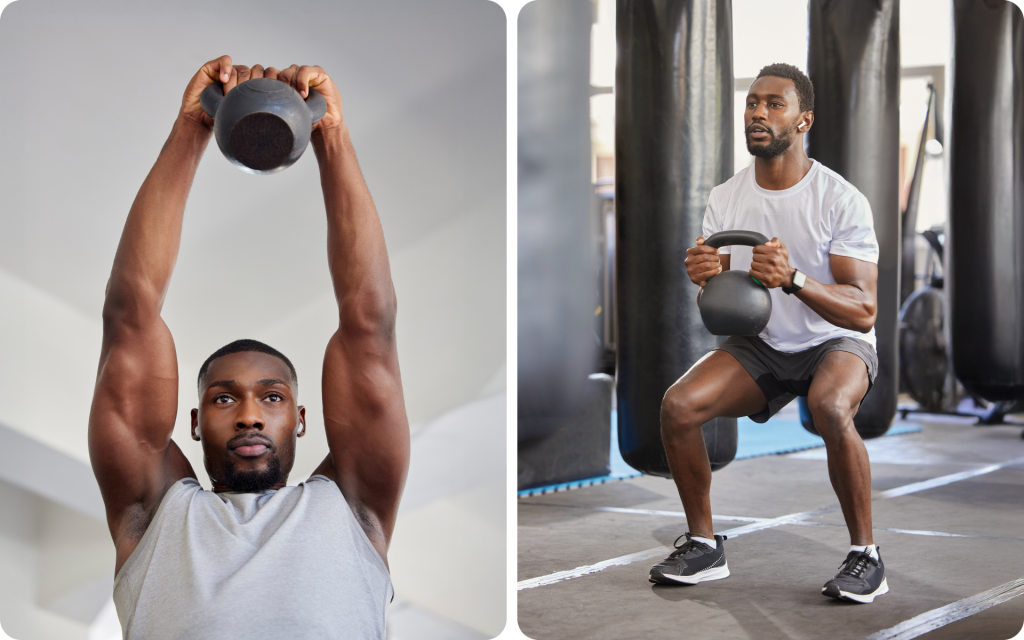
So you can structure your upper-body workouts efficiently, it’s important to also understand the main components of these workouts. It must include the following:
- Warm-ups
- Compound exercises to work multiple muscles at once
- Isolation exercises to work specific muscle groups or one muscle group
- Cool down and stretching exercises
Here’s an example of an easy upper-body gym workout that you can try:
Easy Upper-Body Gym Workout Men Can Follow (30-35 Minutes)
Warm-Up (5-8 Minutes)
Light treadmill or light cardio exercise, rowing machine, or bike, then arm circles, light band pulls, and shoulder rolls. The focus here is to increase your heart rate and warm up the muscles as you get ready for the next step.
Main Workout
Some of the main workout exercises include the following:
Chest Press Machine – 3 sets × 10-12 reps
Steps:
- Sit on the chest press machine and place your back flat against the pad.
- Adjust the seat so the handles are at chest level.
- Hold the handles with both hands and keep your feet flat on the floor.
- Push the handles forward until your arms are almost straight, without locking your elbows.
- Slowly bring the handles back to the starting position.
- Perform about 10-12 reps and rest for about 60-90 seconds, then repeat for 3 sets.
Lat Pulldown – 3 sets × 10-12 reps
Steps:
- Sit on the lat pulldown machine and place your knees under the pads.
- Hold the bar with a wide grip and your palms facing forward.
- Pull the bar down toward your upper chest as you squeeze your shoulder blades together.
- Pause for a few seconds at the bottom.
- Slowly let the bar go up again until your arms are fully stretched.
- Do it for about 10-12 reps and rest for 60-90 seconds and then complete 3 sets.
BetterMe: Health Coaching app helps you achieve your body goals with ease and efficiency by helping to choose proper meal plans and effective workouts. Start using our app and you will see good results in a short time.
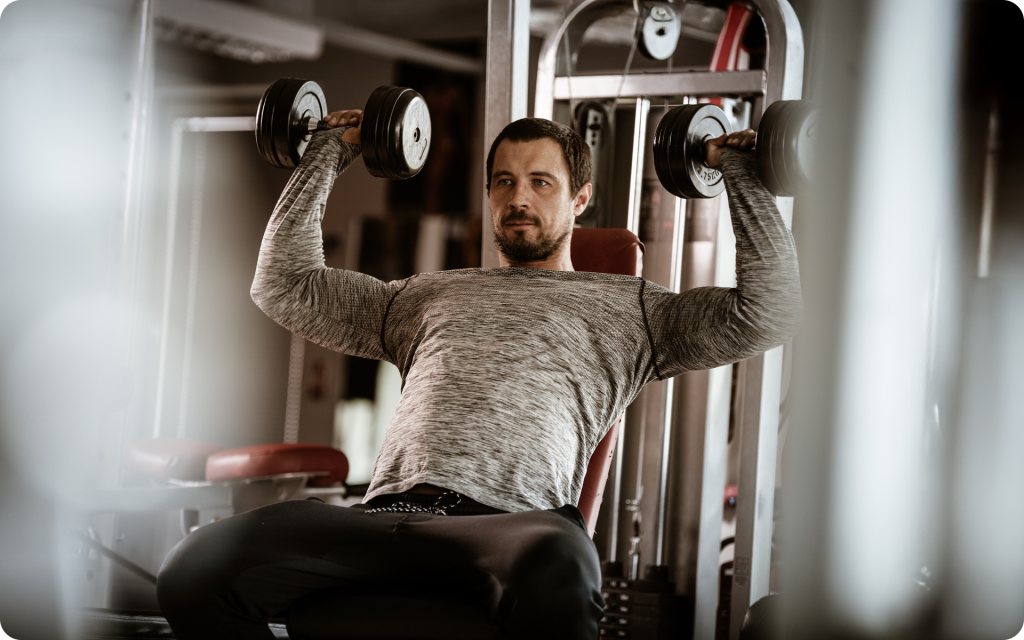
Seated Shoulder Press Machine – 2-3 sets × 10 reps
Steps:
- Sit on the shoulder press machine with your back firmly against the pad.
- Adjust the seat so the handles are at shoulder level.
- Hold the handles while keeping your feet flat on the floor.
- Push the handles upward until your arms are close to full extension. Make sure to avoid locking your elbows.
- Lower the handles slowly back to shoulder level.
- Do it for about 10 reps and rest for about 60-90 seconds, and complete 2-3 sets.
Read more: Full-Body Dumbbell Workout Men: The Ultimate Guide to Gains
How Should a Beginner Start Working out the Upper Body?
A beginner should approach upper-body workouts correctly. This means doing it with the right form, learning the technique, and avoiding weights that your body isn’t yet ready for. It’s also important to start slowly as starting too fast may result in injuries. It should be noted that repetitive exercises, improper form, and overtraining can result in injuries, especially for beginners (1). Here are some of the steps that a beginner can take to start working out the upper body in a safe manner:
Step 1: Warm Up Properly
Starting exercises with a warm-up is always the best practice. A good warm-up will prepare the muscles and joints for the exercise. It also helps reduce the risk of injury. Upper-body mobility warm-up exercises include the following:
- Arm circles
- Shoulder rolls
- Resistance band pull-apart
- Light push-ups or wall push-ups
It’s also important to understand that dynamic warm-ups improve performance and joint range of motion and also play a role in the prevention of injuries (2).

Step 2: Start with Lighter Weights and Only Progress to Heavier Weights When You’re Ready
You don’t want to start heavy or fast. Therefore, choose weights that allow you to complete all reps with good form and then progress gradually. Progressive overload is beneficial for both beginners and anyone who is hoping to maximize muscle hypertrophy (3). In this regard, if you struggle or find yourself swinging the weight just to get it up, it’s likely an indication that the weight is too heavy.
Step 3: Learn Proper Form
Ensure that you’re properly performing each exercise. For example, try not to let your hips sag while planking. You should engage your core and attempt to pull your belly button in. This will properly target the muscles that make up your abdomen and effectively help you strengthen them. Proper technique also helps you progress faster and prevents injuries (4).
Step 4: Train for 2-3 Days per Week
You need rest days and it’s typically recommended that you give yourself 24-48 hours before exercising the same body part. So, training upper-body muscles 2-3 times per week will allow enough recovery and fit within these recovery guidelines. Studies have shown that weekly frequency can impact strength gains and muscle growth and recommend moderate to vigorous training at least twice a week (5).
How to Structure an Upper-Body Gym Workout
To structure an upper-body gym workout, you need to organize your exercises in a clear order so you can train all major upper-body muscles effectively while avoiding fatigue that may come too early and reducing the risk of injury. Here’s a simple structure you can follow:
1. Warm-Up Exercises (5-10 minutes)
You need to start with a warm-up to activate and prepare your muscles and joints. Warm-up exercises include:
- Light cardio exercises such as brisk walking, cycling, or skipping
- Dynamic arm movement such as arm circles, arm swings, and shoulder rolls
- Light warm-up sets using very light weights
As previously mentioned, engaging in warm-up exercises before the main workouts can be helpful for increasing blood flow and reducing the risk of injury (2).
2. Start with Compound Exercises
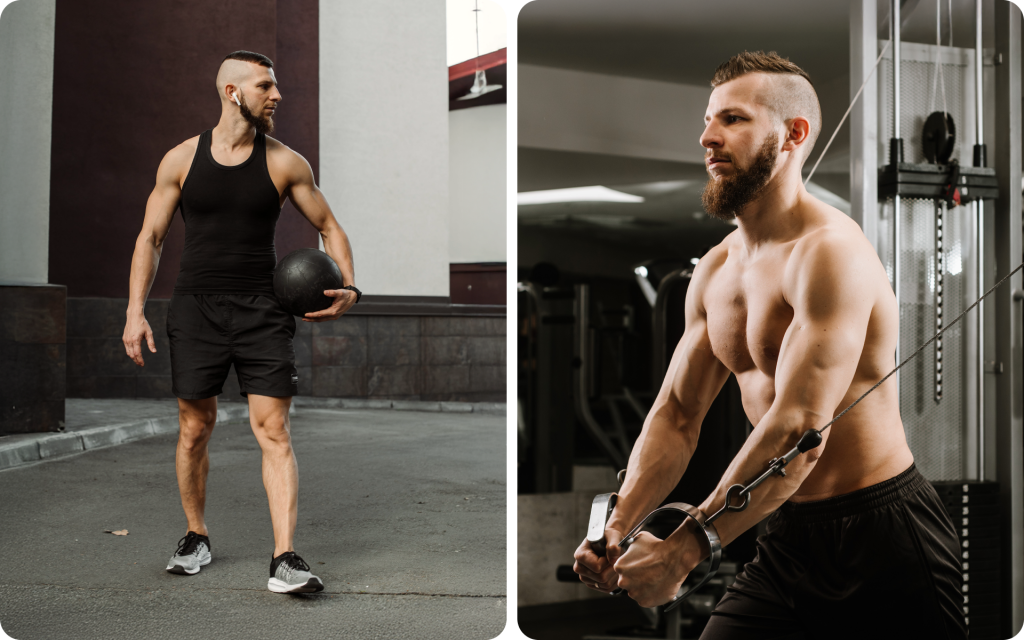
It’s important to begin with exercises that engage most of the major muscles at the same time. These exercises require the most energy and strength. In that regard, you should focus on exercises that target the chest, back, and shoulders, such as:
- Bench press or chest press machine
- Lat pulldown or pull-ups
- Seated Row
3. Move to Accessory and Isolation Exercises
After the compound exercises, move to target muscles that assist the big lifts and use upper-body muscles such as the shoulders, triceps, and biceps. Exercises to engage the shoulders include lateral raises and rear delt fly.
In order to focus on the biceps and triceps, you can either do single-arm movements or use two arms at once. Some of the many exercises include the bicep curl, triceps pushdown, and overhead tricep extension.
Regarding structuring isolation exercises, it’s recommended to perform 2-3 sets of 10-15 reps of each exercise and rest for about 30-60 seconds.
Reasons why BetterMe is a safe bet: a wide range of calorie-blasting workouts, finger-licking recipes, 24/7 support, challenges that’ll keep you on your best game, and that just scratches the surface! Start using our app and watch the magic happen.
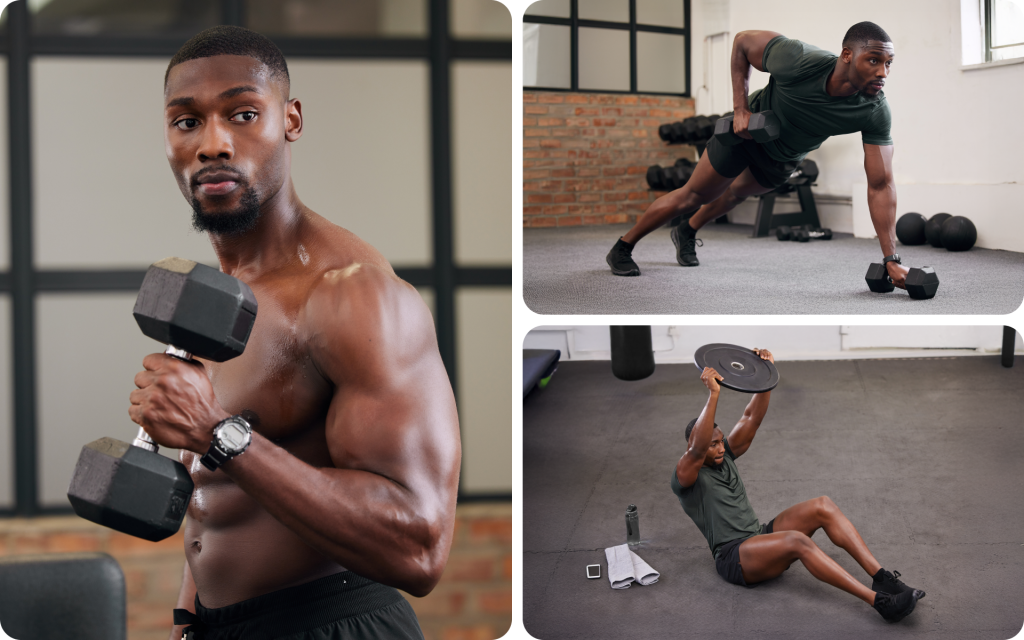
5. Balance Push and Pull Movements
To help minimize your chances of injury and potential for muscle imbalance, you need a mix of push and pull movements. It’s important to note that push exercises or movements work the chest, triceps, and shoulder muscles while pull movements work the biceps and the back.
To have a balance, you can mix pull and push movements as follows:
- Bench press (push)
- Lat pulldown (pull)
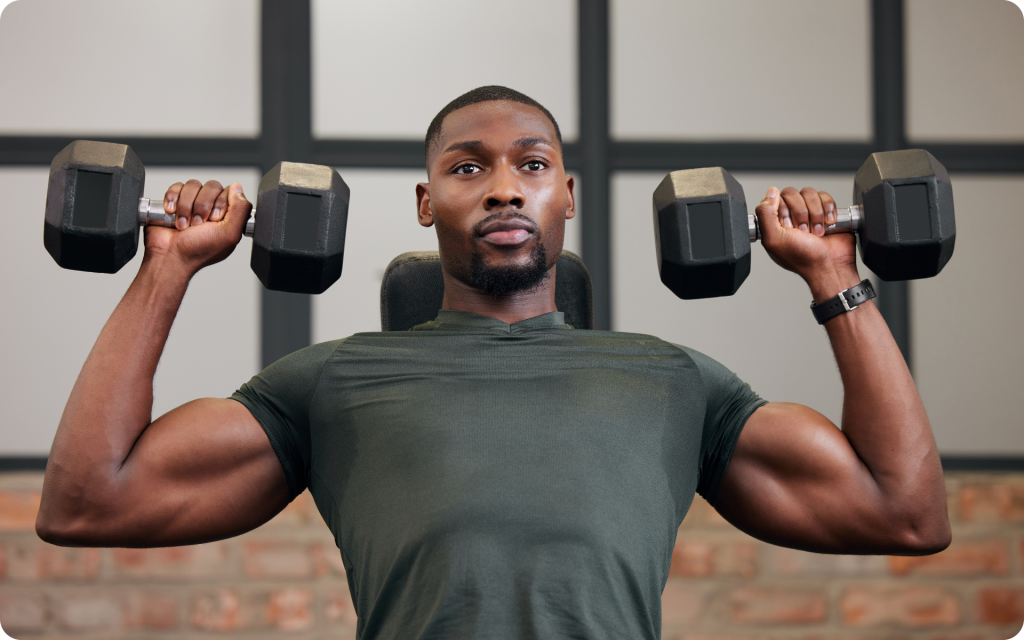
- Shoulder press (push)
- Seated row (pull)
6. Use Proper Exercise Order
For better performance during the exercises, you need to always stick to the proper exercise order – start with compound exercises and finish with isolation exercises.
7. Control the Volume
Overtraining or exercising without allowing enough time for recovery can be damaging both physically and emotionally. It can lead to decreased athletic performance, physiologic dysregulation, and an increased risk of injury and illness (6).
8. Rest and Recovery
Rest days are important to allow for recovery and muscle hypertrophy – you need about 48-72 hours of rest before training your upper body again (7). In addition to rest, you need to sleep well and eat enough protein, then stretch lightly after the training.
Read more: 5-Day Workout Routine for Men: The Ultimate Guide
What Is the Best Upper-Body Gym Workout Men Can Start With?
The best upper-body gym workout for men to start with is one that’s simple and trains the chest, back, shoulders, arms, and core. If you’re a beginner, you can focus on compound exercises that work many muscles at once.
Some of the best starter movements include the chest press machine or push-ups for the chest, lat pulldowns for the back, and shoulder press machines for the shoulders. You can also add bicep curls and triceps pushdowns for the arms, and finish with planks for core strength. In terms of frequency, you can do that for about 2-3 sets of 8-12 reps and with rest of about 60-90 seconds. In addition, you can train 2-3 times per week.
Are 5 Exercises Enough for Upper-Body Day?
Yes, 5 exercises can be enough for upper-body day if each exercise is geared to target key muscle groups of your body. According to studies, what matters most is the total training volume, quality of the exercise, and how often you train rather than the specific number of exercises themselves (8).

In What Order Should You Do Upper-Body Workouts?
When it comes to the order of upper-body workouts, you should start with compound movements that use several muscles at once, such as bench press, push-ups, pull-ups, or lat pulldowns, as they require more energy and strength. After that, move to accessory and isolation muscle exercises that involve the biceps, triceps, and shoulders. Finally, finish off with core movements to get a really well-rounded workout.
What Upper-Body Muscles Should You Train Together?
You should train the upper-body muscles that work together on the same day. A common choice for this is chest, shoulders, and triceps as they all help with pushing movements. Another good option is the back and biceps as they work together during pulling exercises.
Is It OK to Train Your Upper Body Every Day?
No, it’s not OK to train your upper body every day. You need some time for muscles to rest, grow, and recover. Training the same muscles daily can result in overtraining and injury. Therefore, it’s good to incorporate rest days for the workouts to be effective.
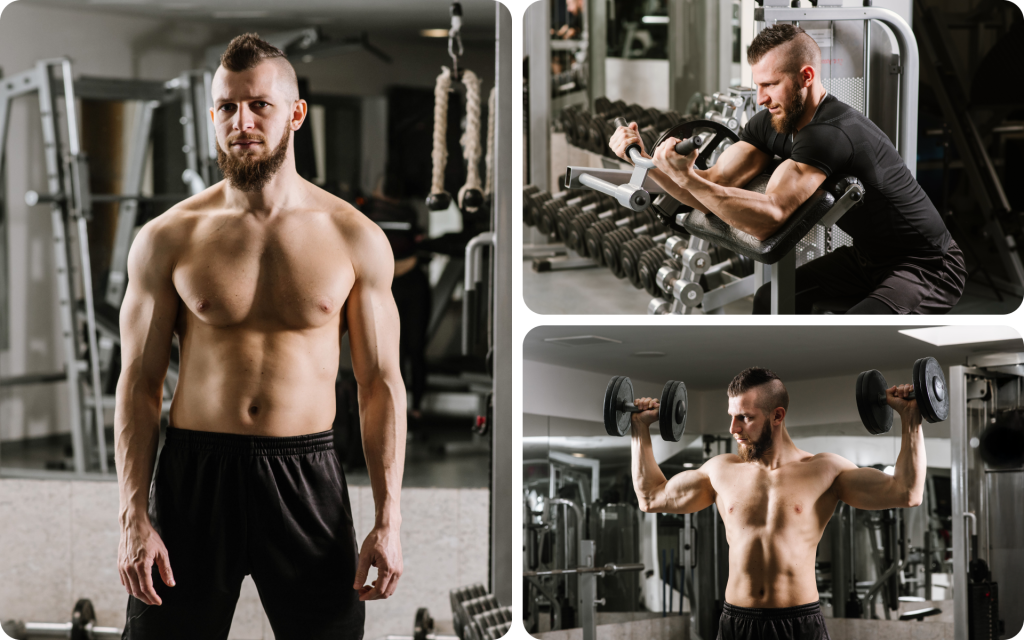
The most effective upper-body exercises are compound movements. For pull movements, some of the best exercises include pull-ups, bent-over rows, and upright rows. For push, some of the best include overhead press, bench press, and dumbbell press. Yes, you can do abs on upper-body days. Your core is what keeps your entire body balanced. It should be activated with each lift you do. We recommend a mix of carries, isometric holds, and anti-rotation work to really fire up your core. An effective upper-body workout routine should last for 45-60 minutes, including the warm-up and cool-down (9). Both heavy and light weights can be effective. Which is better will depend on your fitness level and the goals you want to achieve. It’s generally better to train with low weight and high repetitions if your goal is muscular endurance. For strength and hypertrophy (muscle mass increase), a rep range of 6 to 12 with heavy to moderate weight is recommended. However, what matters most is staying consistent, so find what you like to do for exercise and stick with it. The weight on the barbell will increase sooner than you think.Frequently Asked Questions
What is the most effective upper-body exercise?
Should I do abs on upper-body day?
How long should an upper-body workout last?
Is it better to lift heavy or light weights?
The Bottom Line
It’s important to note that an upper-body gym workout for men should be simple to implement, balanced, and provide consistency. If you’re a beginner, you need to focus on maintaining proper form, engaging in basic exercises, and maintaining a gradual progression.
It’s possible to build strength, grow muscles, improve overall fitness, and gain all the benefits that come with gym workouts when you have a clear upper-body workout schedule.
DISCLAIMER:
This article is intended for general informational purposes only and does not serve to address individual circumstances. It is not a substitute for professional advice or help and should not be relied on for making any kind of decision-making. Any action taken as a direct or indirect result of the information in this article is entirely at your own risk and is your sole responsibility.
BetterMe, its content staff, and its medical advisors accept no responsibility for inaccuracies, errors, misstatements, inconsistencies, or omissions and specifically disclaim any liability, loss or risk, personal, professional or otherwise, which may be incurred as a consequence, directly or indirectly, of the use and/or application of any content.
You should always seek the advice of your physician or other qualified health provider with any questions you may have regarding a medical condition or your specific situation. Never disregard professional medical advice or delay seeking it because of BetterMe content. If you suspect or think you may have a medical emergency, call your doctor.
SOURCES:
- Upper Extremity Injuries in CrossFit Athletes—a Review of the Current Literature (2022, pmc.ncbi.nlm.nih.gov)
- Dynamic Warm-ups Play Pivotal Role in Athletic Performance and Injury Prevention (2024, pmc.ncbi.nlm.nih.gov)
- Effects of Resistance Training Overload Progression Protocols on Strength and Muscle Mass (2024, pubmed.ncbi.nlm.nih.gov)
- Importance of Proper Form and Cueing in Personal Training (2025, nfpt.com)
- The influence of resistance exercise training prescription variables on skeletal muscle mass, strength, and physical function in healthy adults: An umbrella review (2024, sciencedirect.com)
- Overuse Injuries, Overtraining, and Burnout in Young Athletes (2024, publications.aap.org)
- Effects of Different Between Test Rest Intervals in Reproducibility of the 10-Repetition Maximum Load Test: A Pilot Study with Recreationally Resistance Trained Men (2029, pmc.ncbi.nlm.nih.gov)
- How Many Exercises Per Workout? The Science-Backed Figures for Your Goals (n.d, live4well.io)
- How Long Should A Workout Last? (2019, healthline.com)

 Reviewed by