Strength training is a powerful tool for transforming your body and mind. However, for many women, the path forward is often clouded by conflicting advice and outdated myths. This guide takes an evidence-based approach, providing you with the knowledge and structure to build a successful strength training program.
We’ll explore how to design effective workouts, integrate them with cardio, and understand the timeline for results. More importantly, we’ll ground this advice in the latest scientific research on female physiology, ensuring the recommendations aren’t just effective, but optimized for you.
Can Lifting Weights Lose Belly Fat?
Yes, lifting weights can be a highly effective strategy for reducing belly fat, but it works indirectly. The concept of “spot reduction”, or losing fat from a specific area by training the muscles there, is a myth (1).
You cannot perform crunches to burn fat from your stomach. Instead, fat loss occurs systemically across the entire body when you create a consistent calorie deficit (2).
So, how does strength training help?
- Increased Metabolic Rate
Muscle is metabolically active tissue. For every pound of muscle you build, your body burns more calories at rest.
A 2023 narrative review on resistance training in women highlights its favorable impact on metabolic health and body composition (3).
Building a more muscular physique through a consistent strength training program elevates your basal metabolic rate (BMR), meaning you burn more calories 24/7, which helps with overall fat loss (4), including from the abdominal area.
- Enhanced Caloric Burn, During and After Exercise
A lifting session burns a significant number of calories during the workout itself. In addition, it creates an effect known as excess post-exercise oxygen consumption (EPOC), or the “afterburn effect”. Your body uses energy to repair muscle fibers and restore physiological processes, which keeps your metabolism elevated for hours after you leave the gym (5).
- Improved Insulin Sensitivity
Strength training helps your muscle cells become more sensitive to insulin. This means your body is more efficient at using carbohydrates for energy and muscle repair, rather than storing them as fat (6).
Better insulin management is crucial for controlling visceral fat, the dangerous type of fat that surrounds your organs in the abdominal cavity (7).
In addition, your body’s glycogen stores are primarily held within your muscles. This is why diabetes is also a risk factor for those who have low levels of muscle mass (8). Therefore, building more muscle mass means your body has more “storage room”.
In summary, while you can’t directly target belly fat, strength training creates the ideal physiological environment for overall fat reduction. It builds calorie-burning muscle, boosts your metabolism, and improves hormonal regulation, which makes it a cornerstone of any effective fat loss plan (9).
Read more: A Good Starter Workout Routine for Absolute Beginners
What Strength Exercise Burns the Most Belly Fat?
No single exercise burns belly fat directly. However, some exercises are vastly superior for creating the metabolic demand that drives overall fat loss. The best exercises are compound movements that engage multiple large muscle groups simultaneously (10).
These movements are metabolically expensive, which means they require a tremendous amount of energy to perform and recover from. This leads to a greater calorie burn per session and a more significant EPOC effect compared to isolation exercises such as bicep curls or leg extensions (11).
The most effective “fat-burning” strength exercises include:
- Squats (and its variations): Engage the quadriceps, glutes, hamstrings, and core.
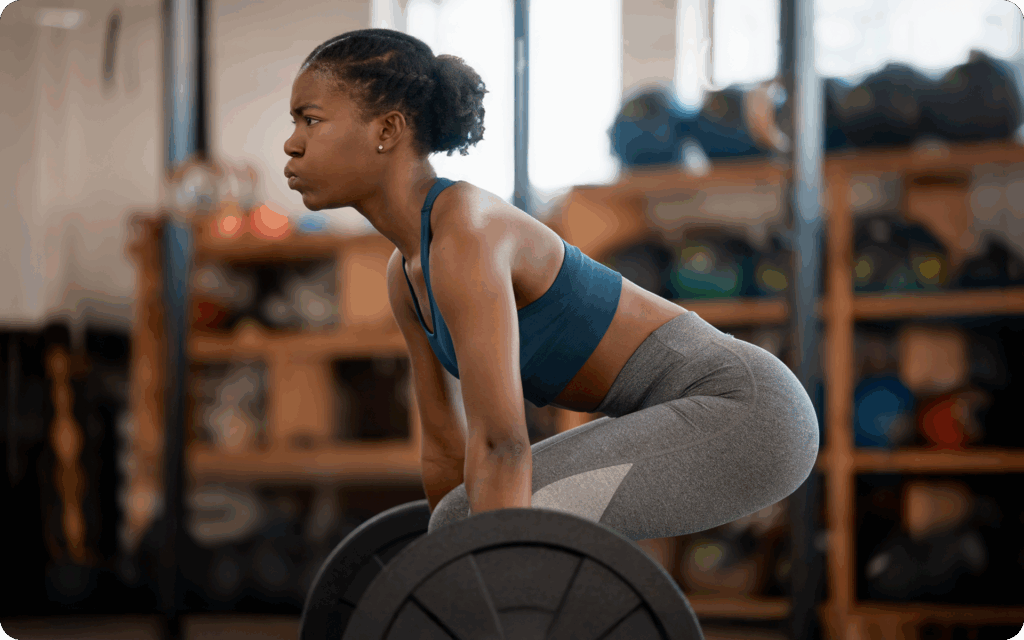
- Deadlifts (and its variations): A full-body movement that targets the glutes, hamstrings, back, and core.
- Hip Thrusts: Primarily target the glutes, the largest muscle in your body, contributing to a high metabolic cost.
- Push-Ups and Bench Presses: Work the chest, shoulders, triceps, and core.
- Rows and Pull-Ups/Pulldowns: Target the large muscles of the back and biceps.
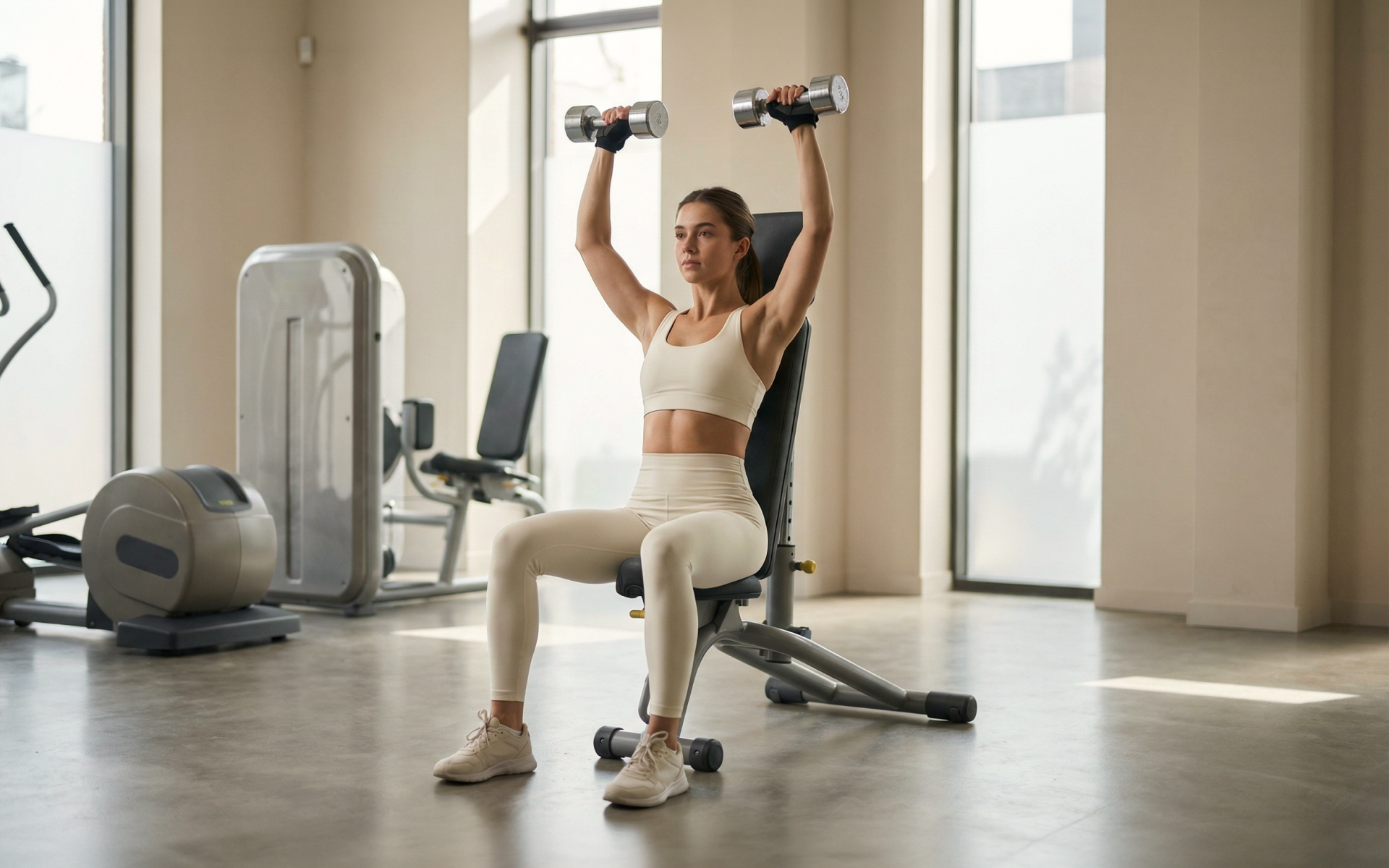
- Overhead Presses: Engage the shoulders, triceps, and upper back.
Incorporating these multi-joint lifts as the foundation of your simple weightlifting routine will maximize your training efficiency and create the largest stimulus for fat loss and muscle growth.
BetterMe: Health Coaching app helps you achieve your body goals with ease and efficiency by helping to choose proper meal plans and effective workouts. Start using our app and you will see good results in a short time.
What Is a Good Strength Training Program for Women?
A good strength training program for women is built on the same core principles as one for men:
- Progressive overload
- Consistency
- Adequate recovery
However, a truly optimal program also acknowledges key insights from female-specific research.
A groundbreaking 2025 Bayesian meta-analysis involving over 2,800 participants provided a clear picture: when measured as a percentage change from baseline, women build muscle just as effectively as men (12).
The study found that while men gain slightly more muscle in absolute terms (e.g. centimeters), this is largely because they start with a larger muscle mass. The relative growth potential is remarkably similar (12).
This means you should train with the same focus and intensity. A well-structured program for women should include:
- Emphasis on Compound Lifts: Your workouts should be centered around the major compound movements previously mentioned.
- Progressive Overload: To stimulate muscle growth, you must continually challenge your body. This means gradually increasing the weight, repetitions, or sets over time (13).
- Appropriate Volume and Intensity: Aim for 10-20 “hard sets” per muscle group per week (14). A hard set is one taken close to muscular failure, typically with 1-3 repetitions in reserve (RIR), where RIR is the number of reps you could have done before failure (15).
- Consideration for Individual Goals and Physiology: While the core principles are universal, the program can be tailored. For instance, many women prioritize glute and hamstring development, so including exercises like hip thrusts and Romanian deadlifts is logical.
Key Exercises for a Good Strength Training Program
Here is a breakdown of essential movements to include in your program. These are the basic lifts, and many more can be added for a complete program.
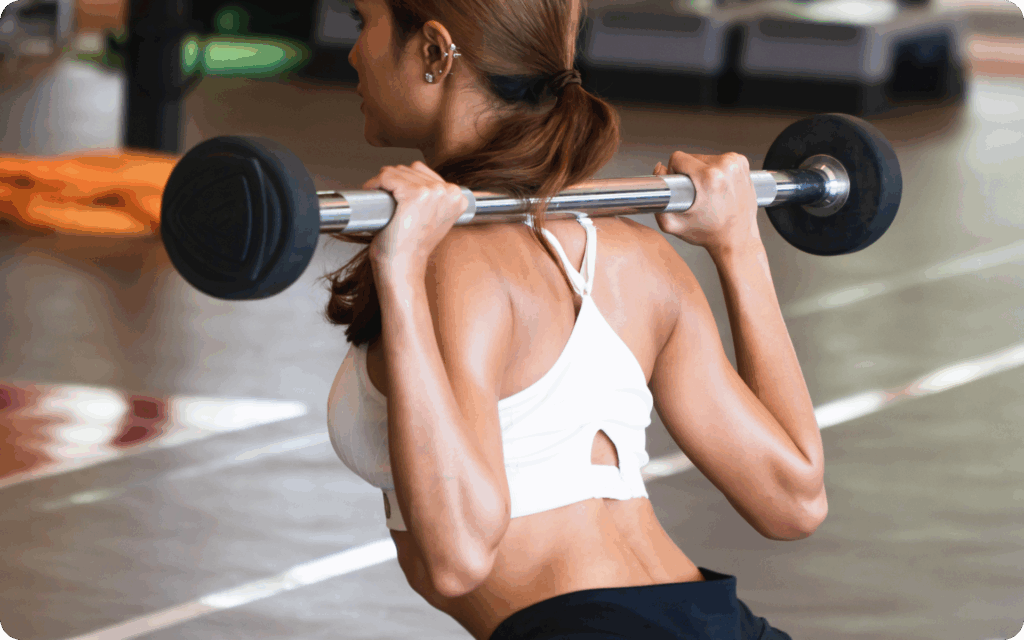
1. Barbell Back Squat
- Target Muscles: Quadriceps, glutes, adductors, core
- Setup: Position a barbell in a squat rack at shoulder height. Step under the bar and rest it across your upper back/traps, not on your neck. Grip the bar with your hands just wider than shoulder-width apart.
- Execution:
- Unrack the weight and take 2-3 steps back, setting your feet shoulder-width apart with your toes pointed slightly out.
- Brace your core by taking a deep breath into your belly.
- Initiate the movement by breaking at the hips and knees simultaneously, as if sitting back into a chair.
- Keep your chest up and your back straight as you lower yourself until your thighs are at least parallel to the floor.
- Drive through your mid-foot to return to the starting position, squeezing your glutes at the top.
- Guidance: Use a weight that allows you to complete your target reps with 2-3 RIR. The tempo should be controlled on the way down (2-3 seconds) and powerful on the way up (1 second).
2. Romanian Deadlift (RDL)
- Target Muscles: Hamstrings, glutes, erector spinae
- Setup: Stand with your feet hip-width apart, holding a barbell or dumbbells in front of your thighs with an overhand grip. Maintain a slight bend in your knees.
- Execution:
- Brace your core and keep your back flat.
- Initiate the movement by pushing your hips backward, as if trying to touch a wall behind you with your glutes.
- Allow the weight to trace a path down your legs, keeping it close to your body.
- Lower the weight until you feel a deep stretch in your hamstrings, typically to mid-shin level. Don’t round your lower back.
- Reverse the motion by driving your hips forward and squeezing your glutes to return to a standing position.
- Guidance: Focus on the hamstring stretch, not how low the weight goes. A 3-second descent with a 1-second pause at the bottom is effective.
3. Barbell Hip Thrust
- Target Muscles: Glutes, hamstrings
- Setup: Sit on the floor with your upper back against a stable bench. Place a barbell across your hips (use a pad for comfort). Your feet should be flat on the floor, about shoulder-width apart.
- Execution:
- Position the bench so it sits just below your shoulder blades.
- Drive through your heels to lift your hips toward the ceiling.
- At the top, your shins should be vertical, and your torso should form a straight line from your shoulders to your knees.
- Squeeze your glutes powerfully for 1-2 seconds at the peak contraction.
- Lower your hips back down with control.
- Guidance: Use a challenging weight. The focus is on a powerful concentric (lifting) phase and a strong peak contraction.
4. Dumbbell Bench Press
- Target Muscles: Pectorals, deltoids, triceps
- Setup: Lie on a flat bench with a dumbbell in each hand, resting on your thighs. Kick the dumbbells up one at a time to shoulder level.
- Execution:
- Press the dumbbells up until your arms are fully extended, but not locked. Your palms should face forward or be neutral.
- Retract your shoulder blades, creating a stable base.
- Lower the dumbbells with control until they are just outside your chest, keeping your elbows at a 45-degree angle to your body.
- Pause briefly at the bottom, feeling a stretch in your chest.
- Press the dumbbells back to the starting position.
- Guidance: A controlled 3-second descent is essential for muscle growth and shoulder health. Avoid flaring your elbows out to 90 degrees.
5. Bent-Over Dumbbell Row
- Target Muscles: Latissimus dorsi, rhomboids, biceps, rear deltoids
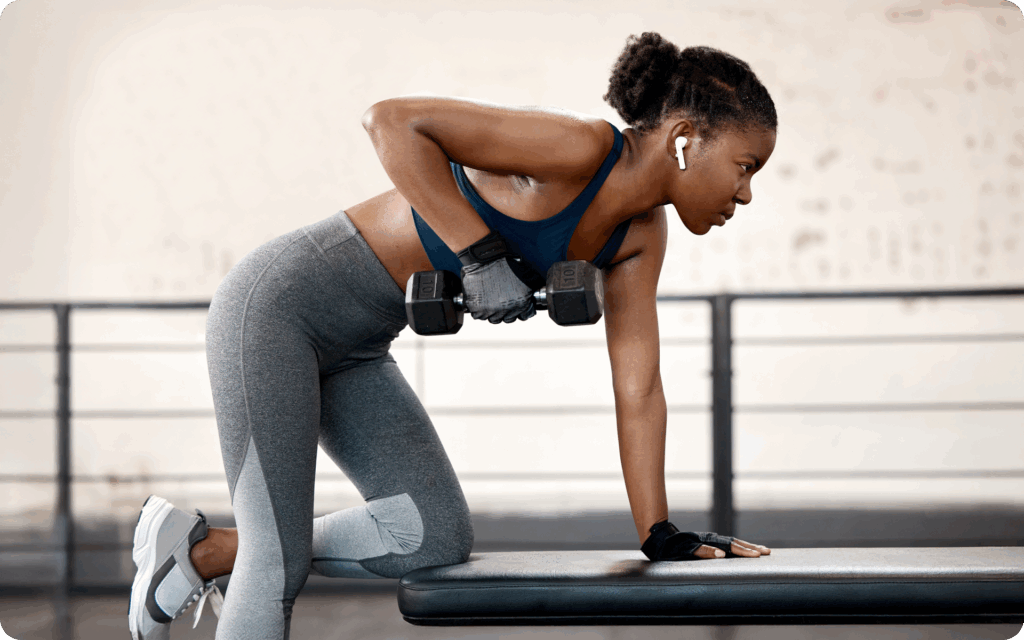
- Setup: Stand with your feet shoulder-width apart, holding a dumbbell in each hand. Hinge at your hips until your torso is nearly parallel to the floor. Let the dumbbells hang with your arms extended.
- Execution:
- Brace your core and maintain a flat back.
- Initiate the row by pulling your shoulder blades together.
- Pull the dumbbells up toward your lower ribcage, keeping your elbows tucked in.
- Squeeze your back muscles at the top of the movement for 1 second.
- Lower the dumbbells with control back to the starting position.
- Guidance: Imagine pulling with your elbows, not your hands, to better engage the back muscles. Avoid using momentum or rounding your back.
Example 4-Week Strength Training Program for Women
This is a 3-day full-body program. Perform each workout once per week with at least one day of rest in between (e.g. Monday, Wednesday, Friday).
Workout A
- Barbell back squat: 3 sets of 6-8 reps (2-3 RIR)
- Dumbbell bench press: 3 sets of 8-12 reps (1-2 RIR)
- Romanian deadlift: 3 sets of 10-15 reps (1-2 RIR)
- Lat pulldown: 3 sets of 10-15 reps (1-2 RIR)
- Plank: 3 sets, hold for 45-60 seconds
Workout B
- Barbell hip thrust: 4 sets of 8-12 reps (1-2 RIR)
- Overhead press (dumbbell or barbell): 3 sets of 8-12 reps (1-2 RIR)
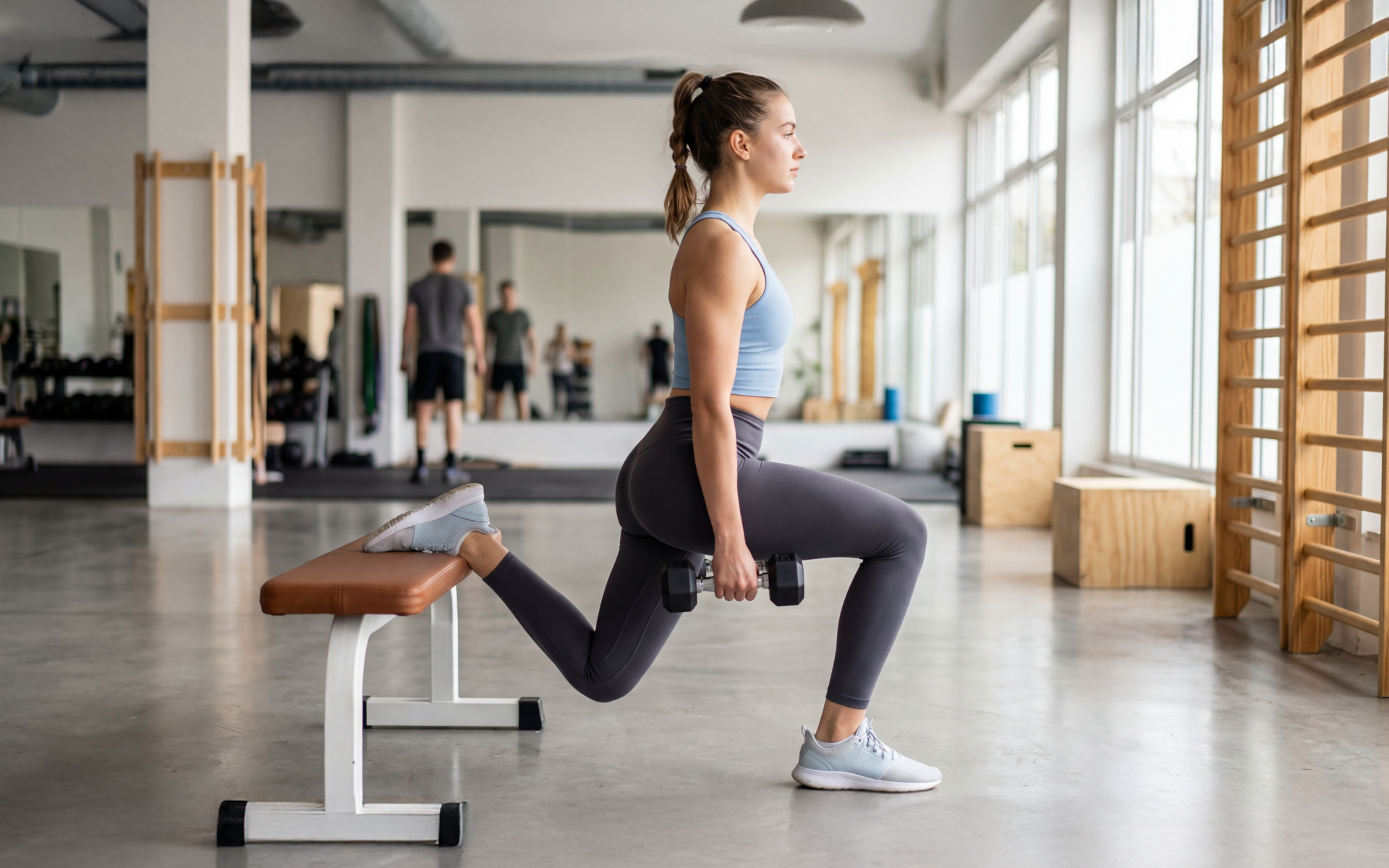
- Bulgarian split squat: 3 sets of 10-15 reps per leg (1-2 RIR)
- Bent-over row: 3 sets of 8-12 reps (1-2 RIR)
- Leg raises: 3 sets of 15-20 reps

Workout C
- Deadlift (conventional or sumo): 3 sets of 5-6 reps (2-3 RIR)
- Incline push-ups: 3 sets to 1-2 RIR
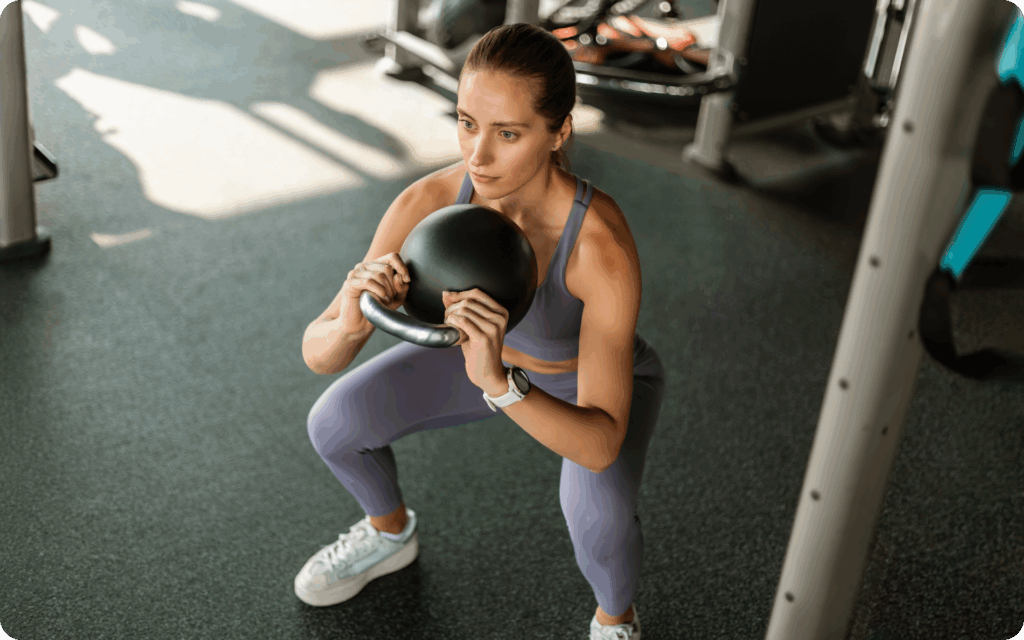
- Goblet squat: 3 sets of 12-15 reps (1-2 RIR)
- Seated cable row: 3 sets of 10-15 reps (1-2 RIR)
- Face pulls: 3 sets of 15-20 reps
Progression: For the first 4 weeks, your goal is to add either one rep to each set or a small amount of weight (e.g. 2.5-5 lbs) each week, while maintaining good form and the target RIR.
Example 12-Week Strength Training Program for Women
This program is periodized, which means that it’s broken into distinct phases (mesocycles) to manage fatigue and drive long-term progress.
Mesocycle 1: Accumulation (Weeks 1-4)
- Goal: Build work capacity and master technique.
- Intensity: Moderate (65-75% of your one-rep max, or 3-4 RIR).
- Volume: 3-4 sets of 10-15 reps for most exercises.
- Focus: Full range of motion and controlled tempo.
Mesocycle 2: Intensification (Weeks 5-8)
- Goal: Increase strength and muscle mass.
- Intensity: High (75-85% of 1RM, or 1-3 RIR).
- Volume: 3-4 sets of 6-10 reps for compound lifts.
- Focus: Lifting heavier weights with excellent form.
Mesocycle 3: Realization/Peak (Weeks 9-11)
- Goal: Maximize strength and performance.
- Intensity: Very High (85-95% of 1RM, or 0-2 RIR).
- Volume: 2-3 sets of 3-6 reps for main lifts.
- Focus: Expressing maximal strength.
Deload (Week 12)
- Goal: Active recovery.
- Intensity: Low (50% of 1RM, or 5+ RIR).
- Volume: Reduce sets by half.
- Focus: Promoting recovery and preparing for the next training cycle.
Adaptations for Different Needs
Strength Training Program for Women Over 50
- Joint-Friendly Swaps: Replace high-impact exercises such as jumping with lower-impact alternatives.
- Swap barbell back squats for goblet squats or leg presses if mobility is a concern.
- Use dumbbells instead of barbells to allow for a more natural range of motion.
- Focus on Bone Density: Bone density loss accelerates during menopause due to decreased estrogen levels. Lower bone density increases the risk of osteoporosis and fractures, which can significantly impact independence and quality of life (16). Weight-bearing exercises provide mechanical load to bones, which stimulates them to retain and even build new bone tissue through a process that is called bone remodeling (17). Controlled overhead presses, loaded carries (farmer’s walks), and goblet squats are excellent.
- Autoregulation: Pay close attention to how you feel. It’s okay to reduce the weight or volume on days when you feel fatigued.
For more details on how to adjust your training as you age, explore our dedicated guide.
Read more about strength training for women over 50.
Women’s Strength Training Program at Home
- Equipment: Focus on exercises you can do with dumbbells, resistance bands, and your own bodyweight.
- Key Movements:
- Lower Body: Goblet squats, dumbbell RDLs, glute bridges (can be loaded with a dumbbell), lunges.
- Upper Body: Push-ups (on knees or incline), dumbbell rows, overhead presses, and band pull-aparts.
- Progression: As weight may be limited, focus on increasing reps, reducing rest times, or using a slower tempo to increase the challenge.
Whether you’re a workout beast or just a beginner making your first foray into the world of fitness and dieting – BetterMe has a lot to offer to both newbies and experts! Install the app and experience the versatility first-hand!
Menstrual Cycle-Aware Approach
A 2025 qualitative study found that many women report feeling strongest and most motivated during the late follicular phase (the week leading up to ovulation). Conversely, the late luteal phase (the week before menstruation) is often associated with lower energy and increased fatigue (18).
However, experiences are highly individual. It’s important to remember that the primary reason women alter their training during their menstrual cycles is due to energy levels and mood. In other words, there’s no reason you must change your training, particularly if you feel fine.
The best approach is not to follow a rigid, cycle-based template but to track your own body’s signals.
- Track Your Cycle: Use an app or journal to note your cycle day, energy levels, mood, and performance in the gym for 2-3 months.
- Optional Adjustments:
- Late Follicular/Ovulation (approx. days 7-14): If you feel strong, this is a great time to push for personal records or perform your highest volume workouts.
- Late Luteal Phase (approx. days 21-28): If you experience significant fatigue or PMS, consider reducing your training volume by 10-20% (e.g. do 3 sets instead of 4) or choosing slightly lighter weights. Maintain consistency, but listen to your body.
How Many Times a Week Should a Woman Do Strength Training?
The optimal frequency for strength training depends on your goals, recovery capacity, and schedule. However, for most women aiming for muscle growth and improved body composition, the research points to a clear range.
Training 2-4 times per week is the sweet spot.
This frequency allows you to achieve the recommended weekly training volume (10-20 hard sets per muscle group) without compromising recovery.
- 2-3 Times Per Week (Full-Body Workouts): This is an excellent starting point and is incredibly effective for both beginners and intermediates (19). Full-body sessions allow you to stimulate each muscle group multiple times per week, which is optimal for muscle protein synthesis (10).
- 4 Times Per Week (Upper/Lower Split): If you have more time and good recovery, an upper/lower split (two upper-body days, two lower-body days) can be beneficial. This allows you to perform more total volume for each body part within a session (20).
A daily weightlifting routine is generally not recommended. Your muscles grow during recovery, not during the workout itself. Training the same muscles every day without rest can lead to overtraining, injury, and diminished results (21).
Read more: Workouts for the Week: All Your Biggest Questions Answered
How Long Does It Take to See Strength Training Results for Females?
Results from strength training appear on multiple timelines. It’s important to understand what to expect and when.
- Immediate Results (1-4 weeks)
The first changes you’ll notice are neuromuscular. Your brain becomes more efficient at recruiting muscle fibers, making you feel significantly stronger and more coordinated. This is often why beginners see rapid strength gains in the first month (22).
- Short-Term Results (4-12 weeks)
This is when visible changes in muscle size (hypertrophy) begin to appear. You may notice your muscles looking fuller and more defined. A dedicated 4-week strength training program for women is enough to start this process, while a 12-week strength training program for women will produce more noticeable aesthetic changes (23).

- Long-Term Results (6+ months)
Consistent training over six months or more leads to significant changes in body composition – more muscle, less fat. Your strength will have increased substantially, and the health benefits, such as improved bone density and metabolic function, will be well-established (24).
Patience and consistency are paramount. Results are not linear, and progress will have peaks and plateaus. Stick with the program, and the changes will come.
If you are just starting your fitness journey, a well-structured beginner program can set you on the right path.
Learn more about weightlifting for female beginners.
How Do You Mix Cardio and Strength Training for Better Results?
Combining cardio and strength training is essential for holistic health. Strength training builds muscle and boosts metabolism, while cardiovascular exercise improves heart health and endurance and helps with recovery. The key is to structure them so they don’t interfere with each other. This is known as concurrent training (25).
Here are evidence-based strategies:
- Prioritize Your Main Goal: If your primary goal is to build strength and muscle, perform your strength training first, when you are fresh. Follow it with a low-to-moderate intensity cardio session. If endurance is your priority, do cardio first.
- Separate Your Sessions: The ideal scenario is to separate strength and cardio workouts by at least 6 hours. This could mean lifting in the morning and going for a run in the evening, or performing them on separate days. This minimizes the “interference effect”, where the molecular signals from endurance training can blunt the signals for muscle growth (25).
- Choose the Right Type of Cardio: Low-intensity steady-state (LISS) cardio, such as walking on an incline, cycling at a moderate pace, or using the elliptical, has a minimal negative impact on strength gains, assuming it’s not for extended periods of time. (26). High-intensity interval training (HIIT) is also effective for fat loss but is very demanding. Limit HIIT to 1-2 sessions per week on non-lifting days to avoid overtaxing your nervous system.
- Keep Cardio Duration in Check: On lifting days, limit your post-workout cardio to 20-30 minutes of low-to-moderate intensity work. Longer durations can shift your body into a more catabolic (muscle-breakdown) state.
Example Weekly Schedule:
- Monday: Full-body strength training
- Tuesday: 30-45 minutes LISS cardio (e.g. incline walk)
- Wednesday: Full-body strength training
- Thursday: Rest or active recovery (e.g. stretching, yoga)
- Friday: Full-body strength training
- Saturday: 20 minutes HIIT or 45 minutes LISS cardio
- Sunday: Rest
This structure ensures you get the benefits of both modalities while allowing for adequate recovery.
Documenting your journey can be a powerful motivator. Seeing how far you’ve come can fuel your continued dedication.
See what a 4-month weight lifting transformation female looks like.
Absolutely. Depending on the intensity and duration, lifting sessions can burn 200-500 calories, contributing to overall caloric expenditure immediately. In the long term, lifting weights builds muscle, which increases your resting metabolic rate, which causes you to burn more calories throughout the day. It also improves insulin sensitivity. This all contributes to effective and sustainable weight loss (3). It depends on your primary goal. If your main objective is to get stronger and build muscle, do weights first when your energy levels are highest. If your priority is improving cardiovascular endurance for a specific event such as a 10k, do cardio first. For general fitness, lifting first is typically recommended to maximize strength gains (25). Yes, a 30-minute strength workout can be very effective if it’s structured with intensity and efficiency. Focus on compound exercises with minimal rest (60-90 seconds) between sets, or use super sets, which are great for maximizing efficiency (27). A well-designed 30-minute session can provide enough stimulus for muscle growth, particularly for beginners or those with limited time. Strength training at the gym produces numerous positive changes. Physically, it builds lean muscle, which leads to a more toned and defined physique. It reduces body fat, improves posture, and increases bone density. Functionally, it makes daily activities easier and reduces the risk of injury. Hormonally, it improves insulin sensitivity and can boost mood through the release of endorphins (3).Frequently Asked Questions
Can a female lose weight by lifting weights?
Should you do cardio first or weights?
Is a 30-minute strength workout enough?
How does the gym change the female body?
The Bottom Line
Building a successful strength training program is a journey of empowerment. It isn’t about adhering to rigid, outdated rules, but about understanding the scientific principles of muscle growth and applying them to your unique body and lifestyle. By focusing on compound lifts, embracing progressive overload, and listening to your body’s individual cues – including those that are related to your menstrual cycle – you can unlock your true physical potential.
DISCLAIMER:
This article is intended for general informational purposes only and does not serve to address individual circumstances. It is not a substitute for professional advice or help and should not be relied on for making any kind of decision-making. Any action taken as a direct or indirect result of the information in this article is entirely at your own risk and is your sole responsibility.
BetterMe, its content staff, and its medical advisors accept no responsibility for inaccuracies, errors, misstatements, inconsistencies, or omissions and specifically disclaim any liability, loss or risk, personal, professional or otherwise, which may be incurred as a consequence, directly or indirectly, of the use and/or application of any content.
You should always seek the advice of your physician or other qualified health provider with any questions you may have regarding a medical condition or your specific situation. Never disregard professional medical advice or delay seeking it because of BetterMe content. If you suspect or think you may have a medical emergency, call your doctor.
SOURCES:
- Spot reduction: why targeting weight loss to a specific area is a myth (2023, sydney.edu.au)
- Fat Loss Depends on Energy Deficit Only, Independently of the Method for Weight Loss (2007, karger.com)
- Resistance training alters body composition in middle-aged women depending on menopause – A 20-week control trial (2023, bmcwomenshealth.biomedcentral.com)
- Increasing muscle mass to improve metabolism (2013, pmc.ncbi.nlm.nih.gov)
- 7 Things to Know About Excess Post-exercise Oxygen Consumption (EPOC) (2014, acefitness.org)
- Strength Training and Insulin Resistance: The Mediating Role of Body Composition (2020, onlinelibrary.wiley.com)
- Adiposity and Insulin Resistance in Humans: The Role of the Different Tissue and Cellular Lipid Depots (2013, academic.oup.com)
- Low muscle mass and risk of type 2 diabetes in middle-aged and older adults: findings from the KoGES (2017, link.springer.com)
- The Effect of Resistance Training in Healthy Adults on Body Fat Percentage, Fat Mass and Visceral Fat: A Systematic Review and Meta-Analysis (2022, pubmed.ncbi.nlm.nih.gov)
- 5 Benefits of Compound Exercises (2016, acefitness.org)
- 7 Things to Know About Excess Post-exercise Oxygen Consumption (EPOC) (2014, acefitness.org)
- Sex differences in absolute and relative changes in muscle size following resistance training in healthy adults: a systematic review with Bayesian meta-analysis (2025, pubmed.ncbi.nlm.nih.gov)
- Effects of Resistance Training Overload Progression Protocols on Strength and Muscle Mass (2024, pubmed.ncbi.nlm.nih.gov)
- A Systematic Review of The Effects of Different Resistance Training Volumes on Muscle Hypertrophy (2022, pmc.ncbi.nlm.nih.gov)
- REPS IN RESERVE (RIR): WHAT YOU NEED TO KNOW (n.d., nasm.org)
- Primary Osteoporosis Induced by Androgen and Estrogen Deficiency: The Molecular and Cellular Perspective on Pathophysiological Mechanisms and Treatments (2024, mdpi.com)
- Regulation of bone health through physical exercise: Mechanisms and types (2022, frontiersin.org)
- Power in the flow: how menstrual experiences shape women’s strength training performance (2025, frontiersin.org)
- Effects of Resistance Training Frequency on Measures of Muscle Hypertrophy: A Systematic Review and Meta-Analysis (2016, link.springer.com)
- Training Programs Designed for Muscle Hypertrophy in Bodybuilders: A Narrative Review (2020, mdpi.com)
- The Importance of Recovery in Resistance Training Microcycle Construction (2024, pmc.ncbi.nlm.nih.gov)
- Neuromuscular adaptations to resistance training in elite versus recreational athletes (2025, frontiersin.org)
- Adaptations to Endurance and Strength Training (2018, pmc.ncbi.nlm.nih.gov)
- Exercise Physiology: A Review of Established Concepts and Current Questions (2024, mdpi.com)
- Optimizing concurrent training programs: A review on factors that enhance muscle strength (2024, journals.lww.com)
- Effects of Individualized Low-Intensity Exercise and Its Duration on Recovery Ability in Adults (2021, mdpi.com)
- Superset Versus Traditional Resistance Training Prescriptions: A Systematic Review and Meta-analysis Exploring Acute and Chronic Effects on Mechanical, Metabolic, and Perceptual Variables (2025, pubmed.ncbi.nlm.nih.gov)

 Reviewed by


 Reviewed by