
The debate between strength training and cardiovascular exercise is a long-standing one in the fitness world. For several decades, they have been viewed as separate paths to different goals: cardio for endurance and fat loss, strength training for muscle and power. However, modern sports science reveals that the true magic happens when you combine them.
Creating a well-rounded schedule that caters to both needs is not just possible, it’s the key to unlocking superior health outcomes, from enhanced fat loss to improved heart health and longevity.
This guide will provide a structured approach to creating your own effective strength and cardio workout plan. We’ll break down the science, quantify the benefits, and provide actionable schedules and exercises you can implement immediately.
Is It Okay to Mix Cardio and Strength Training?
Absolutely. Recent research has provided compelling evidence that a combined approach offers benefits that neither modality can provide on its own.
A significant one-year study published in the European Heart Journal in January 2024 offers powerful insights. Researchers at Iowa State University tracked 406 overweight or obese adults with elevated blood pressure (1).
The participants were divided into four groups: a no-exercise control group, an aerobic-only group, a resistance-only group, and a group that split their time equally between aerobic and resistance exercise. Each exercise group worked out for one hour, three times a week (1).
The results were revealing. The groups performing either aerobic exercise alone or the combined aerobic and resistance routine saw a significant reduction in their composite score for cardiovascular disease risk factors (1).

This composite score measured four key indicators:
- Systolic blood pressure
- Low-density lipoprotein (LDL) cholesterol
- Fasting glucose
- Body fat percentage
The resistance-training-only group didn’t show the same level of cardiovascular benefit as the control group (1).
This study demonstrates that replacing half of your aerobic workout with strength training provides the same cardiovascular benefits while also offering the unique advantage of building muscle.
A combined routine enhances fat loss, improves cardiovascular health, and even accelerates muscle growth. Research has shown that a mixed workout program can increase anabolic hormones and improve insulin sensitivity (2), which are essential for muscle hypertrophy – the process of muscle fibers growing in size (3, 4).
Furthermore, combining cardio and strength training adds variety to your routine. This is a crucial factor for long-term adherence (5). When your workouts are engaging and diverse, you’re far more likely to stick with them, which is the most important element of any successful fitness plan.
Read more: 3-Day Workout Plan for Muscle Gain: Your Ultimate Guide
Is 20 Minutes of Cardio Enough After Lifting Weights?
The question of how much cardio is “enough” depends heavily on your specific goals. For many individuals, 20 minutes of moderate-to-high intensity cardio after a strength training session is not only enough, but can be highly effective.
Let’s quantify this. When you lift weights, your body’s primary energy source is muscle glycogen – stored carbohydrates in your muscles (6). Strength training depletes these stores. When you perform cardio immediately after lifting, your body is in a glycogen-depleted state. This encourages it to turn to a different energy source: your fat stores (7).
Therefore, performing cardio after lifting can be an efficient strategy for fat loss, which makes it a popular choice for a cardio and weight training schedule for weight loss.
A 20-minute session is often sufficient to trigger this effect without causing excessive fatigue that could compromise recovery. However, the intensity is key. 20 minutes of low-intensity walking may not provide the same metabolic stimulus as a high-intensity interval training (HIIT) session (8).

For example, reduced exertion HIIT (REHIT) is a scientifically validated protocol that involves very short, intense sprints (9).
A full REHIT workout can be completed in under 10 minutes, but may be able to deliver superior cardiovascular benefits compared to 30-40 minutes of traditional moderate-intensity cardio (10). A 20-minute session allows ample time for a proper warm-up, a few intense intervals, and a cool-down.
Consider a 20-minute post-lift cardio session that’s structured like this:
- Warm-up: 3 minutes of light cycling or jogging.
- Interval 1: 20 seconds of all-out sprinting.
- Recovery: 2-3 minutes of very slow-paced recovery.
- Interval 2: 20 seconds of all-out sprinting.
- Recovery: 2-3 minutes of very slow-paced recovery.
- Cool-down: 5 minutes of light walking or stretching.
This type of workout is incredibly time-efficient and can significantly boost your cardiorespiratory fitness and fat-burning potential without negatively impacting the muscle-building signals initiated by your strength session. So yes, 20 minutes can be plenty if the exercise is performed correctly and with sufficient intensity.
To learn more about optimizing your workout structure, explore our guide to how to balance cardio and strength training for optimal results.
BetterMe Well-Being Coach app helps you achieve your body goals with ease and efficiency by helping to choose proper meal plans and effective workouts. Start using our app and you will see good results in a short time.
How Should I Balance Strength Training and Cardio?
Balancing strength and cardio involves structuring your workouts based on your primary fitness goals. There is no single “best” way – the optimal approach will depend on whether your priority is muscle growth, endurance, or overall health and body composition.
Let’s explore several evidence-based methods.
Goal: Maximize Muscle Growth (Hypertrophy)
If your main objective is to build muscle, you should prioritize strength training. Performing cardio immediately before a heavy lifting session can cause neuromuscular fatigue, which reduces your ability to lift with maximum force and intensity (11). This can limit the primary stimulus for muscle growth, which is mechanical tension (3).
- Strategy: Perform strength training and cardio on separate days if possible. This allows for full recovery between sessions and minimizes the “interference effect”, where endurance training can blunt the molecular signals for muscle hypertrophy (11).
- Schedule: Dedicate 3-4 days per week to strength training. On your “off” days from lifting, perform 30-45 minutes of low-to-moderate intensity cardio, such as jogging, cycling, or using an elliptical. This approach ensures you get the cardiovascular benefits without compromising your gains.
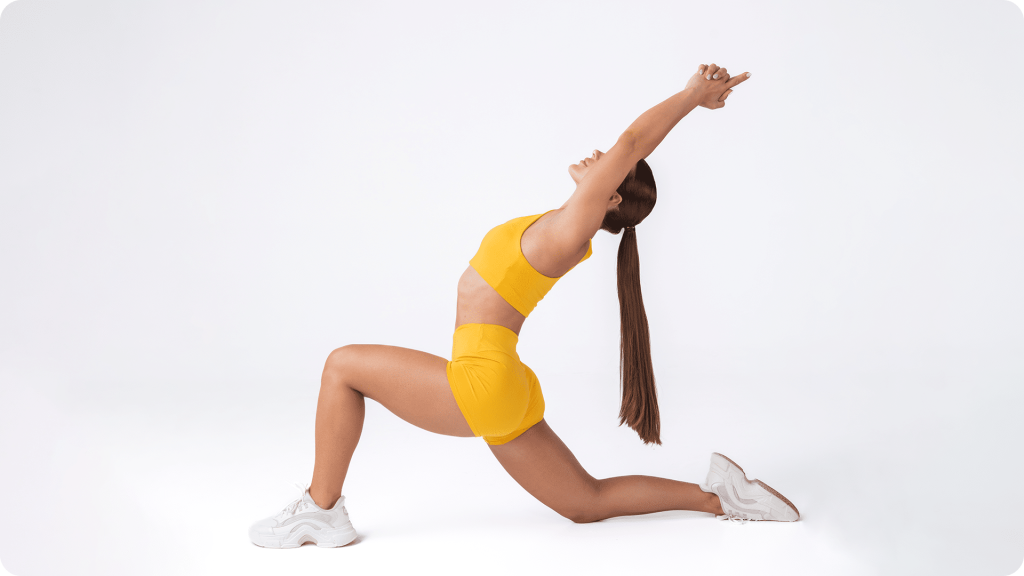
Goal: Maximize Endurance (Cardiovascular Fitness)
If you’re training for an event such as a marathon, triathlon, or century ride (100-mile bike ride), your focus should be on cardio. Your training plan should revolve around improving your aerobic capacity (VO2max) and muscular endurance (12).
- Strategy: Prioritize cardio in your workouts. If you perform both on the same day, do your cardio session first when your energy levels are highest (13).
- Schedule: Schedule 3-5 cardio sessions per week, incorporating a mix of long, slow-distance training, tempo runs, and interval work. You can add 2 full-body strength training sessions on non-cardio days to improve overall strength, reduce injury risk, and enhance running economy (14). Try to minimize heavy lower-body training before your longer endurance sessions – try to pair lower-body training with recovery sessions or lower intensity.
A sample running and strength training weekly schedule would separate these workouts by at least 24 hours.
Goal: General Fitness, Fat Loss, and Body Recomposition
For those who are looking for the best of both worlds, a combined approach in the same session or on the same day is highly effective. The key is to manage intensity and recovery.
- Strategy 1 (Same Session): Lift weights first, then perform cardio. As previously mentioned, this depletes glycogen stores and can enhance fat oxidation during the cardio portion (6, 7).
- Strategy 2 (Same Day, Separate Sessions): Perform two separate workouts. To avoid interference, allow at least a 6-hour gap between them (11). For example, you could do a HIIT cardio session in the morning and a strength workout in the evening. This allows your body’s physiological systems to recover and adapt to each specific stimulus.
- Strategy 3 (Circuit Training): Combine strength and cardio exercises in a fast-paced circuit. This is a time-efficient method for a full-body strength and cardio workout, elevating your heart rate consistently while still challenging your muscles (2).
Discover how strength training can improve everyday movements by reading about functional strength training.

What Is a Sustainable Strength and Cardio Workout Plan?
Sustainability is the cornerstone of any long-term fitness success. A plan is only effective if you can stick with it consistently. A sustainable plan is realistic, enjoyable, and flexible enough to accommodate your life. It should be challenging enough to drive progress, but not so demanding that it leads to burnout or injury.
Here are the key components of a sustainable strength and cardio workout plan for beginners and seasoned lifters alike.
1. Frequency: Start with a Manageable Commitment
Aim for 3-5 total workout sessions per week. This is a sweet spot that allows for adequate training stimulus and sufficient recovery (15). For example, some may plan for 3 strength sessions and 2 cardio sessions, while a beginner might start with 2 of each.
2. Duration: Keep Sessions Efficient
Your workouts don’t need to be two hours long. Highly effective sessions can be completed in 45-60 minutes (16). This includes a warm-up, the main workout, and a cool-down. Time efficiency makes it easier to fit exercise into a busy schedule.
3. Progressive Overload: The Key to Continuous Improvement
Your body adapts to the demands you place on it. To keep making progress, you must progressively increase the challenge. This doesn’t just mean lifting heavier weights. Progressive overload can be applied in strength training in several ways (17):
- Increase Resistance: Add more weight to the bar.
- Increase Repetitions: Perform more reps with the same weight.
- Increase Volume: Add an extra set to an exercise.
- Decrease Rest Time: Reduce the rest period between sets to increase metabolic stress.
- Improve Form: Focus on better technique and a greater range of motion.
- Increase Frequency: Add an extra training day per week.

Progressive overload can be applied in endurance exercises by:
- Increase Speed: Gradually walk, run, or cycle at a faster pace for set intervals or the entire session.
- Increase Duration: Add time to each session, aiming for 5-10% longer per week.
- Increase Incline or Resistance: Adjust treadmill incline or bike resistance to elevate intensity.
- Add Intervals: Incorporate short bursts of higher intensity (such as 30 seconds fast/90 seconds moderate) to tax your cardiovascular system.
- Reduce Rest Periods: Shorten rest intervals during interval training or between brisk walking bouts.
- Increase Frequency: Add another cardio session to your weekly routine.
- Monitor Heart Rate Zones: Aim to spend more time in your target heart rate range as your fitness improves.
4. Incorporate Variety
Performing the same workout week after week can lead to plateaus and boredom (5). Introduce variety by:
- Rotating Exercises: Swap out the exercises every 4-6 weeks to challenge your muscles in new ways.
- Changing Modalities: If you always run for cardio, try cycling, swimming, or rowing. This can also help mitigate overuse issues.
- Trying Different Training Styles: Experiment with circuit training, supersets, or drop sets in your strength routine.
5. Prioritize Recovery
Recovery is when your body repairs and builds itself stronger. Neglecting it is a fast track to overtraining and injury (18).
- Sleep: Aim for 7-9 hours of quality sleep per night. This is when crucial muscle repair and hormone regulation occur.
- Nutrition: Fuel your body with adequate protein for muscle repair, carbohydrates to replenish glycogen, and healthy fats for hormone function.
- Active Recovery: On rest days, engage in light activities such as walking, stretching, or foam rolling to promote blood flow and reduce muscle soreness.
For a deeper dive into the metabolic effects of exercise, check out our article on cardio versus fat burning.
Reasons why BetterMe is a safe bet: a wide range of calorie-blasting workouts, finger-licking recipes, 24/7 support, challenges that’ll keep you on your best game, and that just scratches the surface! Start using our app and watch the magic happen.
What Is a Good Cardio and Strength Training Schedule?
To maximize muscle gain, fat loss, and cardiovascular benefits, a clear and evidence-based weekly structure is essential. Below is an ideal 7-day schedule that balances full-body strength training and moderate-intensity cardio.
Weekly Schedule Overview
- Monday: Full-body strength training
- Tuesday: Moderate-intensity cardio (brisk walking)
- Wednesday: Rest
- Thursday: Full-body strength training
- Friday: Moderate-intensity cardio (brisk walking)
- Saturday: Full-body strength training
- Sunday: Rest
Notes
- Strength Sessions: Each workout involves three sets (3 sets) of 8-12 repetitions (8-12 reps) per exercise, focusing on large muscle groups to maximize training efficiency and hormonal response (19). Work at 65-75% of your one-rep max (1RM), or a weight that feels challenging for the last two repetitions while maintaining proper form. Each session will take approximately 45-60 minutes.
- Cardio Sessions: Brisk walking at 60-70% of your maximum heart rate (calculated as 220 minus your age) qualifies as moderate intensity. Aim for 30-40 minutes per session. At this intensity, you should be able to talk, but not sing.
- Rest Days: Use these days for recovery. If desired, include optional, low-intensity movement such as five to ten minutes of gentle stretching.
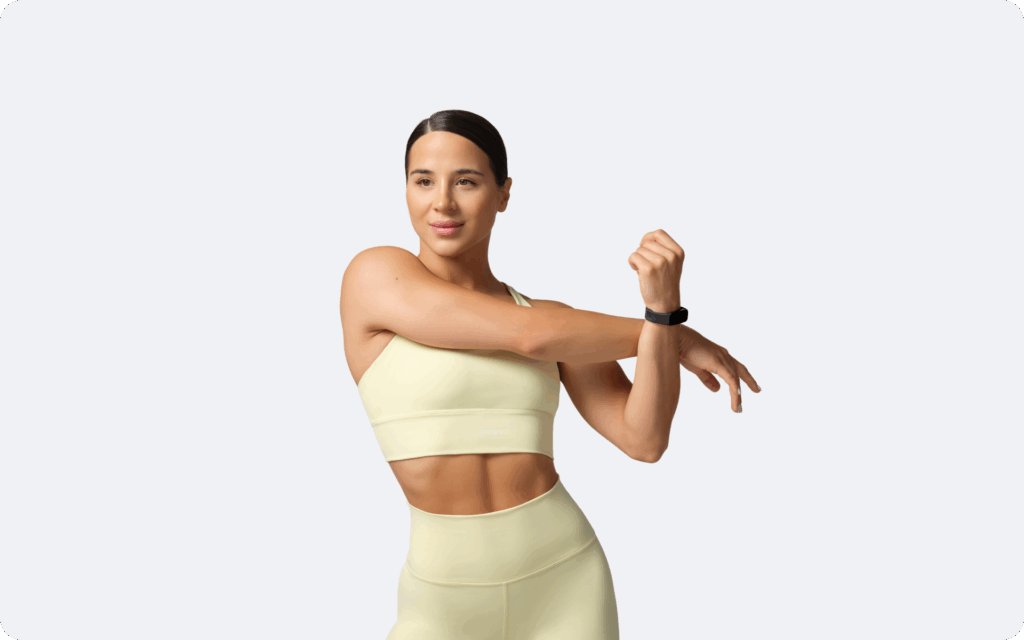
Sample Program
Monday/Thursday/Saturday – Full-Body Strength
- Goblet squat – 3 sets of 8-12 reps
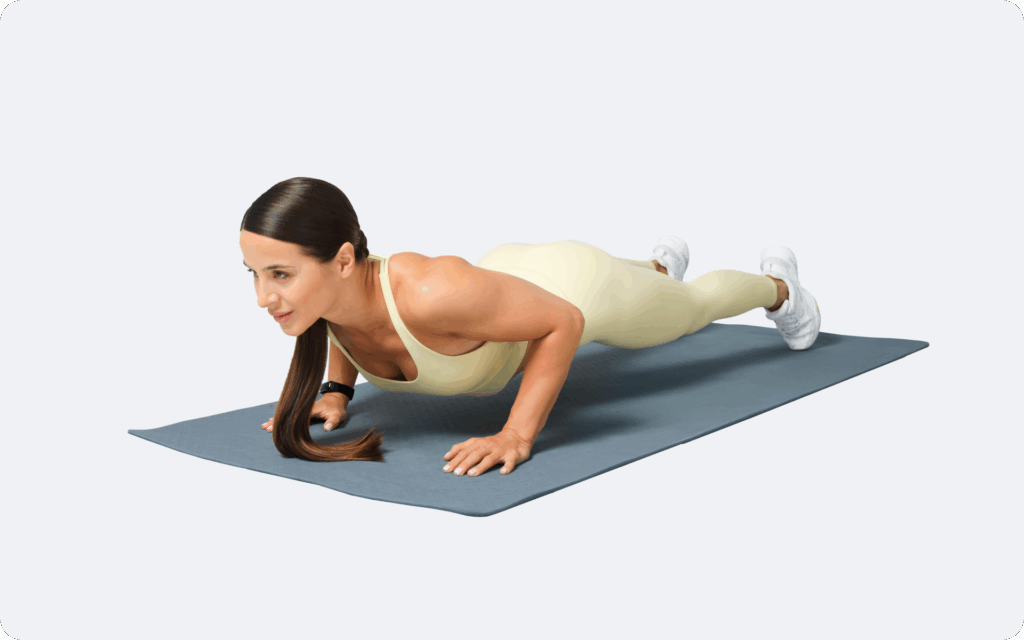
- Push-up (elevate hands as needed) – 3 sets of 8-12 reps
- Dumbbell row – 3 sets of 8-12 reps per arm
- Glute bridge – 3 sets of 8-12 reps
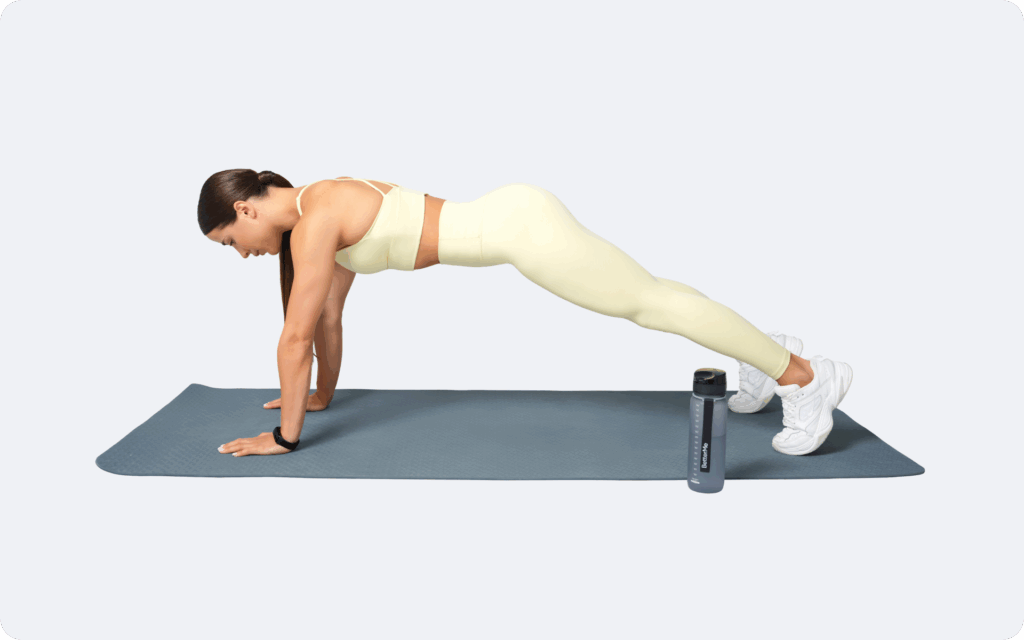
- Plank – 3 sets, holding for 30-45 seconds each
Tuesday/Friday – Moderate-Intensity Brisk Walk
- Walk briskly for 30-40 minutes at a pace that raises your heart rate to 60-70% max HR. Use a fitness tracker or regularly check your pulse to ensure you’re within the recommended range. If you’re walking the same route, aim to slightly increase distance or speed once every 2-3 weeks.
Wednesday/Sunday – Rest
- Recovery is essential for muscle repair and adaptation. Focus on quality sleep, hydration, and, if needed, gentle stretching or mobility exercises. Avoid any strenuous activity.
Exercise Instructions
- Goblet Squat
- Stand with your feet shoulder-width apart.
- Hold a dumbbell or kettlebell vertically against your chest.
- Lower your hips by bending your knees and driving your hips back, keeping your chest tall and your elbows between your knees.
- Go down until your thighs are parallel to the ground (or lower, if mobility allows).
- Pause, then push through your full foot to stand, squeezing your glutes at the top.
- Push-Up (Hands Elevated if Needed)
- Place your hands on the floor or a sturdy surface such as a bench.
- Start in a plank position with a straight line from your head to your heels.
- Lower your chest toward your hands by bending your elbows at 45 degrees from your torso.
- Touch the floor with your chest lightly, then push back up, maintaining a neutral spine.
- Dumbbell Row
- Place one knee and one hand on a bench. Hold a dumbbell in the opposite hand, your arm extended.
- Pull the dumbbell to your hip, keeping your elbow close and squeezing your shoulder blade at the top.
- Lower with control. Repeat for all reps, then switch sides.
- Glute Bridge
- Lie on your back with your knees bent, and your feet flat and hip-width apart.
- Press your lower back into the ground, then push through your feet and lift your hips until your shoulders, hips, and knees form a straight line.
- Squeeze your glutes at the top for 1-2 seconds, then lower your hips back down slowly.
- Plank
- Start on your elbows directly under your shoulders, with your toes on the ground.
- Brace your core and keep your body in a straight line from your head to your heels.
- Avoid letting your hips sag or pike up.
- Hold, breathing steadily, for the allotted time.
Brisk Walk Cues
- Use a purposeful arm swing and maintain a steady pace.
- If measuring heart rate, ensure you’re at 60-70% of your max.
- Maintain an upright posture and relaxed shoulders.
- Wear shoes that are appropriate for prolonged walking sessions.
This proven structure supports fat loss, cardiovascular health, and muscle development, using principles and methods that have been validated by peer-reviewed studies.
Read more: Does Running Burn Face Fat? The Truth About Slimming Your Face
How Long to See Results from Cardio and Strength Training?
Seeing results is a powerful motivator, but it’s important to have realistic expectations. The timeline for results varies based on genetics, consistency, diet, and your starting fitness level. However, we can provide a general, quantified timeline.
First Few Weeks (1-4 weeks)
The most immediate changes are often neurological and internal (20). You may not see dramatic physical changes, but you will feel them.
- Feelings: Increased energy, better mood, improved sleep quality.
- Performance: You’ll notice improvements in your ability to perform exercises. Weights that felt challenging in week one will feel more manageable. This is due to your central nervous system becoming more efficient at recruiting muscle fibers. You might add 5-10 lbs to your lifts or last a few minutes longer on the treadmill.
First Few Months (1-3 months)
This is when visible changes often start to appear, particularly if your nutrition is on point (20).
- Body Composition: You might notice your clothes fitting better. It’s possible to lose 1-2 pounds of fat per week and gain 0.25-0.5 pounds of muscle per week in the initial stages (21, 22).
- Strength: Your strength gains will become more significant. It’s not uncommon to increase your main lifts (squat, bench, deadlift) in the first three months of consistent training (20).
- Cardiovascular Health: Your resting heart rate may decrease by 5-10 beats per minute, and your ability to recover from intense effort will improve noticeably (20).
Six Months and Beyond
With six months of consistent effort, the transformation becomes substantial.
- Physical Appearance: Significant changes in muscle definition and body fat levels are clearly visible. You could realistically lose 20-30 pounds of fat while building 5-10 pounds of muscle (21, 22).
- Health Markers: Blood work will likely show improvements in cholesterol, blood pressure, and blood sugar levels, aligning with findings from the Iowa State study (1).
- Habit Formation: By this point, exercise is likely an integrated part of your lifestyle, not a chore.
The key is to focus on performance-based goals (lifting heavier, running faster) rather than just the number on the scale. This will keep you motivated as your body composition changes, which sometimes means the scale doesn’t move much, even though you’re losing fat and gaining muscle.
For most people aiming for both strength and general fitness, it’s better to lift weights first and then run. Lifting requires maximum neurological drive and energy, which can be compromised if you fatigue yourself with cardio beforehand (11). Performing cardio after lifting can also enhance fat burning (7). The exception is for endurance athletes, who should prioritize their primary sport (running) first. It can, but the effect is often overstated and depends on the duration and intensity of the run. A short, intense cardio session (15-20 minutes of HIIT) or a moderate-intensity session (20-30 minutes) after lifting is unlikely to significantly hurt muscle gains for most people. However, long-duration endurance running (60+ minutes) immediately after a heavy leg day could create competing signals in the body and potentially interfere with optimal muscle protein synthesis (23). Lifting weights every day is generally not recommended for most people. Your muscles need time to recover and grow, and this happens during rest, not during the workout itself. Training the same muscle groups daily can lead to overtraining, injury, and diminished returns (24). A better approach is to train different muscle groups on different days (a split routine) or to incorporate full-body workouts with at least one rest day in between. While you shouldn’t train major muscle groups such as your legs or chest every day, some smaller, more endurance-oriented muscle groups can tolerate more frequent training. These include the calves, abdominals, and forearms (25). Even so, it’s wise to listen to your body and incorporate at least one full rest day per week to allow your entire system, including your central nervous system, to recover.Frequently Asked Questions
Should you lift or run first?
Does running after lifting hurt your gains?
Is it okay to lift weights every day?
What muscles can you train every day?
The Bottom Line
Integrating strength and cardio into a single, cohesive plan is the most effective and efficient path to comprehensive fitness. It allows you to build a strong, resilient, and healthy body capable of both power and endurance.
By understanding your goals, structuring your week intelligently, and focusing on consistency and progressive overload, you can create a workout plan that delivers transformative results and becomes a sustainable part of your life. The journey is a marathon, not a sprint, and every well-planned workout is a step toward a longer, healthier life.
DISCLAIMER:
This article is intended for general informational purposes only and does not serve to address individual circumstances. It is not a substitute for professional advice or help and should not be relied on for making any kind of decision-making. Any action taken as a direct or indirect result of the information in this article is entirely at your own risk and is your sole responsibility.
BetterMe, its content staff, and its medical advisors accept no responsibility for inaccuracies, errors, misstatements, inconsistencies, or omissions and specifically disclaim any liability, loss or risk, personal, professional or otherwise, which may be incurred as a consequence, directly or indirectly, of the use and/or application of any content.
You should always seek the advice of your physician or other qualified health provider with any questions you may have regarding a medical condition or your specific situation. Never disregard professional medical advice or delay seeking it because of BetterMe content. If you suspect or think you may have a medical emergency, call your doctor.
SOURCES:
- Aerobic, resistance, or combined exercise training and cardiovascular risk profile in overweight or obese adults: the CardioRACE trial (2024, academic.oup.com)
- Effects of 12-Week Combined Strength and Endurance Circuit Training Program on Insulin Sensitivity and Retinol-Binding Protein 4 in Women with Insulin-Resistance and Overweight or Mild Obesity: A Randomized Controlled Trial (2024, pmc.ncbi.nlm.nih.gov)
- Anabolic signals and muscle hypertrophy – Significance for strength training in sports medicine (2025, sciencedirect.com)
- Association between muscle mass and insulin sensitivity independent of detrimental adipose depots in young adults with overweight/obesity (2020, pmc.ncbi.nlm.nih.gov)
- Adding Variety to Your Exercise Program (2020, uhhospitals.org)
- Fundamentals of glycogen metabolism for coaches and athletes (2018, pmc.ncbi.nlm.nih.gov)
- Exercising with low muscle glycogen content increases fat oxidation and decreases endogenous, but not exogenous carbohydrate oxidation (2019, sciencedirect.com)
- Comparative effectiveness of high-intensity interval training and moderate-intensity continuous training on cardiometabolic health in patients with diabesity: a systematic review and meta-analysis of randomized controlled trials (2025, dmsjournal.biomedcentral.com)
- Real-world efficacy of equipment-free reduced-exertion high-intensity interval training in improving physical and mental health in inactive males: A randomized controlled trial (2025, sciencedirect.com)
- Reduced Exertion High-Intensity Interval Training is More Effective at Improving Cardiorespiratory Fitness and Cardiometabolic Health than Traditional Moderate-Intensity Continuous Training (2019, pubmed.ncbi.nlm.nih.gov)
- Optimizing concurrent training programs: A review on factors that enhance muscle strength (2024, journals.lww.com)
- Effects of marathon training on maximal aerobic capacity and running economy in experienced marathon runners (2023, pmc.ncbi.nlm.nih.gov)
- The physiological and physical benefits of two types of concurrent training: a randomized controlled trial (2024, pubmed.ncbi.nlm.nih.gov)
- The effects of strength training on distance running performance and running injury prevention (2024, efsupit.ro)
- Effects of Concurrent Strength and Endurance Training on Measures of Physical Fitness in Healthy Middle-Aged and Older Adults: A Systematic Review with Meta-Analysis (2022, link.springer.com)
- How Long Should a Gym Session Be for Real Results? (2025, scarletstate.co.uk)
- Effects of Resistance Training Overload Progression Protocols on Strength and Muscle Mass (2024, pubmed.ncbi.nlm.nih.gov)
- EXPLORING THE SCIENCE OF RECOVERY (n.d., nasm.org)
- Hormonal Responses and Adaptations to Resistance Exercise and Training (2012, link.springer.com)
- Adaptations to Endurance and Strength Training (2018, pmc.ncbi.nlm.nih.gov)
- Summary of Evidence-Based Recommendations (n.d., ncbi.nlm.nih.gov)
- Increasing Lean Mass and Strength: A Comparison of High Frequency Strength Training to Lower Frequency Strength Training (2016, pmc.ncbi.nlm.nih.gov)
- Using Molecular Biology to Maximize Concurrent Training (2014, link.springer.com)
- The Importance of Recovery in Resistance Training Microcycle Construction (2024, pmc.ncbi.nlm.nih.gov)
- Recoverability of large vs small muscle groups (2020, scholarworks.uni.edu)

 Reviewed by